Western Wind Power’s Impacts

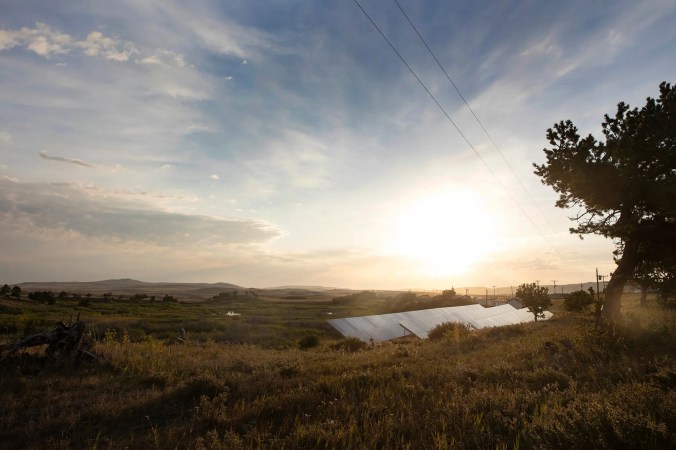
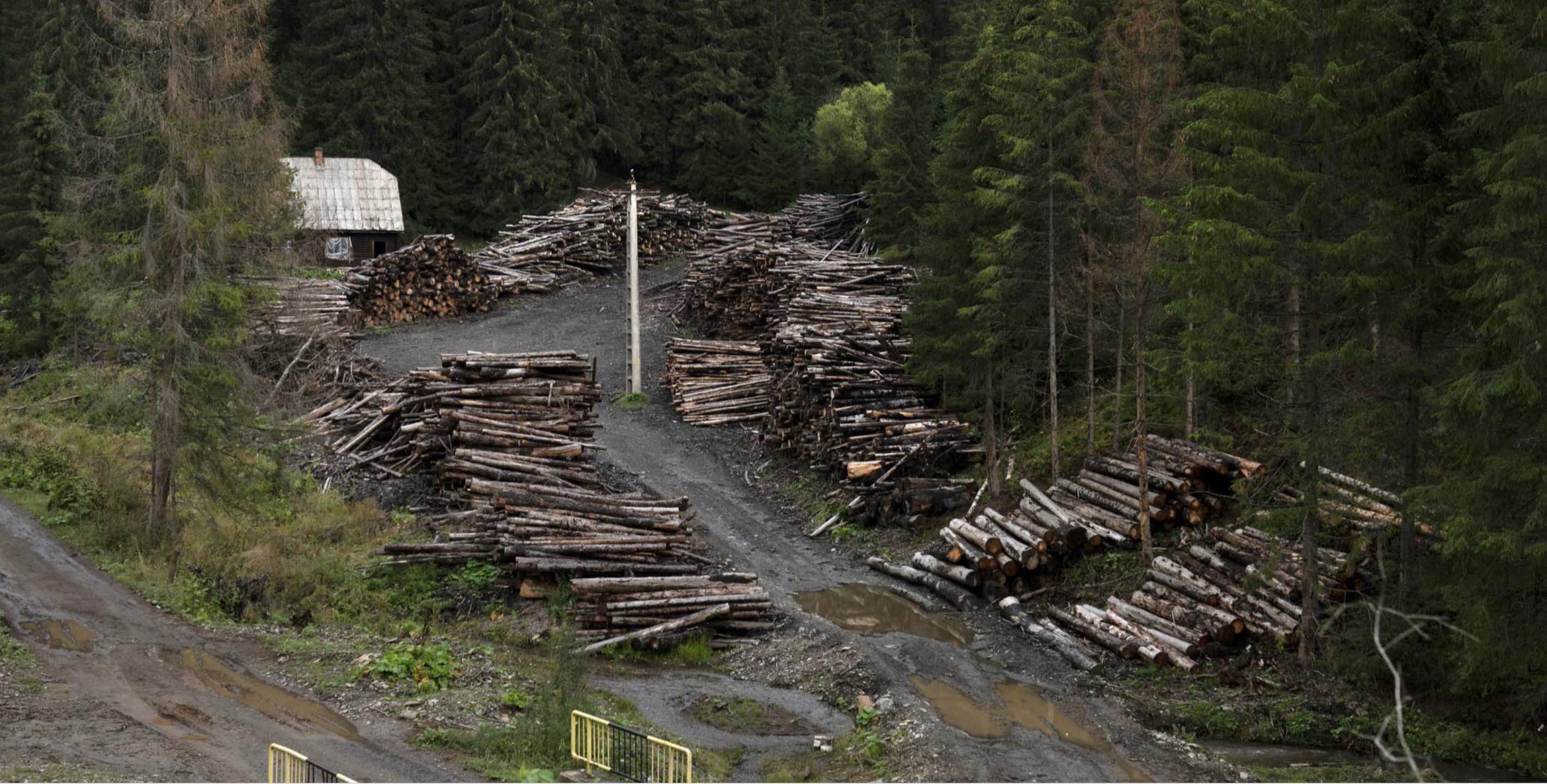
Pads have been cleared in preparation for massive wind turbines at Overland Trail Ranch. (Robert Gauthier / Los Angeles Times)

Wind power is part of our future. Full stop. But it is worth thinking about how the infrastructure for that power will change places of vast beauty and tradition.

A worker herds cattle at Overland Trail Ranch as a snowstorm moves in. (Robert Gauthier / Los Angeles Times)

This article by Sammy Roth, with photography by Robert Gauthier, is a worthy thought piece on what we gain, what we give up, and who decides how and where wind energy comes to town:

This power line could save California — and forever change the American West

PacifiCorp’s Ekola Flats wind farm has 63 turbines, most of them rated at 4.3 megawatts — almost six times as much power as some of the old steel-lattice wind towers in the California desert outside Palm Springs. (Robert Gauthier / Los Angeles Times)

I know the wind turbine blades aren’t going to kill me. At least, I’m pretty sure.

No matter how many times I watch the slender arms swoop down toward me — packing as much punch as 20 Ford F-150 pickup trucks — it’s hard to shake the feeling they’re going to knock me off my feet. They sweep within a few dozen feet of the ground before launching back toward the heavens, reaching nearly 500 feet above my head — higher than the highest redwood.

They’re eerily quiet, emitting only a low hum. But in the howling wind, the tips could be barreling past at 183 mph. Continue reading

When Is Enough Enough In The Outer Banks?

North Carolina’s Outer Banks. YALE ENVIRONMENT 360

Gilbert M. Gaul, a two-time Pulitzer Prize winner and author of the book The Geography of Risk: Epic Storms, Rising Seas and the Cost of America’s Coastsoffers this assessment of coastal development that shows some folks do not seem to know when to stop:

Shifting Sands: Carolina’s Outer Banks Face a Precarious Future

Despite the risks of building on barrier islands, developers kept constructing homes on North Carolina’s Outer Banks. Now, as sea level rises and storms become more frequent and powerful, the famed vacation spot is fighting an increasingly difficult battle to keep from washing away.

Rounding the corner near the village of Rodanthe, there is a stretch of highway known as the S-Curves because of its twisting loops and turns. It is, by almost any measure, one of the most vulnerable sections of roadway in North Carolina, if not the nation. Continue reading

Alpine Hydroelectricity

The Nant de Drance pumped hydropower project. NANT DE DRANCE

Especially with news of rivers drying up across Europe, this is a welcome, if surprising story:

Massive Pumped Hydro Facility to Open This Summer in the Swiss Alps

One of the world’s largest pumped hydropower projects, with an electricity storage capacity equivalent to 400,000 electric vehicles, is set to begin operations soon in the Swiss Alps. Continue reading
Ned Beauman’s Venomous Lumpsucker

The reviews are  coming in, and especially this one by David Annand in TLS makes Ned Beauman’s new book look worthy of this moment in human history:

Whimsical and cruel

A tale of capitalism, penance and species extinction

In the 1980s the American literary critic Tom LeClair identified what he called the “systems novel”, a genre of fiction concerned with the characters, acts and situations of the conventional novel while simultaneously speculating on the complex social structures – Continue reading

When Is Organic The Worst Option?

Some 28% of the world’s land is used for grazing. Photograph: Anadolu Agency/Getty Images

We favor organic, for our coffee, for just about everything, almost always. And yet George Monbiot offers a fully obvious answer to the counterintuitive question in the title:

The most damaging farm products? Organic, pasture-fed beef and lamb

You may be amazed by that answer, but the area of land used for grazing is vast compared with the meat and milk produced Continue reading

McKibben With 2022 Perspective

If Timothy Egan thinks that one day Bill McKibben may win a Nobel prize, do not bet against it–only ask whether it will be for his contribution to literature or instead to world peace:

In his writings, his many speeches and bullhorn exhortations, Bill McKibben comes across as one of the least cynical people on the battlefield of public opinion. He’s passionate about solving problems others have given up on, about building a better world and particularly about climate change, the issue that has made him the Paul Revere of alarm about our fevered planet. Continue reading
Crickets Rising

Personal testament: I have eaten protein bars made from cricket meal; I like the bars but do not picture myself transitioning to cricket dinner dishes. I am not yet sure that pure cricket powder is a product for me.

But I have been surprised by the success of Gricket bars in the Authentica shops–we clearly underestimated how culinarily adventurous the travelers visiting Costa Rica might be. Meanwhile, much further north, I am happy to see this family’s work and the success of the film they entered into this contest run by one of our most important sources of environmental news and opinion during the last decade:

The Three Cricketeers: Betting on Bug Food to Help the Planet

A family in Minnesota wants to put crickets on your dinner plate. In the First Runner-Up in the 2022 Yale Environment 360 Film Contest, they explain how the insects are a high-protein food that can help reduce the massive emissions produced by livestock and large-scale farming.

For Claire Simons and her husband, Chad, it all started when their son brought home a snickerdoodle made of cricket flour one Earth Day. Continue reading
Rwanda’s Cold Chain Challenge

A “cold chain” protects food as it makes its way from farm to table. Illustration by María Jesús Contreras

A five year gap since the last time we linked to a Nicola Twilley story is not a sign of anything; back with a story on an African nation we have had our eyes on, we are gratified by her latest:

Africa’s Cold Rush and the Promise of Refrigeration

For the developing world, refrigeration is growth. In Rwanda, it could spark an economic transformation.

At one in the morning, several hours before fishing boats launch, François Habiyambere, a wholesale fish dealer in Rubavu, in northwest Rwanda, sets out to harvest ice. In the whole country, there is just one machine that makes the kind of light, snowy flakes of ice needed to cool the tilapia that, at this hour, are still swimming through the dreams of the fish farmers who supply Habiyambere’s business. Flake ice, with its soft edges and fluffy texture, swaddles seafood like a blanket, hugging, without crushing, its delicate flesh. Continue reading
Ominous Humongous Fungus

The mushrooms of Armillaria ostoyae (or Armillaria solidipes), the species of honey mushroom that makes up Humongous Fungus (Getty)

We have linked to one Katherine J. Wu article in the past, and that was to share good news; and we linked to stories about humongous fungus a couple of times–not so much news as fascinating; this time there is an ominous implication to the fungus:

The Bigger This Fungus Gets, the Worse We’re Doing

Human actions have turned a usually beneficial fungus into a bringer of death.

Deep in the loamy soil of forests around the world, there exists a fungus called the honey mushroom that makes its living on death. A parasite that preys on weak trees, it sucks its victims dry of nutrients, then feasts on their postmortem flesh. Continue reading
Almost Missed

I have missed plenty of good articles, books and other sources of news and analysis that relate to our goals with this platform. When I am late to see something important, like the book to the right, no regrets. Especially when it comes to my attention through an essay like this one by Daniel Sherrell:

The Democrats’ climate bill is a historic victory. But we can’t stop here

Passage of the Inflation Reduction Act filled me with joy and rage, relief and apprehension, exhaustion and vigilance. We must celebrate, but also mourn, rage and organize

I was at a Mets game when news broke that the climate bill had enough votes to pass in the Senate. It was the bottom of the eighth, and Edwin Díaz had just struck out the heart of the Braves’ lineup. The crowd at Citi Field was feeling good. Everyone could sense a win was at hand.

I read the push notification then sat there stunned for several minutes, watching the Mets clinch the game, waiting for the world-shaping news to register. Continue reading