Capsicum Futures

The World Vegetable Center conducts research, builds networks, and carries out training and promotion activities to raise awareness of the role of vegetables for improved health and global poverty alleviation.

Among the essential components of Kerala cuisine, various chili peppers were central in our diet during the India work years. I became quite tolerant of high intensity heat from capsicum, and learned to enjoy the steamy delirium of a typical mango curry. I am out of practice, not sure I can still handle high Scoville meals any more, but heartened to know that Derek Barchenger and the W.V.C team are taking care for capsicum’s future, so thanks to Clarissa Wei for this story:

The Quest to Save Chili Peppers

A seed bank in Taiwan is home to more chili varieties than anywhere else on earth. In a warming world, we’re going to need them.

In 1999, Susan Lin, a bespectacled plant researcher at the World Vegetable Center, in Taiwan, pulled on a pair of latex gloves and got to work cross-pollinating some chili peppers. She collected tiny white flowers from a cayenne-pepper plant, shook their pollen into a tiny test tube, and walked over to an aji-chili plant. Using tweezers, she removed the petals and anthers from its flower buds, exposing the thread-like stigmas that serve as the plant’s female reproductive organs. Then she dipped the stigmas into the pollen, hoping that they would eventually form peppers. Continue reading
Blooming Where We Are Planted

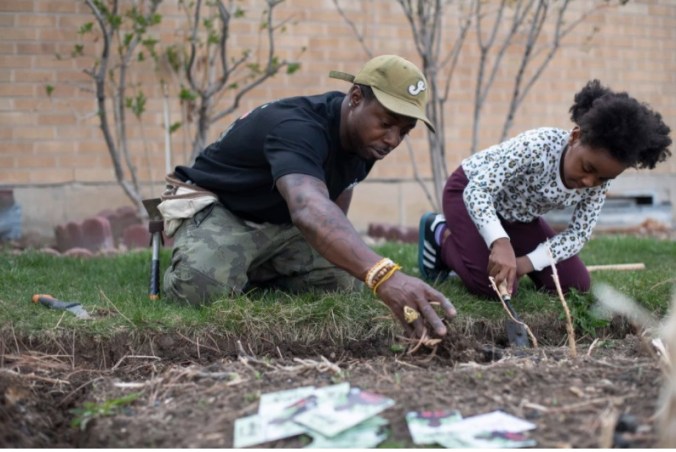
Ietef “DJ Cavem Moetavation” Vita plants seeds with daughter Libya LeaDonvita in the garden at their home outside Denver. Vita is among a growing list of Black gardening enthusiasts-turned-entrepreneurs across the country who’ve launched seed businesses during the pandemic-inspired gardening boom. Rachel Woolf for KHN

Urban farming was an early and has been a frequent topic on this platform, and we have covered it from multiple angles and elevations. In the last year we have focused on a few acres of urbanized land to regenerate bird habitat. So when I scan daily for a story to share, this has been a top-of-mind topic for years. Thanks to National Public Radio (USA) for another:

Black Entrepreneurs Sow Seeds Of Healthier Eating During Pandemic Gardening Boom

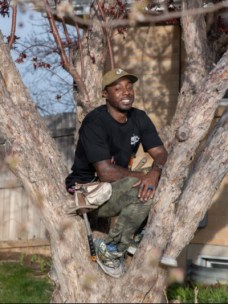
Vita, a vegan rapper, wants to encourage people of color to eat healthier by growing their own vegetables. He sells his own line of kale, beet and arugula seeds. Rachel Woolf for KHN

Ietef Vita had planned to spend most of 2020 on the road, promoting Biomimicz, the album he had released on his #plantbasedrecords label in January. But the pandemic cut those plans short, says Vita, known to his fans as “DJ Cavem Moetavation” and “Chef Ietef.”

He was playing in Berkeley, Calif., on Feb. 29, and “literally got out of town right before they shut the whole country down,” recalls the 34-year-old vegan rapper, who has performed for the Obamas and is known as the father of eco-hip-hop. “It was scary.”

Suddenly sidelined at his metro Denver home with his wife, Alkemia Earth, a plant-based lifestyle coach, and three daughters, Vita struggled to pivot. Eventually, he accepted that he would need to stay put and, as the saying goes, bloom where he was planted.

Vita has mailed out more than 20,000 packets of his kale, beet and arugula seeds to urban farmers across the country. Rachel Woolf for KHN

He and his wife launched an impromptu campaign: mailing out thousands of the more than 42,000 packets of kale, beets and arugula seeds that he’d planned to sell at his shows, all emblazoned with his likeness and the QR code to hear his digital album. Continue reading

Seed-Saving & Science

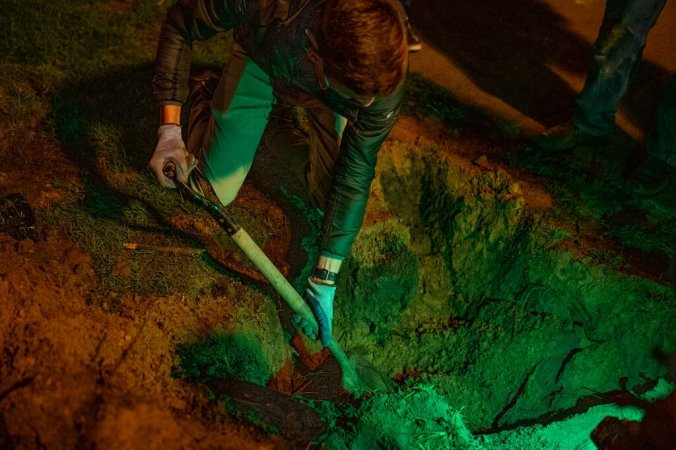
The experiment is a multicentury attempt to figure out how long seeds can lie dormant in the soil without losing their ability to germinate. Derrick L. Turner/Michigan State University

Cara Giaimo has a talent linking science and history, and this article demonstrates it as well as any we have linked to from her. Saving seeds is favorite topic in our pages, so this is in good company:

One of the World’s Oldest Science Experiments Comes Up From the Dirt

Every 20 years under the cover of darkness, scientists dig up seeds that were stashed 142 years ago beneath a college campus. Continue reading

Seeds Are Our Future

Lotus-seeds.jpg

Lotus flower seed heads and raw, un-puffed lotus seeds.

Lotus flower first appeared in these pages years ago, but its seeds were never mentioned. Time to correct that. We missed the opportunity to mention this book when it was first published–we missed the enthusiastic review–but better late than never. Thanks to the folks at Gastropod for the shoutout in a recent episode that gives Thor Hanson and his book their due:

Seeds

02b9f459390ae3332af708bdd6a67871

When seeds first evolved, hundreds of millions of years ago, they not only revolutionized the plant world, but they also eventually sowed the path for human civilization. Today, it’s nearly impossible to eat a meal without consuming a plant embryo—or many. But how did seeds come to play such a critical role in human history? Why might one seed in particular, the lotus seed, hold the secret to immortality? And, perhaps just as importantly, how does this magical seed taste?

Preserving Biodiversity to Feed the World

BioDiv.jpg

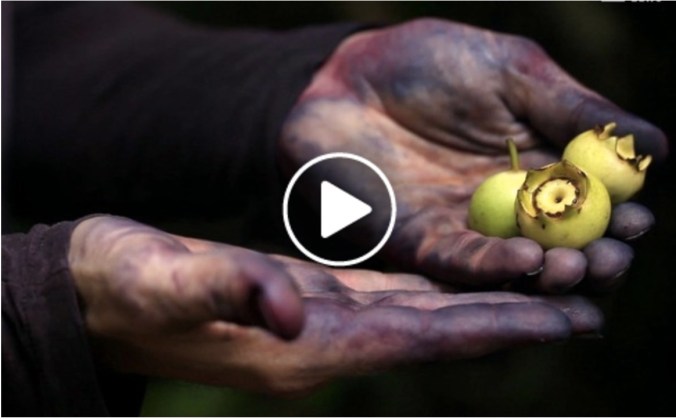
Thanks again to Atlantic for its occasional short film series, and in this case specifically to Erica Moriarty for bringing our attention to a video by Independent Lens available for sampling over at PBS (click the image above):

In the last century, 94% of the world’s seed varieties have disappeared. Family farmsteads have given way to mechanized agribusinesses to sow genetically identical crops on a massive scale. In an era of climate uncertainty and immense corporate power, farmers, scientists, lawyers, and indigenous seed keepers are on a mission to defend the future of food. Botanical explorer Joseph Simcox has been to over 100 countries, collecting thousands of seeds. In this documentary from Independent Lens, he travels to the Peruvian Amazon. Continue reading

Opening the Arctic Vault

The Svalbard Global Seed Vault was inaugurated in 2008. The "doomsday vault" lies inside an Arctic mountain in the remote Norwegian archipelago of Svalbard. For the first time, scientists are taking some seeds out. PHOTO: John McConnico/AP

The Svalbard Global Seed Vault was inaugurated in 2008. The “doomsday vault” lies inside an Arctic mountain in the remote Norwegian archipelago of Svalbard. For the first time, scientists are taking some seeds out. PHOTO: John McConnico/AP

The ongoing civil war in Syria has led to the first-ever withdrawal from the Svalbard “doomsday” Global Seed Vault, a giant storage unit for plant seeds that’s tucked into the side of a frigid mountain in Norway. In the seven years since the Vault opened, hundreds of thousands of seed samples have gone into its icy tombs. And not one has come out—until now. This week the International Center for Agricultural Research in Dry Areas asked for the return of 325 little black boxes of seeds it had stored in the Svalbard vault. For many years, the center housed its own seed bank near Aleppo, Syria. Now, its scientists hope to use the Svalbard samples to regenerate that collection outside of their war-torn home.

Continue reading

Indian Licorice – Abrus precatorius

Photo credits : Shymon

Photo credits: Shymon

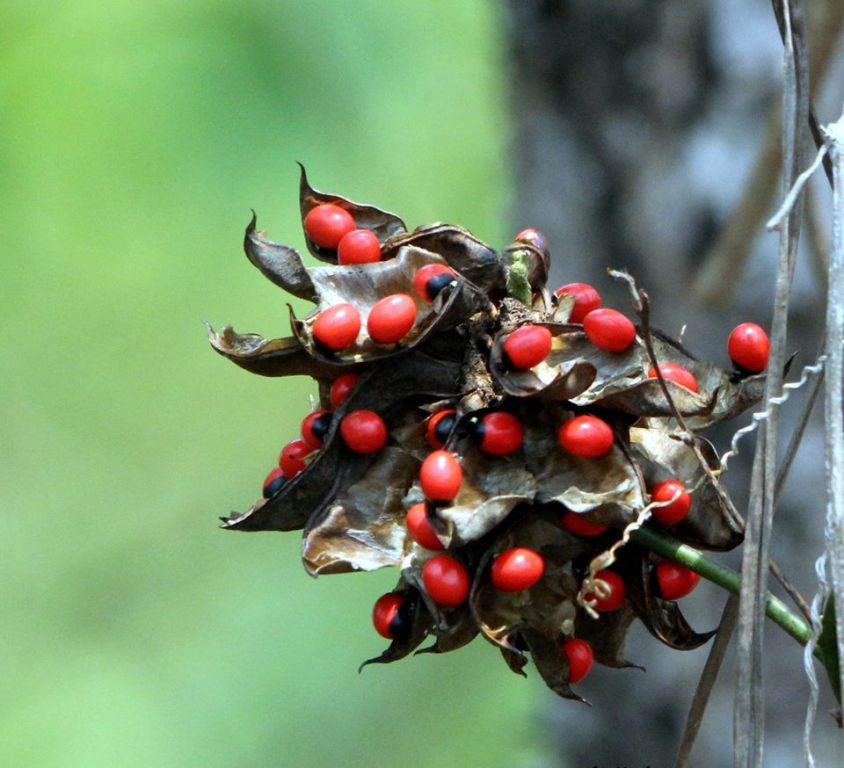
Indian Licorice (Abrus precatorius) is a native of India and the tropical and sub-tropical areas of the Western Ghats. Despite its name, Indian Licorice is not closely related to the licorice (Glycyrrhiza glabra) that lends its flavor to candies, beverages, and other foods. The seeds are bright red and black in color and highly poisonous. Continue reading

Red Bead Tree Seed – Adenanthera pavonina

Adenanthera pavonina seeds

Adenanthera pavonina seeds

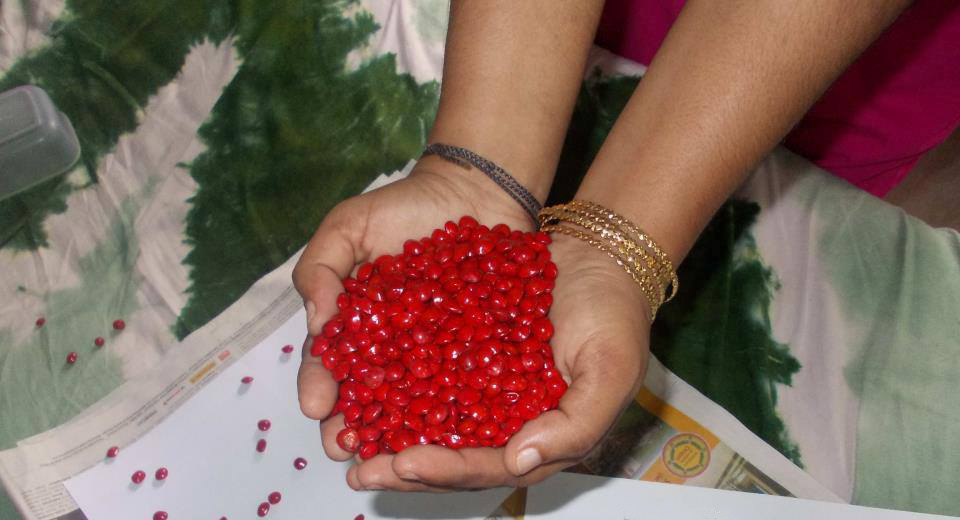
Red bead seeds have been a symbol of love for centuries. Asian goldsmiths use these bright red seeds for making jewelry as well as a standard for weighting precious metals and diamonds. Continue reading