Organikos has focused on coffee varietals, an iconic taste of place product, until now. In addition to supporting farmers all over the country, the sale of these coffees allow travelers to continue tasting Costa Rica once they are back home. We are close to introducing a new line of jams and marmalades using fruits from local farms and typical of what you will find in Costa Rica’s farmer’s markets. Same goal.
Author: Organikos
Driverless Taxi, Anyone?
Apparently there is a market for this service in San Francisco, according to Jeremy Hsu at New Scientist, in spite of the objections:
California approves driverless taxi expansion in San Francisco
Waymo and Cruise can now charge for ride-hailing services throughout San Francisco despite objections that driverless cars interfere with traffic and first responders
Driverless cars have the green light to operate as paid ride-hailing services in San Francisco after the companies Waymo and Cruise won approval from California state regulators. Continue reading
UK Regenerative Agriculture Festival, Groundswell 2023
Last year’s highlights in the video above, and a review of this year’s festival in the link below to an online magazine:
Lannock Manor Farm, Hertfordshire, SG4 7EE, UK
The Groundswell Festival provides a forum for farmers, growers, or anyone interested in food production and the environment to learn about the theory and practical applications of regenerative farming systems.
The next Groundswell Festival takes place on the 26th & 27th of June 2024. View the Event Guide from 2023 here.
Franzen On Motivating Nature Preservation
Yesterday a writer, whose care for nature is as famous as his books are popular, posted this:
To succeed—to get people to care about preserving the world—it can’t be only about nature.
The Bible is a foundational text in Western literature, ignored at an aspiring writer’s hazard, and when I was younger I had the ambition to read it cover to cover. After breezing through the early stories and slogging through the religious laws, which were at least of sociological interest, I chose to cut myself some slack with Kings and Chronicles, whose lists of patriarchs and their many sons seemed no more necessary to read than a phonebook. Continue reading
The Mind Of A Bee
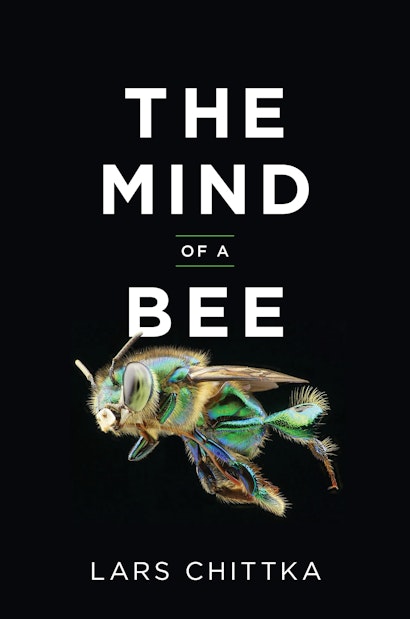
Bees’ brains are always of interest, and both the publisher below and the author above makes a good case for why this book matters:
Most of us are aware of the hive mind—the power of bees as an amazing collective. But do we know how uniquely intelligent bees are as individuals? In The Mind of a Bee, Lars Chittka draws from decades of research, including his own pioneering work, to argue that bees have remarkable cognitive abilities. He shows that they are profoundly smart, have distinct personalities, can recognize flowers and human faces, exhibit basic emotions, count, use simple tools, solve problems, and learn by observing others. They may even possess consciousness. Continue reading
A Further Note On Recent “Good News”
Air quotes, sometimes called scare quotes, are embracing two words in the title of this post because we remain ambivalent about optimism related to climate change. But this article, which we missed last month, points to a video that gives more context:
Uplifting Climate Change Good News — According To Al Gore
Former U.S. Vice President Al Gore has been a huge player in the fight against climate change for as long as most of us can remember. As the founder and current chair of the Climate Reality Project, he has dedicated his life to climate action. Continue reading
Droning For Polluters

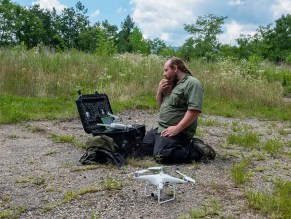
Junior Walk of Coal River Mountain Watch in Naoma, West Virginia, prepares his drone to fly near a reclaimed surface mine in Edwight. Roger May/The Guardian
Mother Jones shares a story we missed in its original publication:
One Man’s Aerial Crusade Against West Virginia’s Coal Industry
Citizen vigilante uses his drone to expose polluters—”I don’t have a lot of friends around here.”
Coal has stalked Junior Walk his entire life.
If You Are In The Market For A New Puffer Jacket
The first and last time some of us heard the word bullrush was with regard to baby Moses. That may change. Thanks to Patrick Greenfield at the Guardian for bringing this company and its innovative product to our attention:
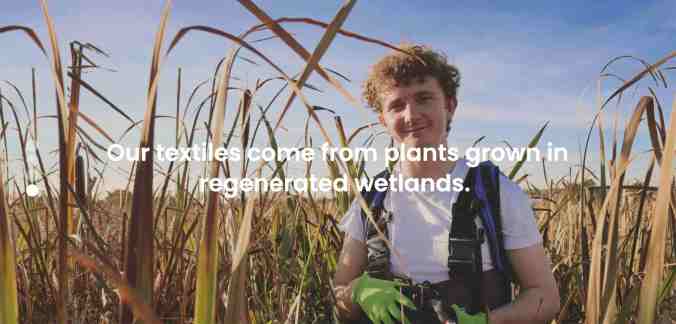
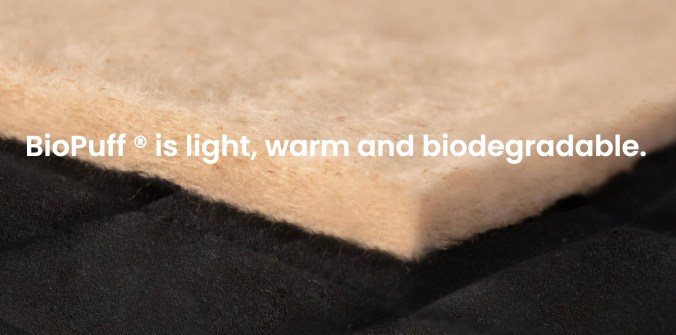
Goosedown out, bulrush in: the plant refashioning puffer jackets
By 2026, a rewetted peatland site in Greater Manchester will be harvesting bulrushes in a trial that aims to boost UK biodiversity, cut carbon emissions and provide eco-friendly stuffing for clothes
The humble bulrush does not look like the next big thing in fashion. Growing in marshes and peatland, its brown sausage-shaped heads and fluffy seeds are a common sight across the UK. Yet a project near Salford in north-west England is aiming to help transform the plant into an environmentally friendly alternative to the goosedown and synthetic fibres that line jackets, boosting the climate and the productivity of rewetted peatland in the process. Continue reading
Dream Of The Octopus
The topic of octopus spiked last year for various reasons, but we have been interested in these creatures for much longer. Thanks to Benjamin Thompson and Shamini Bundell for this podcast on Nature’s website:
Do octopuses dream? Neural activity resembles human sleep stages
Brain probes reveal complexities of octopus sleep, and a hormone that could help make calorie-restricted diets more effective.
00:46 Inside the brains of sleeping octopuses
Researchers have probed the brains of octopuses and confirmed previous reports suggesting that these invertebrates have a two-stage sleep cycle similar to that seen in many vertebrates. The team suggests this system may have evolved independently in the two groups, as there are millions of years of evolutionary history between them. However, despite its presumed importance, it is a mystery why this system exists at all.
Research article: Pophale et al.
Nature Video: Do octopuses dream? Brain recordings provide the first clues
Birds Tell It As They See It
A moment of truth as absurd comedy:
Our cartoonist on capturing the environmental crisis
How to illustrate mankind’s environmental folly
Under the pen name KAL, Kevin Kallaugher has been drawing for The Economist for 45 years. Here, our cameras capture how his cartoons have become ever more strident in trying to illustrate the global environmental crisis that humanity faces…
Plastic Waste Losing Another Place To Land

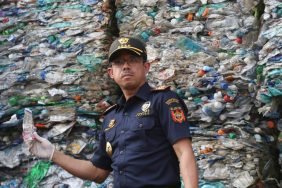
An Indonesian customs official intercepts a container full of illegally imported plastic waste in September 2019. ACHMAD IBRAHIM / AP PHOTO
When conscientious citizens learn more about where all the plastic goes when they do their part to recycle, it can be demoralizing. Recycling is important but the real solution is reducing the waste in the first place:
Indonesia Cracks Down on the Scourge of Imported Plastic Waste
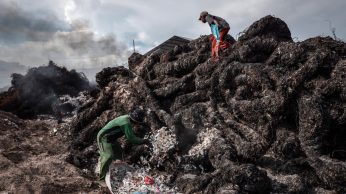
Workers prepare to burn plastic waste at an import dump in Mojokerto, Indonesia. ULET IFANSASTI / GETTY IMAGES
When China banned plastic waste imports in 2018, exporters in wealthy countries targeted other developing nations. Faced with an unending stream of unrecyclable waste, Indonesia has tightened its regulations and has begun to make progress in stemming the plastics flow.
In 2019, at a meeting in Geneva, Switzerland, delegates from 187 countries approved the first-ever global rules on cross-border shipments of plastic waste. Continue reading
Small Win For Limited Right To Trespass In The UK
We thank Helena Horton for her update on this story we linked to just a few days ago:
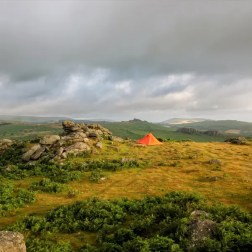
Wild camping allowed on Dartmoor again after court appeal succeeds
Dartmoor National Park Authority had appealed against January high court ruling that outlawed practice
Wild camping is once again allowed on Dartmoor after the national park won a successful appeal against a ruling in a case brought by a wealthy landowner. Continue reading
Replanting With Edibles

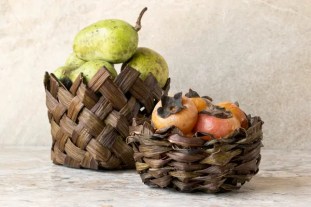
Your first taste of a ripe pawpaw, left, or American persimmon, right, may convince you to plant the trees, which can serve as the centerpiece of a permaculture food forest. J.B. Douglas
It is a relief, always, to read a Margaret Roach article when given the choice between her advice and any given news of the world:
Or just start by planting a few pawpaw or persimmon trees. Chances are, you’ll want more.
At a permaculture site planted by Michael Judd, an edible landscape designer, each fruit tree is underplanted with beneficial companion plants, so “you’re not leaving your poor little fruit tree in a sea of grass,” he said. Michael Judd
Your first taste of a ripe pawpaw or persimmon can leave you hungry for more. That’s why Michael Judd is confident that he can persuade you to make room for several of these trees in your front yard — or even to surrender your lawn altogether.
Turning your yard into a meadow or blanketing it in an expanse of alternative ground covers aren’t the only ecologically viable options for replacing conventional grass. Continue reading
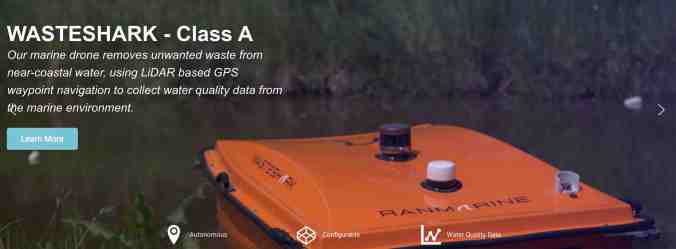
WasteShark
Our thanks to Robert Sullivan for this attention-getting article on a new device:
A Trash-Eating Sea Monster Appears in the Hudson!
A team of scientists and environmentalists tests out the WasteShark, an unmanned watercraft that vacuums up soda cans and potato-chip bags.
WasteShark is not a shark. It is an unmanned watercraft that its creators named for a shark, owing to similarities between how WasteShark collects its prey and the feeding habits of the Rhincodon typus, or whale shark. Continue reading
Property Rights Versus Trespassing Rights

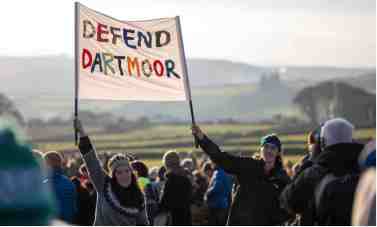
A wealthy couple bought an estate inside Dartmoor National Park and then successfully sued to bar campers from using their land. That ruling is now being appealed. Muir Vidler for The New York Times
Property rights, a foundational aspect of modern society, occasionally bump up against other rights. The journalist Brooke Jarvis has a new article that touches on this theme, we are happy to see:
The Fight for the Right to Trespass
A group of English activists want to legally enshrine the “right to roam” — and spread the idea that nature is a common good.
The signs on the gate at the entrance to the path and along the edge of the reservoir were clear. “No swimming,” they warned, white letters on a red background.
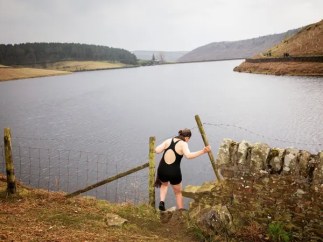
On a chill mid-April day in northwest England, with low, gray clouds and rain in the forecast, the signs hardly seemed necessary. But then people began arriving, by the dozens and then the hundreds. Some walked only from nearby Hayfield, while others came by train or bus or foot from many hours away. In a long, trailing line, they tramped up the hill beside the dam and around the shore of the reservoir, slipping in mud and jumping over puddles. Above them rose a long, curving hill of open moorland, its heather still winter brown. When they came to a gap between a stone wall and a metal fence, they squeezed through it, one by one, slipping under strings of barbed wire toward the water below. Continue reading
If Turtles Could Talk–A Short Documentary

The film follows the perilous journey that sea turtles make to lay their eggs on their ancestral land on a beach in Kenya.
Above is a screenshot from the film by Juma Adero, with text by Natalie Meade, that will likely interest anyone who has been exposed to turtle conservation initiatives:
On a Tropical Beach, Conservationists and Poachers Collide
Juma Adero’s short documentary “If Turtles Could Talk” chronicles the effort to save endangered sea turtles near Mombasa, Kenya.
The shoreline where a green sea turtle hatches from her egg is often the same place she’ll return to nest for the first time. One such inlet is Jumba beach, which abuts the site of an old Swahili village near the bustling city of Mombasa, in southern Kenya. Continue reading
New Roots Garden, Urban Oasis

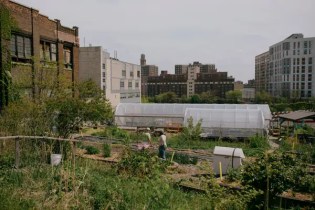
Sheryll Durrant has managed the New Roots Garden, which sits between the Grand Concourse and the Metro North railroad tracks in the Bronx, with volunteers for eight years.
We have linked out to stories about urban farming plenty of times; it never gets old:
Vital Places of Refuge in the Bronx, Community Gardens Gain Recognition
Lawmakers in Albany voted to designate community gardens statewide as crucial to the urban environment, especially in the fight against climate change. The bill awaits the governor’s signature but the role of these gardens stretches back decades.
The Morning Glory garden in the West Farms section of the Bronx is among more than 500 community gardens in New York City.
Sheryll Durrant left her family farm in Jamaica in 1989 and embarked on a career in corporate marketing. But after the 2008 financial meltdown, she reconsidered her life.
She returned to her roots.
Now she runs a thriving urban farm wedged into a triangular plot in the Bronx, between the Grand Concourse and the Metro North railroad tracks. At her farm, New Roots Garden, membership consists of refugees and migrants, resettled by the International Rescue Committee, whose herbs and vegetables sustain their memories of home.
“Just putting your hands in soil is a form of healing,” Ms. Durrant, 63, said. Continue reading
Niemann On Earth
We have referenced Françoise Mouly once before, but the art of Christoph Niemann many more times. This one is not fun, more of a gut punch; but at the source scroll down and see all the other covers on the same theme:
Christoph Niemann’s “Recipe for Disaster”
The artist expresses his sense of urgency about the emergency unfolding all around us.
News cycles, by nature, tend to document crises as discrete events. Suffusive emergencies—like the climate crisis—are captured mostly in the accelerating pace and frequency of such coverage. Continue reading
Starbucks Flexing Its Muscle
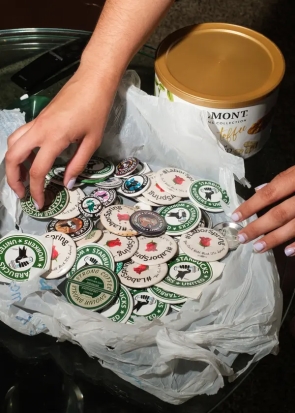
In the coffee business, we look up to the big players for inspiration. Sometimes we find something else. Starbucks can be a very admirable corporate citizen. It can also be rotten, as we are reminded in this op-ed by Megan K. Stack:
Inside Starbucks’ Dirty War Against Organized Labor
NOTTINGHAM, Md. — Agnes Torregoza came to this country when she was a toddler, brought from the Philippines by her parents. Her mother found a teaching job in the Baltimore County Public School District, and the family set about cobbling together a new life. Continue reading
Bears In Our Midst

Bear populations are plummeting in most of the world. But in North America “human-bear conflicts” have been on the rise. Photograph by Alex Majoli / Parc de la Villette / Magnum
On the rare occasions when the historian and elegant writer Jill Lepore has essays whose topics overlap with our interests on this platform, we say hoorah:
Throughout North America, they’re showing up in unexpected places. Can we coexist?
I keep a cannister of bear spray on a shelf by the mudroom door, next to a cakey-capped tube of sunscreen and two mostly empty and partly rusty green aerosol cans of OFF! Deep Woods insect repellent. Continue reading