Fighting Pollution With Garbage

Image may contain Outdoors Flower Plant Nature Pond and Water

Photograph: Abir Mahmud, University of Dhaka

Our thanks to Hannah Richter for her reporting and writing, as well as to Wired for publishing what sounds not like garden variety too good to be true, but quintessentially ridiculous.

Kudos to Nepal for testing out this idea in spite of how it sounds:

Image may contain Lake Nature Outdoors Water Aerial View Architecture and Building

Groups of platforms installed in Nagdaha lake in Nepal. PHOTOGRAPH: SAMYAK PRAJAPATI/THE SMALL EARTH NEPAL

Polluted Lakes Are Being Cleansed Using Floating Wetlands Made of Trash

Platforms combining plants and recycled garbage could offer a cut-price solution for reviving polluted bodies of water.

ON THE BANKS of Nagdaha, a polluted and lotus-infested lake in Nepal, Soni Pradhanang is putting trash back into the water—on purpose.

Image may contain Plant Potted Plant Water Waterfront Boat Transportation Vehicle Outdoors and Food

A floating treatment wetland system loaded with plants. PHOTOGRAPH: SAMYAK PRAJAPATI/THE SMALL EARTH NEPAL

She carefully assembles a platform of styrofoam and bamboo mats, then weaves it together with zip ties and coconut fiber, refuse from nearby tech stores. Then, she pokes 55 plants lush with red flowers through 2-inch holes in the platform, each plant set 6 inches apart. Though Pradhanang’s creation isn’t high-tech, it is effective, and one of the most affordable water-filtration systems available. “I’m cheap,” she says, laughing. Continue reading

Petrostate Is A Choice

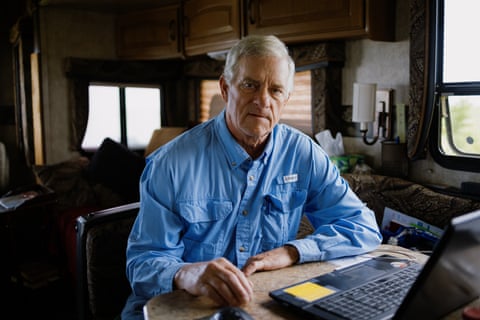
A middle-aged man in a blue button-up shirt sits in front of a laptop.

John Allaire, a former oil industry worker, has turned his efforts to blocking LNG plants from being built directly next to his camper home in Cameron parish.

Some states are moving forward with new technologies leading to a cleaner energy future. We respect John Allaire’s work to protect his state from leaning in to dirty energy, reminding us of the choice we all have to just watch others make decisions affecting where you live, or to do something:

‘This used to be a beautiful place’: how the US became the world’s biggest fossil fuel state

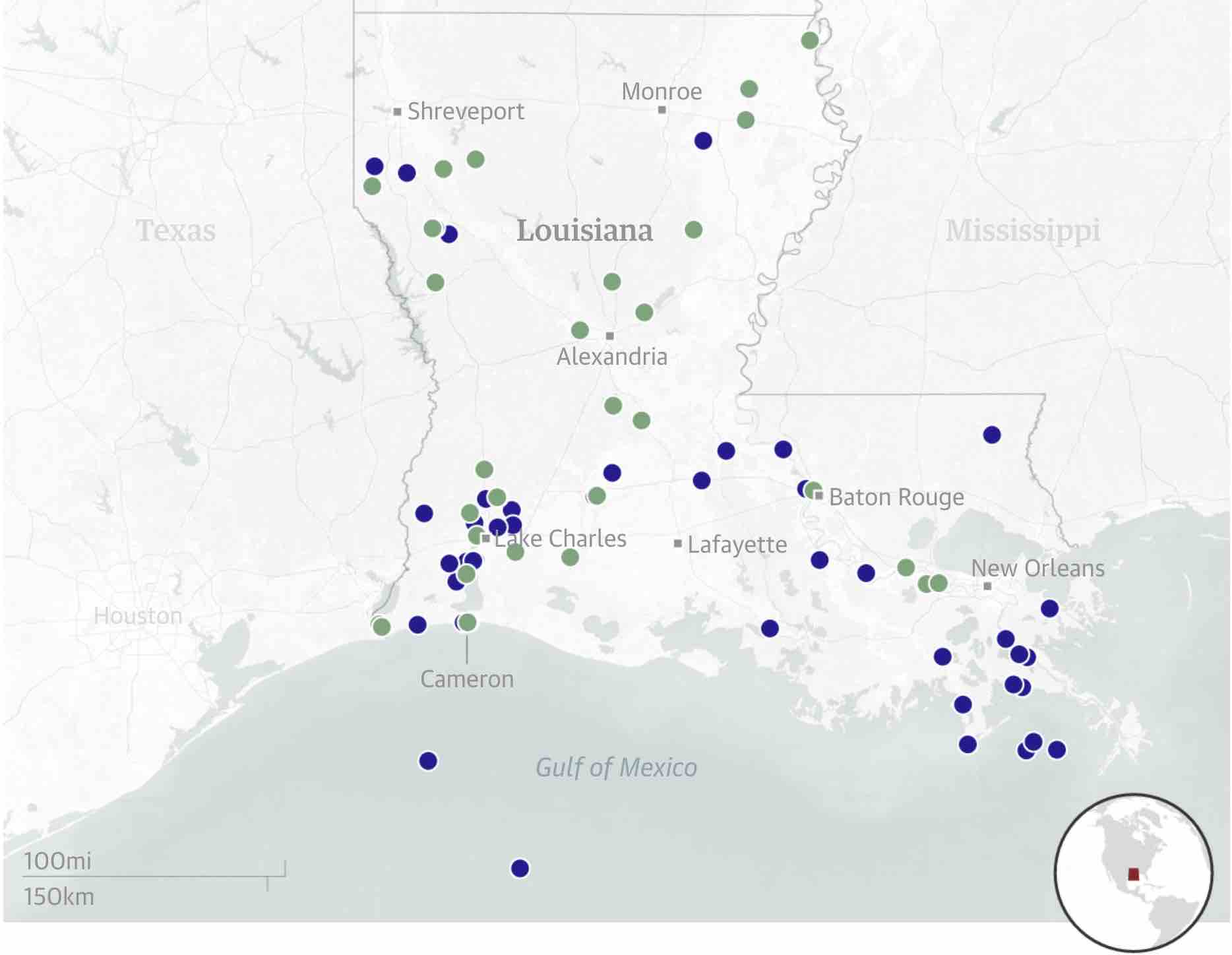
Guardian graphic. Sources: Oil & Gas Watch. Note: Map includes oil, gas and liquified natural gas projects. Those classified as ‘Announced / underway’ also include projects with statuses of ‘Under construction’, ‘Pre-construction’, ‘Commissioning’ and ‘On hold’.

No country has ever in history produced as much oil and gas as the US does now and Louisiana is ground zero

To witness how the United States has become the world’s unchallenged oil and gas behemoth is to contemplate the scene from John Allaire’s home, situated on a small spit of coastal land on the fraying, pancake-flat western flank of Louisiana.

Allaire’s looming neighbor, barely a mile east across a ship channel that has been pushed into the Gulf of Mexico, is a hulking liquified natural gas (or LNG) plant, served by leviathan ships shuttling its chilled cargo overseas. Continue reading

Appalachian Solar & Remediation

A photo of solar panels under a blue skyThanks to Bridgett Ennis at Yale Climate Connections for expanding our coverage of brownfield remediation, which surprisingly has only featured in one previous post in our 13 years linking to environmental news stories. Now two:

Massive solar farm planned for coal mine site in eastern Kentucky

Solar developer BrightNight is set to transform the Starfire coal mine into an 800-megawatt solar farm, bringing renewable energy and jobs to southern Appalachia.

A massive solar farm is in the works at the site of one of the largest coal mines in southern Appalachia. Continue reading

Inca Woven Masterpiece

Illustration of Tupac Inca Yupanqui (an Inca emperor) c. 1590, by an unknown artist. | USED WITH PERMISSION / PRIVATE COLLECTION

In this article by Max J. Krupnick we are given reason to rethink the notion that the Incas had no written language. There is plenty of evidence that they were capable of advanced communication aesthetically:

A Royal Tunic

Unraveling an Inca masterpiece’s secrets

WITH STITCHES as dense as an iPad’s pixels, this woven tunic represents the pinnacle of Inca artistry. The brutal Spanish conquest and the unforgiving march of time have destroyed most Inca textiles, but the tunic now at Dumbarton Oaks in Washington, D.C., survived. Although its symbols captivate visitors and scholars alike, much is left to be learned about the garment. Who made it? Who wore it? Is it truly authentic?

Tunic | ©DUMBARTON OAKS, PRE-COLUMBIAN, WASHINGTON, D.C.

Robert Bliss, who cofounded Dumbarton Oaks, Harvard’s center for Byzantine, Pre-Columbian, and landscape studies, purchased the tunic for his personal collection, so its acquisition history is not well documented. Added to the institute’s holdings in 1963, the tunic attracted scholarly attention as researchers attempted to decode its symbols, which they believed comprised a written language, despite evidence that the Incas did not write. Continue reading

A Cleaner Seine Is A More Inspiring Seine

A photo of people swimming in the Seine in Paris on July 17 2024.

People swimming in the Seine, in July of 2024.Photograph by Raphael Lafargue / Sipa / AP

Skip the first half if you are short on time, but in the second half of this article you will find the fruition of imagination and courage we always hope to see more of:

The Unexpectedly Hopeful Paris Olympics

The Games have never lived up to all their ideals—some of which were dubious to begin with. And yet this year’s iteration, for all its flaws, has already inspired some positive change.

…Which brings me to the Seine. When the Olympics returned to Paris, in 1924, the swimming took place not in the Seine but in a pool, the Piscine des Tourelles. Swimming in the Seine was banned altogether one year prior. It was, after all, not merely a river but a road through Paris, crowded with barges. It was also a sewer, filled with refuse from houseboats and the untreated sewage that overflowed the city’s nineteenth-century system when it rained. Various attempts to clean up the Seine failed. When Paris was selected to host the 2024 Games, seven years ago, it was still illegal to swim in the river. Continue reading

Big Buyer Power & Plastic Reduction Potential

Two stainless steel cylindrical containers hold a few dozen disposable forks, knives and drinking straws.

The goal of the administration’s plan is to reduce demand for plastics and encourage a market for reusable or compostable alternatives. Eric Baradat/Agence France-Presse — Getty Images

We celebrate when individuals, or groups, do things they were not required to do when those things are in the common interest. Some things require rules, and rules also require imagination and courage to be effective. This is welcome news at the intersection of entrepreneurial conservation and rules set by those in a position to make them work:

The White House Has a Plan to Slash Plastic Use in the U.S.

The government said it would phase out its purchases of single-use plastics, a significant step because it is the biggest buyer of consumer goods in the world.

Calling plastic pollution one of the world’s most pressing environmental problems, the Biden administration on Friday said that the federal government, the biggest buyer of consumer goods in the world, would phase out purchases of single-use plastics. Continue reading

Cultivation Of A Plot, Considered Further

A painting of two gardens one outside and one contained within a walled garden.

Illustration by Lauren Tamaki

There is more to The Garden Against Time than we appreciated with the first review we read, so thanks to Katie Kadue for this:

The Paradoxical Paradise of the Garden

Olivia Laing’s memoir of restoring a garden unearths the politics and history of cultivating a plot.

The reader of “Paradise Lost” encounters the Garden of Eden at the same time that Satan does. Having leapt over the garden wall, Milton’s athletic antihero flies up into a tree to survey his new surroundings. “Beneath him with new wonder now he views,” Milton writes, Continue reading

Crows Counting

This photo shows a black-colored crow with its beak raised in the air and partially open. In the blurry background are green foliage and a light blue sky.

Crows can be trained to count out loud much in the way that human toddlers do, a study finds. Andreas Nieder/Universal Images Group Editorial

We have paid crows passing attention, and have not considered them obviously charismatic but always worthy of further consideration:

Crows can count out loud like human toddlers — when they aren’t cheating the test

Math isn’t just a human thing. All kinds of animals, from African grey parrots to chimpanzees, are thought to have some kind of mathematical ability, but it can be hard to test. Now, a new study finds that certain crows have a way with numbers — one that resembles that of human toddlers. Continue reading

MycoHab & Other Namibian Wonders

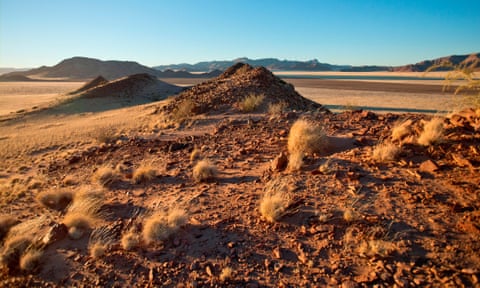
Desert in Namibia

Namibia has a severe housing shortage, with woody encroacher bush reducing the amount of land available for building. Photograph: Hoberman Collection/Universal Images Group/Getty

Mycological options for solving problems are abundant. We had not considered odor as a key potential obstacle, so thanks to Ester Mbathera for this reporting from Namibia:

‘People think they’ll smell but they don’t’: building homes from mushroom waste and weeds

A sustainable project aims to repurpose encroacher bush to create building blocks to solve Namibia’s housing crisis

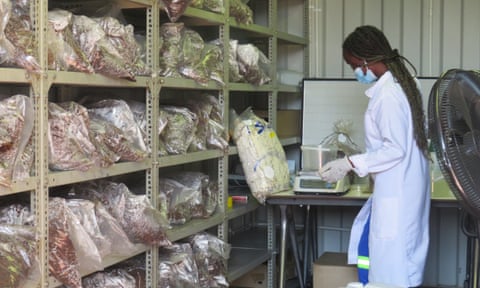
Oyster mushrooms in bags on a shelf with a woman using weighing scales

The remnants of the oyster mushrooms grown on weeds of encroacher bush will be used to create building blocks. Photograph: Ester Mbathera

People think the house would smell because the blocks are made of all-natural products, but it doesn’t smell,” says Kristine Haukongo. “Sometimes, there is a small touch of wood, but otherwise it’s completely odourless.”

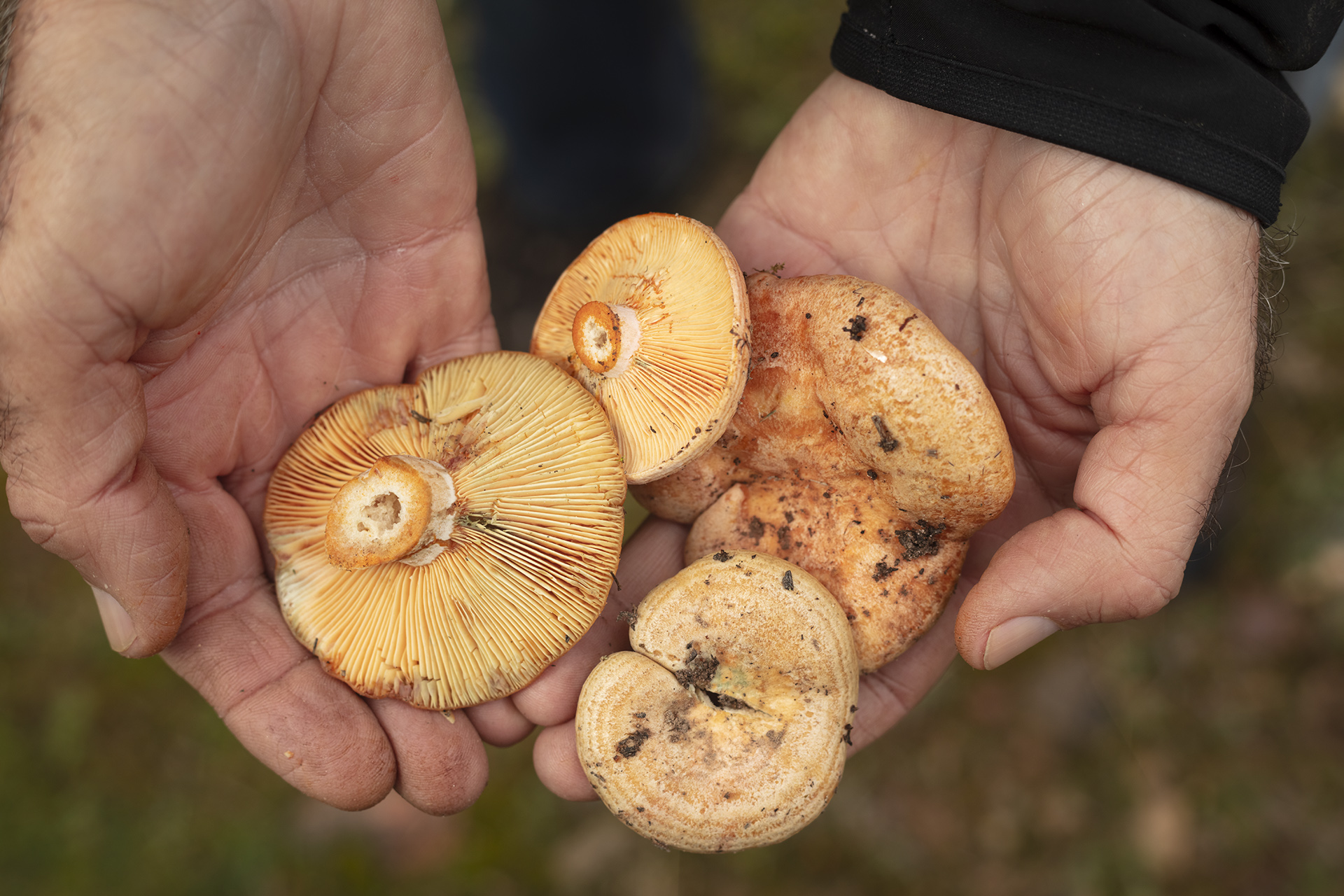
Haukongo is the senior cultivator at the research group MycoHab and her job is pretty unusual. She grows oyster mushrooms on chopped-down invasive weeds before the waste is turned into large, solid brown slabs – mycoblocks – that will be used, it’s hoped, to build Namibian homes. Continue reading

Dry, Hot Places Greening?

The Guera Mountains in southern Chad, a region that has grown greener in recent decades.

The Guera Mountains in southern Chad, a region that has grown greener in recent decades. NATURE PICTURE LIBRARY / ALAMY STOCK PHOTO

Fred Pearce, writing in Yale e360, offers this surprising news from some of the driest, hottest places:

With CO2 Levels Rising, World’s Drylands Are Turning Green

Despite warnings that climate change would create widespread desertification, many drylands are getting greener because of increased CO2 in the air — a trend that recent studies indicate will continue. But scientists warn this added vegetation may soak up scarce water supplies.

Southeast Australia has been getting hotter and drier. Droughts have lengthened, and temperatures regularly soar above 95 degrees F (35 degrees C). Continue reading

Options For Human Waste Management

An illustration of a toilet. Its black lid is open and water is splashing out. An oversize roll of toilet paper is unrolling, seemingly out of control, just above the toilet. The background is pink.

Naomi Anderson-Subryan

Waste has been a regular topic in our pages in the decade+ since we started sharing stories here. Human bodily waste has not been featured, but deserves attention. If you can, consider these options:

What’s Greenest and Cleanest When Nature Calls?

Conventional toilet paper has a big environmental impact. We’ve got the lowdown on alternatives, from bamboo tissue to bidets.

These days, the toilet paper aisle is crowded with products that claim to be more sustainable, from bamboo and recycled material to products with “forest-safe” labels. But are they really better for the environment? And can you cast aside the paper altogether?

Today, we’ll try to get to the bottom of it. Continue reading

USA Environmental Policy Opinion Landscape

An illustration showing a corn field, a wind turbine and an electric car on top of a solar farmIt is political season, which can be overwhelming. But it has moments of inspiration. Karin Kirk at Yale Climate Connections summarizes the landscape of opinion on key environmental issues:

Six incredibly popular climate policies

The majority of registered U.S. voters support electrification and renewable energy.

An infographic showing strong support for climate-pollution reducing policies

A strong majority of registered voters support certain policies aimed at tackling climate change, according to recent research by the Yale Program on Climate Change Communication (the publisher of this site) and the Center for Climate Change Communication at George Mason University.

Here’s a summary of these results. Continue reading

With Rewilding, Markets Are Not Everything, But Are A Key Ingredient

Rewilding can support the development of a wide range of nature-based businesses. NEIL ALDRIDGE

Places can have a particular taste, maybe one that is even iconic, and coffee was the obvious tool in our taste of place toolkit for decades. When it came time to focus on these products as our primary work we drew on some earlier experiments.

One was with honey and the other was with wine. All that was long before coming home to Costa Rica to launch Organikos.

Lunch provided with products from the Wild Côa Network during the ERN-EYR event in the Greater Côa Valley. The Wild Côa Network, which now comprises over 50 members, is driving the development of nature-based enterprise in and around Portugal’s Greater Côa Valley. NELLEKE DE WEERD

We are about to introduce two new products, and one has a story that mixes conservation and rewilding. So, in this story  that follows we sense something akin to the Organikos products in our Authentica shops:

Nature-based business networks take off across Rewilding Europe landscapes

Helping nature heal can lead to prosperous local economies. Nature-based business networks are being developed in a growing number of our rewilding landscapes, enabling businesses and communities to benefit from nature recovery in a sustainable way. This, in turn, is generating more support for rewilding.

The network effect

Today, nature-based business networks are a growing feature of Rewilding Europe’s expanding portfolio of rewilding landscapes. These bring businesses together under a shared rewilding vision for the landscape, facilitating the creation of new tourism packages, helping to close gaps in tourism experiences, and creating new economic opportunities. Continue reading

Groundwater Springs & Habitat

A spring in a forest in Bavaria, Germany.

A spring in a forest in Bavaria, Germany. IMAGEBROKER.COM GMBH & CO. KG / ALAMY STOCK PHOTO

Thanks to Yale e360 for publishing this article by Christian Schwägerl, whose influential book The Anthropocene was published one decade ago:

As World’s Springs Vanish, Ripple Effects Alter Ecosystems

Springs, which bring groundwater to the surface and support a host of unique species, are disappearing globally, victims of development and drought. Researchers are working to document and map these life-giving habitats in an effort to save them before they are gone.

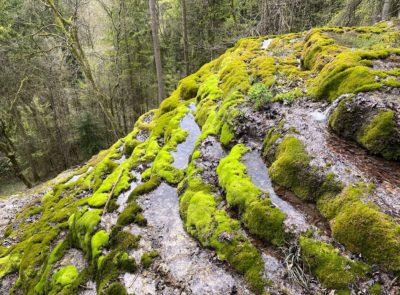
A tufa spring in the Neumarkt region in Bavaria, Germany.

A tufa spring in the Neumarkt region in Bavaria, Germany. CHRISTIAN SCHWÄGERL

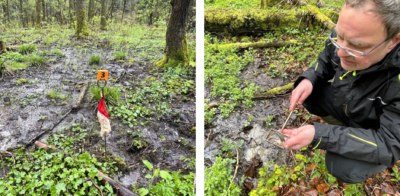
Strong winds sweep over the Rhön, a vast region of rolling, forested hills and pastureland in central Germany. Undeterred, Stefan Zaenker, leading a group of four volunteers, runs through his checklist alongside a forest road. Are rubber boots disinfected to prevent introducing potentially harmful microorganisms into the wetland? Are the team app and GPS functioning correctly? Have enough flags been packed?

Left: A flag marks a helocrene spring in the Rhön region of Germany. Right: Stefan Zaenker takes a sample from a spring.

Left: A flag marks a helocrene spring in the Rhön region of Germany. Right: Stefan Zaenker takes a sample from a spring. CHRISTIAN SCHWÄGERL

When all is in order, Zaenker, 56, leads the group into a soggy alder forest. Its mission for the day: to locate and map as-yet-undiscovered springs and document any species inhabiting them.

A senior conservation official for the state of Hesse, Zaenker considers springs so important for human life and biodiversity that he — along with volunteers from the Hesse Association for Cave and Karst Research — spends much of his spare time conducting large-scale searches for them in the Rhön, which includes the German states of Bavaria, Thuringia, and Hesse, and in a nearby national park. Continue reading

The Garden Against Time, Reviewed

It always comes back to the commons. Thanks to Naomi Huffman at The Atlantic for bringing this book to our attention:

What Gardens of the Future Should Look Like

In her new book, Olivia Laing argues that the lives of all people are enriched with access to land they can use freely.

On a Sunday afternoon in May, the Elizabeth Street Garden, a serene public park wedged between Manhattan’s SoHo and Little Italy neighborhoods, was filled with people undeterred by the gray sky and spitting rain. Visitors sat at tables among fuchsia azaleas and yellow irises, and in the shade of loping old trees, talking, eating pizza, and drinking iced coffee. A painter faced an easel at the back of the garden and composed a watercolor. Continue reading

Really, SpaceX?

A rocket stands with water in the foreground.

Starship, the upper stage of SpaceX’s new rocket, at its launchpad in Boca Chica, Texas. Conservationists are concerned with the environmental impact space operations have on the area.

After assurances about protecting the environment, damage was done. They declined responsibility (the words they used included “…it’s cool”). Not cool:

Wildlife Protections Take a Back Seat to SpaceX’s Ambitions

A New York Times investigation found that Elon Musk exploited federal agencies’ competing missions to achieve his goals for space travel.

As Elon Musk’s Starship — the largest rocket ever manufactured — successfully blasted toward the sky last month, the launch was hailed as a giant leap for SpaceX and the United States’ civilian space program.

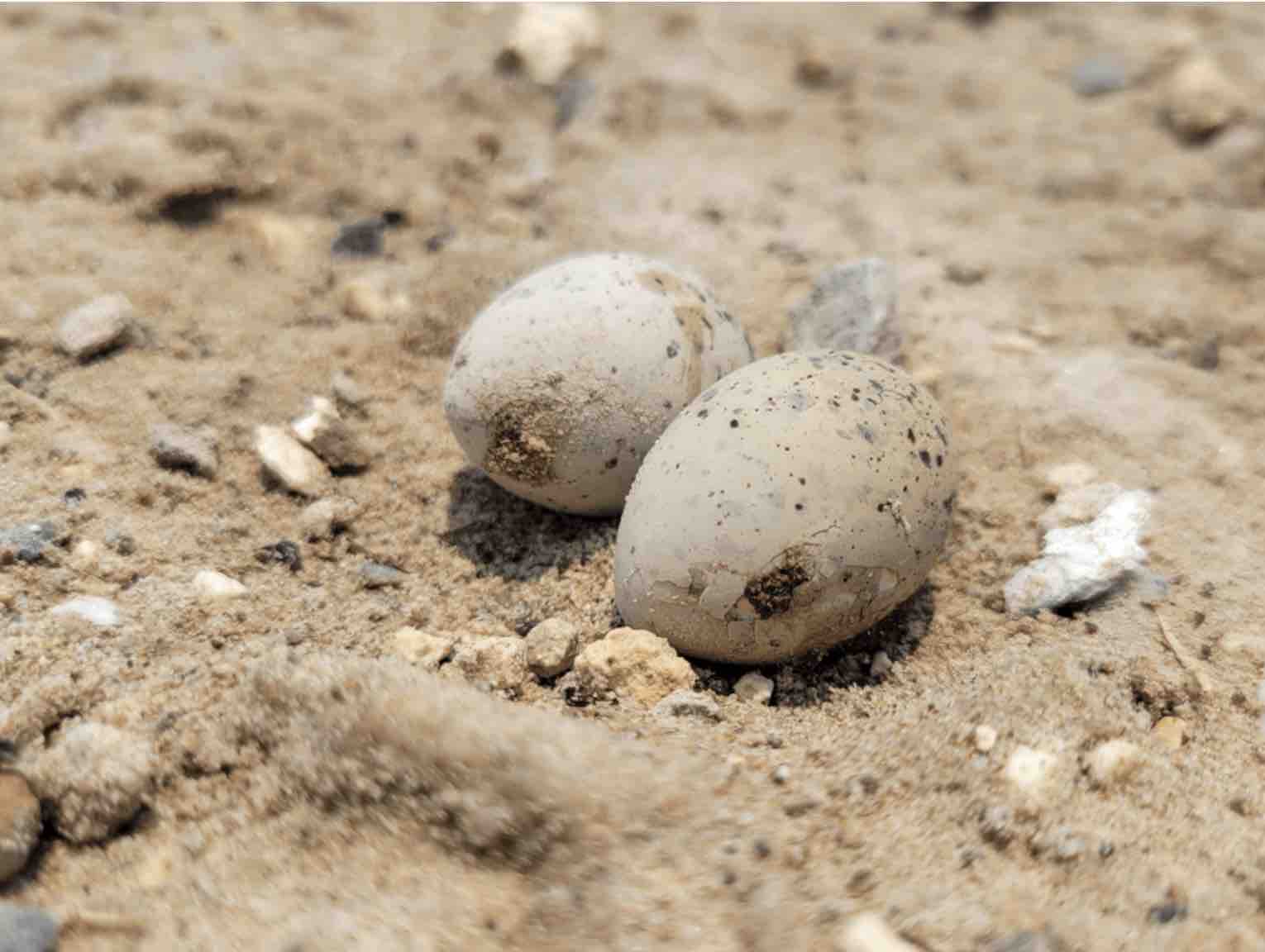
Figure 9. LETE 1 showing both eggs with large holes/cracks and dried egg contents emerging on June 6, 2024.

Two hours later, once conditions were deemed safe, a team from SpaceX, the U.S. Fish and Wildlife Service and a conservation group began canvassing the fragile migratory bird habitat surrounding the launch site.

The impact was obvious.

The launch had unleashed an enormous burst of mud, stones and fiery debris across the public lands encircling Mr. Musk’s $3 billion space compound. Chunks of sheet metal and insulation were strewn across the sand flats on one side of a state park. Elsewhere, a small fire had ignited, leaving a charred patch of park grasslands — remnants from the blastoff that burned 7.5 million pounds of fuel.

Most disturbing to one member of the entourage was the yellow smear on the soil in the same spot that a bird’s nest lay the day before. None of the nine nests recorded by the nonprofit Coastal Bend Bays & Estuaries Program before the launch had survived intact.

Egg yolk now stained the ground. Continue reading

Celebrating Voices Of The Americas

Curved exterior of the National Museum of the American Indian in DC, pale bricks glowing as if during sunrise.We missed the 2024 INDIGENOUS VOICES OF THE AMERICAS –CELEBRATING THE NATIONAL MUSEUM OF THE AMERICAN INDIAN. Our calendars are already marked for next year, based on what we see from this year’s celebration:

Across the Western Hemisphere, thousands of Indigenous communities are sustaining traditional practices and contributing to a more equitable future. Today, these individuals and nations define who they are, through their own stories in their own words.

An illustration of the ingredients for Cherokee bean bread.In 2024, Indigenous Voices of the Americas: Celebrating the National Museum of the American Indian highlights living traditions of Indigenous peoples. At its core, the program honors contemporary and traditional creative expressions, celebrations, and community connections that feed new possibilities for Indigenous futures. The program is co-presented by the Smithsonian Center for Folklife and Cultural Heritage, the National Museum of the American Indian, and the National Park Service.

We would not have known about it except for this article (thanks to National Public Radio, USA):

Bolivian skateboarders demonstrate their skills on the half pipe.

Bolivian women skateboarders — wearing traditional garb — demonstrate their skills on the half pipe. Ben de la Cruz/NPR

It’s a rather unusual skateboard lesson.

Little girls are lined up to learn to balance on a board on a half-pipe ramp. The teachers are young women from Bolivia, in their teens and 20s, wearing traditional garb as a tribute to female strength. Their outfits do not seem as if they are ideal for skateboarding: Each skateboarder wears a beribboned bowler hat and a poofy skirt. Among the eager disciples is Poppy Moore…

The Market For Travel Books

Young woman reads a Lonely Planet guide in Kandy train station, Sri Lanka.

photograph: getty images

A reminder of the reasons for travel writing‘s staying power:

Why travel guidebooks are not going anywhere

Despite predictions that the internet would kill them

They declared that it was dead—or, if it wasn’t dead yet, it soon would be. The cause of the malady was viral: first blogs, then influencers on Instagram and TikTok. Continue reading

Paul Theroux, Still Indulging

At home in Hawaii in 2021. Michelle Mishina Kunz for The New York Times

During the first few months of this platform, when travel experiences as well as variations on biophilia and  conservation became our prevailing themes, a post mentioned one of the great travel writers of our time. 13 years passed and this is his first full reference:

Paul Theroux on Necessary Solitude, Risks and the Joy of Writing

After 60 years of writing and publishing — and almost 60 books — I feel ordering my thoughts on paper to be not a job but a process of my life. You always hear writers complain about the hellish difficulty of writing, but it’s a dishonest complaint.

So many people have it much harder — soldiers, firefighters, field workers, truckers. The writer’s profession is a life of self-indulgence. Continue reading

Fungi & Brownfield Remediation

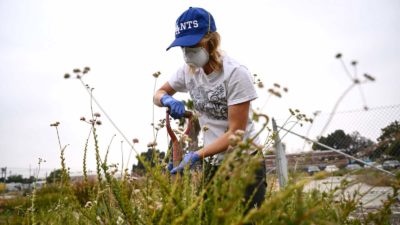
Researcher Danielle Stevenson digs up California buckwheat grown at a brownfield site in Los Angeles.

Researcher Danielle Stevenson digs up California buckwheat grown at a brownfield site in Los Angeles. PATRICK T. FALLON / AFP VIA GETTY IMAGES

Corporate irresponsibility abounds, so brownfield sites are abundant. And fungi sometimes offer relevant remediation options. Thanks to Richard Schiffman and Yale e360 for this interview on a topic we have cared about since launching this platform, and which we believe will be of increasing importance in our future:

Turning Brownfields to Blooming Meadows, With the Help of Fungi

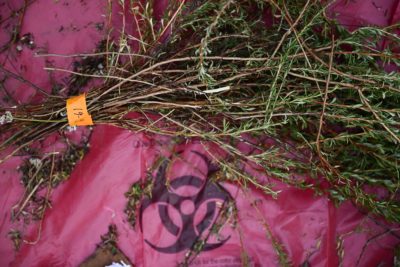
California buckwheat that has absorbed lead at a contaminated site in Los Angeles.

California buckwheat that has absorbed lead at a contaminated site in Los Angeles. PATRICK T. FALLON / AFP VIA GETTY IMAGES

Toxicologist Danielle Stevenson cleans up carbon-based pollutants and heavy metals from contaminated sites using fungi and plants. She’s also training environmental justice and tribal communities in using these methods so they can remediate toxic sites on their own.

The United States is dotted with up to a million brownfields — industrial and commercial properties polluted with hazardous substances. Continue reading