Justice For Dom & Bruno

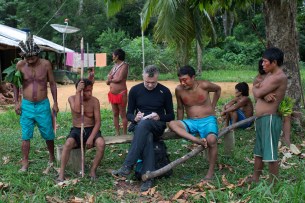
Dom Phillips (center), seen here taking notes as he talks with Indigenous people, reported regularly for the Guardian. Photograph by Joao Laet / AFP / Getty

Only one article by Dom Phillips in our pages, and not a single mention of Bruno Pereira seems wrong, to say the least.  As a rule obituaries are not our thing in these pages, but we have made exceptions.
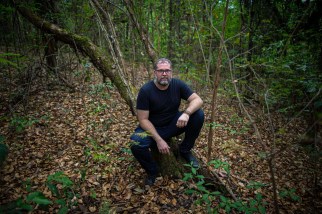
Bruno Pereira was among the many senior officials and veteran experts at FUNAI who had gained a reputation for a robust defense of the agency’s guidelines in the Javari. Photograph by Daniel Marenco

Two Murders in the Amazon

The disappearance of Dom Phillips and Bruno Araújo Pereira, and the crisis created by Jair Bolsonaro’s policies.

From the moment that Dom Phillips and Bruno Araújo Pereira vanished, on June 5th, in the Brazilian Amazon, there were suspicions of foul play. Phillips was a British freelance journalist dedicated to environmental issues, and Pereira, his friend and guide, was a prominent Brazilian Indigenous-affairs expert.

Photograph by Nelson Almeida / AFP / Getty

He was assisting Phillips with research for a book, tentatively titled “How to Save the Amazon.” Continue reading

Agrivoltaics Advancing

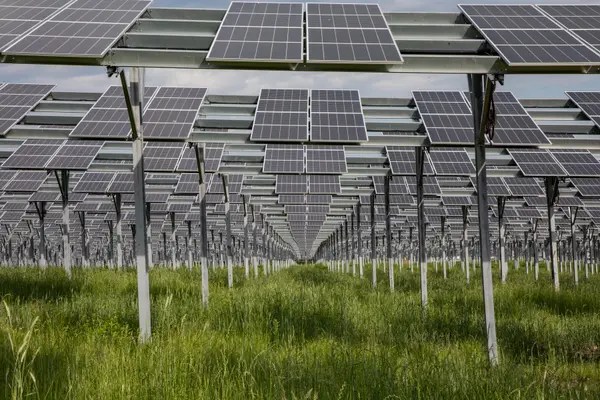
Solar panels on Paul Knowlton’s farm in Grafton, Mass. Cattle will graze below the panels, which rise to 14 feet above the ground. Tony Cenicola/The New York Times

The concept of agrivoltaics has been an occasional topic in our pages over the years, most recently as we have prepared to plant thousands of coffee saplings. Ellen Rosen focuses our attention on how the advances in technology, and entrepreneurship in this space, are addressing the challenges:

Can Dual-Use Solar Panels Provide Power and Share Space With Crops?

Companies like BlueWave are betting on it. But the technology has its critics.

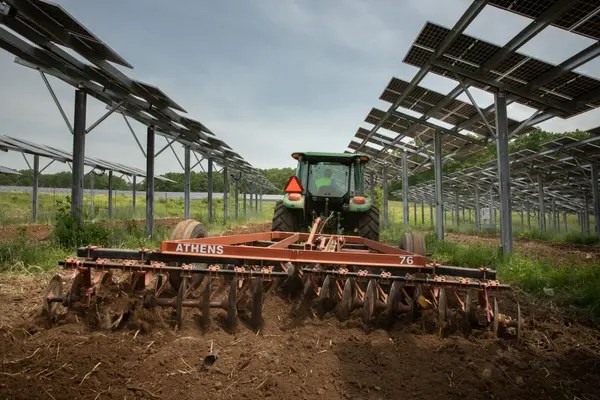
Mr. Knowlton preparing the soil between the panels before he plants butternut squash and lettuce. Tony Cenicola/The New York Times

In its 150-year history, Paul Knowlton’s farm in Grafton, Mass., has produced vegetables, dairy products and, most recently, hay. The evolution of the farm’s use turned on changing markets and a variable climate. Recently, however, Mr. Knowlton added a new type of cash crop: solar power. Continue reading

Clever Climate Work Perk

(Adam Maida / The Atlantic ; CSA Images / Getty)

If you have not been reading Robinson Meyer’s excellent newsletter, take a look at this week’s and you might want to sign up over at The Atlantic:

Corporate Climate Action Is an Employee Perk

In February, Bank of America offered its employees a notable perk: If they had worked at the bank for at least three years, and made less than $250,000, then it would give them $4,000 to buy a new electric car. (Employees interested in merely leasing an EV could claim $2,000.) The move, attached to a company-wide round of salary increases, wasn’t the first time that the bank had made the offer; it had made a similar one in 2015, and again in 2020, although those incentives had also applied to gas-electric hybrids. Continue reading

Wetland Treasury

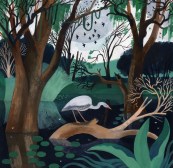
The U.S. once held a wealth of wetness, but the country’s treasury has shrivelled. Illustration by Carson Ellis

The word swamp does not have a pleasant ring to it. The thing itself, though, is something much more than pleasant. Essential to our future, Annie Proulx clarifies in a lovely manner, swamps should be treated with greater care:

Swamps Can Protect Against Climate Change,

If We Only Let Them
Wetlands absorb carbon dioxide and buffer the excesses of drought and flood, yet we’ve drained much of this land. Can we learn to love our swamps?

It can be hell finding one’s way across an extensive boggy moor—the partially dry, rough ground and the absence of any landmarks let the eye rove helplessly into the monotype distance. Continue reading

Southern Cone Rewilding

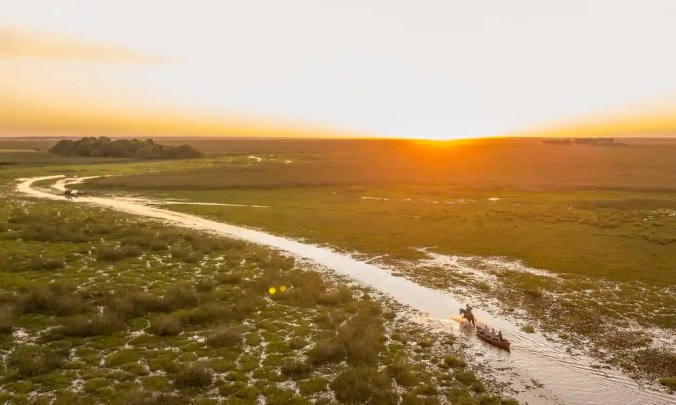
A horse and rider pull a tourist boat through the Iberá marshes

When we have linked to stories about conservation and efforts to rewild in the Southern Cone, it has been a mix of big cats and the efforts of Doug and Kris Tompkins. Our thanks to Patrick Greenfield and the Guardian for taking these themes long form:

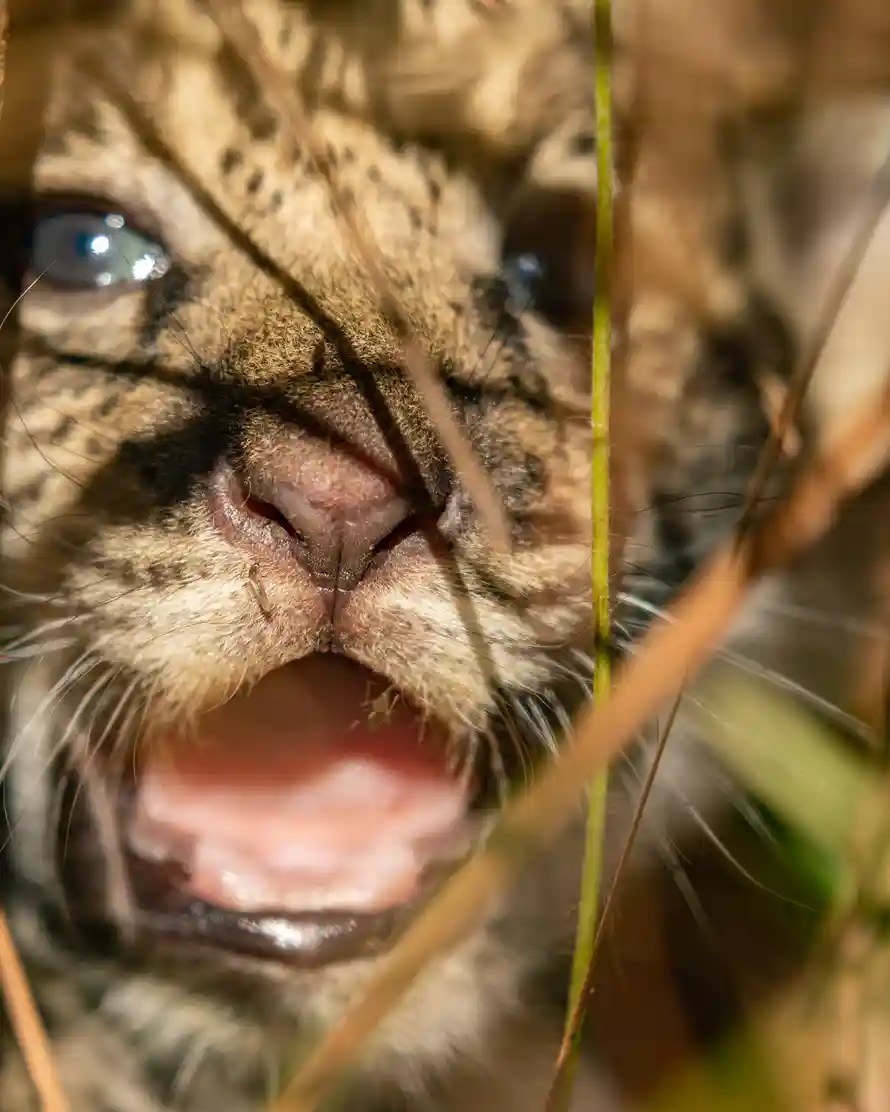
El Impenetrable national park, home to thousands of charismatic plants, flowers and animals, including jaguars.

How to rewild a country: the story of Argentina

It began with a philanthropic couple buying a swamp but has become one of the world’s boldest experiments in restoring degraded habitats, bringing wildlife and landscapes back from the brink

Chapter one

The return of the jaguar

It took about three seconds for piranhas to devour part of her left foot, biologist Deborah Abregü recalls, as we sit waiting for pizzas to cook on an open fire in Argentina’s El Impenetrable national park. Continue reading

Bears Ears Co-Management

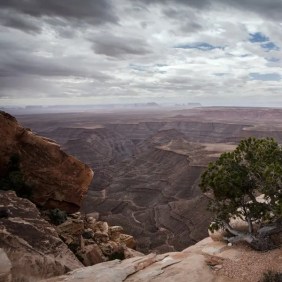
Muley Point in Bears Ears National Monument in Utah. Mark Holm for The New York Times

After plenty of contention, a move in the right direction, at last:

Five Native American tribes will work with the Bureau of Land Management to plan and conserve Bears Ears National Monument in Utah, officials said.

Bears Ears National Monument, whose red-rock landscape sprawls across more than 1.3 million acres in southeastern Utah, will be managed jointly by the federal government and Native American tribes in what administration officials said represents a “one-of-a-kind” model of cooperation. Continue reading

Ed Yong Explains Umwelt

Sally Deng

Ed Yong’s new book was already on our reading list, but just got notched up in the priority list:

Spectacle floods into my eyes whenever I watch a wildlife documentary. A vortex of small fish is gradually picked off by waves of oceanic predators. Snakes chase after marine iguanas. Giraffes clash at sunset. Continue reading

Biblio-Entrepreneurship, Alive & Well

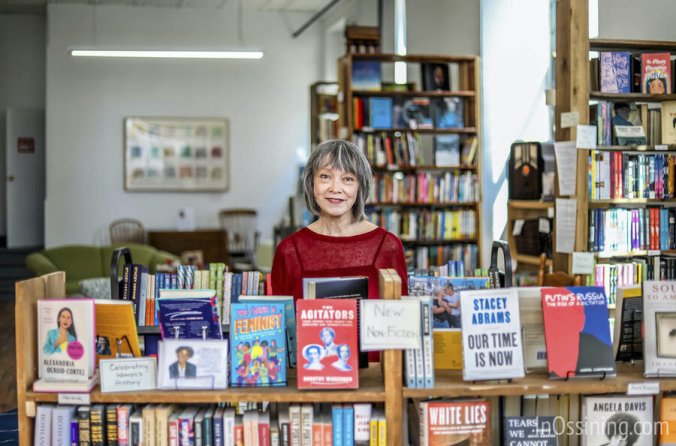
Ana Cabreira/InOssining.com/AP. Amy Hall, owner of Hudson Valley Books for Humanity in Ossining, N.Y., poses for a picture in her bookstore. Ms. Hall, who offers mostly used books that reflect economic and ethnic diversity, is one of many new bookstore owners who recently opened their own store.

We have a thing for independent bookstores. They are better in several important ways. We have a thing against one particular big online retailer, whose start in books was just one step in the wrong direction. Our thanks to  Hillel Italie, the Associated Press and the CS Monitor for this story, and especially to the biblio-entrepreneurs showcased in this article:

Indie bookstore boom turns page to a more diverse America

The year 2021 saw a substantial increase in the number of independent bookstores in the United States. And a growing proportion of these stores is owned by individuals from diverse ethnic and racial backgrounds.

Laura Romani, a Chicago-area resident with a background in education and library science, had long been thinking of a new career. “I was at home a couple of years ago, reflecting on all the experience I gained and how I wanted to contribute to the Latino community, while also allowing myself to be on my own and make use of my love for books and passion for multilingualism,” she said. Continue reading

Lionfish Leather

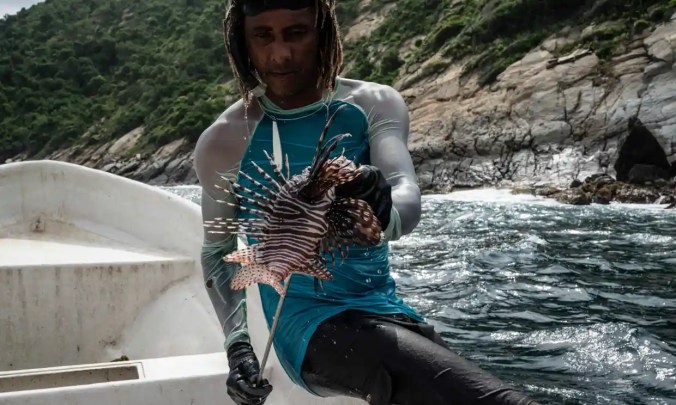
A lionfish caught off Venezuela, where the authorities organise sport fishing competitions to curb the dangerous proliferation of the invasive species. Photograph: Yuri Cortéz/AFP/Getty

Lionfish came to our attention in a series of posts starting in 2014. That year we came to see that fighting this invasive species would require innovative entrepreneurial conservation methods. We published more posts and series about initiatives in the years since then, but the problem continued to grow. For some reason the stories about initiatives started fading from our attention and then stopped with a post in 2018. Now, 22 posts since the first post and four years since the last one, lionfish are back in our thoughts thanks to Inversa’s innovation:

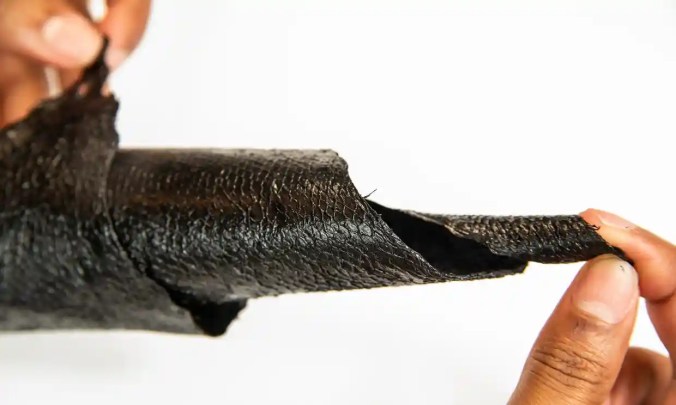
Lionfish leather. Inversa says it is helping to solve an environmental crisis by using an invasive species that eats lots of other fish but has no predators in much of its range. Photograph: Inversa

Fish leather is here, it’s sustainable – and it’s made from invasive species to boot

An avid diver saw how lionfish have devastated populations of Florida’s native tropical fish and resolved to help solve the problem

Aarav Chavda has been diving off the coast of Florida for years. Each time he became increasingly depressed by the ever-growing void, as colourful species of fish and coral reefs continued to disappear. Continue reading

Why Are Starbucks Workers United?

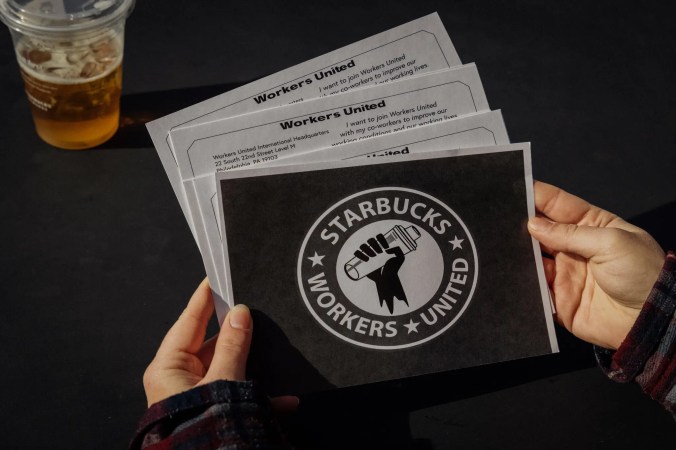
Maggie Carter, a Starbucks barista in Knoxville, Tenn., keeps a stack of union cards with her. Audra Melton for The New York Times

We wrote one time previously about the Starbucks union drive, wondering why Starbucks is against it. We know the typical corporate reasons, but Starbucks has represented itself as atypical. So, we wanted to know. And in related news, the company’s efforts to keep unionization at bay has a new leader. Today we consider a related question, this time from workers’ perspective:

Why a Rhodes Scholar’s Ambition Led Her to a Job at Starbucks

Jaz Brisack became a barista for the same reasons that talented young people have long chosen their career paths: a mix of idealism and ambition.

Most weekend mornings, Jaz Brisack gets up around 5, wills her semiconscious body into a Toyota Prius and winds her way through Buffalo, to the Starbucks on Elmwood Avenue. After a supervisor unlocks the door, she clocks in, checks herself for Covid symptoms and helps get the store ready for customers. Continue reading

Action Is The Thing

ILLUSTRATION: WIRED; GETTY IMAGES

Climate inaction is a theme bookending the first decade of our chronicling news stories and analytical essays. Why, we have stopped bothering to wonder, is inaction so persistent? Whether activism or other forms of action, there is not enough of it relative to the scale of the crisis. We thank Eleanor Cummins, a freelance science journalist and adjunct professor at New York University’s Science, Health, and Environmental Reporting Program for these ideas as published in Wired:

‘Thinkwashing’ Keeps People From Taking Action in Times of Crisis

When it comes to issues like climate change, too many let the perfect become the enemy of the good, while the world burns.

LESS THAN A decade ago, “wait and see” arguments about climate change still circulated. “We often hear that there is a ‘scientific consensus’ about climate change,” physicist Steven E. Koonin wrote in The Wall Street Journal in 2014. “But as far as the computer models go, there isn’t a useful consensus at the level of detail relevant to assessing human influences.” The idea was that the world needed more data before it could respond to the threat posed by global warming—assuming such research indicated a response was even necessary. Continue reading

Science Communication Celebrated

Illustration by Michael Dunbabin; Source photograph by Kevin Winter / Getty

Alan Alda was not likely to appear in our pages before, even though we knew about this work that he has been doing starting some years ago. Not likely because celebrity is more often than not a distraction. But this conversation is worth sharing, because we care about science, and effective communication about science:

Alan Alda Is Still Awesome

The actor and director talks about his podcast, the comedic chops of Volodymyr Zelensky, and being called an “honorary woman.”

Few actors inspire the warm fuzzies like Alan Alda. At eighty-six, he’s still the platonic ideal of “nice dad”: the type of guy you’d find in a cardigan, reading a copy of the Sunday Times in an armchair. But the popular image of Alda doesn’t cover the remarkable breadth of his career. Continue reading

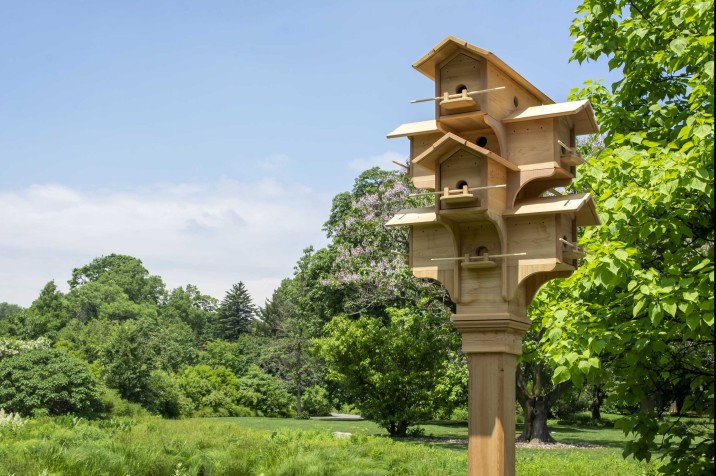
Hotel-ish Homes For Birds, Brooklyn Botanic Garden

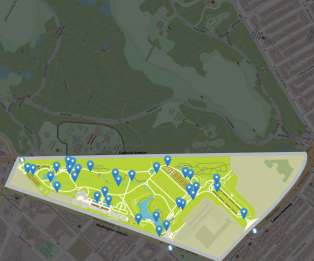
Artist-made birdhouses are installed throughout the Garden as part of For the Birds. Use the exhibition map or scan the list below to explore!

Zach Helfand gives us a quick sketch of what happens when celebrities, and celebrity architects, collaborate on behalf of birds. When you next have the opportunity to visit the Brooklyn Botanic Garden, keep this initiative in mind:

To benefit the Audubon Society, “For the Birds,” a COVID passion project, brings together ornithophiles and artist-designed birdhouses, including a 12BR Apt, A/C, No Elv, Vus.

100 Martin Inn birdhouse on location at Brooklyn Botanic Garden.

The recent housing market has brought about ruinous price increases, a bidding war over a fifth-floor walkup studio with no oven, and enough of a civic exodus for the Post to declaim, earlier this month, “listen up, new york—florida sucks, and you’ll all be back in five years.” But that doesn’t mean deals can’t be had. Take a unit that just went on the market. It’s a newly built architect-designed twelve-bedroom in shall we say Crown Heights, with finishes by a master carpenter and three-hundred-and-sixty-degree views of Prospect Park. Continue reading

Rural Wind & Gold

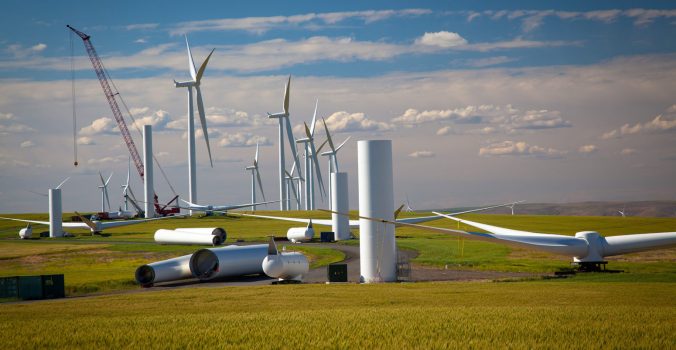
Thanks to Josh Gabbatis and the folks at CarbonBrief:

Windfarms raise incomes and house prices in rural US, study finds

Wind turbines have increased local incomes by around 5% and house values by 2.6% in parts of the US, according to a new study.

The research, published in the journal Energy Policy, found benefits in terms of jobs, taxes and land payments associated with renewable energy. Continue reading

Friday Feel-good Photos

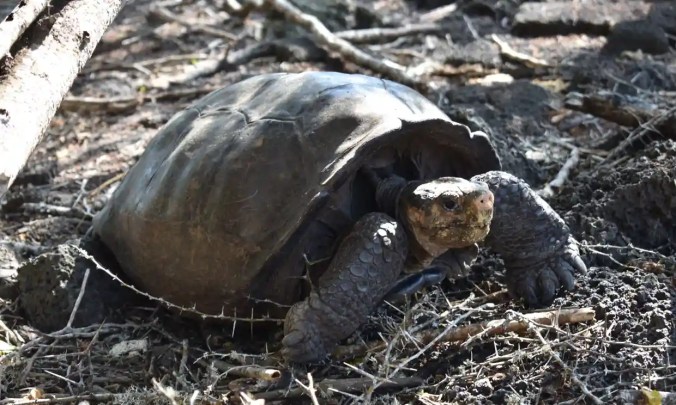
Scientists named the giant tortoise Fernanda, after the Fernandina Island, a largely unexplored active volcano in the western Galápagos archipelago that she calls home. Photograph: Lucas Bustamante/PA

Every now and then it is time for nature photos. First, above, is from a story that surprises, from a place we love:

‘Fantastic giant tortoise’ species thought extinct for 100 years found alive

Identification of Galápagos tortoise celebrated by scientists as a big deal for island’s biodiversity

And then there are photos unconnected to any news stories, scientific or otherwise, submitted for us to enjoy by people from around the world:

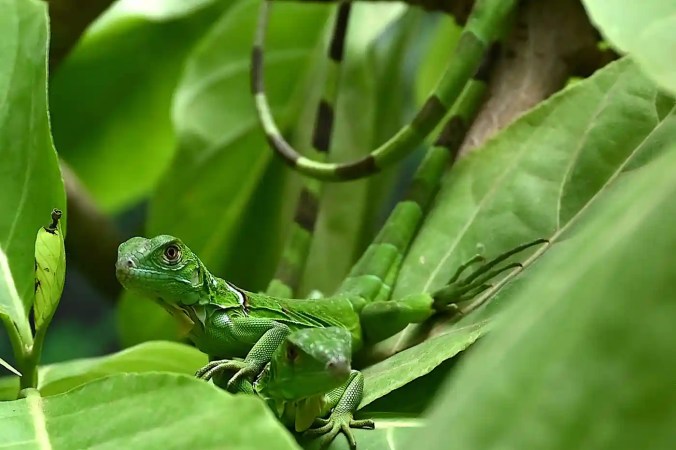
A newly hatched green iguana rests on foliage in a terrarium at the Chennai Snake Park in Chennai, India.  Photograph: Arun Sankar/AFP/Getty Images

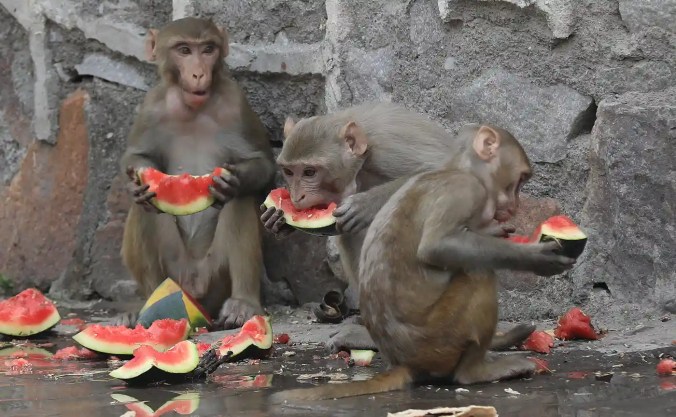
Two are from India, our home for seven years. Monkey business was a constant theme.

Monkeys eat watermelons during the heatwave in New Delhi, India. Photograph: Rajat Gupta/EPA

Another from a place whose name has lots of meaning for us:

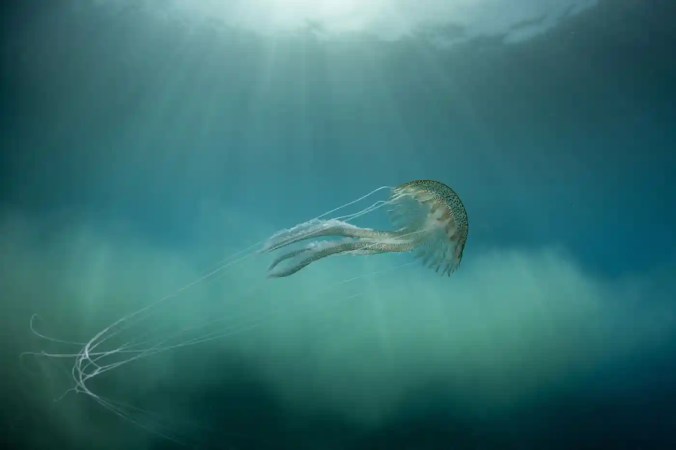
A jellyfish swims off the island of Ithaca, Greece
Photograph: Cor Kuyvenhoven/Ghost Diving/Reuters

See all the other photos here.

Deep Divers & Learning

Thanks to Stephanie Pain, Knowable Magazine and Smithsonian for this:

What Are Scientists Learning About the Deepest Diving Creatures in the Ocean?

Animals-turned-oceanographers are helping biologists find out what they do when they get to the cold, dark depths

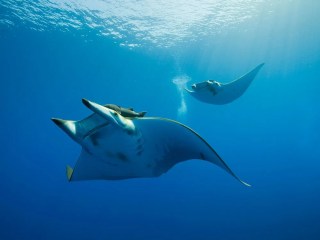
Chilean devil rays swim in the Atlantic Ocean near the Azores. Reinhard Dirscherl / ullstein bild via Getty Images

There’s only one word for it: indescribable. “It’s one of those awesome experiences you can’t put into words,” says fish ecologist Simon Thorrold. Thorrold is trying to explain how it feels to dive into the ocean and attach a tag to a whale shark — the most stupendous fish in the sea. “Every single time I do it, I get this huge adrenaline rush,” he says. “That’s partly about the science and the mad race to get the tags fixed. But part of it is just being human and amazed by nature and huge animals.”

Whale sharks are one of a select group of large marine animals that scientists like Thorrold, of the Woods Hole Oceanographic Institution in Massachusetts, have signed up as ocean-going research assistants. Continue reading

Orchidelirium Anew

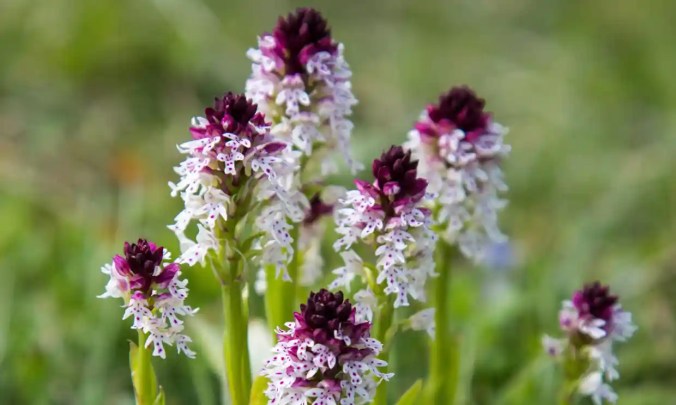
Burnt tip orchids. At least 10 vanished from a national nature reserve at Mount Caburn, East Sussex. Photograph: Katewarn Images/Alamy

Susan Orlean brought orchidelirium to our attention in 1999, shining a light on how and why these flowers inspire lots of good, and plenty of bad behavior. Orchids have been abundant in our pages over the years for various reasons, most recently due to a show; today due to criminal enterprise:

Spate of orchid thefts in England puts rare species at risk

Experts believe plants in Sussex and Kent were ‘stolen to order’

Hardy Orchid Society Replying to @HardyOrchidSoc This is what you should have seen. If you have any information that can help in the investigation please contact @kentpolice @BBCNews

A spate of thefts of rare orchids from sites in southern England has concerned scientists, who say endangered species may be at risk.

Orchid experts believe that the plants, from locations including in Sussex and Kent, may have been “stolen to order”.

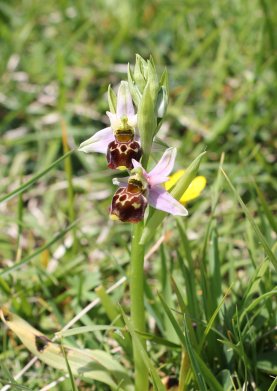
Conservationists at the Sussex Wildlife Trust were dismayed last week to hear of at least 10 burnt-tip orchids missing from a national nature reserve at Mount Caburn, while in Kent the Hardy Orchid Society reported that 30 late spider orchids had been taken from a site in Folkestone.

Neil Evans, of the Hardy Orchid Society, said: “The theft represents a major loss to the population. They are only found in this country in a few sites in Kent.” Continue reading
Really, Starbucks?

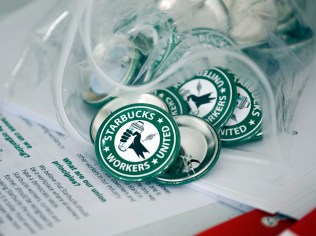
Pro-union pins sit on a table during a watch party for Starbucks’ employees union election in December in Buffalo, N.Y.  Starbucks union organizers say the company is closing a New York store to retaliate. Joshua Bessex/AP

Most of the companies and places and people we ask the question “Really?” of are more clearly acting in bad faith. In this case we are more puzzled that certain. We have generally been a fan of the company that had much to do with improving the lot of coffee farmers, with educating the public about coffee quality, with treating its employees fairly, and many other good works. If their employees feel the need to organize, and clearly want to organize, then Starbucks not supporting them seems out of character. Closing a shop location in Ithaca, a town we know well, may be due to that town being cosmopolitan enough to have several good coffee options:

Starbucks union says the coffee giant is closing a store to retaliate

Starbucks is closing a store in Ithaca, N.Y., in what Starbucks union organizers are calling an illegal move of retaliation after workers at the location voted to unionize. Continue reading

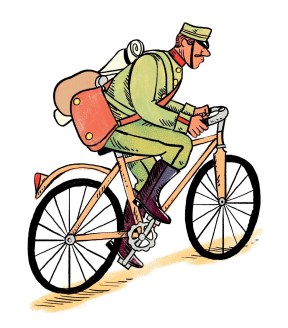
Two Wheels Good, The People’s Nag

The historian Jill Lepore has only been linked to twice before in our posts. Not more, because her topical variety is constantly beyond the scope of topics we focus on.

But her most recent essay is on topic for us. Bicycles might have been the invention that kept us part way out of the climate crisis, but then came the car.

She uses the publication of the book to the right as a launch pad for an excellent history of the bicycle, combined with personal history:

Bicycles Have Evolved. Have We?

From the velocipede to the ten-speed, biking innovations brought riders freedom. But in a world built for cars, life behind handlebars is both charmed and dangerous.

My first bicycle was not, in fact, a bicycle. I rode it in 1968, when I was two years old and as tubby as a bear cub. It had four wheels, not two, and no pedals: strictly speaking, it was a scooter. But Playskool called it a Tyke Bike, so I say it qualifies, and aside from the matte-black, aluminum-alloy number that I’ve got now, which is called (by the manufacturer dead seriously, and by me aspirationally) the Bad Boy, the Tyke Bike may be the swankiest bicycle I’ve ever ridden. Continue reading
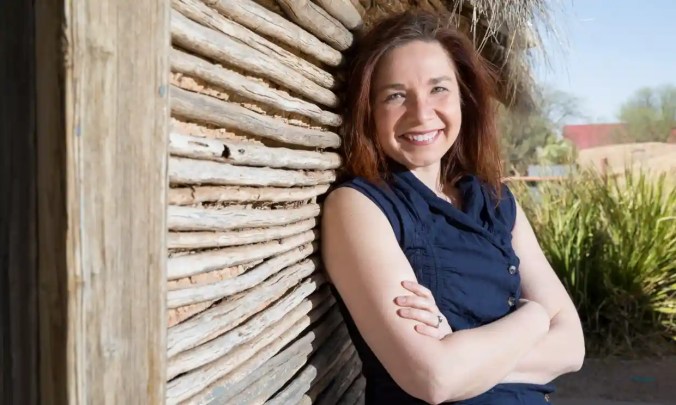
Adaptation Was Better Than Doing Nothing, But Nowhere Near Good Enough

Katharine Hayhoe warns that if we continue emitting greenhouse gases no adaptation will be possible. Photograph: Courtesy of Dr Katharine Hayhoe

We have been promoting adaptation for about as long as we have been posting here.  Fiona Harvey the Guardian’s Environment correspondent, interviews a scientist who will not soft peddle how far gone we are from those options:

We cannot adapt our way out of climate crisis, warns leading scientist

Katharine Hayhoe says the world is heading for dangers people have not seen in 10,000 years of civilisation

The world cannot adapt its way out of the climate crisis, and counting on adaptation to limit damage is no substitute for urgently cutting greenhouse gases, a leading climate scientist has warned. Continue reading