What Very Hungry Caterpillars Really Do

Today’s post is a finding from the natural world that intersects with the premise of a favored book for kids:

Don’t Get Between a Caterpillar and Its Milkweed

Before metamorphosis, monarch butterflies will aggressively head butt each other for access to their favorite food.

In the 1969 children’s book “The Very Hungry Caterpillar,” the tiny protagonist spends a week snarfing his way through a smorgasbord of fruits, meats, sugary desserts and, finally, a nourishing leaf. This family-friendly tale was missing one crucial and far less G-rated plot element: the pure, unadulterated rage of an insect unfed. Continue reading

Major Marine Sanctuary, An Unexpected Gift Of 2020

The marine sanctuary off Tristan da Cunha will be the fourth largest in the world. Photograph: Andy Schofield/RSPB/PA

The Guardian shares some welcome conservation news from a lesser-known bit of land surrounded by plenty water-based wildlife:

Tiny Atlantic island takes giant leap towards protecting world’s oceans

UK overseas territory Tristan da Cunha’s new marine protected area will be fourth largest sanctuary of its kind

Rockhopper penguins on Tristan da Cunha will be among a wealth of marine life to benefit. Photograph: Trevor Glass/RSPB/PA

A community of 250 people on one of the most remote inhabited islands on Earth has made a significant contribution to marine wildlife conservation by banning bottom-trawling fishing, deep-sea mining and other harmful activities from its waters.

The government of Tristan da Cunha, a volcanic archipelago in the south Atlantic and part of the UK’s overseas territories, has announced that almost 700,000 sq km of its waters will become a marine protected area (MPA), the fourth largest such sanctuary in the world. Continue reading

Rudy’s Vegan Butcher, A Re-Conceived Tradition In London

When they opened, the timing did not seem promising, but against all the odds they sold out and are prepping for the next virtuous wave:

Back Soon – Promise!

Wow! Thank you SO much – you guys have cleaned us out and we have been so overwhelmed by your generous support and custom. We are heads down in the kitchen restocking as fast as we can, and are also currently looking for bigger kitchen so we can continue to meet demand. Thanks for understanding while we take a short break – we will be back online as soon as we can! Rudy’s Vegan Butcher, Islington is still open! We’re busy working on our Christmas feasting box too, stay tuned… 😉

Protecting Peat Bog Is Big

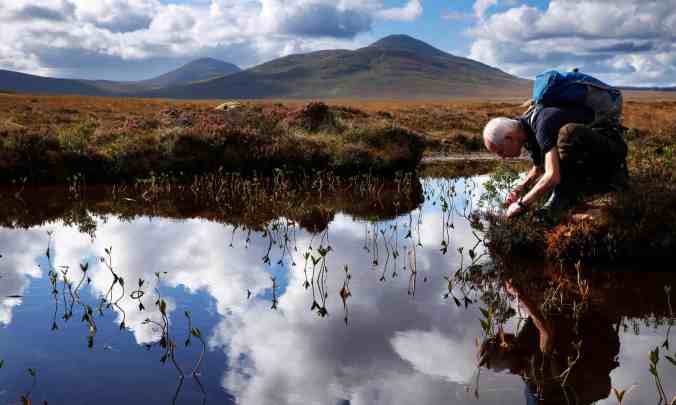
Andrew Coupar, a NatureScot peatlands expert, at the Forsinard visitor centre. Photograph: Murdo MacLeod/The Guardian

If you go to the home improvement center, or any gardening shop, you will see this stuff in plastic bags, ranging in size from small pillow to half-bale. If you purchase it you are buying into a destructive practice that goes beyond the destruction of amazingly beautiful landscape. If heritage status helps end that, we are all for it:

World heritage status for Scottish peat bogs could help UK hit net zero goals

Hopes rise that the Flow Country, the world’s largest carbon store, could become first peatland to win the status

Ecologists estimate that while peatlands cover only 3% of the Earth’s land surface, they hold 30% of the carbon stored on land. Photograph: Murdo MacLeod/The Guardian

Andrew Coupar has crouched down by a small pool, its surface peppered with the small stalks of bogbean. In autumn its dark green oval leaves echo the muted browns, greens and ochres of the surrounding peatland.

In spring, however, the bogbean’s pink-fringed white flowers put on a remarkable display, carpeting the cluster of pools that mirror the blue skies and light clouds above and, along the horizon to west, the mountains of Sutherland. Continue reading

Common Language For Wine Pairing

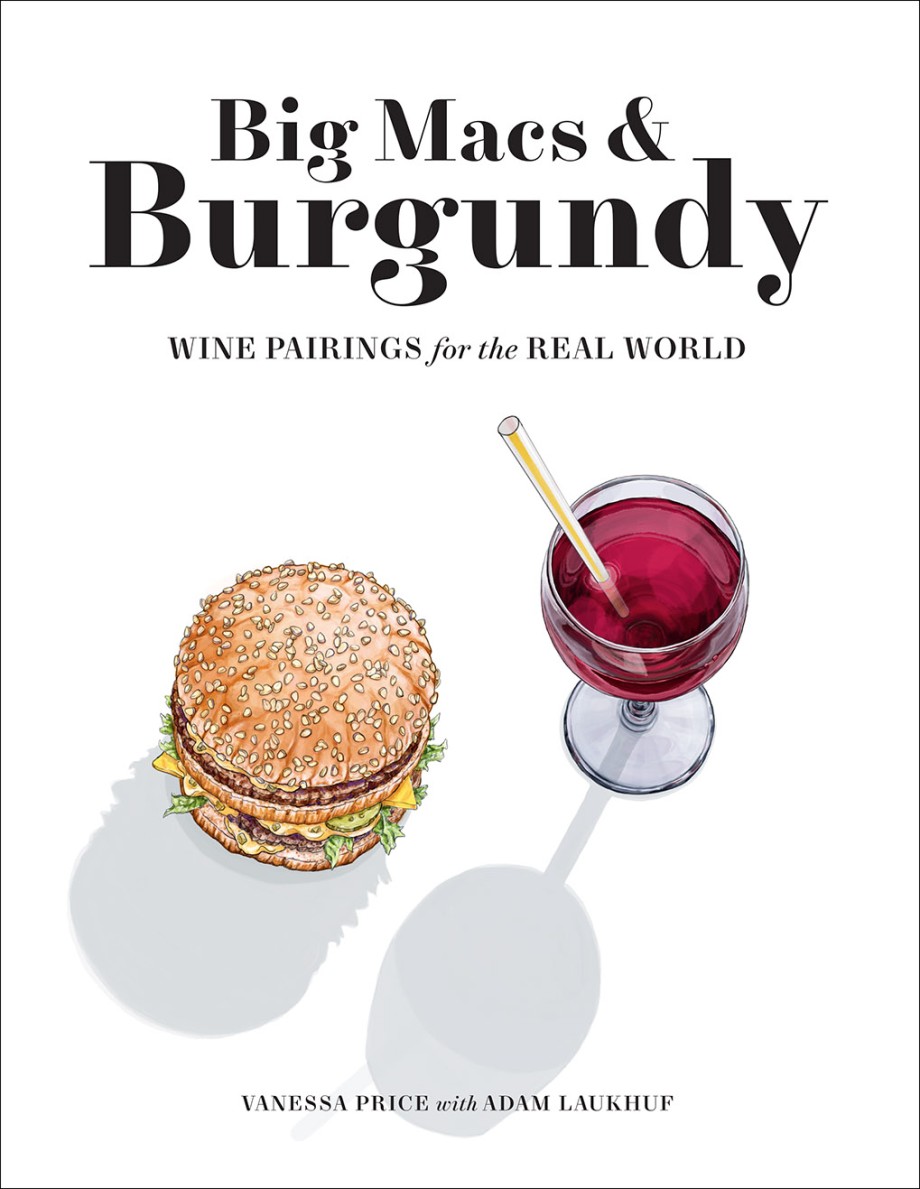
Big Macs & Burgundy Wine Pairings for the Real WorldThanks to an episode of the podcast All Of It, this book  came to our attention. We swore off Big Macs and Cheetos and other over-processed foods decades ago, so the title was off-putting. But if you listen to Vanessa Price explain it the purpose of the book is clear: commonsense language, for a topic that normally is full of fancy language, is a good thing. Abrams books says this:

Essential wine pairings for everything from popcorn to veggie burgers to General Tso’s Chicken, based on the wildly popular Grub Street column Continue reading

Farming A Healthier Diet

Our thanks to Brent Loken for summarizing some the possibilities of better farming for a healthier diet:

About 10,000 years ago, humans began to farm. This agricultural revolution was a turning point in our history and enabled the existence of civilization. Today, nearly 40 percent of our planet is farmland. Spread all over the world, these lands are the pieces to a global puzzle we’re all facing: in the future, how can we feed every member of a growing population a healthy diet?

A 2020 Bright Spot

Solar panels are installed on to the roof of a house in Sydney, Australia. Almost 90% of new electricity generation in 2020 will be renewable, the IEA says. Photograph: Reuters

Thanks to the Guardian’s Environment editor Damian Carrington for this sunny news:

International Energy Agency expects green electricity to end coal’s 50-year reign by 2025

Global renewable electricity installation will hit a record level in 2020, according to the International Energy Agency, in sharp contrast with the declines caused by the coronavirus pandemic in the fossil fuel sectors. Continue reading

Understanding The Life Of Our Groceries

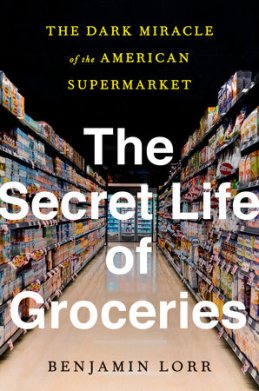
We apparently do not look as closely as we should when we go to the supermarket. One paragraph from this book review should be enough to know whether you want a closer look:

…Author Benjamin Lorr spent five years looking into that as he studied all aspects of American supermarkets — from the suppliers, the distributors, and supply routes, to the workers in the retail outlets themselves. In the reporting for his new book The Secret Life of Groceries: The Dark Miracle of the American Supermarket, Lorr met with farmers and field workers and spent 120-hours-straight driving the highways with a trucker as she made her multistate rounds. He worked the fish counter at a Whole Foods market for a few months, and went to trade shows to learn about entrepreneurs who were trying to break into the industry. He also traveled to Asia to learn about commodity fishing – finding human rights violations along his journey…

Antitrust considerations might be of interest if you plan to purchase The Secret Life of Groceries.

Coffee In Space

Donald Pettit demonstrated his zero-gravity coffee cup on the space station in 2008. NASA TV

Thanks to Mary Robinette Kowal for this very brief note from history demonstrating how the need for caffeine was the mother of invention:

The first patented invention made in space was a coffee cup.

In November 2008, Donald Pettit wanted to drink his tea and coffee from an open vessel.

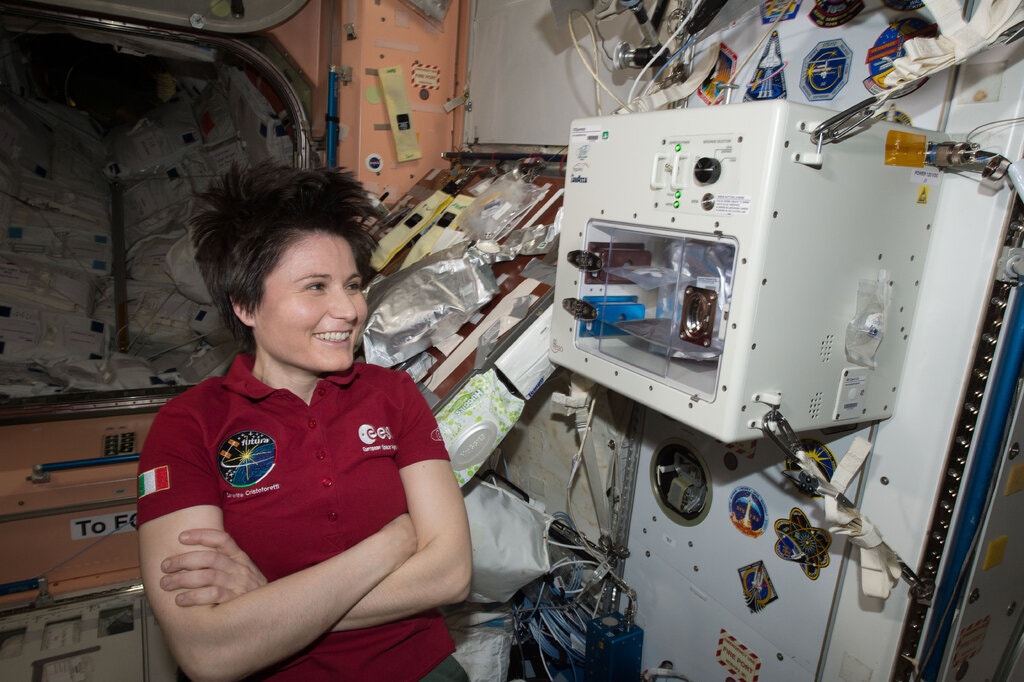
Samantha Cristoforetti, a European Space Agency astronaut, with the new ISSpresso machine in 2015. NASA

While aboard the I.S.S., he tore out a plastic divider from his Flight Data File and used the magic of fluid dynamics to create an open cup. Until then, astronauts drank everything out of a plastic bag with a straw.

We interact with coffee through aroma as much as through taste. In a bag, half of the experience was gone; Dr. Pettit said that he wanted to add “back the dimension of what it’s like to be a human being.” Continue reading

Prospects For Green Hydrogen

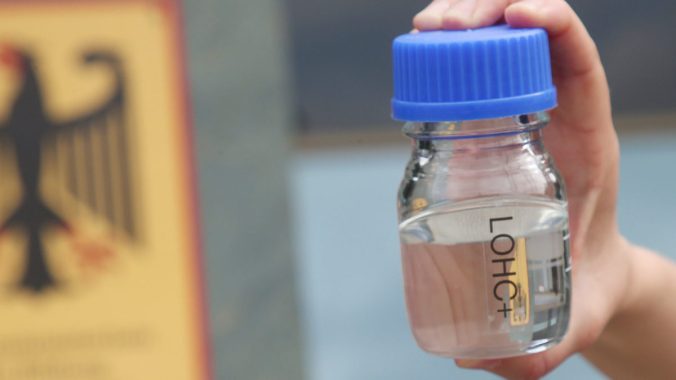
Green hydrogen can be stored in a liquid form. WOLFGANG KUMM/PICTURE-ALLIANCE/DPA/AP IMAGES

Thanks to Yale e360, as always, for news on innovative uses of water related to green energy:

Green Hydrogen: Could It Be Key to a Carbon-Free Economy?

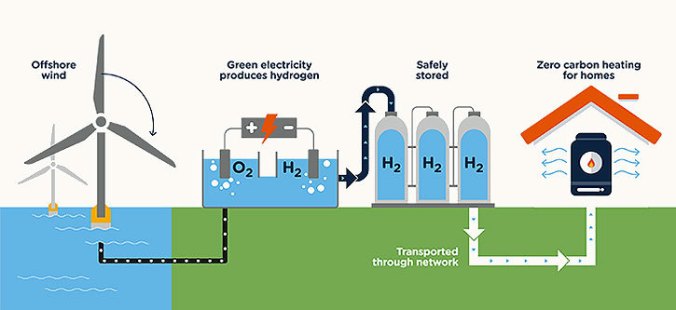
Green hydrogen, which uses renewable energy to produce hydrogen from water, is taking off around the globe. Its boosters say the fuel could play an important role in decarbonizing hard-to-electrify sectors of the economy, such as long-haul trucking, aviation, and heavy manufacturing.

Green hydrogen is produced using renewable energy, making it a CO2-free source of fuel. SGN

Saudi Arabia is constructing a futuristic city in the desert on the Red Sea called Neom. The $500 billion city — complete with flying taxis and robotic domestic help — is being built from scratch and will be home to a million people. And what energy product will be used both to power this city and sell to the world? Not oil. The Saudis are going big on something called green hydrogen — a carbon-free fuel made from water by using renewably produced electricity to split hydrogen molecules from oxygen molecules. Continue reading

Foodways As Tangible & Intangible Heritage

In the 1960s, the Green Revolution placed a premium on high crop yields over factors such as crop diversity and soil preservation. Photograph: Rupak de Chowdhuri/Reuters

2010-2017, from our base in Kerala, India one of our primary activities was food heritage preservation. And it is a constant theme in these pages. Along the way it became clear that both foodstuffs, the tangible things that are used to make food, and foodways, the intangible knowhow for using foodstuffs to make food, are equally worthy of our attention. Thanks to the Guardian for sharing this:

‘Mind-boggling variety’: the food crusaders preserving India’s heritage

A rich range of native crops and seeds is being nurtured in an effort to halt the country’s rapidly vanishing food diversity

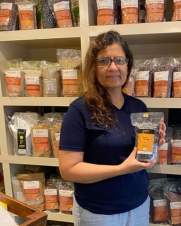
Babita Bhatt left a career in software to launch her own business in natural products grown in the Himalayas. Photograph: Handout

A small army of botanical heritage enthusiasts is spearheading a movement in India for the revival and preservation of the country’s rapidly vanishing food biodiversity by bringing back the rich crop varieties that thrived in the past, but are now on the verge of extinction.

Babita Bhatt, a 43-year-old former software professional, is just one of these crusaders, who are eschewing established careers and fat pay packets to become farmers, activists and entrepreneurs.

Fear of feeding her young daughter foods covered in pesticides was the trigger for Bhatt to move to the hills of Uttarakhand. Trading a steady income for the financial insecurity of an entrepreneur, she launched Himalaya2Home, a self-funded venture, in 2018. Continue reading

For Everyone In The USA

We studiously avoid politics, though we never hesitate to highlight policies we agree with and especially those we disagree with. But today, unlike any day since we started this platform in mid-2011, we cannot not notice that it is a politics-crazy day in the USA. So, we only go as far as noting that, and share what may be an antidote to the craze. The title says it all (click above).

Hornet Hunters of Paris

Urban beekeeping has exploded in Paris, and the honeybees have become an easy target for invasive wasps.

We recently published some good news about a similar invasive insect in Washington State, but it’s important to note that the species on the prowl in Paris is related, but not the same.  Although far less dangerous (tell that to the honeybee prey…) they still are a menace to other insects, especially honeybees. The good news here is that the hornets have been in France for well over a decade, and the human wasp controllers have the skills and tools to combat them, protecting the thriving businesses of urban apiculture.

The Murder Hornet Hunters of Paris

And other tales of hives and honeybees in the City of Light.

“The queen is dead?” a preschool administrator in suburban Paris asked Matthieu Bize, a wasp controller who had come to rid the schoolyard of Asian hornets.

On the ground, a nest was in tatters. Twenty minutes earlier, it had been high up in an ivy-choked tree, where it looked like a jumbo gray-brown balloon. Mr. Bize, 32, had sent a telescopic pole through the canopy, injected a paralyzing white powder into the hornets’ home, and knocked it down. The colony’s larvae, future queens among them, were strewn about. “Nearly finished here,” he said.

In English, the Bize family name is pronounced “bees”; in French, it is “bise” (short for kisses). Dozens of times a day, when Mr. Bize answers his cellphone — “C’est Monsieur Bize” — this gentle phrasing sweetens an otherwise sting-y situation.

For Mr. Bize doesn’t hunt just any pest. One-third of the nests to which he responds belong to a species of dreaded “murder hornet,” a type of wasp that beheads and feeds to its larvae an insect that is very important to, and symbolic of, France: the honeybee.

Beyond the fact that Napoleon chose the honeybee for his logo in the early 19th century (the emperor favored the insect for its tenacity), France is the European Union’s largest agricultural producer, and generally known for pollinator-friendly policies. It is also one of Europe’s major honey trade hubs.

Continue reading

Uncommon Response To An Uncommon Ocean Spill

Replica Air Jordans, constructed by the artist Andy Yoder’s from trash gathered on dumpster dives, evoke the Great Sneaker Spill of 1990. Greg Staley

We shared another story years ago about a creative response to an ocean spill, but it was the frequent kind of spill, involving oil. More common in our pages are stories about creative responses to the plague of waste, especially that from plastic. Today’s story is in good company:

If the Shoe Floats

Over the decades, a mass of flotsam from a freighter accident has inspired scientific discovery, urban legend and, now, an art exhibition commemorating the Great Sneaker Spill of 1990.

Mr. Yoder wields a glue gun to create a sneaker replica for an installation that also stands as commentary on environmental destruction. Greg Staley

It seemingly happened so long ago that the event has assumed elements of urban legend — the saga of the Great Sneaker Spill.

Sometimes referred to as the Great Shoe Spill, the tale recounts an event on May 27, 1990, when, during a sudden violent storm in the North Pacific, five shipping containers were swept off the deck of the freighter Hansea Carrier somewhere between Seoul and Seattle.

Of the 40-foot steel boxes that broke loose and crashed into the ocean, one sank to the bottom and four broke open to spill out a stream of contents that included computer monitors, sex toys and 61,280 Nike sneakers destined for America’s basketball courts and city streets.

… cartons from McDonald’s takeout meals … Greg Staley

The incident went on to become a parable of environmental disaster, as well as a red-letter event in the history of sneakerheads. For months, the buoyant flotilla drifted, carried by wind and currents until, in early 1991, beachcombers reported coming upon batches of the sneakers off Vancouver Island in Canada, pushed north on the Davidson Current. That spring, driven southward by opposing breezes, more of them turned up along the coastlines of Washington and Oregon.

… and posters from a David Hockney exhibition. Greg Staley

The Great Sneaker Spill might have gone unremembered had it not been for the enterprising scavengers who washed and resold the flotsam and Curtis Ebbesmeyer, an oceanographer who, alerted to the spill’s existence by his mother, later used it as the basis for a study of little-known currents. Continue reading

Intimate Ecological Ethos

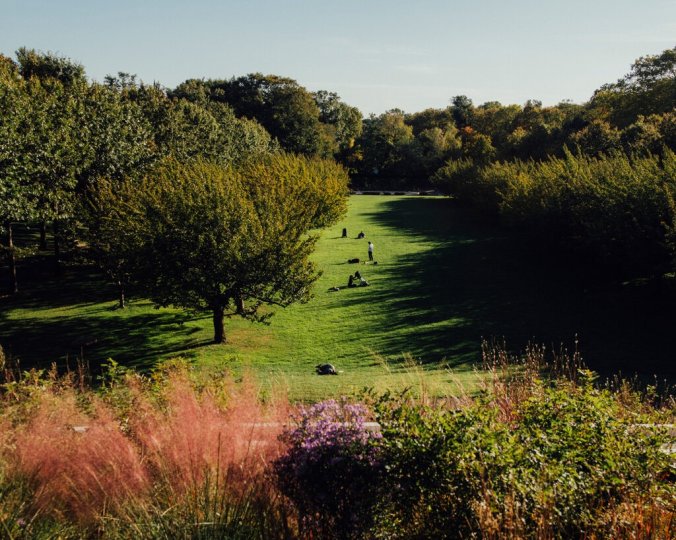
A view of the Cherry Esplanade from the top of the Robert W. Wilson Overlook at the Brooklyn Botanic Garden. George Etheredge for The New York Times

Beyond books and other published material, New Yorkers have plenty of places to see natural spectacles, places where nature can be better understood in an otherwise concrete jungle. Ecological ethos describes the new feel of the intimate 52 acres in one of those places:

Brooklyn Botanic Garden Turns Over a New Leaf

A wild meadow and woodland ‘ruin’ are now on exuberant display. The new, ecologically minded garden boasts shaggy clouds of vegetation.

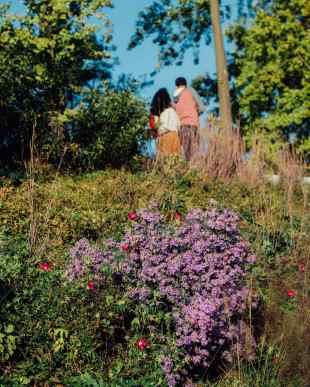
Lavender asters burst through ground-hugging meadow species at the overlook. George Etheredge for The New York Times

Only a skeleton staff at the Brooklyn Botanic Garden witnessed the blizzard of cherry blossoms scattered by spring breezes during the pandemic shutdown. Delicate blooms of wisteria tumbled over pergolas and plump roses unfurled with no appreciative fans to say “Oooh.”

The garden reopened in August for a limited daily number of socially distanced visitors. Now, as fall’s vibrant, showy display begins, meadow and woodland gardens completed at last winter’s onset are finally coming into their own. They are the culmination of a yearslong evolution, as the garden turns over a new leaf with the selection in September of Adrian Benepe, a former commissioner of the New York City Department of Parks and Recreation, as the new president and chief executive. Continue reading

Can There Be Murder Hornet Good News?

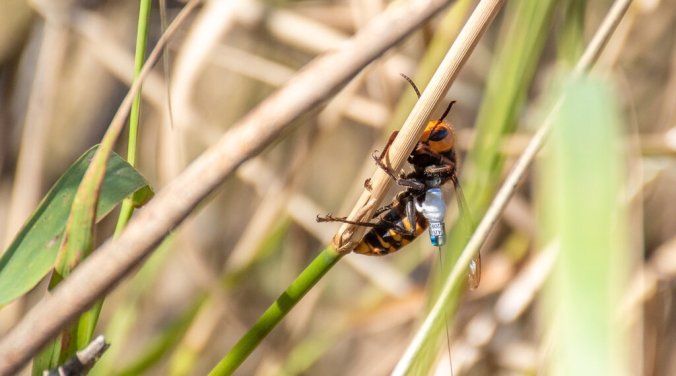
Hornets with radio trackers attached led entomologists to the nest. Washington State Department of Agriculture

If you noted the danger five months ago, and find this topic newsworthy, you know how important it was to find the nest. Finally, after an exhaustive search, they found it and it seems we should count this as good news, especially in a year like 2020:

Murder Hornet Nest, First in U.S., Is Found in Washington State

Officials said they planned to destroy the nest in Blaine, Wash., on Saturday before the voracious Asian giant hornets could multiply and lay waste to bees.

Like detectives closing in on a fugitive hide-out deep in the woods, officials in Washington State announced on Friday that they had located the first murder hornet nest in the United States, tucked in a tree hollow near the Canadian border.

The officials said they planned to destroy the nest in Blaine, Wash., on Saturday before the voracious Asian giant hornets could multiply and begin laying waste to bees that are vital to the survival of the region’s raspberries, blueberries and other crops. Continue reading

What’s In A Name?

Europe’s main farming lobby group says it is “cultural hijacking” to place a vegan burger, right, in the same category as a beef burger. Carsten Koall/EPA, via Shutterstock; Daniel Roland/Agence France-Presse — Getty Images

Since 2011 we have looked far and wide for information as well as inspiration related to our primary interest, entrepreneurial conservation.  Sometimes, instead of inspiration we find its dark counterpart, and the result is exasperation. Reducing consumption of animal protein has been just one topical focus in our pages. We have been inspired by the innovations around meat alternatives.

We know that what’s in a name is important to how we think about a product.  How we should refer to plant-based meat alternatives is one of those cases. Thanks to Isabella Kwai, today we see some potentially exasperating news from a region of the world we normally are inspired by, not least for its regulatory muscle:

E.U. Debates Whether a Veggie Burger Is Really a Burger

The European Parliament is voting on proposals that would ban products without meat from being labeled burgers or sausages, drawing ire from environmentalists and manufacturers.

LONDON — When is a burger not a burger? When it contains no meat, according to a divisive proposed amendment on which the European Parliament is scheduled to vote on Friday, part of a set of measures that would ban products without meat or dairy from using associated terms in their labeling. Continue reading

Locals Get The Job Done With Greater Care

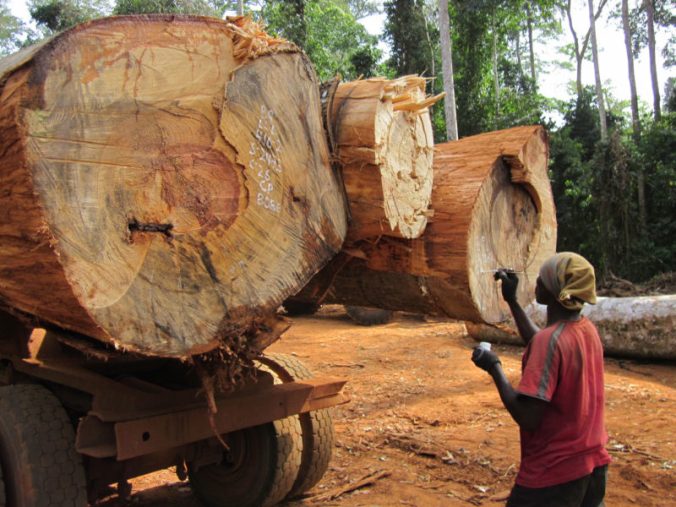
A local logger marks wood for transit to a milling facility in Ghana. MARIEKE WIT/TROPENBOS INTERNATIONAL

There was a time, just a few decades ago, when small, nimble groups of loggers in remote tropical forest areas–including here in Costa Rica–were considered a serious threat. They knew the lay of the land because they were local, and could get in and out of primary forests with valuable tree trunks, often without being detected. Thanks to reporting by Fred Pearce we can see where and how perspective has changed on this part of the forestry value chain:

How Small-Scale Loggers Can Help Save Africa’s Tropical Forests

Small-time loggers providing timber to local villages have long been seen as a threat to forests in Africa. But that view is changing, as evidence mounts that these communities can be better forest protectors than the governments that are sanctioning large-scale commercial operations.

The man with the chainsaw paid the farmer $50, as his gang climbed a hillside in western Ghana. The gang passed coffee fields until they came to a giant hardwood tree. The farmer, who was pleased to have the money in his back pocket, watched as as the gang cut down the tree and used the chainsaw to dismember it deftly into quarters and then into crude planks. Continue reading

Feedlot Paradigm Progress

A dust cloud over the Bovina Cattle Company’s feed yard near Bovina, Texas.

As we all hopefully make progress on our reduction of meat consumption, the science writer Henry Fountain and George Steinmetz (photographs and video) add to our understanding of how cattle are raised now, and what could change to reduce the carbon footprint:

Belching Cows and Endless Feedlots: Fixing Cattle’s Climate Issues

The United States is home to 95 million cattle, and changing what they eat could have a significant effect on emissions of greenhouse gases like methane that are warming the world.

HAPPY, Texas — Randy Shields looked out at a sea of cattle at the sprawling Wrangler Feedyard — 46,000 animals milling about in the dry Panhandle air as a feed truck swept by on its way to their pens. Continue reading