Prepping A Less-Meaty 2020

1955.jpg

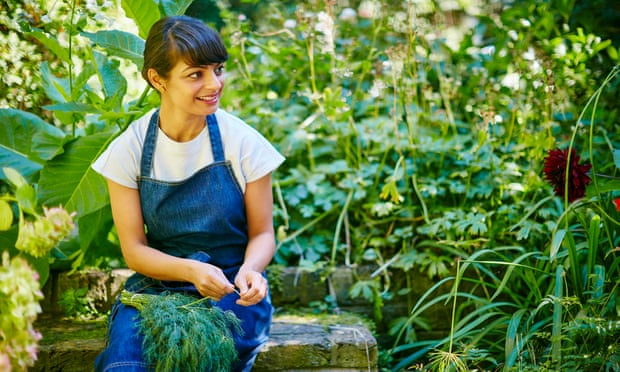
Meera Sodha: ‘Vegan food is exciting, easy and delicious.’ Photograph David Loftus

Thanks to Meera Sodha and the Guardian for this prep sheet for meeting our goals of reducing meat consumption in the new year:

Veganuary recipes: Meera Sodha’s daily meal plan

The Guardian’s vegan columnist has plant-based tips for breakfast, lunch and dinner, plus snacks to stop you falling off the ‘vagon’

3564.jpg

Meera Sodha’s mixed vegetable Thai green curry. Photograph: Louise Hagger/The Guardian. Food styling: Emily Kydd. Prop styling: Jennifer Kay.

When I first started my vegan column, I gave myself a month before I’d have to hand in my notice. As an omnivore (admittedly one that ate little meat but a lot of dairy and eggs), I just couldn’t imagine writing recipes week after week with such a strict set of rules, let alone enjoy eating plant-based food on a regular basis. But then, something wonderful happened.

Taking meat, fish, dairy or eggs out of cooking became a catalyst for creativity, forcing me, and many other chefs and food writers, to think in new and interesting ways about how to extract the most flavour and pleasure from the same old characters in the vegetable drawer. Continue reading

Smart Bees

easy_as_a-bee.jpg

Thanks to Discover Magazine’s Sarah White for bringing our attention to Three Studies Are Showing Bees’ Amazing Math Abilities, a story we had missed earlier:

DSC-D0120_03.jpg

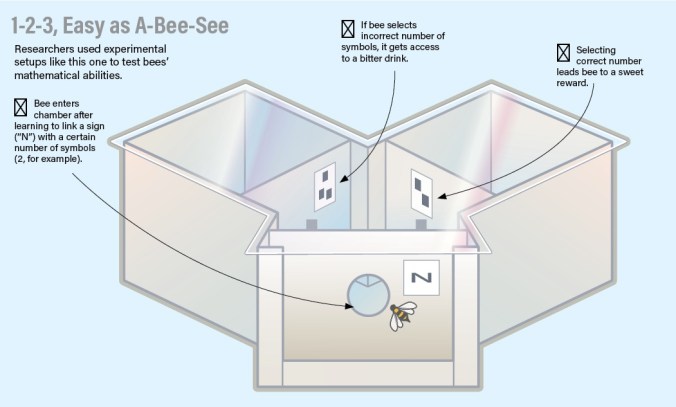
(Credit: Gemma Tarlach/DISCOVER)

Honeybees caused quite a buzz this year when three separate studies showed they possess some of the same mathematical abilities as humans, despite much tinier brains.

In February, research in Science Advances indicated honeybees could learn to add and subtract. To teach the bees arithmetic, cognitive scientists set up a Y-shaped box for the bees to fly through. When a bee entered the box at the bottom of the Y, it saw blue or yellow shapes. If the shapes were blue, the bees were trained to fly down an arm of the Y toward a picture with one additional shape to receive a sucrose reward; the other arm had a bitter drink instead. If the shapes were yellow, bees were rewarded for choosing the picture with one fewer shape…

It Bears Repeating

JMJT3T_Tongass-Bald-Eagle_web.jpg

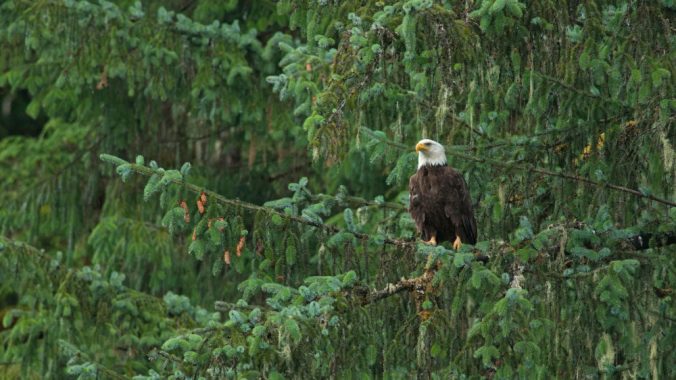
A bald eagle in Tongass National Forest, Alaska. MAURO TOCCACELI/ALAMY

These are times that test our patience. Obvious, right? So is the subject of this essay. And yet, it bears saying, and repeating, precisely because of the times we find ourselves in. So thanks to Mr. Heacox for saying so and to Yale e360 for publishing it:

Let It Be: Why We Must Save Alaska’s Pristine Tongass Forest

At 17 million acres, Alaska’s Tongass is the largest U.S. national forest and the world’s largest remaining temperate rainforest. Now, the Trump administration wants to resume large-scale logging in the Tongass, one of several initiatives threatening some of Alaska’s wildest lands.

GettyImages-460444348_Tongass_web.jpg

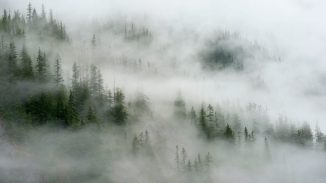
Fog rises from forest near Ford’s Terror, a narrow fjord in the Tongass. WOLFGANG KAEHLER / LIGHTROCKET VIA GETTY IMAGES

When the railroad tycoon Edward H. Harriman fell ill from stress and too much work, his doctors recommended that he take a sea cruise. Unable to do anything in a small way, Harriman filled a ship with America’s foremost scientists, artists, and writers, and sailed the coast of Alaska for two months in the summer of 1899.

GettyImages-1176549046_Tongass-Forest_web

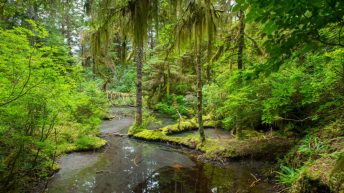
A forest view in the Tongass, the world’s largest remaining temperate rainforest. WOLFGANG KAEHLER / LIGHTROCKET VIA GETTY IMAGES

The expedition, which also included the renowned preservationists John Muir and George Bird Grinnell, found two Alaskas wherever they went, one for the taking, one for the saving. Each at odds with the other. Foremost among the places for saving was the great coastal rainforest of the Southeast Alaska panhandle, a wondrous world of mountains, ice fields, tidewater glaciers, rock-ribbed fjords, coastal brown bears, bald eagles, and 11,000 miles of shoreline.

Eight years later, in 1907, President Theodore Roosevelt took a bold step in that direction by creating the 17-million-acre Tongass National Forest, the largest national forest in the United States. Today, the Tongass contains two national monuments and 19 designated wilderness areas. It also has countless undammed rivers and streams, and some of the world’s last great runs of wild Pacific salmon. Continue reading

Do Not Underestimate The Value Of Fly Brains

GettyImages-878677396.jpg

Comprised of only around 100,000 neurons, the Drosophila fruit fly brain is capable of highly complex behaviors. Getty Images

This link is in the spirit of appreciating the value of the lowliest members of our day to day encounters with nature, and the role they play in helping scientists better understand phenomena important to humans. Thanks to Kevin Jiang and the Harvard Gazette:

Where we get our sense of direction

Experiments reveal how visual cues reorganize course-sensing neurons in fruit flies

Seafood’s Scientific Solution

growing-seafood_2000.jpg

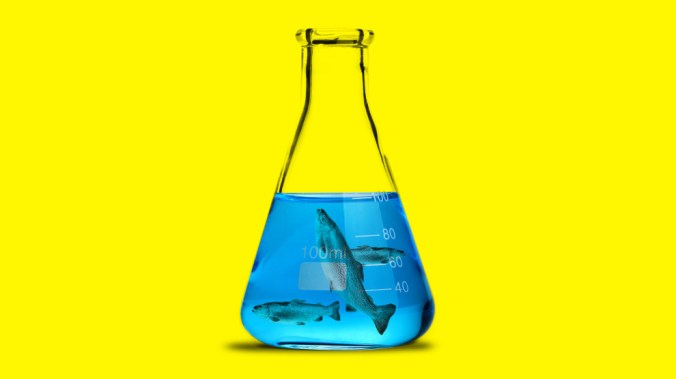
Mother Jones illustration; Getty

Companies like Impossible and its competitor Beyond Meat have gotten most of the attention in our pages for plant-based meat-like products, but when it comes to alternative seafood our stories have mainly focused on invasive species, or on farming kelp or on seaweed farming. Thanks to Mother Jones for stretching our attention to the alternatives to fresh caught or even farm-raised seafood that simulates the kinds of fish that have been over-harvested:

We Destroyed the Oceans. Now Scientists Are Growing Seafood in Labs.

This is why we can’t have nice things.

Do you love burgers—but not the animal cruelty and environmental degradation that go into making them? I come bearing good news: Someday, you might be able to get your meat fix, without all that bad stuff. Scientists can now grow animal flesh, without raising—or in most cases killing—an animal. This food, called “lab-grown meat,” “cell-based meat,” “cultured meat,” “cultivated meat,” “clean meat,” or as comedian Stephen Colbert jokingly called it in 2009, “shmeat,” has set off a flurry of media attention in recent years. Dozens of lab-grown meat companies have materialized, most aiming to solve the problems associated with large-scale beef, pork, poultry, and seafood production.

Finless Foods, a 12-person food-tech startup founded in 2017 and based in Emeryville, California, claims to be the first company to focus on lab-grown fish, although a handful of other startups have since joined them. In October, 28-year-old Finless Foods co-founder Mike Selden gave me a tour of their facility, and I dished about it on the latest episode of the Mother Jones food politics podcast Bite:

MJMeat.jpg

Selden and his co-founder Brian Wyrwas, both products of an agricultural biochemistry program at UMass Amherst, started the company, he says, to “make something good.” Continue reading

Farms & Non-Farms For Our Future

Palm-Oil_Costa-Rica_shutterstock_web.jpg

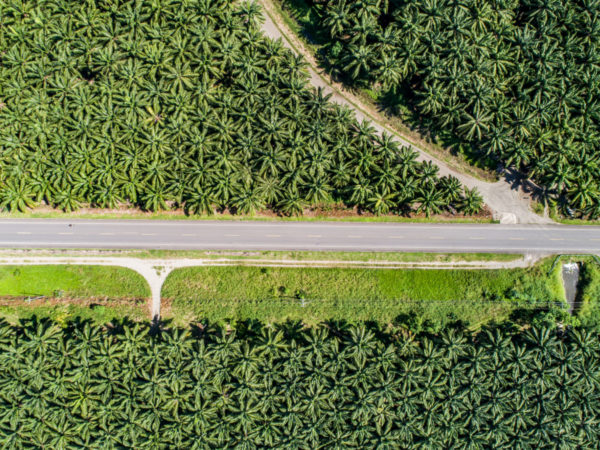
Critics note that flawed strategies have encouraged tree farms, such as this oil palm plantation in Costa Rica. SHUTTERSTOCK

Richard Conniff explains why tree farms, like the one pictured above, are not part of the solution to climate change, whereas abandoned ancient farms like the one picture below may be part of the solution:

Could Abandoned Agricultural Lands Help Save the Planet?

Agriculture’s global footprint is decreasing — more land globally is now being abandoned by farming than converted to it. This, some researchers contend, presents an opportunity for ecological restoration that could help fight climate change and stem the loss of biodiversity.

CastroLaboreiroPortugal_flickr_web.jpg

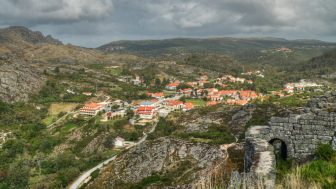
The town of Castro Laboreiro, Portugal, where former grazing lands have reverted to nature. ANTONIO LOMBA/FLICKR

People have lived in Castro Laboreiro, where northern Portugal borders Spain, long enough to have built megaliths in the mountainous countryside and a pre-Romanesque church, from 1,100 years ago, in the village itself. But the old rural population has dwindled away, leaving behind mostly elders yearning for their vanishing culture. Continue reading

Vacation Choices Make A Difference

We did not link out to Annie Lowrey’s article earlier this year, so thanks to her and the Atlantic for this brief summary statement; and with it, a recommendation to read the whole article Too Many People Want to Travel:

Mass Tourism Is Destroying the Planet

Last year, 1.4 billion people traveled the world. That’s up from just 25 million in 1950. In China alone, overseas trips have risen from 10 million to 150 million in less than two decades.

This dramatic surge in mass tourism can be attributed to the emergence of the global middle class, and in some ways, it’s a good thing. Continue reading

117 of 314 Bird Species, As Urban Murals

boorujy_4_mikefernandez_0.jpg

Photo: Mike Fernandez/Audubon

A couple years ago we linked to a story about urban murals and now, progress:

Where Birds Meet Art . . . After Dark

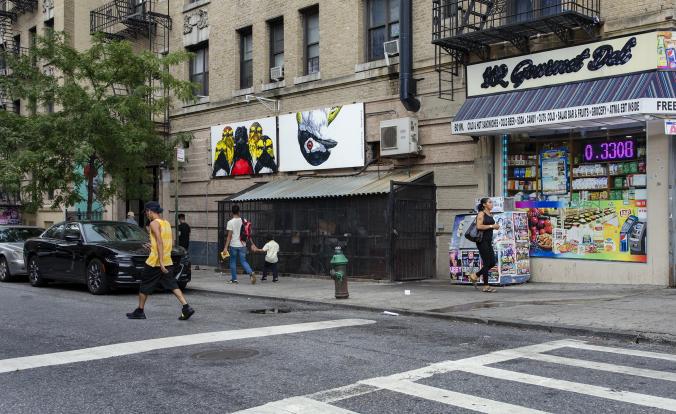
Greater Sage-Grouse by George Boorujy

Greater Sage-Grouse by George Boorujy
Location: 3920 Broadway, New York, NY 10032

The Audubon Mural Project is a collaboration between the National Audubon Society and Gitler &_____ Gallery to create murals of climate-threatened birds throughout John James Audubon’s old Harlem‐based neighborhood in New York City.

Pinyon Jay by Mary Lacy

Pinyon Jay by Mary Lacy
Location: 3668 Broadway, New York, NY 10032

The project is inspired by the legacy of the great American bird artist and pioneering ornithologist and is energized by Audubon’s groundbreaking report “Survival By Degrees.” Audubon’s scientists have found that climate change will threaten at least half of all North American birds with extinction, and that no bird will escape the impacts of climate-change-related hazards like increased wildfire and sea-level rise. The project commissions artists to paint murals to call attention to this problem, and it has been widely covered in the media, including The New York Times.

On the website where Audubon features these murals you can click through to see the individual stories of each, including lots of interesting species information:

gaia_mikefernandez.jpg

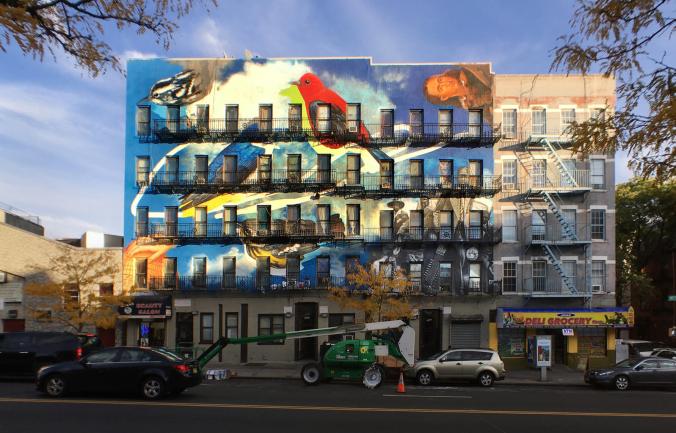
Clockwise from top left: Black-and-white Warbler, Scarlet Tanager, John James Audubon, depiction of Russell Lee’s 1941 photo of Chicago, Magnolia Warbler, James Lancaster’s hand, and Tree Swallow. Photo: Mike Fernandez/Audubon

Endangered Harlem by Gaia

Location: 1883, 1885, and 1887 Amsterdam, New York, NY 10032 Continue reading

Foodrunners

Foodrunners may have the unusual problem of overabundance, in the form of waste and generous people donating their time. Thanks to Marisa Endicott (again) and Mother Jones for bringing this organization to our attention.

FoodRunners.jpg

Alleviating hunger, one volunteer and donor at a time:

Tech Company Free Meals Beget a Lot of Leftovers. Meet the Man on a Mission to Rescue Them.

Food Runners saves extra grub before it’s wasted, and delivers it to hungry mouths.

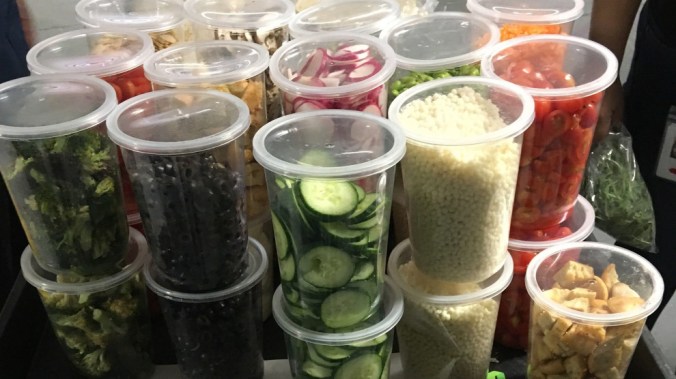
saladtoppingsMSTR

Marisa Endicott

carpacked.jpg

Tso loads his car with Tetris-like precision. Marisa Endicott

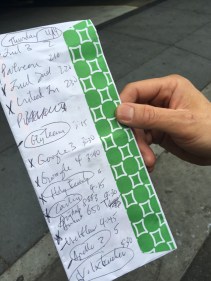
I meet Les Tso on a corner in San Francisco’s SoMa district on a wet Thursday afternoon. He pulls his silver Isuzu SUV into an alley. “Today because it’s the first rain, people are going to be driving cluelessly—there are a lot of Uber and Lyft drivers that come from out of the area,” Tso warns me. “Makes it more exciting, I guess.”

list.jpg

Tso picks up donations from an average 16 places a day. Marisa Endicott

Tso works as a driver for Food Runners, a nonprofit that picks up leftover food from grocery stores, companies, events, and restaurants and brings it to organizations working to feed the hungry. For four hours every weekday, Tso braves the worst of Bay Area traffic to makes his 80 to 90 pickups (an average of 16 a day), primarily from tech companies—including Google, Juul, and LinkedIn—that have become an omnipresent force in the city. Continue reading

Big Money, Big Park, Big Questions

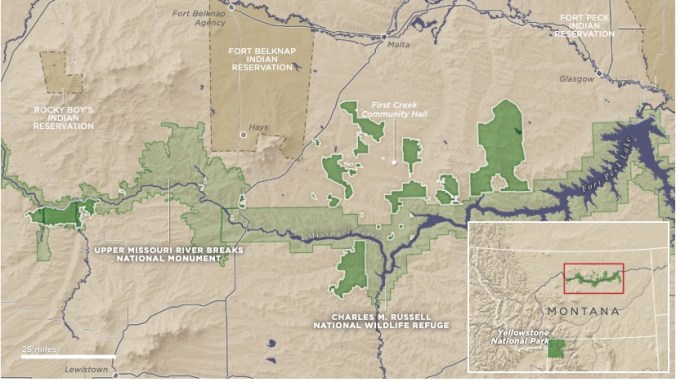
MontanaPark.jpg

American Prairie Reserve’s Patchwork Of Properties
American Prairie Reserve’s purchased and leased land is shown in green with white borders adjacent to Upper Missouri Breaks National Monument and Charles M. Russell National Wildlife Refuge. Together, these parcels complete a network of land larger than Yellowstone National Park, the second-largest national park in the Lower 48 states. Source: American Prairie Reserve, Montana State Library, U.S. Geological Survey 1 Arc-Second SRTM, Natural Earth, Montana Department of Transportation, U.S. Census Bureau, National Park Service
Credit: Daniel Wood/NPR

Hats off to Sean Gerrity, as well as to the farmers and ranchers who have kept the native prairie grasses intact in recent generation, and to the native communities who stewarded these lands long before all this became a story. Our thanks to National Public Radio (USA) for sharing the story:
Big Money Is Building A New Kind Of National Park In The Great Plains

2019-montanaapr-charbage-73_custom-1adbd128a6bbea6e6ee03a2dd1a143db97998700-s1200-c85

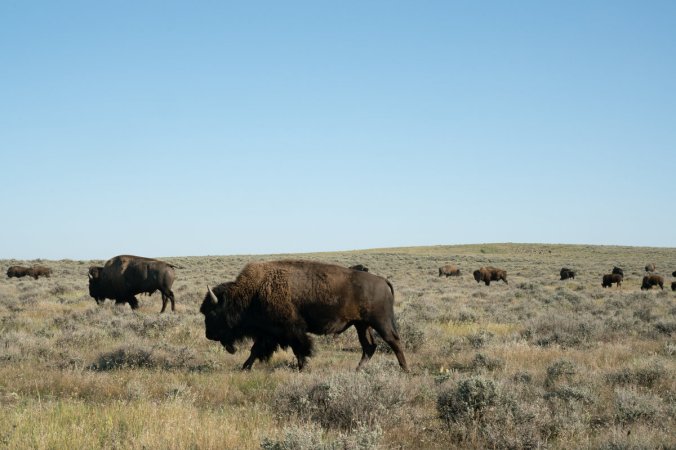
Bison walk on American Prairie Reserve land. The organization is slowly purchasing ranches from willing sellers, phasing out the cows and replacing them with wild bison. Claire Harbage/NPR

This story was supported by the Pulitzer Center on Crisis Reporting.

A privately funded, nonprofit organization is creating a 3.2 million-acre wildlife sanctuary — American Prairie Reserve — in northeastern Montana, an area long known as cattle country.

_dsc3711_custom-6d09ed4fc7375584ea76e1d2c3a28936e9917ac5-s500-c85.jpg

Sean Gerrity founded the American Prairie Reserve more than 18 years ago after he moved back home to Montana from Silicon Valley, where he ran a firm that consulted for companies such as AT&T and Apple.
Claire Harbage/NPR

But the reserve is facing fierce opposition from many locals because to build it, the organization is slowly purchasing ranches from willing sellers, phasing out the cows and replacing them with wild bison. Those private properties are then stitched together with vast tracts of neighboring public lands to create one giant, rewilded prairie. The organization has purchased close to 30 properties so far, but it needs at least 50 more.

“I see them coming in with big money, buying up ranches and walking over the top of the people who are already here,” says ranch owner Conni French. “For them to be successful in their goals, we can’t be here, and that’s not OK with us.”

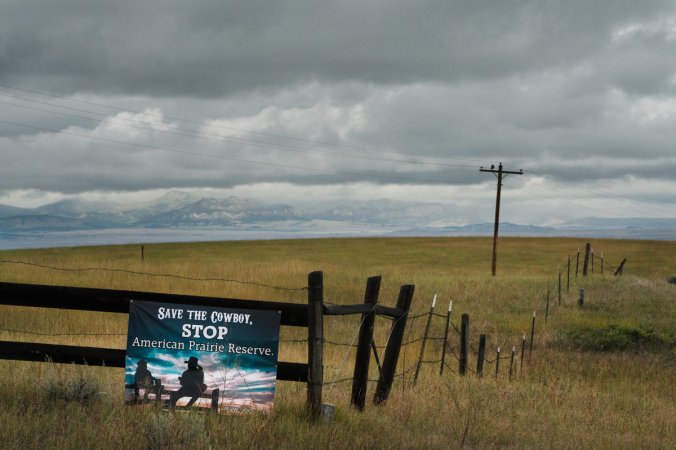
She isn’t alone. Driving around, you see signs everywhere that say, “Save The Cowboy, Stop The American Prairie Reserve.”
_dsc2741_slide-7e313d6d5430d4b9c6d7606875580af1dc204866-s1200-c85

A “Save the Cowboy” sign is posted along a fence. The “Little Rockies” on the Fort Belknap Indian Reservation are seen in the distance. Claire Harbage/NPR

But the project’s efforts have garnered a lot of positive attention from those living outside northeastern Montana because, once it’s complete, it will be the largest wildlife sanctuary in the Lower 48 states — about 5,000 square miles, nearly the size of the Serengeti National Park in Tanzania. Continue reading

Hawks At Home

8749843808_19bf5ddbd1_h-1260x708.jpg

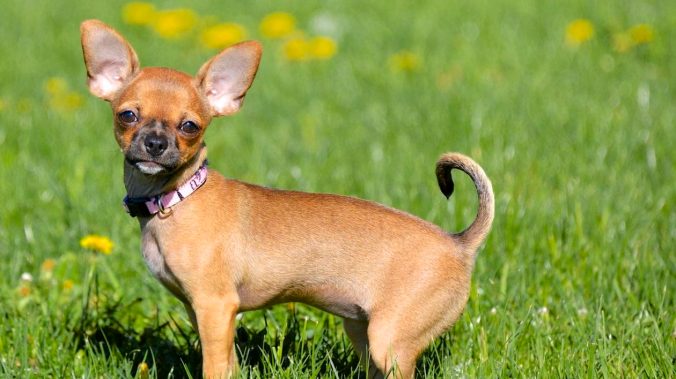
A chihuahua plays on the grass. Photo © Jamie McCaffrey / Flickr

Thanks to Cool Green Science for asking, and answering, this burning question:

Do Hawks Eat Pets?

Hawks have moved into our backyards. And many people seem to find their new neighbors terrifying.

I recently downloaded the Nextdoor app, the “social network for your neighborhood community,” to keep track of road closures and new developments in my rapidly growing community. It served that purpose, but it also gives me sometimes-startling insights into my neighbors’ concerns.

Chief among those concerns is wildlife: Coyotes, bobcats (or bobcats misidentified as mountain lions), deer, and, lately, hawks. Yes, hawks. Continue reading

Skip The Cycle

9781635570106_custom-54da6225b0d86a33d85194d6b606615cc8db9066-s300-c85Adam Minter has not appeared in our pages before, surprisingly. Stories with recycling and upcycling themes have been featured dozens of times on this platform, but this theme is just enough different as to qualify as original, to us. Thanks to National Public Radio (USA) for this review and author interview:

Author Adam Minter remembers two periods of grief after his mother died in 2015: the intense sadness of her death, followed by the challenge of sorting through what he calls “the material legacy of her life.”

Over the course of a year, Minter and his sister worked through their mother’s possessions until only her beloved china was left. Neither one of them wanted to take the china — but neither could bear to throw it out. Instead, they decided to donate it. Continue reading

Doing Something, Anything, About Plastic

whale-skeleton-7ce1508b1ad1868bd09c75bacde71f8436345cf3-s800-c85.jpg

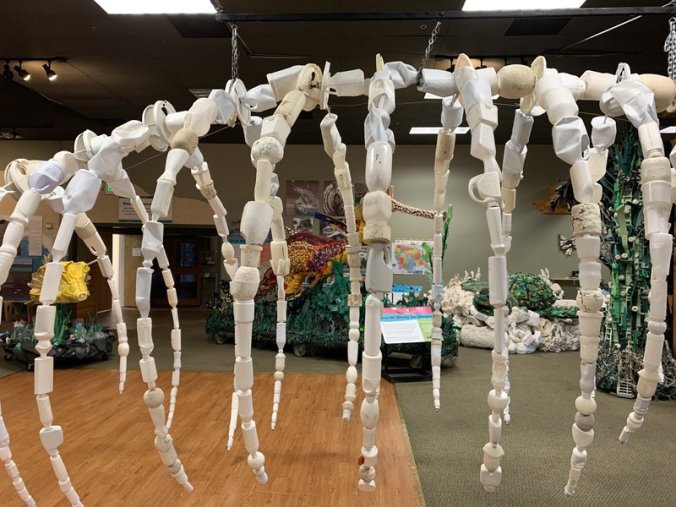
A to-scale sculpture of a juvenile humpback whale ribcage made of plastic bottles.
Kirk Siegler/NPR

An artist doing something about it. Whether or not the root problem is solved, we can all be more creative about doing something about the problem. Angela Haseltine Pozzi demonstrates by example. That’s a nice story to start the day with. Thanks to National Public Radio (USA) for brightening our day:

On The Oregon Coast, Turning Pollution Into Art With A Purpose

sea-dragon-65ed2496ce904724cb4fa2c20bcabfa0f80b54e0-s800-c85.jpg

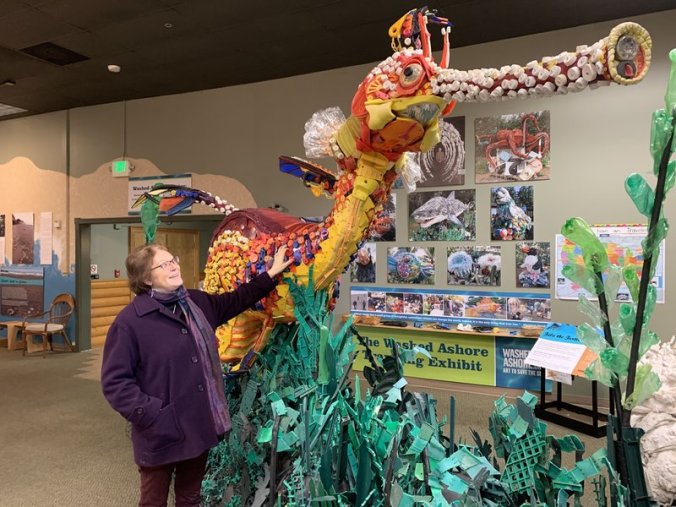
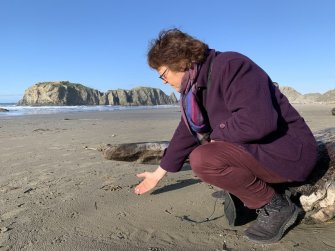
In her gallery in Bandon, Ore., Angela Haseltine Pozzi stands next to an enormous sea dragon sculpted from plastics found on Oregon’s famously ‘pristine’ beaches.
Kirk Siegler/NPR

At Coquille Point along the remote and rugged southern Oregon Coast, the wind is tumultuous and the sea just as violent. Huge waves crash up against the giant, moss-cloaked rocks perched off the beach.

angela-on-beach-4-8188157827d3cad05454b76fa58fa132372d0727-s800-c85.jpg

Angela Haseltine Pozzi founded Washed Ashore in 2010. The nonprofit turns plastics taken from Oregon’s beaches into eye-opening sculptures of threatened marine life.
Kirk Siegler/NPR

This particular stretch of the Oregon coastline is famous for being pristine and wild. But train your eyes down a little closer to the beach and sand as Angela Haseltine Pozzi so often does, and even here you’ll find bits of plastic.

“I think the most disturbing thing I find is detergent bottles and bleach bottles with giant bite marks out of them by fish,” she says.

sea-star-6b5d819c01662700e21ec3d47d27212ea975f7b9-s800-c85.jpg

A sea star made mostly of plastic water bottles from the 2008 Summer Olympics in China that are still washing up on Oregon beaches today.
Kirk Siegler/NPR

Haseltine Pozzi is a local artist and longtime art teacher who’s made it her mission to collect as much of this shameful garbage as possible. It washes up from Asia, Europe, California and right here in Oregon.

In her gallery in the nearby town of Bandon, where she’d spend summers with her grandmother exploring the wild beaches, she’s now taking these plastic invaders and turning them into jaw-dropping sculptures. The plastic bottle caps, cocktail toothpicks, shotgun shell casings — anything — form life-size garbage creatures of the very marine life threatened by all this plastic. Continue reading

A Home For Potato Knowhow

1164

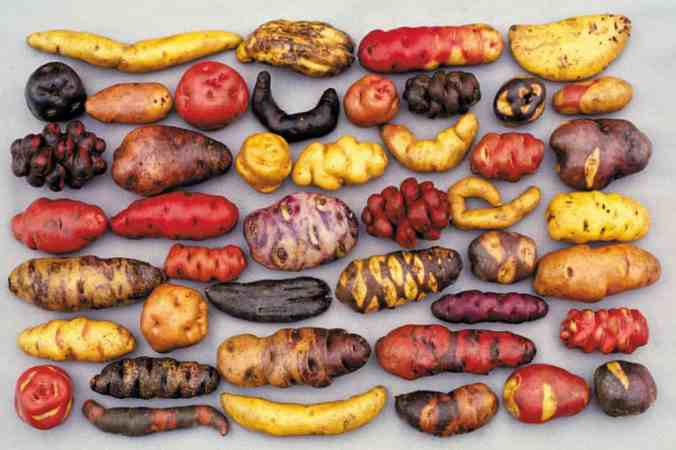
 A selection of the thousands of native potato varieties that grow in Peru. Photograph: The International Potato Centre

Thanks to Dan Collyns (last seen in our pages in 2013), writing in the Guardian, for this:

How Peru’s potato museum could stave off world food crisis

Agri-park high in the Andes preserves the expertise to breed strains fit for a changing climate

3008.jpg

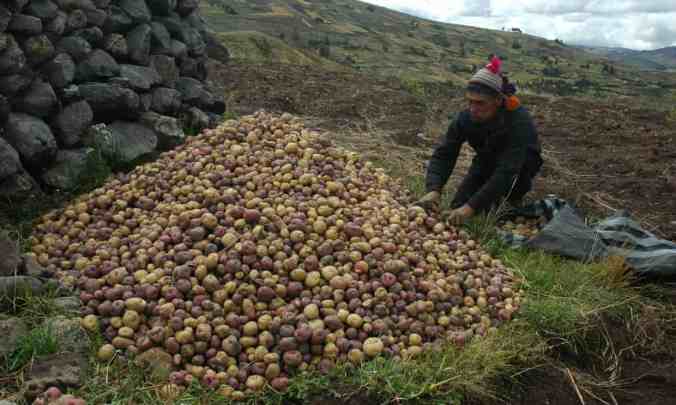
A worker picking potatoes high in the Andes. Photograph: The International Potato Centre

With a climate changing faster than most crops can adapt and food security under threat around the world, scientists have found hope in a living museum dedicated to a staple eaten by millions daily: the humble potato.

High in the Peruvian Andes, agronomists are looking to the ancestral knowledge of farmers to identify genetic strains which could help the tubers survive increasingly frequent and intense droughts, floods and frosts.

6000 (2).jpg

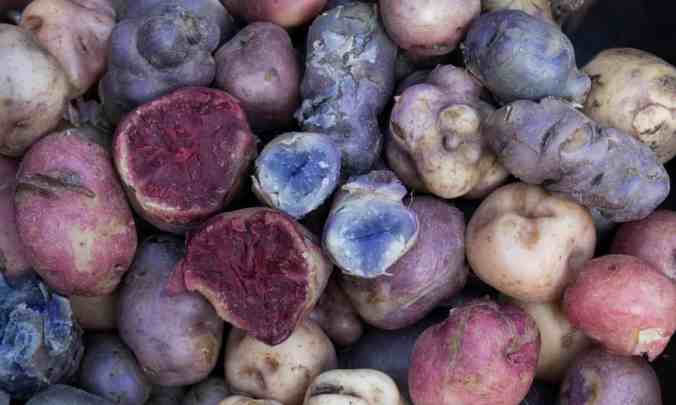
 A selection of biofortified potatoes, grown to be higher in zinc and iron. Photograph: David Dudenhoeffer/The International Potato Centre

The Potato Park in Cusco is a 90 sq km (35 sq mile) expanse ranging from 3,400 to 4,900 metres (16,000 feet) above sea level. It has “maintained one of the highest diversities of native potatoes in the world, in a constant process of evolution,” says Alejandro Argumedo, the founder of Asociación Andes, an NGO which supports the park. Continue reading

Bill McKibben Does The New Math

GettyImages-480270745_KernCountyOilPumps_web2

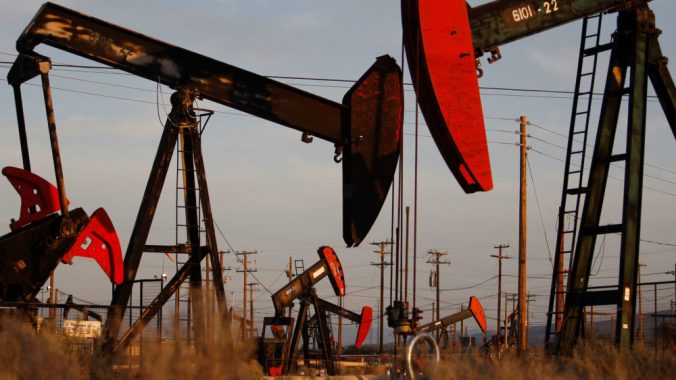
An oil field near McKittrick, California. DAVID MCNEW/GETTY IMAGES

Thanks to Mr. McKibben, as always and to Yale e360 as the forum provided him, for more scientific evidence about the singular challenge facing all of us:

New Climate Math: The Numbers Keep Getting More Frightening

Scientists keep raising ever-louder alarms about the urgency of tackling climate change, but the world’s governments aren’t listening. Yet the latest numbers don’t lie: Nations now plan to keep producing more coal, oil, and gas than the planet can endure. Continue reading

Are We Willing To Do What It Takes?

Thanks to John R. Platt, by way of EcoWatch, for this:

Could inventing a better air conditioner help to save species from extinction?

It’s an idea so crazy it just might work — and it’s just one of many new and innovative conservation initiatives in development around the world to help stem the tide of biodiversity loss. Continue reading

America’s Best Idea Needs Help

24Waterman-jumbo.jpg

Heather McGrath/Redux

Thanks to Jon Waterman, a former park ranger and the author of National Geographic’s Atlas of the National Parks, for this note of caution:

CARBONDALE, Colo. — Deep inside Alaska’s six-million-acre Denali National Park and Preserve, I could see miles of space beneath my feet as I stood on the summit of the tallest mountain in North America. The startling view from the 20,310-foot Denali of rugged wilderness spreading out in all directions, plus the challenge of climbing it, were just two of the many wonders and adventures that I’ve experienced in America’s national parks.

I recently finished writing a book for National Geographic, Atlas of the National Parks, based on extensive research, a lifetime of exploring the parks and several years in the 1980s working as a ranger in two of them, Denali and Rocky Mountain in Colorado.

I meant the book as a celebration of the 103-year-old national park system, and it is. But what I also discovered was an operation in deep trouble, with some parks degraded by ruinous overcrowding; invasions of nonnative plants and animals that are upending delicate ecological balances; and a warming climate that is melting glaciers and withering away the rare yuccas that give their name to Joshua Tree National Park. Continue reading

Foods For Thought

5904.jpg

Composite: Alamy/Getty

Thanks to Clare Finney, writing for the Guardian, for a reminder, and some cases surprises, about foods we may love but should consider the consequences of:

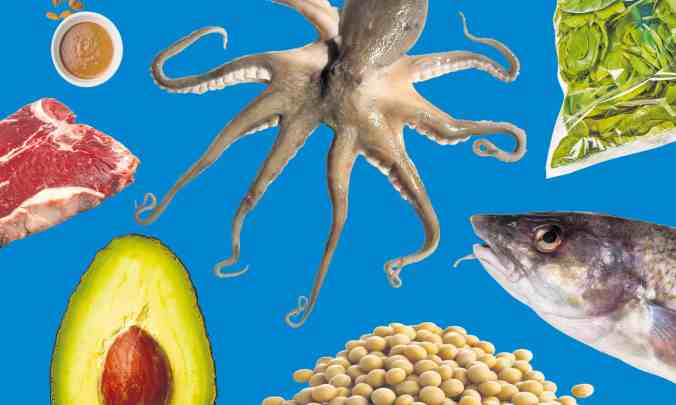
To eat or not to eat: 10 of the world’s most controversial foods

From beef to cod to avocados to soya, many of our best-loved foods raise big ethical and environmental questions. What do the experts say?

Deforestation. Child labour. Pollution. Water shortages. The more we learn about the side-effects of food production, the more the act of feeding ourselves becomes fraught with anxiety. How can we be sure that certain foods are “good” or “bad” for society and the planet? As Tim Lang, professor of food policy at City University of London and the co-author of Sustainable Diets, puts it: “When you come to ‘judge’ food, you end up with an enormous list of variables, from taste to health outcomes to biodiversity.” Here are some of today’s most controversial products – and some thoughts that may help you when shopping. Continue reading

The Word Is Out

4523 (1).jpg

Oxford said the choice reflected the rise in climate awareness and the language we use to discuss it. Photograph: Dean Lewins/AAP

These annual declarations are often silly, but even when silly they say something about what we are thinking and talking more about. This is not exactly good news, except that it beats the alternative (not thinking or talking about it):

Oxford Dictionaries declares ‘climate emergency’ the word of 2019

Usage of the term increased 100-fold in the space of 12 months, dictionary says

Oxford Dictionaries has declared “climate emergency” the word of the year for 2019, following a hundred-fold increase in usage that it says demonstrated a “greater immediacy” in the way we talk about the climate.

Defined as “a situation in which urgent action is required to reduce or halt climate change and avoid potentially irreversible environmental damage resulting from it”, Oxford said the words soared from “relative obscurity” to “one of the most prominent – and prominently debated – terms of 2019.” Continue reading