Activism & The Potential For Change

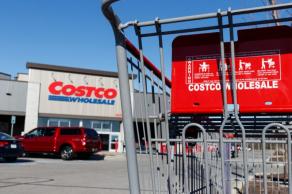
Costco is being urged to cut ties with Citi, the bank that acts as its credit card issuer.

We knew about dirty banking, and now this story from Bill McKibben’s newsletter got us reading about change activism in Progressive Grocer:

Costco Becomes Target of Climate Action Petition

Wholesaler’s credit card issuer Citi is said to have a poor climate record

Costco Wholesale CEO Ron Vachris will receive a petition signed by 40,000 of its shoppers, shareholders and many climate activists on Jan. 17 urging the retailer to drop Citi as its credit card issuer due to the bank’s problematic climate record. Continue reading

Rishi’s Wrong, Skidmore’s Right

Chris Skidmore said he could ‘no longer condone nor continue to support a government that is committed to a course of action that I know is wrong’. Photograph: Chris McAndrew/UK Parliament/PA

We rarely applaud those on the right side of the political spectrum when it comes to environmental issues. Most have been on the wrong side of history with regard to climate change. When one stands up and challenges the status quo, applause applause:

Chris Skidmore resigns Conservative whip over Sunak’s oil and gas licence plan

Former minister also resigns as an MP, which will trigger byelection in his Kingswood constituency

A former Conservative minister has announced he is resigning as an MP in protest at the party’s dash for oil and gas, setting up an awkward vote for the prime minister on the issue on Monday and an even more difficult byelection within weeks. Continue reading

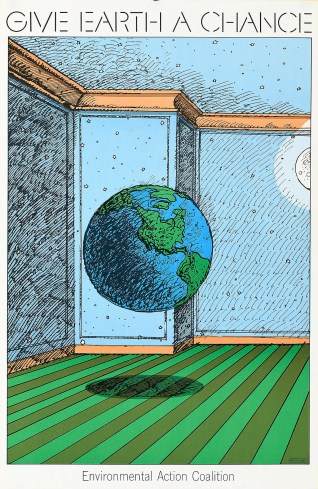
Give Earth A Chance, & Other EcoPosters

A poster from 1970 by Milton Glaser. via Poster House

If you happen to be in New York City and enjoy graphic design related to conservation you might enjoy this:

Told Ya So: The Prescient Posters of the Environmental Movement

Graphic artists have been helping call attention to climate change for decades, and a new exhibition charts the evolution of their pleas.

Last year was the warmest in recorded history. The graphic artists of the environmental movement tried to warn us. Their posters aimed to scare people straight with pictures of ecological ruin, or glorified nature, clean air and water, sunshine and verdure. Some offered earworm-y slogans and haunting visuals. Whatever their approach — bright, witty, somber, blunt, even sexy — they sought an image, a phrase, that could change enough minds to literally save the world. Continue reading

Avocados & Michoacán

An avocado farm in Yoricostio, Michoacán. All photographs from Mexico, August 2023, by Balazs Gardi for Harper’s Magazine © The artist

A decade ago we thought we should source from Harper’s more, but its blog no longer exists to read the whole story that prompted that idea. Still going strong after 173 years of publication, this recent article in the magazine helps us understand what is wrong with one of our favorite farm products:

Forbidden Fruit
by Alexander Sammon

The anti-avocado militias of Michoacán

Phone service was down—a fuse had blown in the cell tower during a recent storm—and even though my arrival had been cleared with the government of Cherán in advance, the armed guard manning the highway checkpoint, decked out in full fatigues, the wrong shade to pass for Mexican military, refused to wave me through. My guide, Uli Escamilla, assured him that we had an appointment, and that we could prove it if only we could call or text our envoy. The officer gripped his rifle with both hands and peered into the windows of our rental car. We tried to explain ourselves: we were journalists writing about the town’s war with the avocado, and had plans to meet with the local council. We finally managed to recall the first name of our point person on the council—Marcos—and after repeating it a number of times, we were let through. Continue reading

New York Noise

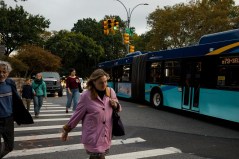
A particularly loud intersection on Manhattan’s Upper West Side. The neighborhood is home to at least one of the noise cameras the city is testing. Sara Naomi Lewkowicz for The New York Times

When we lived in India we used to post frequently on this topic, but it has been a while. Happy to see (thanks to Erin Nolan and the New York Times) that another onetime hometown of ours is taking up the issue:

New York City, not exactly known for its peace and quiet, is expanding its use of technology to fine the drivers of loud cars and motorcycles.

New York City is known for its noise. A cacophony of sounds bombards residents every time they step outside — screeching subway cars, jackhammers drilling away, late-night revelers leaving bars and clubs. Continue reading

Rubber-Induced Destruction

Satellite images of Cambodian forest in 2000 (left) and, after being cleared, in 2015 (right). Forests were replaced by a grid of rubber plantations, as well as croplands. Source: NASA

If you have never seen ecosystem destruction firsthand, count yourself lucky. I witnessed, during visits over several years, as 1,000 acres of primary forest ecosystem was destroyed to make way for a rubber plantation. It was horrifying. And I am further horrified to read how what I witnessed was only a small part of a much bigger rubber-induced destruction (thanks as always to Fred Pearce):

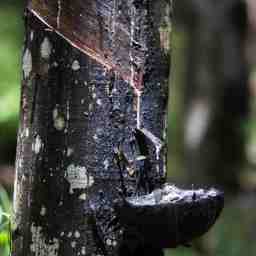
Rubber resin collected from a tree near Lubuk Beringin, Indonesia. TRI SAPUTRO / CIFOR

How Mounting Demand for Rubber Is Driving Tropical Forest Loss

The growing market for rubber is a major, but largely overlooked, cause of tropical deforestation, new analysis shows. Most of the rubber goes to produce tires, more than 2 billion a year, and experts warn the transition to electric vehicles could accelerate rubber use.

The elephants are gone. The trees are logged out. The Beng Per Wildlife Sanctuary in central Cambodia is largely destroyed, after being handed over by the government to a politically well-connected local plantation company to grow rubber. Continue reading

Corrupt Cop

Illustration by Isabel Seliger

Ever wondered what the Cop in Cop1-28 means? The answer is not nearly as interesting as how it came to be that a country whose lifeblood is oil is hosting Cop28. Petrostates have been biding their time, gaining momentum, and now have corrupted the Cop system from within. Weekend reading, Thanksgiving edition, from Elizabeth Kolbert, explains the stakes:

The Road to Dubai

The latest round of international climate negotiations is being held in a petrostate. What could go wrong?

Cop1 was held in 1995 in Berlin’s International Congress Center, a massive, metal-clad complex that looks like the set for a dystopian movie. Around nine hundred government delegates attended the weeklong negotiating session, along with about a thousand observers from non-governmental organizations. Daimler-Benz brought some electric cars to show off, while young activists brought a steamroller, to convey their opposition to cars. Delegates were invited to take a trip along the River Spree in a solar-powered boat. Continue reading

Carlos Manuel Rodriguez, Leading The Conversation, Again

We are grateful to the GEF for sharing this, and to Carlos Manuel Rodriguez for leading the conversation, as he has always done:

Creating space for young people to affect climate policy

In a recent conversation at his home, GEF CEO and Chairperson Carlos Manuel Rodríguez heard from members of the Youth and Climate Change Network of Costa Rica about how the climate emergency is impacting young people. Continue reading

Letters To The Secretary

We have appreciated this newsletter since it started, and every issue since. This week it brings these handwritten letters to our attention:

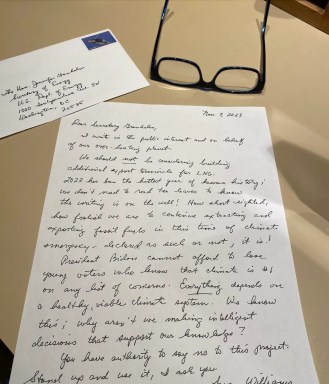
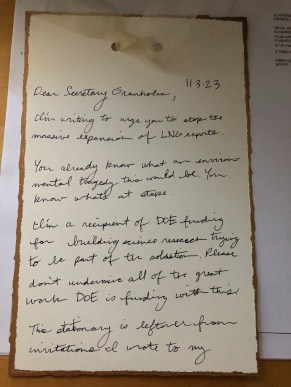
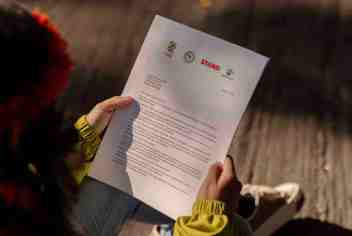
…Oh, and who’s the other group of climate voters the president needs to worry about? That would be older people, like those of us at Third Act—we codgers have been organizing mass protests all year. And while we may not be TikTok savvy, we have another weapon: pen and stationery. In the last week Third Actors have unleashed thousands of letters on DOE headquarters—which may not sound quite as sexy as petitions from the Internet, but they have their own impact, since officials know that if you’re willing to do more than click you’re probably an effective and motivated adversary.

So consider [image above left]

Or [image to the right]

What I’m trying to say is, the Department of Energy has a real problem—an increasingly aware and activated posse of youngsters and oldsters. And a solution: announce CP2 is going nowhere, and that no other project will be approved, or even considered, until there’s been an exhaustive rewrite of the criteria taking into account the latest science and economics. It’s not hard. Continue reading

Removing Environmental Protections Will Not Seem So Clever In Hindsight

Sunset in the trees at Manatee Springs, Florida. Photograph: Michael Warren/Getty Images/iStockphoto

Oliver Milman, again, brings our attention to an environmental activism that deserves attention, this time for all the wrong reasons:

Experts fear half of the 290m wetland acres have lost federal protection and could be at risk from developers

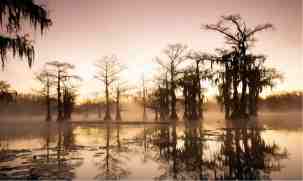
Lake Caddo, on the border between Louisiana and Texas, is a beautiful cypress swamp. Photograph: wanderluster/Getty Images

Often dismissed as dismal wet bogs and rampantly cleared since European arrival in the US, the underappreciated importance of wetlands has been placed into sharp relief by a supreme court ruling that has plunged many of these ecosystems into new peril.

The extent of wetlands, areas covered or saturated by water that encompass marshes, swamps and carbon-rich peatlands, has shrunk by 40% over the past 300 years as the US drained and filled them in for housing, highways, parking lots, golf courses and other uses. Globally, wetlands are disappearing three times faster than forests are. Continue reading

Civil Disobedience & Civil Response

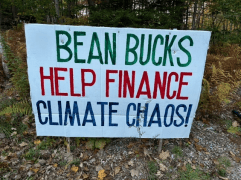
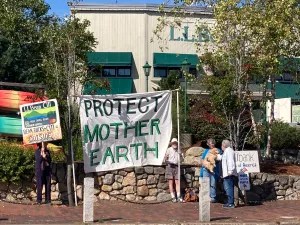
A sign made by William Rixon, who has been protesting L.L. Bean’s partnership with Citibank to offer the Bean Bucks credit card. Courtesy photo

Thanks to Bill McKibben for bringing this to our attention. And kudos to L.L. Bean’s CEO for having the decency to respond to this activist’s efforts to raise awareness of the company’s climate-unfriendly banking choice. Iconic companies messaging their environmental responsibilities need to be held to the same standard as the lousiest companies.

Climate demonstrator outside L.L. Bean gets surprise visit from CEO

Bill Rixon outside the L.L. Bean retail store earlier this month. He was joined by Molly Schen, a member of Third Act Maine. Luna Soley / The Times Record

Freeport resident and retired schoolteacher William Rixon has been demonstrating outside L.L. Bean since the beginning of September. This week, he got a response.

“PROTECT MOTHER EARTH,” William Rixon’s homemade climate banner reads. Assembled with drop cloth and PVC piping, it stands at 10 feet, dwarfing Rixon.

Since September, Rixon and a group of fellow retirees have been standing with signs outside L.L. Bean’s sprawling downtown Freeport campus as well as its corporate headquarters just down the road. Continue reading

Rishi Doubles Down On Awful

Prime Minister Rishi Sunak announcing last month that the U.K. will delay the phaseout of gasoline and diesel cars. JUSTIN TALLIS / POOL VIA AP

When leadership is most needed, the special relationship between the UK and the USA should count for something, but so far no sign of the USA pressing back on the UK’s awful reversal on their already tepid recent leadership on climate. We knew that leadershsip was lacking in the UK. The Orwell-worthy podium messaging in the photo to the left says all you need to know about efforts to obfuscate, but read Fred Pearce‘s account in Yale e360 anyway:

Demonstrators in Edinburgh protest the government’s recent approval of drilling in the Rosebank North Sea oil field. PRESS ASSOCIATION VIA AP IMAGES

Why Is Britain Retreating from Global Leadership on Climate Action?

While Britain has long been a leader in cutting emissions, Prime Minister Rishi Sunak is now implementing a stunning reversal of climate-friendly policies, with new plans to “max out” oil production. Business leaders have joined environmentalists in condemning the moves.

In 1988, British Prime Minister Margaret Thatcher became the first world leader to take a stand on fighting climate change. Continue reading

Climate Leadership Lacking In Too Many Places

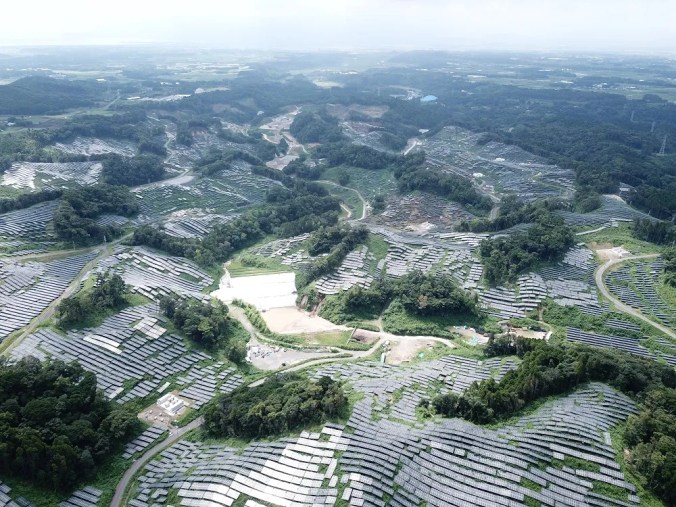
Once a golf course, now a solar farm supplying tens of thousands of homes in Japan

If you know a bit about Japan’s love of golf, the photo above says alot about leadership there in moving away from fossil fuels in the direction of alternative energy. But it is too little too late compared to what is happening elsewhere. Thanks as always to Bill McKibben for his newsletter:

Energy from Heaven

and not from Hell/Exxon.

Amid the torrent of hideous news last week, one item might have skipped your notice: Exxon announced the acquisition—its biggest since picking up Mobil a quarter century ago—of one of the largest fracking operators in the world. As the AP reported, “including debt, Exxon is committing about $64.5 billion to the acquisition, leaving no doubt of the Texas energy company’s commitment to fossil fuels.” In fact, it’s the declaration of conviction that they think they have enough political juice to keep us hooked on oil and gas for a few more decades, even in the face of the highest temperatures in 125,000 years. Continue reading

Really, Cargill?

Beka will hand-deliver a letter to the Cargill-MacMillian dynasty in Minneapolis on Thursday, calling on the billionaire owners of America’s biggest private company to stop destroying the Amazon rainforest and its people. Photograph: Thalia Juarez/The Guardian

Cargill has appeared a few times in our pages over the years, not always showing poor stewardship. But today, we have to ask whether they really are trying as diligently as possible to do the right thing. We applaud Beka and her community for this letter, and hope the recipients respond with the sense of responsibility that comes with their wealth:

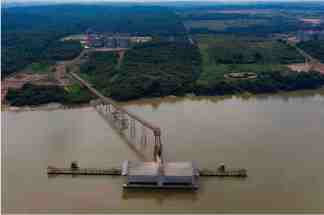
A Cargill transshipment port for soy and corn projects on the Tapajos River in Itaituba, Para state, Brazil, in 2019. Photograph: Léo Corrêa/AP

‘Our world hangs by a thread’: Indigenous activist asks US agri giant to stop destroying Amazon rainforest

Beka Saw Munduruku , 21, traveled 4,000 miles to deliver letter and confront family behind Cargill empire over what she says amounts to a litany of broken promises

A 21-year-old Indigenous activist from a remote Amazonian village will hand deliver a letter to the Cargill-MacMillan dynasty in Minneapolis on Thursday, calling on the billionaire owners of the US’s biggest private company to stop destroying the Amazon rainforest and its people. Continue reading

Driverless Taxi, Anyone?

A Waymo self-driving car in San Francisco. Shutterstock/Iv-olga

Apparently there is a market for this service in San Francisco, according to Jeremy Hsu at New Scientist, in spite of the objections:

California approves driverless taxi expansion in San Francisco

Waymo and Cruise can now charge for ride-hailing services throughout San Francisco despite objections that driverless cars interfere with traffic and first responders

Driverless cars have the green light to operate as paid ride-hailing services in San Francisco after the companies Waymo and Cruise won approval from California state regulators. Continue reading

Droning For Polluters

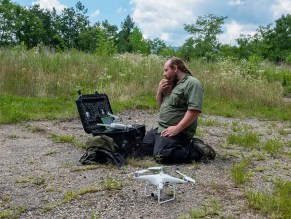
Junior Walk of Coal River Mountain Watch in Naoma, West Virginia, prepares his drone to fly near a reclaimed surface mine in Edwight. Roger May/The Guardian

Mother Jones shares a story we missed in its original publication:

One Man’s Aerial Crusade Against West Virginia’s Coal Industry

Citizen vigilante uses his drone to expose polluters—”I don’t have a lot of friends around here.”

Coal has stalked Junior Walk his entire life.

Continue reading

Plastic Waste Losing Another Place To Land

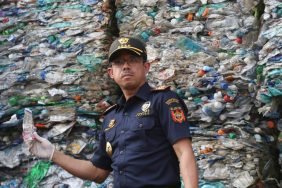
An Indonesian customs official intercepts a container full of illegally imported plastic waste in September 2019. ACHMAD IBRAHIM / AP PHOTO

When conscientious citizens learn more about where all the plastic goes when they do their part to recycle, it can be demoralizing. Recycling is important but the real solution is reducing the waste in the first place:

Indonesia Cracks Down on the Scourge of Imported Plastic Waste

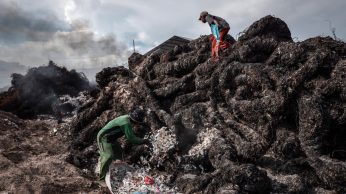
Workers prepare to burn plastic waste at an import dump in Mojokerto, Indonesia. ULET IFANSASTI / GETTY IMAGES

When China banned plastic waste imports in 2018, exporters in wealthy countries targeted other developing nations. Faced with an unending stream of unrecyclable waste, Indonesia has tightened its regulations and has begun to make progress in stemming the plastics flow.

In 2019, at a meeting in Geneva, Switzerland, delegates from 187 countries approved the first-ever global rules on cross-border shipments of plastic waste. Continue reading

Small Win For Limited Right To Trespass In The UK

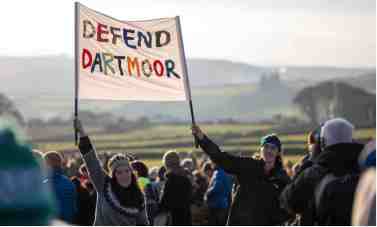
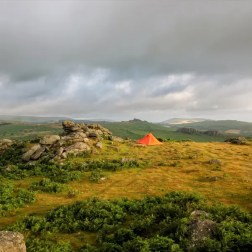
Wild camping campaigners on Dartmoor earlier this year. Photograph: Jim Wild

We thank Helena Horton for her update on this story we linked to just a few days ago:

Wild camping allowed on Dartmoor again after court appeal succeeds

Dartmoor National Park Authority had appealed against January high court ruling that outlawed practice

Wild camping is once again allowed on Dartmoor after the national park won a successful appeal against a ruling in a case brought by a wealthy landowner. Continue reading

Property Rights Versus Trespassing Rights

A wealthy couple bought an estate inside Dartmoor National Park and then successfully sued to bar campers from using their land. That ruling is now being appealed. Muir Vidler for The New York Times

Property rights, a foundational aspect of modern society, occasionally bump up against other rights. The journalist Brooke Jarvis has a new article that touches on this theme, we are happy to see:

The Fight for the Right to Trespass

A group of English activists want to legally enshrine the “right to roam” — and spread the idea that nature is a common good.

The signs on the gate at the entrance to the path and along the edge of the reservoir were clear. “No swimming,” they warned, white letters on a red background.
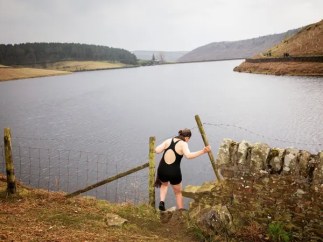
A protester at Kinder Reservoir. Muir Vidler for The New York Times

On a chill mid-April day in northwest England, with low, gray clouds and rain in the forecast, the signs hardly seemed necessary. But then people began arriving, by the dozens and then the hundreds. Some walked only from nearby Hayfield, while others came by train or bus or foot from many hours away. In a long, trailing line, they tramped up the hill beside the dam and around the shore of the reservoir, slipping in mud and jumping over puddles. Above them rose a long, curving hill of open moorland, its heather still winter brown. When they came to a gap between a stone wall and a metal fence, they squeezed through it, one by one, slipping under strings of barbed wire toward the water below. Continue reading