Celebrating Energy Independence

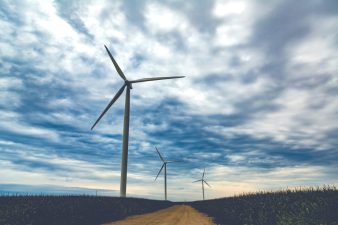
he Pioneer Prairie Wind Farm along the Iowa-Minnesota state line. TONY WEBSTER VIA WIKIPEDIA

If you are in the USA and are looking for more reasons to celebrate independence, consider renewables (thanks to Yale e360):

U.S. Wind and Solar Overtake Coal for the First Time

In a first for the U.S. power sector, wind and solar have generated more electricity than coal so far this year. Continue reading

Wind Power & Backyard Progress

A turbine blade more than 300 feet long. The $4 billion Vineyard Wind project is expected to start generating electricity by year’s end. Bob O’Connor for The New York Times

On previous occasions when we linked to stories about windfarms‘ large turbines, we have noticed that aesthetics can get in the way of progress, so thanks to Stanley Reed and Ivan Penn for this reporting from the New England coast:

A Giant Wind Farm Is Taking Root Off Massachusetts

The offshore energy project will have turbines taller than any building in Boston, but they will be barely visible from Martha’s Vineyard.

On a chilly June day, with the Massachusetts island of Martha’s Vineyard just over the distant horizon, a low-riding, green-hulled vessel finished hammering a steel column nearly 100 feet into the bottom of the Atlantic Ocean. Continue reading

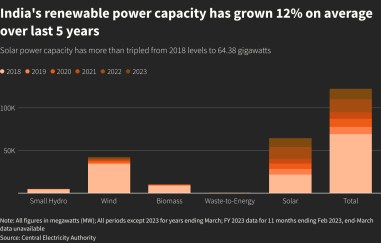
India’s Progress With Solar Power Generation

Reuters Graphics

Progress on solar power generation in India is a big deal. The country’s reduction in poverty, remarkable as it has been, is counterbalanced by its environmental impoverishment. Thanks to Reuters for this article by Sarita Chaganti Singh and Sudarshan Varadhan:

Exclusive: India amends power policy draft to halt new coal-fired capacity

NEW DELHI/SINGAPORE, May 4 (Reuters) – India plans to stop building new coal-fired power plants, apart from those already in the pipeline, by removing a key clause from the final draft of its National Electricity Policy (NEP), in a major boost to fight climate change, sources said. Continue reading

Norway’s Combustion Transition

About 80 percent of new-car sales in Norway were electric last year, putting the country at the vanguard of the shift to emissions-free vehicles. David B. Torch for The New York Times

A major fossil fuel producing country has figured out how to transition away from combustion engines:

About 80 percent of new cars sold in Norway are battery-powered. As a result, the air is cleaner, the streets are quieter and the grid hasn’t collapsed. But problems with unreliable chargers persist.

BAMBLE, Norway — About 110 miles south of Oslo, along a highway lined with pine and birch trees, a shiny fueling station offers a glimpse of a future where electric vehicles rule. Continue reading

The Future Of Solar In India

A local farmer grazes his goats along a road overlooking Pavagada Solar Park. Photographs by Supranav Dash for The New Yorker

Difficult to imagine that with all the times India has appeared in these pages, and separately all the times that solar has appeared, this is the first time they appear together:

India’s Quest to Build the World’s Largest Solar Farms

Pavagada Ultra Mega Solar Park, a clean-power plant the size of Manhattan, could be a model for the world—or a cautionary tale.

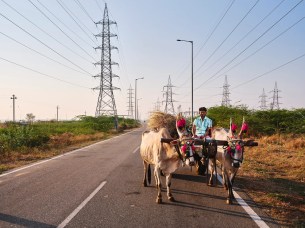
Ashok Narayanappa drives a bullock cart carrying hay, along a stretch of road lined with pylons, in Pavagada Solar Park.

Every morning in the Tumakuru District of Karnataka, a state in southern India, the sun tips over the horizon and lights up the green-and-brown hills of the Eastern Ghats. Its rays fall across the grasslands that surround them and the occasional sleepy village; the sky changes color from sherbet-orange to powdery blue. Eventually, the sunlight reaches a sea of glass and silicon known as Pavagada Ultra Mega Solar Park. Here, within millions of photovoltaic panels, lined up in rows and columns like an army at attention, electrons vibrate with energy. The panels cover thirteen thousand acres, or about twenty square miles—only slightly smaller than the area of Manhattan. Continue reading

#CargoUnderSail #RethinkShipping

Illustration by Owen D. Pomery

The Climate Crisis Gives Sailing Ships a Second Wind

Cargo vessels are some of the dirtiest vehicles in existence. Can a centuries-old technology help to clean them up?

In February, 1912, Londoners packed a dock on the River Thames to gawk at the Selandia, a ship that could race through the water without any sails or smokestacks. Winston Churchill, then the minister in charge of the British Royal Navy, declared it “the most perfect maritime masterpiece of the twentieth century.” But, as the Selandia continued its journey around the world, some onlookers were so spooked that they called it the Devil Ship…

The history is a fun read, so continue to the whole story here. But then, take a closer look at the company featured in the article:

Our Story

Over the course of 20 years working in the maritime industry Cornelius Bockermann witnessed first hand how humans adversely affect our environment. He knew something had to change. In 2013, he moved with his family to Cairns and shipped all their possessions from Germany to their new home in Australia. Through the process of shipping his own goods he experienced the disconnect between commerce and environmental preservation. Upon learning of plans to expand fossil fuel based shipping along the Queensland coast and amongst the Great Barrier Reef he knew he had to act. The question became how do you offer businesses and consumers a sustainable option in shipping?

Cargo Under Sail is the answer and the Dutch schooner named the AVONTUUR is the vessel to start it.

We are a passionate collective of individuals working to create a supply chain that merges the relationship between commerce and preservation. We are restless and can no longer wait for others to make a change.

Our Mission Zero

To eliminate pollution caused by shipping cargo.

We have a five-stage approach:

1. Raise Awareness about the environmental destruction caused by the shipping industry

2. Model a clean shipping future with our AVONTUUR

3. Sell premium AVONTUUR products to support the ongoing operation of the project.

4.  Establish a demand for products shipped by sail

5. Build a modern sail cargo fleet
Dam Damage Done

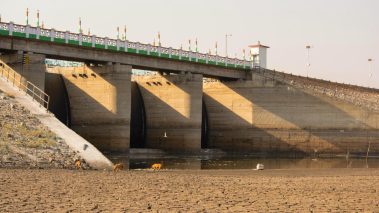
A dried-up reservoir behind a dam in North Karnataka, India. LAKSHMIPRASAD S. / ALAMY STOCK PHOTO

A couple of our earliest posts was about life around a dam in India, so the photo heading this article rings a bell of sorts:

As Projects Decline, the Era of Building Big Dams Draws to a Close

Escalating construction costs, the rise of solar and wind power, and mounting public opposition have led to a precipitous decrease in massive new hydropower projects. Experts say the world has hit “peak dams,” which conservationists hail as good news for riverine ecosystems.

The end of the big dam era is approaching. Continue reading

Developing Clean Energy At Ambitious Scale

It is not every day that your country is given good odds on an important project of such an ambitious scale.

The Economist’s WOODBINE column has this to say about it:

America’s chance to become a clean-energy superpower

Getting the most ambitious energy and climate laws in American history through Congress was not easy. Now comes the hard part

The future catches you in unexpected places. Drive down Interstate 95, the highway running along America’s Atlantic coast, into south-eastern Georgia and you will find signs and rest stops named after pecans and peaches. Continue reading

Heatmap, Climate & Energy Transition

Heatmap Illustration/Getty Images

We are happy to see a new platform that Robinson Meyer has co-founded for climate-related news:

Are Wind Farm Tours the Hoover Dam Trip of the 21st Century?

Marvel at America’s green transition on your next vacation.

Scroll past San Jacinto Mountain, Brandini Toffee, a bicycle-powered bar crawl, and 13 other attractions on Tripadvisor’s list of “Things to Do in Palm Springs” and you’ll come to “Palm Springs Windmill Tours.” Continue reading

DRC’s Price Paid For Our Electric Future

Miners haul sacks of cobalt ore at the Shabara mine near Kolwezi in the Democratic Republic of the Congo. JUNIOR KANNAH / AFP VIA GETTY IMAGES

Jocelyn C. Zuckerman leads a conversation below that puts our electric future in a very particular context:

For Your Phone and EV, a Cobalt Supply Chain to a Hell on Earth

The race for high-tech metals has sparked a cobalt boom in the Democratic Republic of the Congo that has come at a steep human cost. In an e360 interview, author Siddharth Kara talks about the horrific conditions in the mines that are putting thousands of workers at risk.

As countries around the world look to pivot quickly to clean energy, demand for the lithium-ion batteries used to charge our smartphones, laptops, and electric vehicles is booming. Continue reading

Sailing Cargo Ships, Again

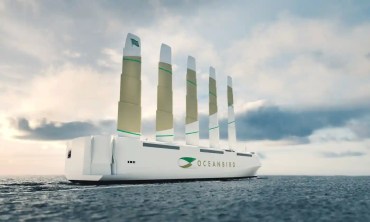
An illustration shows a wind-powered car and truck carrier ship that a Swedish consortium is developing and aiming to launch late 2024. Photograph: Wallenius Marine/Reuters

Old school (sailing cargo ships) becoming the new trend is as good as news gets these days:

Cargo ships powered by wind could help tackle climate crisis

Shipping produces much of the world’s greenhouse gases but new technology offers solutions to cut fuel use

Cars, trucks and planes get plenty of blame for helping drive the climate crisis, but shipping produces a large portion of the world’s greenhouse gases, as well as nitrogen oxides and sulphur pollution because ships largely use cheap heavy fuel oil. Continue reading

Neighborly Advice

Reporting credit: ChavoBart Digital Media

Thanks to the team at Yale Climate Connections:

When do many people decide to go solar? When they’re referred by a friend or neighbor.

They’re more likely to listen to people they trust.

Rooftop solar panels can save people money on their electricity bills. And those savings can mean a lot — especially for people with low incomes, who might have to choose between paying for utilities or buying food or medicine…


Africa’s Sunlight & Europe’s Electricity

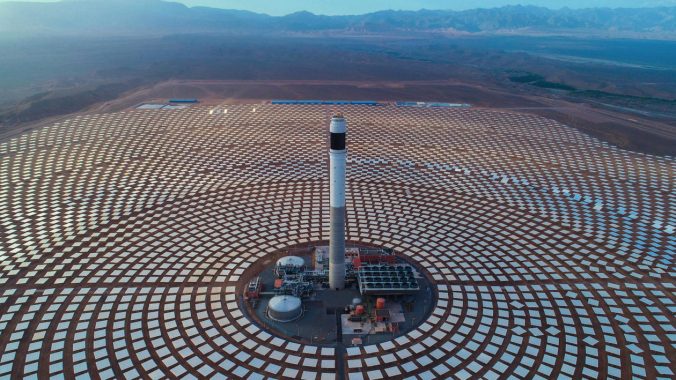
The Noor solar power station near Ouarzazate, Morocco. SEPCO III / XINHUA / ALAMY STOCK PHOTO

Fred Pearce brings us news from the European-African axis of renewable energy:

In Scramble for Clean Energy, Europe Is Turning to North Africa

In its quest for green energy, Europe is looking to North Africa, where vast solar and wind farms are proliferating and plans call for submarine cables that will carry electricity as far as Britain. But this rush for clean power is raising serious environmental concerns.

Solar panels in sun-rich North Africa generate up to three times more energy than in Europe. And North Africa has a lot more room for them than densely populated Europe. Continue reading

Renewable Energy & Winged Creatures

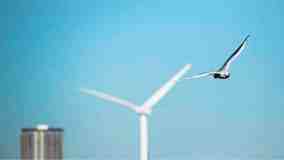
PHOTOGRAPH: YUKIKO YAMAMOTO/GETTY IMAGES

We knew  that the intersection between renewable energy and birds can be problematic, so we thank Emma Foehringer Merchant for this look at one initiative to address it:

Wanted: Dead Birds and Bats, Felled by Renewables

Scientists say collecting, studying, and storing the carcasses from wind and solar facilities can unlock new insights.

“This is one of the least smelly carcasses,” said Todd Katzner, peering over his lab manager’s shoulder as she sliced a bit of flesh from a dead pigeon lying on a steel lab table. The specimens that arrive at this facility in Boise, Idaho, are often long dead, and the bodies smell, he said, like “nothing that you can easily describe, other than yuck.” Continue reading

Greta Thundberg Talking To David Wallace-Wells

David Wallace-Wells has published a conversation, Greta Thunberg: ‘The World Is Getting More Grim by the Day’, in advance of the publication of the book to the right:

There is genuinely no precedent in the modern history of geopolitics for the climate activist Greta Thunberg.

Four and a half years ago, she began “striking” outside of Swedish parliament — a single teenager with a single sign. She was 15. In just a few months, she had made her mark at the United Nations climate conference in Poland: “You are not mature enough to tell it like it is,” she told the assembled diplomats and negotiators, “even that burden you leave to us children.” Continue reading

Post-Peak Meat

Hundreds of dairy farms across California have sold the rights to their manure to energy producers. Illustration: Ricardo Cavolo/The Guardian

We are always on the lookout for more reasons why reducing beef and dairy consumption makes sense:

Brown gold: the great American manure rush begins

The energy industry is turning waste from dairy farms into renewable natural gas – but will it actually reduce emissions?

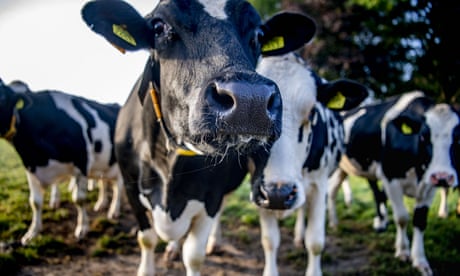
Cows in a meadow at a dairy farm in Zundert, the Netherlands.

Have we reached ‘peak meat’? Why one country is trying to limit its number of livestock

On an early August afternoon at Pinnacle Dairy, a farm located near the middle of California’s long Central Valley, 1,300 Jersey cows idle in the shade of open-air barns. Above them whir fans the size of satellites, circulating a breeze as the temperature pushes 100F (38C). Underfoot, a wet layer of feces emits a thick stench that hangs in the air. Just a tad unpleasant, the smell represents a potential goldmine. Continue reading

Renewable Energy Investment Parity

PEXELS

Thanks to Yale e360:

Clean Energy Saw as Much Investment as Fossil Fuels for the First Time in 2022

Solar, wind, electric vehicles, and other clean energy technologies saw a record-high $1.1 trillion in investment globally last year, matching investment in fossil fuels for the first time ever, according to a new report from Bloomberg New Energy Finance. Continue reading

Bicycles & E-Bike Danger

ILLUSTRATION BY SARAH ANGÈLE WILSON

Bicycle love has been a minor but notable theme in our pages over the years. In more recent years their relationship to electricity has become the focus of more stories, like this one:

The High Cost of Cheap E-Bikes

Electric bicycles are catching on—and their lithium-ion batteries are catching fire. Why is so little being done about it?

Fires and overheating accidents attributed to lithium-ion batteries killed 19 people in the United States in 2022, according to the U.S. Consumer Product Safety Commission. In New York City alone, six people died in these uniquely fast-burning infernos. Experts say poorly made batteries, like those often found on cheaper e-bike models, are the primary culprit. So why is it still so easy to purchase them? Continue reading

The Remarkable Efficiency Of Heat Pumps, Explained

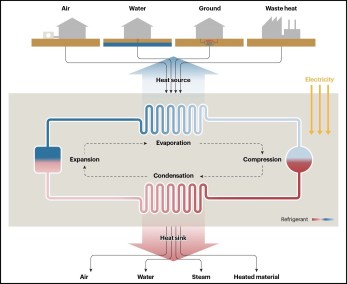
Heat pumps use electricity to compress a refrigerant, raising its temperature. IEA

Heat pumps have only been a passing reference occasionally in these pages, but today they are the focus, thanks to Paul Hockenos in Yale e360:

In Europe’s Clean Energy Transition, Industry Turns to Heat Pumps

With soaring gas prices due to the Ukraine war and the EU’s push to cut emissions, European industries are increasingly switching to high-temperature, high-efficiency heat pumps. Combined with the boom in residential use, the EU is now hoping for a heat pump revolution.

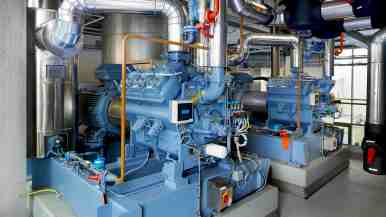
An industrial heat pump at the Mars Confectionery in Veghel, the Netherlands. GEA

The Wienerberger brickworks in Uttendorf, Austria, in the Tyrolean Alps, has always required a steady stream of 90 degree C (194 degree F) heat to dry its construction blocks. This process would have been an expensive proposition for the company after Russia cut gas exports to Europe, as it was for most of Europe’s energy-intensive construction industry. But four years ago, Wienerberger — the largest brick producer in the world — made an investment in the future that is now paying off: it replaced Uttendorf’s gas-fired boiler with an industrial-scale heat pump, which whittles the factory’s energy bill by around 425,00 euros a year. Continue reading

Great EV Expectations

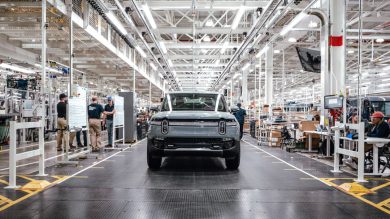
A Rivian R1T electric pickup truck at the company’s factory in Normal, Illinois. JAMIE KELTER DAVIS / BLOOMBERG VIA GETTY IMAGES

I had no reason to bet against Tesla until now, but I did wonder whether it was good for anyone (other than its shareholders) for that one company to dominate its market over the longer term. Now, happily, it looks like the market will do what we need it to do, which is get robust:

For U.S. Companies, the Race for the New EV Battery Is On

Spurred by federal mandates and incentives, U.S. manufacturers are pushing forward with developing new battery technologies for electric vehicles. The holy grail is a battery that is safer, costs less, provides longer driving range, and doesn’t use imported “conflict” minerals.

Sixteen years have passed since engineer Martin Eberhard unveiled his futuristic custom-designed sports car before a crowd of investors, journalists, and potential buyers in a Santa Monica Airport hangar. Continue reading