Seal Spit Surprise

An eagle flies over seal with its mouth open in water along a shoreline.

A white-tailed eagle swoops toward the water’s surface with an adult grey seal directly beneath. Clare Jacobs

We had not heard of this branch of science before, so we thank Douglas Main and the New York Times for this:

A Seal’s Spray Adds a Chapter to the Science of Spitting

The observation suggests that seals join cobras, archerfish and other animals known to spit, although researchers can only speculate about the reason for the mammal’s expectoration.

On Jan. 3, 2022, Clare Jacobs, a bird-watcher, was delighted to spot a rare white-tailed eagle, or Haliaeetus albicilla, at a nature reserve on the Isle of Wight in southern England. These birds, also known as sea eagles or ernes, vanished from the region some 250 years ago, but more than two dozen birds have been released on the island since 2019. Continue reading
Katherine J. Wu On Grizzlies

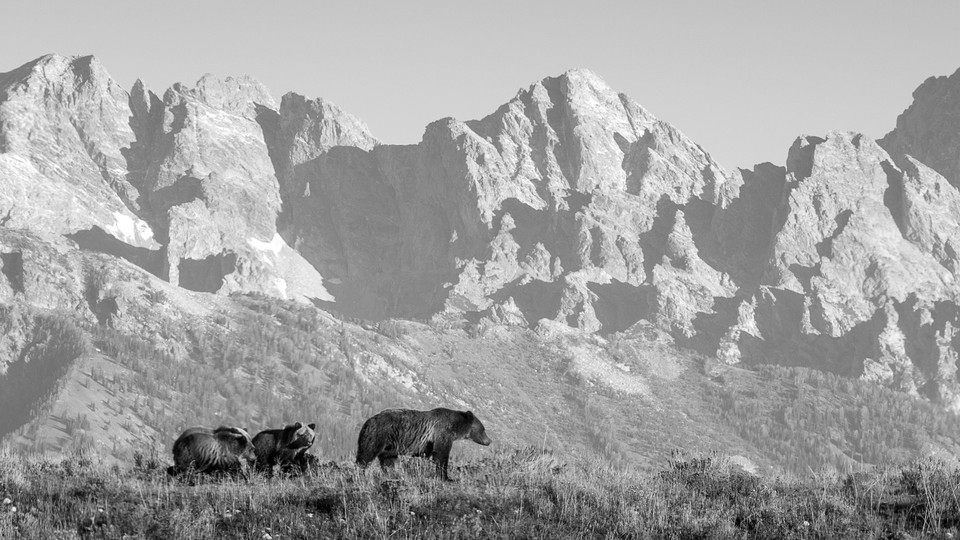
a black-and-white photo of several brown bears walking across a grassy plain, in front of mountains

Getty

We always appreciate Katherine J. Wu‘s writings on nature, especially her use of archival material to make a point:

Grizzly Bears Are Mostly Vegan

But humans made them more carnivorous.

On the subject of grizzly bears, the San Francisco Call—a short-lived newspaper that went out of print in 1913—wasn’t what you’d call kind. Continue reading

Franzen, In The Interest Of Birds, Debunks A Myth

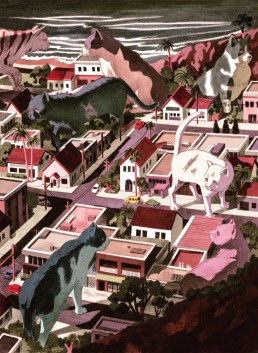
A long-serving animal-control officer described a system intensely pressured to keep animals moving through it. “No Kill sounds great,” the officer said. “But it’s a myth.”Illustration by Antoine Maillard

We have Jonathan Franzen to thank for some of the best writing on caring more about birds, and he helps close out 2023 with a detailed look at the implications and complications of a cat population explosion:

How the “No Kill” Movement Betrays Its Name

By keeping cats outdoors, trap-neuter-release policies have troubling consequences for city residents, local wildlife—and even the cats themselves.

This past June, at the height of kitten season in Los Angeles, Gail Raff got a call for help from the neighborhood of Valley Glen, where a young woman had trapped a cat that needed fixing. Although the City of Los Angeles subsidizes the sterilization of unowned cats, appointments at clinics are hard to come by, and Raff was known in the animal-rescue world as a trapper who secures as many appointments as she can. Continue reading
Preferred Pet Practices

Pet owners can reduce the carbon footprint of their furry loved ones without affecting their health, experts say. Photograph: Getty Images

Pets have featured in exactly one prior post in our pages. Now, thanks to Dwayne Grant and the Guardian, we see there is a topic related to pets quite relevant to our interests:

Throw a dog a bean: how to reduce the carbon footprint of your pets

Thinking about what your dog or cat eats and the products you buy for them can lessen the impact they have on the planet

Did you hear the one about the luxury aviation CEO who claims pets cause as much carbon pollution as private jets? Continue reading

Bears In Our Midst

Bear populations are plummeting in most of the world. But in North America “human-bear conflicts” have been on the rise. Photograph by Alex Majoli / Parc de la Villette / Magnum

On the rare occasions when the historian and elegant writer Jill Lepore has essays whose topics overlap with our interests on this platform, we say hoorah:

The Bear in Your Back Yard

Throughout North America, they’re showing up in unexpected places. Can we coexist?

I keep a cannister of bear spray on a shelf by the mudroom door, next to a cakey-capped tube of sunscreen and two mostly empty and partly rusty green aerosol cans of OFF! Deep Woods insect repellent. Continue reading

Panthera’s Puma Program

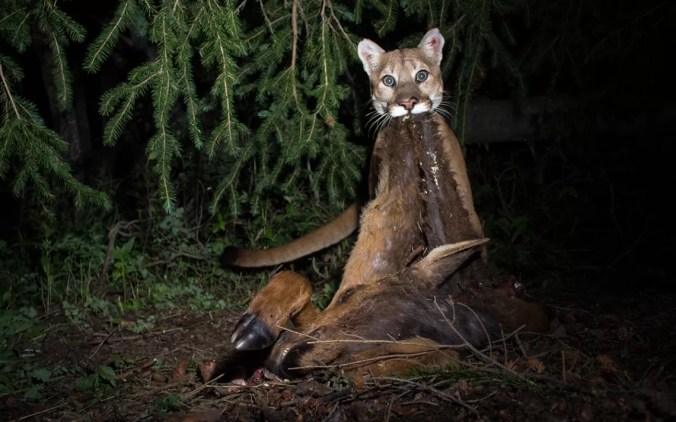
Puma in Wyoming. | Photo by Neal Wight, courtesy of Panthera

Thanks to Grace van Deelen for this article in the magazine of the Sierra Club:

Mountain Lions Are Murder Gardeners

By leaving carcasses, mountain lions create lush landscapes for future victims that could attract prey

If you’re hiking in Yellowstone and stumble upon an unusually lush landscape, you might have found a mountain lion’s garden. Continue reading

Tagging Large Land Animals

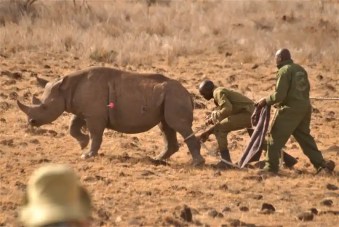
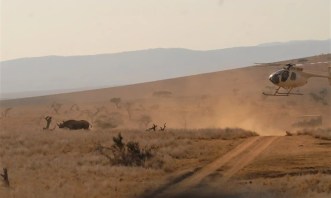
The team secure a darted rhino with nylon rope, then take its temperature and use a pulsemeter to monitor its heart rate and blood oxygenation

We have previous links to articles on tagging animals, but few land animals this big:

How to tag a rhino? Use tech, tact … and plenty of caution – a photo essay

Fewer than 2,000 rhino remain in Kenya, and the country’s wildlife service needs to keep tabs on them to make sure they thrive. It’s a major undertaking, involving a helicopter, 4x4s and a lot of rangers

Here comes a chopper … a helicopter is used to dart the highly aggressive black rhino

Kenya has the world’s third largest rhinoceros population: a total of 1,890 including 966 black rhinos, 922 southern white and two northern white. But how to keep track of them and ensure the species are thriving? Every two or three years, Kenya Wildlife Service (KWS) carries out an ear-notching exercise in all rhino sanctuaries in the country to ensure that at least 60% of the animals are uniquely identifiable. Continue reading

Post-Peak Meat

Hundreds of dairy farms across California have sold the rights to their manure to energy producers. Illustration: Ricardo Cavolo/The Guardian

We are always on the lookout for more reasons why reducing beef and dairy consumption makes sense:

Brown gold: the great American manure rush begins

The energy industry is turning waste from dairy farms into renewable natural gas – but will it actually reduce emissions?

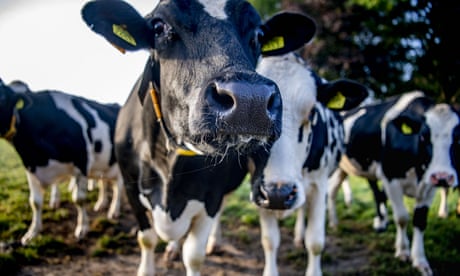
Cows in a meadow at a dairy farm in Zundert, the Netherlands.

Have we reached ‘peak meat’? Why one country is trying to limit its number of livestock

On an early August afternoon at Pinnacle Dairy, a farm located near the middle of California’s long Central Valley, 1,300 Jersey cows idle in the shade of open-air barns. Above them whir fans the size of satellites, circulating a breeze as the temperature pushes 100F (38C). Underfoot, a wet layer of feces emits a thick stench that hangs in the air. Just a tad unpleasant, the smell represents a potential goldmine. Continue reading

Yellowstone, Rewilding & 06

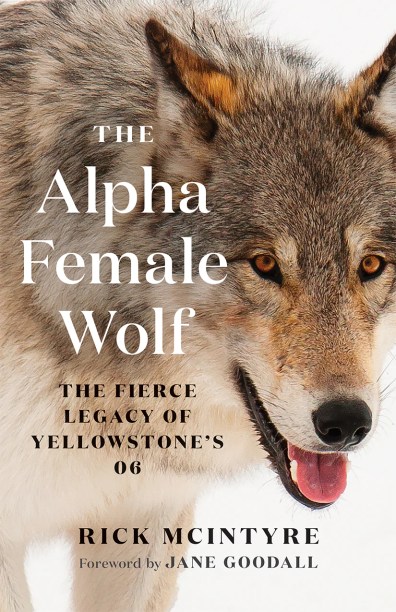
The American west has told the rewilding story from multiple perspectives, and this book to the right makes a special place for the she-wolf in that story, according to this review in Inquisitive Biologist:

The wolves reintroduced to Yellowstone National Park in 1995 are some of the best-studied mammals on the planet. Biological technician and park ranger Rick McIntyre has spent over two decades scrutinizing their daily lives, venturing into the park every single day. Where his previous books focused on three notable alpha* males, it is ultimately the females that call the shots and make the decisions with lasting consequences. This book is a long overdue recognition of the female wolf and continues this multigenerational saga. Continue reading

More Metrics For Animal Intelligence

(Credit: Viesinsh/Shutterstock)

We appreciate Conor Feehly’s article in Discover, expanding our understanding of and ability to measure the intelligence of our co-inhabitants on this planet:

How Intelligence Is Measured In The Animal Kingdom

As understandings of human intelligence evolve, so, too, do understandings of animal intelligence.

Human beings — with our big brains, technology and mastery of language — like to describe ourselves as the most intelligent species. After all, we’re capable of reaching space, prolonging our lives and understanding the world around us. Over time, however, our understanding of intelligence has gotten a little more complicated. Continue reading

Animal Justice With Martha Nussbaum, The Philosopher Of Feelings

Martha Nussbaum has never appeared in our pages, nor has this podcast series. Moral philosophy is usually (but not always) outside the range of topics we pay attention to. But when the topic is animal justice, we are in. If you want a primer prior to the discussion, this profile helps:

“What I am calling for” Nussbaum writes is “a society of citizens who admit that they are needy and vulnerable.”

“What I am calling for,” Nussbaum writes, is “a society of citizens who admit that they are needy and vulnerable.” Photograph by Jeff Brown for The New Yorker

The Philosopher of Feelings

Martha Nussbaum’s far-reaching ideas illuminate the often ignored elements of human life—aging, inequality, and emotion.

Martha Nussbaum was preparing to give a lecture at Trinity College, Dublin, in April, 1992, when she learned that her mother was dying in a hospital in Philadelphia. She couldn’t get a flight until the next day. That evening, Nussbaum, one of the foremost philosophers in America, gave her scheduled lecture, on the nature of emotions. “I thought, It’s inhuman—I shouldn’t be able to do this,” she said later. Then she thought, Well, of course I should do this. I mean, here I am. Why should I not do it? The audience is there, and they want to have the lecture. Continue reading

Aggressive Tourism

A group of safari vehicles packed closely together as passengers look out windows and open roofs at animals grazing on a yellow plain.

About 60 vehicles waited near the Mara River in Kenya as wildebeests and zebras gathered in August to cross the waterway as part of their migration on the Serengeti Plain. Simon Espley

We have Maria Cramer and Costas Christ to thank for this reminder about our responsibilities as producers and consumers of travel experiences:

A video showing dozens of vehicles moving in on a pair of big cats in a Kenyan game reserve highlights how “aggressive tourism” can put endangered animals at even greater risk.

The video surfaced online around October. Filmed from a distance, it shows an antelope grazing on the African plain. Suddenly, two cheetahs race toward it and the antelope takes off, running toward the camera. But the cats are too fast. They converge on it and bring it down. They begin to feed. Continue reading

Big Cats Need Space

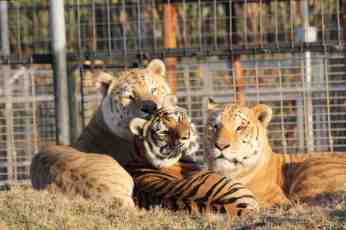
Big cats at the Greater Wynnewood Exotic Animal Park, a private sanctuary featured in the Netflix documentary series Tiger King. FIGHT4ANIMALRIGHTS VIA WIKIPEDIA

Big cats do not belong in cages, and certainly do not deserve to be treated as domestic pets. We assumed there were already clear and strict rules in place:

U.S. to Curb Private Ownership of Big Cats

The U.S. is set to enact a new law that prohibits private citizens from obtaining lions, tigers, jaguars, leopards, and other big cats as pets. Continue reading

Forest Health & The Ecosystem Services Provided By Mice

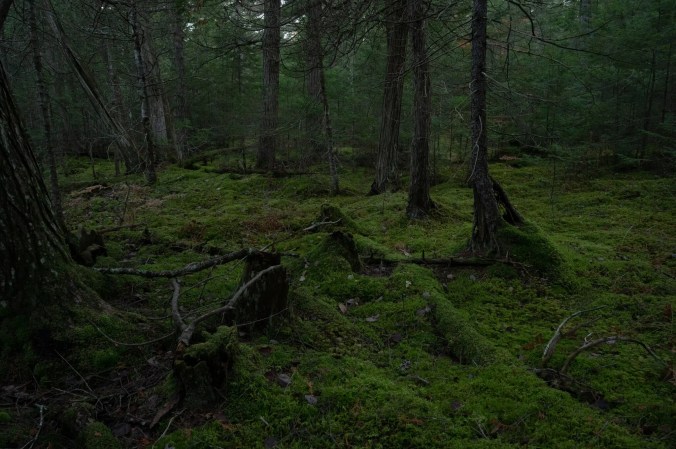
Dawn rises over a forest outside Orono, Me. Researchers want to understand what leads mice, voles and other small animals to bury seeds that become forests.

There really are coincidences that have nothing to do with the overreach of internet companies who see what you are reading in one place and put something in front of you instantly, and for a long time following, based on that first subject. In this case, I was reading about the endless quest for a better mousetrap, and then came upon this fascinating article about the ecosystem services that mice convey. This was as smile-inducing a juxtaposition as my reading has provided me lately. I hope I am correct that this pure chance and not some creepy algorithm, which would wilt my grin:

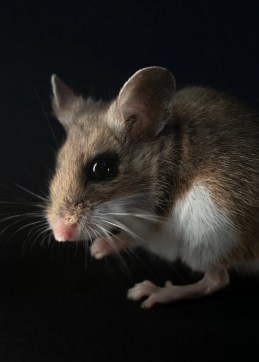
A deer mouse, temporarily captured for a behavioral test before being rereleased to the grounds of a study site at the University of Maine in late October.

Scientists are unearthing a quiet truth about the woods: Where trees grow, or don’t, depends in part on the quirky decisions of small mammals.

It’s easy to look at a forest and think it’s inevitable: that the trees came into being through a stately procession of seasons and seeds and soil, and will replenish themselves so long as environmental conditions allow.

Hidden from sight are the creatures whose labor makes the forest possible — the multitudes of microorganisms and invertebrates involved in maintaining that soil, and the animals responsible for delivering seeds too heavy to be wind-borne to the places where they will sprout. Continue reading

A Paradox Wrapped In A Conundrum

We almost always side with the animals. But sometimes there are no easy answers. Just puzzles.

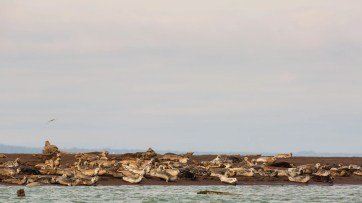
Parker Miles Blohm / KNKX. Harbor seals hauled out at low tide on the Nisqually River on October 10, 2022.

In this case, for what it is worth, our support is with the humans:

Seals and sea lions vex Washington tribes as Marine Mammal Protection Act turns 50

50 years ago, President Nixon signed the Marine Mammal Protection Act into law. The act has been hugely successful in restoring the abundance of the marine species it protects. But some say it’s too successful.

Tribes in particular say their treaty rights to fishing are under threat because now, too many seals and sea lions are feasting on endangered salmon. Continue reading

Splooting To Beat The Heat

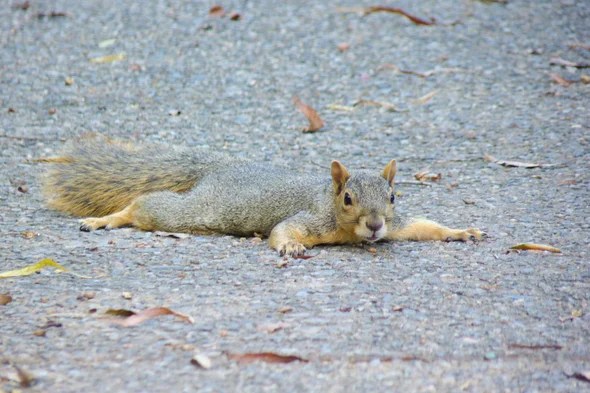
A squirrel in full “sploot” posture. Credit: Debra L Tuttle/Getty Images

Funny as it sounds, it is worth considering how animals deal with heat:

During a Heat Wave, You Can Blast the AC, but What Does a Squirrel Do?

Although recent spikes in temperature affect all of us, our urban critters have had to find their own ways to beat the heat. Sometimes they “sploot.”

It’s summertime in New York City–birds are chirping, insects are scurrying, and everything feels alive! While recent heat waves have pushed a lot of us indoors to the respite of air conditioning, the critters of this city were left to fend for themselves. Continue reading

Turtles & Tortoises & Negative Senescence

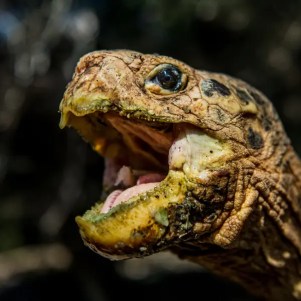
A giant Galápagos tortoise, only as old as it feels. Meridith Kohut for The New York Times

When I learn a new word–even if it is a word I cannot picture using in conversation but it represents a concept that is interesting and surprising, I consider that a good day. Jack Tamisiea, thanks for the science reporting here, and especially for the word senescence:

Tortoises and turtles don’t just live for a long time — they barely age while they live.

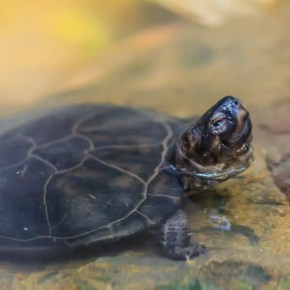
The black marsh turtles displayed negative rates of senescence, meaning their mortality risk decreased as they aged. iStock/Getty Images

For mammals like humans, aging is inevitable. No matter how many vitamins we take, skin sags, bones soften and joints stiffen over time. However, turtles and tortoises age more gracefully. Despite their wrinkled skin and toothless gums, species like Galápagos giant tortoises seem unscathed by the ravages of aging. Some show few signs of slowing down as they plod into their 100s.

To determine what drives these ageless wonders, two groups of researchers examined turtles, tortoises and their ectothermic, or coldblooded, brethren in a pair of studies published Thursday in the journal Science. Continue reading

Ed Yong Explains Umwelt

Sally Deng

Ed Yong’s new book was already on our reading list, but just got notched up in the priority list:

Spectacle floods into my eyes whenever I watch a wildlife documentary. A vortex of small fish is gradually picked off by waves of oceanic predators. Snakes chase after marine iguanas. Giraffes clash at sunset. Continue reading

What the #@ ϟ ⚛︎!

The first mention of humpback whales in our pages, more than a decade ago, was a very brief reference in a post explaining the tragedy of the commons, a precursor to Seth’s environmental history honors thesis.  One post mentions humpback whales in Monterey Bay but we missed the video above until now. There have been so many posts about these whales, that missing it makes the following book review all the more interesting to read to the end. Of course, since it is a review by Elizabeth Kolbert, about a book by Ed Yong, you will want to read to the end anyway:

The Strange and Secret Ways That Animals Perceive the World

Nonhuman creatures have senses that we’re just beginning to fathom. What would they tell us if we could only understand them?

One evening almost sixty years ago, a Tufts University researcher named Roger Payne was working in his lab when he heard a radio report about a whale that had washed up on a beach nearby. Although it was a cold, wet March night, he decided to drive to the shore. Continue reading

P-22 & Other Cats In The Santa Monicas

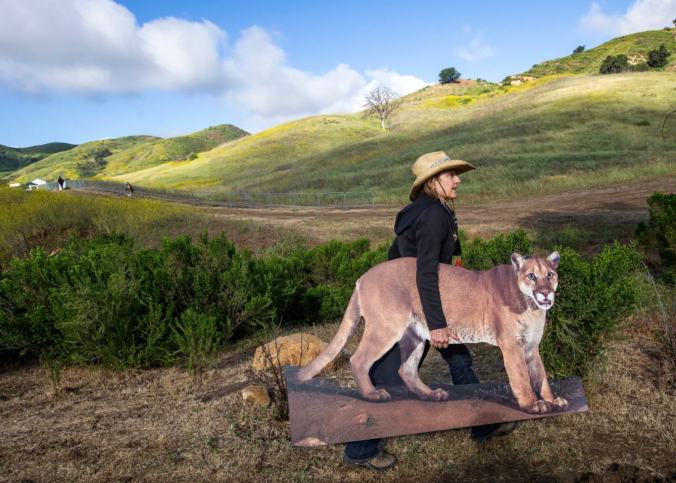
Near the location of the future Wallis Annenberg Wildlife Crossing, a volunteer for the National Wildlife Federation carries a cardboard cutout of a mountain lion known as P-22. Photograph by Mel Melcon / Los Angeles Times / Shutterstock

When we linked to earlier stories about mountain lions in urban California, P-22 was already the it-cat. And the story below, by Emily Witt, shares some anecdotes about P-22’s less fortunate wider family. But mainly it is about one hopeful initiative that P-22 seems to have unwittingly helped make happen:

An Urban Wildlife Bridge Is Coming to California

The crossing will span Route 101, providing safe passage for mountain lions and other animals hemmed in by the freeways that surround the Santa Monica Mountains.

It was just after midnight on April 21st when the radio collar of P-97, an eighteen-month-old mountain lion, sent its last signal. P-97 had only recently separated from his mother, setting out east in the Santa Monica Mountains in search of territory to call his own. (The “P” stands for puma; the number, 97, marks how many mountain lions the National Park Service had tagged when he received the designation.) Continue reading