Sweden’s announcement this week that it is to build a series of animal bridges is the latest in global efforts to help wildlife navigate busy roads
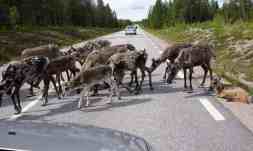
Reindeer viaducts in Sweden will keep herds safe from traffic as they roam in search of grazing. Photograph: Pawel Garski./Alamy
Every April, Sweden’s main highway comes to a periodic standstill. Hundreds of reindeer overseen by indigenous Sami herders shuffle across the asphalt on the E4 as they begin their journey west to the mountains after a winter gorging on the lichen near the city of Umeå. As Sweden’s main arterial road has become busier, the crossings have become increasingly fractious, especially if authorities do not arrive in time to close the road. Sometimes drivers try to overtake the reindeer as they cross – spooking the animals and causing long traffic jams as their Sami owners battle to regain control. Continue reading →
Last week I walked with my grand-daughter among these almendro trees. Amie and I helped plant these when they were foot-high saplings in 2019, and we tagged one with our grand-daughter’s name. The trees, now 3+ feet high, are part of a coastal reforestation scheme; their beneficence includes producing fruits favored by scarlet macaws.
Demonstrators gather in front of the White House to protest the proposed Keystone XL pipeline, in the summer of 2011. Photograph by Melissa Golden / Redux
Everyone loves scarlet macaws. And these trees grow faster than our grand-daughter, giving constant positive feedback. When you have an opportunity to do something like plant a tree, or any other restorative act, first things first: do it. Thanks to Bill McKibben for pointing this out as one of the highlights of yesterday’s change of scenery in Washington, D.C.:
In his first hours in office, Joe Biden has settled—almost certainly, once and for all—one of the greatest environmental battles this country has seen. He has cancelled the permit allowing the Keystone XL pipeline to cross the border from Canada into the United States, and the story behind that victory illustrates a lot about where we stand in the push for a fair and working planet. Continue reading →
Sonia Shah, a science journalist and author of “The Next Great Migration: The Beauty and Terror of Life on the Move,” has provided a great summary of recent developments on the study of animal migration:
An ambitious new system will track scores of species from space — shedding light, scientists hope, on the lingering mysteries of animal movement.
‘‘I’m going to do a set of coos,” Calandra Stanley whispered into the radio. The Georgetown ornithologist and her team had been hunting cuckoos, in an oak-and-hickory forest on the edge of a Southern Illinois cornfield, for weeks. Droplets of yesterday’s rain slid off the leaves above to those below in a steady drip. In the distance, bullfrogs croaked from a shallow lake, where locals go ice fishing in winter. Continue reading →
A painted bunting in Florida. Painted buntings are about 5in in length, dine on seeds and insects and prefer to construct nests in dense foliage. Photograph: Education Images/Universal Images Group/Getty Images
If we had been close by, no doubt we would try to see it:
Give a toast to cork forests, which store a great deal of carbon pollution.
If you open a bottle of champagne or wine this New Year’s Eve, take a look at the stopper.
In recent years, plastic stoppers and screw tops have come on the market as alternatives to natural cork, but cork can be better for the climate.
Cork is harvested in the Mediterranean from the bark of cork oak trees. The process does not harm the tree, and the bark regrows. But the first harvest cannot begin until the tree is about 25 years old. Continue reading →
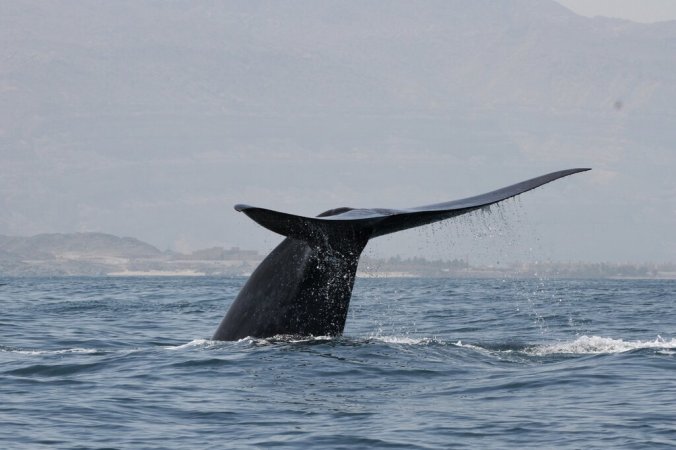
Researchers said that the blue whale song that crackled through the team’s underwater recordings was unlike any they had heard. Robert Baldwin/Environment Society of Oman
Thanks to Katherine J. Wu for this, especially for sharing the recordings of the whale song, and the musical reference for how to think about the difference between this whale population’s song and the that of other whale populations:
The whales in the group seem to sing a unique song.
Weighing up to 380,000 pounds and stretching some 100 feet long, the blue whale — the largest creature to have ever lived on Earth — might at first seem difficult for human eyes and ears to miss.
But a previously unknown population of the leviathans has long been lurking in the Indian Ocean, leaving scientists none the wiser, new research suggests. Continue reading →
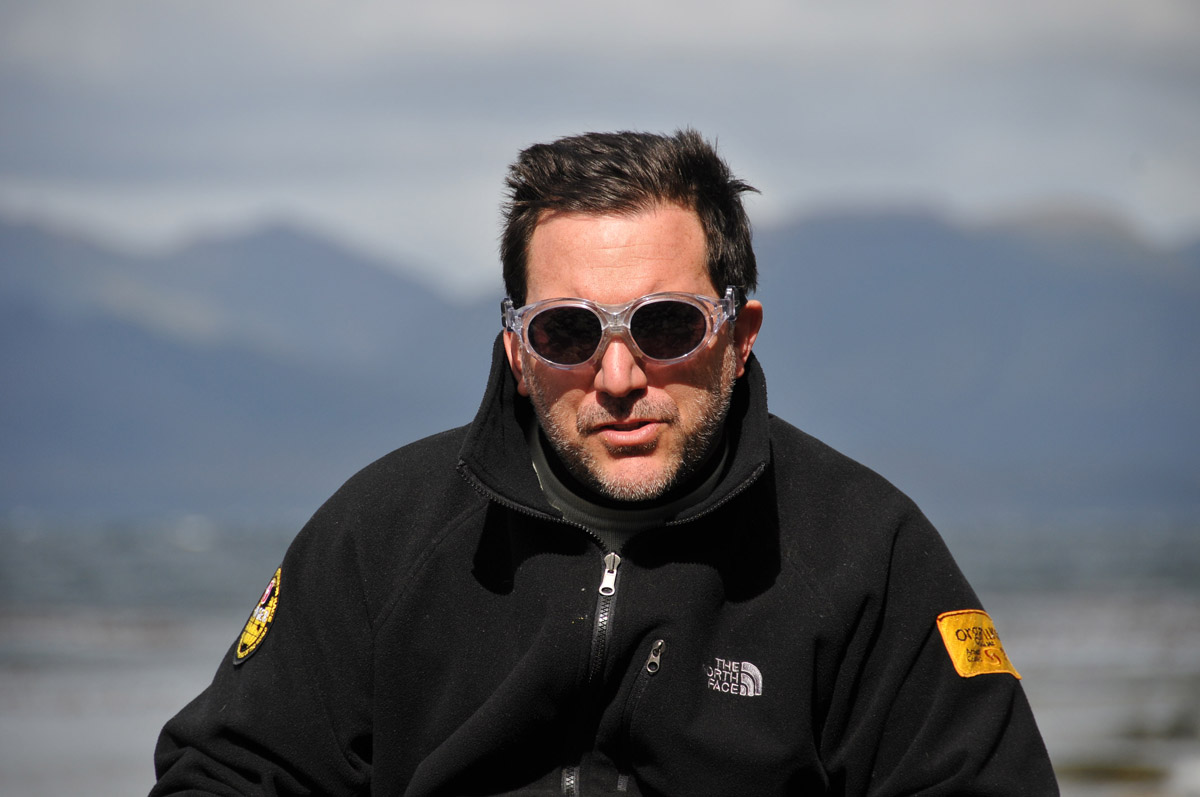
In a brief interview a student recorded my description of the work I was doing in southern Chile from 2008-2010. The Patagonia Expedition Race had secured Wenger’s sponsorship, and now graduate students from Columbia Business School, as well as from Cornell Hotel School, were developing a strategy for how best to use that sponsorship money to achieve lasting conservation results. The patch on the left arm of my jacket shows another sponsor.
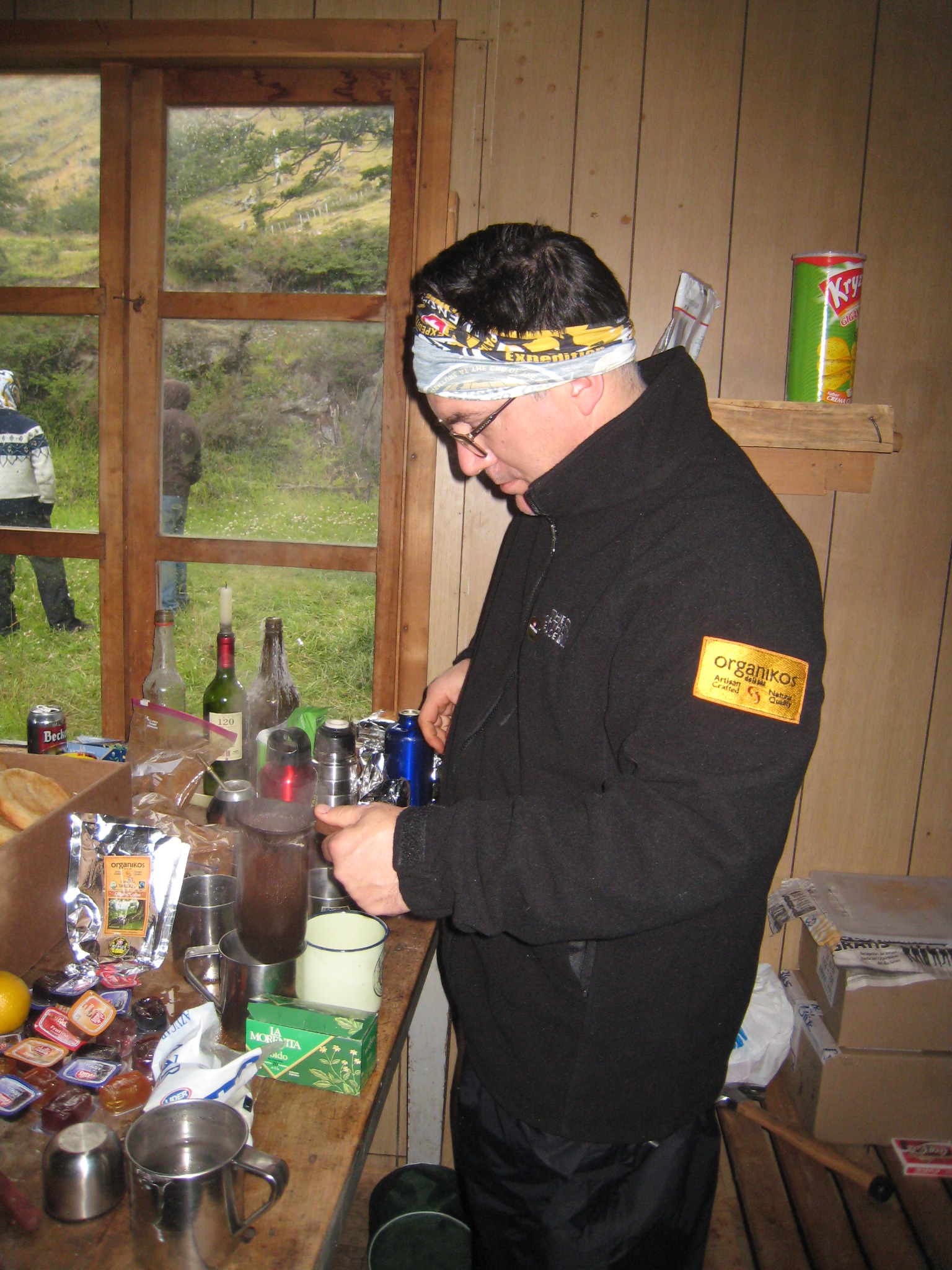
Organikos was a minor sponsor compared to Wenger, but in that earlier iteration of Organikos we were already thinking about what is now the 100% Forward commitment. As a sponsor, I also served coffee from sunrise to sunset at each station along the Race’s 500-mile route. Somewhere I have photos of the race teams drinking Organikos coffee, but at the moment I only find this one of me prepping coffee in the traditional Costa Rican manner to serve to Race volunteers in a farmhouse where we had spent the night on Tierra del Fuego.
In this photo to the left I was waiting for the racers who would soon be arriving at this station in their kayaks. As serious as I appeared to be, it would take nearly a decade to get that coffee launched more formally into the market.
Images Andrew Wilson, Mark Humpfrey, Nicola MaCleod and Bruce Duncan of Team Helly Hansen-Prunesco paddling their way to victory in stage 15 of the 2010 Wenger Patagonian Expedition Race on the island of Tierra del Fuego in southern Chile. Michael Clark Photography
Not long after the photos above were taken, we accepted a new assignment in India that would put the original idea of Organikos on hold. Recently, when Seth took the name and gave it a clear conservation mission, coffee was still the most viable product to start with. I am reminded of all that thanks to Sandra Laville, and the Guardian. Her article, full of good news related to conservation funding in the UK, triggers my memory of the fact that beavers are an invasive species in Patagonia and the Race had the mission of controlling their spread, in the interest of wilderness conservation. Beavers in their natural habitat are in need of protection in some locations, I see:
Donations from individuals and charities to green causes more than double since 2016
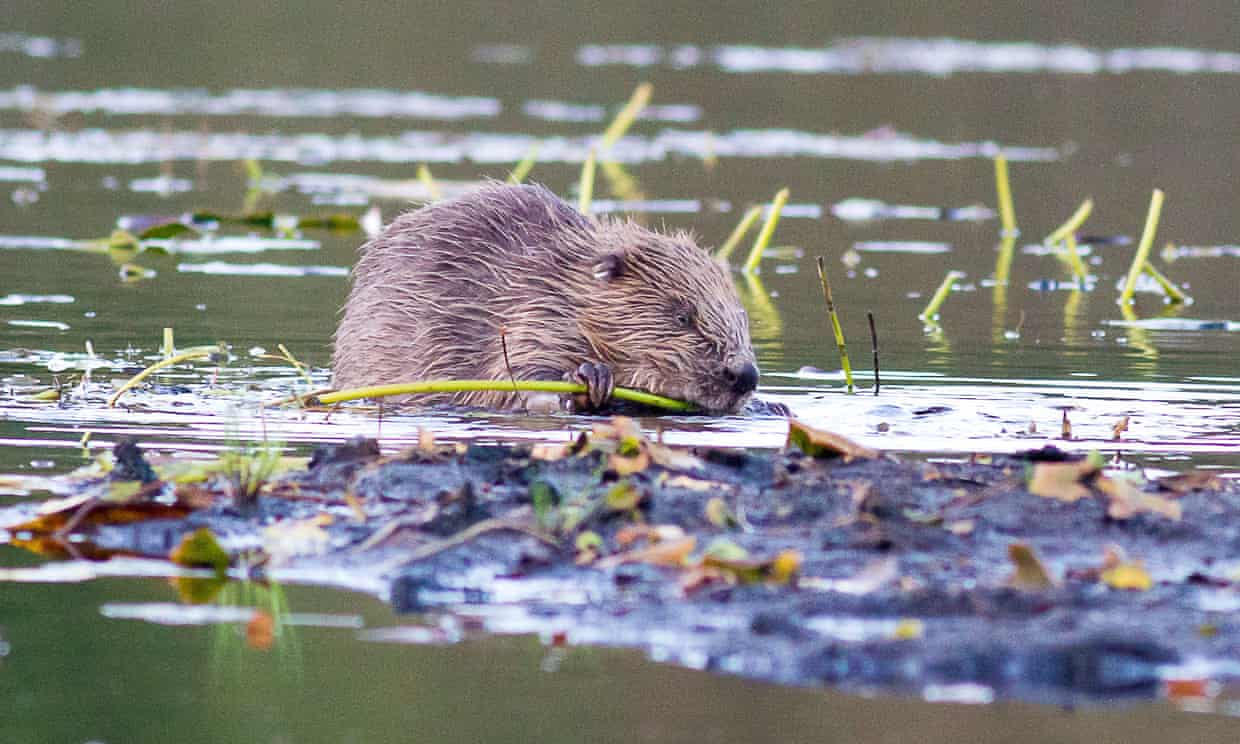
Funding from the People’s Trust for Endangered Species helped reintroduce beavers in Knapdale Forest in Scotland. Photograph: Steve Gardner/Scottish Wildlife Trust/PA
Philanthropic donations to environmental causes have more than doubled in value in the UK as the climate crisis and unprecedented biodiversity loss attract increasing attention from individuals and charities.
The amounts of money given to support efforts to tackle climate change and nature loss range from £5,000 to millions of pounds, and the focus of the funding is as broad.
It includes a £10,000 donation given to support a successful campaign for a deposit return scheme in Scotland; the funding of grassroots defenders of Europe’s last primeval forest, in Poland, and the protection of wetlands in Montenegro; and millions of pounds in support of environmental legal challenges and donations to back campaigning against fossil fuels. Continue reading →
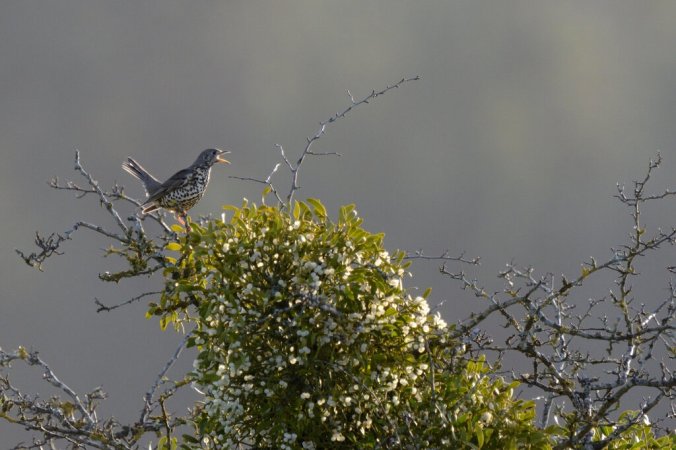
A recent analysis challenges the hypothesis that songbirds helped with a vital step in mistletoe evolution, the move from the ground to the treetops. Fabrice Cahez/Nature Picture Library/Alamy
Cara Giaimo, as ever providing surprising explanations of natural phenomena, has this biology lesson for a holiday tradition:
While some local counts may be cancelled due to regional COVID-19 rules, many community scientists across the hemisphere will carry on one of the longest-running wildlife censuses in a socially distanced fashion.
NEW YORK — For the 121st year, the National Audubon Society is organizing the annual Audubon CBC. Between December 14 and January 5, tens of thousands of bird-loving volunteers will participate in counts across the Western Hemisphere all while abiding by Audubon’s COVID-19 guidelines. Continue reading →
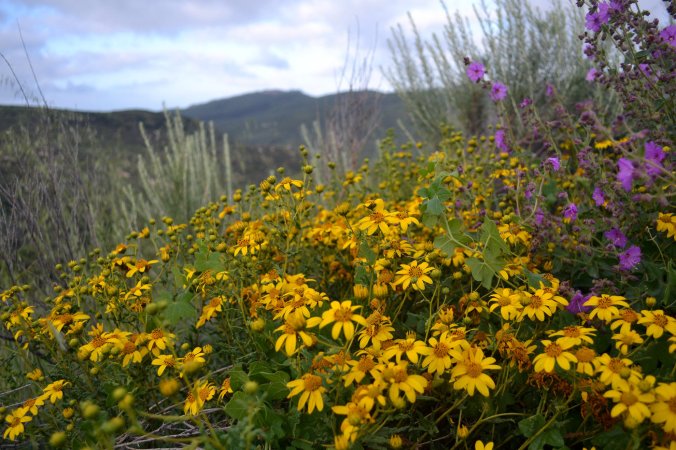
These sunflowers in San Diego National Wildlife Refuge are wild relatives of sunflowers that farmers around the world grow to produce oil. Lisa Cox/USFWS
Thanks to National Public Radio (USA) for this summary of a recent scientific study:
Hundreds of native North American plants, often dismissed as weeds, deserve a lot more respect, according to a new study. These plants, distant cousins of foods like cranberries and pumpkins, actually represent a botanical treasure now facing increased threat from climate change, habitat loss and invasive species.
The crops that the human race now depends on, including grains like wheat and tree fruit like peaches, originally were selected or bred from plants that grew wild hundreds or thousands of years ago. And those ancestral plants, like the small wild sunflowers that can be found across the United States, still exist. “If you see them growing along roadsides, those are the ancestors,” says Colin Khoury, a research scientist at the International Center for Tropical Agriculture. Continue reading →
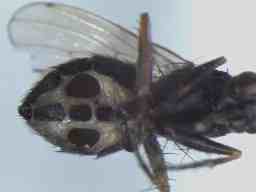
Spores of the parasitic fungus Strongwellsea acerosa. Infected hosts continue to function for days. Photograph: Faculty of Science/University of Copenhagen
The image above, on its own, would be a mystery calling to be explained. Phoebe Weston has our attention again, this time with a story from the fungi universe:
Insect-destroying fungi ‘may represent the next frontier for drug discovery’
A fly infected with the fungus Strongwellsea tigrinae. Spores are discharged through a hole in the abdomen. Photograph: Faculty of Science/University of Copenhagen
Two new fungi species that infect flies and eject spores out of a large hole in the insect’s abdomen “like small rockets” have been discovered in Denmark.
compared to 40% of the EU area and 46% of Europe as a whole
When we talk about expanding woodland and tree cover, sometimes we jump on tree planting as the solution. It certainly has a role to play, but nature is an old hand at planting trees and usually does it better.
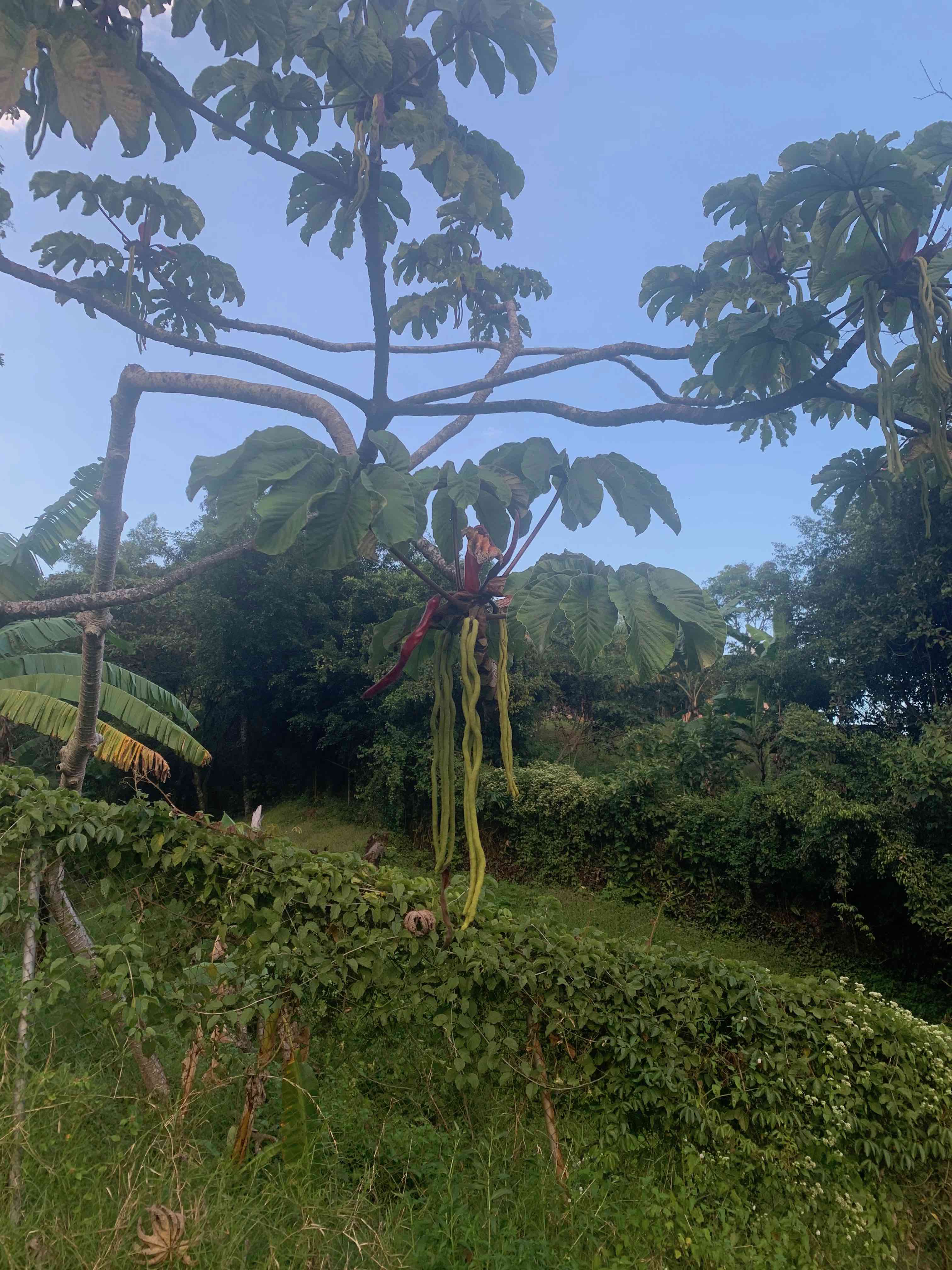
Yesterday, while working on the land we are preparing to plant coffee a few months from now, I noticed that the cecropia trees suddenly have abundant fruit. I knew that sloths love these trees, but while looking for more information to understand this fruit I learned that bats and birds and other animals also appreciate them for food and nesting material; plus, the leaves and roots of the trees have many uses among indigenous communities in the American tropics.
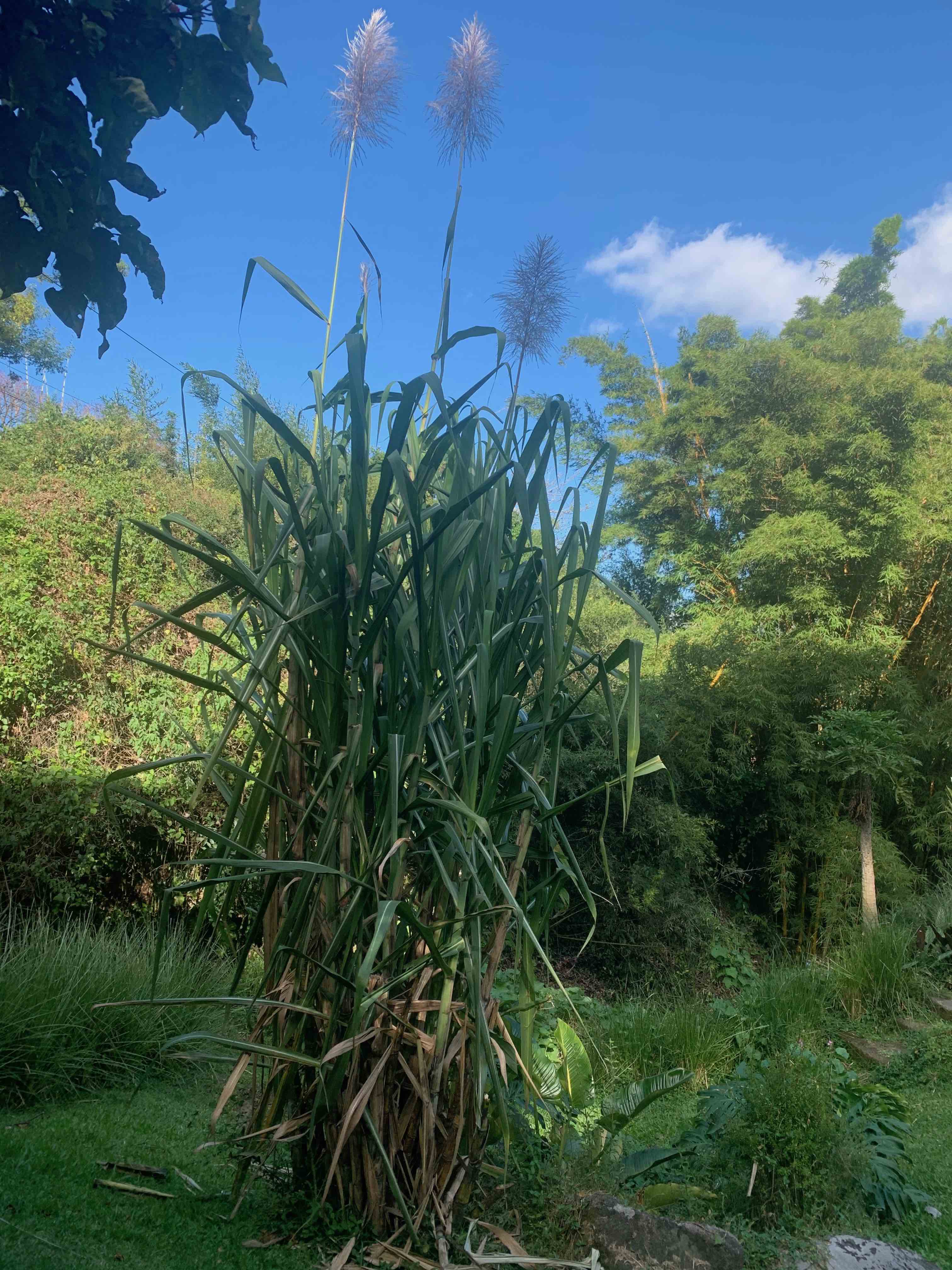
Most of my work recently, now that the poro saplings are planted, is removing unwanted grasses to make way for wanted grasses that help retain soil. One of the grasses planted this year, sugarcane, also surprised me. This plant above, now about one year old, suddenly shot up an extra five feet without my noticing, until yesterday. And the furry, flowery top of the stalks, now visible nearly 20 feet above ground, presumably mean something I will need to read up on. This first stand of sugarcane, which is at the highest point of the land on this property, provided us offspring that we planted along the lowest portion of land, neighboring bananas and plantains that will shade one section of coffee saplings.
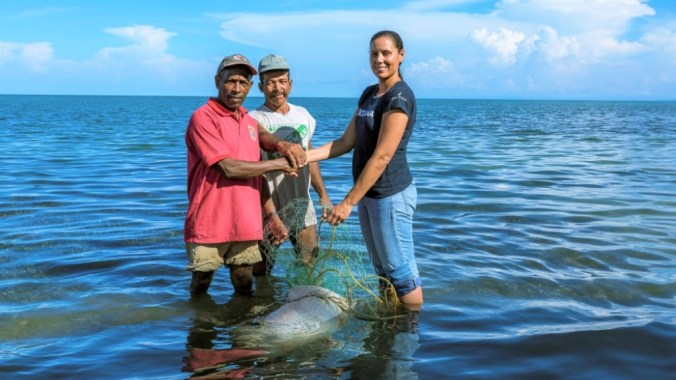
For a country that’s slightly smaller than the U.S. state of Massachusetts, Belize boasts an inordinate number of ocean wonders. It’s home to the world’s second longest barrier reef, which Charles Darwin once described as “the most remarkable reef in the West Indies.” Here, you’ll find more than 500 unique fish species – enough to give every Belizean island its own mascot and still have about 50 left over.
Because this little Caribbean country has a lot worth protecting, it has enacted some of the strongest ocean conservation laws in the world – and they just got even stronger. Following hard-fought victories that banned all trawling and offshore oil drilling in Belize’s waters, the country has now outlawed gillnets, a fishing gear that kills turtles, manatees, and many other marine animals.
In addition to implementing a nationwide gillnet ban, the Belizean government signed an agreement with Oceana and the Coalition for Sustainable Fisheries to help licensed gillnet fishers transition to other jobs. As a result, Belizean resources and livelihoods will be protected well into the future.
As Janelle Chanona, Oceana’s head in Belize, put it: “This is a historic moment for Belize, her people, the Caribbean Sea and, most importantly, for everyone who depends on the country’s marine resources for their livelihoods.” Continue reading →
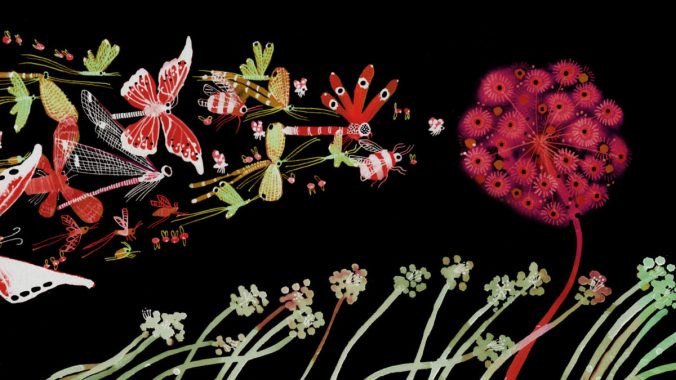
As the curvy berm we started forming earlier this year, combined with 100+ newly planted trees, transition from wet season to dry season, we have been noticing an uptick in insects. While most of my early life experiences in Connecticut led me to believe that the world (or at least I) would be better off with fewer insects, I now think exactly the opposite. Last Sunday I had my first sighting of a bird (same species as our friend Daniel captured by camera in Guatemala a few weeks ago) that is likely here for some of those insects. That sighting alone would have been enough to convince me that more insects are better than fewer. Janet Marinelli‘s article in Yale Environment360 gives me more to ponder on this topic:
The impact of introduced plants on native biodiversity has emerged as a hot-button issue in ecology. But recent research provides new evidence that the displacement of native plant communities is a key cause of a collapse in insect populations and is affecting birds as well.
Zebra swallowtails are entirely dependent on pawpaw trees, which have leaves that are the butterflies’ larvae only source of food. COURTESY OF DOUGLAS TALLAMY
For years, Doug Tallamy sounded the alarm about the grave threat that plants introduced from abroad pose to native insects. By transforming native plant communities into so-called novel landscapes increasingly dominated by exotic species on which many insects cannot feed, the University of Delaware entomologist speculated, they imperil not only insects but also the birds and other animals that depend on insects for survival. Continue reading →
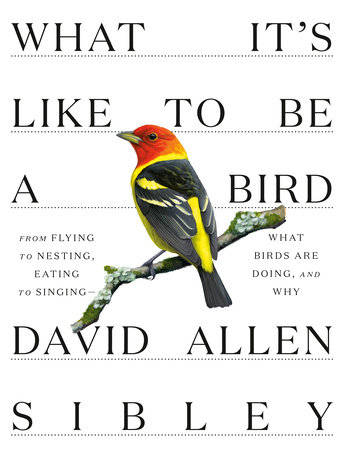
The bird book for birders and nonbirders alike that will excite and inspire by providing a new and deeper understanding of what common, mostly backyard, birds are doing–and why
“Can birds smell?” “Is this the same cardinal that was at my feeder last year?” “Do robins ‘hear’ worms?” In What It’s Like to Be a Bird, David Sibley answers the most frequently asked questions about the birds we see most often…
Have you ever wondered what it’s like to be a bird? Can birds smell? Is that the same cardinal that was at your feeder last year? What are backyard birds doing and why? Continue reading →
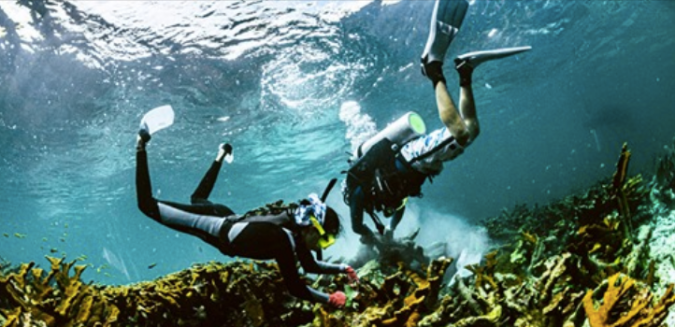
In an unusual experiment, a coral reef in Mexico is now insured against hurricanes. A team of locals known as “the Brigade” rushed to repair the devastated corals, piece by piece.
When Hurricane Delta hit Puerto Morelos, Mexico, in October, a team known as the Brigade waited anxiously for the sea to quiet. The group, an assortment of tour guides, diving instructors, park rangers, fishermen and researchers, needed to get in the water as soon as possible. The coral reef that protects their town — an undersea forest of living limestone branches that blunted the storm’s destructive power — had taken a beating.
Now it was their turn to help the reef, and they didn’t have much time.
“We’re like paramedics,” said María del Carmen García Rivas, director of the national park that manages the reef and a leader of the Brigade. When broken corals roll around and get buried in the sand, they soon die. But pieces can be saved if they are fastened back onto the reef.
“The more days that pass, the less chance they have of survival,” she said.
The race to repair the reef is more than an ecological fight; it’s also a radical experiment in finance. The reef could be the first natural structure in the world with its own insurance policy, according to environmental groups and insurance companies. And Hurricane Delta’s force triggered the first payout — about $850,000 to be used for the reef’s repairs.
The success or failure of this experiment could determine whether communities around the world start using a new tool that marries nature and finance to protect against the effects of climate change. The response to Delta was a first test. Continue reading →
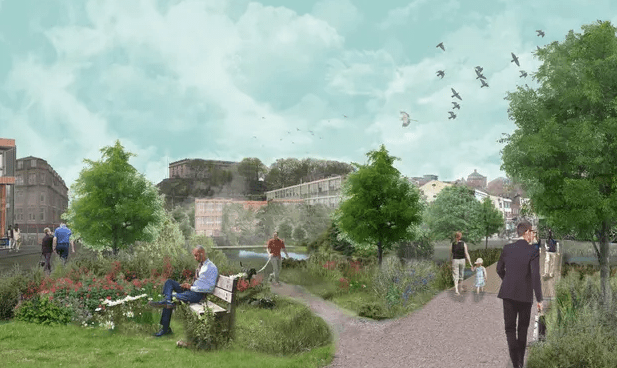
What the Broadmarsh area of central Nottingham could look like if the Wildlife Trust’s ambitious post-Covid wildscape plan gets the go-ahead. Photograph: The Wildlife Trusts
When we’ve written about rewilding on this site before we usually are referring to bringing wildlife back into a landscape that had lost it for decades, if not centuries. This Nottingham project has precedent in terms of plans to transform an urban eyesore into public space that is welcoming to both biodiversity of fauna and flora, and the people who will benefit from taking pleasure in it.
Thanks to the Guardian for highlighting the story. We look forward to reading about the finished project!
An additional Public Service Announcement: If you like this story the Nottingham Wildlife Trust has an ongoing petition to help make this project a reality. Please feel free to follow the link and add your name. Being local to Nottingham is not required.
An empty 1970s shopping centre in Nottingham could be transformed into wetlands, pocket woodlands and a wildflower meadow as part of a post-pandemic urban rewilding project.
The debate about Broadmarsh shopping centre, considered an eyesore by many, has rumbled on for years. This year it was undergoing a £86m revamp by real estate investment trust Intu when the firm went into administration.
The number of empty shops on UK high streets has risen to its highest level in six years, and as retail giants such as Debenhams and Arcadia Group falter, Nottinghamshire Wildlife Trust has come up with a new model of inner city regeneration: urban rewilding.
The trust wants to bulldoze the already half-demolished Broadmarsh building and turn it into 2.5 hectares (6 acres) of scruffy green space at an estimated cost of £3-4m. The designs were created with Influence Landscape Architects and could set a precedent for what to do with the growing amount of vacant retail space in other cities. “It’s unbelievable to hear that stores like Debenhams are in the position they are in – they’re stalwarts of the city, but it does put out an opportunity,” said Sara Boland, managing director of Influence. Continue reading →
On a topic we have posted about at least a few times before, here is the latest science on the ways in which trees communicate among themselves, and with others, accompanied by some phenomenally beautiful supporting photographs (especially the fungi):
Trees appear to communicate and cooperate through subterranean networks of fungi. What are they sharing with one another?
By Ferris Jabr Photographs by Brendan George Ko
As a child, Suzanne Simard often roamed Canada’s old-growth forests with her siblings, building forts from fallen branches, foraging mushrooms and huckleberries and occasionally eating handfuls of dirt (she liked the taste). Her grandfather and uncles, meanwhile, worked nearby as horse loggers, using low-impact methods to selectively harvest cedar, Douglas fir and white pine. They took so few trees that Simard never noticed much of a difference. The forest seemed ageless and infinite, pillared with conifers, jeweled with raindrops and brimming with ferns and fairy bells. She experienced it as “nature in the raw” — a mythic realm, perfect as it was. When she began attending the University of British Columbia, she was elated to discover forestry: an entire field of science devoted to her beloved domain. It seemed like the natural choice.
Mushrooms and conks are the fruiting bodies of fungi. Their underground filaments form networks among the root systems.
By the time she was in grad school at Oregon State University, however, Simard understood that commercial clearcutting had largely superseded the sustainable logging practices of the past. Loggers were replacing diverse forests with homogeneous plantations, evenly spaced in upturned soil stripped of most underbrush. Without any competitors, the thinking went, the newly planted trees would thrive. Instead, they were frequently more vulnerable to disease and climatic stress than trees in old-growth forests. In particular, Simard noticed that up to 10 percent of newly planted Douglas fir were likely to get sick and die whenever nearby aspen, paper birch and cottonwood were removed. The reasons were unclear. The planted saplings had plenty of space, and they received more light and water than trees in old, dense forests. So why were they so frail? Continue reading →









 Organikos