Tokyo’s Rooftop Solar

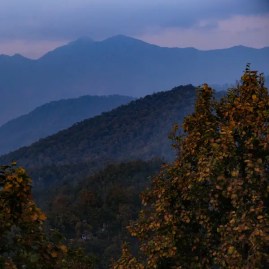
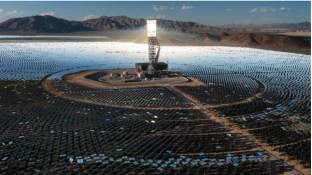
A rooftop solar installation in Yokohama, near Tokyo. COCREATR VIA FLICKR

Our hats off to Japan’s largest city for this requirement:

Tokyo to Mandate Rooftop Solar Panels on New Homes

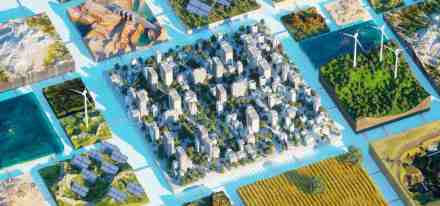
Tokyo is mandating that all new homes in the city be built with rooftop solar panels starting in 2025. Continue reading

Climate Science Is Getting Old

Scientist Roger Revelle, an adviser who warned Lyndon Johnson about climate change in 1965, greets the president in the Oval Office. Roger Revelle papers/Special Collections Archives/UC San Diego

In keeping with a theme–that the science of climate risk has been around for a couple generations now–we have linked to each time there are new revelations:

What Big Oil Knew About Its Products’ Climate Risks—and When

A long-forgotten report sheds light on a high-stakes liability question.

Carroll Muffett began wondering in 2008 when the world’s biggest oil companies had first understood the science of climate change and their product’s role in causing it. Continue reading

The Little Countries That Could

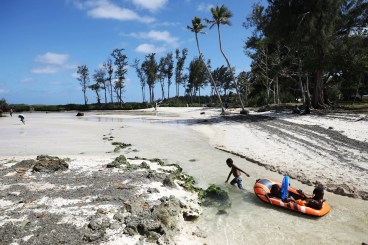
The atoll nation of Vanuatu is threatened by rising seas. “We had to learn how to manage our unimportance,” its president said. Mario Tama/Getty Images

This story has a familiar ring to it, if you are familiar with the history of Costa Rica going back to colonial times. Never a particularly “important” part of the empire, it thereby avoided many pitfalls typical of other countries in Latin America, and evolved into a stable democracy with progressive ideas and goals and achievements. We wish this little country in the Pacific comparable success by thinking outside the box, as its president says:

Emergency supplies being distributed after Cyclone Harold in 2020. International Federation of Red Cross, via Agence France-Presse — Getty Images

It wants a top international court to weigh in on whether nations are legally bound to protect against climate risks.

Nikenike Vurobaravu presides over a tiny country with a large hand in climate diplomacy.

Rising sea levels threaten the very existence of his Pacific Island nation of Vanuatu and its population of just over 300,000 people. Its best defense, he says, it to raise its voice creatively in international diplomatic talks. Continue reading

Is Cruise Travel Evolving In A Way That Is Good For The Planet?

Cruise ship tourism is unfortunately not disappearing as we might have hoped. Are the ships evolving to be more environmentally and socially responsible? Our thanks to Maria Cramer for asking and attempting to answer the question:

How Green is Your Cruise?

As cruise companies head into their busiest season, they say they have ambitious plans to curb greenhouse emissions and find cleaner sources of fuel. But critics say the progress is too slow.

In the Caribbean, many cruise companies have bought islands and turned them into private resorts for the exclusive use of cruise passengers who cavort in enormous wave pools, rush down 135-foot water slides with names like Daredevil’s Peak, and zip-line across wide beaches. Continue reading

Thwaites & Us

Probes beneath the ice could shed light on the fate of the world’s coastlines. Illustration by Owen D. Pomery

Most of us do not spend much time thinking about what is happening there, but Antarctica’s future is now very much entwined with the future of the rest of the planet.  All of us. So, thanks to David W. Brown for this travelogue:

Journey to the Doomsday Glacier

Thwaites could reshape the world’s coastlines. But how do you study one of the world’s most inaccessible places?

I first saw our icebreaker, the RV Araon, when we were due to leave for Antarctica. The largest icebreakers are more than five hundred feet long, but the Araon was only the length of a football field; I wondered how it would handle the waves of the Southern Ocean, and how it would fare against the thick sea ice that guards the last wilderness on Earth. Continue reading

Startling Capacities Of Regional Forests

Harvard Forest (pictured) was included in a study that looks at how New England forests can be better utilized in the fight against climate change.
Stephanie Mitchell/Harvard Staff Photographer

We had no clue how much forest area that region has, nor how much capacity to absorb carbon that would translate to:

New England forests, new strategies can offset most regional emissions over 30 years, report says

Study, led by Harvard ecologist, lays out five policies to boost levels of absorption as six states lower emissions

A major new report suggests that with a handful of strategies New England’s 32 million acres of forests, which cover about three-quarters of the region, could eventually come close to absorbing 100 percent of all the carbon produced by the six states. Continue reading

Turning Around Brazil

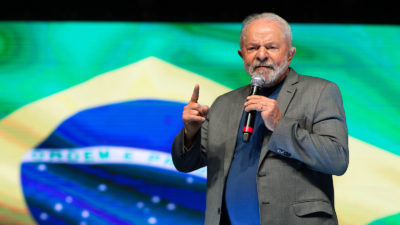
Brazil's president-elect, Luiz Inácio Lula da Silva, at a rally in July.

Brazil’s president-elect, Luiz Inácio Lula da Silva, at a rally in July. ANDRESSA ANHOLETE / GETTY IMAGES

We can only hope the answer is yes:

With Lula Back, Can Brazil Turn the Tide on Amazon Destruction?

With his return as Brazil’s president, Luiz Inácio Lula da Silva is promising to reverse the alarming rate of deforestation in the Amazon. But as he heads to key UN climate talks, his ambitious plans to achieve “zero deforestation” will need to find international support.

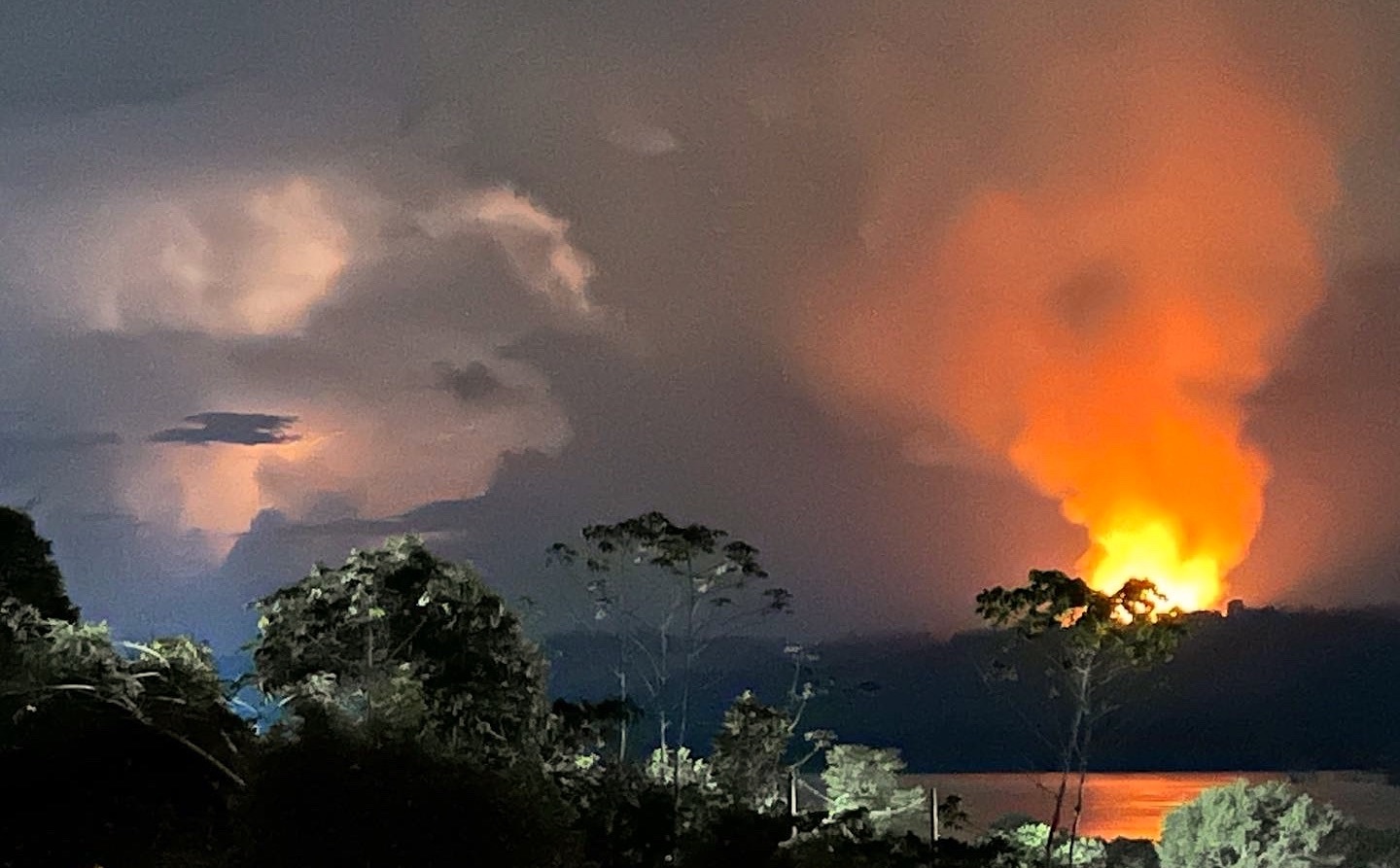
A forest fire burns near the author's home in Altimira, Brazil last month.

A forest fire burns near the author’s home in Altimira, Brazil last month. JON WATTS

The month before Brazil’s October 30 presidential election was the most brutal of Jair Bolsonaro’s term as president. Landowners rushed to illegally clear forest while they could rely on the impunity that had been a characteristic of the Bolsonaro era. From my home in Altamira, I could see flames on the other side of the Xingu River from a blaze large enough to generate its own lightning. Most other days in September and October, my asthmatic lungs tightened and the horizon was shrouded in haze as a consequence of the rushed burn-off. Continue reading

Nepal’s Community Forests

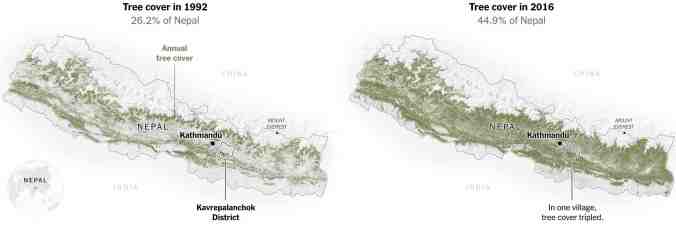
Note: Green areas show land that is mostly covered by trees, based on an analysis of satellite imagery. Source: Jefferson Fox, Jamon Van Den Hoek, Kaspar Hurni, Alexander Smith and Sumeet Saksena.By Pablo Robles

We have shared plenty of stories about Nepal, but until now no story about Nepal involving trees or forests. We welcome this one:

The community forests in Khairahani, Nepal, stretching over several tree-capped hills in March. Karan Deep Singh/The New York Times

An effort decades in the making is showing results in Nepal, a rare success story in a world of cascading climate disasters and despair

KANKALI COMMUNITY FOREST, Nepal — The old man moved gingerly, hill after hill, cutting dry shrubs until he was surrounded by trees that had grown from seedlings he had planted two decades ago. He pointed to a row of low peaks above the Kathmandu valley that were covered with dense foliage. Continue reading

Blue Carbon Collaboration

Scientists fixed bio-logger tags equipped with cameras on tiger sharks in the Bahamas to map the ocean’s seagrass meadows. Photograph: Diego Camejo/Beneath the Waves

We thank Laura Paddison for this underwater news, published in the Guardian, that has implication for climate change mitigation:

Scientists discover ‘world’s largest’ seagrass forest – by strapping cameras to sharks

New study, carried out using tiger sharks in the Bahamas, extends total known global seagrass coverage by more than 40%

Tiger sharks are notoriously fierce. The huge animals, which can grow to more than 16ft, are ruthless predators and scared of absolutely nothing – recent research found that while other shark species fled coastal waters during strong storms, tiger sharks “didn’t even flinch”.

But recently they have a new role that could help burnish their reputations: marine scientists. Continue reading

Choose Your Hope Vector Carefully

We all need an occasional dose of hope, especially when it comes to climate change. Choosing the right kind makes a huge difference, so give McKibben’s newsletter a thorough reading this week:

Magical Hope vs Actual Hope

Left or right, physics doesn’t much care about your wishful thinking

I spent the weekend in Reno, Nevada with, among other people, my old friend Rebecca Solnit. We were there to rally voters and knock on doors in one of the nastiest elections in the country—and at such times Solnit’s powerful reflections on hope are a balm and a spur. Continue reading

David Wallace-Wells & Co With New Perspective

After providing some of the deepest gloom, one of the environmental journalists we respect for not flinching or sugar-coating is singing a new tune, at least on this day:

Beyond Catastrophe

A New Climate Reality Is Coming Into View

By David Wallace-Wells
Photographs by Devin Oktar Yalkin
Captions by Charley Locke

You can never really see the future, only imagine it, then try to make sense of the new world when it arrives Continue reading

Memo From Mr. Gates

We have only rarely linked to stories featuring or mentioning Mr. Gates.

This is not because we do not value his opinions; we think he is the smart money on multiple fronts. Climate change is one of them.

Even if we consider McKibben the more reliable scribe, and even if we give Malmo his due, this is still smart money territory:

The state of the energy transition

My annual memo about the journey to zero emissions.

When I first started learning about climate change 15 years ago, I came to three conclusions. First, avoiding a climate disaster would be the hardest challenge people had ever faced. Second, the only way to do it was to invest aggressively in clean-energy innovation and deployment. And third, we needed to get going. Continue reading

Ecotage Made Plain

I first heard an interview with Andreas Malm last year, and listening to more on the subject I found his argument understandable, and compelling enough to read a bit further. But, I did not read the book. I let it go, the way one lets any taboo thought recede from memory. His book came back to my attention today with this essay. And I realize that by not sharing on this platform I was denying what is compelling about his basic argument. At the very least, I can share what the publisher says about the book:

Why resisting climate change means combatting the fossil fuel industry

The science on climate change has been clear for a very long time now.  Yet despite decades of appeals, mass street protests, petition campaigns, and peaceful demonstrations, we are still facing a booming fossil fuel industry, rising seas, rising emission levels, and a rising temperature. With the stakes so high, why haven’t we moved beyond peaceful protest? Continue reading

Deep Sea Creatures & Deep Sea Materials

Another type of gummy squirrel found on an expedition in the CCZ called Psychropotes semperiana. DeepCCZ Project

We have linked to articles concerned about mining deep sea locations for the materials needed in electric vehicle batteries, and other articles featuring deep sea creatures we had no previous knowledge of.  Now it is time to combine the two topics more explicitly, and we thank Benji Jones at Vox for this article:

Relicanthus daphneae, an anemone-like organism in the CCZ, stuck on top of the stalk of a dead sea sponge. Its tentacles can extend several feet long. Diva Amon and Craig Smith/University of Hawaiʻi

These spectacular deep-sea creatures live in a potential mining hot spot

The world needs more metals for batteries to fight climate change. Should it come at the cost of these animals?

Metallic nodules recovered from the Clarion-Clipperton Zone. Abyssline Project

If you were to dive to the bottom of the ocean somewhere between Hawaii and Mexico, you might see a field of sunken treasure. Here, in what’s called the Clarion-Clipperton Zone (CCZ), much of the seafloor is covered with fist-sized rocks that contain valuable metals like cobalt, manganese, and nickel. Continue reading

Infinity Trees

The trees, according to the ecologist Constance Millar, give you a “sense of infinity.” Photo by Adam Perez

We know that getting to a trillion trees is a stretch, but we might be able to sense infinity from a certain species of tree, according to Soumya Karlamangla in the New York Times article we link to here. Photos by Adam Perez help alot.

Bristlecone pines can live and reproduce even with only one branch of needles. Photo by Adam Perez

Historically I have worked to find my personal sense of infinity deep within tropical forests, but reading this and seeing the photos of these trees in a totally different type of ecysystem I can be convinced that it is elsewhere also:

In California, Where Trees Are King, One Hardy Pine Has Survived for 4,800 Years

In a harsh alpine desert, the Great Basin bristlecone pines abide amid climate change. Among them is the oldest tree on Earth (if you can find it).

Great Basin bristlecone pine trees endure in harsh conditions that other vegetation cannot withstand. Photo by Adam Perez

BISHOP, Calif. — Before the Egyptians built the Pyramids, before Jesus Christ was born, before the Roman Empire formed or collapsed, the trees were here.

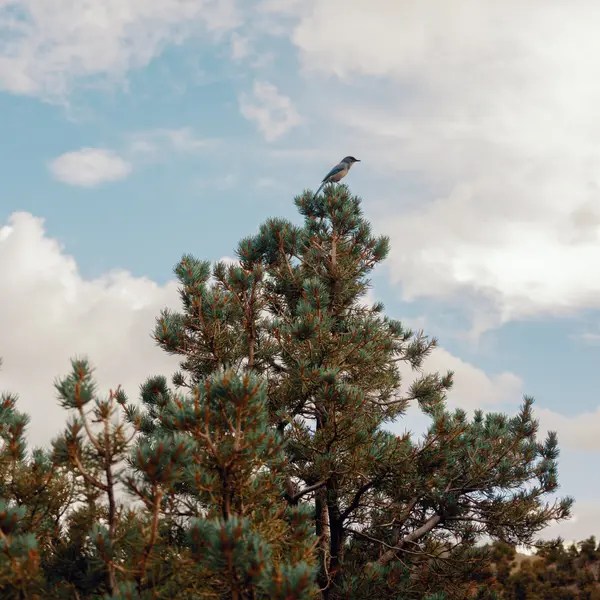
Ten thousand feet up in the White Mountains of central California, in a harsh alpine desert where little else survives, groves of gnarled, majestic Great Basin bristlecone pines endure, some for nearly 5,000 years. Their multicolor trunks bend at gravity-defying angles, and their bare branches jut toward the sky, as if plucked from the imaginations of Tim Burton or J.K. Rowling.

These ancient organisms, generally considered the oldest trees on Earth, seem to have escaped the stringent laws of nature. Continue reading

Challenges In Getting To A Trillion Trees

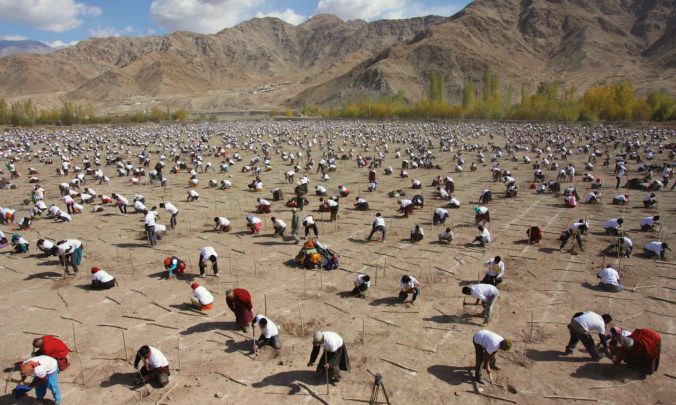
More than 9,000 people in Leh, India planted more than 50,000 tree saplings in under an hour on October 10, 2010. DRUKPA PUBLICATIONS VIA WIKIPEDIA

Fred Pearce has helped us understand the complexity in the relationship between trees and climate change, and this new story takes it to a logical extreme:

Phantom Forests: Why Ambitious Tree Planting Projects Are Failing

High-profile initiatives to plant millions of trees are being touted by governments around the world as major contributions to fighting climate change. But scientists say many of these projects are ill-conceived and poorly managed and often fail to grow any forests at all.

It was perhaps the most spectacular failed tree planting project ever. Certainly the fastest. Continue reading

The Race That Matters Most

Bernice Lee, an expert on climate politics at Chatham House, says: “Good results at a global level are built on strong domestic, local and regional action.” Illustration: Nathalie Lees

Thanks to the Guardian’s Environment editor, Damian Carrington, as always, for reminding us which horse to bet on:

Hope amid climate chaos: ‘We are in a race between Armageddon and awesome’

Renewables, decarbonisation, activism, cooperation … The challenge is immense, but the situation is far from hopeless

Every one of us will love someone who is still alive in 2100, says climate campaigner Ayisha Siddiqa. That loved one will either face a world in climate chaos or a clean, green utopia, depending on what we do today.

It’s a powerful reason for action, providing hope that the will for transformative change can be found. Continue reading

Previously Unheralded Climate Policy Good News

(David McNew / Getty)

Robinson Meyer‘s newsletter this week is the most positive in its history, so if only for that read it and click the banner above to sign up:

America’s Climate Bill Looks Even Better Than Before

Late last month, analysts at the investment bank Credit Suisse published a research note about America’s new climate law that went nearly unnoticed. The Inflation Reduction Act, the bank argued, is even more important than has been recognized so far: The IRA will “will have a profound effect across industries in the next decade and beyond” and could ultimately shape the direction of the American economy, the bank said. Continue reading

Reducing Emissions & Living Well

Gauchos at the Pintado wind farm in Corral de Piedra, Uruguay.

Gauchos at the Pintado wind farm in Corral de Piedra, Uruguay. Alessandro Cinque for The New York Times

We normally think of Costa Rica to answer this question, but it is in good company:

No greater challenge faces humanity than reducing emissions without backsliding into preindustrial poverty. One tiny country is leading the way.

Let’s say you live in the typical American household. It doesn’t exist, not in any sense except in a data set, but it’s easy enough to imagine.

“We learn to live with less here,” says a former bank analyst, Ignacio Estrada, who had decided to take a 75 percent pay cut to return home. “And it’s made my life better.”

“We learn to live with less here,” says a former bank analyst, Ignacio Estrada, who had decided to take a 75 percent pay cut to return home. “And it’s made my life better.” Alessandro Cinque for The New York Times

Maybe it’s your aunt’s, or your neighbor’s, or a bit like your own. Since more than half of us live outside big cities, it’s probably in a middle-class suburb, like Fox Lake, north of Chicago.

Uruguay’s national director of energy, Ramón Méndez, at home in Montevideo.

Uruguay’s national director of energy, Ramón Méndez, at home in Montevideo. Alessandro Cinque for The New York Times

You picked it because it’s affordable and not a terrible commute to your job. Your house is about 2,200 square feet — a split-level ranch, perhaps. You’re in your mid-30s and just welcomed your first child. Together with your partner you make about $70,000 a year, some of which goes toward the 11,000 kilowatts of electricity and 37,000 cubic feet of natural gas you use to heat the house, play video games and dry your clothes. You take six or seven plane flights a year, to visit your mom after her surgery or attend a conference, and drive about 25,000 miles, most of which you barely register anymore, as you listen to Joe Rogan or Bad Bunny. Maybe twice a month you stop at Target and pick up six or seven things: double-sided tape, an extra toothbrush, an inflatable mattress. Continue reading

Electrify, The Book

Thanks to MIT Press for this preview:

How to Fix Climate Change (A Sneaky Policy Guide)

We may already have a “miracle” fix for climate change: Electrify everything.

Climate change is a planetary emergency. We have to do something now — but what? Saul Griffith, an inventor and renewable electricity advocate (and a recipient of a MacArthur “genius” grant), has a plan. In his book “Electrify,” Griffith lays out a detailed blueprint for fighting climate change while creating millions of new jobs and a healthier environment. Griffith’s plan can be summed up simply: Electrify everything. He explains exactly what it would take to transform our infrastructure, update our grid, and adapt our households to make this possible. Billionaires may contemplate escaping our worn-out planet on a private rocket ship to Mars, but the rest of us, Griffith says, will stay and fight for the future. Continue reading