Guided Forest-Bathing In The Loire Valley

The tree houses at Loire Valley Lodges are spread out throughout the forest and each is decorated by a different artist. Joann Pai for The New York Times

After several days of heavier fare, today’s recommended reading leans to the escapist:

Beyond the Châteaux: New Escapes in France’s Loire Valley

Rethinking what the region’s travel should be has meant expanding the focus from fairy tale castle crawls to experiences anchored more firmly in nature, food and the arts.

The Loire Valley is a UNESCO Heritage-protected region, and drew in 9 million yearly visitors to its cultural sites before the pandemic. Joann Pai for The New York Times

On my last prepandemic trip to the Loire Valley, in 2018, I found myself in a familiar place.

Ten years after my first road trip on the region’s castle route, I was back at the 500-year-old Château de Chambord, joining a small group of European and American tourists on a guided tour. Within seconds of convening in the inner courtyard, we were craning our necks to marvel at the structure’s ornamental bell towers as our guide rattled off facts and dates about King Francis I and his former hunting lodge. When she ushered us up to the towers, chiding us for not listening, a feeling of deja-vu washed over me. Continue reading

Asking So What About Climate Change

Cynthia Rosenzweig at her farm in Tuscany, Italy, in 1969. She now works in a lab at Columbia University but her research takes her to farms around the world.
Shari Lifson

The expected effects of climate change have haunted these pages plenty over the years. We have not heard of this prize before but as practitioners who believe in the value of science, especially the value of good scientific questions, in mitigating those effects we appreciate that the World Food Prize goes to former farmer who answers climate change question: ‘So what?’

For scientist – and former farmer – Cynthia Rosenzweig, her work on climate change has always revolved around one big question: “So what?”

“Impacts of climate change are crucially important,” she says. “If the climate changes and nothing happened, why would we care?” Continue reading

Indigenous Knowhow & Conservation

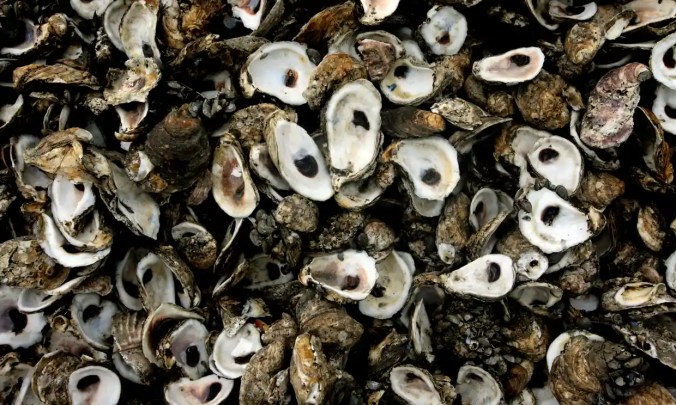
Prof Ian McNevin said ‘the scale of Indigenous oyster harvesting is extraordinary’, and compared it to contemporary commercial oyster farms. Photograph: Orjan F Ellingvag/Corbis/Getty Images

Some of us writing in these pages have been fans of oysters primarily for their culinary value (living in France, and then later in Croatia, could create such bias). But we have posted more frequently about the resiliency that oysters have come to represent in the search for protection against climate impact. Here is some more on that topic, intersecting with another theme we pay frequent attention to:

Precolonial First Nations oyster fisheries sustained millennia of intense harvests, study shows

Researchers in Australia and North America say management of oyster reefs should incorporate Indigenous knowledge

Oyster fisheries in Australia and North America survived for up to 10,000 years prior to colonisation, sustaining First Nations communities even under intense harvest, according to new research. Continue reading

Personal Approaches To Carbon Footprint Reduction

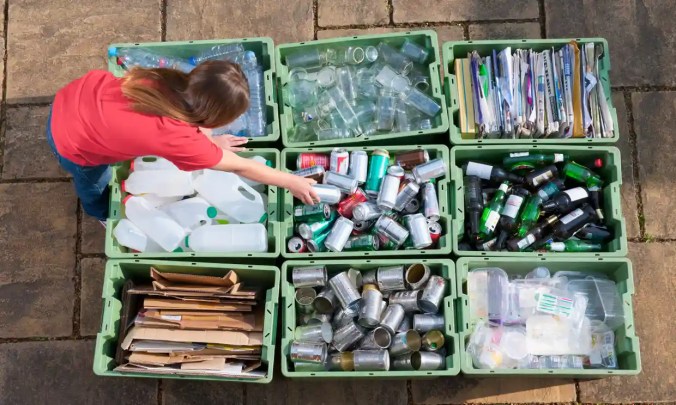
Recycle to save the planet? Photograph: Jacobs Stock Photography Ltd/Getty Images

A public service request for your input, from the Guardian:

What is the single most effective thing I could do to reduce my carbon footprint?

The long-running series in which readers answer other readers’ questions on subjects ranging from trivial flights of fancy to profound scientific and philosophical concepts

What is the single most effective thing I could do to reduce my carbon footprint? Without dying, preferably. Andrew Hufnagel, Caithness

Post your answers (and new questions) below or send them to nq@theguardian.com. A selection will be published on Sunday.

First Drafts Of History

First reading of the day was this essay by a historian linked to once and referred to one time previously. And next up, the conscience of our generation compounds the idea, or rather pounds the idea home about who is writing the first draft of what will become our history, by defining reality as we see it today. I have listened to conversations with Daniel Yergin twice recently, and acknowledge being sucked into his expert definition of how to understand the fossil fuel world. I appreciate McKibben’s cold water on my face:

Who gets to define reality?

A search for the climate high ground

“Realism” is the high ground in politics—a high ground from which to rain down artillery fire on new ideas.

To wit, this week the New York Times profiled Canadian energy analyst Vaclav Smil, who—alongside others like Daniel Yergin—has long insisted that the transformation from fossil fuels to hydrocarbons must take a long time. Smil is a good writer and a smart historian; he’s documented the many-decades-long transitions from, say, wood to coal, and coal to oil as dominant energy sources. Continue reading

Unexpectedly Amazing In Kerala

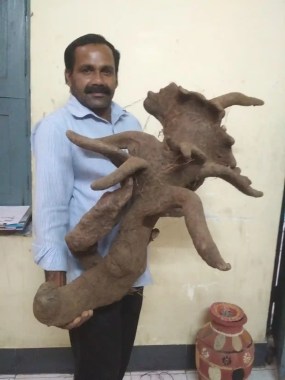
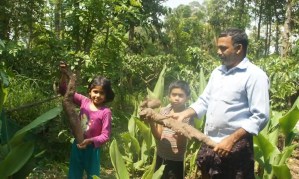
Shaji has a prized collection of more than 200 varieties of tubers. Photograph: Shaji NM

In our Kerala days we visited Wayanad many times, but I would remember if I had met Shaji. We would have sought his advice to expand on the agricultural initiatives at the properties we developed and managed.  Monika Mondal’s story ‘The tuber man of Kerala’ on a quest to champion India’s rare and indigenous crops brings back memories of unassuming neighbors doing unexpectedly amazing things:

Shaji NM has devoted his life to collecting and farming tubers such as yam, cassava and taro, and promoting them across the country

Shaji NM has spent the past two decades travelling across India to collect rare indigenous tubers. Photograph: Shaji NM

Known as “the tuber man of Kerala”, Shaji NM has travelled throughout India over the past two decades, sometimes inspecting bushes in tribal villages, at other times studying the ground of forests closer to home among the green hills of Wayanad in Kerala. His one purpose, and what earned him his title, is to collect rare indigenous varieties of tuber crops.

“People call me crazy, but it’s for the love of tubers that I do what I do,” says Shaji. “I have developed an emotional relationship with the tuber. When we did not have anything to eat, we had tubers.” Continue reading

Climate Policies To Cheer On

(Washington Post illustration; Demetrius Freeman/The Washington Post; iStock)

I am heading to Ithaca tomorrow for family reasons, so the third item described in the story that follows is of particular interest. But every one of the items is worth reflecting on, in a news world without enough such stories. Our thanks to the Washington Post Staff who put this list together:

10 recent climate policies that could make a difference

Stories from the past six months that show what local and national policy change can look like

The most recent IPCC report makes it clear: There is no one silver bullet that can address global warming. Instead, nations, businesses, communities and individuals all have a role to play in helping to create a safer and more sustainable future. But without action from the world’s wealthiest countries, the nations and people who are least at fault for fueling climate change will be the ones who suffer the most, the scientists behind the report warn. Continue reading
Plant-based Diet Enhanced By The Sea

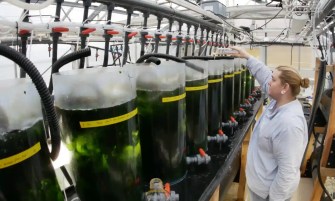
Seaweed ecologist Dr Sophie Steinhagen inspects the crop at the seafarm in the Koster archipelago in Sweden.

Three months into a beef-free diet, with no temptation to lapse, I am aware that other animal protein is so far a saving grace. When I switch entirely to alternative creatures such as crickets, and to plants including seaweed, I will know the transformation is complete.

Seaweed farming in Sweden could be a vital component of the shift away from eating meat for protein.

Meanwhile, thanks to the Guardian for Richard Orange’s reporting from Malmö on Sea-farmed supercrop: how seaweed could transform the way we live.

From high-protein food to plastics and fuel, Swedish scientists are attempting to tap the marine plant’s huge potential

Steinhagen inspects the tanks in her “seaweed kindergarten”.

You can just see the buoys of the seafarm,” Dr Sophie Steinhagen yells over the high whine of the boat as it approaches the small islands of Sweden’s Koster archipelago. The engine drops to a sputter, and Steinhagen heaves up a rope to reveal the harvest hanging beneath: strand after strand of sea lettuce, translucent and emerald green. Continue reading

More On Seed Banks

We have featured these banks before, but they are worthy of a more detailed inside look.

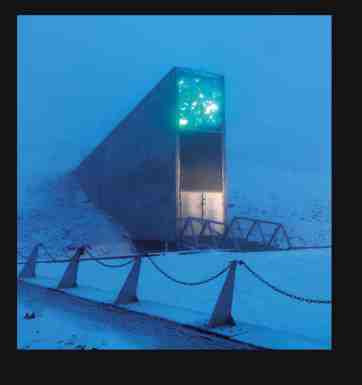
So, thanks to by Salomé Gómez-Upegui, Rita Liu and the Guardian. Their article, Seed banks: the last line of defense against a threatening global food crisis is full of images and written descriptions that put these banks in better perspective:

As climate breakdown and worldwide conflict continue to place the food system at risk, seed banks from the Arctic to Lebanon try to safeguard

As the risks from the climate crisis and global conflict increase, seed banks are increasingly considered a priceless resource that could one day prevent a worldwide food crisis. Continue reading
Cold Brew Coffee, 2022

Cold brew coffee experimentation, April 2020

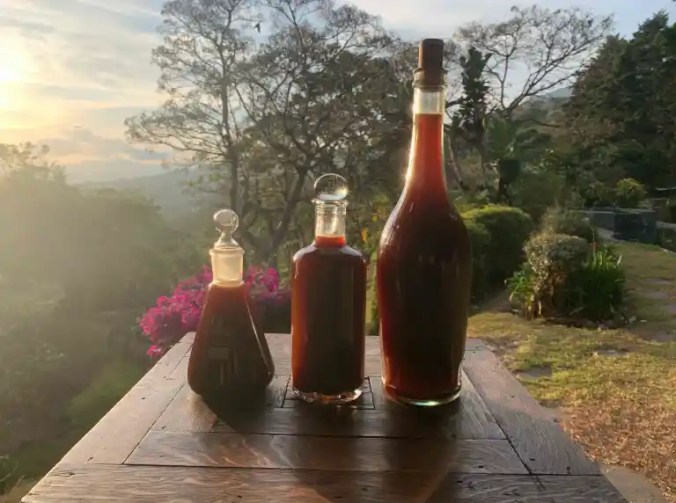
Two years ago, when the pandemic had shut down the airports in Costa Rica and we had no clue how long that would last, we wondered how the artisans and the farmers who supplied our recently opened Authentica shops would fare. We had to ask ourselves what we were going to do with the roughly 7,000 pounds of coffee beans we had contracted to buy from that year’s harvest. The most obvious move was to start roasting in the USA, so we could deliver to customers who had bought from us in Costa Rica and wanted to continue buying.

Cold brew coffee was a brief experiment at the time, but with sufficiently robust results to convince us that when travelers returned we would offer samples. The time has come.

Innovative Illustration & Atmospheric Pressure

Source: Geophysical Research Letters.

Whenever we see advances in innovative illustration to better our understanding of phenomena, natural or otherwise, we note it here. Atmospheric pressure is something most of us have heard countless times, but not necessarily stopped to think what it is. Among other things, it is important. Also, it is understandable. If you have a couple minutes, watch this accessible animation of a natural phenomenon that does not get enough attention, and read the accompanying text:

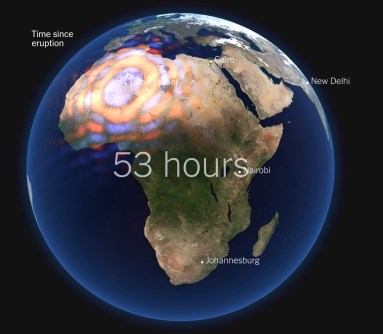
‘It’s Super Spectacular.’ See How the Tonga Volcano Unleashed a Once-in-a-Century Shockwave.

By Aatish Bhatia and Henry Fountain

Produced by Aatish Bhatia and Sean Catangui

As shown in this visualization, based on a simulation created by Ángel Amores, a physical oceanographer at the Mediterranean Institute for Advanced Studies in Majorca, Spain, the shockwave took about 36 hours to circumnavigate the globe, spreading out in concentric rings from the volcano known as Hunga Tonga-Hunga Haʻapai and traveling at the speed of sound. The simulation was published in the journal Geophysical Research Letters in March. Continue reading
Carbon, Sequestration & Hope

(Brandon Thibodeaux / The New York Times / Redux)

When I read about a promising new technology related to carbon sequestration, I am ambivalent based on the experience of many past false hopes. Carbon is a very large problem. Finding new methods of sequestration is a very challenging puzzle.

I track such developments every week by reading the newsletter that Bill McKibben posts on Substack. Most weeks I post something here from that, and do my best to balance the terrifying and enraging with the more hopeful news he occasionally shares there.

The only other newsletter I read regularly is Robinson Meyer’s newsletter for the Atlantic, called The Weekly Planet. Here is one of his worth reading for a bit of encouragement (when you click the hyperlink it will go to the current newsletter, which until April 20 is this one; after April 20 scroll to find this edition):

The Biggest Investment Ever in Sucking Carbon Out of the Sky

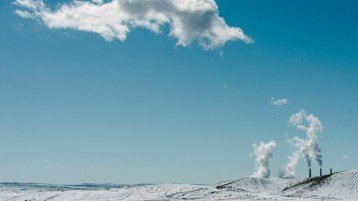
The world’s biggest tech companies are getting serious about carbon removal, the still-nascent technology wherein humanity can pull heat-trapping carbon dioxide out of the atmosphere. Yesterday, an alliance of prominent Silicon Valley companies—including Google, Meta, Shopify, and the payment company Stripe—announced that it is purchasing $925 million in carbon removal over the next eight years. In a world awash in overhyped corporate climate commitments, this is actually a big deal. Continue reading

A New Knife Worthy Of Our Attention

Knives are the oldest type of manufactured tool, and they’re still evolving. Karsten Moran for The New York Times

I last posted on the topic of knives earlier this year, partly because the onetime blacksmith apprentice in me felt compelled to salute the skillset, but mainly because the mission behind the knife-making in that case was worth promoting.

Otherwise, culinary utensils do not get much attention in our pages. Ceiba being the celebrated exception to that general rule–wooden culinary utensils, but no knives. Derrick Bryson Taylor offers us a good reason to revisit this neglect:

Knives are humanity’s oldest tool, dating back millions of years. A group of scientists in Maryland have produced a version made of hardened wood, which they say is sharper than steel.

More than 60 years ago in “Mastering the Art of French Cooking,” Julia Child, one of America’s most emulated chefs, described the necessity of decent, reliable kitchen equipment. Continue reading

The Rights Of Man Versus The Rights Of Nature

For most of history, people saw themselves as dependent on their surroundings, and rivers and mountains had the last word. Illustration by Marion Fayolle

Florida is on my mind today. Yesterday I listened to some excellent reporting on this podcast episode and was surprised to learn that some consider the political climate in the state environmentally-friendly. Surprising because the entire reporting emphasized what sounded like anti-regulatory business-friendly fervor. And after reading this article by one of my favorite writers, I think the state will be on my mind for the indefinite future (late in the article she writes “Start taking Stone seriously and it’s hard to stop;” so far she is correct):

A Lake in Florida Suing to Protect Itself

Lake Mary Jane, in central Florida, could be harmed by development. A first-of-its-kind lawsuit asks whether nature should have legal rights.

Lake Mary Jane is shallow—twelve feet deep at most—but she’s well connected. She makes her home in central Florida, in an area that was once given over to wetlands. To the north, she is linked to a marsh, and to the west a canal ties her to Lake Hart. To the south, through more canals, Mary Jane feeds into a chain of lakes that run into Lake Kissimmee, which feeds into Lake Okeechobee. Were Lake Okeechobee not encircled by dikes, the water that flows through Mary Jane would keep pouring south until it glided across the Everglades and out to sea. Continue reading

Coffee, Birds & Bees

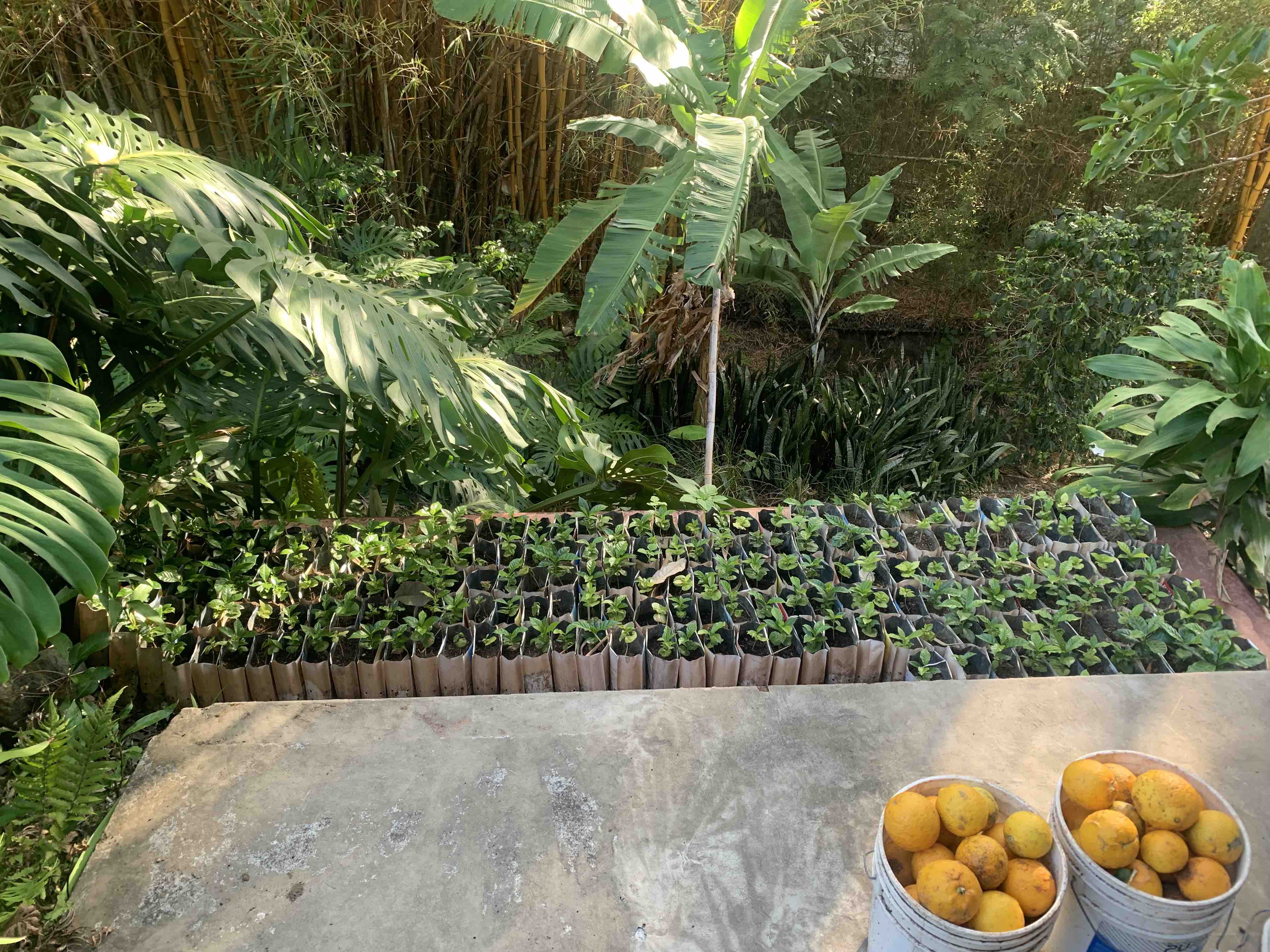
Seedlings from coffee picked in early 2021

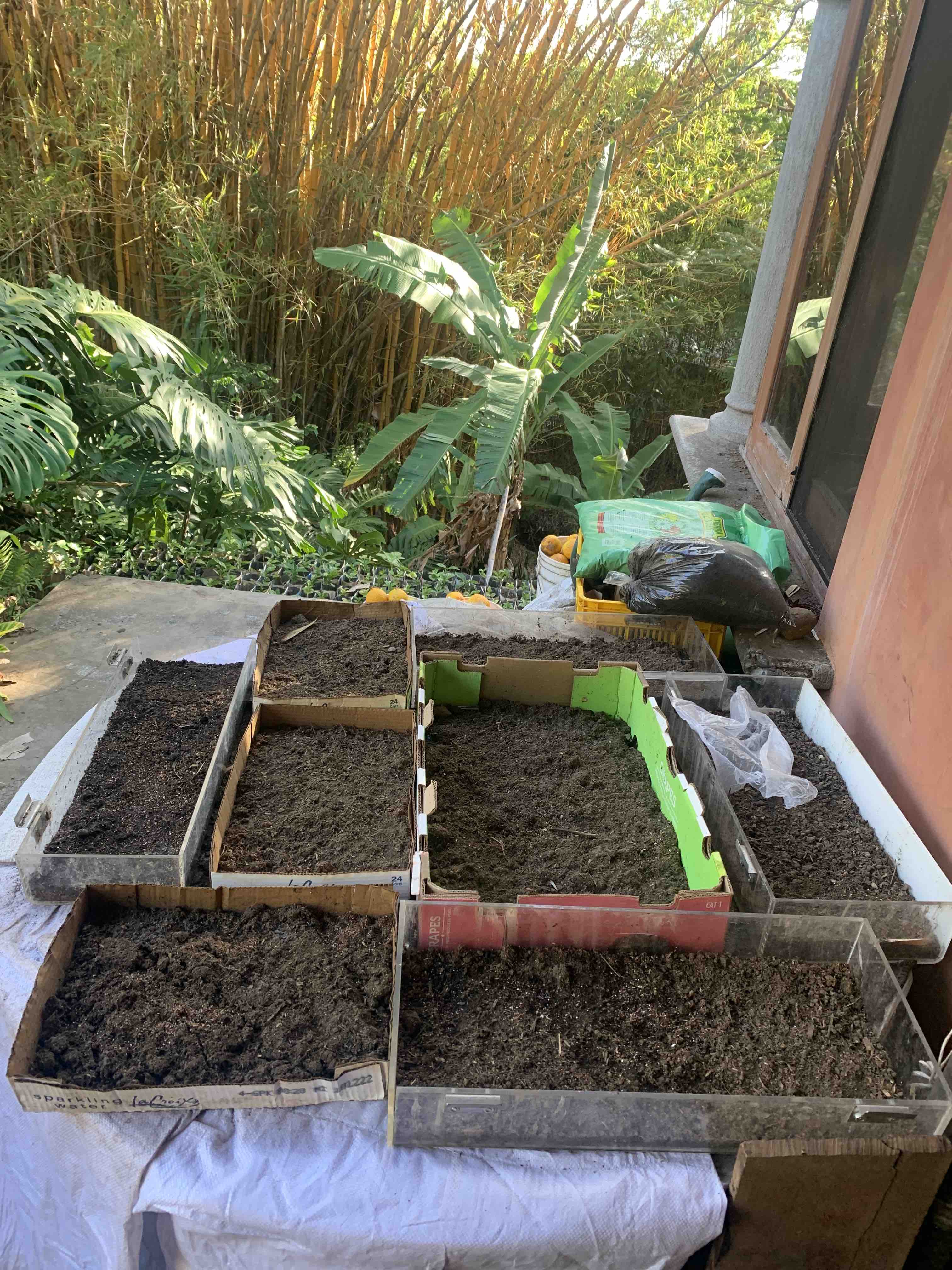
On a couple of acres of mountain land in Escazu, on property that once was part of a larger coffee farm, we have been preparing to plant a thousand or so coffee saplings, which will eventually become trees among trees. Above are the thriving seedlings from 2021 germination, and below the early stage of germination from this year’s pickings.

Germination of coffee picked in early 2022

Coffee culture has been a long time in the making, so the slow pace of the Organikos arc has not intimidated me. And yet, if I could speed it up, I would because of the variety of beneficiaries.

Today an article by Cristen Hemingway Jaynes on the website EcoWatch brings to my attention a team of researchers who I will pay more attention to. Some are here in Costa Rica, at CATIE; the others at University of Vermont. Their work makes me appreciate the value of getting on with this:

Birds and Bees Make Better Coffee, Study Finds

Birds and bees work together as pollinators. DansPhotoArt on flickr / Moment / Getty Images

For many people, one rich, pleasant smell signals the start of a new day more than any other: coffee. Different techniques have been used to get the best cup of the caffeine-rich liquid, from a French press to the pour-over method.

A unique new study has found that the secret to better coffee is really in control of the birds and the bees. Continue reading

Vagrancies Better Appreciated

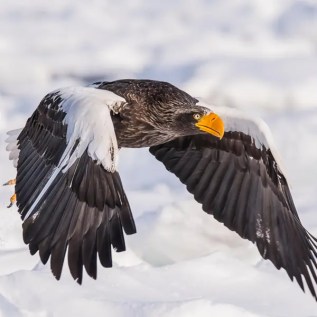
A Stellar’s sea eagle, native to East Asia. Design Pics Inc./Alamy

These two themes, birds and their various forms of adaptation, make Marion Renault’s article These Birds Aren’t Lost. They’re Adapting a perfect fit for sharing here as an excerpt, and recommending that you read the story where it was published:

Bird-watchers love to see vagrants, or birds that have traveled far outside their range. But scientists say they have a lot to teach us in a world facing ecological change.

From what we can tell, the Steller’s sea eagle trekking across North America does not appear homesick.

The bird has strayed thousands of miles from its native range in East Asia over the last two years, roving from the Denali Highway in Alaska down to a potential sighting South Texas before moving eastward and back north to Canada and New England. Its cartoonish yellow beak and distinctive wing coloration recently attracted crowds of rapt birders to Maine before turning up on April Fools’ Day in Nova Scotia. Continue reading

Octopus As White Whale

Bret Grasse, a manager of cephalopod operations at the Marine Biological Laboratory in Woods Hole, Mass., with his charge, a lesser Pacific striped octopus.

Yesterday, a story about a small and late victory for whales. Today, a small victory for our other favorite sea creature, in the form of a search for the white whale equivalent among octopus:

A lab in Massachusetts may have finally found an eight-armed cephalopod that can serve as a model organism and assist scientific research.

From a first batch of seven wild Octopus chierchiae, Mr. Grasse and his colleagues have raised over 700 children, grandchildren and great-grandchildren.

The tank looked empty, but turning over a shell revealed a hidden octopus no bigger than a Ping-Pong ball. She didn’t move. Then all at once, she stretched her ruffled arms as her skin changed from pearly beige to a pattern of vivid bronze stripes.

“She’s trying to talk with us,” said Bret Grasse, manager of cephalopod operations at the Marine Biological Laboratory, an international research center in Woods Hole, Mass., in the southwestern corner of Cape Cod. Continue reading

Tracking Disappearing Species

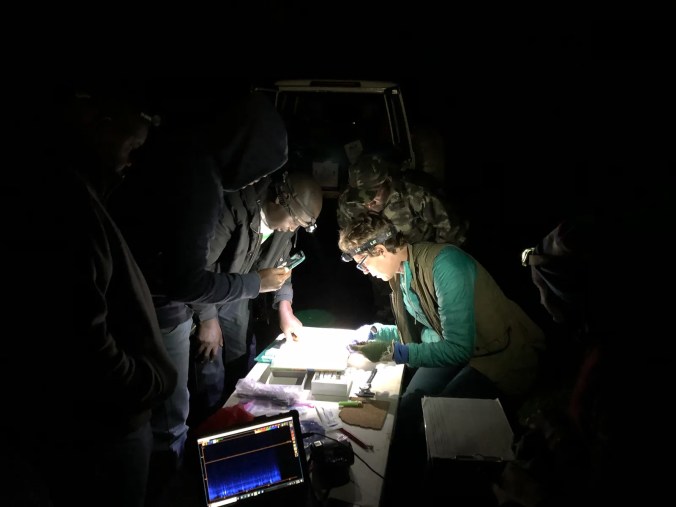
Researchers work through taxonomic keys to determine whether they had just caught a Hills’ horseshoe bat in Rwanda’s Nyungwe National Park.Photograph by Jon Flanders / Courtesy Bat Conservation International

Disappearing species as a topic in these pages has taken many forms. Hunters of disappearing species, less so. My exposure to this topic is limited to one project that Seth participated in. But the fact that Seth also had experience on a different type of project in Rwanda’s Nyungwe National Park made this article particularly of interest. Carolyn Kormann, once again, thank you:

The Hunt for a Lost Bat

The obsessive people who track down disappearing species are their own variety of rare—sparsely found across a wide geographic range, in all sorts of habitats.

In January, 2019, a multinational team of biologists set out into the rain forest of southwestern Rwanda, in search of a near-mythical bat that they thought might be extinct. Continue reading

Letters To Strangers

This book looks like a must-read for multiple reasons. At least 65. That is the number of writers musing on a simple question: how can an “ephemeral encounter with a stranger leave such an eternal mark?” As someone whose life story hinges on a chance encounter in an airport, and so believes that strangers can make great co-adventurers, I am in. If you want a taste of what is in store, this essay by an author we have appreciated in these pages several times over the years, titled To My Lost Trishaw Driver, is excerpted from it:

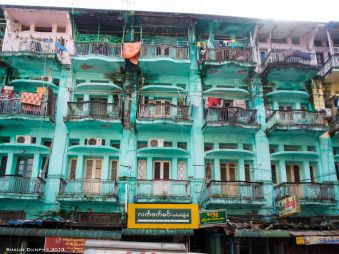
Yangon, Myanmar, via Creative Commons.

Pico Iyer on decades of letters to a man he met, once, in Myanmar.

Travel is, deep down, an exercise in trust, and sometimes I think it was you who became my life’s most enduring teacher. I had every reason to be wary when, in 1985, I clambered out of the overnight train and stepped out into the October sunshine of Mandalay, blinking amidst the dust and bustle of the “City of Kings.” Continue reading

Youth & Perspective

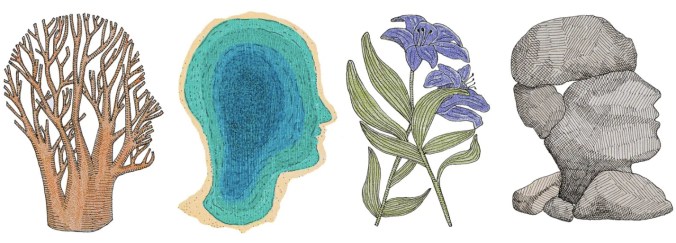
It should not be this difficult to change viewpoints on an existential topic. But apparently it is. If it requires a new social media platform, and watching a few short, catchy videos, so be it:

A growing chorus of young people is focusing on climate solutions. “‘It’s too late’ means ‘I don’t have to do anything, and the responsibility is off me.’”

Alaina Wood is well aware that, planetarily speaking, things aren’t looking so great. She’s read the dire climate reports, tracked cataclysmic weather events and gone through more than a few dark nights of the soul. Continue reading