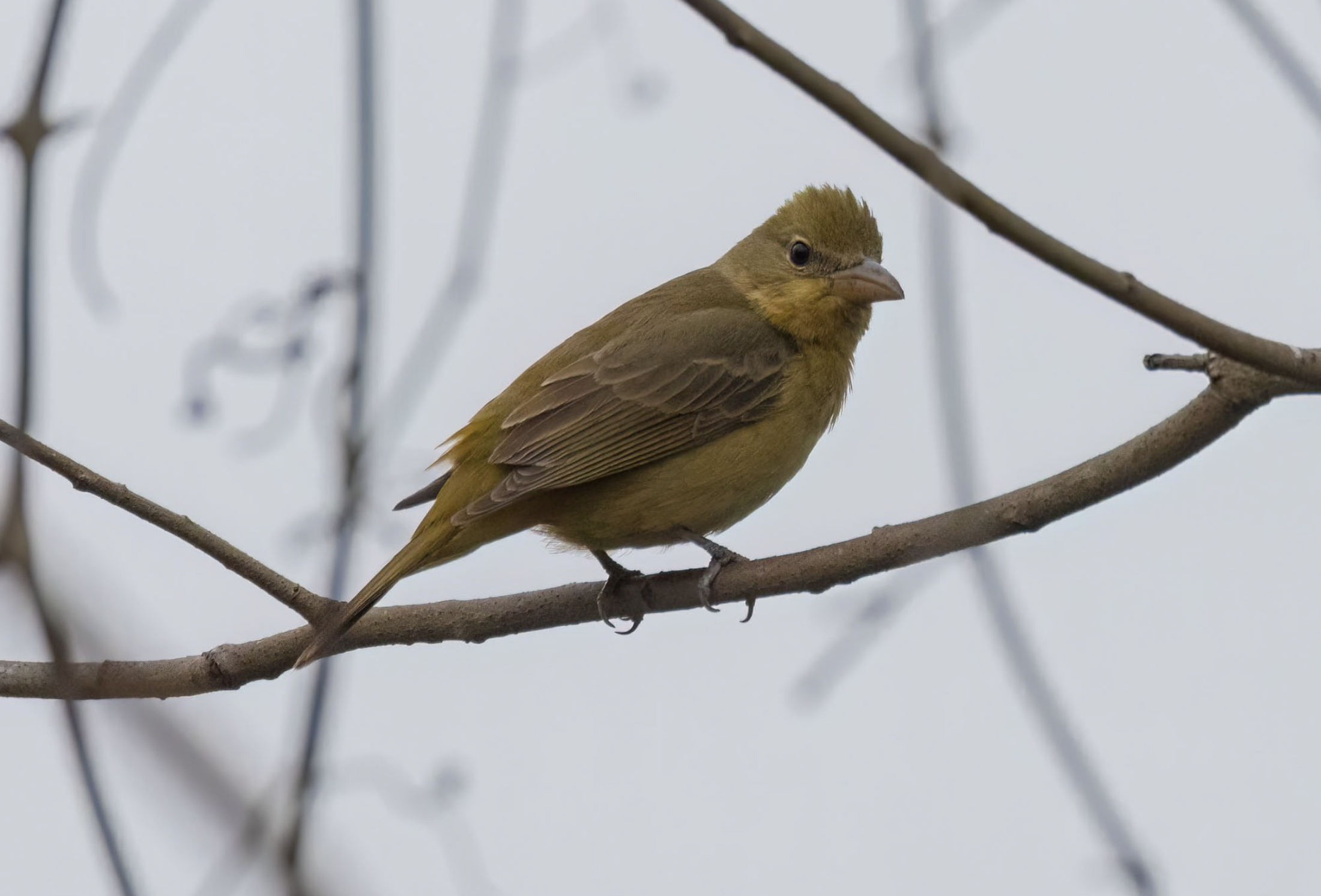
Female
Lake Creek Trail, TX
Female
Lake Creek Trail, TX
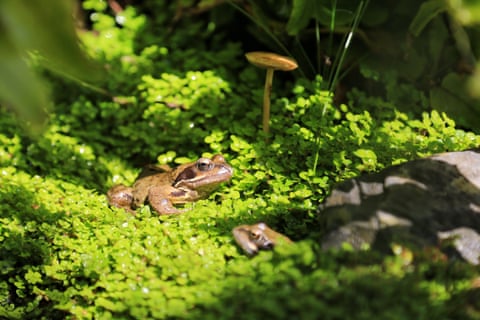
Common frogs and other amphibians will spawn in the most modest of garden ponds. Photograph: Brendan Allis/Getty Images/iStockphoto
There are many variations on the theme of garden as haven in our pages over the years. The common thread is that at the scale of a garden, there is much that the individual can do to support conservation. Thanks to Jules Howard for adding to the theme:
The frogs may be gone, but life goes on: how I regained my faith in gardening for wildlife
Gardens allowed to grow a little wild can be a lifeline for struggling pollinator populations – in rural as well as urban areas. Photograph: kirin_photo/Getty Images/iStockphoto
The extremes of the climate crisis mean it’s harder than ever to provide a garden haven for birds, insects and other animals. Some gardeners are questioning whether trying to do the right thing is time well spent
More than two decades ago, I had the honour of running the world’s last (possibly only) frog telephone helpline. No, this is not a set-up for a punchline. Continue reading

Isabel Seliger
While Brisa surfs in Tahiti, the fate of our oceans will be on our minds. While not self-evidently important to most of us, most of the time, their scale on our planet gets us to pay attention when someone makes the case. Porter Fox, who reports on climate change, has come to the following conclusions with regard to those waters:
There’s a New Reason to Save Life in the Deep Ocean
Honey Long and Prue Stent
To most of us, the ocean is a no man’s land — a vast, bottomless and uncharted void. Three-quarters of the ocean has never been seen by humans, and only a quarter of its floor has been mapped in detail, which means we have a better understanding of the surface of Mars than we do of the seas on our own planet. It is this lack of exploration and appreciation — particularly of the layer of cold, dark water that begins where light fades, known as the ocean’s twilight zone — that has led us to a very precarious place. Continue reading

Grayson muralist Jose Muñóz hand-painted this sign welcoming visitors to Dos Rios. Geloy Concepcion for NPR
California has a new protected area, complete with a Native Use Garden. Visit the website for the Dos Rios, described by National Public Radio (USA) as follows:
The sun rises, shedding light onto an oak grove along the western edge of Dos Rios. Geloy Concepcion for NPR
California’s newest state park is like a time machine
At the crack of dawn in California’s Central Valley, birds sing their morning songs and critters chirp unabashedly. In a shady grove next to a river, an owl swoops down from the spindling branches of an oak tree that has stood its ground for centuries.
A few feet above the tree’s base, its massive trunk is lined with a white ring, indicating how high the San Joaquin River rose during a flood last year. Dos Rios is supposed to flood — it’s a floodplain, recently transformed into California’s newest state park.
The Native Use Garden is a place where, with permission from Dos Rios staff, tribal members can go to gather native plants for ceremonial use and other cultural practices. Geloy Concepcion for NPR
The park opened this summer, emerging among the never-ending rows of agriculture the valley is known for. It’s a lush 2.5 square miles now bursting with hundreds of thousands of native trees, bushes and animals.
Dos Rios, named for the Tuolumne and San Joaquin rivers that meet at the edge of the park, is the first new California state park in more than a decade.
But it isn’t like most state parks. In addition to bringing much-needed green space to an underserved area, its unusual design uses nature-based climate solutions that reinvigorate native wildlife. Continue reading
.jpg)
Photograph: Abir Mahmud, University of Dhaka
Our thanks to Hannah Richter for her reporting and writing, as well as to Wired for publishing what sounds not like garden variety too good to be true, but quintessentially ridiculous.
Kudos to Nepal for testing out this idea in spite of how it sounds:
.JPG)
Groups of platforms installed in Nagdaha lake in Nepal. PHOTOGRAPH: SAMYAK PRAJAPATI/THE SMALL EARTH NEPAL
Polluted Lakes Are Being Cleansed Using Floating Wetlands Made of Trash
Platforms combining plants and recycled garbage could offer a cut-price solution for reviving polluted bodies of water.
ON THE BANKS of Nagdaha, a polluted and lotus-infested lake in Nepal, Soni Pradhanang is putting trash back into the water—on purpose.
A floating treatment wetland system loaded with plants. PHOTOGRAPH: SAMYAK PRAJAPATI/THE SMALL EARTH NEPAL
She carefully assembles a platform of styrofoam and bamboo mats, then weaves it together with zip ties and coconut fiber, refuse from nearby tech stores. Then, she pokes 55 plants lush with red flowers through 2-inch holes in the platform, each plant set 6 inches apart. Though Pradhanang’s creation isn’t high-tech, it is effective, and one of the most affordable water-filtration systems available. “I’m cheap,” she says, laughing. Continue reading
 Thanks to Bridgett Ennis at Yale Climate Connections for expanding our coverage of brownfield remediation, which surprisingly has only featured in one previous post in our 13 years linking to environmental news stories. Now two:
Massive solar farm planned for coal mine site in eastern Kentucky
Solar developer BrightNight is set to transform the Starfire coal mine into an 800-megawatt solar farm, bringing renewable energy and jobs to southern Appalachia.
A massive solar farm is in the works at the site of one of the largest coal mines in southern Appalachia. Continue reading

Illustration of Tupac Inca Yupanqui (an Inca emperor) c. 1590, by an unknown artist. | USED WITH PERMISSION / PRIVATE COLLECTION
In this article by Max J. Krupnick we are given reason to rethink the notion that the Incas had no written language. There is plenty of evidence that they were capable of advanced communication aesthetically:
Unraveling an Inca masterpiece’s secrets
WITH STITCHES as dense as an iPad’s pixels, this woven tunic represents the pinnacle of Inca artistry. The brutal Spanish conquest and the unforgiving march of time have destroyed most Inca textiles, but the tunic now at Dumbarton Oaks in Washington, D.C., survived. Although its symbols captivate visitors and scholars alike, much is left to be learned about the garment. Who made it? Who wore it? Is it truly authentic?
Tunic | ©DUMBARTON OAKS, PRE-COLUMBIAN, WASHINGTON, D.C.
Robert Bliss, who cofounded Dumbarton Oaks, Harvard’s center for Byzantine, Pre-Columbian, and landscape studies, purchased the tunic for his personal collection, so its acquisition history is not well documented. Added to the institute’s holdings in 1963, the tunic attracted scholarly attention as researchers attempted to decode its symbols, which they believed comprised a written language, despite evidence that the Incas did not write. Continue reading

The goal of the administration’s plan is to reduce demand for plastics and encourage a market for reusable or compostable alternatives. Eric Baradat/Agence France-Presse — Getty Images
We celebrate when individuals, or groups, do things they were not required to do when those things are in the common interest. Some things require rules, and rules also require imagination and courage to be effective. This is welcome news at the intersection of entrepreneurial conservation and rules set by those in a position to make them work:
The White House Has a Plan to Slash Plastic Use in the U.S.
The government said it would phase out its purchases of single-use plastics, a significant step because it is the biggest buyer of consumer goods in the world.
Calling plastic pollution one of the world’s most pressing environmental problems, the Biden administration on Friday said that the federal government, the biggest buyer of consumer goods in the world, would phase out purchases of single-use plastics. Continue reading
 It is political season, which can be overwhelming. But it has moments of inspiration. Karin Kirk at Yale Climate Connections summarizes the landscape of opinion on key environmental issues:
Six incredibly popular climate policies
The majority of registered U.S. voters support electrification and renewable energy.
A strong majority of registered voters support certain policies aimed at tackling climate change, according to recent research by the Yale Program on Climate Change Communication (the publisher of this site) and the Center for Climate Change Communication at George Mason University.
Here’s a summary of these results. Continue reading
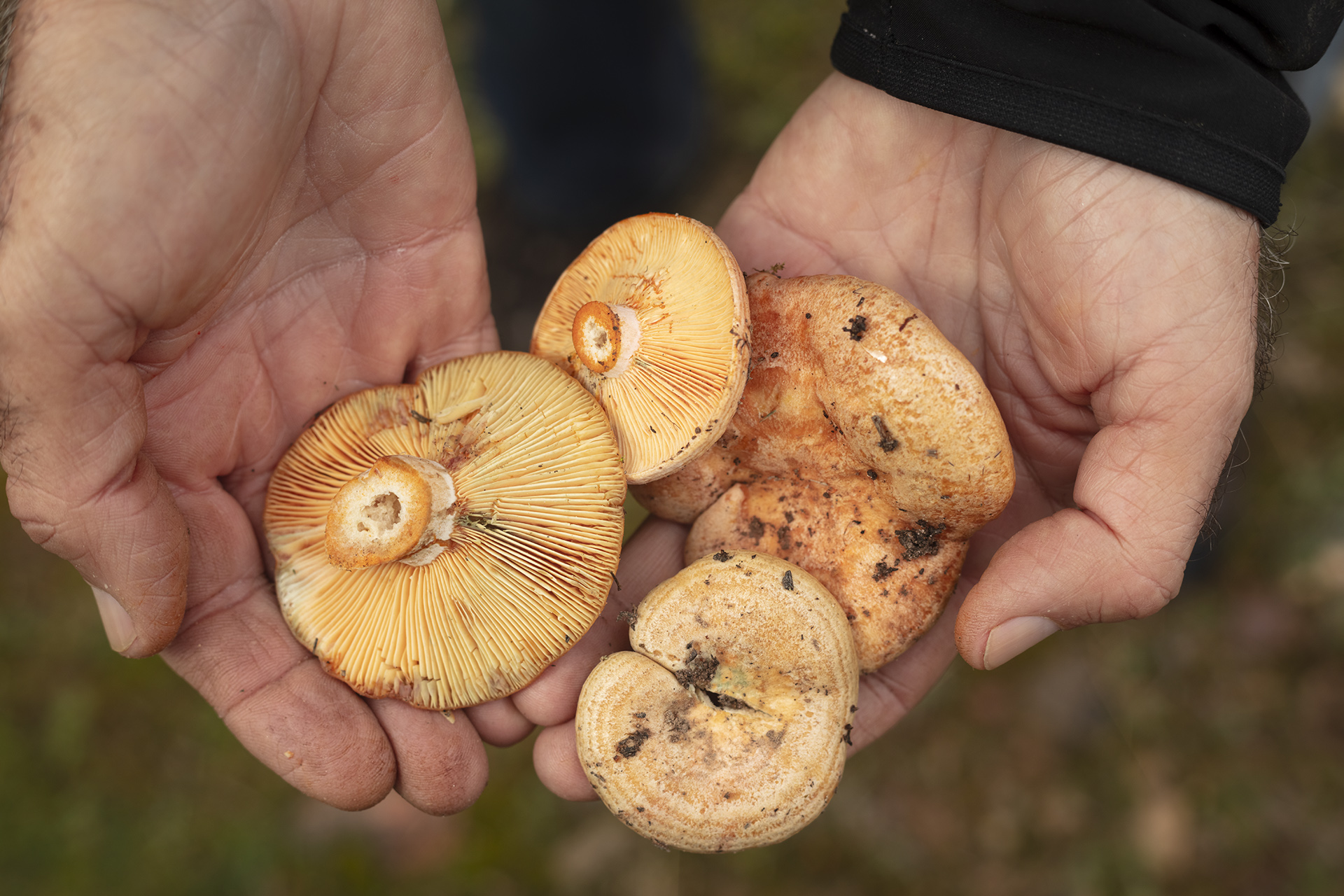
Rewilding can support the development of a wide range of nature-based businesses. NEIL ALDRIDGE
Places can have a particular taste, maybe one that is even iconic, and coffee was the obvious tool in our taste of place toolkit for decades. When it came time to focus on these products as our primary work we drew on some earlier experiments.
One was with honey and the other was with wine. All that was long before coming home to Costa Rica to launch Organikos.

Lunch provided with products from the Wild Côa Network during the ERN-EYR event in the Greater Côa Valley. The Wild Côa Network, which now comprises over 50 members, is driving the development of nature-based enterprise in and around Portugal’s Greater Côa Valley. NELLEKE DE WEERD
We are about to introduce two new products, and one has a story that mixes conservation and rewilding. So, in this story that follows we sense something akin to the Organikos products in our Authentica shops:
Nature-based business networks take off across Rewilding Europe landscapes
Helping nature heal can lead to prosperous local economies. Nature-based business networks are being developed in a growing number of our rewilding landscapes, enabling businesses and communities to benefit from nature recovery in a sustainable way. This, in turn, is generating more support for rewilding.
The network effect
Today, nature-based business networks are a growing feature of Rewilding Europe’s expanding portfolio of rewilding landscapes. These bring businesses together under a shared rewilding vision for the landscape, facilitating the creation of new tourism packages, helping to close gaps in tourism experiences, and creating new economic opportunities. Continue reading
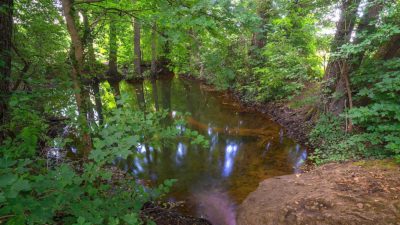
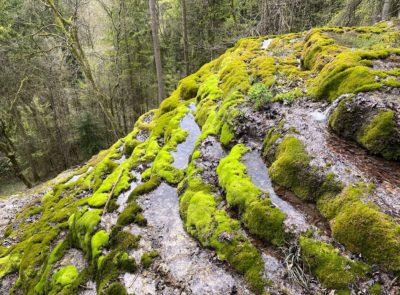
A spring in a forest in Bavaria, Germany. IMAGEBROKER.COM GMBH & CO. KG / ALAMY STOCK PHOTO
Thanks to Yale e360 for publishing this article by Christian Schwägerl, whose influential book The Anthropocene was published one decade ago:
As World’s Springs Vanish, Ripple Effects Alter Ecosystems
Springs, which bring groundwater to the surface and support a host of unique species, are disappearing globally, victims of development and drought. Researchers are working to document and map these life-giving habitats in an effort to save them before they are gone.
A tufa spring in the Neumarkt region in Bavaria, Germany. CHRISTIAN SCHWÄGERL
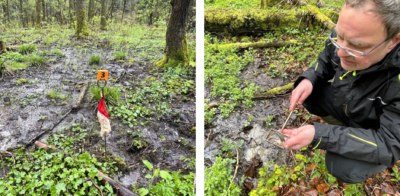
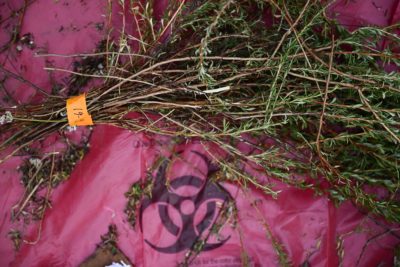
Strong winds sweep over the Rhön, a vast region of rolling, forested hills and pastureland in central Germany. Undeterred, Stefan Zaenker, leading a group of four volunteers, runs through his checklist alongside a forest road. Are rubber boots disinfected to prevent introducing potentially harmful microorganisms into the wetland? Are the team app and GPS functioning correctly? Have enough flags been packed?
Left: A flag marks a helocrene spring in the Rhön region of Germany. Right: Stefan Zaenker takes a sample from a spring. CHRISTIAN SCHWÄGERL
When all is in order, Zaenker, 56, leads the group into a soggy alder forest. Its mission for the day: to locate and map as-yet-undiscovered springs and document any species inhabiting them.
A senior conservation official for the state of Hesse, Zaenker considers springs so important for human life and biodiversity that he — along with volunteers from the Hesse Association for Cave and Karst Research — spends much of his spare time conducting large-scale searches for them in the Rhön, which includes the German states of Bavaria, Thuringia, and Hesse, and in a nearby national park. Continue reading
 It always comes back to the commons. Thanks to Naomi Huffman at The Atlantic for bringing this book to our attention:
What Gardens of the Future Should Look Like
In her new book, Olivia Laing argues that the lives of all people are enriched with access to land they can use freely.
On a Sunday afternoon in May, the Elizabeth Street Garden, a serene public park wedged between Manhattan’s SoHo and Little Italy neighborhoods, was filled with people undeterred by the gray sky and spitting rain. Visitors sat at tables among fuchsia azaleas and yellow irises, and in the shade of loping old trees, talking, eating pizza, and drinking iced coffee. A painter faced an easel at the back of the garden and composed a watercolor. Continue reading
 We missed the 2024 INDIGENOUS VOICES OF THE AMERICAS –CELEBRATING THE NATIONAL MUSEUM OF THE AMERICAN INDIAN. Our calendars are already marked for next year, based on what we see from this year’s celebration:
Across the Western Hemisphere, thousands of Indigenous communities are sustaining traditional practices and contributing to a more equitable future. Today, these individuals and nations define who they are, through their own stories in their own words.
In 2024, Indigenous Voices of the Americas: Celebrating the National Museum of the American Indian highlights living traditions of Indigenous peoples. At its core, the program honors contemporary and traditional creative expressions, celebrations, and community connections that feed new possibilities for Indigenous futures. The program is co-presented by the Smithsonian Center for Folklife and Cultural Heritage, the National Museum of the American Indian, and the National Park Service.
We would not have known about it except for this article (thanks to National Public Radio, USA):
Bolivian women skateboarders — wearing traditional garb — demonstrate their skills on the half pipe. Ben de la Cruz/NPR
It’s a rather unusual skateboard lesson.
Little girls are lined up to learn to balance on a board on a half-pipe ramp. The teachers are young women from Bolivia, in their teens and 20s, wearing traditional garb as a tribute to female strength. Their outfits do not seem as if they are ideal for skateboarding: Each skateboarder wears a beribboned bowler hat and a poofy skirt. Among the eager disciples is Poppy Moore…

At home in Hawaii in 2021. Michelle Mishina Kunz for The New York Times
During the first few months of this platform, when travel experiences as well as variations on biophilia and conservation became our prevailing themes, a post mentioned one of the great travel writers of our time. 13 years passed and this is his first full reference:
Paul Theroux on Necessary Solitude, Risks and the Joy of Writing
After 60 years of writing and publishing — and almost 60 books — I feel ordering my thoughts on paper to be not a job but a process of my life. You always hear writers complain about the hellish difficulty of writing, but it’s a dishonest complaint.
So many people have it much harder — soldiers, firefighters, field workers, truckers. The writer’s profession is a life of self-indulgence. Continue reading
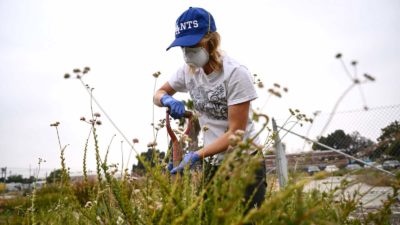
Researcher Danielle Stevenson digs up California buckwheat grown at a brownfield site in Los Angeles. PATRICK T. FALLON / AFP VIA GETTY IMAGES
Corporate irresponsibility abounds, so brownfield sites are abundant. And fungi sometimes offer relevant remediation options. Thanks to Richard Schiffman and Yale e360 for this interview on a topic we have cared about since launching this platform, and which we believe will be of increasing importance in our future:
Turning Brownfields to Blooming Meadows, With the Help of Fungi
California buckwheat that has absorbed lead at a contaminated site in Los Angeles. PATRICK T. FALLON / AFP VIA GETTY IMAGES
Toxicologist Danielle Stevenson cleans up carbon-based pollutants and heavy metals from contaminated sites using fungi and plants. She’s also training environmental justice and tribal communities in using these methods so they can remediate toxic sites on their own.
The United States is dotted with up to a million brownfields — industrial and commercial properties polluted with hazardous substances. Continue reading

Workers install solar panels at a home in San Francisco, California.Photograph by Michaela Vatcheva / Bloomberg / Getty
McKibben’s essay in the New Yorker, showcasing the showcase for renewable energy, will brighten your day:
California Is Showing How a Big State Can Power Itself Without Fossil Fuels
For part of almost every day this spring, the state produced more electricity than it needed from renewable sources.
Something approaching a miracle has been taking place in California this spring. Beginning in early March, for some portion of almost every day, a combination of solar, wind, geothermal, and hydropower has been producing more than a hundred per cent of the state’s demand for electricity. Continue reading
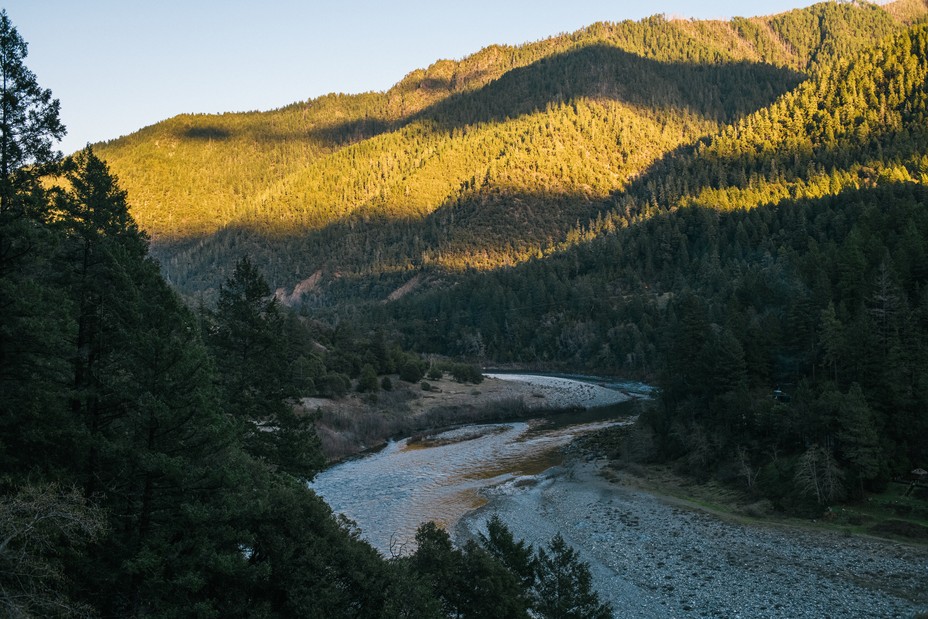
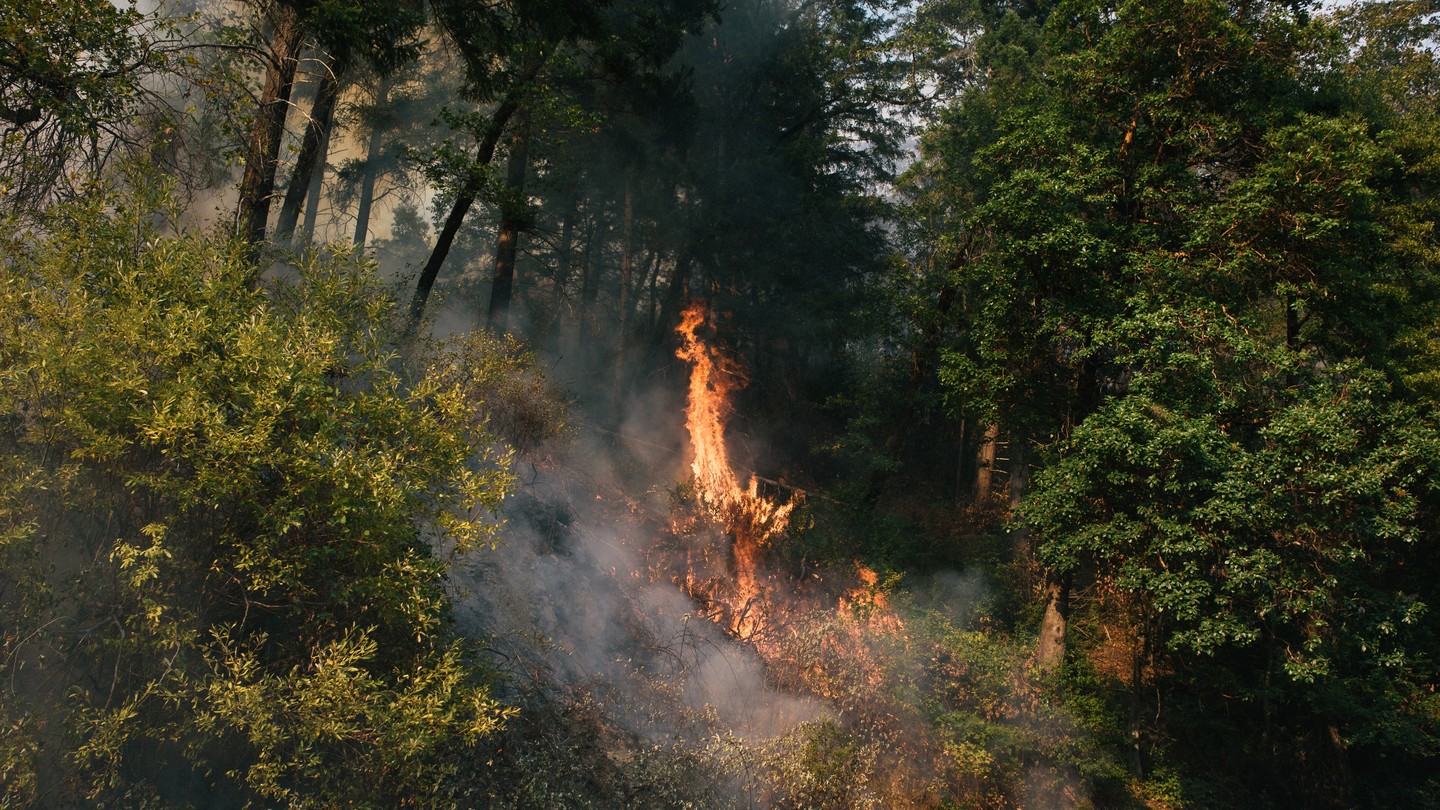
View of the Klamath from Orleans, California, ancestral Karuk territory. For millennia, the Yurok, Karuk and Hupa of northern California, and indigenous tribes worldwide, passed the use of fire down through generations as a means of land stewardship and survival. Light, frequent burning created fire-adapted landscapes.
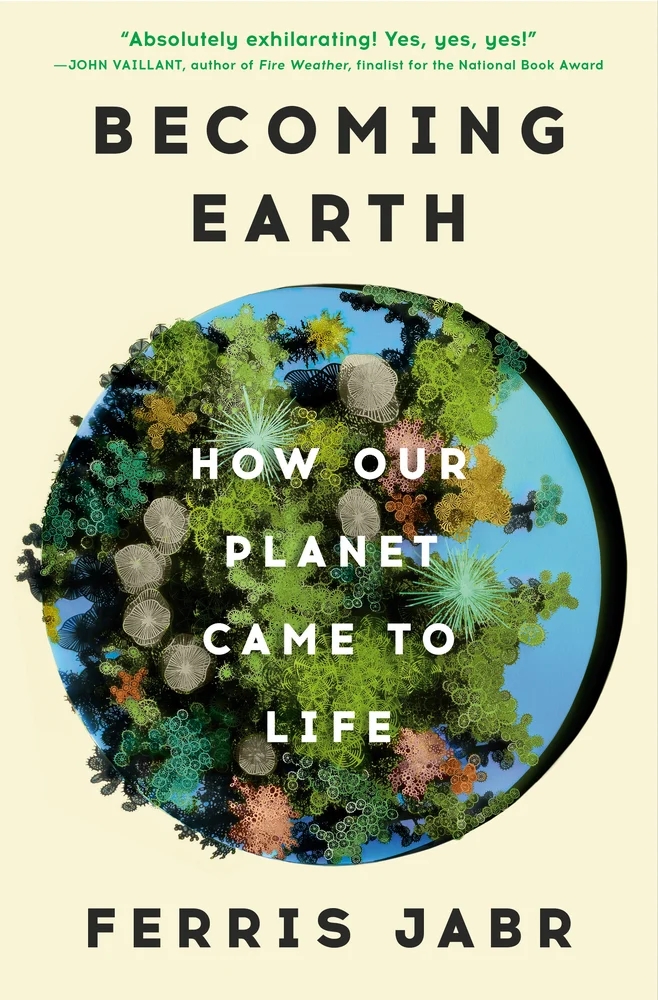 I recall during the pandemic reading the work of Ferris Jabr, which expanded on our understanding of the social networking of trees, an idea I remain compelled by. Now he has a book, adapted for The Atlantic. In the essay form he focuses on the value of indigenous knowhow handed down generation to generation for centuries. He highlights how fire is a wild, powerful element of nature, wielded as a tool for stable life of ecosystem and society.
Detail of a landscape during a cultural prescribed burn training (TREX) hosted by the Cultural Fire Management Council and the Nature Conservancy in Weitchpec, California. (Alexandra Hootnick)
THE DEEP CONNECTION BETWEEN LIFE AND FIRE
How wildfire defines the world
Perched on a densely forested hill crisscrossed with narrow, winding, often unsigned roads, Frank Lake’s house in Orleans, California, is not easy to find. On my way there one afternoon in late October, I got lost and inadvertently trespassed on two of his neighbors’ properties before I found the right place. When Lake, a research ecologist for the United States Forest Service, and his wife, Luna, bought their home in 2008, it was essentially a small cabin with a few amenities. They expanded it into a long and handsome red house with a gabled entrance and a wooden porch. A maze of Douglas firs, maples, and oaks, undergrown with ferns, blackberries, and manzanitas, covers much of the surrounding area. Continue reading

Illustration by João Fazenda
Our thanks to Adam Iscoe, writing in the New Yorker, for this:
An Around-the-World Eco-Voyage Makes a Pit Stop Near Wall Street
Energy Observer, a ship equipped with solar panels and a hydrogen fuel cell, has spent the past seven years circumnavigating the globe, powered by sun, water, and salads.
One phrase that describes New York’s waterways is “diesel-powered”: supersized container ships, megayachts, oil tankers, garbage barges. But not every ship that comes to town is on a Greenpeace watch list; there are also schooners, plus the odd outrigger canoe. And recently a hundred-foot-long former racing catamaran from France, which had been retrofitted with solar panels and a hydrogen fuel cell, docked near Wall Street. Continue reading

Screenshot
Cute kitten videos are everywhere, and we avoid posting them here. But due to the Cairngorms rewilding efforts in Scotland this type of video is different, so our thanks as always to the Guardian:
Wildcat kittens born outside captivity in Cairngorms a ‘major milestone’
Adult cats were released into national park last year after British population had come close to extinction
The birth of wildcat kittens in the Cairngorms national park has been hailed as a “major milestone” in efforts to rescue the secretive mammals from extinction in the UK. Continue reading
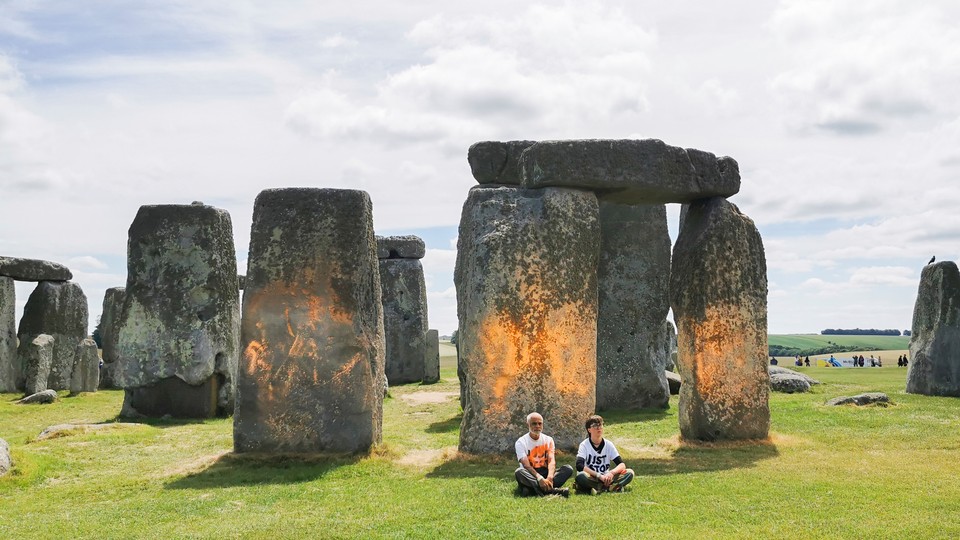
Just Stop Oil via AP
On this platform dedicated to environmental and conservation topics, purposeful stone alteration has appeared in our pages exactly once before. Environmental vandalism, likewise. I appreciate this essay by Tyler Austin Harper, an assistant professor of environmental studies at Bates College and a contributing writer at The Atlantic, about a recent act of environmental vandalism:
Maybe Don’t Spray-Paint Stonehenge
Climate protests should be pro-humanity.
They run toward Stonehenge in white shirts. just stop oil is emblazoned on the front, marking them as emissaries of a British climate-activism group. The pair—one of them young, the other older—carry twin orange canisters that emit a cloud of what looks like colored smoke (we later learn it’s dyed corn flour). Continue reading



.jpg)



 Organikos