Carlos Manuel Rodriguez, Leading The Conversation, Again

We are grateful to the GEF for sharing this, and to Carlos Manuel Rodriguez for leading the conversation, as he has always done:

Creating space for young people to affect climate policy

In a recent conversation at his home, GEF CEO and Chairperson Carlos Manuel Rodríguez heard from members of the Youth and Climate Change Network of Costa Rica about how the climate emergency is impacting young people. Continue reading

Letters To The Secretary

We have appreciated this newsletter since it started, and every issue since. This week it brings these handwritten letters to our attention:

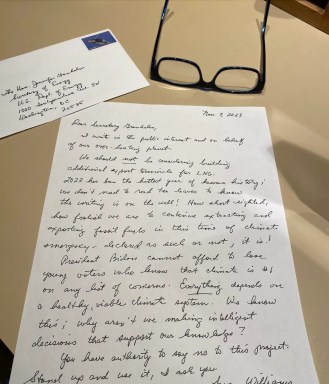
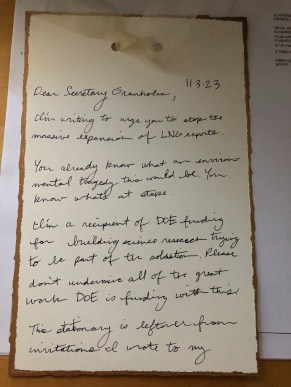
…Oh, and who’s the other group of climate voters the president needs to worry about? That would be older people, like those of us at Third Act—we codgers have been organizing mass protests all year. And while we may not be TikTok savvy, we have another weapon: pen and stationery. In the last week Third Actors have unleashed thousands of letters on DOE headquarters—which may not sound quite as sexy as petitions from the Internet, but they have their own impact, since officials know that if you’re willing to do more than click you’re probably an effective and motivated adversary.

So consider [image above left]

Or [image to the right]

What I’m trying to say is, the Department of Energy has a real problem—an increasingly aware and activated posse of youngsters and oldsters. And a solution: announce CP2 is going nowhere, and that no other project will be approved, or even considered, until there’s been an exhaustive rewrite of the criteria taking into account the latest science and economics. It’s not hard. Continue reading

Photosynthesis Mimicry Out Of Cambridge

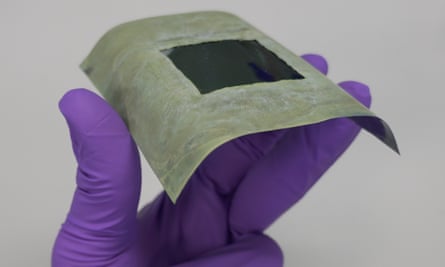
Researchers from the University of Cambridge designed ultra-thin, flexible devices, which take their inspiration from photosynthesis – the process by which plants convert sunlight into food.

Researchers from the University of Cambridge designed ultra-thin, flexible devices, which take their inspiration from photosynthesis – the process by which plants convert sunlight and CO2 into food. Photograph: Virgil Andrei

Photsynthesis comes in handy on this planet. This invention leverages the natural process into a technology to tackle a large scale challenge. We can only hope that it is not too little, too late:

Floating factories of artificial leaves could make green fuel for jets and ships

Cambridge University scientists develop a device to ‘defossilise’ the economy using sunlight, water and carbon dioxide

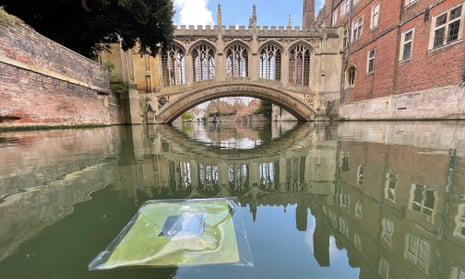
The artificial leaves were tested on the River Cam in and around Cambridge including sites such as the Bridge of Sighs.

The artificial leaves were tested on the River Cam in and around Cambridge including sites such as the Bridge of Sighs. Photograph: Virgil Andrei

Automated floating factories that manufacture green versions of petrol or diesel could soon be in operation thanks to pioneering work at the University of Cambridge. The revolutionary system would produce a net-zero fuel that would burn without creating fossil-derived emissions of carbon dioxide, say researchers. Continue reading

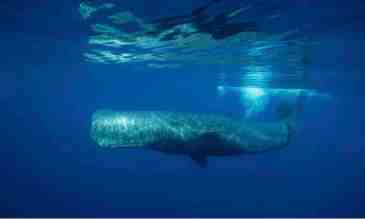
Dominica’s Whale Sanctuary

Fewer than 500 sperm whales are estimated to live in the waters surrounding Dominica. Photograph: By Wildestanimal/Getty Images

This island is already known for sperm whales. Protecting their habitat strengthens Dominica’s reputation as the conservation leader in the region:

Dominica creates world’s first marine protected area for sperm whales

Nearly 300 sq miles of water on west of Caribbean island to be designated as a reserve for endangered animals

The tiny Caribbean island of Dominica is creating the world’s first marine protected area for one of Earth’s largest animals: the endangered sperm whale. Continue reading

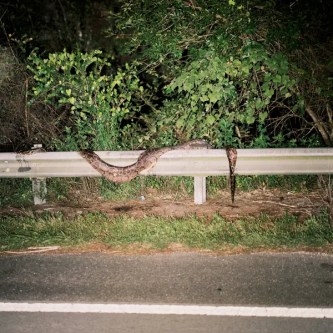
Invasive Pythons Are Winning, Get Your Game On

A Burmese python that was hit by a car. Zack Wittman for The New York Times

Nearly 12 years to the day since the first spectacular article we read on invasive species, we still watch for these stories. When it is invasive-hunting season, we take notice when new initiatives are announced:

Her Livelihood? Hunting Pythons in the Dead of Night.

Amy Siewe teaches people how to find and euthanize invasive Burmese pythons, which have been so successful at adapting to Florida that they appear here to stay.

On a clothing rack in Ms. Siewe’s living room are a dozen of skins, dyed deep hues by a tannery that helps her make python-leather products, including Apple Watch bands. Zack Wittman for The New York Times

An unexpected chill can fall over the Florida Everglades late at night. Stars speckle the sky. Frogs croak and croak, their mating calls echoing in the air.

It is all peace and wonder until you remember why you are out at this hour, on the flatbed of a pickup truck outfitted with spotlights, trying to find invasive creatures lurking in the shadows.

A python hunt might evoke images of hunters trudging through swamps and wresting reptiles out of the mud. In reality, it involves cruising the lonely roads that traverse the Everglades in S.U.V.s, hoping for a glimpse of a giant snake. It is strange work, straining on the eyes, brutal on the sleep schedule. Continue reading

The Slow Ways App, For Right Of Way Walkers

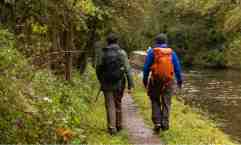
The Slow Ways founder, Daniel Raven-Ellison (right) walks with the Guardian’s Patrick Barkham as they verify a route between Congleton and Macclesfield. Photograph: Fabio De Paola/The Guardian

The right of way is a theme we love, and now there is a technology to assist our pursuit of those rights, at least in one country.

Our thanks to and the Guardian for their coverage of this development:

Walk the walk: the app mapping 140,000 miles of public right of way

Slow Ways was set up during the pandemic when frustrated locked-down walkers drew up more than 9,000 walking routes across Great Britain. Photograph: Fabio De Paola/The Guardian

Community-based, Slow Ways has verified 60% of a network of pedestrian-friendly routes across Great Britain

I meet up with Daniel Raven-Ellison, the brains behind the Slow Ways walking network, in the darkness of a drizzly dawn at Kidsgrove railway station in Staffordshire. Our mission? To walk and verify the final 17-mile (27km) link in the route between Birmingham and Manchester. Continue reading

Heirloom Captures Carbon

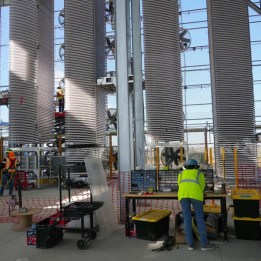
Heirloom’s plant in Tracy, Calif., pulls carbon dioxide from the air so it can be sealed permanently in concrete. Jim Wilson/The New York Times

We have been waiting for this day to arrive:

In a U.S. First, a Commercial Plant Starts Pulling Carbon From the Air

The technique is expensive but it could help fight climate change. Backers hope fast growth can bring down costs.

In an open-air warehouse in California’s Central Valley, 40-foot-tall racks hold hundreds of trays filled with a white powder that turns crusty as it absorbs carbon dioxide from the sky.

The start-up that built the facility, Heirloom Carbon Technologies, calls it the first commercial plant in the United States to use direct air capture, which involves vacuuming greenhouse gases from the atmosphere. Continue reading

Endangered Eating By Sarah Lohman

The author, culinary historian Sarah Lohman, came to our attention at the time her previous book was being published, and we are happy to see more of her work. From her own website:

American food traditions are in danger of being lost. How do we save them?

Apples, a common New England crop, have been called the United States’ “most endangered food.” The iconic Texas Longhorn Cattle is categorized at “critical” risk for extinction. Unique date palms, found nowhere else on the planet, grow in California’s Coachella Valley —but the family farms that caretake them are shutting down…

And the reviews suggest that the book is every bit as good as the author had hoped it would be.

Nature Conservancy 2023 Global Photo Contest Winners

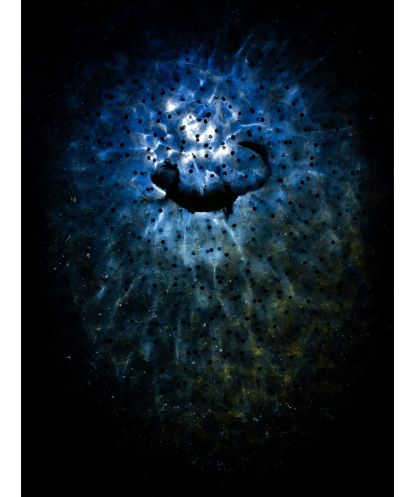
BETWEEN THE STARS I photographed this moment underwater. I was able to do it by putting my camera in an underwater case, attaching it to a metal weight and placing it all under the eggs. I waited nearby for it to be dark, and when the newt appeared, I lit it with an LED lamp. I started the camera with a home-made wired remote release. It turned out 1-2 sharp pictures. © Tibor Litauszki/TNC Photo Contest 2023

We appreciate the break from the news of the day:

The Nature Conservancy is proud to announce the winners of the 2023 photo contest.

Your images gave voice to nature and showed us the power and peril of the natural world.

The following photos submitted to our 2023 photo contest captivated our judges the most.

This image is a clear display of the patience, coincidence, technical adaptability and composition that earns top choice in the competition. Well-constructed and simply beautiful. The outward simplicity of the photo almost makes it easy to forget how much waiting is required to get a shot like this. The high-speed nature of the subject means you have to be dialed in perfectly when the shot arrives.
— Cole Sprouse, Celebrity Guest Judge

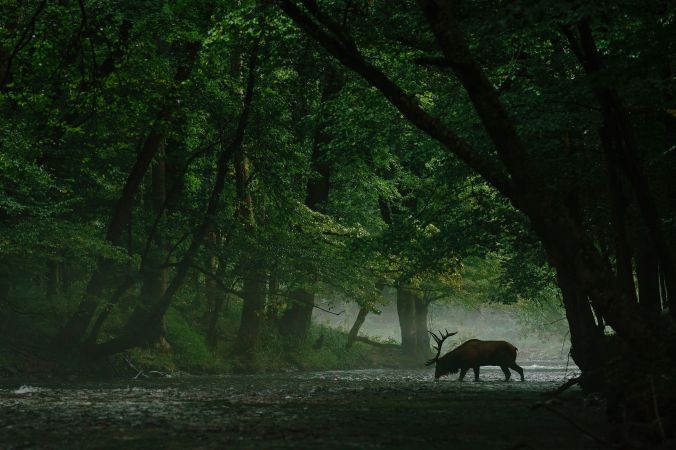
We are happy to see Alan Taylor‘s photography in the mix this year:

A COOL DRINK A bull elk stopping in the Oconaluftee River in the Great Smoky Mountains National Park to a refreshing drink © Alan Taylor/TNC Photo Contest 2023

This year the categories are: Continue reading

Save The Wave In Iceland

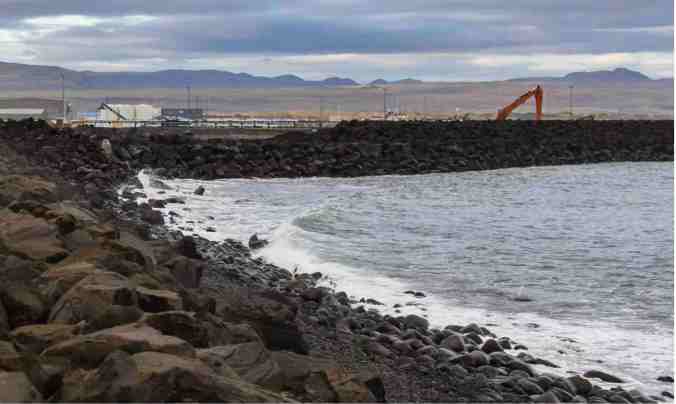
Surfers believe that construction work at Þorlákshöfn could ruin conditions. Photograph: Sigga Ella/The Guardian

Female surfer and business co-owner from Reykjavík, Elín Kristjánsdóttir Photograph: Sebastien Drews

Protecting waves from the effects of development, for surfing, has featured in two previous posts. Those were in locations more commonly associated with the sport. Iceland has featured in our pages many more times over the years, not once in relation to waves or surfing. Until today:

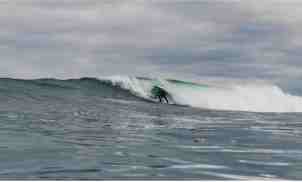
Improvements in wetsuit technology mean surfers can enjoy the waters in Iceland all year round. Photograph: Sigga Ella/The Guardian

Icelandic surfers fear port development will ruin ‘perfect point break’

Volcanoes, northern lights and midnight sun are all on offer at this haven, which locals want to preserve

Look at this wave,” says Mathis Blache, pointing to the sea from the shore’s black rocks as a swell rolls in. “It’s just perfect.” Despite air and water temperatures in the single digits, the 27-year-old student and surfer points out two other surfers – and a couple of seals – delighting in the conditions at Þorlákshöfn in south-west Iceland.

This spot, where surfers can enjoy either the midnight sun or the northern lights depending on the time of year, has in recent years become the heart of Iceland’s rapidly growing surfing community. Continue reading

Big Turbines, Big Location, Big Wind Farm

Image via U.S. Bureau of Ocean Energy Management
A map shows the location of Dominion’s federal lease and where the company proposes to run associated infrastructure.

Thanks to National Public Radio (USA) station WHRO for this news.

It is a big deal:

Dominion can soon start building Virginia Beach offshore wind farm, feds say

Dominion Energy will soon have the green light to start building its long-awaited wind farm off the Virginia Beach coast.

Dominion Energy’s pilot turbines off Virginia Beach this summer. (Photo by Laura Philion)

The Biden administration announced Tuesday its approval of the $9.8 billion Coastal Virginia Offshore Wind project, which when constructed will be the largest in the country’s history.

Dominion can now start constructing infrastructure for the project on-shore, said spokesperson Jeremy Slayton. The company just needs the Bureau of Ocean Energy Management to OK its construction and operations plan for the offshore farm. Continue reading

Frogs, Western Ghats & Science

Sathyabhama Das Biju (from left), James Hanken, Harvard’s Alexander Agassiz Professor of Zoology, and Sonali Garg during a June 2023 field trip to study amphibians in the Western Ghats, a biodiversity hotspot in India. Photo by A.J. Joji

During our seven years living and working in the Western Ghats we came to appreciate frogs through the eyes of our family, those of our staff, as well as travelers and occasional scientific references (the man on the left in the photo to the left having shown up in our pages one of those times). Good to know that the science is being shared for good cause, thanks to Anne J. Manning in this article for the Harvard Gazette:

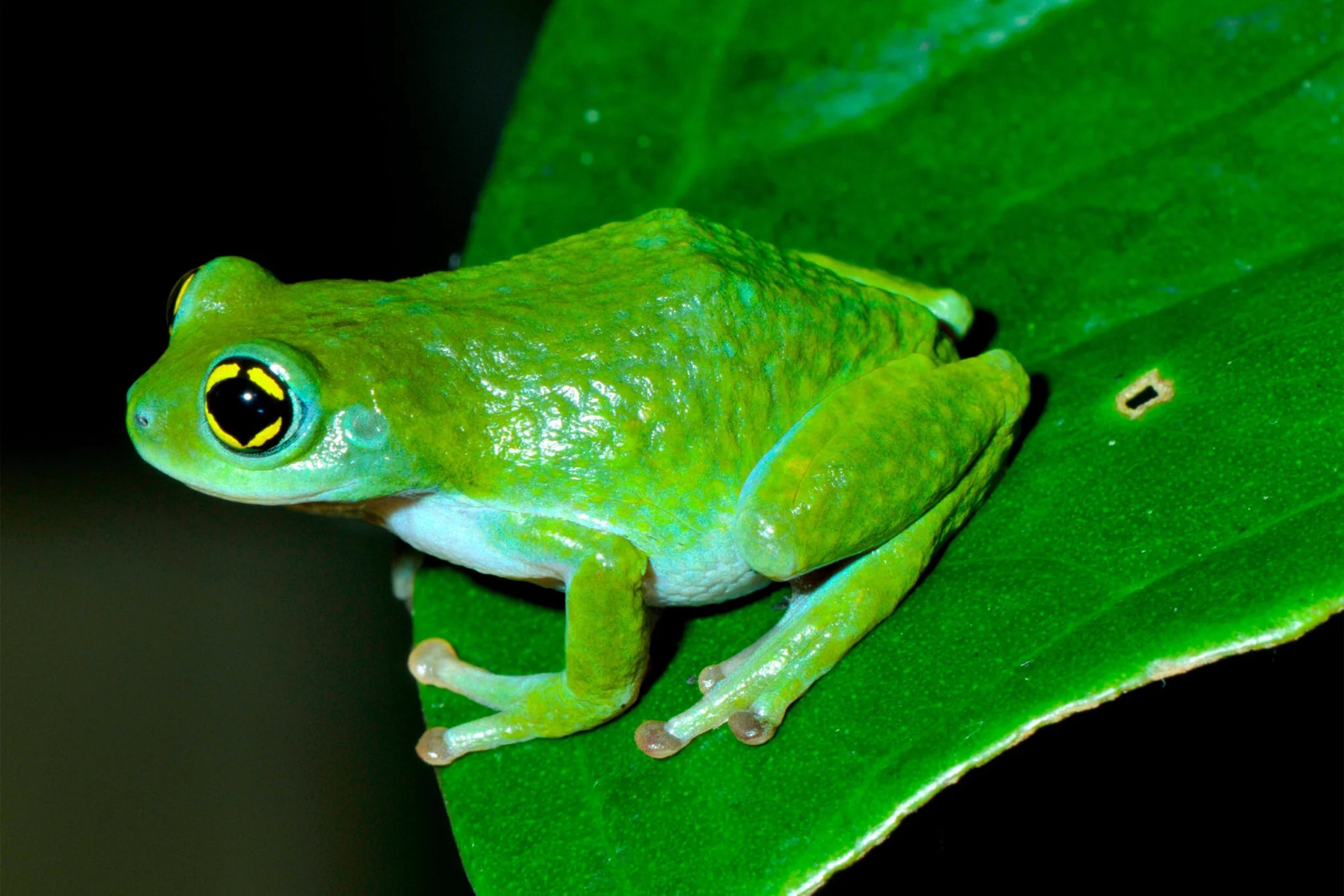
The Indian Purple Frog, first described by Sathyabhama Das Biju in 2003.

Who will fight for the frogs?

Indian herpetologists bring their life’s work to Harvard just as study shows a world increasingly hostile to the fate of amphibians

Having pulled themselves from the water 360 million years ago, amphibians are our ancient forebears, the first vertebrates to inhabit land.
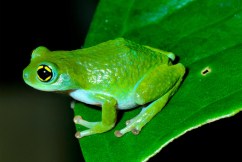
After 136 years from its original description, Günther’s shrub frog was recently rediscovered in the wild. Credit: S.D. Biju and Sonali Garg

Now, this diverse group of animals faces existential threats from climate change, habitat destruction, and disease. Two Harvard-affiliated scientists from India are drawing on decades of study — and an enduring love for the natural world — to sound a call to action to protect amphibians, and in particular, frogs.

Sathyabhama Das Biju, the Hrdy Fellow at Harvard Radcliffe Institute and a professor at the University of Delhi, and his former student Sonali Garg, now a biodiversity postdoctoral fellow at Harvard’s Museum of Comparative Zoology, are co-authors of a sobering new study in Nature, featured on the journal’s print cover, that assesses the global status of amphibians. It is a follow-up to a 2004 study about amphibian declines.
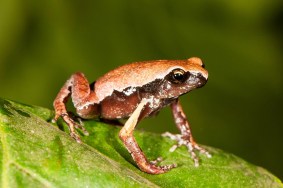
Franky’s narrow-mouthed frog is among the threatened species. Credit: S.D. Biju and Sonali Garg

Biju and Garg are experts in frog biology who specialize in the discovery and description of new species. Through laborious fieldwork, they have documented more than 100 new frog species across India, Sri Lanka, and other parts of the subcontinent.

According to the Nature study, which evaluated more than 8,000 amphibian species worldwide, two out of every five amphibians are now threatened with extinction. Climate change is one of the main drivers. Continue reading

Rishi Doubles Down On Awful

Prime Minister Rishi Sunak announcing last month that the U.K. will delay the phaseout of gasoline and diesel cars. JUSTIN TALLIS / POOL VIA AP

When leadership is most needed, the special relationship between the UK and the USA should count for something, but so far no sign of the USA pressing back on the UK’s awful reversal on their already tepid recent leadership on climate. We knew that leadershsip was lacking in the UK. The Orwell-worthy podium messaging in the photo to the left says all you need to know about efforts to obfuscate, but read Fred Pearce‘s account in Yale e360 anyway:

Demonstrators in Edinburgh protest the government’s recent approval of drilling in the Rosebank North Sea oil field. PRESS ASSOCIATION VIA AP IMAGES

Why Is Britain Retreating from Global Leadership on Climate Action?

While Britain has long been a leader in cutting emissions, Prime Minister Rishi Sunak is now implementing a stunning reversal of climate-friendly policies, with new plans to “max out” oil production. Business leaders have joined environmentalists in condemning the moves.

In 1988, British Prime Minister Margaret Thatcher became the first world leader to take a stand on fighting climate change. Continue reading

Climate Leadership Lacking In Too Many Places

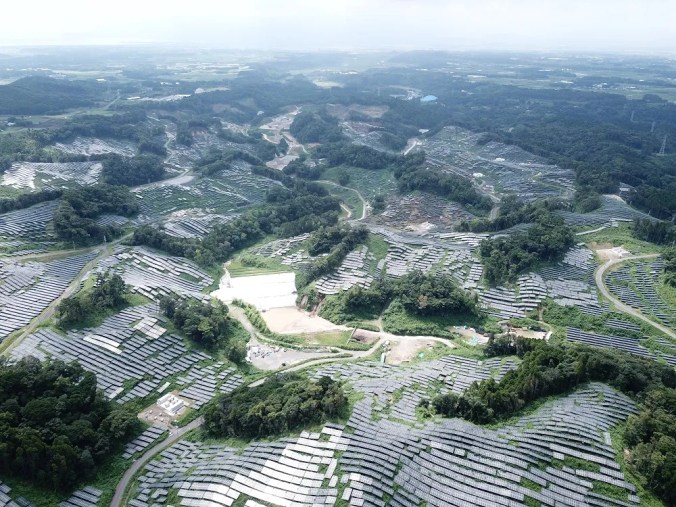
Once a golf course, now a solar farm supplying tens of thousands of homes in Japan

If you know a bit about Japan’s love of golf, the photo above says alot about leadership there in moving away from fossil fuels in the direction of alternative energy. But it is too little too late compared to what is happening elsewhere. Thanks as always to Bill McKibben for his newsletter:

Energy from Heaven

and not from Hell/Exxon.

Amid the torrent of hideous news last week, one item might have skipped your notice: Exxon announced the acquisition—its biggest since picking up Mobil a quarter century ago—of one of the largest fracking operators in the world. As the AP reported, “including debt, Exxon is committing about $64.5 billion to the acquisition, leaving no doubt of the Texas energy company’s commitment to fossil fuels.” In fact, it’s the declaration of conviction that they think they have enough political juice to keep us hooked on oil and gas for a few more decades, even in the face of the highest temperatures in 125,000 years. Continue reading

Going The Extra Mile For Monarch Butterflies

Ms. Elman collects butterfly eggs from milkweed plants growing wild along New York City’s highways. Karine Aigner

Some of the best stories are about people who go the extra mile for others:

To Save Monarch Butterflies, They Had to Silence the Lawn Mowers

An unlikely group of New Yorkers is winning small victories in the battle to protect butterfly habitats.

The small white dot under a milkweed plant is a monarch butterfly egg. Karine Aigner

The Long Island Expressway is not generally a place people linger, unless they’re stuck in traffic.

But during the summer, Robyn Elman can often be found walking alone near the highway’s shoulder, inspecting scraggly patches of overgrown milkweed. The plant is the only source of nutrition for monarch caterpillars before they transform into butterflies. Continue reading

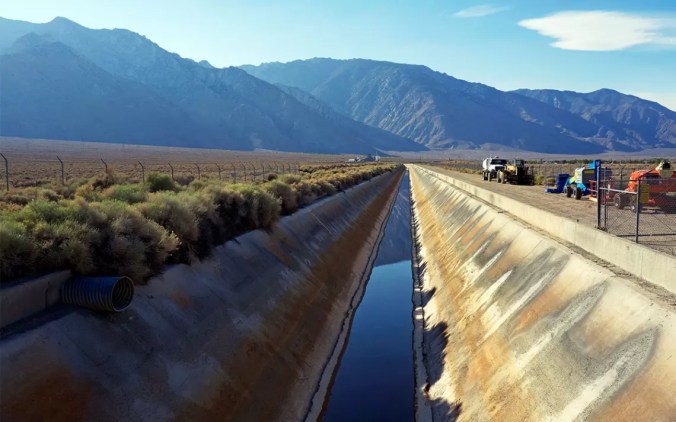
Water Rights, Heritage & Responsibility

The Los Angeles Aqueduct. | Photo by Brian Melley/AP

California water has been covered in earlier posts, and it keeps getting more important. Once again, with abundance comes responsibility:

Dear Los Angeles: You’re Drinking Indigenous Water

How LA can localize its water supply and finally do right by the Owens Valley Paiute tribes

In August 2023, a tropical storm bore down upon Southern California for the first time in 84 years. As Hilary’s northward-rolling blanket of rain touched off mudslides from Hollywood to the San Bernardino Mountains, thigh-deep water floated vehicles in the streets of Cathedral City. To the east, 120 miles of Highway 395 were closed due to flooding and rock slides, pinching off the route between the city of Los Angeles and the once-green valley 300 miles away from which it has, for over a century, sourced fresh water. Continue reading

Really, Cargill?

Beka will hand-deliver a letter to the Cargill-MacMillian dynasty in Minneapolis on Thursday, calling on the billionaire owners of America’s biggest private company to stop destroying the Amazon rainforest and its people. Photograph: Thalia Juarez/The Guardian

Cargill has appeared a few times in our pages over the years, not always showing poor stewardship. But today, we have to ask whether they really are trying as diligently as possible to do the right thing. We applaud Beka and her community for this letter, and hope the recipients respond with the sense of responsibility that comes with their wealth:

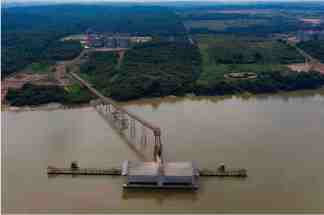
A Cargill transshipment port for soy and corn projects on the Tapajos River in Itaituba, Para state, Brazil, in 2019. Photograph: Léo Corrêa/AP

‘Our world hangs by a thread’: Indigenous activist asks US agri giant to stop destroying Amazon rainforest

Beka Saw Munduruku , 21, traveled 4,000 miles to deliver letter and confront family behind Cargill empire over what she says amounts to a litany of broken promises

A 21-year-old Indigenous activist from a remote Amazonian village will hand deliver a letter to the Cargill-MacMillan dynasty in Minneapolis on Thursday, calling on the billionaire owners of the US’s biggest private company to stop destroying the Amazon rainforest and its people. Continue reading

Where Your Seafood Comes From, And How

Ian Urbina has chronicled this topic in the past, and the fishing crimes on the high seas have not abated, to say the least:

BEHIND THE SEAFOOD YOU EAT

China has invested heavily in an armada of far-flung fishing vessels, in part to extend its global influence. This maritime expansion has come at grave human cost.

DANIEL ARITONANG GRADUATED from high school in May, 2018, hoping to find a job. Short and lithe, he lived in the coastal village of Batu Lungun, Indonesia, where his father owned an auto shop. Aritonang spent his free time rebuilding engines in the shop, occasionally sneaking away to drag-race his blue Yamaha motorcycle on the village’s back roads. Continue reading

Stories from the Field: Spoon-billed Sandpiper

In my previous post I’d written about birding with Clement Francis and how educational he was in so many ways – sparking my interest in birding, my abilities as a bird photographer, and not least, my understanding of the challenges that birds and other wildlife suffer in the face of climate change and human related habit destruction. The story of the Spoon-billed Sandpiper impacted me in a huge way.

This tiny bird travels between the Arctic Tundra and the South Asiatic regions. While they breed in the tundra, they migrate southwards during winters in a migratory route of 8000 kilometres. Just 200 pairs of this birds existed back then. Now due to human intervention and the implementation of captive breeding programmes, the population are reaching to a decent number.

The International Union for Conservation of Nature (IUCN)  has listed the Spoon-billed Sandpiper under the “critically endangered” species. During one of our trips Clement showed me the picture of the bird in its breeding plumage that was shot in Siberia. From that moment on my mind was set on seeing the bird. It may appear like an exaggeration, but the bird appeared in my dreams quite often and the desire to see it for myself grew stronger every day. At the time of our trip the bird was in migration to a small patch in the Sunderbans of Bangladesh,  but the numbers there were decreasing, and their path seemed to be shifting toward stopovers in Thailand instead. 

Continue reading