Proposed Chumash Sanctuary One Step Closer

Thanks to National Public Radio (USA) for bringing this to our attention:

Members of the Chumash tribe have pushed for a decade to create a new marine sanctuary. If created, it would be the first to be designated with tribal involvement from the outset. Robert Schwemmer/NOAA

Biden proposes vast new marine sanctuary in partnership with California tribe

The Biden administration is one step away from designating the first national marine sanctuary nominated by a tribe. The Chumash Heritage National Marine Sanctuary would protect 5,600 square miles of ocean off the central California coast, an area known for its kelp forests, sea otters and migratory whales. Tribal members of the Chumash, who have lobbied for its creation for more than a decade, would be involved in managing it…

The First Tribally Nominated Sanctuary

Preserving marine and cultural resources along 156 miles of Central California Coastline

Estimated to generate $23 million in economic activity and create 600 new jobs

Will safeguard the Central Coast from offshore oil expansion and other threats


Beechnut & Beaver Hope

Nearing the end of the northern summer, one for too many of the wrong kind of record books, some notion of hope is more than welcome. This edition of his newsletter offers some:

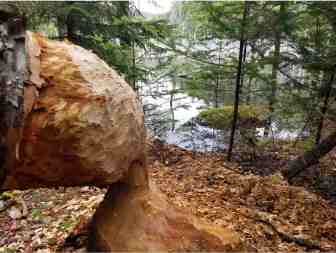
Beavering Away

With Your Help. (An annual update!)

In the guise of my annual report on our nifty online community I’m going to show you my vacation pictures! Lucky you!

It’s possible I’m just feeling guilty because I took a couple of days off in this Summer To End All Summers. But Sunday and Monday, while Hillary was introducing southern Californians below the age of 85 to the concept of ‘tropical storm,’ I went on a wander with an old friend through the middle of the Wilcox Lake Wild Forest in New York’s Adirondack Mountains, a splendidly remote chunk of land that I’ve lived on the edge of, off and on, for much of my life, and which I never tire of exploring. Continue reading

Honey Bee Dangers & Mythology

Gorazd Trusnovec inspects a beehive at the B&B Hotel Ljubljana Park in Ljubljana, Slovenia.

Thanks to this article by David Segal, with photographs and video by Ciril Jazbec, we realize now that even after our dozens of links to articles about bees, one key point was never on our radar. Our beekeeping/honey-making friends in Costa Rica inform us that the opposite is an issue here–in the entire country there are only 800 beekeepers and most of them are small scale hobbyists, and that a national authority (SENASA) controls the density of hives per area:

Mr. Trusnovec at home. “I would say that the best thing you could do for honey bees right now is not take up beekeeping,” he says.

In Slovenia and around the world, conservationists try — and mostly fail — to combat the widespread belief that honey bees are in danger.

When the B&B Hotel in Ljubljana, Slovenia, decided to reinvent itself as an eco-friendly destination in 2015, it had to meet more than 150 criteria to earn a coveted Travelife certificate of sustainability. But then it went step further: It hired a beekeeper to install four honey bee hives on the roof. Continue reading

Planting Trees In New Haven

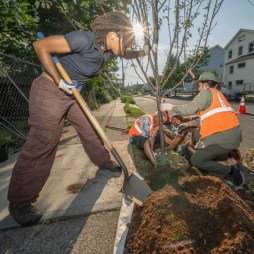
From left, Jess Jones, Ed Rodriguez, Zach Herring and Joshua De-Anda, planting a crab apple tree at 10 Wolcott Street in the Fair Haven neighborhood of New Haven, Conn. Tony Cenicola/The New York Times

Ed Rodriguez has a few years on me, but we have comparable tree counts. The caption of the second photo below captures my my own preference of activity on any given day. Having grown up in Connecticut and moved to Costa Rica decades ago, I note our reverse patterns of migration.

Colbi Edmonds, a member of the 2023-24 New York Times Fellowship class, reports from Seth’s previous hometown New Haven on an initiative I love reading about as much as I enjoy my own versions of the same kind of activity:

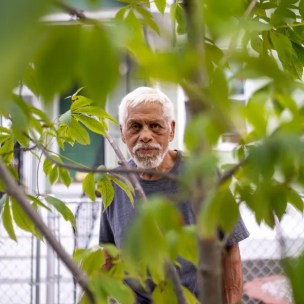
“I love to dig and mess around in the soil,” said Ed Rodriguez, who grew up in Puerto Rico but moved to Connecticut in the 1960s. Christopher Capozziello for The New York Times

One Neighborhood, 90 Trees and an 82-Year-Old Crusader

Ed Rodriguez is on a mission to convince his neighbors that they need trees to help combat summer heat — and to make the world a better place. It’s not always so easy.

Maria Gonzalez, who lives in New Haven, Conn., was envious of the other side of her street. It was lined with trees, offering some beauty as well as a shield from this summer’s unusual heat. But the sidewalk directly in front of her residence was bare, with trash littering patches of grass. Continue reading

UK Regenerative Agriculture Festival, Groundswell 2023

Last year’s highlights in the video above, and a review of this year’s festival in the link below to an online magazine:

Lannock Manor Farm, Hertfordshire, SG4 7EE, UK

The Groundswell Festival provides a forum for farmers, growers, or anyone interested in food production and the environment to learn about the theory and practical applications of regenerative farming systems.

The next Groundswell Festival takes place on the 26th & 27th of June 2024. View the Event Guide from 2023 here.

Cats Coming In From The Wild

Wild cats were a big part of our life in Belize, when our business included operating a lodge in the northwest of the country. As a “cat person” I appreciate this evolutionary biologist walking me through the adaptation from wild cats to domesticated:

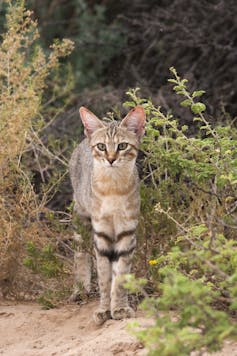
long-legged, striped cat peeks out of scrubby greens

An African wildcat doesn’t look so different from a domestic cat. pum_eva/iStock via Getty Images Plus

Cats first finagled their way into human hearts and homes thousands of years ago – here’s how

A few years ago, I had the opportunity to go on safari in southern Africa. One of the greatest thrills was going out at night looking for predators on the prowl: lions, leopards, hyenas.

As we drove through the darkness, though, our spotlight occasionally lit up a smaller hunter – a slender, tawny feline, faintly spotted or striped. The glare would catch the small cat for a moment before it darted back into the shadows. Continue reading

The Mind Of A Bee

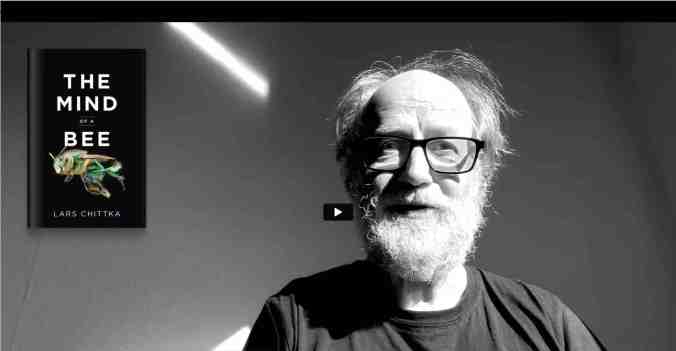
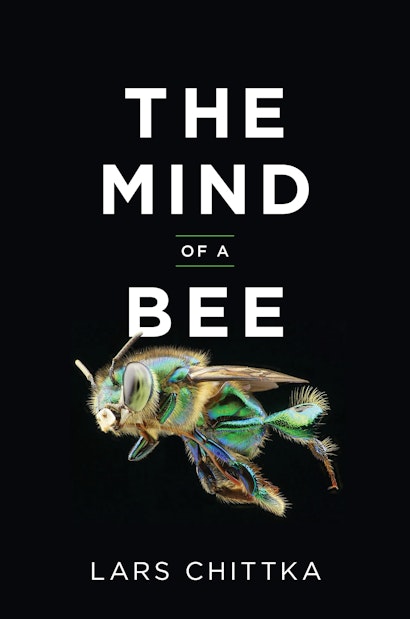
Bees’ brains are always of interest, and both the publisher below and the author above makes a good case for why this book matters:

Most of us are aware of the hive mind—the power of bees as an amazing collective. But do we know how uniquely intelligent bees are as individuals? In The Mind of a Bee, Lars Chittka draws from decades of research, including his own pioneering work, to argue that bees have remarkable cognitive abilities. He shows that they are profoundly smart, have distinct personalities, can recognize flowers and human faces, exhibit basic emotions, count, use simple tools, solve problems, and learn by observing others. They may even possess consciousness. Continue reading

Among The Reasons To Regenerate Soil

Organikos soil regeneration view from above, early Tuesday morning

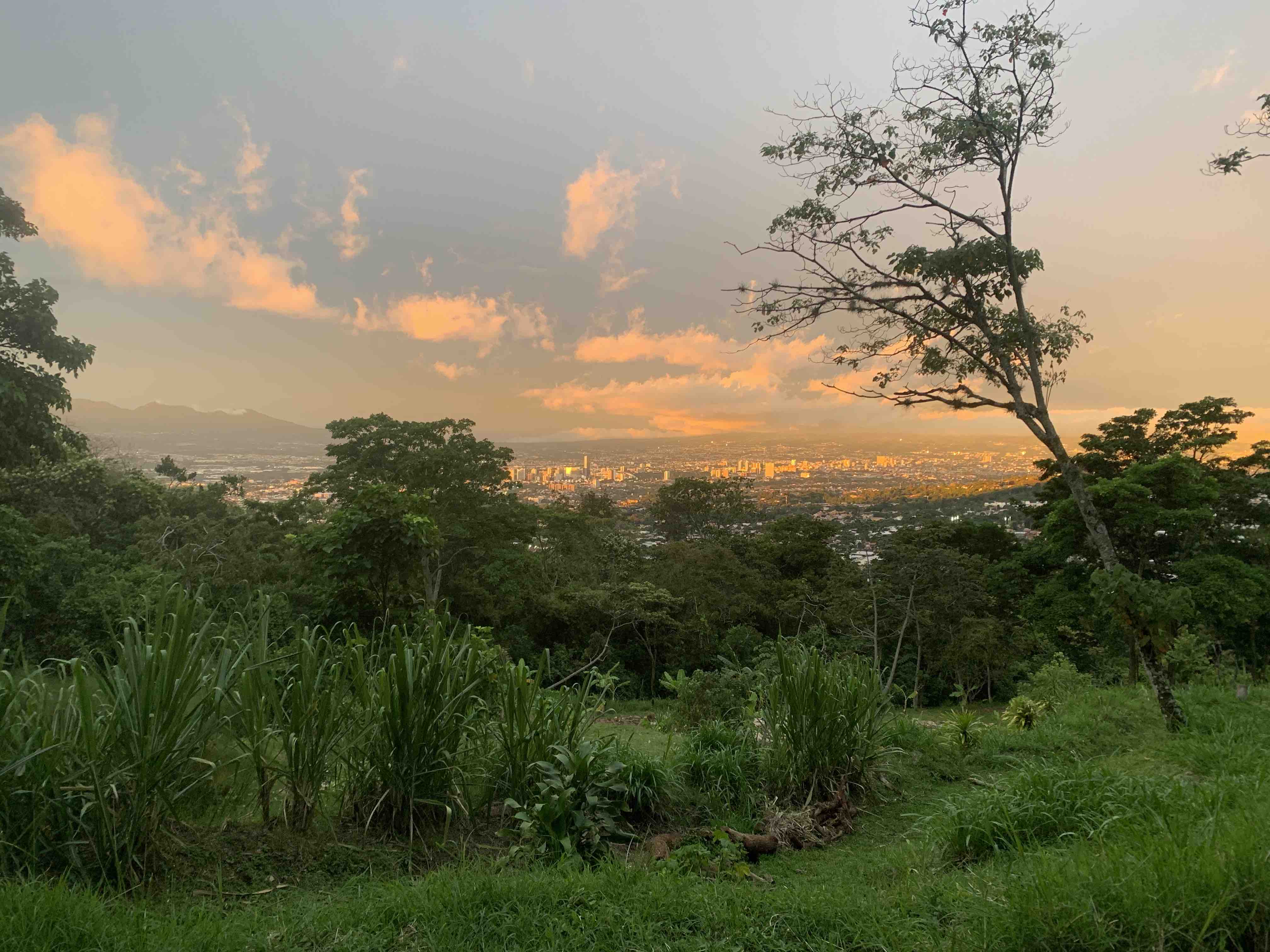
When we started the berm where the sugarcane grows now, we knew we had a multi-year project ahead of us. This morning, before the sun had risen enough to shine on the land, I snapped the photo above, looking down on the acreage where we have planted more than 100 trees to provide shade for coffee we will plant in the near future. Besides all that, plenty of good ideas for how and why to regenerate the quality of the soil on that land; here’s some more:

A springtail crawls over snail eggs. ANDY MURRAY

Nearly Two-Thirds of All Species Live in the Ground, Scientists Estimate

Soils are more rich in life than coral reefs or rainforest canopies, providing a home to nearly two-thirds of all species, according to a sprawling new analysis. Continue reading

Huilo Huilo’s Hojarasca

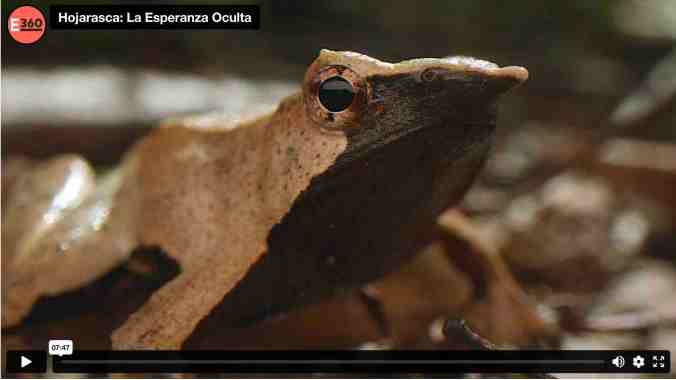
We first noticed this film contest three years ago, and have followed it since. The 3rd-place winner of this year’s film contest was made in the Huilo Huilo Biological Reserve, habitat of the endangered species pictured above. In 2009 I was in the middle of a two-year work engagement in southern Chile. During the middle of that year Amie, as well as Seth and Milo, were able to join me for a few months and we spent time in this reserve. I am happy to be reminded:

In a Chilean Forest Reserve, the Remarkable Darwin’s Frog Endures

Four emerging filmmakers from Latin America collaborated to film Darwin’s frog and the biologist who studies the endangered species in Chile’s Huilo Huilo Biological Reserve. “Hojarasca: The Hidden Hope” is the Third-Place Winner of the 2023 Yale Environment 360 Film Contest.

Worldwide, amphibians are going extinct — victims of habitat loss, climate change, pollution, and fungal diseases. Continue reading

A Further Note On Recent “Good News”

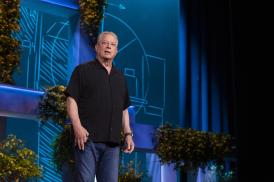
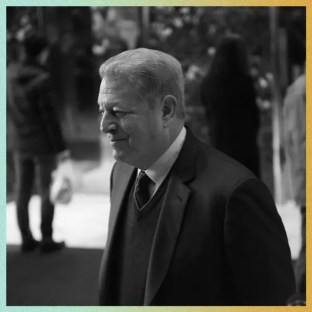
L GORE SPEAKS AT TED COUNTDOWN SUMMIT. JULY 11-14, 2023, DETROIT, MI. PHOTO: GILBERTO TADDAY / TED

Air quotes, sometimes called scare quotes, are embracing two words in the title of this post because we remain ambivalent about optimism related to climate change. But this article, which we missed last month, points to a video that gives more context:

Uplifting Climate Change Good News — According To Al Gore

Former U.S. Vice President Al Gore has been a huge player in the fight against climate change for as long as most of us can remember. As the founder and current chair of the Climate Reality Project, he has dedicated his life to climate action. Continue reading

Droning For Polluters

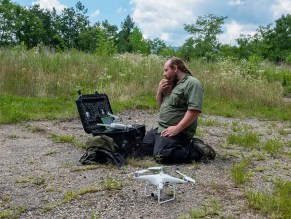
Junior Walk of Coal River Mountain Watch in Naoma, West Virginia, prepares his drone to fly near a reclaimed surface mine in Edwight. Roger May/The Guardian

Mother Jones shares a story we missed in its original publication:

One Man’s Aerial Crusade Against West Virginia’s Coal Industry

Citizen vigilante uses his drone to expose polluters—”I don’t have a lot of friends around here.”

Coal has stalked Junior Walk his entire life.

Continue reading

If You Are In The Market For A New Puffer Jacket

The first and last time some of us heard the word bullrush was with regard to baby Moses. That may change. Thanks to Patrick Greenfield at the Guardian for bringing this company and its innovative product to our attention:

Goosedown out, bulrush in: the plant refashioning puffer jackets

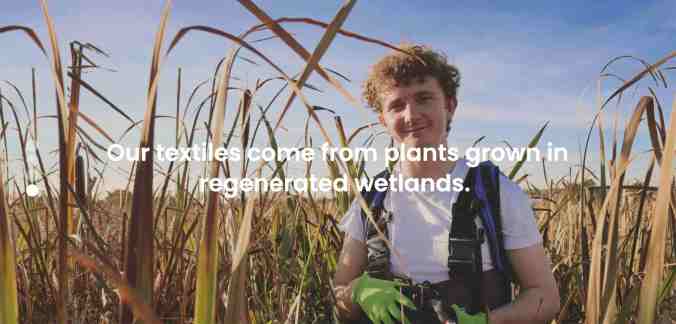
By 2026, a rewetted peatland site in Greater Manchester will be harvesting bulrushes in a trial that aims to boost UK biodiversity, cut carbon emissions and provide eco-friendly stuffing for clothes

Bulrushes grow in marshes and peatland across the UK. Photograph: Krys Bailey/Alamy

The humble bulrush does not look like the next big thing in fashion. Growing in marshes and peatland, its brown sausage-shaped heads and fluffy seeds are a common sight across the UK. Yet a project near Salford in north-west England is aiming to help transform the plant into an environmentally friendly alternative to the goosedown and synthetic fibres that line jackets, boosting the climate and the productivity of rewetted peatland in the process. Continue reading

Plastic Waste Losing Another Place To Land

An Indonesian customs official intercepts a container full of illegally imported plastic waste in September 2019. ACHMAD IBRAHIM / AP PHOTO

When conscientious citizens learn more about where all the plastic goes when they do their part to recycle, it can be demoralizing. Recycling is important but the real solution is reducing the waste in the first place:

Indonesia Cracks Down on the Scourge of Imported Plastic Waste

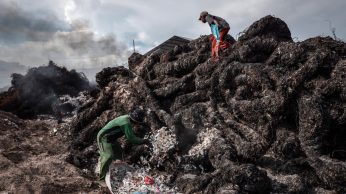
Workers prepare to burn plastic waste at an import dump in Mojokerto, Indonesia. ULET IFANSASTI / GETTY IMAGES

When China banned plastic waste imports in 2018, exporters in wealthy countries targeted other developing nations. Faced with an unending stream of unrecyclable waste, Indonesia has tightened its regulations and has begun to make progress in stemming the plastics flow.

In 2019, at a meeting in Geneva, Switzerland, delegates from 187 countries approved the first-ever global rules on cross-border shipments of plastic waste. Continue reading

Replanting With Edibles

Your first taste of a ripe pawpaw, left, or American persimmon, right, may convince you to plant the trees, which can serve as the centerpiece of a permaculture food forest. J.B. Douglas

It is a relief, always, to read a Margaret Roach article when given the choice between her advice and any given news of the world:

Or just start by planting a few pawpaw or persimmon trees. Chances are, you’ll want more.

A long view of a food forest, with fruit trees growing in beds of companion plants.

At a permaculture site planted by Michael Judd, an edible landscape designer, each fruit tree is underplanted with beneficial companion plants, so “you’re not leaving your poor little fruit tree in a sea of grass,” he said. Michael Judd

Your first taste of a ripe pawpaw or persimmon can leave you hungry for more. That’s why Michael Judd is confident that he can persuade you to make room for several of these trees in your front yard — or even to surrender your lawn altogether.

Turning your yard into a meadow or blanketing it in an expanse of alternative ground covers aren’t the only ecologically viable options for replacing conventional grass. Continue reading

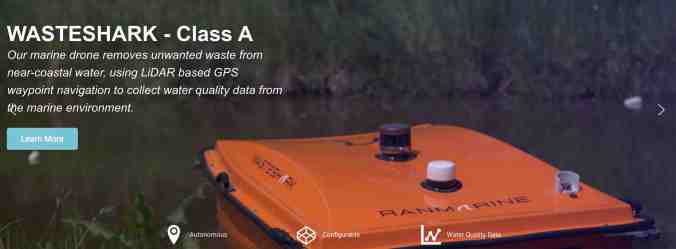
WasteShark

Our thanks to Robert Sullivan for this attention-getting article on a new device:

A Trash-Eating Sea Monster Appears in the Hudson!

A team of scientists and environmentalists tests out the WasteShark, an unmanned watercraft that vacuums up soda cans and potato-chip bags.

WasteShark is not a shark. It is an unmanned watercraft that its creators named for a shark, owing to similarities between how WasteShark collects its prey and the feeding habits of the Rhincodon typus, or whale shark. Continue reading

If Turtles Could Talk–A Short Documentary

The film follows the perilous journey that sea turtles make to lay their eggs on their ancestral land on a beach in Kenya.

Above is a screenshot from the film by Juma Adero, with text by Natalie Meade, that will likely interest anyone who has been exposed to turtle conservation initiatives:

On a Tropical Beach, Conservationists and Poachers Collide

Juma Adero’s short documentary “If Turtles Could Talk” chronicles the effort to save endangered sea turtles near Mombasa, Kenya.

The shoreline where a green sea turtle hatches from her egg is often the same place she’ll return to nest for the first time. One such inlet is Jumba beach, which abuts the site of an old Swahili village near the bustling city of Mombasa, in southern Kenya. Continue reading

Bears In Our Midst

Bear populations are plummeting in most of the world. But in North America “human-bear conflicts” have been on the rise. Photograph by Alex Majoli / Parc de la Villette / Magnum

On the rare occasions when the historian and elegant writer Jill Lepore has essays whose topics overlap with our interests on this platform, we say hoorah:

The Bear in Your Back Yard

Throughout North America, they’re showing up in unexpected places. Can we coexist?

I keep a cannister of bear spray on a shelf by the mudroom door, next to a cakey-capped tube of sunscreen and two mostly empty and partly rusty green aerosol cans of OFF! Deep Woods insect repellent. Continue reading

Antarctica Off The Bucket List

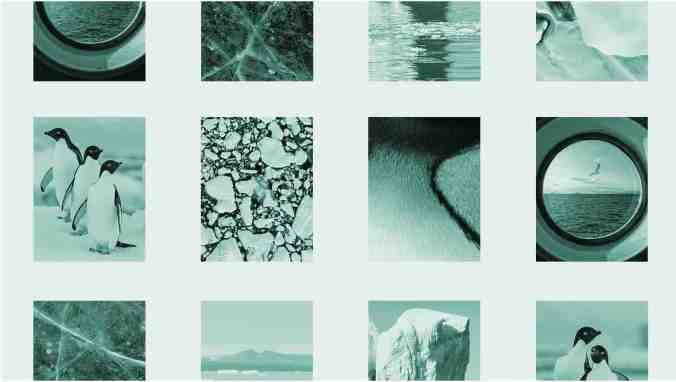
Illustration by The Atlantic. Source: Getty.

During my two years working in southern Chile I was close several times to going further south. In spite of my disappointment at the time, in hindsight I am fine with not having made the journey. Thank you, Sara Clemence, for getting that clear in my head:

Take Antarctica off your travel bucket list.

On the southernmost continent, you can see enormous stretches of wind-sculpted ice that seem carved from marble, and others that are smooth and green as emerald. You can see icebergs, whales, emperor penguins. Visitors have described the place as otherworldly, magical, and majestic. The light, Jon Krakauer has said, is so ravishing, “you get drugged by it.”

Travelers are drawn to Antarctica for what they can find there—the wildlife, the scenery, the sense of adventure—and for what they can’t: cars, buildings, cell towers. They talk about the overwhelming silence. The Norwegian explorer Erling Kagge called it “the quietest place I have ever been.” Continue reading

Climate Optimism, Part 2

Hilary Swift for The New York Times

Bill McKibben’s occasional optimism notwithstanding, he and Al Gore are the two most visible alarmists on climate change. Even in the worst of circumstances both find reason to point out our remaining options for actually doing something.

Our thanks to David Gelles and the New York Times for rounding out the doom and gloom with a bit of hope:

Al Gore on Extreme Heat and the Fight Against Fossil Fuels

The past few weeks have him even more worried than usual.

It’s been 17 years since former Vice President Al Gore raised the alarm about climate change with his documentary, “An Inconvenient Truth.” Since then, he’s been shouting from the rooftops about the risks of global warming more or less nonstop. Continue reading

Reviving Plants Lost To Time

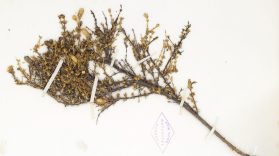
A branch of Blutaparon rigidum, collected on a 1905-1906 expedition to the Galapagos Islands, contains hundreds of potentially viable seeds. NEW YORK BOTANICAL GARDEN

We have touched on the topic of reviving extinct species only a few times previously, and as obvious as it seems we must mention that reviving plant species sounds like a more sound ambition. So, thanks to Janet Marinelli and Yale e360 for this story:

Back from the Dead: New Hope for Resurrecting Extinct Plants

Armed with new technology, botanists are proposing what was once thought impractical: reviving long-lost plant species by using seeds from dried specimens in collections. The challenges remain daunting, but researchers are now searching for the best de-extinction candidates.

In January 1769, botanists Joseph Banks and Daniel Solander found a daisy in Tierra del Fuego, at the southern tip of South America. Continue reading