Beware The Phantom

(Photo credit: Isaac Bowen / CC BY-NC 2.0)

Thanks to Yale Climate Connections:

‘’Phantom’ power is responsible for up to 10% of a home’s energy use

The electricity that your gadgets use during standby mode could be driving up your utility bill. 

‘Tis the season of ghosts, goblins … and phantom power? Continue reading

Community Challenges To Going Solar

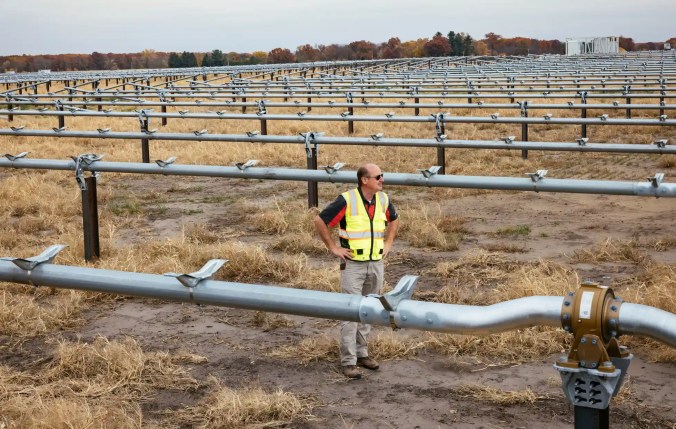
Farmer Norm Welker on his land in Starke county, Indiana, where a solar power field is being constructed. Photograph: Taylor Glascock/The Guardian

Our thanks to Oliver Milman, as ever, and the Guardian, as always, for this story from the front lines of getting it done in spite of opposition:

One of Connie Ehrlich’s anti-solar billboards in Winamac, Indiana. Photograph: Taylor Glascock/The Guardian

‘It’s got nasty’: the battle to build the US’s biggest solar power farm

A community turns on itself over the aptly named Mammoth solar project, a planned $1.5bn power field nearly the size of Manhattan

When proposals for the largest solar plant ever conceived for US soil started to gather pace – a plan that involves spearing several million solar panels into the flat farmland of northern Indiana – something in Connie Ehrlich seems to have snapped. Continue reading

Animal-Free Meat & Racing The Clock

BlueNalu’s fried cell-cultured yellowtail amberjack fish taco. Photograph: Courtesy of BlueNalu

Whether the meat you eat is from land animals or from the ocean, the chances are high that you will be eating man-made versions sooner rather than later:

‘Fishless fish’: the next big trend in the seafood industry

‘Alternative seafood’ is having a moment, with the rise of companies like BlueNalu and Wildtype, which has the backing of Leonardo DiCaprio

In the middle of San Francisco, there’s a pilot production plant for Wildtype, one of a handful of cell-cultivated seafood companies in the US. Inside, it’s growing sushi-grade coho salmon in tanks similar to those found in breweries – no fishing or farming required. Continue reading

Memo From Mr. Gates

We have only rarely linked to stories featuring or mentioning Mr. Gates.

This is not because we do not value his opinions; we think he is the smart money on multiple fronts. Climate change is one of them.

Even if we consider McKibben the more reliable scribe, and even if we give Malmo his due, this is still smart money territory:

The state of the energy transition

My annual memo about the journey to zero emissions.

When I first started learning about climate change 15 years ago, I came to three conclusions. First, avoiding a climate disaster would be the hardest challenge people had ever faced. Second, the only way to do it was to invest aggressively in clean-energy innovation and deployment. And third, we needed to get going. Continue reading

Plus De Ce Méfait, S’il Vous Plaît

As an energy crisis looms, Paris officials have taken steps to reduce nighttime lights, as have conservation-minded Parkour practitioners. Mauricio Lima for The New York Times

We cannot presume to cheer this type of mischief anywhere else, but considering the origin story of parkour, and the incentives for activism, it seems fitting for the City of Lights:

With Leaps and Bounds, Parkour Athletes Turn Off the Lights in Paris

As an energy crisis looms, nimble young activists are using superhero-like moves to switch off wasteful lights that stores leave on all night.

Kevin Ha extinguishing a store’s lights last month. Mauricio Lima for The New York Times

Paris— After taking a few steps back to get a running start, Hadj Benhalima dashed toward the building, pushed against its wall with his foot, propelled himself upward and stretched out his arm.

At the peak of his leap, he flipped off a light switch, more than 10 feet off the ground. A click sound rang out, and the bright lights of a nearby barbershop went off instantly.

“Oooh,” his friends cheered, as Mr. Benhalima, a thin 21-year-old dressed all in black, landed back on the sidewalk. It was the second store sign he had turned off on a recent nighttime tour across Paris’s upscale neighborhoods. Many more would follow as he soared up and dropped back down across the city. Continue reading

The Race That Matters Most

Bernice Lee, an expert on climate politics at Chatham House, says: “Good results at a global level are built on strong domestic, local and regional action.” Illustration: Nathalie Lees

Thanks to the Guardian’s Environment editor, Damian Carrington, as always, for reminding us which horse to bet on:

Hope amid climate chaos: ‘We are in a race between Armageddon and awesome’

Renewables, decarbonisation, activism, cooperation … The challenge is immense, but the situation is far from hopeless

Every one of us will love someone who is still alive in 2100, says climate campaigner Ayisha Siddiqa. That loved one will either face a world in climate chaos or a clean, green utopia, depending on what we do today.

It’s a powerful reason for action, providing hope that the will for transformative change can be found. Continue reading

Reducing Emissions & Living Well

Gauchos at the Pintado wind farm in Corral de Piedra, Uruguay.

Gauchos at the Pintado wind farm in Corral de Piedra, Uruguay. Alessandro Cinque for The New York Times

We normally think of Costa Rica to answer this question, but it is in good company:

No greater challenge faces humanity than reducing emissions without backsliding into preindustrial poverty. One tiny country is leading the way.

Let’s say you live in the typical American household. It doesn’t exist, not in any sense except in a data set, but it’s easy enough to imagine.

“We learn to live with less here,” says a former bank analyst, Ignacio Estrada, who had decided to take a 75 percent pay cut to return home. “And it’s made my life better.”

“We learn to live with less here,” says a former bank analyst, Ignacio Estrada, who had decided to take a 75 percent pay cut to return home. “And it’s made my life better.” Alessandro Cinque for The New York Times

Maybe it’s your aunt’s, or your neighbor’s, or a bit like your own. Since more than half of us live outside big cities, it’s probably in a middle-class suburb, like Fox Lake, north of Chicago.

Uruguay’s national director of energy, Ramón Méndez, at home in Montevideo.

Uruguay’s national director of energy, Ramón Méndez, at home in Montevideo. Alessandro Cinque for The New York Times

You picked it because it’s affordable and not a terrible commute to your job. Your house is about 2,200 square feet — a split-level ranch, perhaps. You’re in your mid-30s and just welcomed your first child. Together with your partner you make about $70,000 a year, some of which goes toward the 11,000 kilowatts of electricity and 37,000 cubic feet of natural gas you use to heat the house, play video games and dry your clothes. You take six or seven plane flights a year, to visit your mom after her surgery or attend a conference, and drive about 25,000 miles, most of which you barely register anymore, as you listen to Joe Rogan or Bad Bunny. Maybe twice a month you stop at Target and pick up six or seven things: double-sided tape, an extra toothbrush, an inflatable mattress. Continue reading

Fishing Endgame

Note: Data for 2020 is from June 2020 through May 2021; for 2021, it is from June 2021 through May 2022.

Overfishing and potential solutions have received lots of attention in our pages over the years. It is not a new problem. And yet, we now have better metrics for how serious the problem is and who is responsible, currently, for making the problem worse. The screenshot to the left does not capture the full value of the dynamic illustration accompanying this article. Click the image to go to the source:

A Chinese ship fishing for squid off the west coast of South America in July 2021. Isaac Haslam/Sea Shepherd via Associated Press

How China Targets the Global Fish Supply

With its own coastal waters depleted, China has built a global fishing operation unmatched by any other country.

Rich and ecologically diverse, the waters around the Galápagos Islands have attracted local fishermen for centuries. Now, these waters face a much larger, more rapacious hunter: China. Continue reading

Patagonia 2.0

Details of a desk in a Patagonia office with a stack of orange and brown stickers that read “defend bears ears national monument’ on top of stacks of magazines and papers.

Patagonia has become more politically active, going so far as to sue the Trump administration in a bid to protect the Bears Ears National Monument. Laure Joliet for The New York Times

We have mentioned this company multiple times in our pages over the years, because we take inspiration from it, the same way we have taken inspiration from the example set by Chuck Feeney. It is worth noting that I also value everything I have ever bought from Patagonia. The day of this blizzard in New York I took an old beat up backpack in to see if they could repair it in the nearby shop; instead, they gave me a new one.

Good quality products, combined with good service, make the good environmental values of the company all the better:

“Hopefully this will influence a new form of capitalism that doesn’t end up with a few rich people and a bunch of poor people,” said Mr. Chouinard. Meridith Kohut for The New York Times

Billionaire No More: Patagonia Founder Gives Away the Company

Mr. Chouinard filmed an announcement for his employees at home in Wyoming. By giving away the bulk of their assets during their lifetime, the Chouinards have established themselves as among the most charitable families in the country. Natalie Behring for The New York Times

A half century after founding the outdoor apparel maker Patagonia, Yvon Chouinard, the eccentric rock climber who became a reluctant billionaire with his unconventional spin on capitalism, has given the company away.

Rather than selling the company or taking it public, Mr. Chouinard, his wife and two adult children have transferred their ownership of Patagonia, valued at about $3 billion, to a specially designed trust and a nonprofit organization. They were created to preserve the company’s independence and ensure that all of its profits — some $100 million a year — are used to combat climate change and protect undeveloped land around the globe. Continue reading

Olives, Farmers, Beauty & Beastly Heat

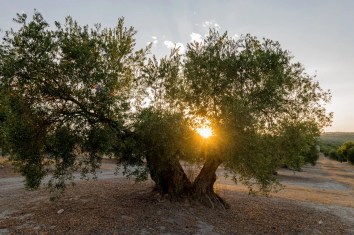
Emilio Parra Doiztua for The New York Times

My thoughts today start with the people who farm olives in this location deprived of the water needed to sustain their livelihoods. Because my mother was born on an olive-producing farm in an olive-privileged region of Greece, my eye is always drawn to stories about olive farmers.

Jaén, a province of Andalusia, has over 67 million olive trees. Emilio Parra Doiztua for The New York Times

When there are photos of olive trees, I am in for the whole story. My strongest, earliest memories are of the olive trees surrounding the terrace of the farmhouse my mother grew up in. Stories about olive farmers challenged by climate change are more difficult to read without sympathy pain, but I do so knowing that olive trees are survivors.

Panacite, a store in Ubeda, sells a range of variants of oil production from the region. Emilio Parra Doiztua for The New York Times

David Segal and José Bautista have reported this story with compassion and clarity:

Spain’s Jaén Province, home to one fifth of the world’s supply of “green gold,” copes with climate change and threats to its way of life.

The branch, plucked from one of thousands of trees in this densely packed olive grove, has browning leaves and a few tiny, desiccated buds that are bunched near the end. To Agustín Bautista, the branch tells a story and the story is about a harvest that is doomed. Continue reading

More Insects In Our Diet

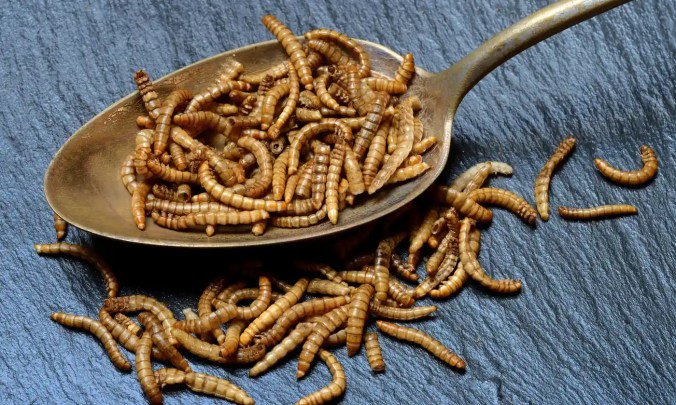
Mealworms, the larval form of the yellow mealworm beetle, have been cooked with sugar by researchers who found that the result is a meat-like flavoring. Photograph: image BROKER/Alamy

Thanks again to Oliver Milman, after a long while,  for this article in the Guardian. The photo is clickbait, so try not to let it get in the way. The story is worthy of attention, unless you are vegan, because of its prediction about how commonplace eating insects will be for most of us in the not too distant future; or should be:

Flavorings made from mealworms could one day be used on convenience food as a source of protein

Insects can be turned into meat-like flavors, helping provide a more environmentally friendly alternative to traditional meat options, scientists have discovered. Continue reading

Ending Lawn Sprawl

Grow wild Ordinarily only academics can walk on the grass courts of Cambridge’s colleges. Peter Dench

Tom Banham’s article in 1843, a masterpiece of longform writing on the topic of lawns, is preaching to the converted (me, at least). I live in a location with abundant rain and grass is more of a pest than the mainstay of beautifully manicured sprawling lawns (for which I am a sucker as much as anyone is).

We just planted the first couple dozen of 1,000+ coffee saplings and the grass on the hills where they are being planted plays a role in soil retention but we want the soil’s nutrients focused on the coffee. But there are plenty of more important reasons to be concerned about grass sprawl elsewhere:

The going gets turf: do lawns have a future in the age of drought?

Our gardens are sterile deserts that guzzle water and chemicals. Perhaps it’s time to let them be

The harvesting in August 2021 of the wildflower meadow planted at King’s College, Cambridge. Peter Dench

The lawns at Tusmore House, a neo-Palladian mansion 15 miles north of Oxford, are so perfectly flat and exactingly shorn that they induce a kind of vertigo. Continue reading

England’s Green And Pleasant Land

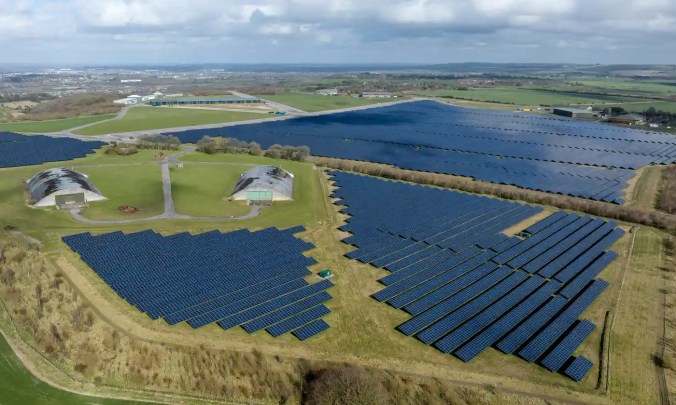
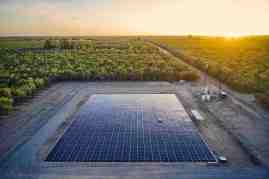
Solar farm in Wroughton, England. Planning permission for 23 solar farms has been refused across England, Wales and Scotland between January 2021 and July 2022. Photograph: Chris Gorman/Getty Images

Nature gets disrupted even by the most sensitively planned green solutions. Here is a parallel story to yesterday’s, with solar replacing wind and England replacing Western USA, illustrating the challenges facing renewable energy:

Exclusive: Projects which would have cut annual electricity bills by £100m turned down

Solar farms are being refused planning permission in Great Britain at the highest rate in five years, analysis has found, with projects which would have cut £100m off annual electricity bills turned down in the past 18 months.

Continue reading

Resistance Is Futile

Illustration by Kotryna Zukauskaite

We do not have time for the patience required for proving the futility of resistance, but this historical perspective is valuable nonetheless:

When Coal First Arrived, Americans Said ‘No Thanks’

Back in the 19th century, coal was the nation’s newfangled fuel source—and it faced the same resistance as wind and solar today

Steven Preister’s house in Washington, D.C. is a piece of American history, a gorgeous 110-year-old colonial with wooden columns and a front porch, perfect for relaxing in the summer. Continue reading

Ever-Improving Solar Technologies & Techniques

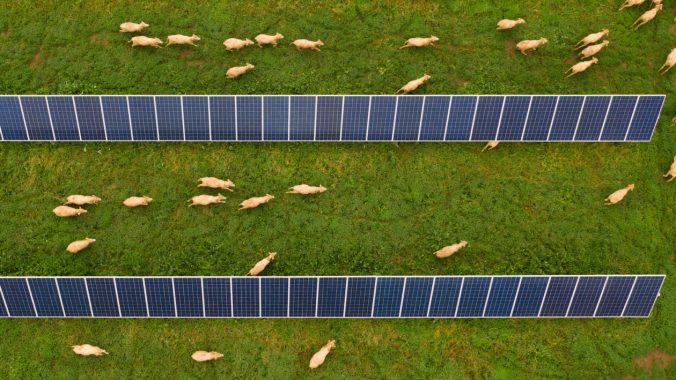
Sheep graze alongside a solar array in Dubbo, Australia. JANIE BARRETT / THE SYDNEY MORNING HERALD VIA GETTY IMAGES

Solar power, one of the renewables with the greatest promise, continues to improve:

A solar array in Madera County, California, with panels placed side-by-side on the ground. ERTHOS

More Energy on Less Land: The Drive to Shrink Solar’s Footprint

With the push for renewables leading to land-use conflicts, building highly efficient utility-scale solar farms on ever-smaller tracts of land has become a top priority. New approaches range from installing PV arrays that take up less space to growing crops between rows of panels.

Farmers grow hay between solar fences in Donaueschingen, Germany. NEXT2SUN

From the ground, the new solar farm shimmers like a mirage oasis on a hot summer day. Instead of row after slanting row of shiny panels stretching taller than corn, this array, mounted directly on the earth, lies flat as water. Continue reading

Vertical Farming Super Strawberries

Illustration by João Fazenda

In the early years of this platform we were developing new properties in Kerala, India and food was a focal point. More recently when we indulge in the culinary it is Costa Rica taste of place we are talking about. Occasionally vertical farming makes its way into these pages, but it has been a while:

Selling “Omakase” Strawberries, for the Price of a Full Meal

The founder of Oishii, whose haute-cuisine strawberries have sold for as much as ten dollars a pop, offers a tour of one of his V.C.-backed vertical farms, modelled on the foothills of Japan and built in New Jersey.

Consider the strawberry: red, ripe, an ephemeral pleasure as fleeting as a summer fling. Continue reading

Net Zero’s Three Major Flaws

The flaws of Net Zero campaigns have been linked to several times in our pages. So have some of the inspirational yet problematic proposals like tree-planting initiatives and direct air capture. I recommend taking five minutes to read and view this to get a clearer view on the three major flaws with the latest buzzwords:

New Climate Promises, Same Old Global Warming

In what seems like a rapid shift of gears, corporations are finally jumping into action on climate change. Continue reading

What Cruise Ships Do In Plain Sight

Cruise ship with smoke pouring from funnel

A cruise ship leaving the port of Victoria in British Columbia, Canada, where environmental laws are less stringent than in the neighbouring US states of Washington and Alaska. Wildlife put at risk by cruise ships dumping waste include sea otters and orcas. Photograph: Shaun Cunningham/Alamy

If you enjoy cruise ship experiences, our intent is not to offend you by sharing this. Just to be sure you are aware of what cruise ship operators routinely do with waste:

US cruise ships using Canada as a ‘toilet bowl’ for polluted waste

Lax Canadian regulations create ‘perverse incentive’ for US cruise ships en route to Alaska to discharge toxic mix of chemicals and wastewater off British Columbia, report says

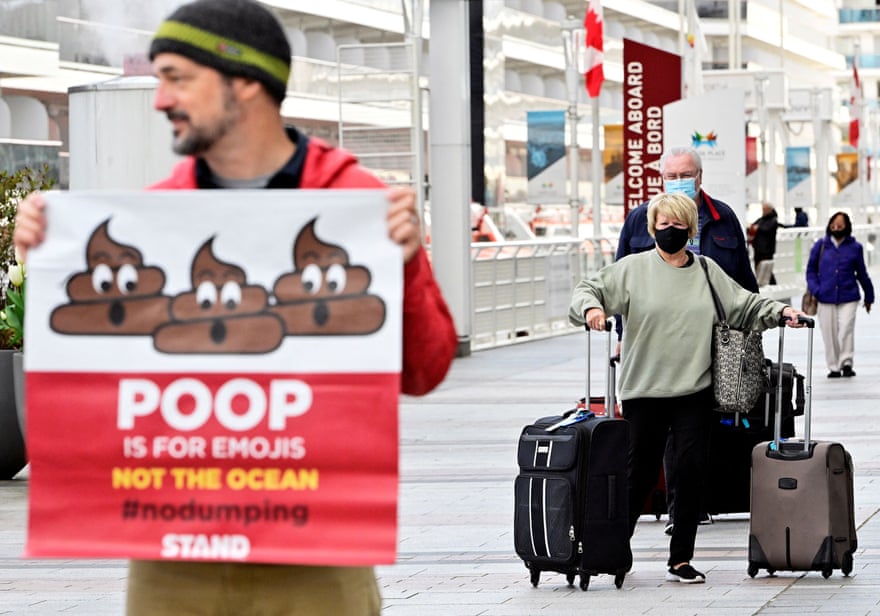
Man stands in front of cruise ship holding sign that reads ‘Poop is for emojis, not the oceans’. Passengers with luggage can be seen behind him.

A protest in April against the dumping of sewage by cruise ships arriving in Vancouver. Photograph: Jennifer Gauthier/Reuters

From the comfort of cruise ships, a typical trip to Alaska offers magnificent views of glaciers and untamed national parks, and visits to quaint seaside towns. For years, these draws have made cruises to Alaska the most booked US holiday.

But the journey to those pristine areas, which involves sailing along Canada’s west coast for two or three days, is leaving behind a trail of toxic waste, including within marine protected areas (MPAs), according to new research. Continue reading

How Important Is Plant-Based Meat?

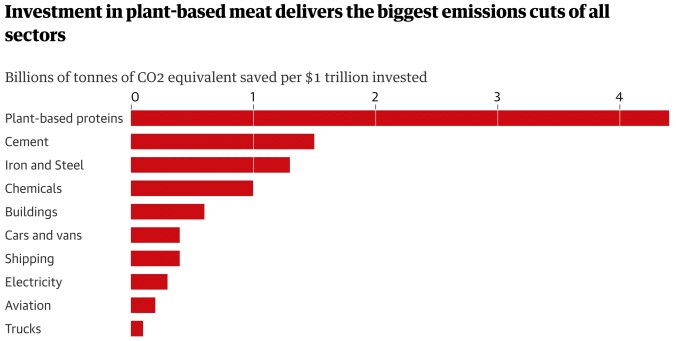
Guardian graphic | Source: Boston Consulting Group

We were already convinced by testing (our own and others) that this product category would be important, but this study shows the importance to be practically off the charts in terms of reduced carbon footprint per dollar invested. Our thanks to Damian Carrington, the Guardian’s Environment editor, for bringing this to our attention:

Malte Clausen, a partner at BCG: ‘Widespread adoption of alternative proteins can play a critical role tackling climate change.’ Photograph: Nathaniel Noir/Alamy

Plant-based meat by far the best climate investment, report finds

Exclusive: Non-animal proteins can play critical role tackling climate crisis, says Boston Consulting Group

Investments in plant-based alternatives to meat lead to far greater cuts in climate-heating emissions than other green investments, according to one of the world’s biggest consultancy firms.

The report from the Boston Consulting Group (BCG) found that, for each dollar, investment in improving and scaling up the production of meat and dairy alternatives resulted in three times more greenhouse gas reductions Continue reading

Alt-Leather, Vegan & Otherwise

Innovative vegan leather belt made from mycelium fiber, fungal spores and plant fibers. los_angela / iStock / Getty Images Plus

Our thanks to Linnea Harris for the latest news in alt-leather, which is best when vegan, except for when it is not:

The Future of Leather: How Pineapple Leaves, Cacti, and Mycelium Are Revolutionizing the Industry

Leather is everywhere – in our shoes, our purses and luggage, our winter jackets and stylish furniture – but its effect is seen globally.

To create the leather for our clothing, homewares, and other purposes, billions of cows are slaughtered each year. Continue reading