When we posted on his book a few weeks ago the title of our post suggested that it was a frivolous offering. Not so. Surprisingly we have not posted about Nathan Myhrvold before, but the best profile on him was written before this platform launched. Then his dinosaur obsession and invention workshop were his primary talking points. In recent years those have made room for food.
And in case you do not have time for his book, you can get a sense of those talking points on this episode of The Splendid Table podcast:
This week, we take a deep dive into pizza with the co-author of the voluminous Modernist Pizza, Nathan Myhrvold. We get into the history, culture, and techniques behind great pizza. We hear stories from his worldwide travels and deep dives into pizza cultures and traditions. Plus, we hear about the culinary lab research devoted to making the best pizza ever, and he sticks around to answer your pizza-making questions. He is the founder of the Modernist Cuisine Lab…
It’s a feeling we come back to again and again, especially when talking about foods we love. Coffee, cheese, wine, tea…the significance of each one resonates with both a sense of culture and place to where quite a few of the contributors to this site have called home.
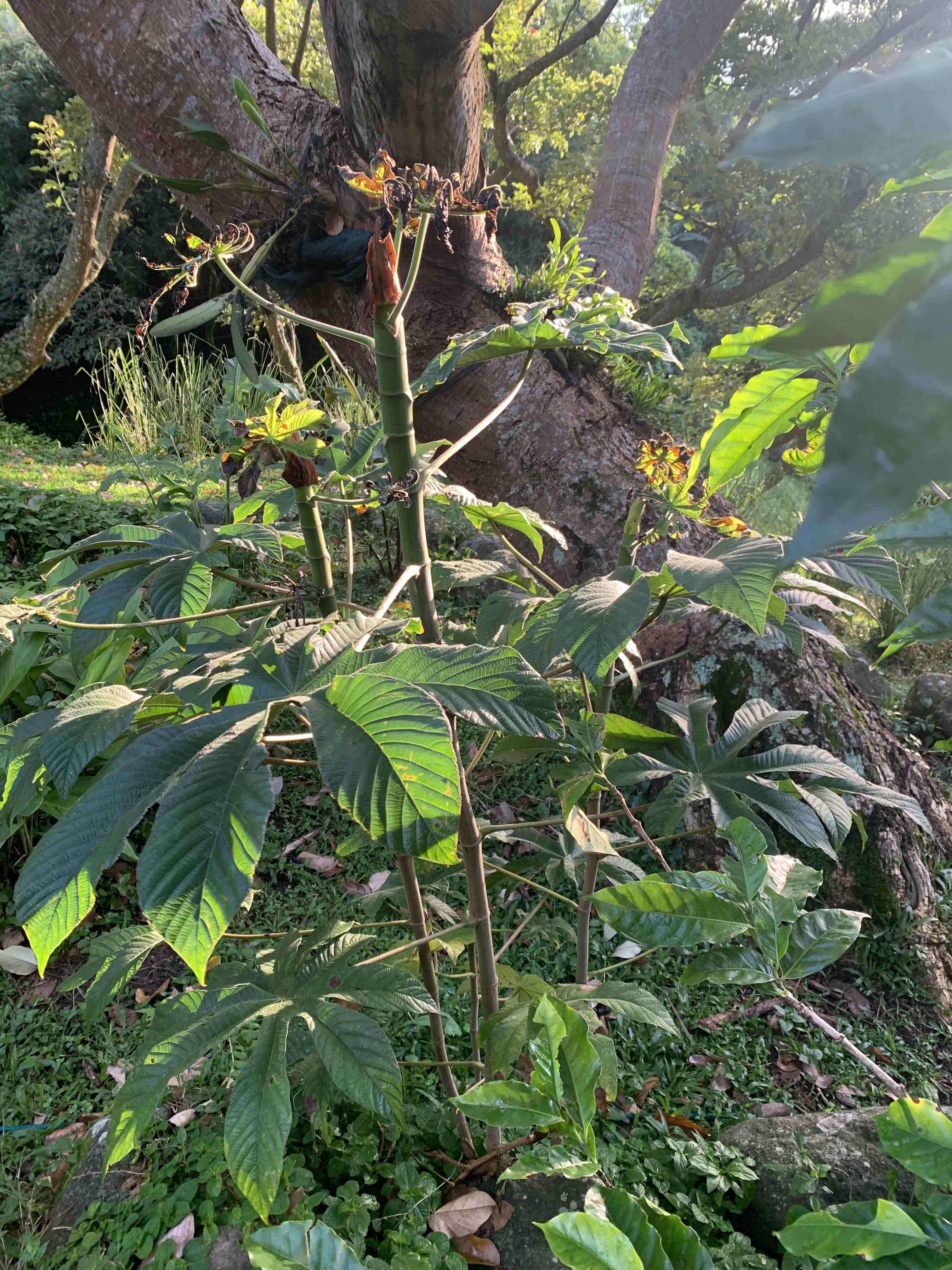
In the case of the image above, we peer into the poro trees we have mentioned numerous times. This particular poro, whose thick diagonally oriented trunk is situated at the uppermost point on the land where our coffee grows, is home to several orchids, both wild and cultivated. And in the foreground of the image a young cecropia tree is making its way upward, with a reddish top.
Next to the cecropia, out of the frame, is a mature coffee tree. Next to that is a young lime tree, and surrounding are various flowers and mano de tigre, aka monstera deliciosa. Just downhill from the trees and flowers in this image are bananas, plantain and sugar cane. The best coffees enjoy diverse company as they grow.
General view of the International Perfume Museum’s gardens in Grasse. “The same rose or the same jasmine grown in Egypt or Morocco, it will be different from the rose grown in Grasse,” head gardener Christophe Meze says. “It’s like wine, you can have the same type of grape, but you won’t have the same wine because of the sun, because of the soil, because of the terroir.” Bénédicte Desrus for NPR
Perfume flower grower Pierre Chiarla picks jasmine flowers in his field in Grasse, France. Bénédicte Desrus for NPR
GRASSE, France — The town of Grasse sits in the hills above the more famous French Riviera city of Cannes, and it doesn’t have the Mediterranean Sea at its doorstep. What it does have is fields of flowers — jasmine, May rose, tuberose, lavender. It is known as the perfume capital of the world.
It wasn’t always this way. Back in the18th and 19th centuries, the industry took off in Grasse in part because this was an absolutely putrid-smelling town. Continue reading →
Save The Waves Coalition and Pronatura Noroeste achieve approval for Arroyo San Miguel
In a historic moment for environmental and surf conservation, the first state park in Baja California, Mexico was officially approved, providing long-lasting protection for the iconic San Miguel wave alongside 67 hectares of green space.
The local initiative spearheaded by Pronatura Noroeste AC, and joined by international nonprofit Save The Waves Coalition (STW), has been in the works for years. Today, the campaign to legally protect San Miguel becomes a reality. Continue reading →
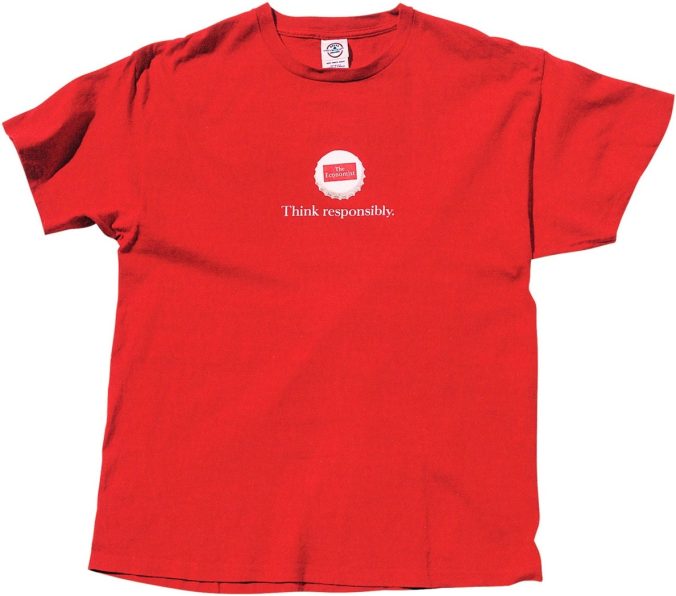
This is from the British magazine The Economist. The message is very stylish, but it’s still a T‑shirt, and it makes me wonder about how to react to such a sudden, challenging dictum.
We do not sell it, but I can relate to the kind of person who would wear the one in the photo to the right. Like the one above it illustrates a very short and delightful photo essay:
I’m not particularly interested in collecting things, but there is a kind of running motif in my life: despite my basic indifference, objects seem to collect around me. Continue reading →
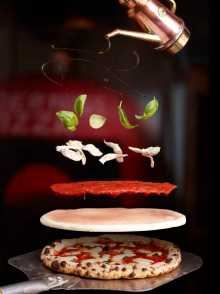
Modernist Pizza might apply the latest science to the pizzaiolos’ role, but it also dishes up deep history too
Pizza Margherita.
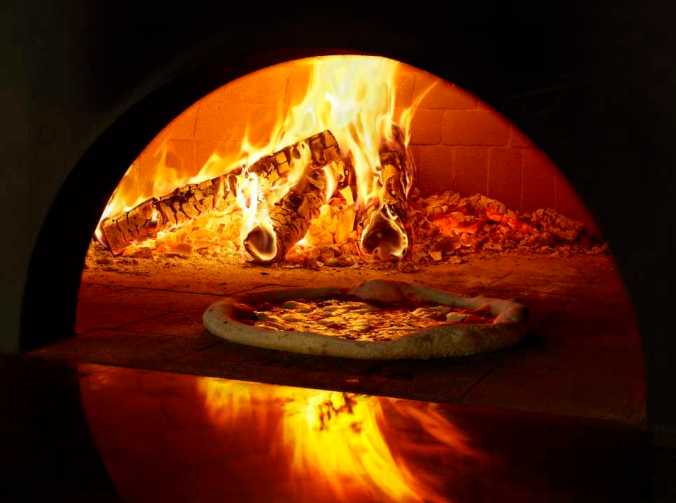
Modernist Pizza certainly applies a little science to the task of making a great slice. In this huge, comprehensive, three-volume publication, authors Nathan Myhrvold and Francisco Migoya share innumerable practical tips and innovative techniques to create great pizzas. Myhrvold is Microsoft’s former Chief Technology Officer and studied under Stephen Hawking at the University of Cambridge, and so almost all of those tips and techniques aren’t simple repetitions of old hunches and dogma, but the product of numerous test-kitchen experiments. Want to know the precise effects of ageing on mozzarella? Or which parts of your oven really cook your pie? Then get this set of books. Continue reading →
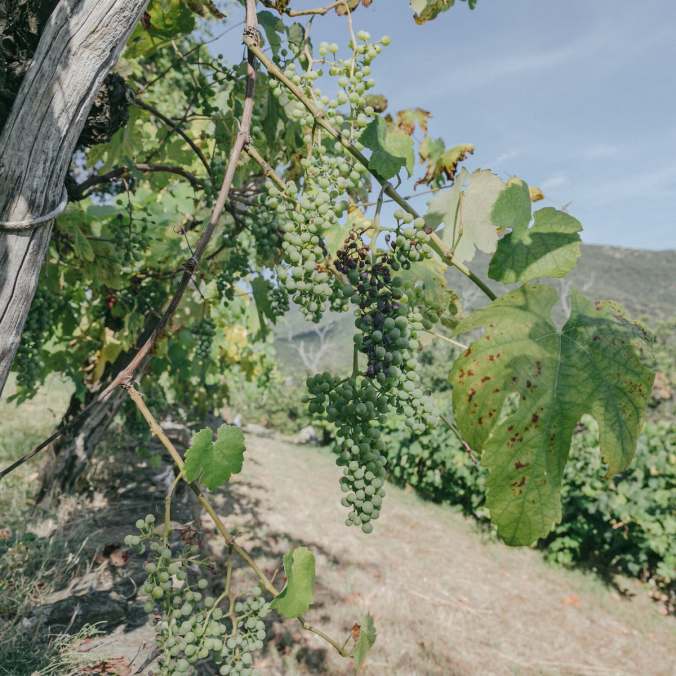
Jacquez vines at Michel Arnaud’s farm in the village of Saint-Mélany in the Ardèche region of France. The American hybrid variety has been banned in France since 1934. Andrea Mantovani for The New York Times
French authorities have tried to outlaw hardy American hybrids for 87 years. But climate change and the natural wine movement are giving renegade winemakers a lift.
A tasting of forbidden wines at Hervé Garnier’s “Memory of the Vine” association in the village of Beaumont. Mr. Garnier, standing third from right, is one of the last stragglers in a long-running struggle against the French wine establishment and its allies in Paris. Andrea Mantovani for The New York Times
BEAUMONT, France — The vines were once demonized for causing madness and blindness, and had been banned decades ago. The French authorities, brandishing money and sanctions, nearly wiped them out.
But there they were. On a hillside off a winding mountain road in a lost corner of southern France, the forbidden crop was thriving. Early one recent evening, Hervé Garnier inspected his field with relief.
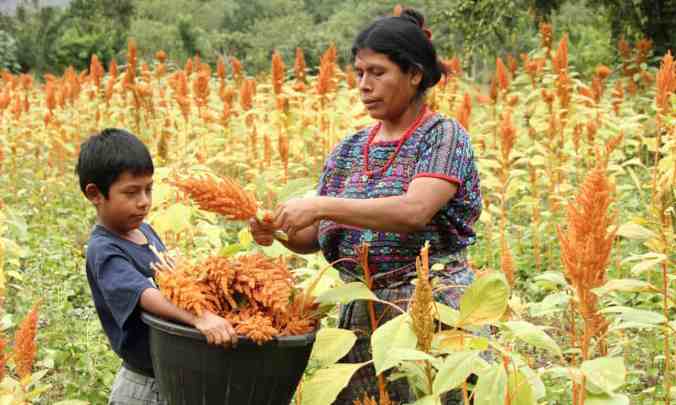
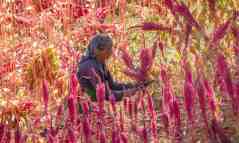
Indigenous women in North and Central America are coming together to share ancestral knowledge of amaranth, a plant booming in popularity as a health food
An elderly woman cuts an amaranth crop, in Uttarakhand, India. The plant is indigenous to North and Central America but also grown in China, India, Southeast Asia, West Africa and the Caribbean. Photograph: Hitendra Sinkar/Alamy Stock Photo
Just over 10 years ago, a small group of Indigenous Guatemalan farmers visited Beata Tsosie-Peña’s stucco home in northern New Mexico. In the arid heat, the visitors, mostly Maya Achì women from the forested Guatemalan town of Rabinal, showed Tsosie-Peña how to plant the offering they had brought with them: amaranth seeds.
Back then, Tsosie-Peña had just recently come interested in environmental justice amid frustration at the ecological challenges facing her native Santa Clara Pueblo – an Indigenous North American community just outside the New Mexico town of Española, which is downwind from the nuclear facilities that built the atomic bomb. Continue reading →
The phased opening of Humboldt Forum, a museum in Berlin, includes this exhibit, and of course a beautiful book to boot.
An interesting feature, in the form of an editorial on the museum’s website can help put this exhibit in context. The goal of this museum is anti-colonial, among other things, according to the museum’s editorial:
According to the people behind the project, the partial reconstruction of Berlin’s historic palace was an expression of the power to mend, to repair the urban fabric and the historical associations enshrined in the space it occupies.
Which is unusual for a well-funded museum in a wealthy country to say. So, this book looks interesting from multiple angles, and the text describing the book is a hint at that:
The elephant is an admired but also endangered animal. In all times and cultures, the ivory of its tusks has been sought after. What kind of material is it, how is it used in history and the present, and what can be done today to protect the largest land mammals from poaching? This richly illustrated volume undertakes a cultural-historical journey and a current positioning. Ivory fascinates – and polarises. Continue reading →
Rebecca Mead, whose last appearance in our pages was referred to just yesterday, explores a five-century old mystery involving birds that is a fun half-hour read, especially but not exclusively for bird nerds:
Birds native to Australasia are being found in Renaissance paintings—and in medieval manuscripts. Their presence exposes the depth of ancient trade routes.
“Madonna della Vittoria,” by the Renaissance painter Andrea Mantegna, must have looked imposing when it was first installed as an altarpiece in Santa Maria della Vittoria, a small chapel in the northern-Italian city of Mantua. The painting, which was commissioned by the city’s ruler, Francesco II Gonzaga, was completed in 1496, and measures more than nine feet in height. A worshipper’s eye likely lingered on its lower half—where the Virgin, seated on a marble pedestal, bestows a blessing on the kneeling, armored figure of Francesco—instead of straining to discern the intricacies of its upper half, which depicts a pergola bedecked with hanging ornaments and fruited vines. In the late eighteenth century, Napoleon’s forces looted the painting and transported it to the Louvre, where it now occupies a commanding spot in the Denon wing. Continue reading →
Short answer: yes. Explanations and caveats follow.
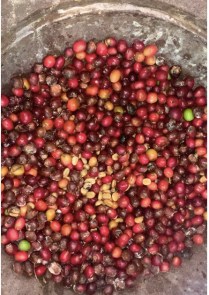
Coffee cherries that I harvested in January on the onetime coffee farm that we are rehabilitating. I am biased enough to enjoy the process of picking coffee, washing it and preparing it for planting.
I believe coffee has health benefits. Do I have them memorized? No. Do I fully understand the ones I can recall? No. But even with changing scientific findings over the years (e.g. findings from decades ago about coffee’s negative health effects were confounded by the fact that smoking and drinking coffee were highly correlated in study participants) I am inclined to listen to and trust findings from credentialed scientists.
A friend sent me the above video a couple of days ago, asking if I believe the contents. I just watched it. In six minutes a medical expert delivers more scientific findings than I could possibly digest. Upon first listening I am inclined to believe that coffee is better for me, in ways I had not been aware of, than I had previously considered.
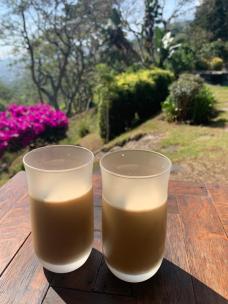
During the early days of the pandemic, staying in isolation, I experimented with hot-brewed and cold-brewed coffee trying to come up with a new way to enjoy it that would also boost my immune system
That said, I am also willing to believe that for every finding of the health benefits, there could be findings of health penalties that I simply have not come across. Or maybe I have willfully avoided coming across them.
I am inclined to bias on this topic for at least two reasons. First, because I enjoy drinking coffee as much or more than the average person. Stated less politely, I might be a coffee junkie. And related to that, maybe because of that, my primary entrepreneurial activity now is selling coffee. I try to keep my enthusiasm in check, and rarely reference the health benefits of coffee unless I feel I truly understand the scientific findings.
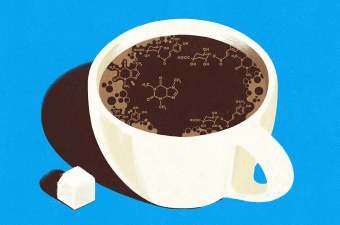
Gracia Lam
Just after watching the video my friend sent, I came across this, so will make a rare exception and recommend both these summaries of information about coffee’s health benefits. Jane Brody, the Personal Health columnist for the New York Times since 1976, recently reviewed decades of scientific findings, including plenty of overlap with the medical expert in the video above, and with this quick read you can judge for yourself:
Americans sure love their coffee. Even last spring when the pandemic shut down New York, nearly every neighborhood shop that sold takeout coffee managed to stay open, and I was amazed at how many people ventured forth to start their stay-at-home days with a favorite store-made brew. Continue reading →
From California to Maine, land is being given back to Native American tribes who are committing to managing it for conservation. Some tribes are using traditional knowledge, from how to support wildlife to the use of prescribed fires, to protect their ancestral grounds.
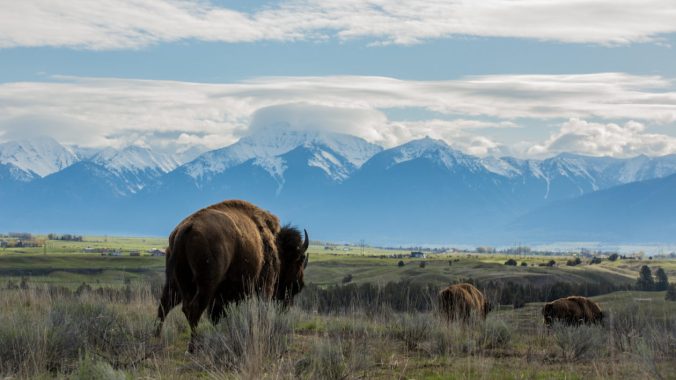
In 1908 the U.S. government seized some 18,000 acres of land from the Confederated Salish and Kootenai Tribes to create the National Bison Range in the heart of their reservation in the mountain-ringed Mission Valley of western Montana.
While the goal of protecting the remnants of America’s once-plentiful bison was worthy, for the last century the federal facility has been a symbol to the tribes here of the injustices forced upon them by the government, and they have long fought to get the bison range returned. Continue reading →
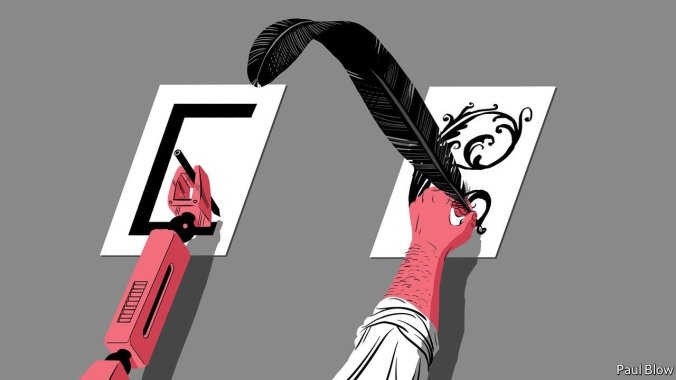
The Economist offers this brief thinkpiece on what to make of the recent uptick in interest in craft-made products (unless you are a subscriber to the magazine you will need to sign up for free limited access to the magazine’s website):
The market for artisan goods is likely to grow. But organised craft could lose its charm
In “THE REPAIR SHOP”, a British television series, carpenters, textile workers and mechanics mend family heirlooms that viewers have brought to their workshop. The fascination comes from watching them apply their craft to restore these keepsakes and the emotional appeal from the tears that follow when the owner is presented with the beautifully rendered result. Continue reading →
Having had more than my fair share of delicacies that I did not find appetizing, the concept of this museum is not lost on me. I can laugh, even when the humor is problematic. But of all the museums in all the towns in all the world, I doubt I will visit this one. After yesterday’s post, this article by Jiayang Fan seems particularly well-timed:
At the Disgusting Food Museum, in Sweden, where visitors are served dishes such as fermented shark and stinky tofu, I felt both like a tourist and like one of the exhibits.
In the spring of 2019, Arthur De Meyer, a twenty-nine-year-old Belgian journalist, toured the Disgusting Food Museum, in Malmö, Sweden. As with the Museum of Sex, in New York City, and the Museum of Ice Cream, in San Francisco, the Disgusting Food Museum is conceptually closer to an amusement park than to a museum. There are eighty-five culinary horrors on display—ordinary fare and delicacies from thirty countries—and each tour concludes with a taste test of a dozen items. De Meyer, the son of a cookbook author and a food photographer, told me that he’d always been an adventurous eater. As a reporter, he also prided himself on his ability to maintain his composure. “But the taste test was war,” he said. “The kind where you’re defenseless, because the bombs are going off invisibly, inside of you.” Continue reading →
The old joke that begins “waiter, there is a fly in my soup” was already stale. Now it is long past its sell-by date. We have been selling this protein bar, made in Costa Rica, for long enough now to say without reservation: insects are not repellant. These bars compete alongside dozens of other snack products we offer, and have become a surprise best-seller.
I had expected occasional curiosity-driven sales, but instead they have outsold more established protein bar brands and other snack options. Insects have already earned more respect as a food source than I had imagined. Thanks to the Guardian for this partial explanation of the phenomenon, and its potential:
A bug’s life: inspecting the produce at Ÿnsect’s lab. Photograph: Reuters
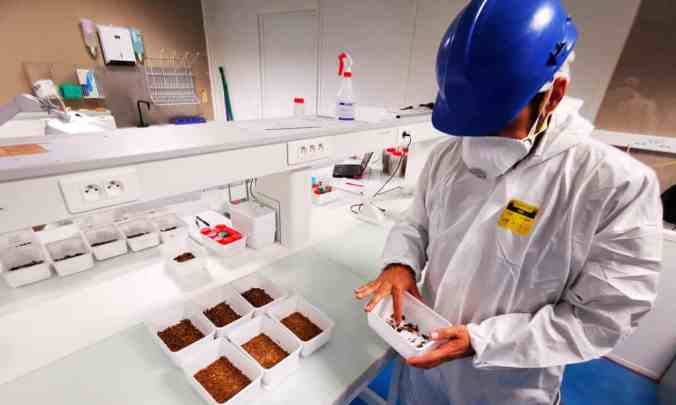
Fried crickets on the school menu, milk made from fly larvae and mealworm bolognese for dinner? These are the environmentally friendly meals we can look forward to. Bon appetit!
My first attempts at feeding insects to friends and family did not go down well. “What the hell is wrong with you?” asked my wife when I revealed that the tomato and oregano-flavoured cracker bites we had been munching with our G&Ts were made from crickets. Continue reading →
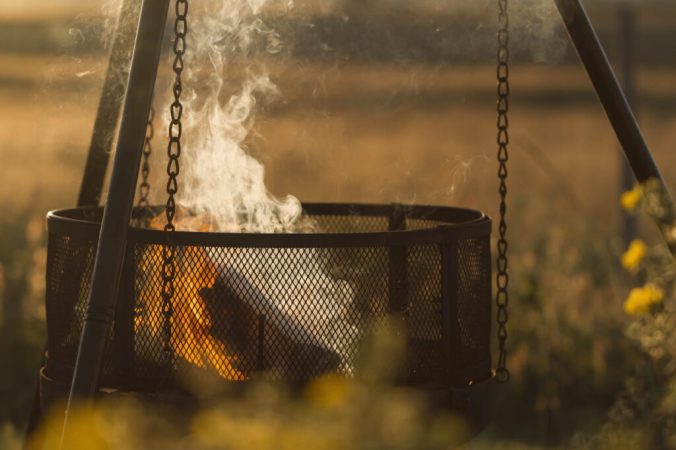
As anyone who’s spent time by a crackling campfire or a barbecue pit can attest, the scent of smoke is unmistakable—and surprisingly mysterious. Smoke clings to clothing but vanishes in the breeze. Continue reading →
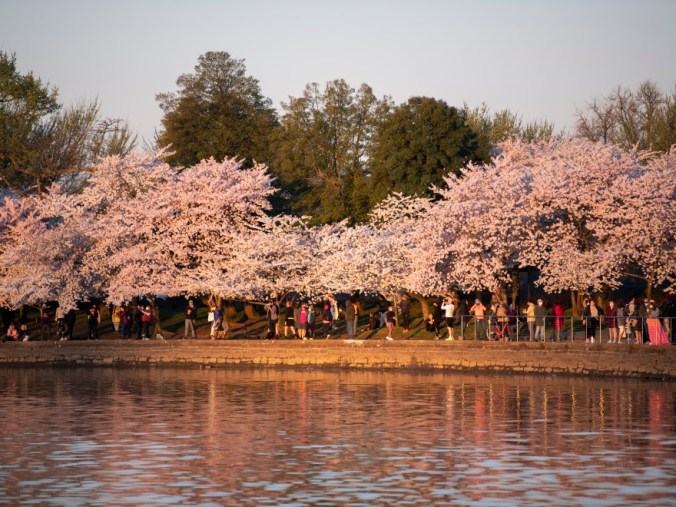
UNITED STATES – March 30: Visitors gather to watch the sunrise under blooming Japanese cherry blossom trees along the Tidal Basin in Washington on Tuesday, March 30, 2021. The 2021 National Cherry Blossom Festival commemorates the original gift of 3,000 cherry trees from the city of Tokyo to the people of Washington in 1912. (Photo by Caroline Brehman/CQ-Roll Call, Inc via Getty Images)
In Washington, D.C. the cherry blossoms came early this year. Plenty was said, including on Texas Public Radio, about the implications related to climate change. Elizabeth Kolbert has this to say, pivoting from cherry blossoms to both environmental and economic policies in the USA:
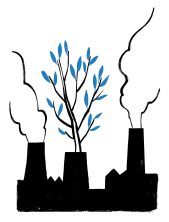
The Administration has an ambitious vision for combatting global warming, but it’s only a start.
Illustration by João Fazenda
The first known reference to Japan’s cherry blossoms comes from the country’s oldest surviving text, the Kojiki, completed in 712. Japan was trying to shrug off the influence of its more powerful neighbor, China, and cherry blossoms became a symbol of Japanese identity, in contrast to the plum blossoms of the Chinese. By the early ninth century, the practice of cherry-blossom viewing had become so well established that the date of the peak bloom appeared in Japanese poems and other literary works. Continue reading →
Today we start a “taste of place” series with Costa Rica Meadery as our first artisanal showcase. And the first beverage we will be tasting is this best-selling “…mead that celebrates Costa Rica’s Atlantic coast. A fusion of a mead, a “chicha”, and a local drink called “agua de sapo.” Made with multifloral honey, ginger, native corn malt, and spices from the north. Very refreshing, light-bodied with a strong aroma and taste of ginger and citrus.”
The idea is to taste all that with a small portion and a brief discussion, and then onward to four other mead products. Come taste the place!
While bee populations have waned throughout rural America, urban hives are thriving in cities such as Detroit, producing honey that’s reminiscent of mint, clover or goldenrod. Photo by Patricia Heal. Prop styling by Martin Bourne
Terroir is a word that has appeared often in these pages. Taste of place, a phrase with related meaning, likewise has appeared plentyof times. This phrase is a tag line used frequently in our work, based on an experience I had in Paraguay in 2005. We will begin weekly “taste of place experiences” for guests in both Authentica shops tomorrow; starting with mead, followed by chocolate, then honey, coffee and so on. Every week an artisan will present how they source ingredients, how they make their product, and how the taste of it reflects the particular location in Costa Rica where sourcing is done. So, great to see this about urban taste of place movement in our neighbor to the north:
THE GRAPEVINES RISE at the corner of East 66th Street and Hough Avenue in Cleveland, 14 trim green rows claiming over half a city block — a little less than an acre — beside an abandoned building with boarded-up windows, whose rolling lawn on a summer morning is as lush as Versailles’s. The sky is brilliant and wide above stoplights and swoops of telephone wire. Across the tar-patched street stand storefronts behind scissor gates and a former grocery whose facade half collapsed last May, raining brick on the sidewalk. Down the avenue, the walls of another boarded-up building have been commandeered as an outdoor art gallery, papered over in posters with messages: “I survived the Hough riots”; “Growing your own food is like printing your own money.”
Long celebrated in France, the concept of place-specific tastes is spurring the revitalization of neighborhoods and communities.
THE GRAPEVINES RISE at the corner of East 66th Street and Hough Avenue in Cleveland, 14 trim green rows claiming over half a city block — a little less than an acre — beside an abandoned building with boarded-up windows, whose rolling lawn on a summer morning is as lush as Versailles’s. The sky is brilliant and wide above stoplights and swoops of telephone wire. Across the tar-patched street stand storefronts behind scissor gates and a former grocery whose facade half collapsed last May, raining brick on the sidewalk. Down the avenue, the walls of another boarded-up building have been commandeered as an outdoor art gallery, papered over in posters with messages: “I survived the Hough riots”; “Growing your own food is like printing your own money.”
For centuries, the French have used the word “terroir” to describe the environment in which a wine is produced. Going back to the Latin “terra,” “earth,” it’s rooted in a traditional vision of the countryside and has become more fervently embraced as our agrarian past recedes. Continue reading →
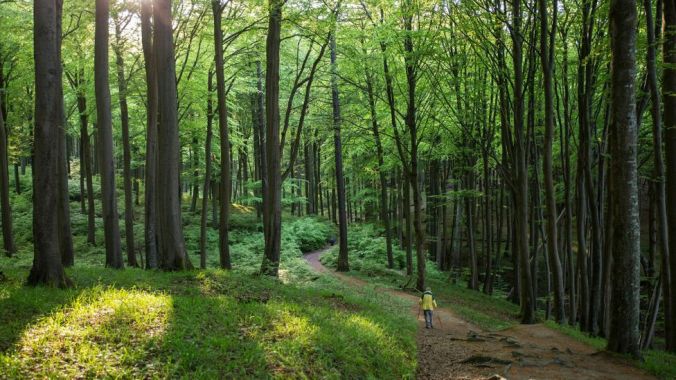
Waldeinsamkeit is an archaic German term for the feeling of “forest loneliness” (Credit: Marco Bottigelli/Getty Images)
Everybody is at it in Germany. They’re doing it in the trees in the Black Forest. Out in the magical Harz Mountains. In the national parks of Bavaria when silhouetted in the moonlight. And in the city centre woodlands of Berlin and Munich. Continue reading →
 When we posted on his book a few weeks ago the title of our post suggested that it was a frivolous offering. Not so. Surprisingly we have not posted about Nathan Myhrvold before, but the best profile on him was written before this platform launched. Then his dinosaur obsession and invention workshop were his primary talking points. In recent years those have made room for food.











 Organikos