International Seabed Authority

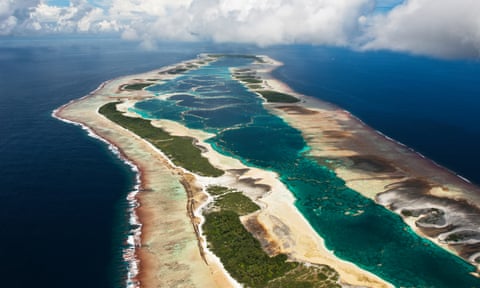
A long thin atoll around a lagoon

The Millennium Atoll in Kiribati, the Pacific state that is sponsoring Michael Lodge for re-election as ISA leader. Photograph: Mauricio Handler/Getty

Before we leave the subject of oceans, back to the question of how their protection is managed, and by whom.

We are learning today that some of the planet’s smaller nation states have a potentially significant, and clearly long overdue influence on how the oceans surrounding them will be protected:

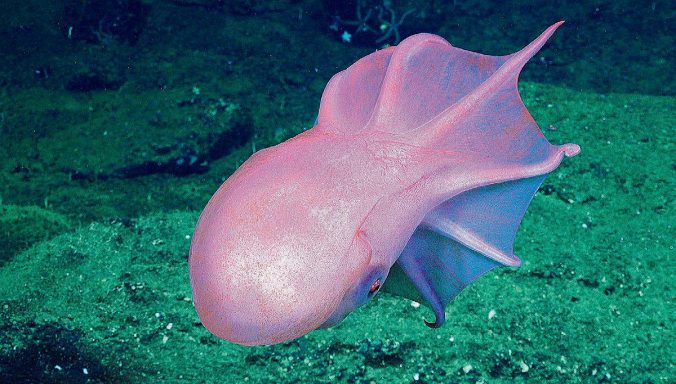
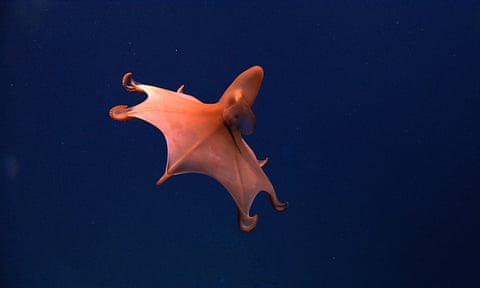
The rare dumbo octopus (Cirrothauma murrayi)

The rare dumbo octopus (Cirrothauma murrayi) is one of many creatures potentially at risk from deep-sea mining. Photograph: NOAA

Inside the battle for top job that will decide the future of deep-sea mining

Marking a pivotal moment for the fate of the barely known ecosystems on the ocean floor, 168 nations will decide this week who will head the International Seabed Authority

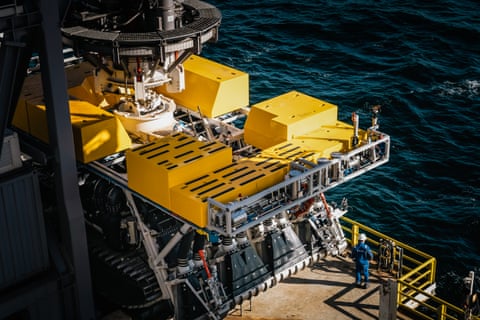
Deep-sea mining exploration machinery in the Pacific Ocean

Deep-sea mining exploration trials under way in the Clarion-Clipperton Zone of the Pacific Ocean between Hawaii and Mexico. Photograph: Richard Baron/The Metals Company

Leticia Carvalho is clear what the problem is with the body she hopes to be elected to run: “Trust is broken and leadership is missing.” Later this week, at the headquarters of the International Seabed Authority (ISA) in Kingston, Jamaica, nations negotiating rules governing deep-sea mining face a critical vote that could impact the nascent industry for years: who should be the next leader of the regulatory body? Continue reading
Mountaineering Books Worthy Of Your Time

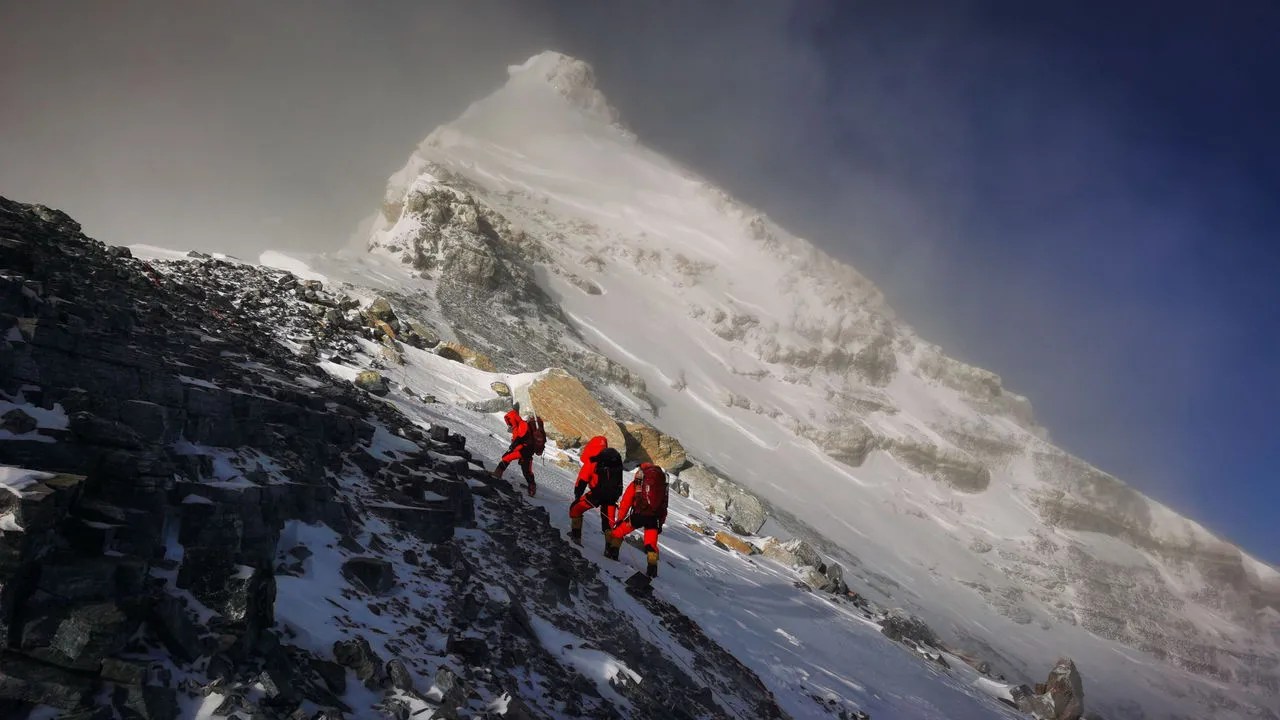
photograph: tashi tsering/xinhua/eyevine

It goes without saying, for most non-mountaineers anyway, that Jon Krakauer is the master of this genre, but hear what the Economist has to say:

Five of the best books on climbing mountains

The books and a documentary that capture the pull of the peaks

Mountaineering has gone mainstream. What was once a pursuit for only the hardiest adventurers is now the extreme sport du jour. Take Mount Everest. In the four decades after Sir Edmund Hillary and Tenzing Norgay first reached the summit in 1953 an average of 12 people a year followed in their footsteps. Continue reading
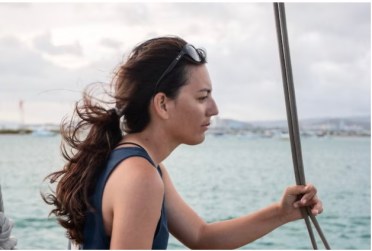
Lehua Kamalu Captains Hōkūleʻa,

This half hour podcast episode may be your best gateway to a weekend of healthy distraction:

She Sails the Seas Without Maps or Compasses

For nearly 50 years, a group of Hawaiians have been sailing on traditional voyaging canoes using the methods that early Polynesian explorers relied on to navigate the Pacific Ocean—without maps and modern instruments, and relying on the stars, ocean waves, birds, and other natural elements to guide them. We meet National Geographic Explorer Lehua Kamalu, the first woman to captain a long-distance voyage on Hōkūleʻa, a double-hulled Polynesian canoe that was built in Hawaii in the 1970s. She describes what it’s like to navigate in incredibly rough waters, what it means to keep Polynesian navigation alive in the 21st century, and about her next big adventure: a four-year circumnavigation of the Pacific Ocean.

When Disney became the owner of Fox Entertainment’s assets, National Geographic Partners was part of the deal. We never appreciated National Geographic’s association with Fox Entertainment, nor do we think Disney is much better a fit, but we can still appreciate when they do something right.

The Lab Of Peter Girguis

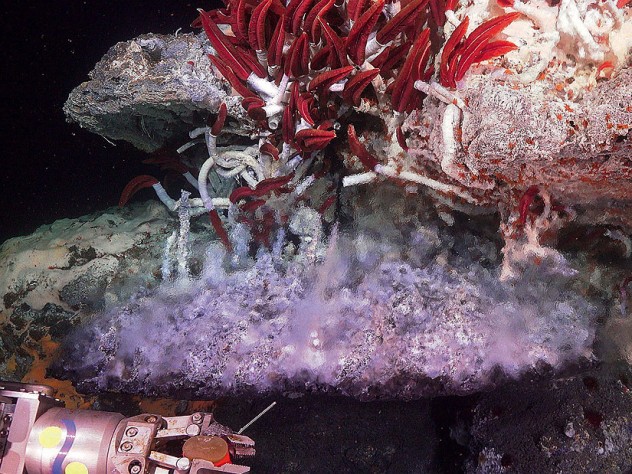
Giant tubeworms take up chemicals from a hydrothermal vent 6,200 feet deep in the Gulf of California (the Girguis lab is world-renowned for research on these worms). Photograph courtesy of the Schmidt Ocean Institute

Our thanks to Veronique Greenwood (after a few years’ absence from our notice) for her most recent article in Harvard Magazine:

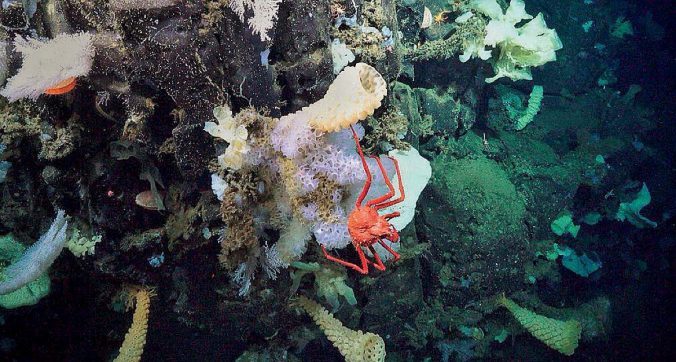
Top: a remote dive at Emery Knoll, a deepwater reef off Southern California, reveals crabs, sponges, and corals. Bottom: a rare sighting of the massive seven-arm octopus, Haliphron atlanticus. Photographs courtesy of the Schmidt Ocean Institute

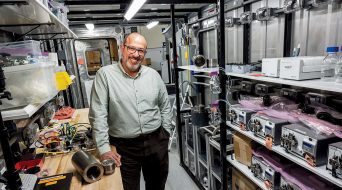
Peter Girguis on terra firma in the lab. Photograph by Jim Harrison

Plumbing the Deep Sea

Peter Girguis probes life on the ocean floor

In a cavernous underground space behind Harvard’s Biological Laboratories, biochemist Peter Girguis frowns at the pressure vessel in his hand. The machined titanium cylinder, about the size of a French press, gleams as he works to release the cap, and he chuckles at his own stubbornness. He could probably find a tool to loosen it, he remarks. Continue reading
Thwaites & Us

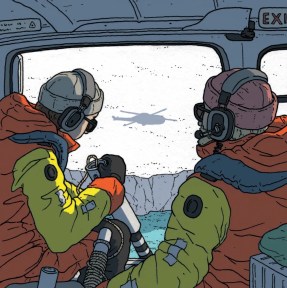
Probes beneath the ice could shed light on the fate of the world’s coastlines. Illustration by Owen D. Pomery

Most of us do not spend much time thinking about what is happening there, but Antarctica’s future is now very much entwined with the future of the rest of the planet.  All of us. So, thanks to David W. Brown for this travelogue:

Journey to the Doomsday Glacier

Thwaites could reshape the world’s coastlines. But how do you study one of the world’s most inaccessible places?

I first saw our icebreaker, the RV Araon, when we were due to leave for Antarctica. The largest icebreakers are more than five hundred feet long, but the Araon was only the length of a football field; I wondered how it would handle the waves of the Southern Ocean, and how it would fare against the thick sea ice that guards the last wilderness on Earth. Continue reading
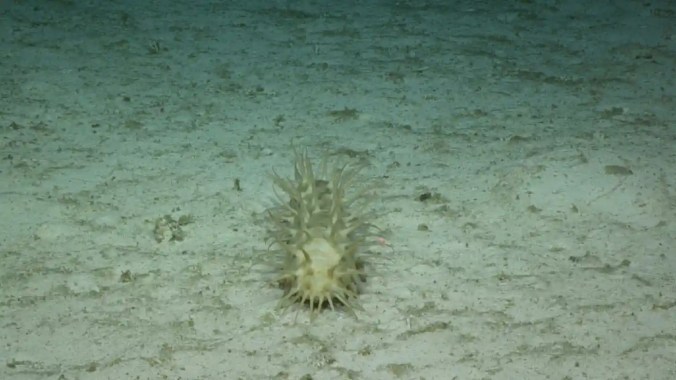
New (To Us) Creatures Of The Deep

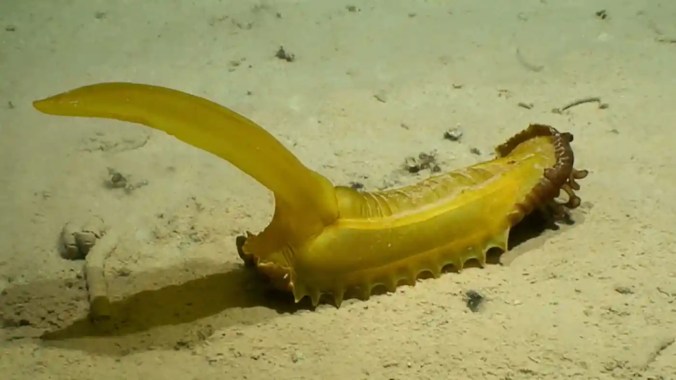
A gummy squirrel – Psychropotes longicauda – is a type of sea cucumber. This specimen is 60cm long with red palps, or lips, with which it feeds on sediment on the ocean floor, 5,100m deep

Discoveries still happen, even as the earth burns. Creatures not previously known are being identified 5,000 meters below the surface of the ocean. Some do not even yet have a name:

A spiny sea creature on the ocean floor

Scientists find 30 potential new species at bottom of ocean

Natural History Museum scientists seek to unlock mysteries of deep sea but some fear activity will disturb diversity of the depths

Scientists have found more than 30 potentially new species living at the bottom of the sea. Continue reading
Justice For Dom & Bruno

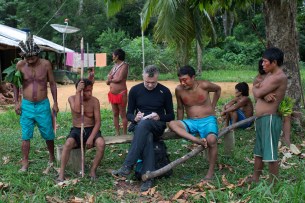
Dom Phillips (center), seen here taking notes as he talks with Indigenous people, reported regularly for the Guardian. Photograph by Joao Laet / AFP / Getty

Only one article by Dom Phillips in our pages, and not a single mention of Bruno Pereira seems wrong, to say the least.  As a rule obituaries are not our thing in these pages, but we have made exceptions.

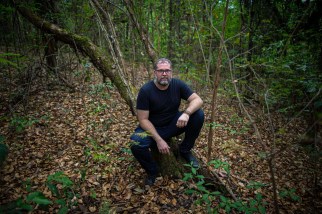
Bruno Pereira was among the many senior officials and veteran experts at FUNAI who had gained a reputation for a robust defense of the agency’s guidelines in the Javari. Photograph by Daniel Marenco

Two Murders in the Amazon

The disappearance of Dom Phillips and Bruno Araújo Pereira, and the crisis created by Jair Bolsonaro’s policies.

From the moment that Dom Phillips and Bruno Araújo Pereira vanished, on June 5th, in the Brazilian Amazon, there were suspicions of foul play. Phillips was a British freelance journalist dedicated to environmental issues, and Pereira, his friend and guide, was a prominent Brazilian Indigenous-affairs expert.

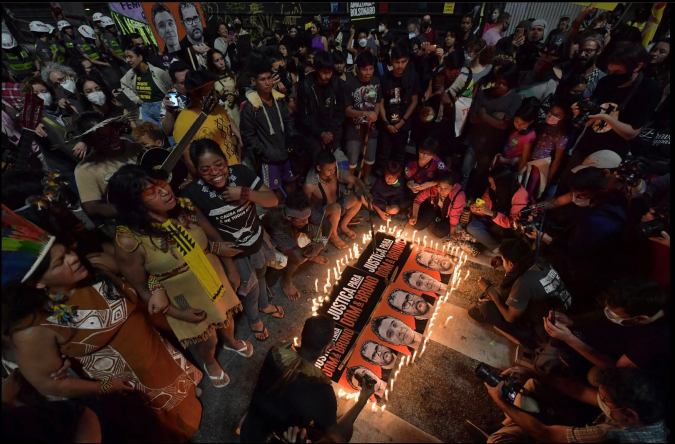
Photograph by Nelson Almeida / AFP / Getty

He was assisting Phillips with research for a book, tentatively titled “How to Save the Amazon.” Continue reading

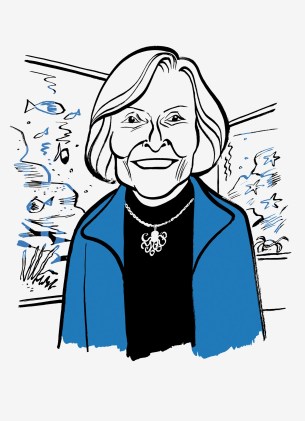
Sylvia Earle, Her Deepness

Sylvia Earle. Illustration by João Fazenda

Yesterday’s post got me looking back at our attention to marine science over the years, making me wonder whether we have given that topic its fair share. Yes, probably, but more is needed. I already knew this name because it has appeared in our pages a few times over the years. But just recently I heard her name from two different people who have had the chance to know her personally. One of them, when I mentioned the name, replied with Her Deepness replacing Sylvia Earle’s given name. Thanks to Dana Goodyear, who had me at puma, but who also knows a thing or two about water, now this:

Without Sylvia Earle, We’d Be Living on Google Dirt

The marine biologist and aquanaut evokes a Bond girl with a Ph.D. To save a species, she says, you have to know it.

Do you like to breathe?” This is a question that the marine biologist and deep-sea explorer Sylvia Earle asks frequently. The ocean produces half of the oxygen on Earth. If it dies, humanity can’t survive, so humans better pay attention to it. Continue reading
Mycology’s Expansive Boundaries

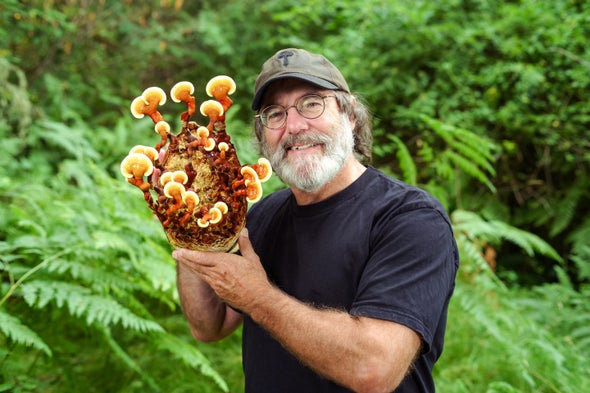
Paul Stamets. Credit: Trav Williams Broken Banjo Photography

In the media we scan for articles and podcasts to share here, some of the last year’s attention to fungi has been aimed at making them seem less alien by celebrating their very alien-ness. Up to now, this has all been earth-bound, but maybe that has been an arbitrary boundary. Thanks to Scientific American magazine for this conversation with the man who has been stretching fungi boundaries for much longer than we have been paying attention:

Future Space Travel Might Require Mushrooms

Mycologist Paul Stamets discusses the potential extraterrestrial uses of fungi, including terraforming planets, building human habitats—and providing psilocybin therapy to astronauts

The list of mycologists whose names are known beyond their fungal field is short, and at its apex is Paul Stamets. Educated in, and a longtime resident of, the mossy, moldy, mushy Pacific Northwest region, Stamets has made numerous contributions over the past several decades— perhaps the best summation of which can be found in his 2005 book Mycelium Running: How Mushrooms Can Help Save the World. But now he is looking beyond Earth to discover new ways that mushrooms can help with the exploration of space. Continue reading
Scientific Expeditions Then, Considered Now

p08j9wrd

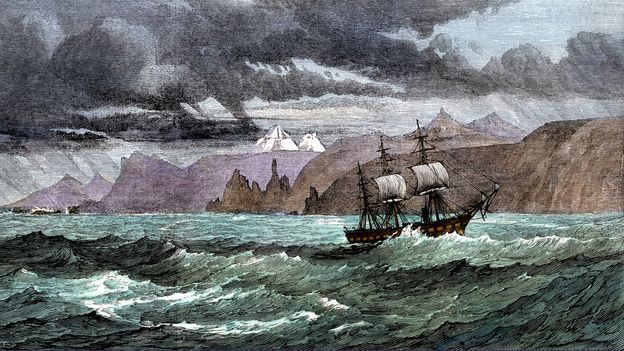
The HMS Challenger set sail from England in 1872 and changed the course of scientific history (Credit: North Wind Picture Archives/Alamy)

Thanks to the BBC for reminding us of the value of such voyages in earlier centuries, and their contributions to science, among other things:

HMS-Challenger: The Voyage That Birthed Oceanography

The 3.5-year voyage to the furthest corners of the globe reshaped marine science and permanently changed our relationship with the planet’s oceans.

p08j9wr9

During the four-year journey, the ship uncovered many new species and shaped our understanding of the seas (Credit: LeeYiuTung/Getty Images)

In the foyer of the National Oceanography Centre in Southampton, England, stands a ship’s painted figurehead. It towers well above head height and depicts an armoured knight with a silver chest plate, a raised visor and a thick handlebar moustache. The knight’s eyes have a faraway gaze in them – and well they might. This wooden statue is the sole remnant of a square-rigged ship that once embarked on a three-and-a-half-year voyage to the furthest corners of the globe, reshaping marine science, unearthing all manner of underwater oddities and permanently changing our relationship with the planet’s oceans. The vessel’s name was HMS Challenger. Continue reading
Experiential Learning & Social Enterprise

img_7929-00d6c37254394099fdabc17f3a9f58edf45afcbe-s2000-c85.jpg

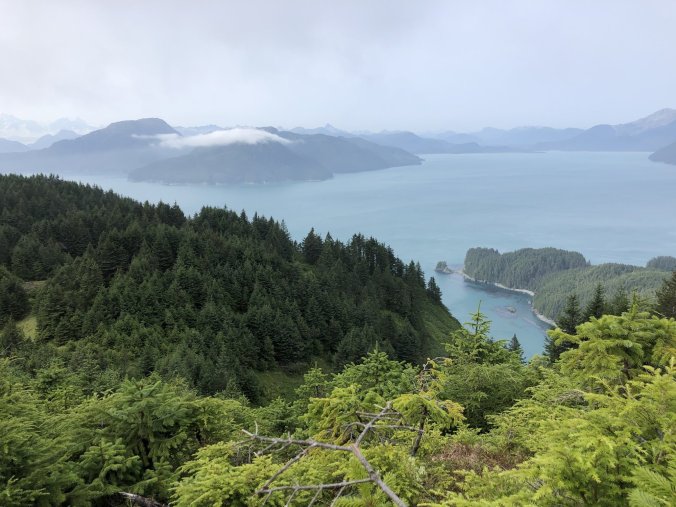
The waters and mountains of the Inian Islands, near Glacier Bay, Alaska.Lauren Migaki/NPR

img_3125-e4c5960c6deafeb70a1351245d93ef84c23822ce-s1300-c85.jpg

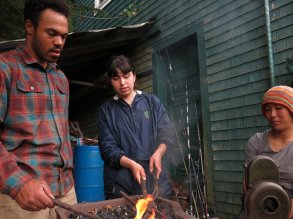
With help from books and YouTube, Abe Marcus (left, pictured with Yasamin Sharifi, center, and Tsu Isaka) has been learning how to operate a coal-powered, hand-cranked forge found on the property. Lauren Migaki/NPR

There is a great story shared yesterday on the National Public Radio (USA) website, told in unusually long form for that outlet, by Anya Kamenetz. I look forward to more stories by this journalist — she relates a story that is as far away from my own experience as I can imagine, but I feel at home in it. The picture to the right, from near the end of the story, hints at one reason. But it is not that. Nor is it the fact that I witnessed the birth and evolution of a similar initiative in Costa Rica.

I taught a field course in amazing locations (2005 in Senegal, followed by Costa Rica in 2006 followed by Croatia, India, Siberia and Chilean Patagonia), but that bore little resemblance to the initiative in this story. All those factors may help me feel at home in this story, but mostly I relate to it as a story told well for the purpose of understanding the motivations of a social entrepreneur and incidentally her commitment to experiential learning.

In Alaska’s Wilderness, A New Vision Of Higher Learning

img_3218-40ad27a28a658ea679c7588062a86574bdbf6e68-s1300-c85.jpg

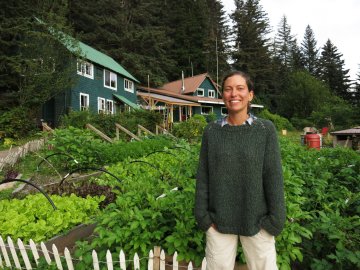
Marcus stands in front of the massive vegetable garden at The Arete Project in Glacier Bay, Alaska. Lauren Migaki/NPR

In Glacier Bay, Alaska, mountains rush up farther and faster from the shoreline than almost anywhere else on the planet. Humpback whales, halibut and sea otters ply the waters that lap rocky, pine-crowned islands, and you can stick a bare hook in the water and pull out dinner about as fast as it takes to say so.

This is the place 31-year-old Laura Marcus chose for her Arete Project. Or just maybe, this place chose her.

The Arete Project takes place in the remote wilderness of the Inian Islands in southeast Alaska.
Lauren Migaki/NPR

Arete in Greek means “excellence.” And Marcus’ Arete is a tiny, extremely remote program that offers college credit for a combination of outdoor and classroom-based learning. It’s also an experiment in just how, what and why young people are supposed to live and learn together in a world that seems more fragile than ever. It’s dedicated, Marcus says, to “the possibility of an education where there were stakes beyond individual achievement — where the work that students were doing … actually mattered.” Continue reading
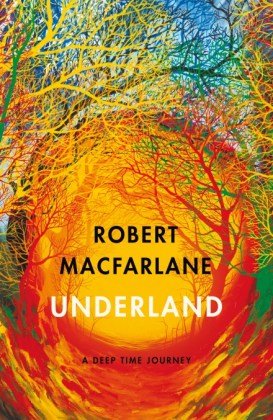
Underland, Reviewed

16Williams-COVER-jumbo.jpg

Armando Veve

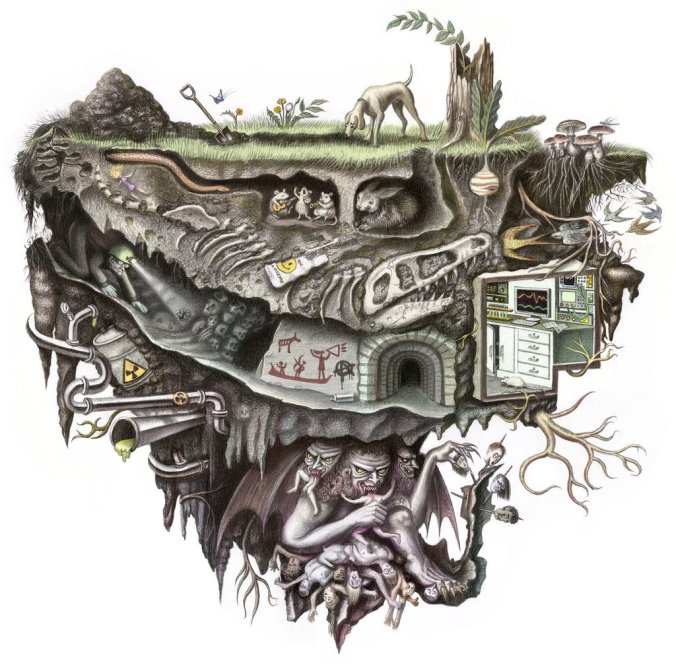
Robert Macfarlane first came to my attention in Ethiopia a few years ago. And then again the following year while in India. And now I see where it was all leading, in the form of a book, to see what is beneath our feet, reviewed here:

McfarlaneYou know a book has entered your bloodstream when the ground beneath your feet, once viewed as bedrock, suddenly becomes a roof to unknown worlds below. The British writer Robert Macfarlane has written such a book. “Underland: A Deep Time Journey” is an epic exploration and examination of darkness and the caverns underground that have captured our imaginations, pulled us downward, housed our dead and allowed us to bury our most violent secrets. It is also a descent into the beauty where dark wisdom is located.

Macfarlane divides his explorations into three sections, or “chambers,” devoted to “Seeing,” “Hiding” and “Haunting.” As he moves through them, he will take us to ancient barrows in Britain’s Mendip Hills, the understory of the Epping Forest and a physics lab investigating “dark matter” from deep within a coastal Yorkshire mine. He will guide us through underground rivers in Italy and show us the pictographs known as “the red dancers” found in Norwegian sea caves.

a82561e841884780abafe5f96c1df4a9-jumbo.jpg

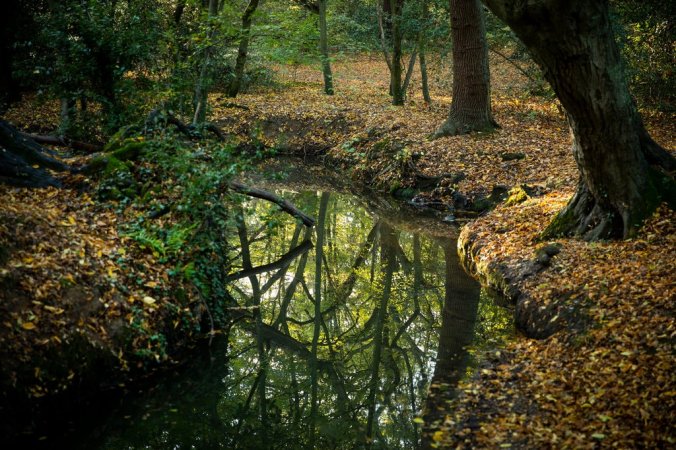
London’s Epping Forest in the autumn.CreditDavid Levene/evevine, via Redux

Macfarlane homes in on “something seemingly paradoxical: that darkness might be a medium of vision, and that descent may be a movement toward revelation rather than deprivation.” Night vision becomes an essential strategy for survival in the Anthropocene, the new epoch we find ourselves in, which registers the human press on the planet as a geologic force. “For more than 15 years now,” Macfarlane explains, “I have been writing about the relationships between landscape and the human heart. What began as a wish to solve a personal mystery — why I was so drawn to mountains as a young man that I was, at times, ready to die for love of them — has unfolded into a project of deep-mapping.” Continue reading
Tasmanian Tiger Tale

180702_r32368_rd.jpg

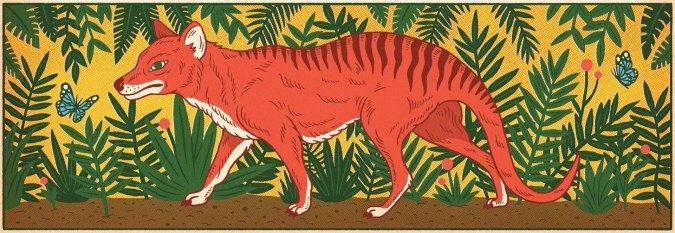
Like the dodo and the great auk, the Tasmanian tiger is more renowned for the tragedy of its death than for its life, about which little is known. Enthusiasts hope it will be a Lazarus species—an animal considered lost but then found. Illustration by Bene Rohlmann

We thank Brooke Jarvis for her reporting on this compelling tale:

The Obsessive Search for the Tasmanian Tiger

Could a global icon of extinction still be alive?

Andrew Orchard lives near the northeastern coast of Tasmania, in the same ramshackle farmhouse that his great-grandparents, the first generation of his English family to be born on the Australian island, built in 1906. When I visited Orchard there, in March, he led me past stacks of cardboard boxes filled with bones, skulls, and scat, and then rooted around for a photo album, the kind you’d expect to hold family snapshots. Instead, it contained pictures of the bloody carcasses of Tasmania’s native animals: a wombat with its intestines pulled out, a kangaroo missing its face. “A tiger will always eat the jowls and eyes,” Orchard explained. “All the good organs.” The photos were part of Orchard’s arsenal of evidence against a skeptical world—proof of his fervent belief, shared with many in Tasmania, that the island’s apex predator, an animal most famous for being extinct, is still alive. Continue reading
The Food Explorer, Explored

GastroTaking a cue from yesterday’s post, another recent Gastropod can be combined with a review in the New York Times of a book that fits well in our pages:

You’ve probably never heard of David Fairchild. But if you’ve savored kale, mango, peaches, dates, grapes, a Meyer lemon, or a glass of craft beer lately, you’ve tasted the fruits of his globe-trotting travels in search of the world’s best crops—and his struggles to get them back home to the United States.

This episode, we talk to Daniel Stone, author of The Food Explorer, a new book all about Fairchild’s adventures. Listen in now for tales of pirates and biopiracy, eccentric patrons and painful betrayals, as well as the successes and failures that shaped not only the way we eat, but America’s place in the world.

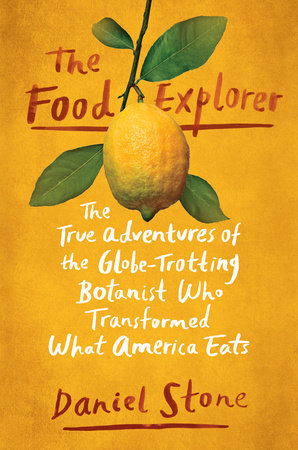
9781101990582Daniel Stone, an author I had not known of 24 hours ago, fits well within our pages as part of a mix of historical sleuthing and present-day food activism that have been central themes here since we started.  Thanks to his book being the subject of that podcast, as well as its review last month, allow us to recommend that if you have an hour for the both, combine the listen with the read:

In a photograph dated Christmas 1896, featured in “The Food Explorer,” Daniel Stone’s biography of the botanist and explorer David Fairchild, his subject is sitting with his patron and friend Barbour Lathrop, in what looks like an empty saloon or a lounge on a steamship. The caption informs us that they’re off the coast of Sumatra; both are dressed in white and have mustaches that border on the extravagant.

Continue reading
Rules Of Experiencing Nature, Reconsidered

tnc_76472733_preview_cropped

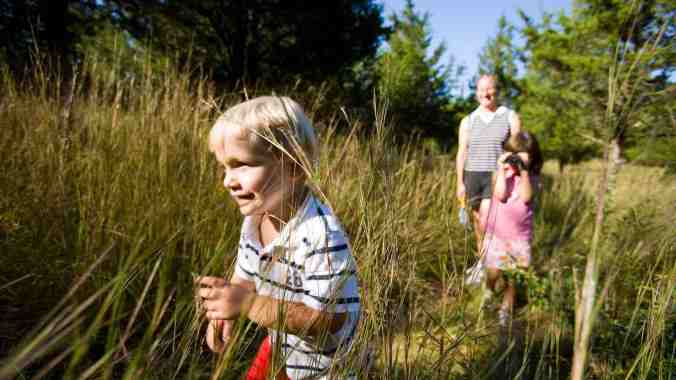
A woman and her young children hike through a grassy field in Pleasant Valley Preserve near the Eightmile River in Lyme, Connecticut. Photo © Jerry Monkman

Just when we thought we knew what we were doing out in nature, this:

Why Staying on the Trail Is Bad for Nature

Stay on the trail. Look, don’t touch. Take only photographs, leave only footprints.

These and similar rules have become a standard component of a refined environmental ethic; any reasonable outdoor education class is going to emphasize them.

I have a confession to make: As a kid I violated every one of those rules, frequently and without guilt. It made me a conservationist. Continue reading
The Technological Wow Factor of Archaeology

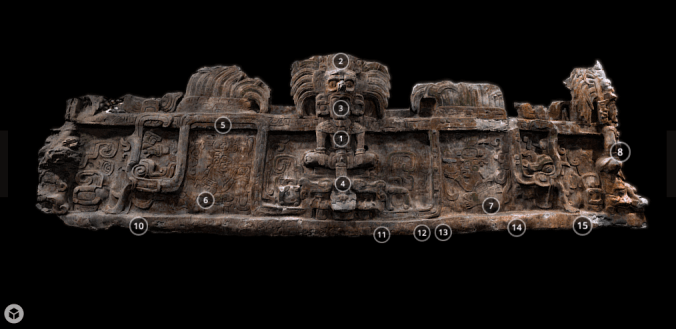
Crist’s post about this fascinating National Geographic article last week touched on its excellent graphics but barely began to scratch the surface of the amazing technology that would certainly have left the readers of the early issues of the magazine speechless.

In addition to the world-class photography, the interactive 3-D graphic of the frieze above uses SketchFab technology to allow viewers to not only zoom in and out, but to turn the object around in all directions, as if handling it in person. Do take the time to play with it! Continue reading
Come Back To Belize, Meg Lowman!

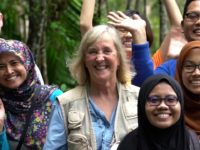
We have mentioned Meg more than once since we met her a few years ago, because our interests are aligned. Thanks to this public radio station for reminding me that Meg is due for a visit to Belize (I say wishfully) for a 20-years later discovery trip, and we will be happy to see her at Chan Chich Lodge when the time comes:

megmalaysiaFor over 30 years, Dr. Meg Lowman –Canopy Meg, has designed hot-air balloons and walkways for treetop exploration to solve mysteries in the world’s forests, especially insect pests and ecosystem health. Meg is affectionately called the mother Continue reading

Snake Kings And Other Discoveries

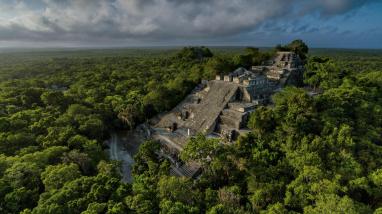
01-calakmul-maya-pyramid.adapt.1900.1.jpg

CALAKMUL In the seventh century A.D. the Snake rulers presided over this capital city—in what today is southern Mexico—and its largest structure, a pyramid 180 feet tall. From Calakmul they managed an intricate web of alliances. CONSEJO NACIONAL PARA LA CULTURA Y LAS ARTES (CONACULTA), INSTITUTO NACIONAL DE ANTROPOLOGÍA E HISTORIA (INAH), MEXICO

Discoveries in the lands once populated by the Maya continue apace. As Chan Chich Lodge completes three decades of archeological exploration, the wonders of three millennia are uncovered. The stories that capture my interest the most, related to the Maya, are about the man-nature relationship.

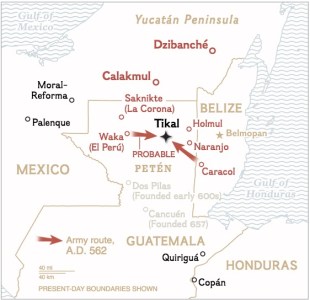
SnakeKingMap.jpg

JEROME COOKSON, NG STAFF
SOURCE: DAVID FREIDEL, WASHINGTON UNIVERSITY IN ST. LOUIS

For example, Erik Vance’s story from last year. I remember thinking that it was the best article I had ever read in National Geographic. Partly, the graphics are better, if that is possible, than the typically excellent quality the magazine is known for. Also, the topic is more topical for me now. Chan Chich Lodge is situated exactly where the o in Holmul is on the map to the left. The lodge’s Maya foundations are situated at the periphery of where the snake kings once ruled.

And we now have an ethnobotanical initiative linking Maya foodways to our surrounding nature conservation. That initiative is linked to the lodge’s food program, with some high expectations related to our abundant forests. But mainly, with regard to this article, the writing illuminating the topic is excellent:

…Two warring city-states were locked in perennial conflict, grappling for supremacy. For a brief period one of those city-states prevailed and became the closest thing to an empire in Maya history. It was ruled by the Snake kings of the Kaanul dynasty, which until just a few decades ago no one even knew existed. Thanks to sites around this city-state, including Holmul, archaeologists are now piecing together the story of the Snake kings…

35 composite of 2 and 3.adapt.1190.1.jpg

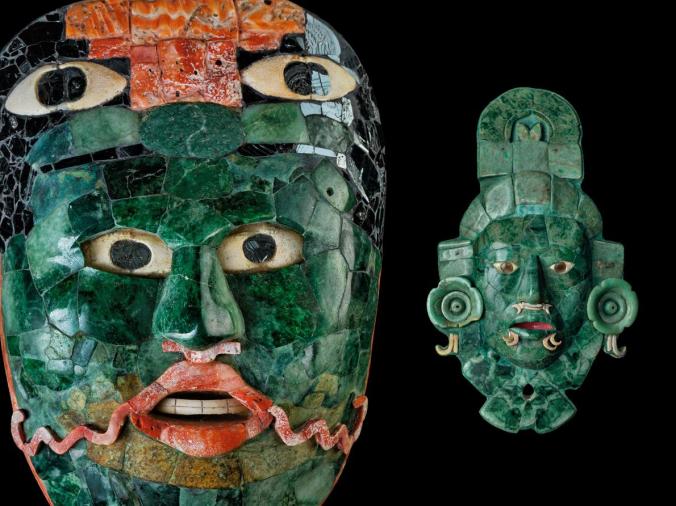
Masks from the tombs at Calakmul were meant to ease the passage of the Snake elite into the next world. Royal visages made of green jade, more valuable than gold to the ancient Maya, evoked the annual agricultural cycle and regeneration. CONACULTA, INAH, MEXICO (BOTH) PHOTOGRAPHED AT (LEFT TO RIGHT): NATIONAL PALACE, MEXICO CITY; MUSEO DE SITIO DE COMALCALCO, MEXICO

Night Vision

IMG_5769

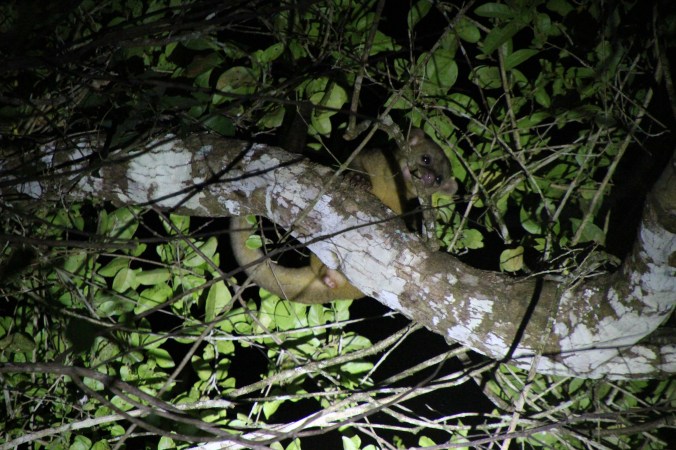
After my first few nights at Chan Chich, I quickly learned that the jungle activity changes a bit in the night time. Bats swoop through the air, the sounds of howler monkeys reverberate off of the trees, and cane toads hop across my path.

So of course, when the opportunity arose to go on a night ride I was eager to see what would be in store for me. While I knew it would be foolish to hope for a jaguar sighting, I set out taking comfort in the fact that at least my chances would be higher than if I had stayed in for the night. What I didn’t count on, however, was my inherently poor ability to spot wildlife in the darkness.

Continue reading

Investigator Of The Abyss

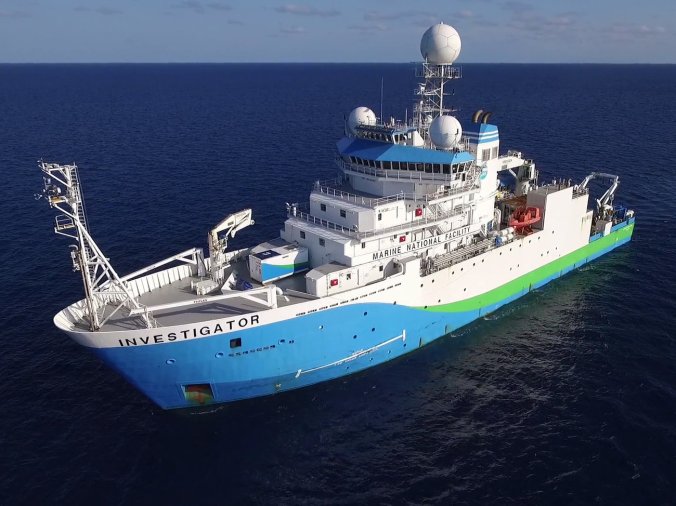
csiro-blue-water-research-vessel-investigator_image-csiro-marine-national-facility-84122ca6688b9466b61bb23f977447c7262cdf3d-s1300-c85.jpg

Courtesy of Museums Victoria / CSIRO

Thanks to National Public Radio (USA) and Kat Lonsdorf for a brief look into the deep work of Tim O’Hara:

Explorers Probing Deep Sea Abyss Off Australia’s Coast Find Living Wonders

Far below the surface of the ocean, off the coast of eastern Australia is an area simply known as “the abyss.” The largest and deepest habitat on the planet, the abyssal zone stretches well beyond Australia’s waters and spans half the world’s oceans — but it remains largely unexplored. Continue reading