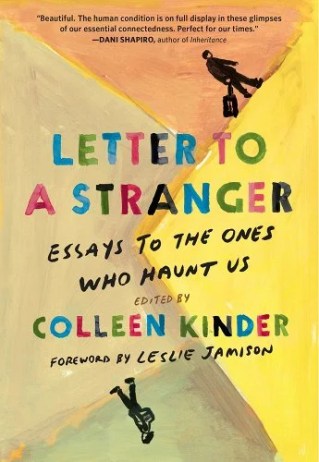
Letters To Strangers

This book looks like a must-read for multiple reasons. At least 65. That is the number of writers musing on a simple question: how can an “ephemeral encounter with a stranger leave such an eternal mark?” As someone whose life story hinges on a chance encounter in an airport, and so believes that strangers can make great co-adventurers, I am in. If you want a taste of what is in store, this essay by an author we have appreciated in these pages several times over the years, titled To My Lost Trishaw Driver, is excerpted from it:

Yangon, Myanmar, via Creative Commons.

Pico Iyer on decades of letters to a man he met, once, in Myanmar.

Travel is, deep down, an exercise in trust, and sometimes I think it was you who became my life’s most enduring teacher. I had every reason to be wary when, in 1985, I clambered out of the overnight train and stepped out into the October sunshine of Mandalay, blinking amidst the dust and bustle of the “City of Kings.” Continue reading
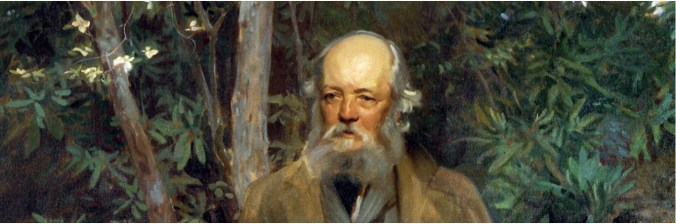
Frederick Law Olmsted At 200

Portrait of Frederick Law Olmsted (detail), 1895, by John Singer Sargent (1856–1925); The Artchives/Alamy Stock Photo.

From Hedgehog Review, a bit of scholarly reflection on a man whose impact on the landscape of cityscapes is still worthy of consideration:

The Man Who Built Forward Better

On Frederick Law Olmsted’s Bicentennial

Witold Rybczynski

What would Frederick Law Olmsted (1822–1903) make of his works today, in the bicentennial year of his birth? No doubt he would be delighted by the survival and continued popularity of so many of his big-city parks, particularly Central Park and Prospect Park, but also parks in Boston, Chicago, and Montreal, as well as Buffalo, Detroit, Rochester, and Louisville. He might be surprised by the bewildering range of activities these parks now accommodate—not only boating and ice-skating, as in his day, but exercising, jogging, picnicking, and games, as well as popular theatrical and musical events. I don’t think this variety would displease him. After all, it was he who introduced free band concerts in Central Park, over the objections of many of his strait-laced colleagues. He would be pleased by the banning of automobiles; his winding carriage drives were never intended for fast—and noisy—traffic. Continue reading

Maori Tree-Saving

Tourists visiting Tāne Mahuta, the largest known kauri tree, in Waipoua Forest in New Zealand. The tree is named for a god in Māori mythology. Ruth Mcdowall for The New York Times

A former kauri ambassador blowing a conch shell near Tāne Mahuta. There’s hope among advocates that Māori-led interventions have created enough time for scientists to save the kauri. Ruth Mcdowall for The New York Times

Thanks to Pete McKenzie for this story, How Maori Stepped In to Save a Towering Tree Crucial to Their Identity, in the New York Times:

Tāne Mahuta, an ancient tree named after the god of forests in Māori mythology, is threatened by the slow creep of an incurable disease.

WELLINGTON, New Zealand — In an ancient grove in northern New Zealand, the mighty conifer known as Tāne Mahuta, lord of the forest, is threatened by the encroachment of a deadly enemy. Continue reading

Jumpstarting System Change

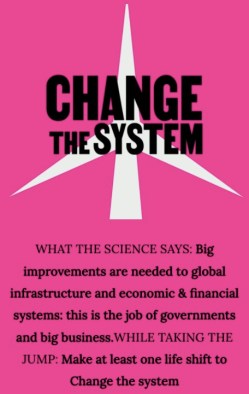
So many things to change, so little time. If you are looking for a way to jumpstart a change to the system, consider these six lifestyle adjustments (thanks to the Guardian for the feature story on Jump):

From using smartphones for longer to ending car ownership, research shows ‘less stuff and more joy’ is the way forward

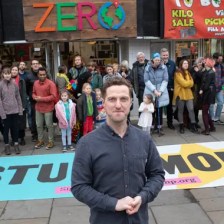
Founder of the Jump campaign Tom Bailey. Photograph: Andy Hall/The Observer

Research shows that people in wealthier, high-consuming countries can help avert climate breakdown by making six relatively straightforward lifestyle changes, creating a society of “less stuff and more joy”.

Experts say if enacted these “shifts” would account for a quarter of the required emissions reductions needed to keep the global heating down to 1.5C and increase pressure on government and the private sector to make the necessary far-reaching systemic change. Continue reading

Trees’ Wondrous Capabilities

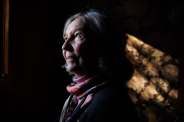
Diana Beresford-Kroeger at her home in Ontario. “If you build back the forests, you oxygenate the atmosphere more, and it buys us time,” she said. Nasuna Stuart-Ulin for The New York Times

Another round of thanks to Cara Buckley for a vividly written snapshot. Using Science and Celtic Wisdom to Save Trees (and Souls) is about one person’s multi-talented capacity to inspire us in new ways related to trees, and the patience it has required:

Diana Beresford-Kroeger, a botanist and author, has created a forest with tree species handpicked for their ability to withstand a warming planet.

MERRICKVILLE, Ontario — There aren’t many scientists raised in the ways of druids by Celtic medicine women, but there is at least one. She lives in the woods of Canada, in a forest she helped grow. From there, wielding just a pencil, she has been working to save some of the oldest life-forms on Earth by bewitching its humans. Continue reading

Arctic Heroes

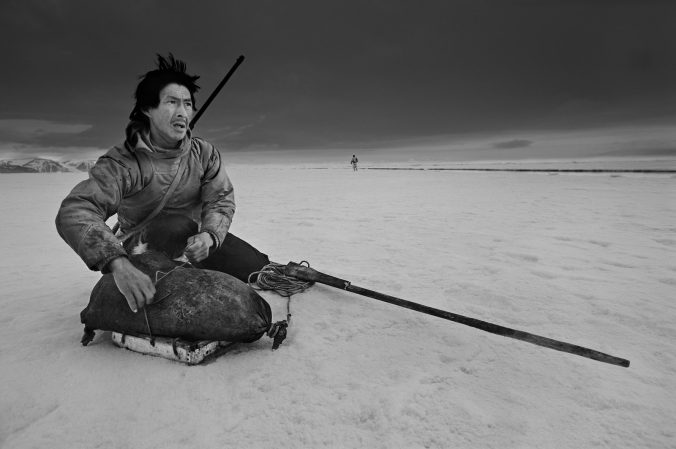
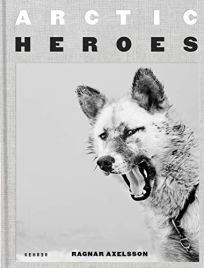
The book is not new, but it is new to us. Ben Taub has brought to our attention this stunning portraiture that, like most great photography, makes you wonder how the artist got the composition just so:

Ragnar Axelsson

The Fading Ways of Indigenous Arctic Hunters

Ragnar Axelsson

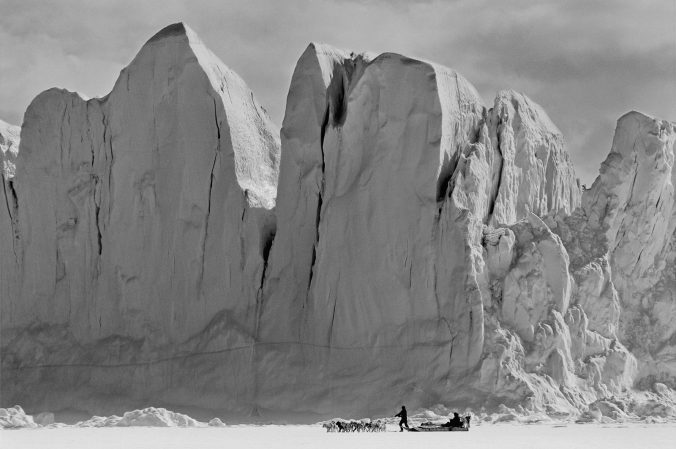
Ragnar Axelsson’s portraits from Greenland reveal the effects of climate change on ice floes, sled dogs, and a traditional culture.

During springtime in the far, far north—when the sun breaches the horizon, after months of total darkness—indigenous Greenlandic hunters head out to frozen inlets and get lost in ice and time. By day, the hunters might move miles in one direction, while the ice under their feet floats gently in another. Continue reading

Entangled In Costa Rica

If you have visited Costa Rica, or been fortunate enough to live here, you might have already become entangled with the country’s many opportunities to support conservation. For many decades foreigners have been welcomed to join in the country’s marine and terrestrial conservation initiatives. Many of those foreigners adopt the country as home after getting entangled in all kinds of good ways.

The first eight minutes of the video above are bliss: several young people are introduced, each of whom has become entangled. Along with those introductions, some stunning photography and videography showcasing Costa Rica’s nature, helping you to understand the entanglement. At 8:14 you see the dictionary definitions of entangled. The next 17 minutes are a case study in industrial fishing’s unintended consequences. Not surprisingly, this has already received lots of awards, but they ask you to share freely, so please do. And if you want to support financially, that will be appreciated as well.

Bottled Green Revolution?

Not  sure whether this changes anything we read about yesterday, but at least for some it could be interesting to read about how this 80-Year-Old Man Hasn’t Watered This Sealed Bottle Garden Since 1972 And It’s Still Alive:

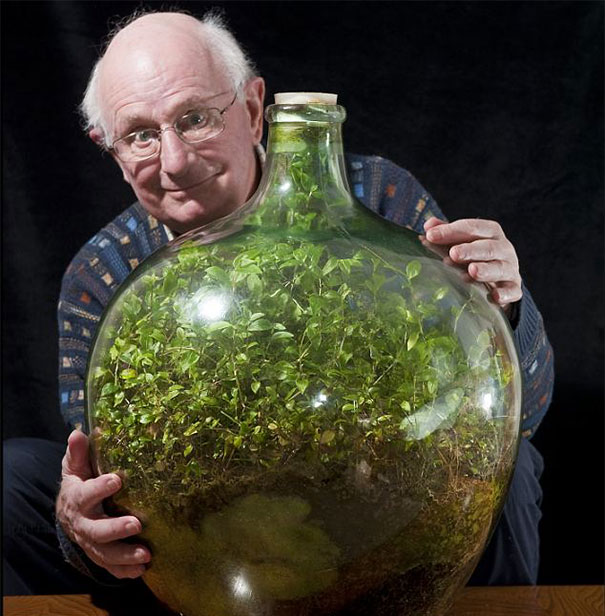
In a beautiful example of a closed but functional ecosystem, David Latimer has grown a garden sealed inside a giant glass bottle that he has only opened once since he started it almost 60 years ago.
Latimer planted the terrarium garden on Easter Sunday in 1960. He placed some compost and a quarter pint of water into a 10-gallon glass carboy and inserted a spiderwort sprout, which is not typically an indoor plant, using wires. Continue reading

David Attenborough’s Green Planet

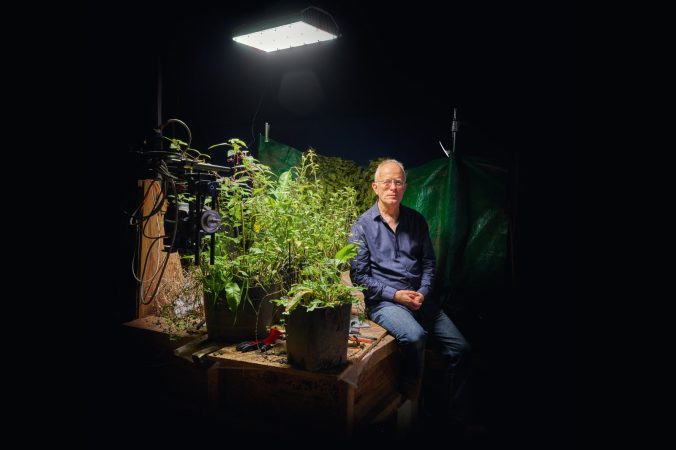
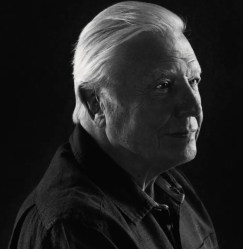
Mike Gunton, creative director of the BBC Natural History Unit and a long-time collaborator with David Attenborough.PHOTOGRAPH: BENEDICT REDGROVE

David Attenborough has been a frequent feature in our pages over the years. Each conversation with him repeats something we already knew but shares something we had not previously known:

David Attenborough’s Unending Mission to Save Our Planet

“We tend to think we are the be all and end all—but we’re not. The sooner we can realize that the natural world goes its way, not our way, the better.”

David Attenborough’s Green Planet is his latest series in a career that began in the 1950s and is as notable for its variety of firsts—pioneering 16-mm film in TV; first to film a Komodo dragon; first to use drone cameras—as it is for his long-standing commitment to bringing wildlife and environmental issues into the homes of viewers around the world. PHOTOGRAPH: NADAV KANDER

WE MAKE LOTS of programs about natural history, but the basis of all life is plants.” Sir David Attenborough is at Kew Gardens on a cloudy, overcast August day waiting to deliver his final piece to camera for his latest natural history epic, The Green Planet. Planes roar overhead, constantly interrupting filming, and he keeps putting his jacket on during pauses. “We ignore them because they don’t seem to do much, but they can be very vicious things,” he says. “Plants throttle one another, you know—they can move very fast, have all sorts of strange techniques to make sure that they can disperse themselves over a whole continent, have many ways of meeting so they can fertilize one another and we never actually see it happening.” He smiles. “But now we can.” Continue reading
Roses In The Cloister

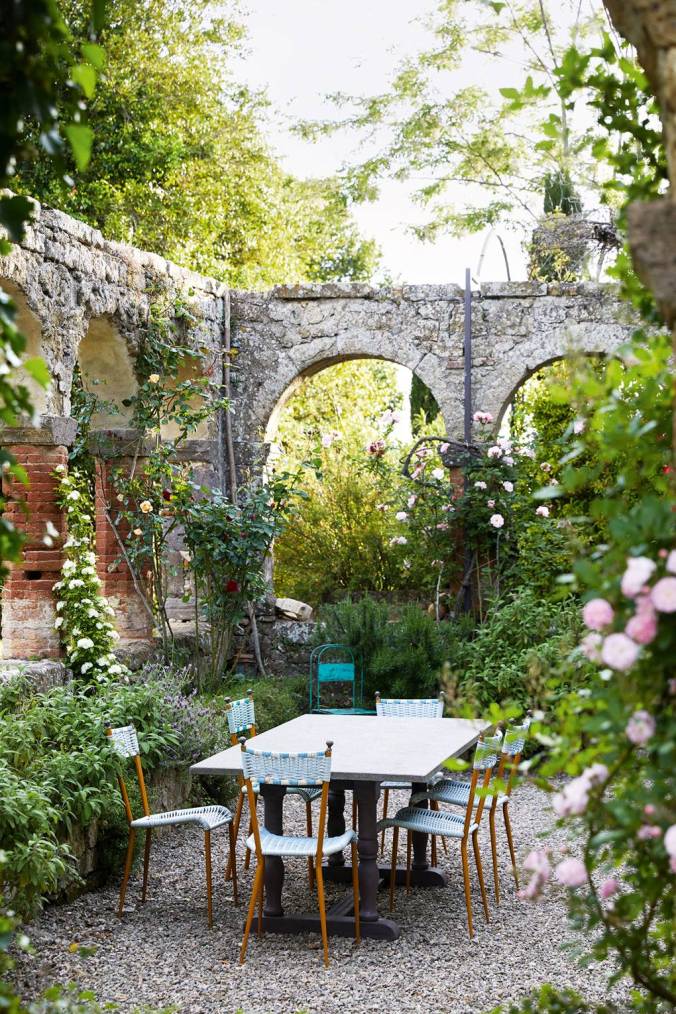
Roses in the cloister.   SIMON WATSON

Yesterday’s post linked to earlier ones with rose references, and one of those led me to a small correction. The photo above shows a slightly different angle on the roses in the garden of the restored convent. I had assumed those roses were very old. A bit of sleuthing led me to the fact that they were planted during the restoration, and they are “indeed quite perfumed.” For that and other reasons it is worth taking another look at that project, this time told by Olinda Adeane and with excellent photos by Simon Watson:

A mother & daughter’s restoration of a 16th-century Tuscan convent

A mother-and-daughter design duo has taken an unconventional approach to the conversion of a sixteenth-century convent in Tuscany, filling the rooms with objects and artworks of their own making.

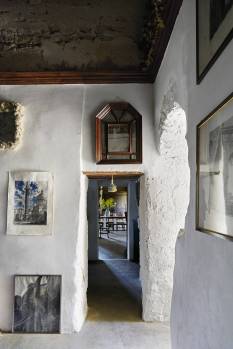
In the library, hand-coloured prints stand out against the white walls. SIMON WATSON

Henry James once described his friend Edith Wharton as a ‘great and glorious pendulum’ swinging back and forth across the Atlantic. In a similar fashion, Holly Lueders, a designer from New York, has returned to Greece every year since she first visited the country as an 18-year-old student. Holly grew up in a sleepy town in Missouri with little in the way of culture or local craft, but her family was artistic and good with their hands. ‘Anything we wanted, we made for ourselves,’ remembers Holly. She studied art history and archaeology at Columbia University and completed her studies in Athens. Continue reading
Admiring A Horticultural Refuge

Stella Kalinina

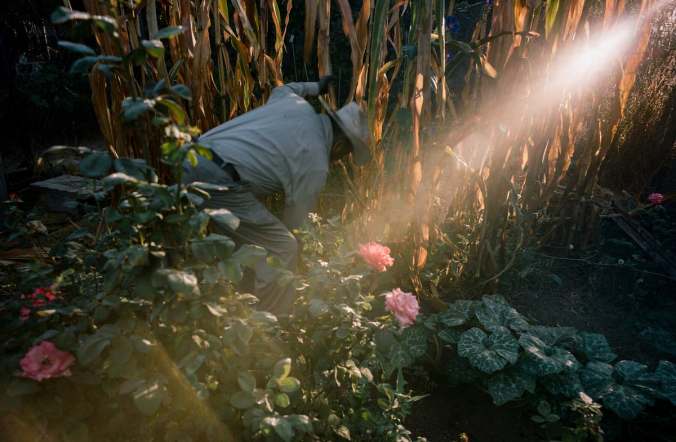
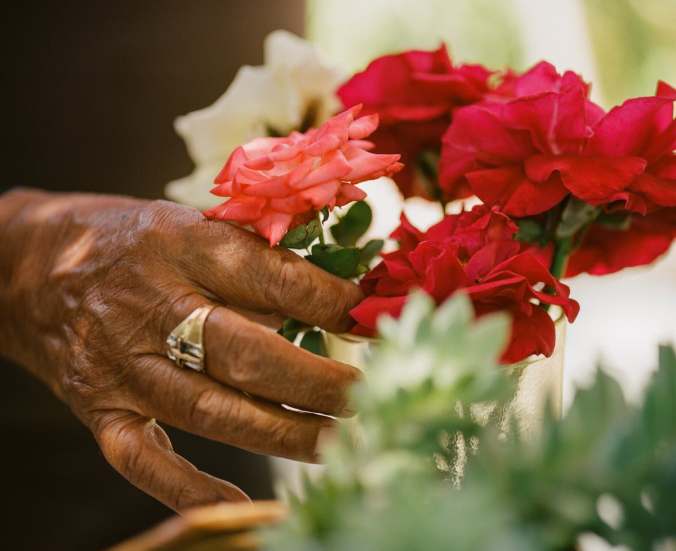
Community gardens have been a regular topic in our pages over the last decade. We never tire of the subject. I personally have a soft spot for roses, especially those found in unexpected places. So, Raúl Laly Fernández, you are my hero. I hope that the next time I am in Los Angeles I will find you in this garden and bear witness to the rose wonders I see in these photographs. Kudos to the writer/photographer Stella Kalinina for capturing this intersection between immigrant culture, working class refuge, and horticultural knowhow:

Mr. Fernández decorates a sitting area in his plot with roses that he grows.

In Los Angeles, Glimpses of an Oasis With Deep Immigrant Roots

The San Pedro Community Gardens have provided physical and spiritual nourishment for the past half a century to multiple generations of immigrant Angelenos.

Kimberly Mentlow received a plot in San Pedro after three years on a waiting list. “Being able to plant something or see something grow — it’s extremely therapeutic,” she said.

Ten minutes from my home, next to a decommissioned landfill, a freeway and the largest port in the country, sits an unlikely hillside oasis of vegetables and fruit trees.

Emerging like a mirage from its surroundings, the San Pedro Community Gardens occupy a six-acre parcel of city-owned land in the otherwise highly industrialized area of the blue-collar harbor community of San Pedro, in Los Angeles. Continue reading
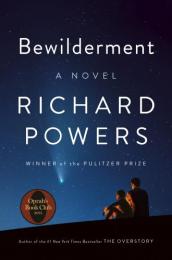
Bewilderment & Richard Powers In Conversation

When I first linked to the work of Richard Powers it was when his previous book was being reviewed. Now he has a new book out, and from the conversation that follows it sounds like this one is a very good bookend to that one:

Richard Powers on What We Can Learn from Trees

The Pulitzer Prize-winning author asks whether we can reimagine our relationship with the natural world before it’s too late.

There are certain conversations I fear trying to fit into a description.

Continue reading
The Nature Conservancy’s 2021 Global Photo Contest Winners

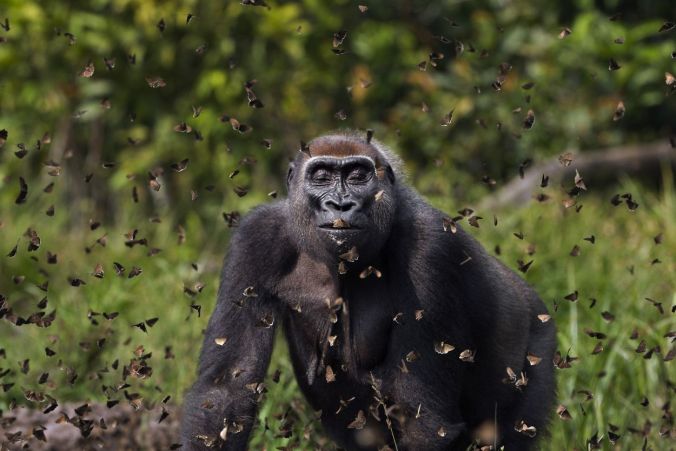
MALUI Western lowland gorilla female ‘Malui’ walking through a cloud of butterflies she has disturbed in a bai. Bai Hokou, Dzanga Sangha Special Dense Forest Reserve, Central African Republic. December 2011. © Anup Shah/TNC Photo Contest 2021

There are several annual photo contests that we have been following over the years. Thanks to The Nature Conservancy for convening this one:

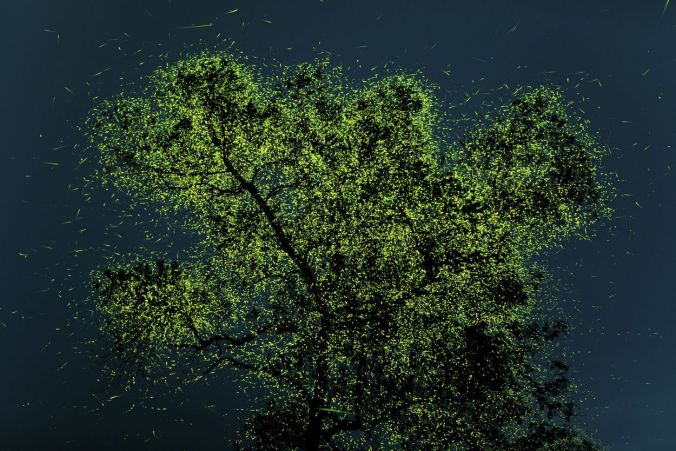
FIREFLIES Just before Monsoon, these fireflies congregate in certain regions of India and on a few special trees like this one, they are in crazy quantity which can range in millions. © Prathamesh Ghadekar/TNC Photo Contest 2021

Save The Waves @ Arroyo San Miguel

The young man who we met 15 years ago is going strong. Save The Waves Coalition has pulled off another small miracle:

SAN MIGUEL SURF BREAK PROTECTED WITH LANDMARK CREATION OF BAJA CALIFORNIA’S FIRST STATE PARK

Save The Waves Coalition and Pronatura Noroeste achieve approval for Arroyo San Miguel

In a historic moment for environmental and surf conservation, the first state park in Baja California, Mexico was officially approved, providing long-lasting protection for the iconic San Miguel wave alongside 67 hectares of green space.

The local initiative spearheaded by Pronatura Noroeste AC, and joined by international nonprofit Save The Waves Coalition (STW), has been in the works for years. Today, the campaign to legally protect San Miguel becomes a reality. Continue reading

Gerald Durrell, The Stationary Ark, And A 2021 Maverick

Gerald Durrell, somehow, has escaped mention in 11,281 previous posts over the last decade+ on this platform. Today is the day to begin correcting that oversight. His novelist brother Lawrence is worthy of his own post here another day. And the family name was recently popularized on television. While Gerald’s own legacy is not easy to categorize, a good starting point is to look at Durrell Wildlife Conservation Trust and his related conservation work. Books are a big part of the legacy and the one to the right has had a tangible influence:

An Ark for Vanished Wildlife

Derek Gow’s maverick efforts to breed and reintroduce rare animals to Britain’s countryside.

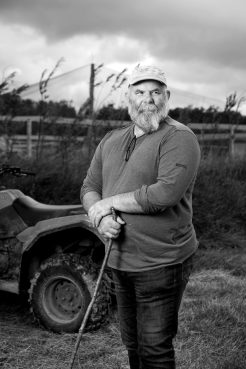
Derek Gow wants his farm to be a breeding colony, a seedbed for a denuded island. Photograph by Jonny Weeks / eyevine / Redux

Derek Gow decided to abandon conventional farming about ten years ago, not long after the curlews left. At the time, Gow, who is thickset and white of beard, had a flock of fifteen hundred breeding ewes and a hundred and twenty cows, which he kept on a three-hundred-acre farm of heavy clay close to the border between Devon and Cornwall, in southwest England. He was renting an extra field from a neighbor, and a pair of curlews had come to forage for a few days. A farm worker spotted the distinctive brown birds; they have long beaks that slope downward, like violin bows. “He didn’t even recognize what they were,” Gow told me.

Curlews are Europe’s largest wading bird. Continue reading
Wheat 2 Schools

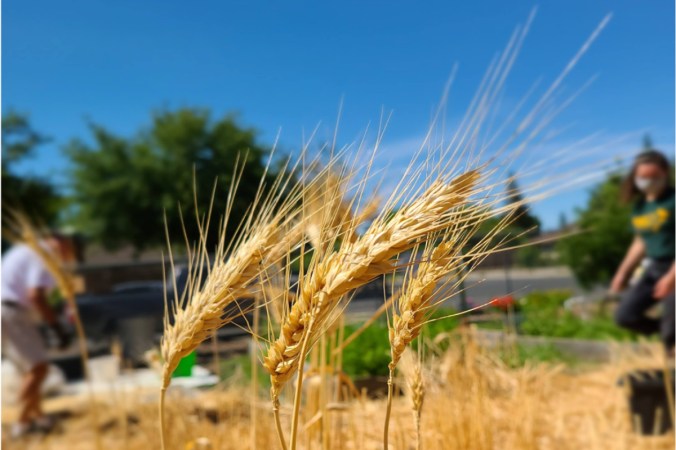
Harvesting Hard Red Spring wheat variety Summit 515 at Whitehead Elementary school in Woodland, California – the second school to grow wheat as part of the Wheat 2 Schools project. (Photo courtesy of Claudia Carter)

Thanks to Civil Eats, after a while, for bringing Nan Kohler and her mission to our attention:

The Next Chapter for Farm to School: Milling Whole Grains in the Cafeteria

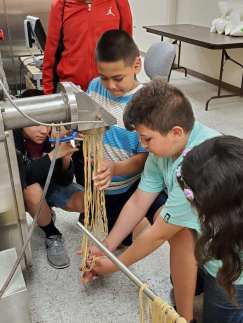
Elementary students processing whole wheat pasta with the wheat they harvested that season from their school’s wheat garden.

A new project in California aims to purchase mills for school cafeterias, marking the next step in years-long effort to bring local, whole grains to schools around the country.

Nan Kohler founded the milling company Grist & Toll in Pasadena, California in 2013 and her freshly milled flours have been a hit with bakers, chefs, and locavores ever since. But her abiding wish is to sell California-grown, freshly milled whole grain flour, which is nutritionally superior to refined flour, to the public schools in the area. Continue reading
Kim Stanley Robinson’s Message For All Of Us

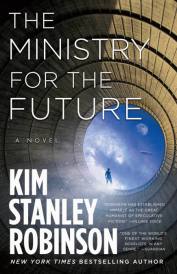
When The Ministry for the Future came to my attention late last year, it was the first I had heard of this author (I am buried deep under a big rock when it comes to science fiction). Now I wonder how I could have missed such an important thinker on the most important topics of our time (not science fiction):

Kim Stanley Robinson on “Utopian” Science Fiction

One of the premier writers of thinky sci-fi, Kim Stanley Robinson opened his book “The Ministry for the Future” with an all too plausible scenario: a lethal heat wave descends on India, with vast, horrifying consequences. It’s a sobering read, especially after July, 2021, was declared the hottest month on record. And yet Robinson tells Bill McKibben that his work is not dystopian; his central concern is how the globe could respond to such a disaster and begin to halt the momentum of global warming. Continue reading

A Taste Of Matthew Raiford’s Heritage

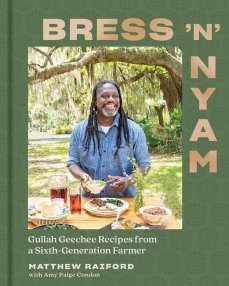
The last food book we featured was not a cookbook, but had plenty of food for thought. Thanks to the Kim Severson (again, after a couple years of our not seeing her work) for bringing Matthew Raiford, his family heritage, his farm and his cookbook to our attention in her article: A High-Summer Feast to Forge Connections in the Deep South. And if time is short, click through just for the exceptional photography:

Rinne Allen for The New York Times

Matthew Raiford swore he’d never return to his family farm in coastal Georgia. But in breaking that vow, he found a sense of community worth celebrating with a lavish spread.

BRUNSWICK, Ga. — It’s not a stretch to say there may have never been a party for a cookbook like the one Matthew Raiford threw on his family farm a few weeks ago.

Rinne Allen for The New York Times

The book’s title is “Bress ‘n’ Nyam” — “bless and eat” in the English-based Creole spoken by the Gullah Geechee people who live along the coasts of the Carolinas, Georgia and northern Florida. Their ancestors were captured in West Africa and enslaved. Nowhere else in America has the cultural line from Africa been better preserved. (Mr. Raiford’s people call themselves freshwater Geechee, which means they are from the mainland of coastal Georgia. Saltwater Geechees are from the barrier islands.) Continue reading

The Unalloyed Joy Of Given Plants

Being a gardener has an odd way of attracting the kindness of strangers. Illustration by Daniel Salmieri

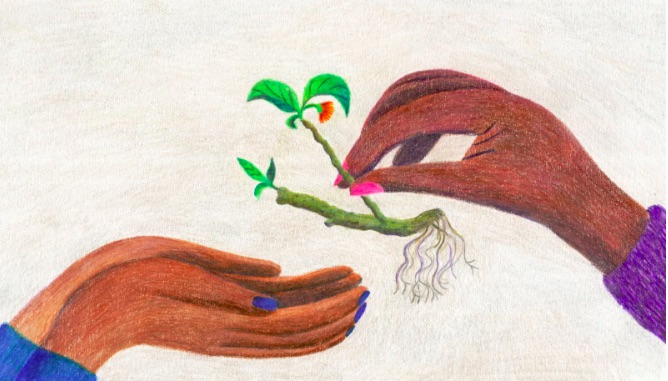
Charlotte Mendelson addresses a topic that we can relate to as we repopulate a one-time farm, primarily with coffee but plenty of other goodies as well, most of them gifted to us:

Give Me All Your Cuttings

Free stuff is the zenith of the gardener’s life, the soil tender’s greatest thrill.

I may tell myself that I chat up my neighbors out of a post-quarantine craving for connection. I can pretend that I haul myself outside for a swift ten thousand steps because I’ve finally learned the value of tending myself, body and spirit. But the truth is that I have one motivation for every social interaction, city walk, or strenuous cycle ride: free stuff. Continue reading
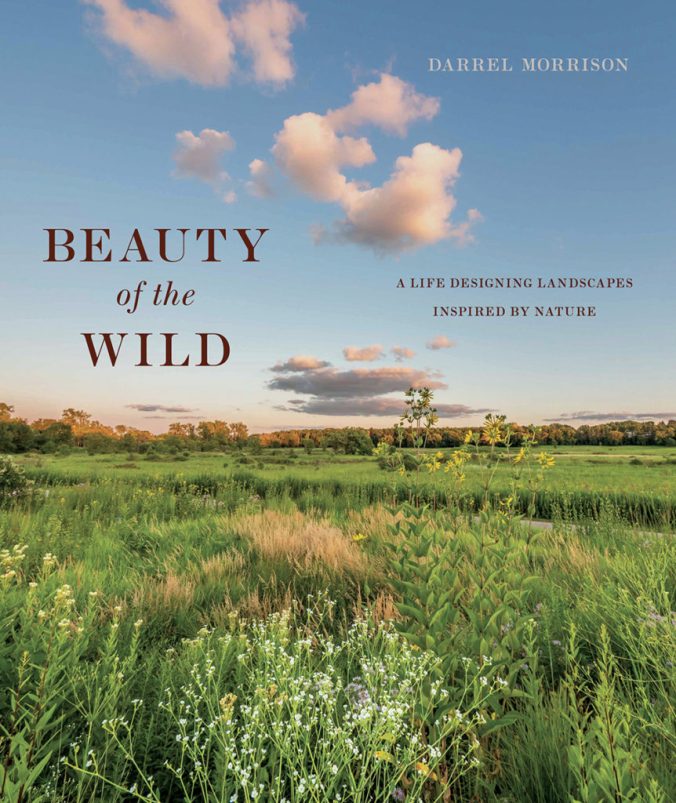
Beauty Of The Wild

Library of American Landscape History has published this book, which came to our attention thanks to this excellent article (again) by Margaret Roach:

Three large islands at Storm King Art Center are planted with a mix of prairie grasses, including little bluestem, big bluestem, Indiangrass and switchgrass. Jerry L. Thompson

Your Garden May Be Pretty, but Is It Ecologically Sound?

Darrel Morrison, the elder statesman of the ecological landscaping movement, offers some advice for gardening in a changing world.

Mr. Morrison’s mesic prairie design for the University of Wisconsin Arboretum Native Plant Garden, with the larger Curtis Prairie restoration in the distance. Robert Jaeger

Some gardeners react to any mention of ecological landscaping — the merging of environmental science and art — as if it were a compromise or concession meant to limit their creativity. Darrel Morrison, a landscape architect who has been practicing and teaching this philosophy for some five decades, begs to differ.

“There is the implication that you are suggesting a vegan diet,” said Mr. Morrison, the creator of influential designs at Storm King Art Center, in Orange County, N.Y., the Brooklyn Botanic Garden and the Lady Bird Johnson Wildflower Center in Austin, Texas. “A lot of people, when they hear a phrase like ‘ecologically sound landscaping,’ they think they are giving up something. But they are not — it only enhances the experience.” Continue reading