If You Can, Catch Pacita Abad At MoMA PS1

The work at the center is the nearly 17-foot-tall “Marcos and His Cronies,” which features a dragon demon surrounded by 18 fearsome masked figures.

Installation view of “Pacita Abad” at MoMA PS1. From left: “Waiting in Washington” (1990), “Marcos and His Cronies” (1985-1995) and “Subali” (1983/1990). Kris Graves/MoMA PS1

Pacita Abad has not only not appeared in our pages before, but her work was rejected by plenty of institutions who probably should have known better. Now, if given the chance, most of us will choose not to miss the opportunity to experience her work:

Stitch by Stitch, Pacita Abad Crossed Continents and Cultures

The Filipino American artist is having her first retrospective at MoMA PS1 as the mainstream art world finally catches up to her work. “You will regret missing it,” our critic says.

A row of five colorful paintings depicting masks from various cultures, from left, “Oceania Mask,” “Hopi Mask,” “African Mephisto,” “Mayan Mask,” and “African Mask” with a Kongo figure.

From left, “Oceania Mask (Dancing Demon),” 1983/1990; “Hopi Mask,” 1990; “African Mephisto,” 1981; “Mayan Mask,” 1990; and “African Mask (Kongo),” 1990, on view at MoMA PS1. Kris Graves/MoMA PS1

About a year before she died of cancer, in 2004, at the age of 58, the artist Pacita Abad and a team painted a pedestrian bridge that crosses the Singapore River with exuberant colors and more than 2,000 circles. Surrounded by ho-hum hotels and apartment buildings, it radiates joy. Abad’s work is in museums throughout Asia, and in Manila, where she grew up, the National Museum’s holdings include a painfully lucid 1980 painting of two wary children, Cambodian refugees, holding each other. Continue reading

Celebrating Voices Of The Americas

Curved exterior of the National Museum of the American Indian in DC, pale bricks glowing as if during sunrise.We missed the 2024 INDIGENOUS VOICES OF THE AMERICAS –CELEBRATING THE NATIONAL MUSEUM OF THE AMERICAN INDIAN. Our calendars are already marked for next year, based on what we see from this year’s celebration:

Across the Western Hemisphere, thousands of Indigenous communities are sustaining traditional practices and contributing to a more equitable future. Today, these individuals and nations define who they are, through their own stories in their own words.

An illustration of the ingredients for Cherokee bean bread.In 2024, Indigenous Voices of the Americas: Celebrating the National Museum of the American Indian highlights living traditions of Indigenous peoples. At its core, the program honors contemporary and traditional creative expressions, celebrations, and community connections that feed new possibilities for Indigenous futures. The program is co-presented by the Smithsonian Center for Folklife and Cultural Heritage, the National Museum of the American Indian, and the National Park Service.

We would not have known about it except for this article (thanks to National Public Radio, USA):

Bolivian skateboarders demonstrate their skills on the half pipe.

Bolivian women skateboarders — wearing traditional garb — demonstrate their skills on the half pipe. Ben de la Cruz/NPR

It’s a rather unusual skateboard lesson.

Little girls are lined up to learn to balance on a board on a half-pipe ramp. The teachers are young women from Bolivia, in their teens and 20s, wearing traditional garb as a tribute to female strength. Their outfits do not seem as if they are ideal for skateboarding: Each skateboarder wears a beribboned bowler hat and a poofy skirt. Among the eager disciples is Poppy Moore…

Natural History Anew

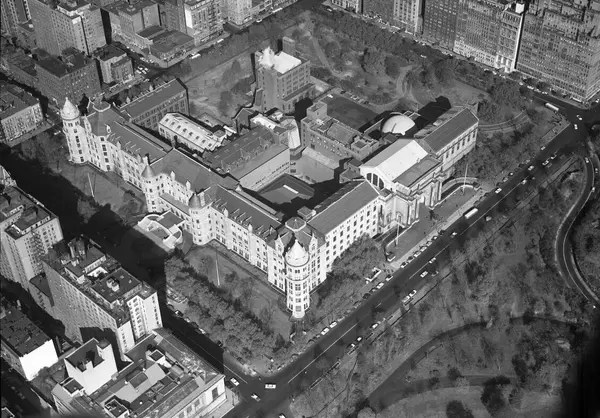
An image from 1957, when the cross and square design was still legible. American Museum of Natural History

We have featured so many natural history museums in our pages over the years that one more might have been redundant; but no:

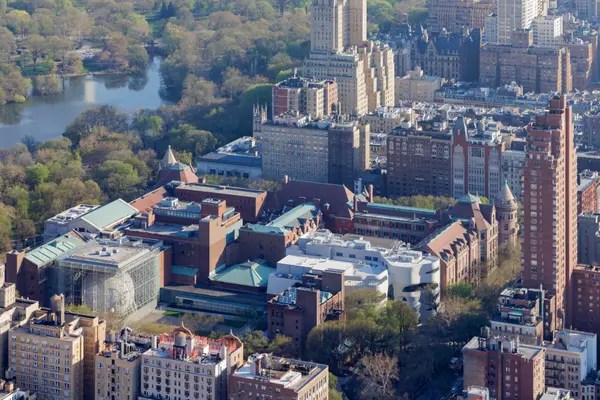
A new aerial photo shows the museum today, as a crazy quilt of buildings from many eras, with Gilder on the right. Iwan Baan

The article below, by Michael Kimmelman with photographs and video by Peter Fisher, allows us to imagine the experience of a new view on natural history in New York City.

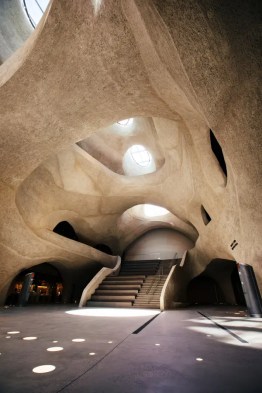
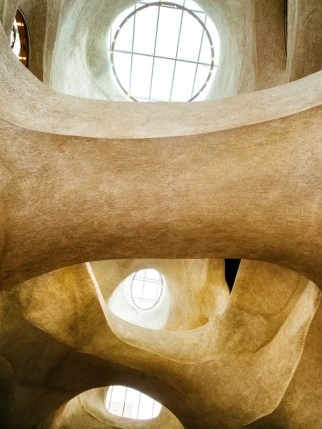
The view at the entrance toward the monumental staircase with bleacher seats.

We are ready to be awed:

The stunning $465 million Richard Gilder Center for Science, designed like a canyon, is destined to become a colossal attraction.

When plans for it first surfaced, I wondered if the new Gilder Center at the Natural History museum might end up looking overcooked.

From the outside it’s a white-pink granite cliff with yawning windows shaped a little like the openings to caves, nestling the museum’s wonderful Romanesque Revival addition from the turn of the last century. Past the front doors, that cliff face morphs. It becomes an atrium in the guise of a towering canyon, a city block deep.

Skylights and balconies in the atrium of the new Richard Gilder Center for Science, Education and Innovation.

For its architects, Jeanne Gang and her team, Gilder was clearly a gamble and leap of faith, bucking today’s innocuous norms, almost begging for charges of starchitectural self-indulgence.

Now that it’s built, I love it.

I wouldn’t go so far as to equate it with the curvaceous genius of Gaudi or with Saarinen’s groovy TWA Terminal, but it’s in the family. Like them, Gilder is spectacular: a poetic, joyful, theatrical work of public architecture and a highly sophisticated flight of sculptural fantasy. New Yorkers live to grouse about new buildings. This one seems destined to be an instant heartthrob and colossal attraction. Continue reading

The Birds Of Australia, Interactive Exhibition Of John & Elizabeth Gould’s Illustrations

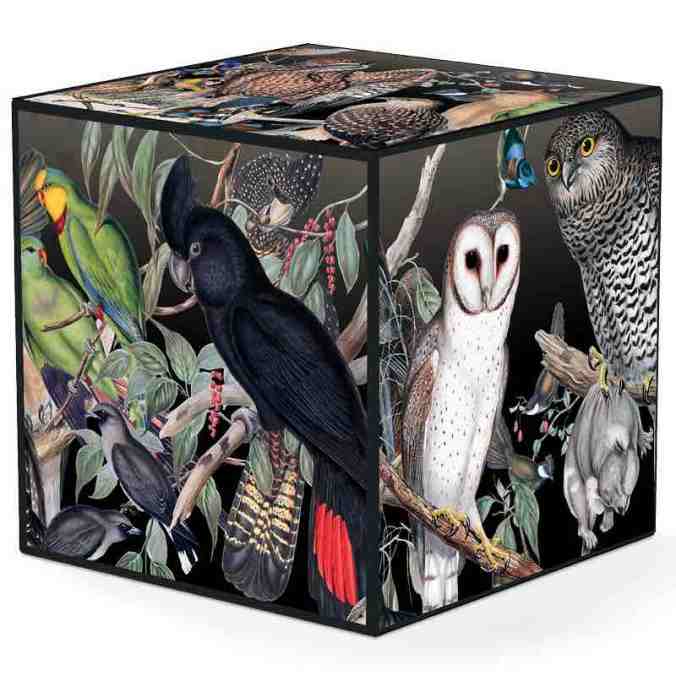
A new exhibition showcasing the incredible world of Australia’s birdlife will launch in Newcastle. Presented on STORYBOX, an interactive storytelling cube, The Birds of Australia, brings to life the iconic bird illustrations of John and Elizabeth Gould together with First Nations storytelling and knowledges.

We have linked to stories about both John Gould and his wife Elizabeth, and now there is a museum exhibition honoring both together, so if you happen to be in Australia:

Touring exhibition: The Birds of Australia

Trace the journey of English ornithologist John Gould and his wife Elizabeth, as they travelled across New South Wales in the 1800s on one of the most significant birding expeditions in history, helping inform contemporary knowledge and conservation of Australian birds. The Goulds described and illustrated over 300 birds that were completely new to science, including the Pied Butcherbird (Cracticus nigrogularis) and the now extinct Paradise Parrot (Psephotellus pulcherrimus). It was an astonishing record of observation and sustained hard work. Continue reading

Origami At The American Museum Of Natural History

D. Finnin/© AMNH

Folding paper was a frequent topic for us starting in 2011, but origami specifically has been featured only a few times. This holiday season at the American Museum of Natural History we add to the mentions:

The Making of the Origami Holiday Tree

One 13-Foot Tree, 1,000 Origami Models: A Spectacular Museum Tradition

M. Shanley/© AMNH

Early each year, as the days begin to get a bit longer and the first signs of spring crop up in Central Park, Ros Joyce and Talo Kawasaki, volunteers from OrigamiUSA and the designers of the Museum’s Origami Holiday Tree start planning for the year ahead.

M. Shanley/© AMNH

They begin combing the Museum’s halls in search of inspiration—going from floor to floor to decide on a perfect theme and to find just the right exhibits to re-create as origami models on the tree. Continue reading

Understanding & Reviving Games From Other Places, And Times Before

Leaving aside the question of why so many of the world’s most important historical artifacts are in London, rather than where they originated, the curator in the video above is charming. And the man in the photo just below to the right is his counterpart in the place where this particular artifact originated.  My interest in board games is much less well informed, but like Mr. Mofaq I have an interest in their revival, so Deb Amlen’s article in the New York Times is appreciated:

Hoshmand Mofaq, an Iraqi artist, pondered his next move on one of the Royal Game of Ur boards he designed. Mr. Mofaq is part of a group who hope to popularize and return the game to the Iraqi people as part of their cultural heritage. Shwan Mohammed/Agence France-Presse — Getty Images

For 4,600 years, a mysterious game slept in the dust of southern Iraq, largely forgotten. The passion of a museum curator and the hunger of young Iraqis for their cultural history may bring it back.

It is the end of a long, hot day of selling your wares in a market in ancient Mesopotamia, around 2,400 B.C., and you are looking for a way to unwind.

Netflix will not be invented for another four and a half millenniums, but as luck would have it, a pub lies ahead in the distance. A beer and a round of the Middle East’s favorite game is just the thing to pick you up. The thrill of the game is irresistible: It is impossible to predict who will win in this race to get your pieces to the end of the board, even in the last few moves.

One of the boards of the Royal Game of Ur excavated in the 1920s, on display at the British Museum. The British Museum, via Commons.wikimedia.org

You sit down across from your opponent, who offers you the first turn. You pick up the four-sided dice and shake them in your fist. Maybe this time the rumored fortunetelling aspect of the game will bless you with a spate of good luck and prosperity. Continue reading

The Parthenon Marbles, Back Where They Belong

The Parthenon in 1875.

The Parthenon in 1875. Interfoto/Alamy

The Elgin Room of the British Museum in an undated photograph taken during the Victorian era.

The Elgin Room of the British Museum in an undated photograph taken during the Victorian era. Keasbury-Gordon Photograph Archive, via Alamy

The original Parthenon marbles belong back in Athens, in the museum built for them. With all due respect to my British friends, my opinion is informed partly by my mother being from Greece, but mostly by an impartial logic.

That logic is expressed in the article below, which also happens to lay out an interesting sideshow:

Robots at the Marmi di Carra marble workshop in Italy carved a replica of a horse head, the original of which sits in the British Museum in London.

Robots at the Marmi di Carra marble workshop in Italy carved a replica of a horse head, the original of which sits in the British Museum in London.

Few cultural disputes inflame British passions more than the disposition of the Parthenon Marbles. Public debate about the statuary has raged since the early 1800s, when the sculptures and bas-reliefs, which date from 447 B.C. to 432 B.C., were stripped from the Parthenon and other Classical Greek temples on the Acropolis of Athens by agents of Thomas Bruce, a Scottish statesman and seventh earl of Elgin. The marbles were purchased — some say looted — by Elgin during his time as ambassador to the Ottoman Empire, the occupying power; they have resided in the British Museum since 1817. Continue reading

Species Discoveries Of 2021

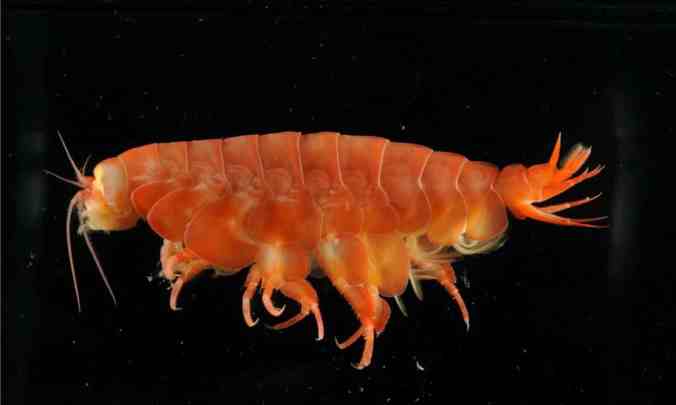
Eurythenes atacamensis, a giant new crustacean endemic to the Peru-Chile ocean trench, identified by scientists in 2021. Photograph: Weston et al 2021

The work of species discovery continues, even as extinction continues unabated:

‘Hell herons’, metallic beetles, tiny shrimp – scientists have been busy describing unusual creatures despite Covid restrictions

Two newly described species of spinosaur dinosaurs discovered on the Isle of Wight, named ‘hell heron’ and ‘riverbank hunter’. Photograph: Anthony Hutchings

Six new dinosaurs, an Indian beetle named after Larry the cat, and dozens of crustaceans critical to the planet’s carbon cycle were among 552 new species identified by scientists at the Natural History Museum this year.

In 2021, researchers described previously unknown species across the tree of life, from a pair of giant carnivorous dinosaurs known as spinosaurs – nicknamed the “riverbank hunter” and “hell heron” – to five new snakes that include the Joseph’s racer, which was identified with the help of a 185-year-old painting. Continue reading

Smithsonian Craft Show

Some of the crafts we carry seem museum quality to us, but we offer them in the context of commerce.

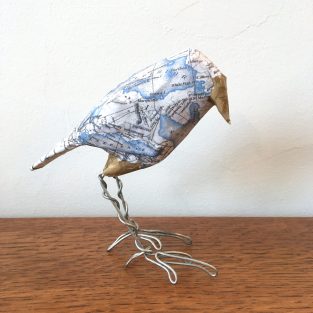
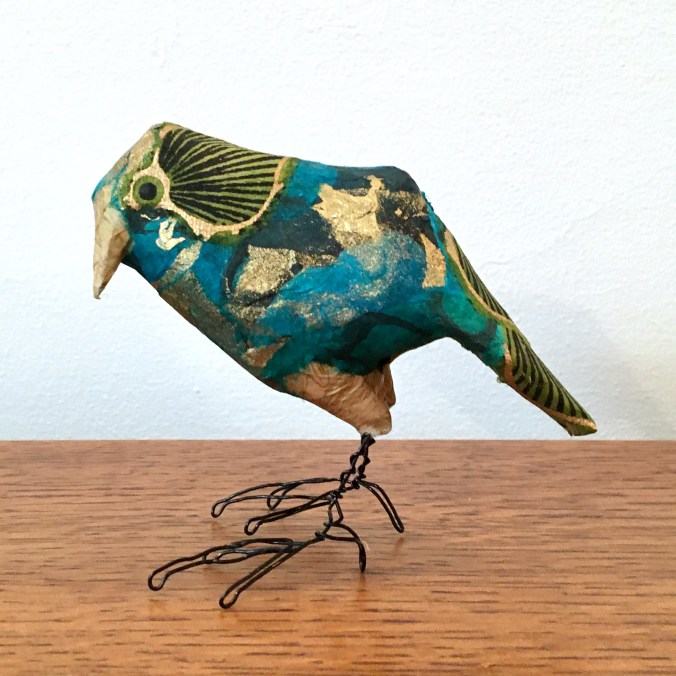
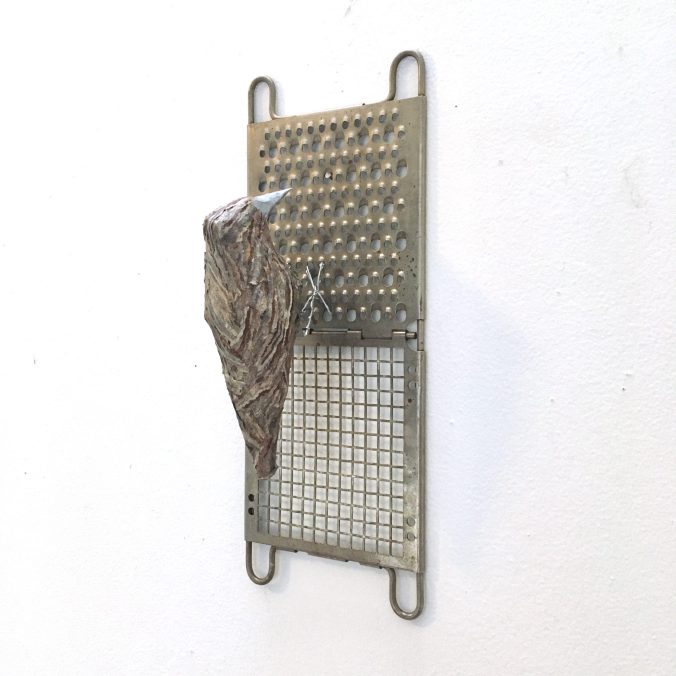
We would love to attend this show at the Smithsonian, primarily to see the work of Jessica Beels, whose work is showing in the Mixed Media and Paper section of the Show. Her website is full of reasons to see more of her work.

Nowhere on that site do  we see works like these three bird figures. We favor birds in art, wherever it may be, and when the medium stretches boundaries as these do, all the more interesting.

Perfume & Museum

General view of the International Perfume Museum’s gardens in Grasse. “The same rose or the same jasmine grown in Egypt or Morocco, it will be different from the rose grown in Grasse,” head gardener Christophe Meze says. “It’s like wine, you can have the same type of grape, but you won’t have the same wine because of the sun, because of the soil, because of the terroir.” Bénédicte Desrus for NPR

Perfume appeared early in our pages mostly due to their botanical intrigue–but has only been an occasional topic since then. This story of how the perfume trade developed (if the topic is of greater interest see Chandler Burr’s The Emperor of Scent) in Grasse is a fine fit with our interest in unusual museums and the intersection of farming and innovation:

In France’s Perfume Capital Of The World, There’s A World Of Beautiful Fragrance

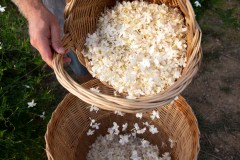
Perfume flower grower Pierre Chiarla picks jasmine flowers in his field in Grasse, France. Bénédicte Desrus for NPR

GRASSE, France — The town of Grasse sits in the hills above the more famous French Riviera city of Cannes, and it doesn’t have the Mediterranean Sea at its doorstep. What it does have is fields of flowers — jasmine, May rose, tuberose, lavender. It is known as the perfume capital of the world.

It wasn’t always this way. Back in the 18th and 19th centuries, the industry took off in Grasse in part because this was an absolutely putrid-smelling town. Continue reading

If You Happen To Be In Berlin

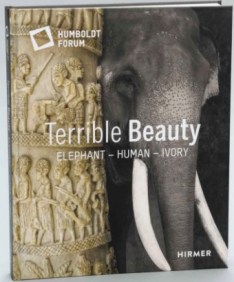
The phased opening of Humboldt Forum, a museum in Berlin, includes this exhibit, and of course a beautiful book to boot.

An interesting feature, in the form of an editorial on the museum’s website can help put this exhibit in context. The goal of this museum is anti-colonial, among other things, according to the museum’s editorial:

According to the people behind the project, the partial reconstruction of Berlin’s historic palace was an expression of the power to mend, to repair the urban fabric and the historical associations enshrined in the space it occupies.

Which is unusual for a well-funded museum in a wealthy country to say. So, this book looks interesting from multiple angles, and the text describing the book is a hint at that:

The elephant is an admired but also endangered animal. In all times and cultures, the ivory of its tusks has been sought after. What kind of material is it, how is it used in history and the present, and what can be done today to protect the largest land mammals from poaching? This richly illustrated volume undertakes a cultural-historical journey and a current positioning. Ivory fascinates  and polarises. Continue reading

One Culture’s Delicacy Is Another’s Punchline

Having had more than my fair share of delicacies that I did not find appetizing, the concept of this museum is not lost on me. I can laugh, even when the humor is problematic. But of all the museums in all the towns in all the world,  I doubt I will visit this one. After yesterday’s post, this article by Jiayang Fan seems particularly well-timed:

The Gatekeepers Who Get to Decide What Food Is “Disgusting”

At the Disgusting Food Museum, in Sweden, where visitors are served dishes such as fermented shark and stinky tofu, I felt both like a tourist and like one of the exhibits.

In the spring of 2019, Arthur De Meyer, a twenty-nine-year-old Belgian journalist, toured the Disgusting Food Museum, in Malmö, Sweden. As with the Museum of Sex, in New York City, and the Museum of Ice Cream, in San Francisco, the Disgusting Food Museum is conceptually closer to an amusement park than to a museum. There are eighty-five culinary horrors on display—ordinary fare and delicacies from thirty countries—and each tour concludes with a taste test of a dozen items. De Meyer, the son of a cookbook author and a food photographer, told me that he’d always been an adventurous eater. As a reporter, he also prided himself on his ability to maintain his composure. “But the taste test was war,” he said. “The kind where you’re defenseless, because the bombs are going off invisibly, inside of you.” Continue reading

Technology Facilitating Museum Collaboration

Our thanks to Samantha Sarafin for news on 21st century technology allowing museums to share artisanal glass from earlier centuries, among other things:

A model of how museums can share their collections more widely

3D images of 19th-century glass marine invertebrates go online

Five researchers set out three years ago to capture the full beauty of a museum’s famous glass models through images. Continue reading

Glowing & Growing

CoffeeClean1

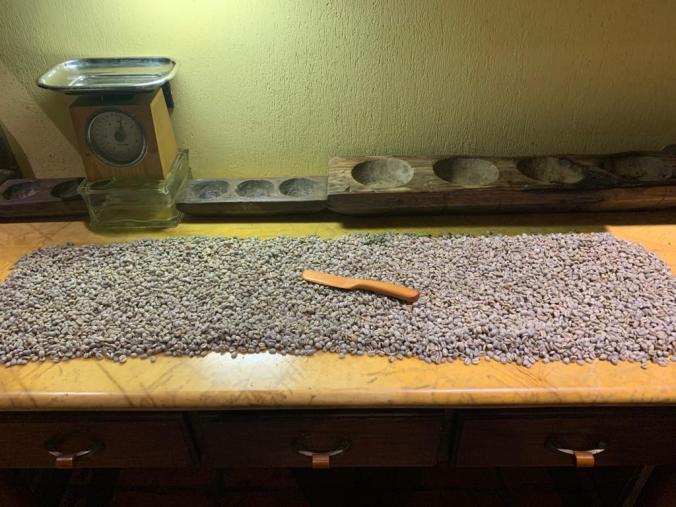
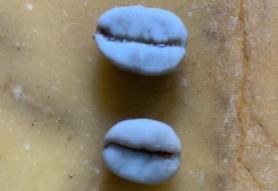
CoffeeClean2As we prepare to plant coffee Amie and I yesterday completed washing 14,000 beans, give or take, from the most recent harvest of coffee from this land where we live. As big as that number sounds, it is just a few pounds of green beans, picked from several trees that have held on over the years.

CoffeeClean3

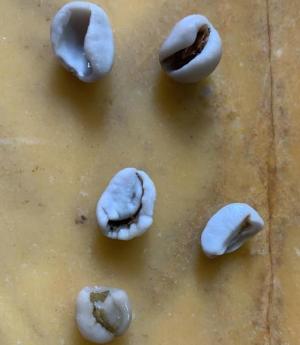
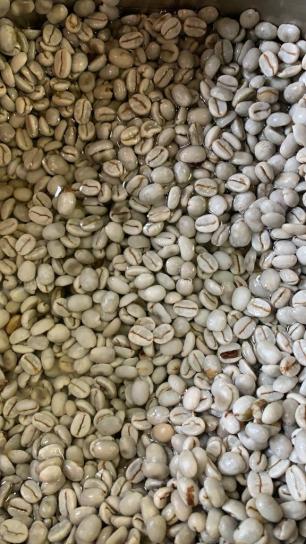
In previous years this would provide a month’s drinkable coffee, but this year we will germinate the beans instead. We selected the fully formed, unbroken beans like those above, separating out the small percentage of broken or misshapen beans like those to the right. After germination, by August we expect to have between 3,000 and 4,000 viable seedlings we will keep in a nursery. One year from now those will be saplings ready to plant in the ground.  We are approaching this task traditionally, by hand, sight of eye, and a few simple analog tools.

CoffeeClean4This morning we will dig holes for the first of the shade trees going onto that land where the coffee will be planted. But first, the news. The best I could find, for motivation, involves a man temporarily in New York City, working in a museum. His work, and the exhibition he is tending to, provides me context for the countryside as it still is for many coffee farmers here, and the technology transforming the countryside for future generations. Already plenty of coffee farmers are using technology as advanced as that of the tomato man in the story below. Without romanticizing the hard labor of traditional coffee farming, the work we are doing makes me more appreciative of the coffee farmers we source from. Thanks to Elizabeth A. Harris for this story:
The Museum Is Closed, but Its Tomato Man Soldiers On

Although the Guggenheim’s “Countryside” show was shuttered by the pandemic, its crop of cherry tomatoes is still growing, and feeding New Yorkers.

merlin_172484226_e841d84e-bb0a-47af-8329-6efdd50ef85c-jumbo

Jeenah Moon for The New York Times

17tomatoes8-superJumbo-v2

Jeenah Moon for The New York Times

The halls of the Guggenheim Museum are pretty quiet these days, with mostly just its ghosts and some security guards as company for the art.

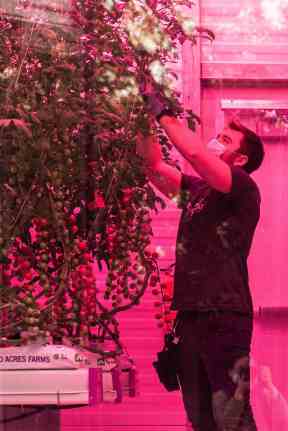
Oh, and there’s the guy who takes care of the tomatoes.

David Litvin, an indoor crop specialist, tends the plants in a temporarily shuttered exhibition, “Countryside, The Future.” He moved to New York from Tel Aviv in February, along with his wife, Stefanie, and their Dutch shepherd, Ester, with a plan to stay six months harvesting the Guggenheim tomatoes. He was going to see the city, too.

“I went out once to a comedy bar, but that’s it,” he said.

The museum has been closed since March 13, but Mr. Litvin still walks across Central Park every day around noon from his rental on the Upper West Side to tend to his flock. “When you grow tomatoes on Fifth Avenue, you want to have the perfect tomatoes, there’s no room to mess up,” he said. “If I have ugly plants, I’ll hear it from the neighbors.” Continue reading

The Youthful Insights Behind ‘Black Histories, Black Futures’

Jadon Smith is one of six teen curators for “Black Histories, Black Futures,” the first exhibition at the Museum of Fine Arts, Boston, curated entirely by high school students. photo credit: Melanie Stetson Freeman/Staff

Although the exhibit highlighted here began in January (notably directly following the holiday honoring MLK), we have the CS Monitor to thank for bringing it to our attention.  The museum is currently closed due to the coronavirus outbreaks, but the making of video on the MFA website shows some highlights, and we can only hope that there will be opportunity to visit it in person before the end date of June 20th.

“The teen curators—fellows from youth empowerment organizations Becoming a Man (BAM), The BASE, and the Bloomberg Arts Internship Boston program managed by EdVestors—used skills they developed as paid interns in a pilot internship program at the MFA to research, interpret, and design the exhibition. Their work highlights areas of excellence within the Museum’s collection and lays foundations for the future.”

What if curators were teens? Museums try it.

Jadon Smith steps closer to his favorite painting by Archibald Motley, carefully examining the details he’s looked at many times before, a smile from ear to ear. At the center of the piece, five elegant women dressed in their Sunday best sit in a restaurant. One woman, hidden in the background, catches his attention.

The John Axelrod Collection/Frank B. Bemis Fund, Charles H. Bayley Fund, and the Heritage Fund for a Diverse Collection/Courtesy of The MFA “Cocktails” by Archibald Motley is an oil on canvas painting from about 1926. Motley was known for depicting the blossoming of black social life.

“Women are the centerpiece of the whole entire painting,” says Jadon, a junior at John D. O’Bryant School of Mathematics and Science, during a visit to Boston’s Museum of Fine Arts in early March. “They’re supposed to be there to be seen. Don’t ignore them. Notice that they’re there, appreciate the fact that they’re there.”

Jadon is one of six local teens selected to craft “Black Histories, Black Futures” – the museum’s first exhibition curated entirely by high school students. The MFA’s exhibition, the culmination of a partnership with local youth empowerment organizations, reflects a growing trend, one that has museums working to engage and represent a more diverse population within the field of fine art. Including young people in the curation process not only trains the next generation of curators, say museum staffers, but it also helps aging institutions display refreshing and inclusive exhibitions inspired by the young curators’ own experiences.

“This institution is 150 years old. And so what does that mean for young people? Where do young people belong in such an old institution?” says Layla Bermeo, an associate curator at the MFA. “This project really tried to argue that young people belong in the center.”.. Continue reading

Mexico, Mapping Memory

Blanton Museum of Art, for one more day, offers this:

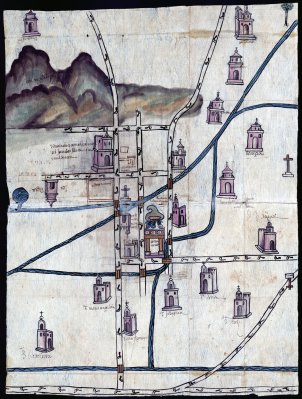
Exactly 500 years ago, in August of 1519, an expedition led by the Spanish explorer Hernando Cortés began marching inland into Mexican territory. Just two years later, what today is Mexico City fell to an ethnically diverse army composed of both Spanish and local peoples from other cities, starting a long period of European colonization. This exhibition aims to expand our perspective on these events by featuring a selection of maps, known as Mapas de las Relaciones Geográficas, created by Indigenous artists around 1580. These unique documents show some of the visual strategies used by native communities for the endurance and perseverance of their cultures throughout the so-called colonial period and well beyond.

To learn more about the map click Teozacoalco Map. Thanks to National Public Radio (USA) for bringing this to our attention:

1.-meztitl-n_custom-76d71392f43cf17eb677f3a356088e82632e53ce-s1400-c85.jpg

The Mapping Memory exhibition in at the Blanton Museum of Art in Austin, Texas, displays maps made in the late 1500s of what is now Mexico. They were created by indigenous peoples to help Spanish invaders map occupied lands. This watercolor and ink map of Meztitlán was made in 1579 by Gabriel de Chavez. Blanton Museum of Art

440 Years Old And Filled With Footprints, These Aren’t Your Everyday Maps

4.-culhuac-n_custom-a07202fd250a7d6dc16ed2124d2c4e0adf01ec99-s1400-c85.jpg

Pedro de San Agustín created this watercolor map of Culhuacán in 1580. He was a judge — a powerful figure in the town. “Before the conquest, nobles were the only ones trained as painters,” exhibit curator Rosario Granados explains. She notes that this map is made on bark paper, the traditional material used before the Spaniards arrived. Blanton Museum of Art

At the Blanton Museum of Art in Austin, Texas, 19 maps, nearly 440 years old, are on display — and they look spectacular. “Works on paper are delicate so we’re only allowed to put them on display for nine months out of 10 years,” says Blanton Museum communications director Carlotta Stankiewicz.

The Mapping Memory exhibition contains work by indigenous mapmakers from the late 1500s. The maps demonstrate a very different sense of space than maps drawn by Europeans. They’re not drawn to scale; instead, they’re deeply utilitarian.

A map of Culhuacán, for example, shows rivers running straight, with tiny arrows in the middle, indicating which way they flow. The pathways curve like snakes, with footprints or hoofprints indicating whether the paths can be walked or ridden. Continue reading

Birds, Beacons Of Good Fortune

1984-83-1

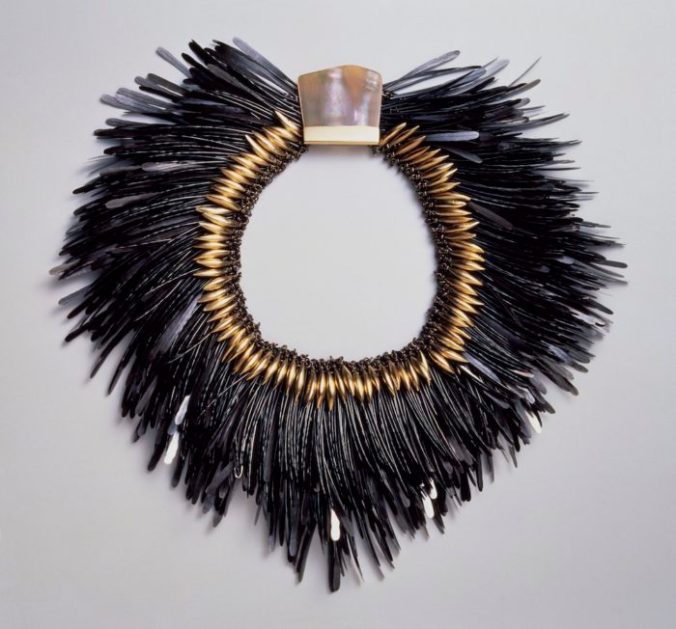
Necklace, designed by Tone Vigeland (Norwegian, born 1938)

HistoirenaturelIILeVa_0032-700x1063

Book, Histoire naturelle des oiseaux de paradis et des rolliers: suivie de celle des toucans et des barbus (Natural History of Birds of Paradise and Rollers: Followed by that of Toucans and Barbets), Volume 2; 1806; Written by François Levaillant (French, 1753–1824); Illustrated by Jacques Barraband (French, 1767–1809); Smithsonian Libraries, QL674.L65 1806

An exhibit at the Cooper Hewitt comes to my attention thanks to Dylan Kerr, whose essay The Mandarin Duck and Avian Art at the Cooper Hewitt makes an interesting link between the choices Rebeca Mendez made as a curator and a recent unusual bird sighting in New York City:

For the past several weeks, New Yorkers have been abuzz over a mysterious visitor. A mandarin duck, an intricately colored waterfowl native to East Asia, has taken up residence alongside the mallards in the Central Park Pond, drawing crowds and inspiring memes, dog costumes, and a Twitter account (bio: “I’m not from around here”). Pundits have argued that the frenzy betrays a desire for good news. But perhaps, the Mexico City-born designer Rebeca Méndez suggested the other day, something deeper is at play. “In our own normal life, we have patterns that we are so used to.

1950-111-10-700x1156

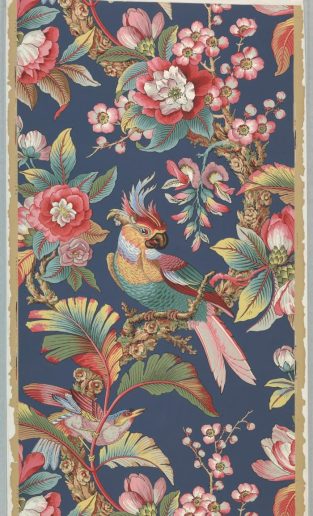
Sidewall; 1905–13; Manufactured by Zuber & Cie (Rixheim, Alsace, France); Block-printed on paper; Gift of James J. Rorimer, 1950-111-10

My immediate reaction is yes. We are bombarded with more negative information more quickly, more constantly than ever in my lifetime. We need relief, and nothing like an exotic bird coming to town to bring it:

When something”—an anatine interloper, say—“comes in and breaks that, it’s incredibly exciting,” she said. “The world suddenly collapses—it’s like a wormhole from far-east Asia to Manhattan.”

Méndez recently curated an exhibition of avian art at the Cooper Hewitt, Smithsonian Design Museum, across the street from the Park. It’s part of the “Selects” series, in which the museum invites a guest to put together a show from objects in its collection. Continue reading

On A Lighter Patrimonial Note

08wesanderson-5-superJumbo.jpg

“Cabinet of Curiosities” by Frans Francken the Younger, circa 1620-25. Credit Mustafah Abdulaziz for The New York Times

KHM-Wes-Anderson-5-683x1024.jpg

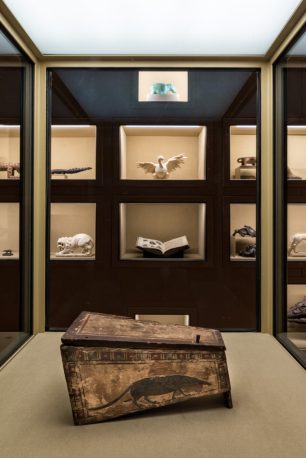
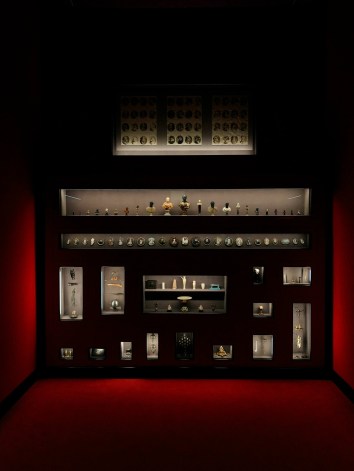
Exhibition view of “Spitzmaus Mummy in a Coffin and other Treasures.” © KHM-Museumsverband.

Yesterday’s post about pre-history sleuthing coincided with my reading about this new exhibition. In our home we have a cabinet of curiosities. I also tend to like Wes Anderson films. So I had to learn more.

What is a spitzmaus, how might one have gotten mummified, and who put it in a coffin? More to the point, when and where might I see such a thing? Will it be worth the journey?

The review of this exhibition has more of a fashion review feel to it, especially with the headline photo (below, at the start of the review) and mention of celebrities in the early paragraphs. It almost made me bypass the story. But credit to Cody Delistraty for letting Mustafah Abdulaziz’s excellent photos from the exhibition speak prominently throughout the rest of his review. There are a couple of one minute videos that make clear the answers to the latter two questions:


The one above has a fleeting sense of Wes Anderson to it, whereas the one below is straightforward curator-speak:


But still, what is a spitzmaus?

08wesanderson-11-jumbo.jpg

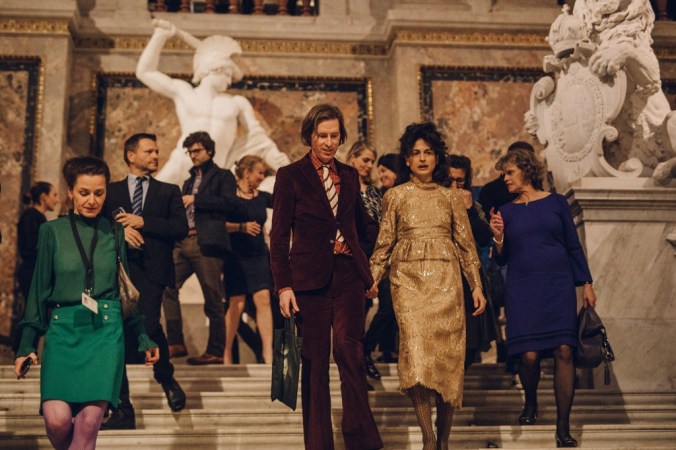
Wes Anderson with his partner, the author and designer Juman Malouf, at the opening of the exhibition they curated. Credit Mustafah Abdulaziz for The New York Times

Wes Anderson, Curator? The Filmmaker Gives It a Try

Mr. Anderson and his partner, Juman Malouf, were given free rein in Austria’s largest museum. But you can’t make an exhibition as you would a movie, our critic writes.

merlin_146431551_117bda51-c727-430d-9392-cd56e5622b6e-superJumbo.jpg

The exhibition “Spitzmaus Mummy in a Coffin and Other Treasures” was put together from objects in the collection of the Kunsthistorisches Museum, Austria’s largest. Credit Mustafah Abdulaziz for The New York Times

VIENNA — Wes Anderson looked tired. The filmmaker was wearing a red blazer and a striped tie, standing beneath the elaborate 19th-century cupola of the Kunsthistorisches Museum. His partner, the author and designer Juman Malouf, was by his side.

Dozens of friends — the actors Tilda Swinton and Jason Schwartzman; the filmmaker Jake Paltrow; and a pair of lesser-known Coppolas among them — stood around him. Photographers jostled for angles.

It wasn’t a movie premiere, but the exhibition opening for “Spitzmaus Mummy in a Coffin and Other Treasures,” which Mr. Anderson and Ms. Malouf curated, certainly had the air of one.

Mr. Anderson and Ms. Malouf were asked to put the show together from objects in the collection of the Kunsthistorisches Museum, Austria’s largest. When Mr. Anderson stepped up to the microphone on Monday to address the guests, it was with the weariness of someone who had gone to battle and come back changed. Continue reading

Orhan Pamuk’s Istanbul Is My Workplace

04Pamuk-slide-MMM9-jumbo.jpg

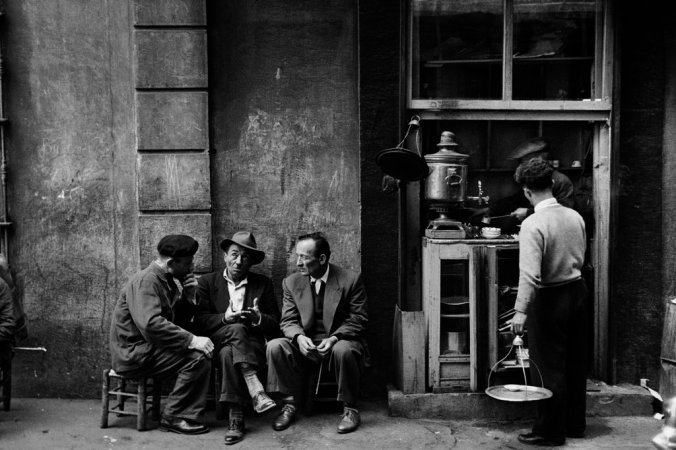
In the Tophane quarter, 1986. Credit Ara Guler/Magnum Photos

The third of three previous posts invoking Orhan Pamuk mentions an experience in a museum a couple years ago in Istanbul. I did not write much about it in that post because I did not know what to say, or if there was anything to say about how the museum affected me. But reading Orhan Pamuk’s words in the essay below about his friend, and the photographs that man took, evoked strong memory of the effect that museum had on me. It evoked a strong sense of the value of memory, in all its limits and even imperfections.

Just prior to that museum experience I had written a dozen posts about the work we had been doing in India since 2010, which was connected to work we began in Costa Rica many years earlier. I think what that museum visit put into focus for me was how, in our work crafting experiences with sense and sensibility, we were creating our own museums of innocence. Our mission is to create authentic, distinctive and valuable life experiences, to build profitable businesses around these, and then to direct the associated economic benefits to the conservation and prosperity of unique natural and cultural heritage and to the improvement of the quality of life of the local host communities. That work is about crafting memories, just as books, museums and photographs do in their own way. Seeing these pictures and reading these words reminds me of that:

‘I Like Your Photographs Because They Are Beautiful’

Orhan Pamuk remembers his friend Ara Guler, the great photographer, who lovingly captured Istanbul and its people.

04Pamuk-slide-PTPC-jumbo.jpg

A coffee bar in a Beyoglu arcade, 1958. Credit Ara Guler/Magnum Photos

Ara Guler, who died on Oct. 17, was the greatest photographer of modern Istanbul. He was born in 1928 in an Armenian family in Istanbul. Ara began taking photographs of the city in 1950, images that captured the lives of individuals alongside the city’s monumental Ottoman architecture, its majestic mosques and magnificent fountains. I was born two years later, in 1952, and lived in the same neighborhoods he lived in. Ara Guler’s Istanbul is my Istanbul. Continue reading

Color Conservation

The hues in the Forbes Collection include the esoteric, the expensive, and the toxic. Photograph by Jason Fulford for The New Yorker

Color is such a constant in our lives that it seems odd to consider any need for it’s conservation. How it exists in nature, how we humans perceive it, and how we’ve use the technology of the time to preserve it, has been relevant for tens of thousands of years. The Forbes Collection archives in the Harvard University’s Fogg Art Museum highlights the work of it’s founder, Edward Waldo Forbes, for whom “pigment hunting and gathering was not just a matter of creating an archive of lost or languishing color. It was about the union of art and science.”

Treasures from the Color Archive

The historic pigments in the Forbes Collection include the esoteric, the expensive, and the toxic

How blue can it get? How deep can it be? Some years ago, at the Guggenheim Bilbao, I thought I’d hit on the ultimate blue, displayed on the gallery floor. Yves Klein, who died at thirty-four, was obsessed with purging color of any external associations. Gestural abstraction, he felt, was clotted with sentimental extraneousness. But, in search of chromatic purity, Klein realized that even the purest pigments’ intensity dulled when combined with a binder such as oil, egg, or acrylic. In 1960, he commissioned a synthetic binder that would resist the absorption of light waves, delivering maximum reflectiveness. Until that day in Bilbao, I’d thought Klein a bit of a monomaniacal bore, but Klein International Blue, as he named the pigment—rolled out flat or pimpled, with saturated sponges embedded in the paint surface—turned my eyeballs inside out, rods and cones jiving with joy. This is it, I thought. It can’t get any bluer.

Until YInMn came along: the fortuitous product of an experiment in the materials chemistry lab at Oregon State University in 2009. Intending to discover something useful for the electronics industry, Mas Subramanian and his team heated together oxides of manganese, yttrium, and indium at two thousand degrees Fahrenheit. What emerged was a new inorganic pigment, one that absorbed red and green light waves, leaving as reflected light the bluest blue to date. Subramanian sent a sample to the Forbes Collection in the Straus Center for Conservation and Technical Studies, at Harvard University, where it sits with twenty-five hundred other specimens that document the history of our craving for color.

Among the other blues on the Forbes’s shelves is Egyptian Blue, a modern approximation of the first synthetic pigment, engineered five millennia ago, probably from the rare mineral cuprorivaite, a soft mid-blue used for the decoration of royal tomb sculpture and the wall paintings of temples. Later, blues strong enough to render sea and sky were made from weathered copper-carbonate azurite—crystalline bright but sometimes darkening in an oil binder. In 1271, Marco Polo saw lapis lazuli quarried from a mountain at Badakhshan, in what is now Afghanistan. Laboriously prepared by removing impure specks of glinting iron pyrite, it became ultramarine—as expensive, ounce for ounce, as gold, and so precious that it was initially reserved for depictions of the costume of the Virgin. In addition to these, the Forbes Collection has a poor man’s blue—smalt made from crushed cobalt containing potassium glass, which weakens, eventually, to a thin greeny-brown gray.

The Forbes Collection owes its existence to a belief in the interdependence of art and science, but it is also an exhaustive archive of cultural passion. A display features Vantablack, which absorbs 99.96 per cent of light, and has to be grown on surfaces as a crop of microscopic nanorods. In 2016, the sculptor Anish Kapoor saw the pigment’s potential for collapsing light, turning any surface into what appears to be a fathomless black hole, and he acquired the exclusive rights to it. An outcry from artists, who objected to the copyright, prompted the Massachusetts manufacturer NanoLab to release Singularity Black, created as part of the company’s ongoing research with nasa, to the public, and the artist Stuart Semple to make the World’s Pinkest Pink available to any online buyer willing to declare himself “not Anish Kapoor.” But Kapoor obtained a sample of the pink pigment, and used it to coat his middle digit, which he photographed and posted online for Semple.

Narayan Khandekar, the head of the Straus Center for Conservation and Technical Studies, takes pleasure in such skirmishes, secure in the knowledge that he presides over something weightier: a priceless resource for understanding how works of art are made, and how they should be preserved. The Department of Conservation and Technical Research was founded, in 1928, by Edward Waldo Forbes, the director of Harvard’s Fogg Museum from 1909 to 1944. Today, the Forbes’s vast library of color and its technical laboratories are housed in the museum’s steel-and-filtered-glass rebuild, designed by Renzo Piano. Rows of pigments in tubes, jars, and bowls are visible through the doors of floor-to-ceiling cabinets. Khandekar had the winning idea of displaying them as if unspooled from a color wheel: reds at one end, blues at the other. There are the products of nineteenth-century chemical innovation—viridian green, cadmium orange, and the chrome yellow with which van Gogh was infatuated but which, over time, has begun to darken his sunflowers. But at the heart of the Forbes Collection are the natural pigments that were the staples of painters’ inventories before chemically synthesized paints replaced the impossibly esoteric, the dangerously toxic, the prohibitively expensive, and the perilously fugitive. Continue reading