Huxley’s Extra Effort

A family of scientist-writers recast religion and ethics in light of evolution. Illustration by Melinda Beck

We are all fortunate that the Huxley family produced no slouches:

How the Huxleys Electrified Evolution

Defending Darwinism from both clerical and scientific opponents, T. H. Huxley and his grandson Julian shaped how we think about the past and future of our species.

Thomas Henry Huxley almost skipped the showdown of his life. It was the fourth day of the 1860 meeting of the British Association for the Advancement of Science. He was tired. Continue reading

New Fracking Science

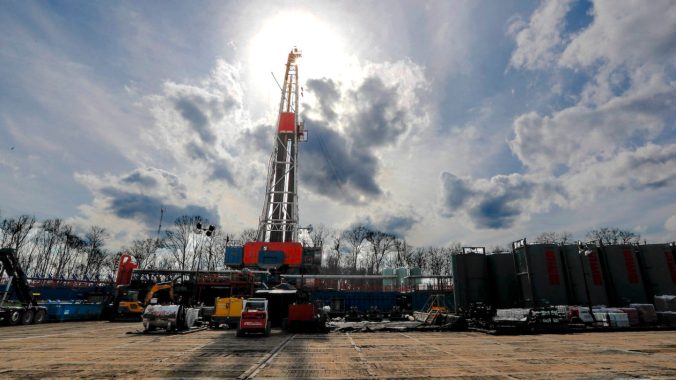
A shale gas drilling rig in St. Marys, Pennsylvania. AP PHOTO / KEITH SRAKOCIC

We thought the science of fracking’s dangers was already sufficiently clear, and now this (read Jon Hurdle’s entire story at Yale e360):

As Evidence Mounts, New Concerns About Fracking and Health

Two decades after the advent of fracking, a growing number of studies are pointing to a link between gas wells and health problems, particularly among children and the elderly. Researchers are now calling for new regulations restricting where wells can be located.

Almost 20 years after the adoption of hydraulic fracturing began to supercharge U.S. production of oil and gas, there’s growing evidence of a correlation between the industry’s activities and an array of health problems ranging from childhood cancer and the premature death of elderly people to respiratory issues and endocrine disruption. Continue reading

Blue Carbon Collaboration

Scientists fixed bio-logger tags equipped with cameras on tiger sharks in the Bahamas to map the ocean’s seagrass meadows. Photograph: Diego Camejo/Beneath the Waves

We thank Laura Paddison for this underwater news, published in the Guardian, that has implication for climate change mitigation:

Scientists discover ‘world’s largest’ seagrass forest – by strapping cameras to sharks

New study, carried out using tiger sharks in the Bahamas, extends total known global seagrass coverage by more than 40%

Tiger sharks are notoriously fierce. The huge animals, which can grow to more than 16ft, are ruthless predators and scared of absolutely nothing – recent research found that while other shark species fled coastal waters during strong storms, tiger sharks “didn’t even flinch”.

But recently they have a new role that could help burnish their reputations: marine scientists. Continue reading

Tagging Technology Gives Godwit Game

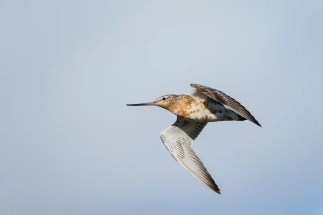
A juvenile bar-tailed godwit has flown from Alaska in the US to Tasmania in Australia, covering a record 13,560kms without stopping. Photograph: Johnny Madsen/Alamy

Who’s got game in the bird world is not, strictly speaking, a phrase associated with ornithologists or what they do for a living. But sometimes, their news features what looks like competitive sport to the lay public. We have shared news of long-journey bird species on several occasions, and one that has the right stuff now stands out from the rest by virtue of tagging technology:

Bar-tailed godwit sets world record with 13,560km continuous flight from Alaska to southern Australia

Satellite tag data suggests five-month-old migratory bird did not stop during voyage which took 11 days and one hour to reach Tasmania

A juvenile bar-tailed godwit – known only by its satellite tag number 234684 – has flown 13,560 kilometres from Alaska to the Australian state of Tasmania without stopping, appearing to set a new world record for marathon bird flights. Continue reading

Tree Core Samples & Age Estimations

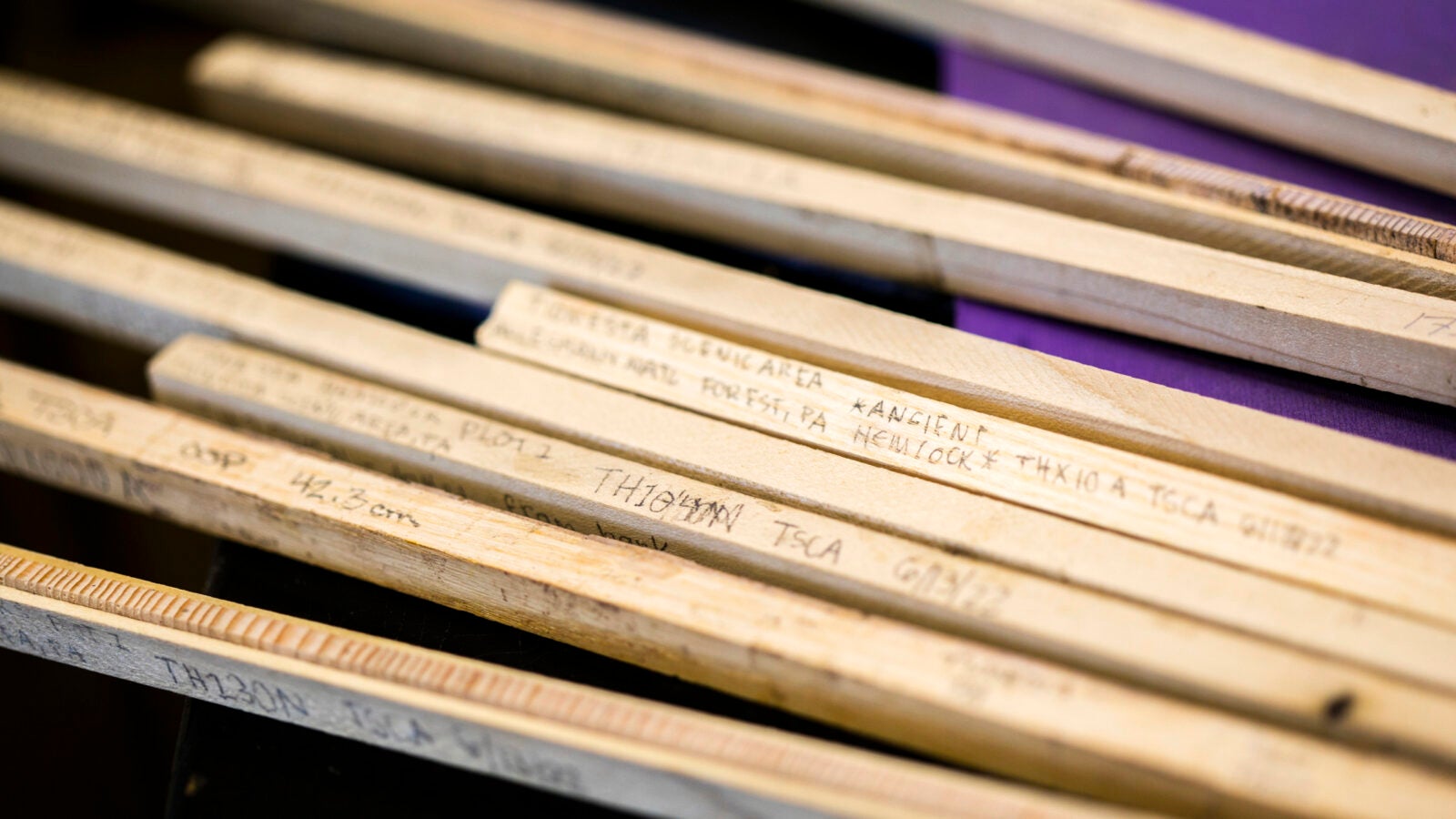
Tree cores Harvard Forest

Core samples may hold clues to a forest’s response to climate change. Photos by Stephanie Mitchell/Harvard Staff Photographer

Juan Siliezar, staff writer for the Harvard Gazette asks and answers a question that we never tire of:

Want to know how cold it was in 1490? Ask a tree

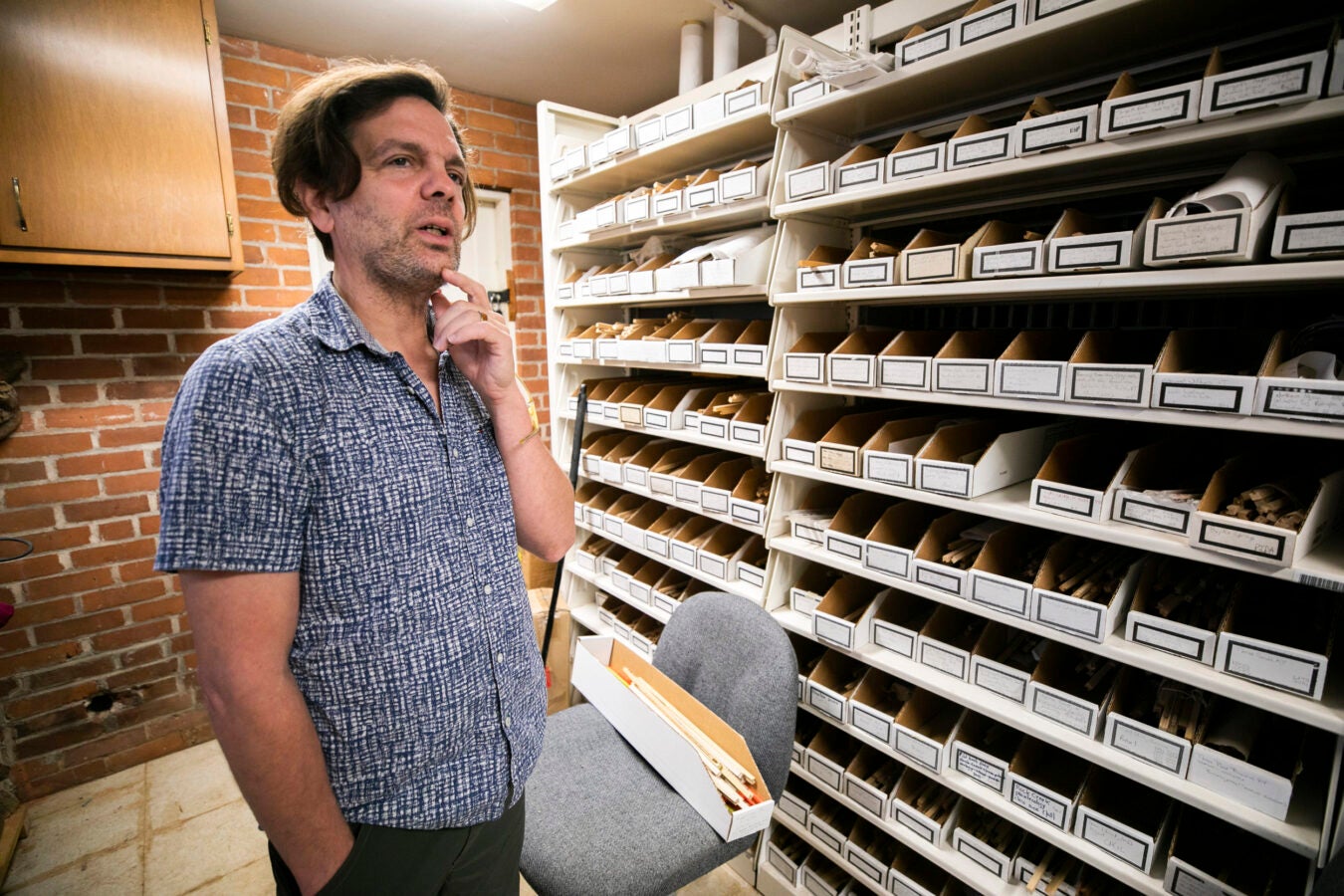
Harvard Forest Senior Ecologist Neil Pederso

“We use tree cores to extract what I’ve been leaning toward calling the memory of the tree,” said Neil Pederson in the lab alongside core samples.

Sometimes getting to where you want to go is a matter of finding the right guide.

Four teams of researchers, led by Harvard Forest ecologists, searched for a patch of ancient trees deep in the woods of western Pennsylvania this summer as part of a project to study how climate changes affected trees over the centuries. One of the scientists had come across them 40 years earlier, but they appeared to have vanished. Just as the group was about to give up and move on they came across someone who gave them a valuable clue. Continue reading

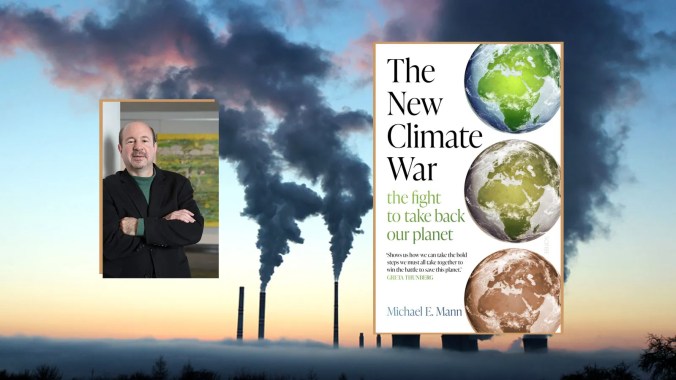
The New Climate War Book Tour Optimism

If you are wondering where the hope comes from, read Eric Schwartzman’s article at Yale Climate Connections:

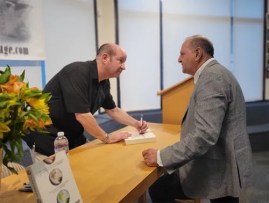
Climate scientist Michael E Mann PhD, author of The New Climate War signs his book for winemaker Ross Halleck of Halleck Vineyard in Sonoma County, California.

Scientist Michael Mann expresses hope during West Coast book tour

University of Pennsylvania climate scientist says he remains optimistic despite daunting challenges and continued concerns about ‘false’ climate solutions.

CORTE MADERA, CALIFORNIA – Don’t believe the climate crisis doomsayers: We can still achieve a 50% reduction in carbon emissions by 2030. But we have to elect lawmakers with the political will to enact meaningful climate legislation. The atmosphere is warming significantly, just as Exxon Mobil scientists were predicting back in 1982. Continue reading

Elephant Seals & Marine Sciences

Thanks to Sierra for this:

When Elephant Seals Become Ocean Researchers

Marine mammals unlock the secrets of climate and the Arctic

By Kate Golden

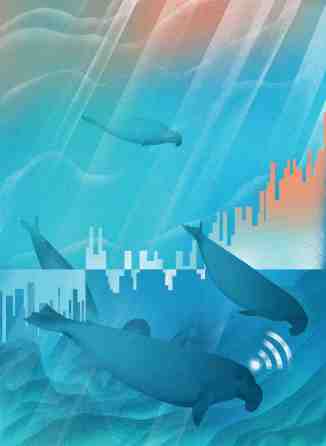
Illustrations by Masha Foya

ON A FEBRUARY MORNING at Año Nuevo Reserve on the coast of Northern California, hundreds of gray-brown elephant seals lay strewn, lumplike, all over the beach. It was hard to hear anything over the honks and shrieks of status jockeying and sex dramas. The north wind gusted to 35 knots and blew a river of fine sand into everyone’s faces. At a dense seal cluster near the water, researchers and students from the University of California, Santa Cruz, knelt over an 815-pound female whose stern had been labeled “X1” with Clairol bleach. Continue reading

On Those 20 Quadrillion+ Ants, Again

Ants in Escazu

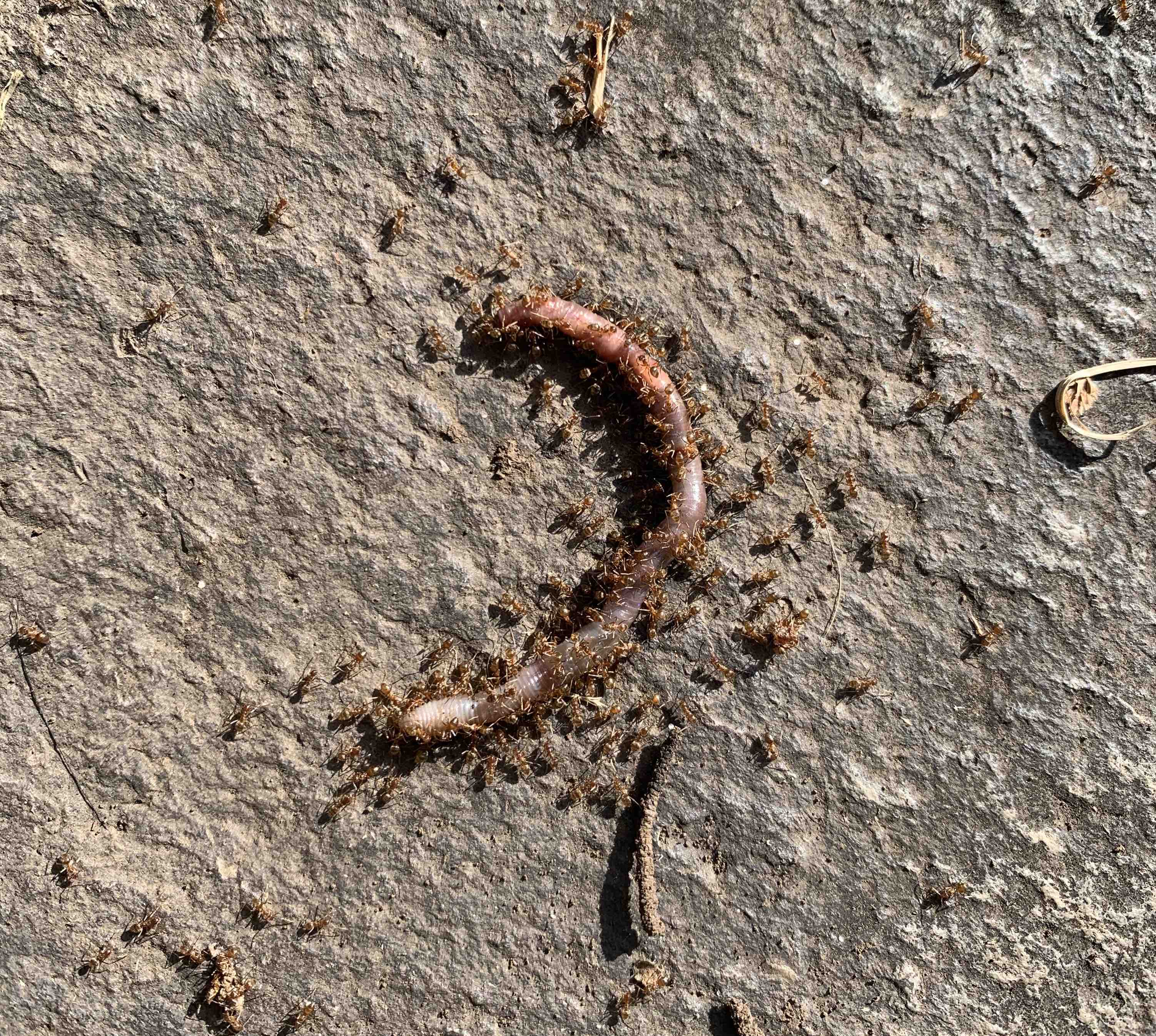
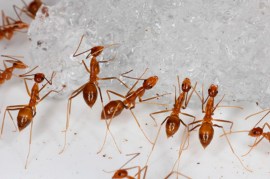
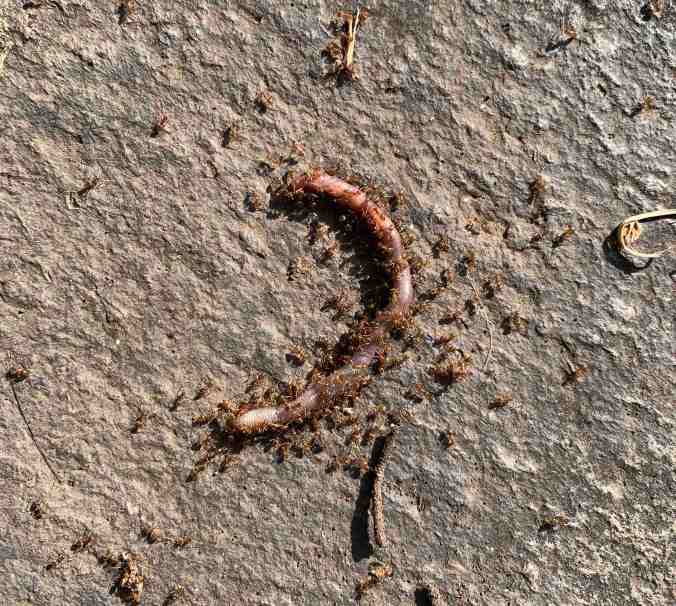
The earthworm in the photo above had been in a bag of soil where a coffee seedling started germinating earlier this year. I was moving the seedling from its small “starter” bag to a larger one, and the earthworm jumped out, wriggling under the nearby supplies I was working with. I did not see it again until it was too late. Since earthworms are good for soil, and we are in the early stages of a soil regeneration project, I was sorry to see the worm lose its life. This particular species of ant is currently everywhere on the property where we are re-planting coffee. I have not seen so many of this type of ant at any point in the last 22 years on this property, and their shocking abundance made me think of that new ant study. Normally we do not repeat sharing of news stories here, unless new information has come to light. It has only been a couple days, but I must share more on the study because my planting work is keeping the subject in front of me, and the photos in this article are that good.
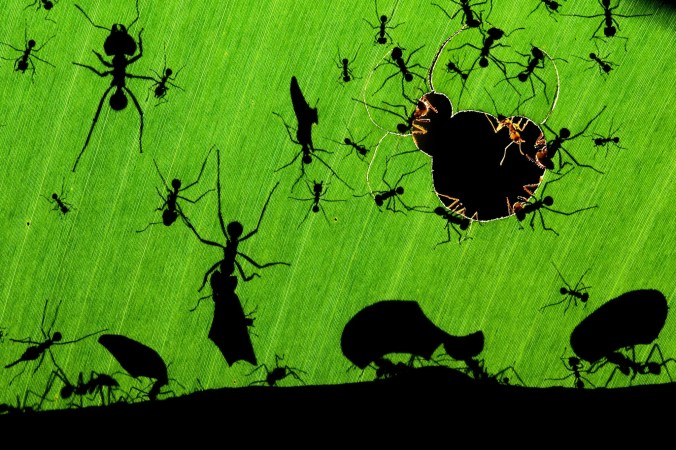
Leaf cutter ants in Costa Rica. The researchers sampled 1,300 locations around the world, estimating ant abundance in different environments in areas such as forests and steppes. Bence Mate/Nature Picture Library, via Alamy

Rebecca Dzombak, who authored this article for the New York Times, will be on our radar from now on:

Weaver ants engaged in teamwork. Sunthorn Viriyapan/Alamy

Counting the World’s Ants Requires a Lot of Zeros

There are 20 quadrillion ants worldwide, according to a new census, or 2.5 million for every living human. There are probably even more than that.
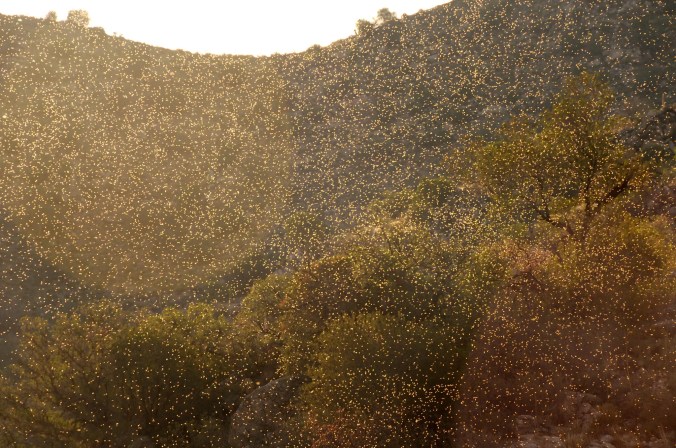
Male leaf cutter ants on the move over the Sonoran Desert in search of females and to make more ants. Norma Jean Gargasz/Alamy

Right now, ants are scurrying around every continent except Antarctica, doing the hard work of engineering ecosystems. They spread seeds, churn up soil and speed up decomposition. They forage and hunt and get eaten. You may not know how much you rely on them. Continue reading

Ant Mass Calculation

In this photo provided by the U.S. Fish and Wildlife Service, yellow crazy ants are seen in a bait testing efficacy trial at the Johnston Atoll National Wildlife Refuge in December, 2015. An invasive species known as the yellow crazy ant has been eradicated from the remote U.S. atoll in the Pacific. Robert Peck/AP

The mass of ants on earth is not a topic we have considered, but there is not too much surprise at reading this news:

The number of ants on Earth has a mass greater than all birds and mammals combined

For every human on Earth, there are estimated to be about 2.5 million ants — or 20 quadrillion in total.

A new study published by researchers at both the University of Hong Kong and University of Würzburg in Germany attempts to count the total number of ground-dwelling and tree-dwelling ants. Continue reading

Carbon Burial Venturing

Port Arthur’s Motiva Oil Refinery.PHOTOGRAPH: KATIE THOMPSON

The capturing of carbon is a concept we have been working to understand, but questions about where it goes  and how it is stored, have been fuzzy until now (thanks to Jeffrey Ball at Wired):

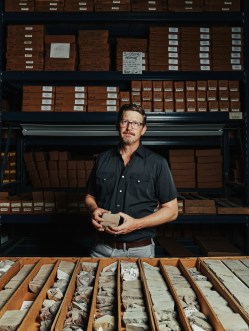
Tip Meckel holds a sandstone sample. PHOTOGRAPH: KATIE THOMPSON

The Big Business of Burying Carbon

The porous rock beneath the Gulf Coast launched the petroleum age. Now entrepreneurs want to turn it into a gigantic sponge for storing CO2.

SOMETIME AFTER THE dinosaurs died, sediment started pouring into the Gulf of Mexico. Hour after hour the rivers brought it in—sand from the infant Rockies, the mucky stuff of ecosystems. Year after year the layers of sand hardened into strata of sandstone, pushed down ever deeper into the terrestrial pressure cooker. Continue reading

New (To Us) Creatures Of The Deep

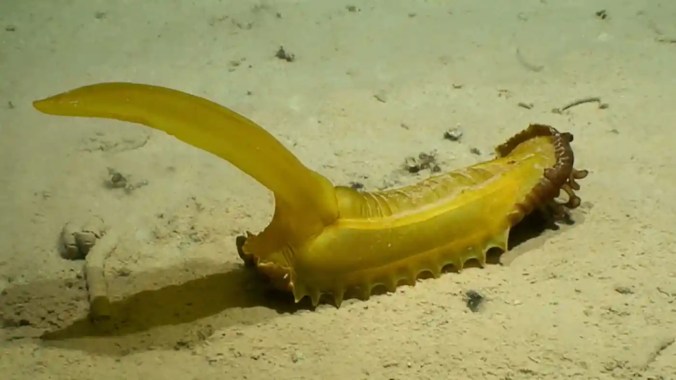
A gummy squirrel – Psychropotes longicauda – is a type of sea cucumber. This specimen is 60cm long with red palps, or lips, with which it feeds on sediment on the ocean floor, 5,100m deep

Discoveries still happen, even as the earth burns. Creatures not previously known are being identified 5,000 meters below the surface of the ocean. Some do not even yet have a name:

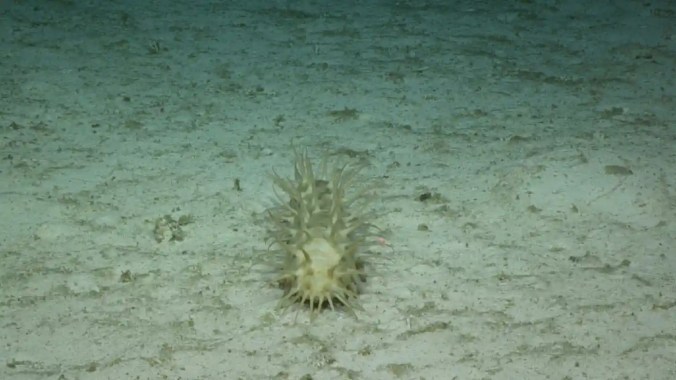
A spiny sea creature on the ocean floor

Scientists find 30 potential new species at bottom of ocean

Natural History Museum scientists seek to unlock mysteries of deep sea but some fear activity will disturb diversity of the depths

Scientists have found more than 30 potentially new species living at the bottom of the sea. Continue reading

Action Is The Thing

ILLUSTRATION: WIRED; GETTY IMAGES

Climate inaction is a theme bookending the first decade of our chronicling news stories and analytical essays. Why, we have stopped bothering to wonder, is inaction so persistent? Whether activism or other forms of action, there is not enough of it relative to the scale of the crisis. We thank Eleanor Cummins, a freelance science journalist and adjunct professor at New York University’s Science, Health, and Environmental Reporting Program for these ideas as published in Wired:

‘Thinkwashing’ Keeps People From Taking Action in Times of Crisis

When it comes to issues like climate change, too many let the perfect become the enemy of the good, while the world burns.

LESS THAN A decade ago, “wait and see” arguments about climate change still circulated. “We often hear that there is a ‘scientific consensus’ about climate change,” physicist Steven E. Koonin wrote in The Wall Street Journal in 2014. “But as far as the computer models go, there isn’t a useful consensus at the level of detail relevant to assessing human influences.” The idea was that the world needed more data before it could respond to the threat posed by global warming—assuming such research indicated a response was even necessary. Continue reading

Science Communication Celebrated

Illustration by Michael Dunbabin; Source photograph by Kevin Winter / Getty

Alan Alda was not likely to appear in our pages before, even though we knew about this work that he has been doing starting some years ago. Not likely because celebrity is more often than not a distraction. But this conversation is worth sharing, because we care about science, and effective communication about science:

Alan Alda Is Still Awesome

The actor and director talks about his podcast, the comedic chops of Volodymyr Zelensky, and being called an “honorary woman.”

Few actors inspire the warm fuzzies like Alan Alda. At eighty-six, he’s still the platonic ideal of “nice dad”: the type of guy you’d find in a cardigan, reading a copy of the Sunday Times in an armchair. But the popular image of Alda doesn’t cover the remarkable breadth of his career. Continue reading

Questions About Forests As Carbon Sinks

PEXELS

We have featured articles about forests so many times for multiple reasons. Even when we hint that we do so just out of pure love, it is almost always about the value of forests to our future on the planet. As always, when a Yale e360 article can help illuminate further on a topic, here goes:

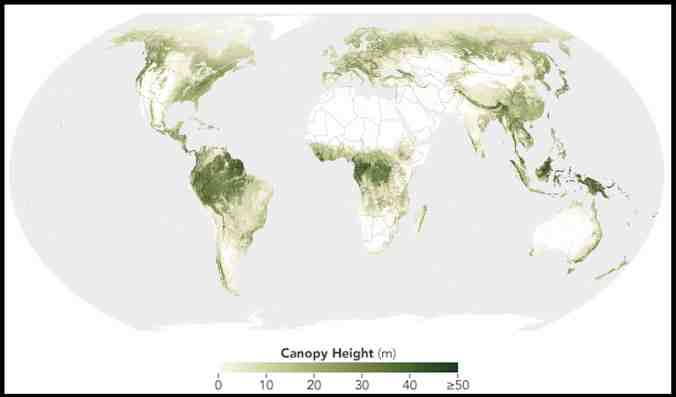
This map shows the height of forests worldwide. Taller forests typically store more carbon. NASA

Climate Change Will Limit How Much Carbon Forests Take Up, New Research Shows

Governments are increasingly looking to forests to draw down carbon pollution, but worsening droughts threaten to stunt tree growth, while larger wildfires and insect infestations risk decimating woodlands, two new studies show. Continue reading

Mosquito GMO News

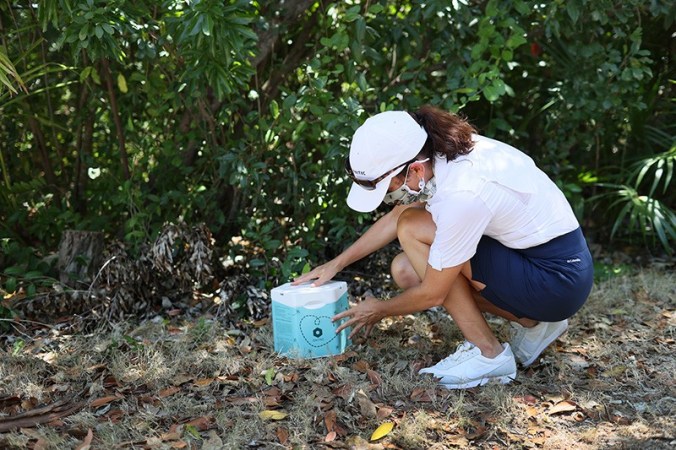
Biotechnology firm Oxitec ran the first open-air test of genetically modified mosquitoes in the United States by placing boxes of its eggs in selected spots in the Florida Keys. Credit: Joe Raedle/Getty

Genetically modified this and that have been concerns of ours for most of the time we have been posting on environmental issues and nature news. This news below may be the best test of how tolerant one might become about a technology that is inherently full of danger–of the unintended consequences variety more than the known in advance variety–and yet could tame some of the greatest natural pests that mankind suffers from:

Biotech firm announces results from first US trial of genetically modified mosquitoes

Oxitec reports that its insects behaved as planned — but a larger trial is needed to learn whether they can reduce wild mosquito populations.

Researchers have completed the first open-air study of genetically engineered mosquitoes in the United States. The results, according to the biotechnology firm running the experiment, are positive. But larger tests are still needed to determine whether the insects can achieve the ultimate goal of suppressing a wild population of potentially virus-carrying mosquitoes. Continue reading

Innovative Illustration & Atmospheric Pressure

Source: Geophysical Research Letters.

Whenever we see advances in innovative illustration to better our understanding of phenomena, natural or otherwise, we note it here. Atmospheric pressure is something most of us have heard countless times, but not necessarily stopped to think what it is. Among other things, it is important. Also, it is understandable. If you have a couple minutes, watch this accessible animation of a natural phenomenon that does not get enough attention, and read the accompanying text:

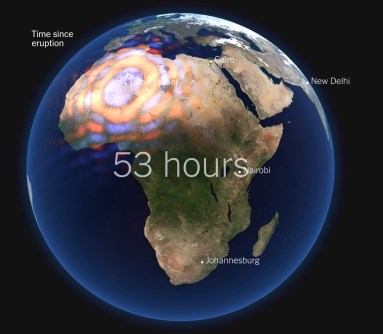
‘It’s Super Spectacular.’ See How the Tonga Volcano Unleashed a Once-in-a-Century Shockwave.

By Aatish Bhatia and Henry Fountain

Produced by Aatish Bhatia and Sean Catangui

As shown in this visualization, based on a simulation created by Ángel Amores, a physical oceanographer at the Mediterranean Institute for Advanced Studies in Majorca, Spain, the shockwave took about 36 hours to circumnavigate the globe, spreading out in concentric rings from the volcano known as Hunga Tonga-Hunga Haʻapai and traveling at the speed of sound. The simulation was published in the journal Geophysical Research Letters in March. Continue reading

Octopus As White Whale

Bret Grasse, a manager of cephalopod operations at the Marine Biological Laboratory in Woods Hole, Mass., with his charge, a lesser Pacific striped octopus.

Yesterday, a story about a small and late victory for whales. Today, a small victory for our other favorite sea creature, in the form of a search for the white whale equivalent among octopus:

A lab in Massachusetts may have finally found an eight-armed cephalopod that can serve as a model organism and assist scientific research.

From a first batch of seven wild Octopus chierchiae, Mr. Grasse and his colleagues have raised over 700 children, grandchildren and great-grandchildren.

The tank looked empty, but turning over a shell revealed a hidden octopus no bigger than a Ping-Pong ball. She didn’t move. Then all at once, she stretched her ruffled arms as her skin changed from pearly beige to a pattern of vivid bronze stripes.

“She’s trying to talk with us,” said Bret Grasse, manager of cephalopod operations at the Marine Biological Laboratory, an international research center in Woods Hole, Mass., in the southwestern corner of Cape Cod. Continue reading

How Do We Love Thee, Forests, Let Us Count The Ways

Forests, such as this one in Indonesia, do lmore than just store carbon. Photograph: Xinhua/Rex/Shutterstock

It may sound obvious, but until now it was not quantified: The world’s forests do more than just store carbon, new research finds

New data suggests forests help keep the Earth at least half of a degree cooler, protecting us from the effects of climate crisis

The world’s forests play a far greater and more complex role in tackling climate crisis than previously thought, due to their physical effects on global and local temperatures, according to new research. Continue reading

Close The Hose Of Fossil Fuel Cash

Michael Mann, director of the Earth System Science Center at Pennsylvania State University, said fossil-fuel funding ‘has been used to compromise leading academic institutions’. Photograph: James Ross/AAP

Hats off to Michael Mann and colleagues for this determination:

Universities must reject fossil fuel cash for climate research, say academics

Open letter from 500 academics likens fossil-energy funding of climate solutions to tobacco industry disinformation

Universities must stop accepting funding from fossil fuel companies to conduct climate research, even if the research is aimed at developing green and low-carbon technology, an influential group of distinguished academics has said. Continue reading

Octopus Intelligence Illustrated

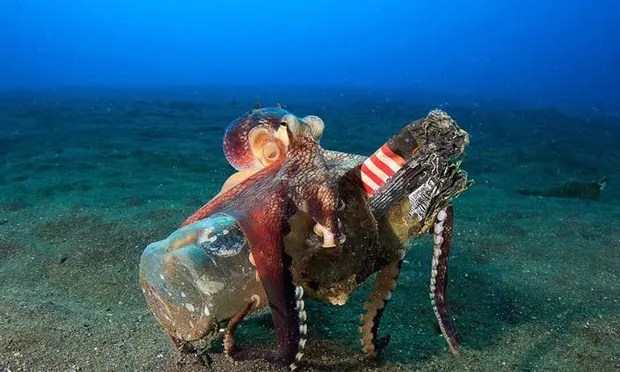
Octopuses were seen carrying plastic items around while ‘stilt-walking’. Photograph: Serge Abourjeily

It is not how we would prefer to understand them, or for these animals to demonstrate intelligence, but here are some examples of how they adapt to our discarded stuff:

Bottles, cans, batteries: octopuses found using litter on seabed

The most common interaction recorded was using rubbish as shelter. Photograph: Edmar Bastos

Creatures seen using discarded items for shelter or to lay eggs, highlighting ‘extreme ability to adapt’

Whether it’s mimicking venomous creatures, or shooting jets of water at aquarium light switches to turn them off, octopuses are nothing if not resourceful. Continue reading