Appalachian Solar & Remediation

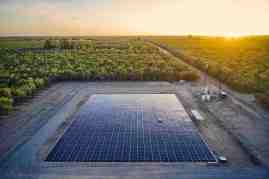
A photo of solar panels under a blue skyThanks to Bridgett Ennis at Yale Climate Connections for expanding our coverage of brownfield remediation, which surprisingly has only featured in one previous post in our 13 years linking to environmental news stories. Now two:
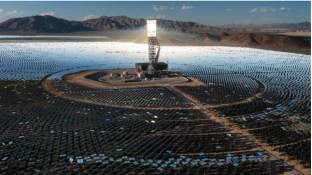
Massive solar farm planned for coal mine site in eastern Kentucky

Solar developer BrightNight is set to transform the Starfire coal mine into an 800-megawatt solar farm, bringing renewable energy and jobs to southern Appalachia.

A massive solar farm is in the works at the site of one of the largest coal mines in southern Appalachia. Continue reading

Slowed Growth Of Fossil Fuel

For those who might say too little too late we say this still counts as good news worth reading, so thanks to Yale Climate Connections:

‘Turning point in energy history’ as solar, wind start pushing fossil fuels off the grid

Fossil fuel growth has stalled while wind and solar are growing.

Solar and wind energy grew quickly enough in 2023 to push renewables up to 30% of global electricity supply and begin pushing fossil fuels off the power grid, the Ember climate consultancy concludes in a report released May 8. Continue reading

Solar’s Impressive Portion Of USA Energy Supply Increase

Robert Nickelsberg/Getty Images

Thanks to Tik Root, Senior Staff Writer at Grist:

Solar hits a renewable energy milestone not seen since WWII

With supply chains finally open, solar provided most of the nation’s new electricity capacity last year.

Solar accounted for most of the capacity the nation added to its electric grids last year. That feat marks the first time since World War II, when hydropower was booming, that a renewable power source has comprised more than half of the nation’s energy additions.  Continue reading

Insects Love Solar Farms

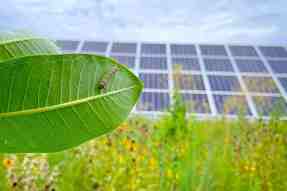
A monarch caterpillar on a common milkweed leaf at a solar farm in Minnesota. LEE WALSTON / ARGONNE NATIONAL LABORATORY

We have already linked a couple of times to the multidimensional benefits of solar, and here is another dimension:

At Solar Farms Planted with Native Vegetation, Insects Flourish

To reach its climate goals, the U.S. will need to build solar arrays on some 15,000 square miles of land, an area larger than Maryland. Continue reading

Celebrating Energy Independence

he Pioneer Prairie Wind Farm along the Iowa-Minnesota state line. TONY WEBSTER VIA WIKIPEDIA

If you are in the USA and are looking for more reasons to celebrate independence, consider renewables (thanks to Yale e360):

U.S. Wind and Solar Overtake Coal for the First Time

In a first for the U.S. power sector, wind and solar have generated more electricity than coal so far this year. Continue reading

India’s Progress With Solar Power Generation

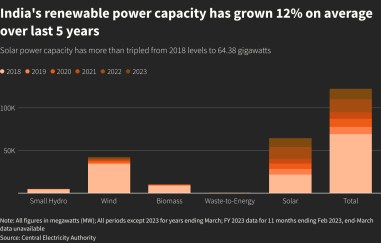
Reuters Graphics

Progress on solar power generation in India is a big deal. The country’s reduction in poverty, remarkable as it has been, is counterbalanced by its environmental impoverishment. Thanks to Reuters for this article by Sarita Chaganti Singh and Sudarshan Varadhan:

Exclusive: India amends power policy draft to halt new coal-fired capacity

NEW DELHI/SINGAPORE, May 4 (Reuters) – India plans to stop building new coal-fired power plants, apart from those already in the pipeline, by removing a key clause from the final draft of its National Electricity Policy (NEP), in a major boost to fight climate change, sources said. Continue reading

The Future Of Solar In India

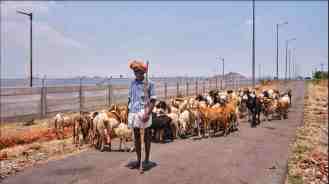
A local farmer grazes his goats along a road overlooking Pavagada Solar Park. Photographs by Supranav Dash for The New Yorker

Difficult to imagine that with all the times India has appeared in these pages, and separately all the times that solar has appeared, this is the first time they appear together:

India’s Quest to Build the World’s Largest Solar Farms

Pavagada Ultra Mega Solar Park, a clean-power plant the size of Manhattan, could be a model for the world—or a cautionary tale.

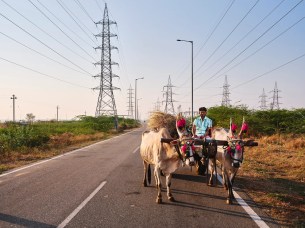
Ashok Narayanappa drives a bullock cart carrying hay, along a stretch of road lined with pylons, in Pavagada Solar Park.

Every morning in the Tumakuru District of Karnataka, a state in southern India, the sun tips over the horizon and lights up the green-and-brown hills of the Eastern Ghats. Its rays fall across the grasslands that surround them and the occasional sleepy village; the sky changes color from sherbet-orange to powdery blue. Eventually, the sunlight reaches a sea of glass and silicon known as Pavagada Ultra Mega Solar Park. Here, within millions of photovoltaic panels, lined up in rows and columns like an army at attention, electrons vibrate with energy. The panels cover thirteen thousand acres, or about twenty square miles—only slightly smaller than the area of Manhattan. Continue reading

Neighborly Advice

Reporting credit: ChavoBart Digital Media

Thanks to the team at Yale Climate Connections:

When do many people decide to go solar? When they’re referred by a friend or neighbor.

They’re more likely to listen to people they trust.

Rooftop solar panels can save people money on their electricity bills. And those savings can mean a lot — especially for people with low incomes, who might have to choose between paying for utilities or buying food or medicine…


Africa’s Sunlight & Europe’s Electricity

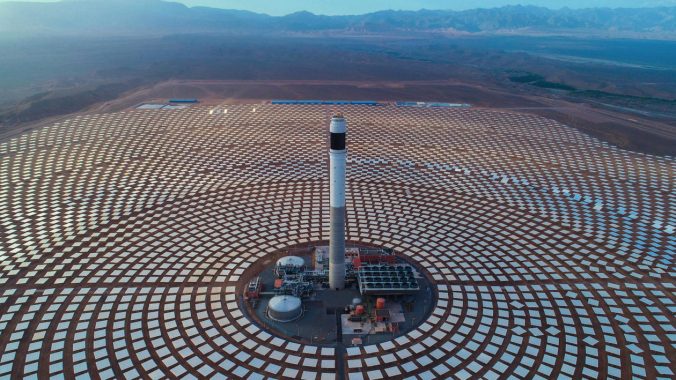
The Noor solar power station near Ouarzazate, Morocco. SEPCO III / XINHUA / ALAMY STOCK PHOTO

Fred Pearce brings us news from the European-African axis of renewable energy:

In Scramble for Clean Energy, Europe Is Turning to North Africa

In its quest for green energy, Europe is looking to North Africa, where vast solar and wind farms are proliferating and plans call for submarine cables that will carry electricity as far as Britain. But this rush for clean power is raising serious environmental concerns.

Solar panels in sun-rich North Africa generate up to three times more energy than in Europe. And North Africa has a lot more room for them than densely populated Europe. Continue reading

Tokyo’s Rooftop Solar

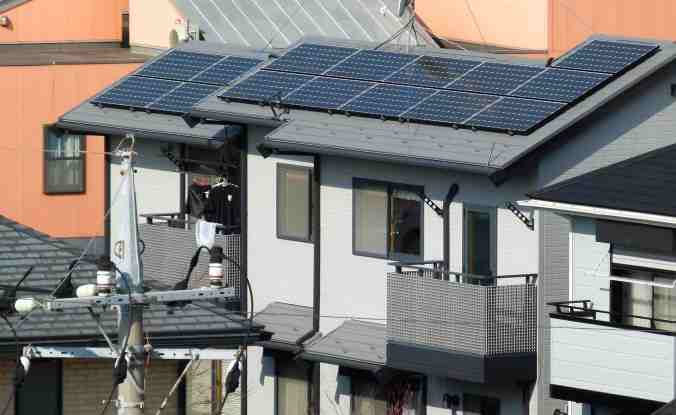
A rooftop solar installation in Yokohama, near Tokyo. COCREATR VIA FLICKR

Our hats off to Japan’s largest city for this requirement:

Tokyo to Mandate Rooftop Solar Panels on New Homes

Tokyo is mandating that all new homes in the city be built with rooftop solar panels starting in 2025. Continue reading

Community Challenges To Going Solar

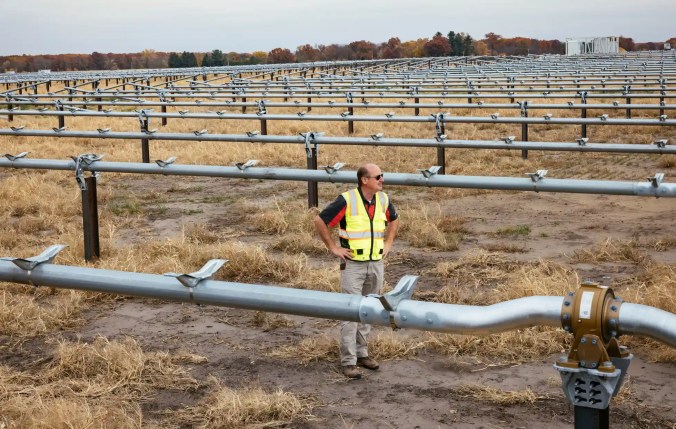
Farmer Norm Welker on his land in Starke county, Indiana, where a solar power field is being constructed. Photograph: Taylor Glascock/The Guardian

Our thanks to Oliver Milman, as ever, and the Guardian, as always, for this story from the front lines of getting it done in spite of opposition:

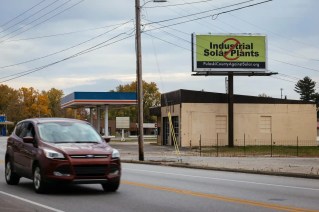
One of Connie Ehrlich’s anti-solar billboards in Winamac, Indiana. Photograph: Taylor Glascock/The Guardian

‘It’s got nasty’: the battle to build the US’s biggest solar power farm

A community turns on itself over the aptly named Mammoth solar project, a planned $1.5bn power field nearly the size of Manhattan

When proposals for the largest solar plant ever conceived for US soil started to gather pace – a plan that involves spearing several million solar panels into the flat farmland of northern Indiana – something in Connie Ehrlich seems to have snapped. Continue reading

Previously Unheralded Climate Policy Good News

(David McNew / Getty)

Robinson Meyer‘s newsletter this week is the most positive in its history, so if only for that read it and click the banner above to sign up:

America’s Climate Bill Looks Even Better Than Before

Late last month, analysts at the investment bank Credit Suisse published a research note about America’s new climate law that went nearly unnoticed. The Inflation Reduction Act, the bank argued, is even more important than has been recognized so far: The IRA will “will have a profound effect across industries in the next decade and beyond” and could ultimately shape the direction of the American economy, the bank said. Continue reading

England’s Green And Pleasant Land

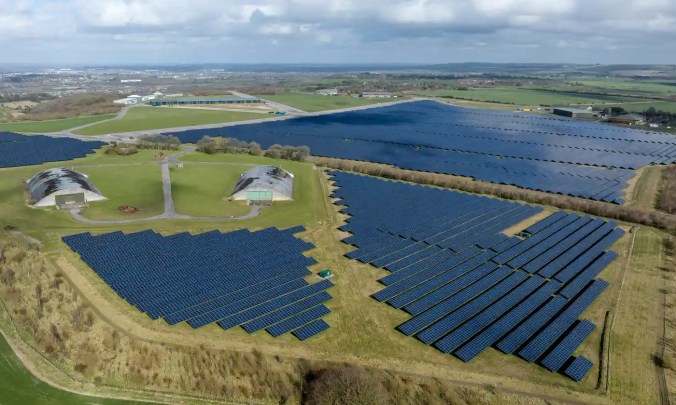
Solar farm in Wroughton, England. Planning permission for 23 solar farms has been refused across England, Wales and Scotland between January 2021 and July 2022. Photograph: Chris Gorman/Getty Images

Nature gets disrupted even by the most sensitively planned green solutions. Here is a parallel story to yesterday’s, with solar replacing wind and England replacing Western USA, illustrating the challenges facing renewable energy:

Exclusive: Projects which would have cut annual electricity bills by £100m turned down

Solar farms are being refused planning permission in Great Britain at the highest rate in five years, analysis has found, with projects which would have cut £100m off annual electricity bills turned down in the past 18 months.

Continue reading

Resistance Is Futile

Illustration by Kotryna Zukauskaite

We do not have time for the patience required for proving the futility of resistance, but this historical perspective is valuable nonetheless:

When Coal First Arrived, Americans Said ‘No Thanks’

Back in the 19th century, coal was the nation’s newfangled fuel source—and it faced the same resistance as wind and solar today

Steven Preister’s house in Washington, D.C. is a piece of American history, a gorgeous 110-year-old colonial with wooden columns and a front porch, perfect for relaxing in the summer. Continue reading

Ever-Improving Solar Technologies & Techniques

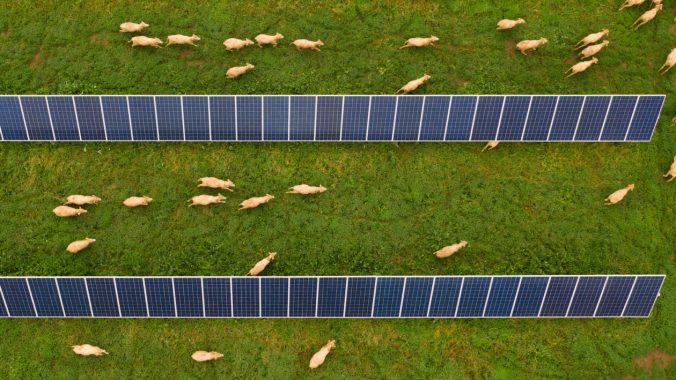
Sheep graze alongside a solar array in Dubbo, Australia. JANIE BARRETT / THE SYDNEY MORNING HERALD VIA GETTY IMAGES

Solar power, one of the renewables with the greatest promise, continues to improve:

A solar array in Madera County, California, with panels placed side-by-side on the ground. ERTHOS

More Energy on Less Land: The Drive to Shrink Solar’s Footprint

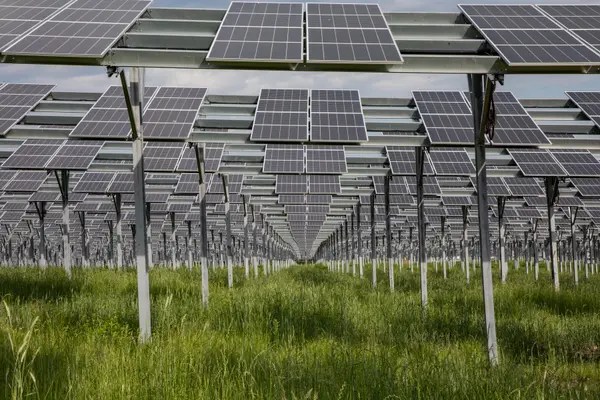
With the push for renewables leading to land-use conflicts, building highly efficient utility-scale solar farms on ever-smaller tracts of land has become a top priority. New approaches range from installing PV arrays that take up less space to growing crops between rows of panels.

Farmers grow hay between solar fences in Donaueschingen, Germany. NEXT2SUN

From the ground, the new solar farm shimmers like a mirage oasis on a hot summer day. Instead of row after slanting row of shiny panels stretching taller than corn, this array, mounted directly on the earth, lies flat as water. Continue reading

Agrivoltaics Advancing

Solar panels on Paul Knowlton’s farm in Grafton, Mass. Cattle will graze below the panels, which rise to 14 feet above the ground. Tony Cenicola/The New York Times

The concept of agrivoltaics has been an occasional topic in our pages over the years, most recently as we have prepared to plant thousands of coffee saplings. Ellen Rosen focuses our attention on how the advances in technology, and entrepreneurship in this space, are addressing the challenges:

Can Dual-Use Solar Panels Provide Power and Share Space With Crops?

Companies like BlueWave are betting on it. But the technology has its critics.

Mr. Knowlton preparing the soil between the panels before he plants butternut squash and lettuce. Tony Cenicola/The New York Times

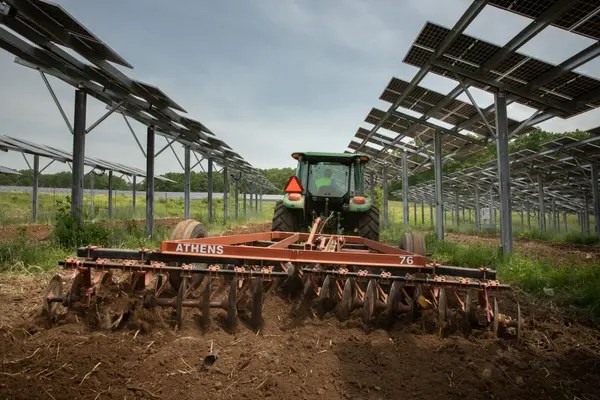
In its 150-year history, Paul Knowlton’s farm in Grafton, Mass., has produced vegetables, dairy products and, most recently, hay. The evolution of the farm’s use turned on changing markets and a variable climate. Recently, however, Mr. Knowlton added a new type of cash crop: solar power. Continue reading

More Solar Canopy Initiatives

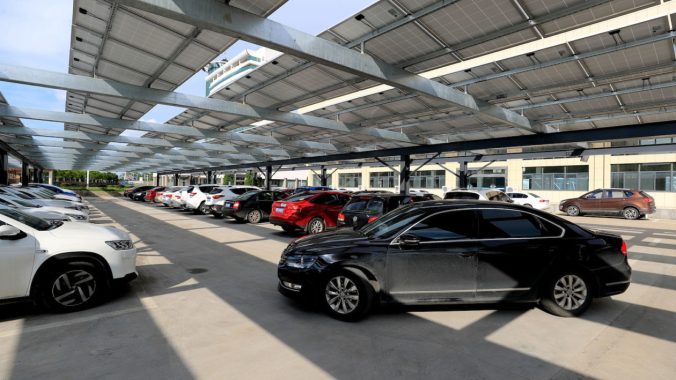
A solar-covered parking lot at the plant of Anhui Quanchai Engine Co., Ltd. in Chuzhou, China. IMAGINECHINA VIA AP IMAGES

Using solar panels to create shade for coffee trees requires thought about the tradeoffs between the non-shade benefits trees otherwise provide: (nitrogen-fixing in the case of poro trees, plus bird habitat and other biodiversity benefits) and the non-shade benefits that solar panels provide (renewable energy). Solar panels on parking lots and other roofs, on the other hand, seems the definition of a no-brainer. Our thanks to Richard Conniff and Yale e360, as always:

Why Putting Solar Canopies on Parking Lots Is a Smart Green Move

Solar farms are proliferating on undeveloped land, often harming ecosystems. But placing solar canopies on large parking lots offers a host of advantages — making use of land that is already cleared, producing electricity close to those who need it, and even shading cars.

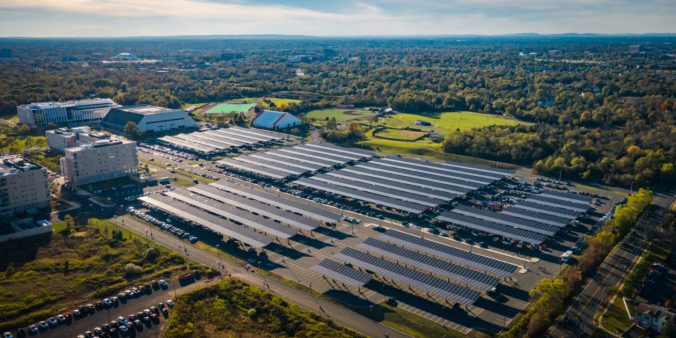
A solar parking facility at Rutgers University in Piscataway, New Jersey, with an output of 8 megawatts of electricity.

Fly into Orlando, Florida, and you may notice a 22-acre solar power array in the shape of Mickey Mouse’s head in a field just west of Disney World. Nearby, Disney also has a 270-acre solar farm of conventional design on former orchard and forest land. Park your car in any of Disney’s 32,000 parking spaces, on the other hand, and you won’t see a canopy overhead generating solar power (or providing shade) — not even if you snag one of the preferred spaces for which visitors pay up to $50 a day. Continue reading

A New Canopy Concept

This year, the garden produced more than 8,000 pounds of produce, while the panels above generate enough power for 300 local homes. Kirk Siegler/NPR

When the poro and other trees we planted in the last two years mature, they will provide shade for a thousand or so coffee saplings. High elevation arabica coffee likes shade, and birds like the habitat. Those trees are growing fast, but it will be decades until their full shade potential is reached. As I read “This Colorado ‘solar garden’ is literally a farm under solar panels” I can picture an interesting complement to the shade poro provides:

When Byron Kominek returned home after the Peace Corps and later working as a diplomat in Africa, his family’s 24-acre farm near Boulder, Colo., was struggling to turn a profit.

“Our farm has mainly been hay producing for fifty years,” Kominek said, on a recent chilly morning, the sun illuminating a dusting of snow on the foothills to his West. “This is a big change on one of our three pastures.”

That big change is certainly an eye opener: 3,200 solar panels mounted on posts eight feet high above what used to be an alfalfa field on this patch of rolling farmland at the doorstep of the Rocky Mountains. Continue reading

Sri Lanka Energy Progress

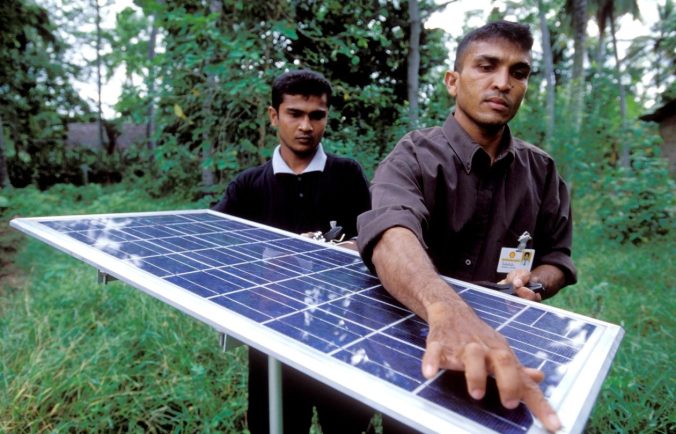
A solar installation in Sri Lanka. DOMINIC SANSONI / WORLD BANK VIA FLICKR

Thanks to Yale e360 for this news from our old neighborhood:

Sri Lanka Pledges No New Coal, Makes Push Into Rooftop Solar

In its latest climate plan, Sri Lanka is ruling out new coal power and aiming to reach 70 percent clean electricity by 2030, an important milestone on its way to reaching its goal of a carbon-neutral electricity generation system by 2050, Climate Home News reported. Continue reading

A 2020 Bright Spot

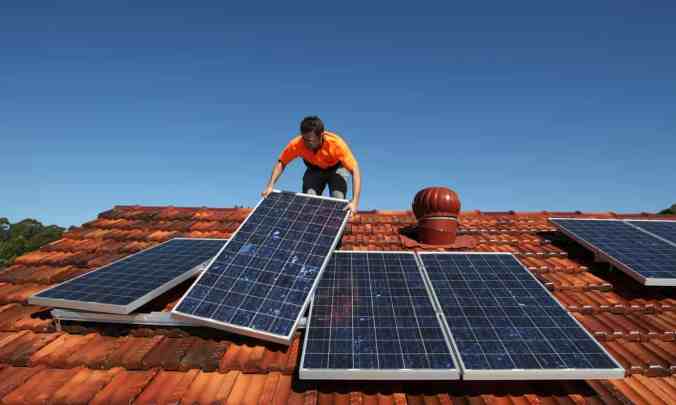
Solar panels are installed on to the roof of a house in Sydney, Australia. Almost 90% of new electricity generation in 2020 will be renewable, the IEA says. Photograph: Reuters

Thanks to the Guardian’s Environment editor Damian Carrington for this sunny news:

International Energy Agency expects green electricity to end coal’s 50-year reign by 2025

Global renewable electricity installation will hit a record level in 2020, according to the International Energy Agency, in sharp contrast with the declines caused by the coronavirus pandemic in the fossil fuel sectors. Continue reading