
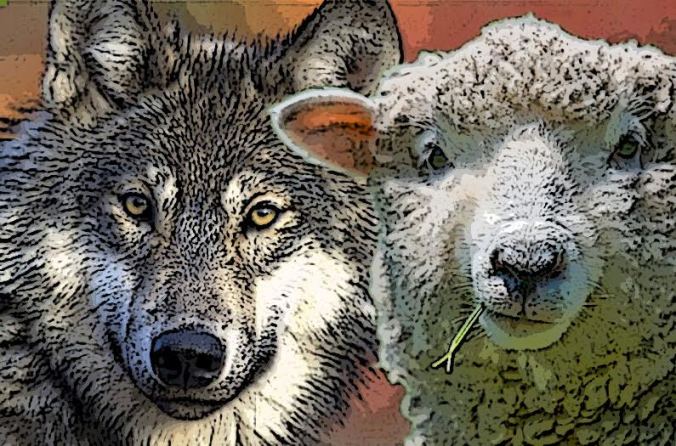
Because invasive species are among the main drivers of extinction today, conservationists have made efforts to cull mice in favor of albatrosses, rats in favor of puffins, and pythons in favor of bobcats. Illustration by Javier Jaén; Source photographs from Getty
Invasive species have received plenty of attention in our pages in the years since we first shared on this topic. Creative approaches to solving the problem abound. Elizabeth Kolbert reviews two books that take up the moral implications:
Should We Kill Some Wild Creatures to Protect Others?
Where humans have tilted the game in favor of one species, some believe we should cull predators to save their prey. Others think it’s a mistake to pick sides.
The northern spotted owl is about a foot and a half high, with very dark eyes, a greenish beak, and a rim of feathers, called a facial disk, that makes it appear to be regarding the world with worried perplexity. Like most owls, northern spotteds are nocturnal, but, unlike most of their brethren, they are picky. They can live only in old-growth forests in the Pacific Northwest. Their diet is restricted and seems to consist mainly of flying squirrels. They’re incapable of building nests of their own, and so, to raise their young, they rely on tree cavities or on basketlike growths that are produced by arboreal infections and known, evocatively, as witches’ brooms.
The spotted owl’s fastidiousness produced one of the great environmental conflicts of the twentieth century. By the late nineteen-eighties, it was estimated that only fifteen hundred breeding pairs survived. Since the owls depended on old growth, the only way to save them, according to biologists, was to preserve the Northwest’s remaining stands of ancient trees. The timber industry countered that leaving those trees untouched would cost thousands of jobs. The two sides adopted increasingly confrontational tactics. Continue reading









 Organikos