The Little Things Librarians Do That Can Have Big Impact

See the source imageReading this op-ed reminded me of a book that I read in my mid-teens. I remember reading it cover to cover in one sitting and it sparked a kind of book-reading that had not been part of my life previously.  I was a plot-driven reader and April Morning got me more interested in character. So my belated thanks to one of the librarians, circa 1978, at the amazing library down the street from our home, who recommended this book to me. When I came back to see what other books by the same author were available, I saw that he had a very long list of titles in the card catalog.

So I asked for help from another librarian, and soon I was reading this other historical novel. Reading The Hessian may account for my becoming an English major in college a few years later. I did not like this book nearly as much. And this led to a conversation with the librarian who had recommended it to me. Literary criticism it was not, but having something to say about the difference between the two books, and hearing someone else’s opinion on the same, was interesting. Belated thanks to that librarian for that conversation, and for the next gift.

She told me that Howard Fast would be giving a lecture in the library’s auditorium the following week. That too would be a first. I had never attended an author’s lecture before. He was talking about a book, The Immigrants, that had just been published. I do not remember much about the lecture, but at the end of it I went to the front of the auditorium and handed the author an envelope. In it was a short letter thanking him for writing the two books I had read, and sharing a few thoughts I had exchanged with the librarian. Days later I received a letter in the mail. It was from the author, replying to the letter this kid had handed him in the auditorium. Thank you, Howard Fast.  And thank you, librarians.
Think Twice About Whatever It Takes For Honeybees

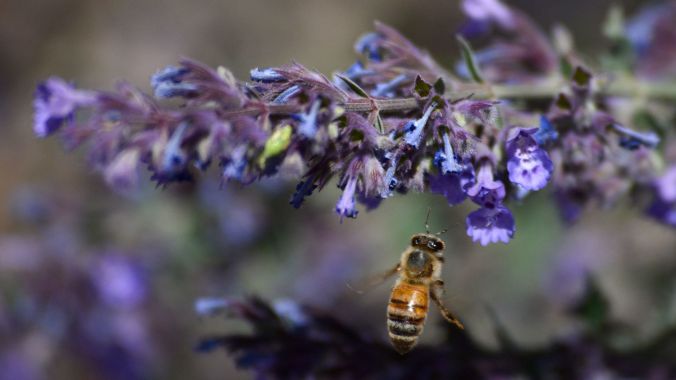
A honey bee visits a blooming catmint plant in New Mexico. ROBERT ALEXANDER/GETTY IMAGES

Since Milo’s 2011 post on this topic we have paid attention to the plight of honey bees and their human keepers, and might have had a “whatever it takes” perspective on letting those human keepers find solutions to keep their colonies alive. Jennifer Oldham’s article in Yale e360 has us thinking twice:

Will Putting Honey Bees on Public Lands Threaten Native Bees?

As suitable sites become scarce, commercial beekeepers are increasingly moving their hives to U.S. public lands. But scientists warn that the millions of introduced honey bees pose a risk to native species, outcompeting them for pollen and altering fragile plant communities.

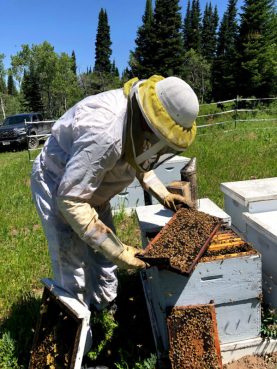
Beekeeper Dennis Cox checks his hives in Strawberry Valley, Utah in July. JENNIFER OLDHAM / YALE E360

Honey bees heavy with pollen and nectar foraged from wildflowers on Utah’s Uinta-Wasatch-Cache National Forest collide with tall grass and tumble to the ground. They are attempting to land alongside a hive, and I watch as they struggle to stand, fly into the box, and disgorge nectar to be made into honey.

The pollinators belong to a 96-hive apiary, trucked here to Logan Canyon for the summer to rest and rebuild their population, replenishing bees lost to disease and pesticides after months pollinating California’s almond groves. By Labor Day, the yard could house 5 million domesticated pollinators. Continue reading

Reviving A Garden Can Revive More Than A Garden

Among the reasons we have stayed  committed once we embarked on restoration of a parcel of a coffee farm buried two decades ago, it is a welcome distraction. Also, it is good exercise. Those side benefits add motivation to continue uncovering and then reviving a buried agricultural treasure. If you are not in a place where you can do such a thing, but are in need of a breath-slowing, jaw-unclenching respite, other options exist. Do gardens and/or stories of agricultural revival get you there? The video above, or the classic to the right might be options to consider. Thanks to Helen Rosner for bringing them to our attention in this essay:

The Soothing Pleasures of “The Victorian Kitchen Garden,” a Vintage BBC Docuseries

“The Victorian Kitchen Garden,” a thirteen-part series on the particularities of Victorian horticulture, is a serene display of domestic competence.Photograph by Anne Gilbert / Alamy

Some time this past spring, I had my annual realization that if I wanted to plant a garden this year I should have got started weeks, maybe months, earlier. Then I set about my annual task of Googling how to make a garden happen. A few days later, clearing out my hundreds of open browser tabs of horticultural-advice forums, I paused over an open Web page that I hadn’t noticed: a grainy upload on the mysterious and vaguely European video-hosting Web site Dailymotion. “The Victorian Kitchen Garden – S01 – E01 – The Beginning,” it said. Curious, I pressed play, and a gentle wave of clarinet arpeggios sounded from my laptop speakers, and a mist-veiled greenhouse appeared on the screen. My breathing slowed, my jaw unclenched. Continue reading

Preparing For An Entangled Future

The Science section of the Guardian’s website has an article profiling an author and his new book (click above to find the book on the author’s website) that relate to a topic we care about as much as any we post about on this platform.

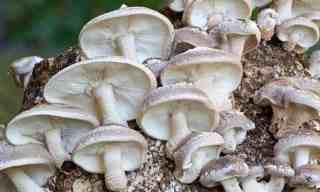
Shiitake mushrooms (Lentinula edodes) being home cultivated. Photograph: Gerry Bishop/Alamy

When Amie and Milo and I moved to Kerala, India in 2010 it was ostensibly for the sake of our client. But it was also for Milo. He was 16 years-old with a strong interest in mycology, and was motivated to translate his knowledge into practice. Within the first year he set up a small farming operation for culinary mushrooms.

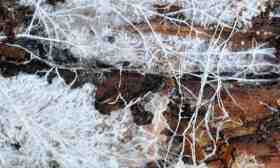
Underground network: a wood-rotting fungal mycelium exploring and consuming a log. Photograph: Alison Pouliot

He was adept at explaining the importance of complex networks like those in the image to the left, and made me a believer: the future is fungal, for culinary, medicinal, and bio-remediation purposes. When restoration of this coffee farm started, I built a berm with logs at the core, expecting a mycelium network to develop, creating a healthy border for the shade trees planted.

These days Milo has his own forest tract to continue these pursuits and I keep a lookout for related stories of interest. Merlin Sheldrake has my full attention today:

The future is fungal: why the ‘megascience’ of mycology is on the rise

The study of fungi has long been overshadowed by more glamorous scientific quests. But biologist Merlin Sheldrake is on a mission to change that

Merlin Sheldrake is convinced fungi will play a crucial role in our growing understanding of the environment. Photograph: Cosmo Sheldrake

As a boy, Merlin Sheldrake really loved the autumn. In the garden of his parents’ house – he grew up a few moments from Hampstead Heath, which is where he and I are walking right now, on an overcast summer morning – the leaves would fall from a big chestnut tree, forming gentle drifts into which he liked nothing more than to hurl himself. Wriggling around until he was fully submerged, Sheldrake would lie there, quite content, “buried in the rustle, lost in curious smells”. As he writes in his wondrous new book, Entangled Life, these autumnal piles were both places to hide and worlds to explore. Continue reading

Rewilding: Restoring Ecosystem & Community

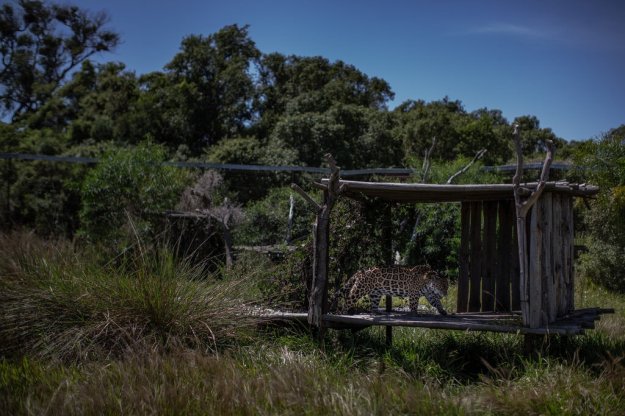
The jaguar Isis in her pre-release pen; she is part of a rewilding project in Iberá National Park in Argentina.

Rewilding, once a novelty idea, has been scaling and we are gratified to see Argentina’s progress:

‘Fixing the Damage We’ve Done’: Rewilding Jaguars in Argentina

Bringing back the top predator to Argentina’s wetlands could restore the health of an entire ecosystem. But inducing five felines with troubled pasts to hunt, and mate, is not easy.

IBERÁ NATIONAL PARK, Argentina — They had a big job to do, drafted as the first few jaguars to be reintroduced to Argentina’s wetlands after more than seven decades of absence.

Capybaras, a giant rodent, at the park.

But they were a troubled bunch.

Tobuna came from an Argentine zoo and was fat and lethargic, in the twilight of her reproductive life. Her daughter, Tania, had been hidden from view in the same zoo because a tiger had mauled one of her legs as a cub. Continue reading

Brilliant & Ominous

When you genuinely smile and then recoil a moment later, you are responding to what this artist wants you to see and then understand. The animation is brilliant and its short message on how ocean litter/marine plastic is harming marine life is ominous. The  Artist Statement that accompanies it is not required reading, but it is there for the taking:

Two years ago, an experience on a small island inTaiwan changed my life. It was the closest I’d lived to the sea, being only a ten minute drive away. Everyone can enjoy the beach with its white sand and turquoise ocean. At the time, I went snorkeling almost every week. Seeing such alluring tropical fish and coral reefs still lingers in my mind. However, I also cannot forget the scenes of tons of human waste lying around the shore as if it was a part of nature. Continue reading

Smile-inducing Nature Photos

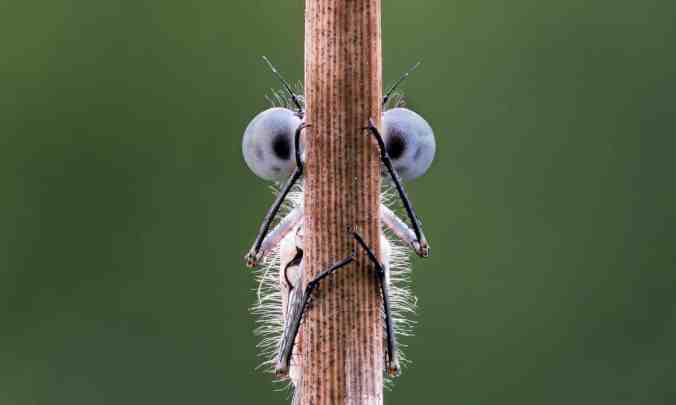
Hide and seek Photograph: Tim Hearn

Thanks to Matt Fidler’s display of the work by photographers in the right place at the right time to induce a needed smile in this contest’s audience.

Comedy Wildlife Photography awards 2020 finalists – in pictures

Continue reading

Gastropod Defense Team? Not so fast…

Visitors to this site know that coffee plays a significant role in the lives of many of our contributors, so the threat of rust is something we’ve been aware of for some time as well. We’re usually in favor of finding natural and non-invasive solutions to pest problems, but are quite aware that “non-invasive” must be the operative word.

The unintended consequences of using the invasive Asian tramp snail as a biological control could be significant, causing more harm than help. The studies here suggest that selective planting amid the coffee could provide various solutions, which consider the benefits of the polyculture planting methods of shade-grown coffee.

What Tiny Snail Poop Could Mean For Latin America’s Coffee Farms

Zachary Hajian-Forooshani never expected to find snails in the mountainous, coffee-producing heart of Puerto Rico. In 2016, when he was a University of Michigan masters student, he and his peers noticed some curious excrement on the undersides of coffee plants, which they eventually traced to the invasive Asian tramp snail. “Cool things pop out and you follow up with them,” says Hajian-Forooshani, who has made the snails and their colorful poop the subject of his doctoral research. “I just followed a trail of excrement.”

The oddly colored snail poop was, not coincidentally, the same bright-orange color as coffee rust, a parasitic fungus that’s coming for your morning buzz.

Central American farmers have tried breeding hybrid coffee species that are rust-resilient, but the fast-moving fungus is quick to develop an immunity to that resistance. ADAM KEOUGH/PUBLIC DOMAIN MARK 1.0

Coffee leaf rust has been a menace for more than a century. After appearing on Sri Lanka in the late 1800s, it enveloped the island within 20 years, ridding what was once the world’s greatest coffee exporter of its cash crop in near entirety. Traveling on the wind across Africa’s coffee belt, coffee rust reached the Atlantic coast by the 1950s. Its arrival in Brazil in 1970 sowed panic in a heavily coffee-reliant economy, and within 12 years, no coffee-producing region in Latin America, where seven-eighths of the world’s joe is produced, was rust-free. Today, 70 percent of Central American farms are infected, costing the region $3.2 billion in damage and lost income. Continue reading

From Gardens Long Gone, Now Revived

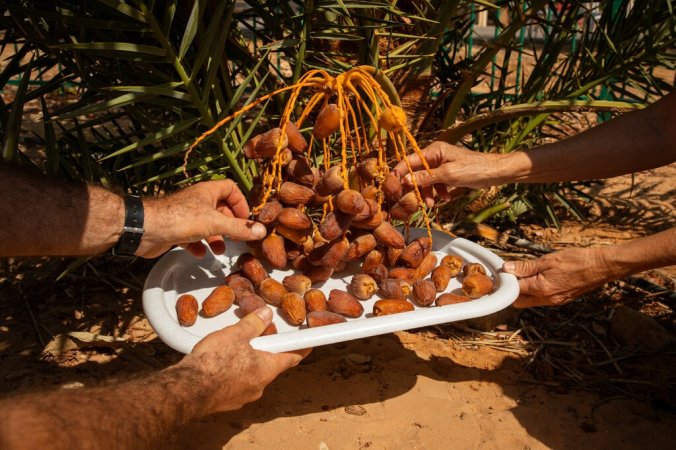
These dates sprouted from 2,000-year-old seeds retrieved from archaeological sites in the Judean wilderness. Dan Balilty for The New York Times

While we are on the topic of gardens, let’s continue on a roll:

Aided by Modern Ingenuity, a Taste of Ancient Judean Dates

The harvest of the much-extolled but long-lost Judean dates was something of a scientific miracle. The fruit sprouted from seeds 2,000 years old.

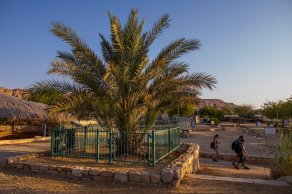
The proud father Methuselah, grown from ancient seeds, at Kibbutz Ketura in the Arava desert, Israel. Dan Balilty for The New York Times

KETURA, Israel — The plump, golden-brown dates hanging in a bunch just above the sandy soil were finally ready to pick.

They had been slowly ripening in the desert heat for months. But the young tree on which they grew had a much more ancient history — sprouting from a 2,000-year-old seed retrieved from an archaeological site in the Judean wilderness. Continue reading

Enter The Dragon

Irene Rinaldi

With farms on our collective minds recently, considering how edibles grow, why we plant this versus that. Thanks to Alexander Villegas, a journalist and farmer, for today’s look at what grows where, and why, in a bittersweet story about a family farm in northwest Costa Rica:

My Family Had Suffered Loss After Loss. Then Came the Dragon Fruit.

In an area devastated by droughts and erratic rainfall, I took a chance on a bright little magenta ball of hope.

LIBERIA, Costa Rica — I hated the family farm as a kid.

It was hot; it reeked of manure; and it’s where a tree crushed and killed my grandfather. When we visited, I spent my time playing with my Game Boy while the other kids took turns riding young bulls.

So I was surprised when my dad asked me to take the farm over last year. He’d recently retired and was planning on selling part of it to pay off his house in the city. He’d live off the rest and drive up to the farm throughout the week. But the lawyer he hired stole the land. My dad lost his house and was afraid he’d lose everything else. Continue reading