Phenology Disrupted by Climate Change in the UK

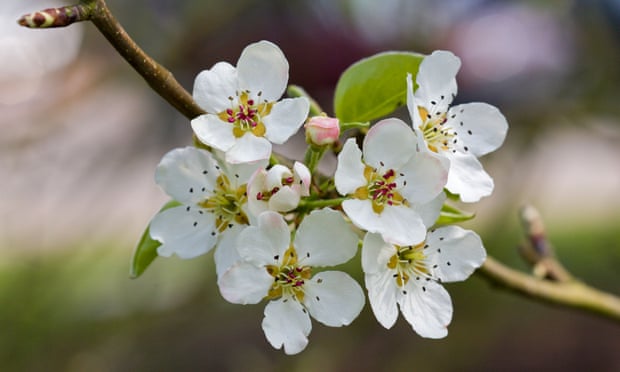
The UK has a rich history of biological recording by scientists and ‘citizen scientists’ who document the first signs of spring. Photograph: Alamy/Guardian

We first heard of the word phenology on this site back in 2012, from writings on a citizen science workshop in the Galápagos. Since then, the term has been linked to citizen science in the context of forest life cycles in England, coffee farming in Costa Rica, and orchids in the United Kingdom. It’s a good thing that there’s a history of normal people collecting information on nature’s timelines in Britain, because that provides rich and deep data on changing phenology with a warming climate. Jessica Aldred reports for the Guardian on a new study published in Nature:

Climate change is disrupting the seasonal behaviour of Britain’s plants and animals, with rising temperatures having an impact on species at different levels of the food chain, new research shows.

The result could be widespread “desynchronisation” between species and their phenological events – seasonal biological cycles such as breeding and migration – that could affect the functioning of entire ecosystems, according to the large-scale study published this week in the journal Nature.

Continue reading

Graylings Recovering

Spawning Arctic Grayling at Green Hollow Genetic Brood Reserve. Photo © Emily Cayer FWP

Graylings sound like wild beings out of a fantasy series, but in fact they’re a type of fish found all over the world in different species, some threatened with population decline, and some stable. The Arctic grayling, found in Russia and Canada but also some areas in Alaska, Montana and Wyoming, has suffered extirpation from certain spots in the latter two states during the last hundred years or so, due to anthropogenic effects. Ted Williams reports for The Nature Conservancy:

The Arctic grayling’s spotted, orange-trimmed dorsal fin looks as if it had been photoshopped. It’s half as long as the body and just as wide; and it glows with impossible shades of violet, green and turquoise. This gaudy trout cousin was deposited by the retreating glacier in the coldest, clearest waters of the contiguous states.

So common was the species in Michigan that a city, Grayling, took its name. And as recently as the early 20th century grayling abounded in the upper Missouri River system. While these fish still thrive in Alaska and Canada, they’ve been wiped out in Michigan and persist only in about 15 percent of their historic range in Montana and Wyoming.

Continue reading

Queens, NY Entrepeneurial Conservation

Queens

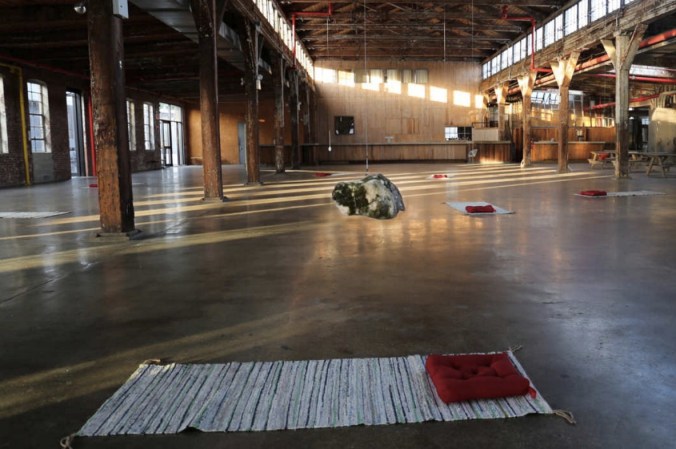
Architecture intersecting with cultural conservation–that is a topic that will always get my attention. When I read this article it reminded me a bit of the early days of scouting out the location that would become Xandari Harbour’s restaurant, 51. Hard to resist reading, based on the title, and the article does not disappoint:

Never Has My Breath Been Taken Away Like It Was at Knockdown Center

By


#11 Of One Dozen Love Letters About Xandari

XWebsite.jpg

It is that time of year. Monsoon in Kerala, and what we like to call green season in Costa Rica. The rains are delicious, and give the sense of abundance and replenishment, refreshment. It is the ideal time for ayurveda in Kerala. Or just pure relaxation with a book, escaping the news and other distractions–digital detox–and any of the four properties shown above can help you achieve that bliss.

For one more day La Paz Group will be responsible for ensuring that Xandari delivers that bliss. July 1 onward George M George and his team will be in that role. In making the rounds to all the properties this week we have been experiencing a sensation that maps on almost perfectly to the sensation that has come with two decades of nomadic life. Continue reading

Moringa: Superfood?

A moringa tree (tallest plant in the back left of the photo)

There’s a Moringa tree in the coffee plot at Xandari’s west farm area, and the head gardener José Luis always points it out to guests as a plant with dozens of healthy properties, in addition to its value as a shade-provider to the coffee shrubs. The genus of trees is beginning to be touted as a “miracle tree” and superfood in the United States, but has yet to really catch on among the denizens of developing nations in the dryland tropics, where Moringa grows best. Amanda Little writes for the New Yorker:

On the western margin of Agua Caliente [Mexico], Mark Olson, a professor of evolutionary biology at the National Autonomous University of Mexico, has a farm. “It may look like a shitty little field with runty little trees in a random little town, but it’s an amazing scientific resource,” Olson said, as he led me through the hilly, hardscrabble acre that constitutes the International Moringa Germplasm Collection. This is the world’s largest and most diverse aggregate of trees from the genus Moringa, which Olson believes are “uniquely suited to feeding poor and undernourished populations of the dryland tropics, especially in the era of climate change.”

Continue reading

Use Nature, Not Seawalls, to Defend from Storms

A Living Shoreline replaced a failing bulkhead at the N.C. Wildlife Resource Commission’s Edenhouse boat ramp on the Chowan River. Photo by the North Carolina Coastal Federation

From the Harvard Gazette, an article by Colleen Walsh on the environmental damage and lack of success in general from manmade seawalls:

For years coastal homeowners have tried to beat back Mother Nature with seawalls, imposing structures of wood and/or concrete intended to fend off angry tides and surging storms. But emerging research suggests that in some areas, biological barriers both better protect against erosion and preserve vital ocean habitats.

Not only have seawalls in certain areas been shown repeatedly to fail when tested, but they pose a threat to the delicate ecosystems associated with wetlands and intertidal areas, Rachel Gittman, a postdoctoral research associate at Northeastern University’s Marine Science Center, said during a talk at Radcliffe on Thursday. Instead of absorbing energy generated by wind and waves, seawalls reflect that force back into the water, said Gittman, further eroding the shore and erasing important habitats for fish, crabs, and shore birds.

Continue reading

#10 Of One Dozen Love Letters About Xandari

ADXHArchitectural Digest is not the reason we do what we do. But when they take note, in any manner, we feel the love. Xandari Harbour soft-opened, and within a very short time got an inordinate amount of good press even before the formal opening. Yet the AD mention, which was neither a cover story nor even a particularly huge feature, had a different level of impact on those of us on the team that developed it.
George M George, the visionary who saw the potential in the run down property and particularly the crumbling godown (waterfront warehouse) featured on the left above post-restoration, was that team’s source of energy, inspiration, encouragement–this would not have happened without his excellent leadership. Continue reading

North American Stretch Goals On Clean Energy

ap_536579746853_wide-2c65268ff1e240e81358570076bd3f5f5ad33056-s1400-c85

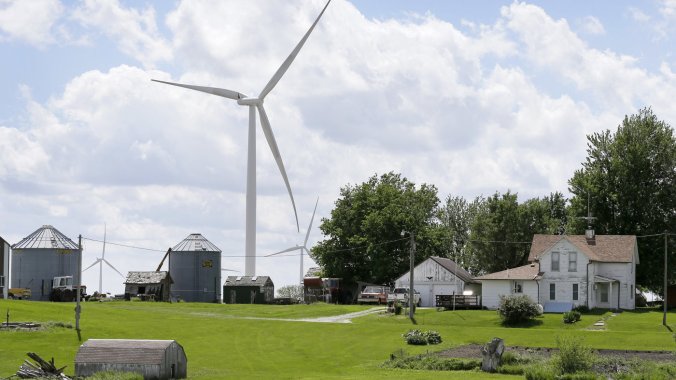
A wind turbine stands over a farmhouse in Adair, Iowa. Charlie Neibergall/AP

Thanks to National Public Radio (USA):

Obama’s New Clean Energy Goal For North America: 50 Percent By 2025

The three leaders are expected to set a target for North America to get 50 percent of its electricity from nonpolluting sources by 2025. That’s up from about 37 percent last year.

Aides acknowledge that’s a “stretch goal,” requiring commitments over and above what the three countries agreed to as part of the Paris climate agreement. Continue reading

Solar for Homes, Empowered by Google

First result when searching “solar power” in Google

We posted about a solar oven yesterday, and today we heard about a less tangible but equally valuable product offered for free by Google: by visiting their Project Sunroof webpage, you can find out in seconds if your roof is suitable for panels, how many panels you’d need, and finally, what your payment options are depending on your location (at the moment it seems focused on the US and the different state and federal tax credits available). From their About page:

Why are we doing this?

As the price of installing solar has gotten less expensive, more homeowners are turning to it as a possible option for decreasing their energy bill. We want to make installing solar panels easy and understandable for anyone.

Project Sunroof puts Google’s expansive data in mapping and computing resources to use, helping calculate the best solar plan for you.

Continue reading

#9 Of One Dozen Love Letters About Xandari

XCRMSN1

Two years ago I had the pleasure of meeting a family at Xandari in Costa Rica who were on their first vacation in Costa Rica and at Xandari. The father in the family was a photographer by avocation and he shared various photographs with me that he had taken on that visit. He captured views from the property that I consider to be classic favorites of the guests who know Xandari the best. I asked permission to use his photographs, which he granted, but this is the first chance (oops) I have had to share them.

Then one year ago I had the good fortune to meet them again on their second vacation at Xandari–good fortune in the sense that I do not spend alot of time at the Costa Rica property, and so meeting them again was just funny good luck. Ray showed me more photographs. I noticed his scope and scale had changed this time around. Continue reading

Watch Your Wood, Know Its Origin

2000 (1)

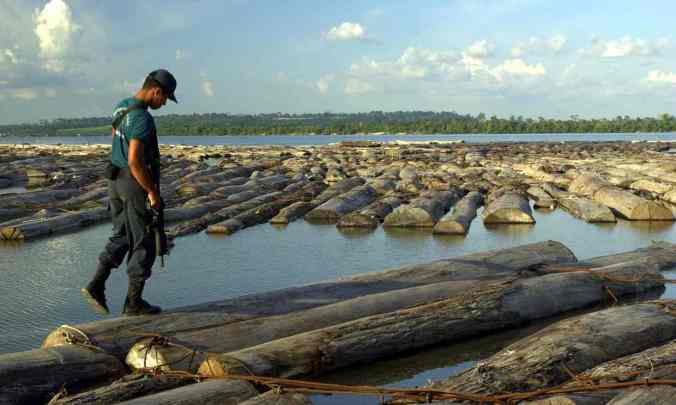
An armed officer inspects a seizure of thousands of illegal mahogany logs in Brazil. Photograph: Dado Galdieri/AP

Thanks to the Guardian for this reminder that we consumers need to do our caveat emptor duties when buying wood products:

Deforestation is rife in the Amazon, Colombia and the Philippines, say environmental groups

British shoppers could be unknowingly buying wooden furniture, flooring and even food items that are byproducts of destructive illegal logging in the Amazon, environmental campaigners are warning.

Friends of the Earth is calling on ministers to make companies reveal the source of their products in order to stop the black market trade. Last week human rights watchdog Global Witness revealed that 185 environmental activists were killed in 2015, many of whom had been trying to stop illegal logging in the Amazon. An estimated 80% of Brazilian hardwood is illegally logged.

Continue reading

Birds Back From Beyond Brink

gettyimages-129031564_custom-0155a178bff9fc85b180038391dbdbe1bf478731-s1400-c85

Spix’s macaws (L-R) Felicitas, Frieda, Paula and Paul sit on a branch in their aviary in Germany. The species has not been seen in the wild for 15 years until the recent sighting in Brazil. DPA/AFP/Getty Images

Thanks to National Public Radio (USA):

An Avian Mystery: Rare Parrot Spotted In Wild For First Time In 15 Years

For the last 15 years, Spix’s Macaw has been presumed extinct in the wild. That’s until one of the blue-feathered parrots was spotted and caught on video flying near the town of Curaca, Brazil.

Conservators say the appearance of the mysterious rare bird represents “a new hope” for the area.

The bird was first spotted by a local farmer named Nauto Sergio Oliveira, a government conservation institute said in a statement. Oliviera told his neighbors, and the next day his wife Lourdes Oliveira and daughter Damilys trekked out at dawn in search for the bird.

The rare parrot appeared in a nearby riparian forest and Damilys managed to catch it on video: Continue reading

Creative Solar Cookers from GoSun Stove

Cooking directly with solar power is not something we’ve posted about here before, although it is a pretty important subject when you consider the vast amount of wood, electricity, or natural gas used to cook food around the world. About seven years ago we enjoyed one of our favorite articles from the New Yorker about the effort to perfect solar ovens and reduce smoke-related deaths in developing countries, and it’s clear that the quest to build a better solar oven is still going:

Continue reading

Op-ed: Can Brexit Work for the Environment?

Magazine cover by Barry Blitt

We’ve been reading for several weeks now in The Guardian that leaving the European Union would not be good for the United Kingdom’s air pollution problems, their landfill waste management, their wildlife conservation, and so on. Now that the vote has been made and the break will happen, Craig Bennet, CEO of the environmental justice and advocacy group Friends of the Earth, has written a piece for the British news source pleading with readers to not let a departure from the E.U. start a downward spiral on environmental issues for the U.K:

Friends of the Earth campaigned vigorously to remain in the EU. Membership of Europe has been good for our ‘green and pleasant land’, and the plain truth is that pollution doesn’t recognise national boundaries. It seems obvious to me that the best way of solving anything other than very local environmental problems is for countries to cooperate and develop solutions under a common framework.

Continue reading

#8 Of One Dozen Love Letters About Xandari

12974425_1230966180264955_2655848184739776256_n

Photo and pendant by Milo Inman

While we were in the early stages of shaping the look of Xandari Pearl, we had a team of design interns, and these highly creative collaborators sent us a constant stream of design feedback on the evolving Marari pearl concept. Little did I know that at that same time Milo, who at that time I thought of as a photographer-to-be, was developing another artistic talent. The photo above shows one example of that talent.

I consider that pendant as good an artifact of Xandari’s aesthetic legacy as any.  Continue reading