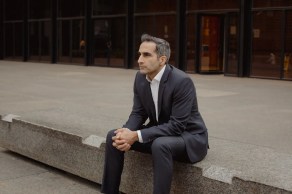
Yejin Choi leading a research seminar in September at the Paul G. Allen School of Computer Science & Engineering at the University of Washington. John D. and Catherine T. MacArthur Foundation
We have shared dozens of links to stories about advances in technology–especially those with application to conservation–none has touched on artificial intelligence. During my daily scanning for articles to share in 2022 I have noticed this topic more and more as a source of fear, to the point where I stopped reading them; but today’s is different:
Artificial intelligence stirs our highest ambitions and deepest fears like few other technologies. It’s as if every gleaming and Promethean promise of machines able to perform tasks at speeds and with skills of which we can only dream carries with it a countervailing nightmare of human displacement and obsolescence. But despite recent A.I. breakthroughs in previously human-dominated realms of language and visual art — the prose compositions of the GPT-3 language model and visual creations of the DALL-E 2 system have drawn intense interest — our gravest concerns should probably be tempered. At least that’s according to the computer scientist Yejin Choi, a 2022 recipient of the prestigious MacArthur “genius” grant who has been doing groundbreaking research on developing common sense and ethical reasoning in A.I. Continue reading →
A woman walks along a cliff top near Lake Powell, the second biggest reservoir in the U.S., where climate-change-driven drought continues to lower water levels. Photograph by David McNew / Getty
Farmers, bureaucrats, and water negotiators converged on Caesars Palace, in Las Vegas, to fight over the future of the drought-stricken Southwest.
In mid-December, I drove to Lake Mead, the nation’s largest reservoir, to see its infamous bathtub ring. The bathtub, in this metaphor, is Lake Mead, on the border between Nevada and Arizona; the ring is a chalk-white coating of minerals that its receding waters have left behind. The Southwest, which includes the Colorado River Basin, has been in a protracted drought since 2000; climate change has made it worse. Continue reading →
‘In the woods, there will be much more fungi and even more colour: scarlet elf cup (above), orange witches’ butter, yellow stagshorn, green elf cup, blue roundheads.’ Photograph: fotoco-istock/Getty Images/iStockphoto
The profound therapeutic benefits of connecting with nature and spending time outside are well known. But in winter? When it’s cold, gloomy and everything looks dead? In fact, especially in the winter, when we are susceptible to fatigue, illness and seasonal low mood. And actually there is plenty of life, beauty and wonder right outside our doors, if we look closely.
Come and take a short walk with me in my nearest wild patch – an urban cemetery, a common environment across the British Isles. Continue reading →
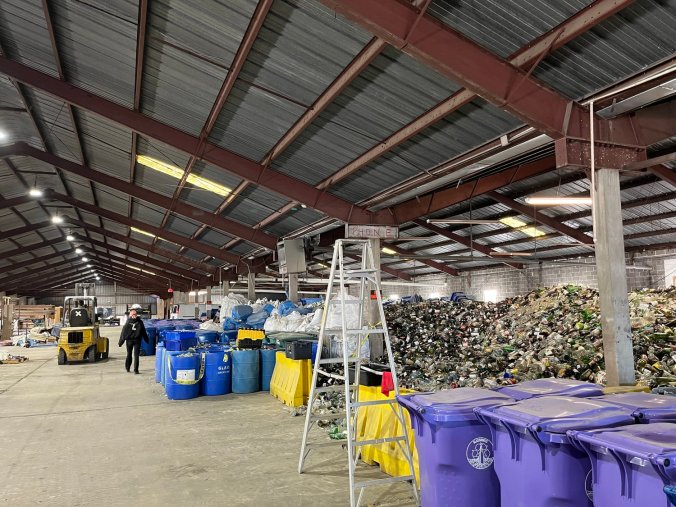
We collect and convert NOLA’s glass bottles — which have been crammed into our landfills for decades — into functional products: sand and glass cullet. These precious materials have an array of applications, from coastal restoration to flood prevention to eco-construction.
Our recycling process involves diverting used glass products from landfills and sorting, sifting, and ultimately converting them into sand products ranging from super soft, beach-like sand to glass gravel. The final products are used for coastal restoration projects, disaster relief efforts, eco-construction, new glass products, and so much more. The applications for sand are truly endless.
Laurence D. Fink, who runs BlackRock, has urged companies to adopt socially conscious practices. Winnie Au for The New York Times
We have no access to Mr. Fink’s motives or those of the firm he runs, or to how he and his colleagues make decisions–only to some of the actions they have taken. Our view on him and his firm may be simplistic, in that we respect their initial leadership on ESG but fault them now for not doing more. Even if they have only been virtue-signaling, and even if they fall short on true virtue, what they have done is obviously much better than those who are wrong on climate change:
Right-wing officials are attacking BlackRock for overstepping. Those on the left say the world’s biggest asset manager is not doing enough.
Environmental, social and governance — or E.S.G. — investing, “to some degree, is a smoke screen,” said Tariq Fancy, a former BlackRock executive. Chloe Ellingson for The New York Times
It was a clarion call to chief executives everywhere.
In 2018, Laurence D. Fink, the longtime chief executive of BlackRock, the world’s largest asset manager, urged corporate leaders to assess the societal impact of their businesses, embrace diversity and consider how climate change could affect long-term growth.
“Companies,” Mr. Fink wrote in his annual letter to chief executives, “must ask themselves: What role do we play in the community? How are we managing our impact on the environment? Are we working to create a diverse work force? Are we adapting to technological change?” Continue reading →
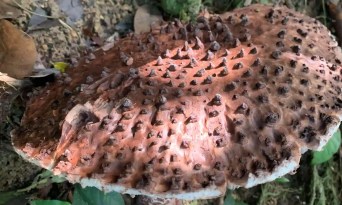
The sculptured toadstool (Amanita sculpta) had not been seen in Singapore for more than 80 years. Photograph: Adrian Loo/National Parks Board of Singapore
The sighting of a ‘magnificent’ specimen of the Amanita sculpta, not seen in Singapore for 80 years, shows how the public can aid in conservation efforts
The cap is like a chocolate chip cookie,” says Serena Lee, senior manager at Singapore Botanic Gardens’ herbarium, describing the top of the sculptured toadstool (Amanita sculpta). Continue reading →
On our recent return to the United States after a decade away in our other language, my family was struck by a change in American English. Continue reading →
The Conversation is “a news organization dedicated to facts and evidence” and with the tag line “Academic rigor, journalistic flair”. Our kind of reading. The graph to the left illustrates this article’s point; the photo below to the right is too composed for rigor:
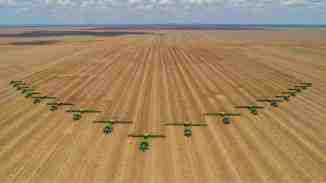
Brazil’s enormous soy farms mostly produce food for animals, not humans. lourencolf / shutterstock
Here’s the basic problem for conservation at a global level: food production, biodiversity and carbon storage in ecosystems are competing for the same land. Continue reading →
Early each year, as the days begin to get a bit longer and the first signs of spring crop up in Central Park, Ros Joyce and Talo Kawasaki, volunteers from OrigamiUSA and the designers of the Museum’s Origami Holiday Tree start planning for the year ahead.
They begin combing the Museum’s halls in search of inspiration—going from floor to floor to decide on a perfect theme and to find just the right exhibits to re-create as origami models on the tree. Continue reading →
The Foodway connects the river area with people, growing food and medicinal plants. Come explore the food forest and relish (hah!) the delight of seeds becoming plants for life.
The Guardian’s Meka Boyle gives another reason why visiting this borough is a worthwhile extension to any visit to New York City:
The Bronx River Foodway, the only legal place to forage in New York, celebrates the end of a season
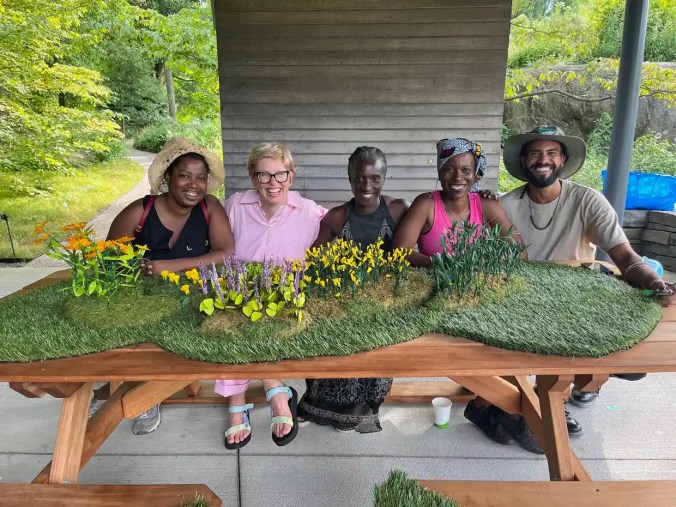
Foodway team members gathered around a picnic bench at the New York Botanical Garden created by the artist Elizebeth Hamby. Photograph: Courtesy Elizabeth Hamby
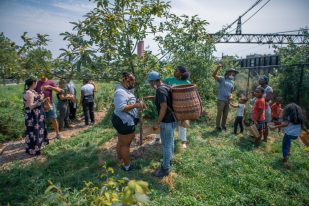
Bimwala’s tours are a mix of returning foragers eager to learn more and newcomers, many of whom have lived in the Bronx for decades. Photograph: Courtesy of Nathan Hunter
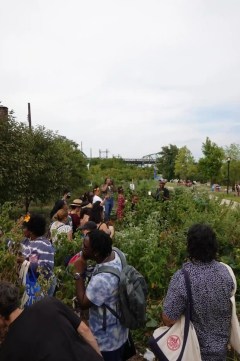
On a crisp November day in the South Bronx, more than 300 people made their way from Westchester Avenue below the clamor of the 6 train down a tree-lined path leading to Concrete Plant park. This is the home of the Bronx River Foodway, a quarter-acre food forest full of edible, mostly native plants. What looks like a stretch of land dotted with trees appears at first glance to be overrun by weeds, but the wild foliage has been intentionally planted by the Foodway. It is the only legal foraging site in New York City.
Neighbors young and old poured on to the grassy banks of the Bronx River to celebrate the end of the season and the foliage of the Bronx, including an array of snacks made from foraged ingredients: ginkgo cheese and acorn crackers, and pickled mushrooms and herbal ales made at recent four-part cooking series put on by the Foodway over the last two months. Continue reading →





Turning glass waste into useable sand and cullet.




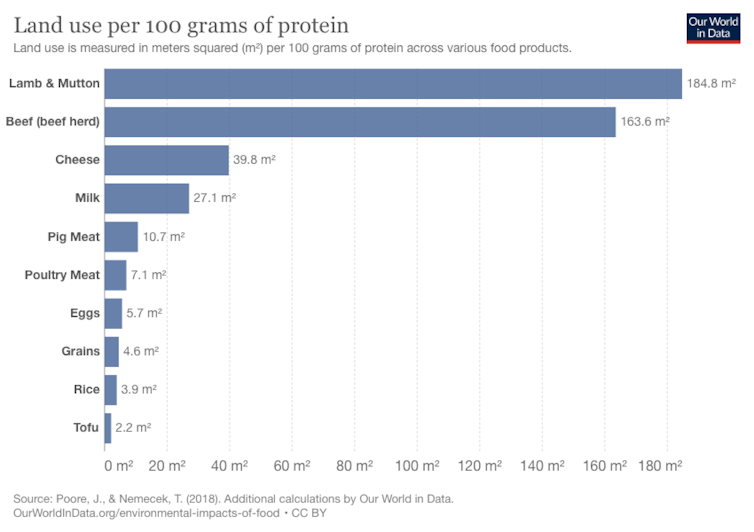 The Conversation is “a news organization dedicated to facts and evidence” and with the tag line “Academic rigor, journalistic flair”. Our kind of reading. The graph to the left illustrates this article’s point; the photo below to the right is too composed for rigor:

 Just after recently learning that this borough is the greenest, another story clues us in on this innovative program: