Climate Scientist Wields Words Well

Carl Recine/Reuters

Kate Marvel is a climate scientist at the environmental nonprofit Project Drawdown, and was a lead author on the Fifth National Climate Assessment. She has well-informed opinions and as we have noted before, she knows how to express them clearly:

I’m a Climate Scientist. I’m Not Screaming Into the Void Anymore.

Two and a half years ago, when I was asked to help write the most authoritative report on climate change in the United States, I hesitated. Did we really need another warning of the dire consequences of climate change in this country? Continue reading

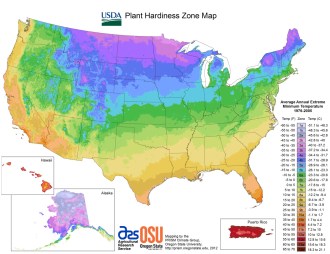
Newly Revised For Planting Plans

Source: U.S. Department of Agriculture

The topics of what to plant, when to plant, where to plant are constantly with us in Costa Rica.  Thanks to Julia Simon at National Public Radio (USA) for this note on gardeners in the USA using an online resource to rethink their planting plans:

‘It feels like I’m not crazy.’ Gardeners aren’t surprised as USDA updates key map

A newly updated government map has many of the nation’s gardeners rushing online, Googling what new plants they can grow in their mostly warming regions. Continue reading

Carl Safina, Ecologist & Author, Interviewed

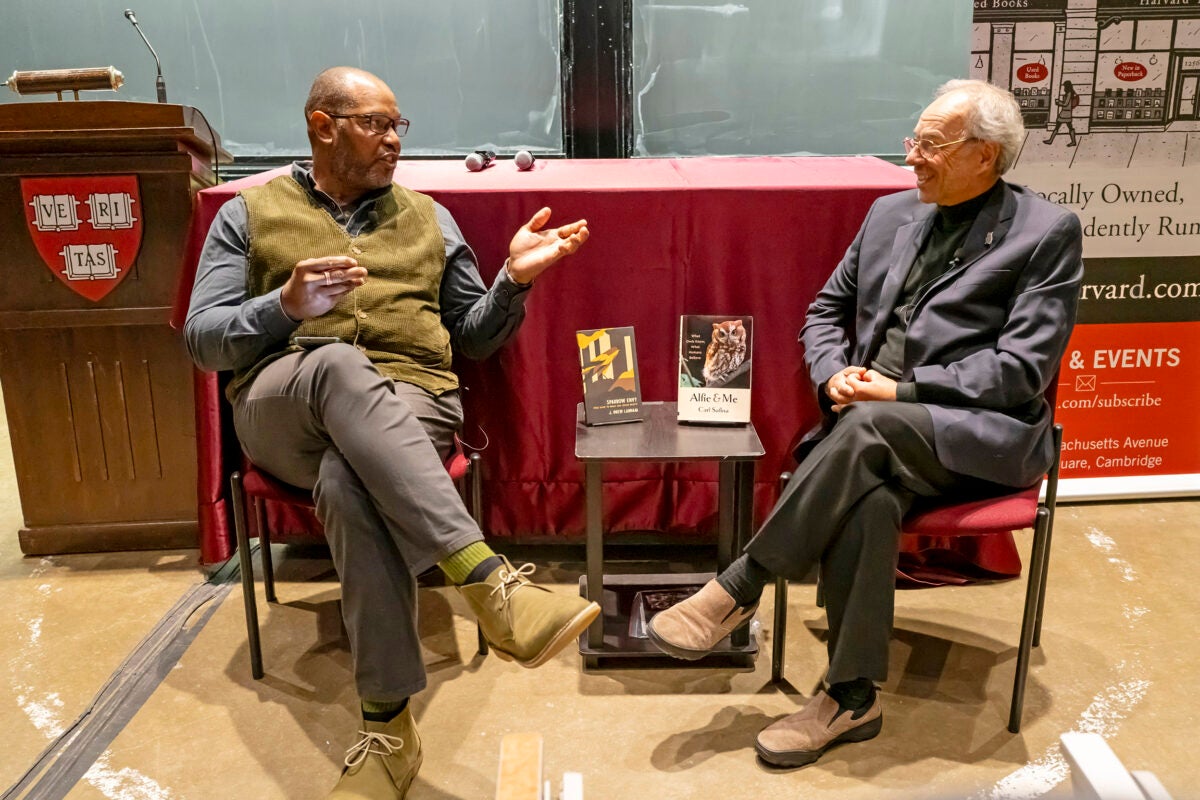
Joseph Drew Lanham and Carl Safina.

Joseph Drew Lanham (left) interviews fellow ecologist Carl Safina during a recent Harvard talk about Safina’s book “Alfie and Me: What Owls Know, What Humans Believe.” Jon Chase/Harvard Staff Photographer

We have linked to the work of Carl Safina only twice before (the second time just a photo credit) but now realize what we have been missing. Our thanks to Alvin Powell,
Harvard Gazette staff writer:

Screech owl wisdom

It took an ailing screech owl to teach a scientist the value of up-close-and-personal study.

Alfie and Me: What Owls Know, What Humans Believe by Carl Safina ...In a talk Monday at the Science Center, Carl Safina, an ecologist at Stony Brook University and author of several books about humanity’s relationship with nature, recalled that the chick was found on a friend’s lawn as the pandemic was tightening its grip on the world. In the picture Safina received, the bird looked beyond saving.“How did it die?” he asked.

“It was just a downy little, dying thing,” Safina, whose most recent book is “Alfie and Me: What Owls Know, What Humans Believe,” said in his Harvard talk, which was sponsored by the FAS Division of ScienceHarvard Library, and the Harvard Book Store and included questions from Clemson University ecologist Joseph Drew Lanham. Continue reading

Photosynthesis Mimicry Out Of Cambridge

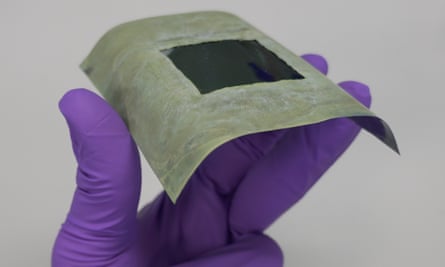
Researchers from the University of Cambridge designed ultra-thin, flexible devices, which take their inspiration from photosynthesis – the process by which plants convert sunlight into food.

Researchers from the University of Cambridge designed ultra-thin, flexible devices, which take their inspiration from photosynthesis – the process by which plants convert sunlight and CO2 into food. Photograph: Virgil Andrei

Photsynthesis comes in handy on this planet. This invention leverages the natural process into a technology to tackle a large scale challenge. We can only hope that it is not too little, too late:

Floating factories of artificial leaves could make green fuel for jets and ships

Cambridge University scientists develop a device to ‘defossilise’ the economy using sunlight, water and carbon dioxide

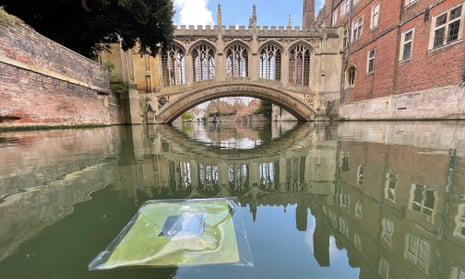
The artificial leaves were tested on the River Cam in and around Cambridge including sites such as the Bridge of Sighs.

The artificial leaves were tested on the River Cam in and around Cambridge including sites such as the Bridge of Sighs. Photograph: Virgil Andrei

Automated floating factories that manufacture green versions of petrol or diesel could soon be in operation thanks to pioneering work at the University of Cambridge. The revolutionary system would produce a net-zero fuel that would burn without creating fossil-derived emissions of carbon dioxide, say researchers. Continue reading

Dominica’s Whale Sanctuary

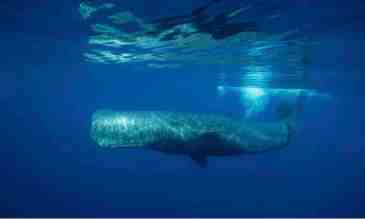
Fewer than 500 sperm whales are estimated to live in the waters surrounding Dominica. Photograph: By Wildestanimal/Getty Images

This island is already known for sperm whales. Protecting their habitat strengthens Dominica’s reputation as the conservation leader in the region:

Dominica creates world’s first marine protected area for sperm whales

Nearly 300 sq miles of water on west of Caribbean island to be designated as a reserve for endangered animals

The tiny Caribbean island of Dominica is creating the world’s first marine protected area for one of Earth’s largest animals: the endangered sperm whale. Continue reading

Invasive Pythons Are Winning, Get Your Game On

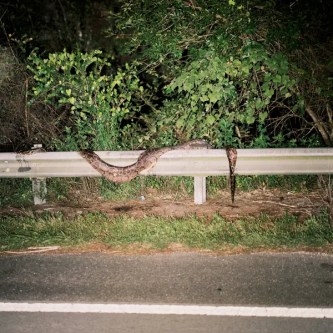
A Burmese python that was hit by a car. Zack Wittman for The New York Times

Nearly 12 years to the day since the first spectacular article we read on invasive species, we still watch for these stories. When it is invasive-hunting season, we take notice when new initiatives are announced:

Her Livelihood? Hunting Pythons in the Dead of Night.

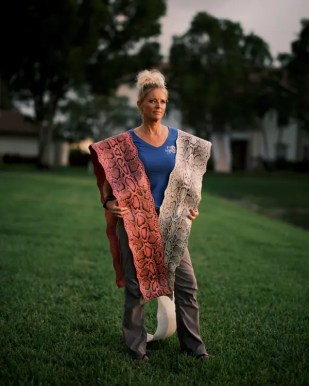
Amy Siewe teaches people how to find and euthanize invasive Burmese pythons, which have been so successful at adapting to Florida that they appear here to stay.

On a clothing rack in Ms. Siewe’s living room are a dozen of skins, dyed deep hues by a tannery that helps her make python-leather products, including Apple Watch bands. Zack Wittman for The New York Times

An unexpected chill can fall over the Florida Everglades late at night. Stars speckle the sky. Frogs croak and croak, their mating calls echoing in the air.

It is all peace and wonder until you remember why you are out at this hour, on the flatbed of a pickup truck outfitted with spotlights, trying to find invasive creatures lurking in the shadows.

A python hunt might evoke images of hunters trudging through swamps and wresting reptiles out of the mud. In reality, it involves cruising the lonely roads that traverse the Everglades in S.U.V.s, hoping for a glimpse of a giant snake. It is strange work, straining on the eyes, brutal on the sleep schedule. Continue reading

More Energy Use Annually Dwarfs Gains From Renewables

Ty Wright / Bloomberg / Getty

The facts about our progress combatting environmental crises are complex. Sometimes we sense hope and other times not so much. Zoë Schlanger, writing in the Atlantic, runs some numbers on mitigation from renewables:

One Huge Contradiction Is Undoing Our Best Climate Efforts

The math isn’t adding up.

You’d be forgiven for thinking that the fight against climate change is finally going well. Continue reading

The Slow Ways App, For Right Of Way Walkers

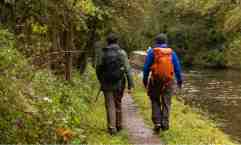
The Slow Ways founder, Daniel Raven-Ellison (right) walks with the Guardian’s Patrick Barkham as they verify a route between Congleton and Macclesfield. Photograph: Fabio De Paola/The Guardian

The right of way is a theme we love, and now there is a technology to assist our pursuit of those rights, at least in one country.

Our thanks to and the Guardian for their coverage of this development:

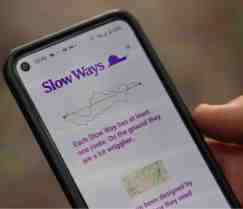
Walk the walk: the app mapping 140,000 miles of public right of way

Slow Ways was set up during the pandemic when frustrated locked-down walkers drew up more than 9,000 walking routes across Great Britain. Photograph: Fabio De Paola/The Guardian

Community-based, Slow Ways has verified 60% of a network of pedestrian-friendly routes across Great Britain

I meet up with Daniel Raven-Ellison, the brains behind the Slow Ways walking network, in the darkness of a drizzly dawn at Kidsgrove railway station in Staffordshire. Our mission? To walk and verify the final 17-mile (27km) link in the route between Birmingham and Manchester. Continue reading

Understanding Seawalls, Their Promise & Their Limits

Daniel A. Gross does some heavy lifting on behalf of all of us, especially those in coastal areas. This technology is foreign to most of us, except the Dutch. We can hope all we want, but now might be a good time to start thinking more seriously about whether this technology is fit for the task:

Can Seawalls Save Us?

Huge coastal barriers could protect the world’s cities. But they’ll have unexpected costs.
Pacifica, California, just south of San Francisco, is the kind of beachfront community that longtime residents compare to Heaven. One of its streets is called Paradise Drive; local fishermen brag that Pacifica Pier is among the state’s best places to catch salmon, striped bass, and crab. Every few years, a superbloom blankets the coast with golden wildflowers. When the sun cuts through the region’s famous fog, the sky sometimes glows, as in a Turner painting.
Some of Pacifica’s most dramatic views could be found on Esplanade Drive, where mid-century developers built bungalows on top of a cliff. For almost fifty years, residents gazed out from their back yards to see whales splashing in the Pacific. Then, in 1998, a group of homeowners gathered to say goodbye. “I cannot express how spectacular it has been living here,” one of them, Joe Parker, said at the time. “I’ve seen dolphins out there. I recognize all the seabirds.” Beverly Axelrod, who had spent fourteen years on Esplanade Drive, recalled how her ocean view had “healed everything.” Continue reading

Heirloom Captures Carbon

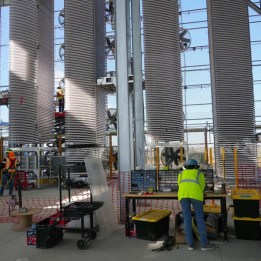
Heirloom’s plant in Tracy, Calif., pulls carbon dioxide from the air so it can be sealed permanently in concrete. Jim Wilson/The New York Times

We have been waiting for this day to arrive:

In a U.S. First, a Commercial Plant Starts Pulling Carbon From the Air

The technique is expensive but it could help fight climate change. Backers hope fast growth can bring down costs.

In an open-air warehouse in California’s Central Valley, 40-foot-tall racks hold hundreds of trays filled with a white powder that turns crusty as it absorbs carbon dioxide from the sky.

The start-up that built the facility, Heirloom Carbon Technologies, calls it the first commercial plant in the United States to use direct air capture, which involves vacuuming greenhouse gases from the atmosphere. Continue reading

Industrial Meat, Fascinating & Disgusting

The “cultivation room” at Upside Foods in Emeryville, California. The company is one of two now approved to sell lab-grown meat to U.S. consumers. Upside Foods

We appreciate Garth Brown writing in New Atlantis for this rather disgusting explanation of one big part of our industrial meat system:

Oiling the Chicken Machine

Queasy about lab-grown meat? Too bad — you’ve pretty much been eating it for decades.

In her community, it’s common knowledge that my mom is a soft touch when it comes to chickens. She maintains a motley flock of adoptees — backyard hens whose owners have moved, scrawny layers too old to be worth their feed, the pets of children who never much wanted them in the first place. She knows most of the people who donate the birds, or at least knows how they connect to her capacious social circle. Continue reading

Starbucks Puzzles

Hannah Rosenberg/Sun File Photo. Cornell will be terminating its partnership with Starbucks following a recent National Labor Relations Board ruling.

While lecturing on social enterprise recently, as I have done each semester in recent years, I learned the following news from a student and found the article below in the University’s newspaper to explain it:

Cornell to End Partnership With Starbucks by June 2025

Cornell will be terminating its partnership with Starbucks no later than the expiration of its current contract, Student Assembly President Patrick Kuehl ’24 announced in an Aug. 16 email to the student body. The contract is set to expire in June 2025…

Thanks to Jonathan Mong at the Cornell Daily Sun for that clear explanation, worth reading in full if you care about the coffee business, and/or the basics of labor law in the USA. Bravo to the University for its consistent stand upholding those labor laws. Starbucks, a company I once admired without reservation, now primarily puzzles and frequently disappoints me:

Starbucks increases U.S. hourly wages and adds other benefits for non-union workers

Starbucks is increasing pay and benefits for most of its U.S. hourly workers after ending its fiscal year with record sales. Continue reading

Endangered Eating By Sarah Lohman

The author, culinary historian Sarah Lohman, came to our attention at the time her previous book was being published, and we are happy to see more of her work. From her own website:

American food traditions are in danger of being lost. How do we save them?

Apples, a common New England crop, have been called the United States’ “most endangered food.” The iconic Texas Longhorn Cattle is categorized at “critical” risk for extinction. Unique date palms, found nowhere else on the planet, grow in California’s Coachella Valley —but the family farms that caretake them are shutting down…

And the reviews suggest that the book is every bit as good as the author had hoped it would be.

Cruise Ships Constantly Careless

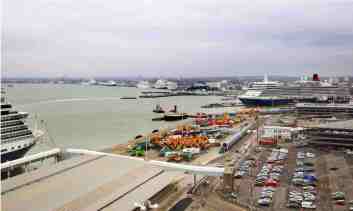
Cruise ships docked in Southampton, where an analysis of ship schedules found most did not make use of onshore power facilities. Photograph: Chris Ison/PA

We have pointed in this direction plenty of times over the years, so by now you might say it is caveat emptor:

Cruise ships polluting UK coast as they ignore greener power options

Most liners rely on marine gas oil when docked, despite claims they reduce emissions by plugging into low-carbon electricity

Cruise ships visiting Britain are frequently failing to plug into “zero emission” onshore power and instead running their engines and polluting the local environment with fumes. Continue reading

Nature Conservancy 2023 Global Photo Contest Winners

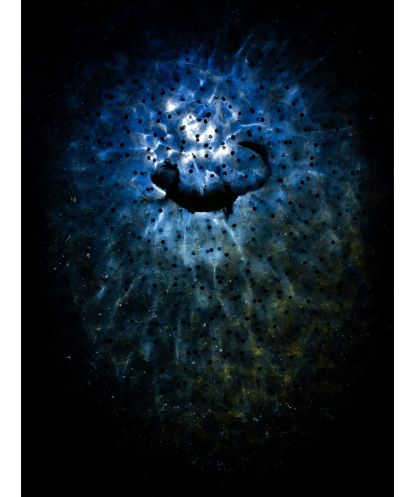
BETWEEN THE STARS I photographed this moment underwater. I was able to do it by putting my camera in an underwater case, attaching it to a metal weight and placing it all under the eggs. I waited nearby for it to be dark, and when the newt appeared, I lit it with an LED lamp. I started the camera with a home-made wired remote release. It turned out 1-2 sharp pictures. © Tibor Litauszki/TNC Photo Contest 2023

We appreciate the break from the news of the day:

The Nature Conservancy is proud to announce the winners of the 2023 photo contest.

Your images gave voice to nature and showed us the power and peril of the natural world.

The following photos submitted to our 2023 photo contest captivated our judges the most.

This image is a clear display of the patience, coincidence, technical adaptability and composition that earns top choice in the competition. Well-constructed and simply beautiful. The outward simplicity of the photo almost makes it easy to forget how much waiting is required to get a shot like this. The high-speed nature of the subject means you have to be dialed in perfectly when the shot arrives.
— Cole Sprouse, Celebrity Guest Judge

We are happy to see Alan Taylor‘s photography in the mix this year:

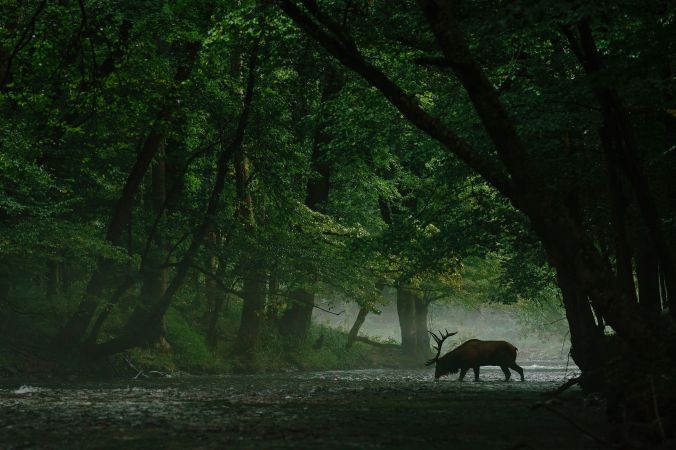
A COOL DRINK A bull elk stopping in the Oconaluftee River in the Great Smoky Mountains National Park to a refreshing drink © Alan Taylor/TNC Photo Contest 2023

This year the categories are: Continue reading

Save The Wave In Iceland

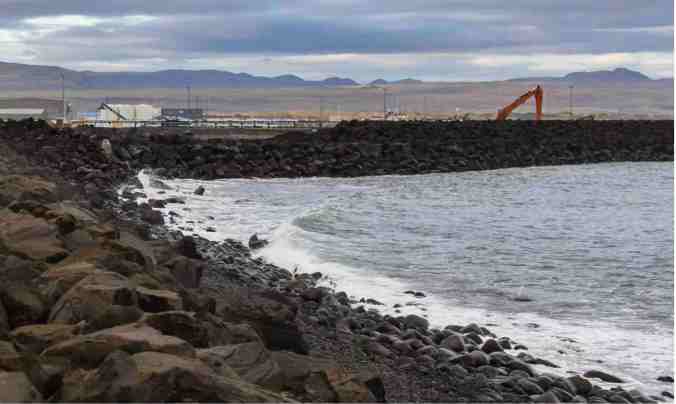
Surfers believe that construction work at Þorlákshöfn could ruin conditions. Photograph: Sigga Ella/The Guardian

Female surfer and business co-owner from Reykjavík, Elín Kristjánsdóttir Photograph: Sebastien Drews

Protecting waves from the effects of development, for surfing, has featured in two previous posts. Those were in locations more commonly associated with the sport. Iceland has featured in our pages many more times over the years, not once in relation to waves or surfing. Until today:

Improvements in wetsuit technology mean surfers can enjoy the waters in Iceland all year round. Photograph: Sigga Ella/The Guardian

Icelandic surfers fear port development will ruin ‘perfect point break’

Volcanoes, northern lights and midnight sun are all on offer at this haven, which locals want to preserve

Look at this wave,” says Mathis Blache, pointing to the sea from the shore’s black rocks as a swell rolls in. “It’s just perfect.” Despite air and water temperatures in the single digits, the 27-year-old student and surfer points out two other surfers – and a couple of seals – delighting in the conditions at Þorlákshöfn in south-west Iceland.

This spot, where surfers can enjoy either the midnight sun or the northern lights depending on the time of year, has in recent years become the heart of Iceland’s rapidly growing surfing community. Continue reading

Big Turbines, Big Location, Big Wind Farm

Image via U.S. Bureau of Ocean Energy Management
A map shows the location of Dominion’s federal lease and where the company proposes to run associated infrastructure.

Thanks to National Public Radio (USA) station WHRO for this news.

It is a big deal:

Dominion can soon start building Virginia Beach offshore wind farm, feds say

Dominion Energy will soon have the green light to start building its long-awaited wind farm off the Virginia Beach coast.

Dominion Energy’s pilot turbines off Virginia Beach this summer. (Photo by Laura Philion)

The Biden administration announced Tuesday its approval of the $9.8 billion Coastal Virginia Offshore Wind project, which when constructed will be the largest in the country’s history.

Dominion can now start constructing infrastructure for the project on-shore, said spokesperson Jeremy Slayton. The company just needs the Bureau of Ocean Energy Management to OK its construction and operations plan for the offshore farm. Continue reading

Frightening Future Facts For All Hallows’ Eve

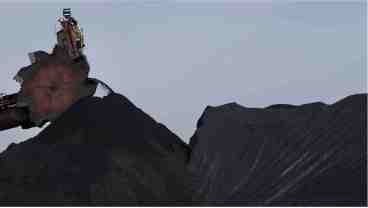
Faced with climate change on the one hand and the material demands of new energy infrastructure on the other, humanity had better figure out how to reuse the resources it has already dug up. Illustration by Laura Edelbacher

Not to rain on the parade of the candy and costumes fun of October 31, but to heighten the mood of the day with some sobering truths facing all of us, our thanks as always to Elizabeth Kolbert for getting our attention pointed where it needs to go:

The Real Cost of Plundering the Planet’s Resources

Our accelerating rates of extraction come with immense ecological and social consequences.

The town of Spruce Pine, North Carolina, doesn’t have a lot to say for itself. Its Web site, which features a photo of a flowering tree next to a rusty bridge, notes that the town is “conveniently located between Asheville and Boone.” According to the latest census data, it has 2,332 residents and a population density of 498.1 per square mile. A recent story in the local newspaper concerned the closing of the Hardee’s on Highway 19E; this followed an incident, back in May, when a fourteen-year-old boy who’d eaten a biscuit at the restaurant began to hallucinate and had to be taken to the hospital. Without Spruce Pine, though, the global economy might well unravel. Continue reading

Crowdsourcing & OED

Illustration by Paul Spella / The Atlantic. Sources: Wikimedia; Getty.

The origins and uses of words have been of interest to us since early on, because the terminology around conservation is relatively young; also because words are essential to the cause. Stephanie Hayes, writing this review in the Atlantic, reminds us to keep paying attention to how we know what we know about words:

Who Made the Oxford English Dictionary?

A new book gives life to one of the world’s greatest crowdsourcing efforts.

The Oxford English Dictionary always seemed to me like the Rules from on high—near biblical, laid down long ago by a distant academic elite. But back in 1857, when the idea of the dictionary was born, its three founders proposed something more democratic than authoritative: a reference book that didn’t prescribe but instead described English, tracking the meaning of every word in the language across time and laying out how people were actually using each one. Continue reading