What Does Positive & Progressive Permitting Look Like?

We have seen the Center for Biological Diversity mentioned in his newsletters before, but this week Bill McKibben links to this recently released document. The Center offers a positive and progressive consideration of priorities we should give to permitting renewable energy, contrasting efforts to gut regulatory protections related to fossil fuel permitting highlighted in his current newsletter:

Introduction

It is indisputable that the climate emergency requires the United States to rapidly transform its majority fossil energy system to 100% clean and renewable energy.

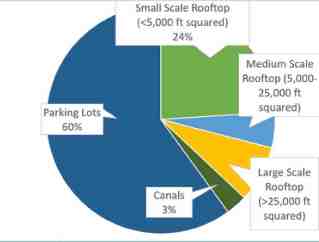
Distributed solar on rooftops alone can generate a significant portion of our energy demands while also bringing key benefits like resilience, local job generation, and avoided wildlife impacts. Once distributed energy is maximized, building renewables on top of parking lots and canals as additional built surfaces can fill the remaining gap in our current energy demand. Prioritizing these sites for renewable energy can avoid the community impacts and bottlenecks associated large-scale transmission construction.

The United Nations Intergovernmental Panel on Climate Change’s recent sixth synthesis report makes absolutely clear that an unprecedented bold transition to renewable energy with an equally aggressive effort to halt new fossil fuel development and phase out existing fossil fuel usage is absolutely vital to avoiding the most catastrophic consequences of climate change (1). This necessary transformation presents a tremendous opportunity to pursue a far more just path forward—one that ends the status quo entrenchment of the fossil fuel industry; empowers federal agencies to use their authorities to accelerate the transitions to a justly sourced, justly implemented, resilient, and equitable power system; actualizes the principles of environmental justice; and preserves our core environmental laws. Continue reading
Reversal Of Absurd Destruction Counts As Progress in Brazil’s Amazon

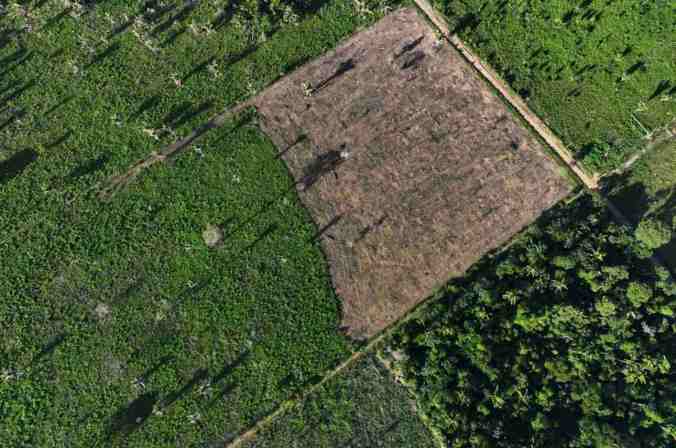
An aerial view shows a deforested area during an operation to combat deforestation at the Cachoeira Seca indigenous reserve, in Uruara, Para State, Brazil January 19, 2023. REUTERS/Ueslei Marcelino

What counts as good news now in one part of the world is simply a reversal of absurd destruction trends of recent years. Without minimizing its importance we can acknowledge that a positive reversal is a low bar for what needs to be accomplished:

Deforestation in Brazil’s Amazon falls 68% in April, first major drop under Lula

SAO PAULO, May 12 (Reuters) – Deforestation in Brazil’s Amazon rainforest fell 68% in April from the previous year, preliminary government data showed on Friday, a positive reading for President Luiz Inacio Lula da Silva as it represents the first major drop under his watch. Continue reading

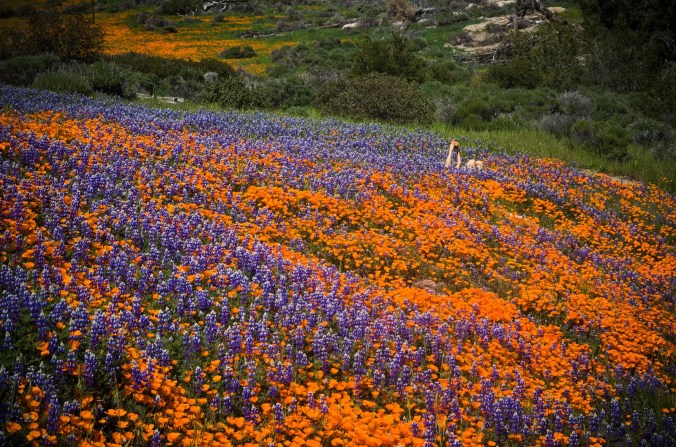
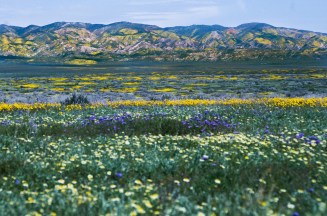
About That Bloom

Figueroa Mountain. April, 2023.

We had a quick look at this phenomenon recently, but Dana Goodyear is just the person to give it this depth of follow up that is worth a read and luxuriant gazing:

Point Buchon Trail, Montaña de Oro State Park. February, 2023.

The Superbloom Is a Glimpse of California’s Past

This year’s rains reversed, temporarily, more than a decade of catastrophic drought. Some of the seeds that caused the bloom have lain dormant for years.

This winter, it rained in California. Ten inches in San Francisco in the ten days after Christmas alone. Thirty-one atmospheric rivers—columns of vapor that move water from the tropics. Record-breaking snow at Mammoth Lakes. Los Angeles measured its wettest year on record since 2004-05, the year I moved here.

Carrizo Plain National Monument. April, 2023.

My memories from that first winter are of driving in a rental car on slick gray roads, weaving around Jurassic-looking fallen palm fronds; my elderly neighbor calling, terrified, as the water rushed from my basement office toward her house; a picture on the front page of the paper showing a swimming pool sliding off a hill.

Pinnacles National Park. April, 2023.

People hunkered down; red tags went up, flagging damaged buildings. I had left all my sweaters in New York, and froze. I learned the city through a veil of rain. Looking at the mountains, downtown is to the right, and the coast is to the left.

By April, the rain had stopped, and nasturtiums, not muddy rivers, were cascading down the hillsides. Seussian red bottlebrush trees and violet jacarandas made the days vivid, and at night the white blooms emanated perfume.

So this was Los Angeles: abundant, intoxicating, unmoored. It must have been a Superbloom, though I don’t remember anyone calling it that then. I didn’t know that it would be eighteen years before I would see this Los Angeles again. Continue reading

The Lab Of Peter Girguis

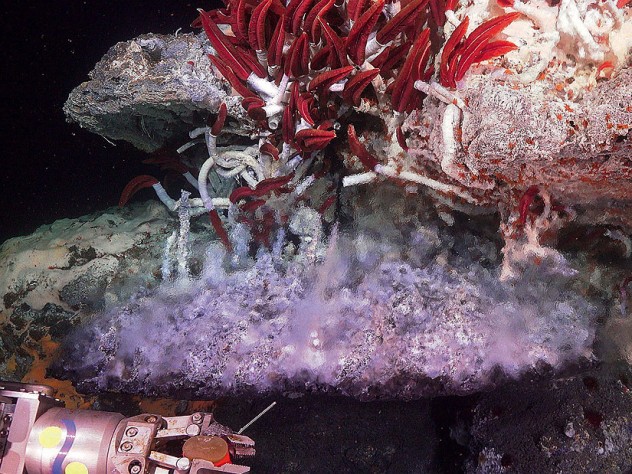
Giant tubeworms take up chemicals from a hydrothermal vent 6,200 feet deep in the Gulf of California (the Girguis lab is world-renowned for research on these worms). Photograph courtesy of the Schmidt Ocean Institute

Our thanks to Veronique Greenwood (after a few years’ absence from our notice) for her most recent article in Harvard Magazine:

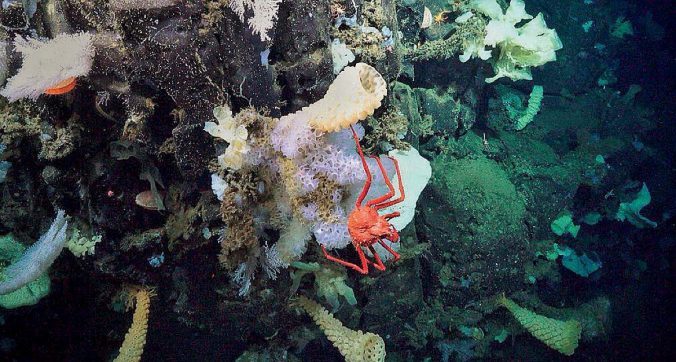
Top: a remote dive at Emery Knoll, a deepwater reef off Southern California, reveals crabs, sponges, and corals. Bottom: a rare sighting of the massive seven-arm octopus, Haliphron atlanticus. Photographs courtesy of the Schmidt Ocean Institute

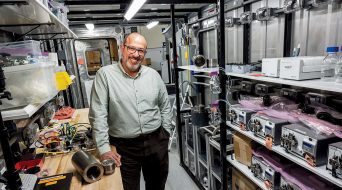
Peter Girguis on terra firma in the lab. Photograph by Jim Harrison

Plumbing the Deep Sea

Peter Girguis probes life on the ocean floor

In a cavernous underground space behind Harvard’s Biological Laboratories, biochemist Peter Girguis frowns at the pressure vessel in his hand. The machined titanium cylinder, about the size of a French press, gleams as he works to release the cap, and he chuckles at his own stubbornness. He could probably find a tool to loosen it, he remarks. Continue reading

Chilekwa Mumba, 2023 Goldman Environmental Prize Winner

The 2023 Goldman Prize goes to this man:

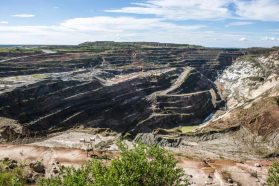
Alarmed by the pollution produced by the Konkola Copper Mines operation in the Copperbelt Province of Zambia, Chilekwa Mumba organized a lawsuit to hold the mine’s parent company, Vedanta Resources, responsible. Chilekwa’s victory in the UK Supreme Court set a legal precedent—it was the first time an English court ruled that a British company could be held liable for the environmental damage caused by subsidiary-run operations in another country. This precedent has since been applied to hold Shell Global—one of the world’s 10 largest corporations by revenue—liable for its pollution in Nigeria.

Our thanks to Jocelyn C. Zuckerman for this conversation with him:

The Nchanga copper mine, operated by Konkola Copper Mines, in Chingola, Zambia. WALDO SWIEGERS / BLOOMBERG VIA GETTY IMAGES

This Zambian Took on a U.K. Mining Giant on Pollution and Won

Chilekwa Mumba led a court battle to hold a U.K.-based company responsible for the gross pollution from a copper mine it owns in Zambia. In an interview, he talks about how he and local villagers faced arrest to overcome long odds and finally win a landmark legal victory.

The southern African nation of Zambia is home to a wealth of minerals — in particular, lots of the copper and cobalt that the world will require to power a green economy. Continue reading

India’s Progress With Solar Power Generation

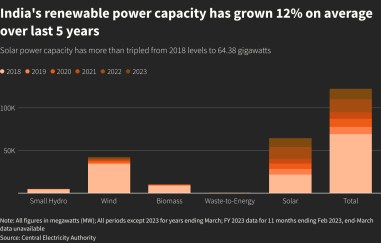
Reuters Graphics

Progress on solar power generation in India is a big deal. The country’s reduction in poverty, remarkable as it has been, is counterbalanced by its environmental impoverishment. Thanks to Reuters for this article by Sarita Chaganti Singh and Sudarshan Varadhan:

Exclusive: India amends power policy draft to halt new coal-fired capacity

NEW DELHI/SINGAPORE, May 4 (Reuters) – India plans to stop building new coal-fired power plants, apart from those already in the pipeline, by removing a key clause from the final draft of its National Electricity Policy (NEP), in a major boost to fight climate change, sources said. Continue reading

Norway’s Combustion Transition

About 80 percent of new-car sales in Norway were electric last year, putting the country at the vanguard of the shift to emissions-free vehicles. David B. Torch for The New York Times

A major fossil fuel producing country has figured out how to transition away from combustion engines:

About 80 percent of new cars sold in Norway are battery-powered. As a result, the air is cleaner, the streets are quieter and the grid hasn’t collapsed. But problems with unreliable chargers persist.

BAMBLE, Norway — About 110 miles south of Oslo, along a highway lined with pine and birch trees, a shiny fueling station offers a glimpse of a future where electric vehicles rule. Continue reading

The Future Of Solar In India

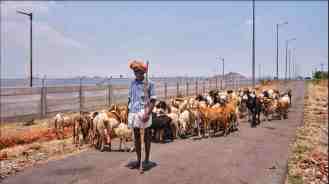
A local farmer grazes his goats along a road overlooking Pavagada Solar Park. Photographs by Supranav Dash for The New Yorker

Difficult to imagine that with all the times India has appeared in these pages, and separately all the times that solar has appeared, this is the first time they appear together:

India’s Quest to Build the World’s Largest Solar Farms

Pavagada Ultra Mega Solar Park, a clean-power plant the size of Manhattan, could be a model for the world—or a cautionary tale.

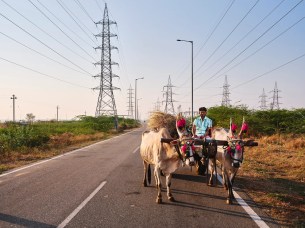
Ashok Narayanappa drives a bullock cart carrying hay, along a stretch of road lined with pylons, in Pavagada Solar Park.

Every morning in the Tumakuru District of Karnataka, a state in southern India, the sun tips over the horizon and lights up the green-and-brown hills of the Eastern Ghats. Its rays fall across the grasslands that surround them and the occasional sleepy village; the sky changes color from sherbet-orange to powdery blue. Eventually, the sunlight reaches a sea of glass and silicon known as Pavagada Ultra Mega Solar Park. Here, within millions of photovoltaic panels, lined up in rows and columns like an army at attention, electrons vibrate with energy. The panels cover thirteen thousand acres, or about twenty square miles—only slightly smaller than the area of Manhattan. Continue reading

Think, While You Can, About The Processed Foods You Eat

Jess Ebsworth

The groceries we shop for, even with the finer shopping options, sometimes disappoint; but some foods are just plain wrong, as this article by Sally Wadyka in the New York Times explains:

The Link Between Highly Processed Foods and Brain Health

Eating packaged foods like cereal and frozen meals has been associated with anxiety, depression and cognitive decline. Scientists are still piecing together why.

Roughly 60 percent of the calories in the average American diet come from highly processed foods. Continue reading

Alcohol 2.0

click this image to go to the video and accompanying text

Alcohol rarely features in our pages, but in the spirit of public service announcement this pair seems worth sharing:

The Opinion Video above is about a drug problem — but not the one you may think. While the United States struggles to deal with the opioid crisis, there’s a quieter drug epidemic that has been unfolding for a lot longer. It involves a substance that was normalized long ago but that, by some measures, plays a role in more than 140,000 deaths a year.

It’s alcohol.

But don’t worry. We here at Opinion Video are not a bunch of temperance reformers coming to take away your six-packs and single malts. We just think there’s a lot more that American lawmakers could be doing to lessen the harm that alcohol causes…

The Economist podcast episode below, from a couple months back, is a useful bookend to the op-ed above. It illuminates the mysteries of the hangover and the chemistry of new alcohol-free, healthy and buzz-inducing alternatives:

How alternatives to alcohol could save lives

Our podcast on science and technology. This week, we explore how innovators are dreaming up ways to enjoy the effects of alcohol, without the costs

ALCOHOL IS the most widely used drug in the world, but it is also the cause of three million deaths each year and has been linked to many other long-term illnesses. Continue reading

Bringing Back Peat

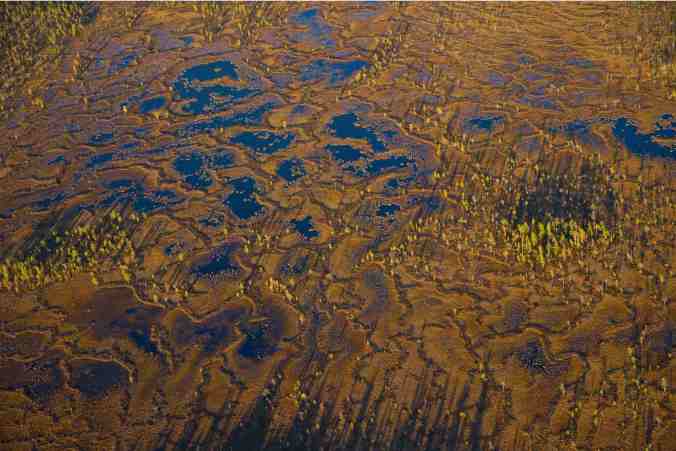
Peatland and taiga forest in northern Finland. NATURE PICTURE LIBRARY / ALAMY STOCK PHOTO

It has been a year since we linked to a peat-in-place story, of which there cannot be too many (so thank you, Yale e360):

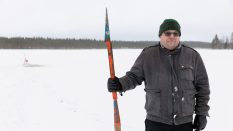
Tero Mustonen. GOLDMAN ENVIRONMENTAL PRIZE

Finland Drained Its Peatlands. He’s Helping Bring Them Back

Tero Mustonen has led a successful effort to restore roughly 80 areas of ecologically critical peatlands across his native Finland. In an interview, he talks about the importance of bringing Indigenous knowledge to rewilding initiatives in far northern regions and beyond.

Until a century ago, almost a third of Finland was covered in pristine peatlands, which comprise one of the Earth’s largest and most important carbon sinks. Since then, however, half of Finnish peatlands have been strip-mined for fuel or drained to make room for forest plantations. Continue reading

Viewed From Above, Our Most Important Leaks

Illustration by Ard Su

David W. Brown offers this updated look at the use of satellite technology for a key metric:

A Security Camera for the Planet

A new satellite, funded by a nonprofit, aims to pinpoint emissions of methane—a gas that plays a major role in global warming.

When his phone rang, Berrien Moore III, the dean of the College of Atmospheric and Geographic Sciences at the University of Oklahoma, was fumbling with his bow tie, preparing for a formal ceremony honoring a colleague. He glanced down at the number and recognized it as nasa headquarters. This was a bad sign, he thought. In Moore’s experience, bureaucrats never called after hours with good news.

It can see large methane concentrations along its orbital path, but can’t pinpoint emissions sources. Illustration by Ard Su

For roughly six years, Moore and his colleagues had been working on a space-based scientific instrument called the Geostationary Carbon Cycle Observatory, or GeoCarb. nasa had approved their proposal in 2016; it was now 2022, and GeoCarb was being built by Lockheed Martin, in Palo Alto, California. Once it was in space and mounted to a communications satellite, GeoCarb would scan land in the Western Hemisphere continuously in strips, taking meticulous measurements of three carbon-based gases: carbon dioxide, carbon monoxide, and methane. It would give scientists a detailed view of the carbon cycle—the process by which carbon circulates through the Earth’s forests, lakes, trees, oceans, ice, and other natural features. Continue reading

Andy Hunter Scales Up Without Selling Out

Andy Hunter, the founder of Bookshop.org (pictured here at Spoonbill & Sugartown Books in Brooklyn) developed his love for books early. “I became a reader, in the beginning, because it provided me solace,” he says. PHOTOGRAPH: YAEL MALKA

Who could resist a story about scaling up without selling out–especially when it involves an online book shop?

Our thanks to Kate Knibbs, a senior writer at WIRED, for this profile of someone who has indirectly featured in our pages without being named before.

Not to mention the photographs by Yael Malka accompanying the story:

How Bookshop.org Survives—and Thrives—in Amazon’s World

Andy Hunter’s ecommerce platform was a pandemic hit. Now he’s on a mission to prove that small businesses can scale up without selling out.

“DO YOU REMEMBER what kind of beer it was?”

PHOTOGRAPH: YAEL MALKA

Andy Hunter pauses for so long before answering my question, it’s awkward. He’s racking his brain. I’ve asked him to tell me about the night he came up with the idea that led to his improbably successful bookselling startup, Bookshop.org. As a former magazine editor, he wants to get the details right.

He remembers the easy stuff: It was 2018. He was on the road for work. At the time, Hunter ran the midsize literary publishing house Catapult, a job that required schmoozing at industry events. The night of his big brainstorm, he was away from his two young daughters and his usual evening obligations—dishes, bedtime rituals—and had a rare moment to think, and drink a beer. Continue reading
Libreria Bookshop & Review Of Once Upon A Prime

Click above to visit an independent bookshop whose platform for selling books online is a welcome distraction. Below, the owner of that shop (a character worth contemplating) writes a great book review. Oddly enough, we could not find, or figure out how to find, this book on his bookshop’s website.

But nevermind that, we have linked to the publisher’s blurb on the book to the left:

Once Upon a Prime review – why maths and literature make a winning formula

Prof Sarah Hart’s exuberant study of the enduring conversation between mathematics and literature is fascinating

The universe (which others call the Library) is composed of an indefinite, perhaps infinite number of hexagonal galleries.” That’s how Jorge Luis Borges starts The Library of Babel, beloved by maths geeks and book nerds alike for the way it toys with the mathematical concept of infinity. Continue reading
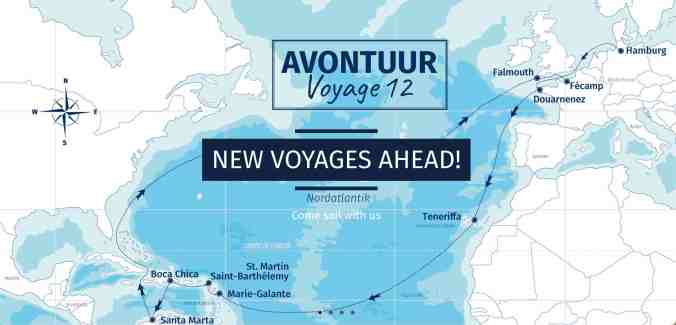
#CargoUnderSail #RethinkShipping

Illustration by Owen D. Pomery

The Climate Crisis Gives Sailing Ships a Second Wind

Cargo vessels are some of the dirtiest vehicles in existence. Can a centuries-old technology help to clean them up?

In February, 1912, Londoners packed a dock on the River Thames to gawk at the Selandia, a ship that could race through the water without any sails or smokestacks. Winston Churchill, then the minister in charge of the British Royal Navy, declared it “the most perfect maritime masterpiece of the twentieth century.” But, as the Selandia continued its journey around the world, some onlookers were so spooked that they called it the Devil Ship…

The history is a fun read, so continue to the whole story here. But then, take a closer look at the company featured in the article:

Our Story

Over the course of 20 years working in the maritime industry Cornelius Bockermann witnessed first hand how humans adversely affect our environment. He knew something had to change. In 2013, he moved with his family to Cairns and shipped all their possessions from Germany to their new home in Australia. Through the process of shipping his own goods he experienced the disconnect between commerce and environmental preservation. Upon learning of plans to expand fossil fuel based shipping along the Queensland coast and amongst the Great Barrier Reef he knew he had to act. The question became how do you offer businesses and consumers a sustainable option in shipping?

Cargo Under Sail is the answer and the Dutch schooner named the AVONTUUR is the vessel to start it.

We are a passionate collective of individuals working to create a supply chain that merges the relationship between commerce and preservation. We are restless and can no longer wait for others to make a change.

Our Mission Zero

To eliminate pollution caused by shipping cargo.

We have a five-stage approach:

1. Raise Awareness about the environmental destruction caused by the shipping industry

2. Model a clean shipping future with our AVONTUUR

3. Sell premium AVONTUUR products to support the ongoing operation of the project.

4.  Establish a demand for products shipped by sail

5. Build a modern sail cargo fleet

At Long Last, Lamprey Love

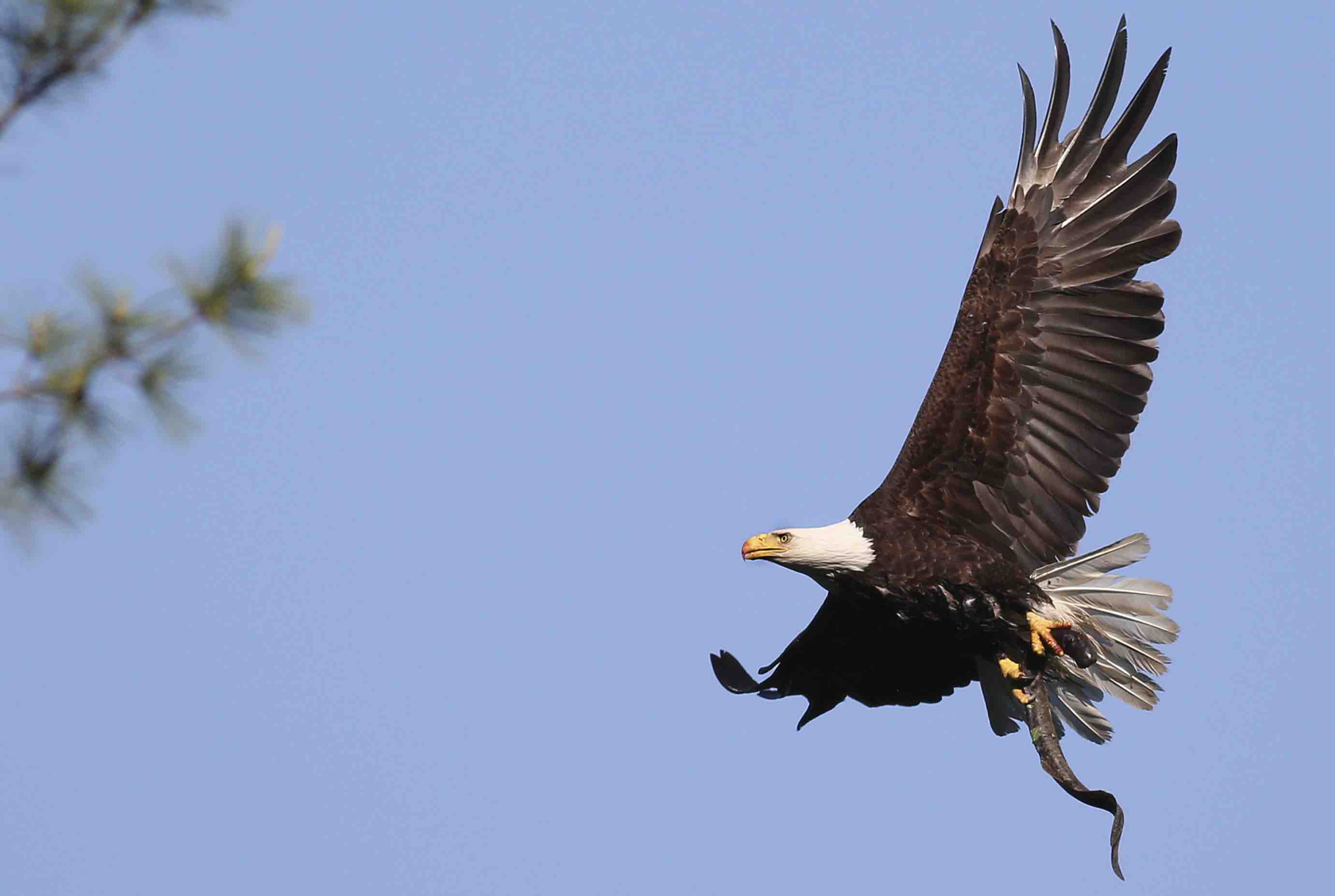
A bald eagle carries a sea lamprey snatched from the Connecticut River in Windsor, Vermont. MARY HOLLAND / NATURALLY CURIOUS

Nine years ago lamprey was referenced in a book review; then a couple years later, in a story about dam removal; and again a year later; and more recently with a book review and another dam removal story; today, a story about giving this creature its due:

A sea lamprey. T. LAWRENCE / GREAT LAKES FISHERY COMMISSION / NOAA VIA FLICKR

Long Reviled as ‘Ugly,’ Sea Lampreys Finally Get Some Respect

The sucker-mouthed marine lamprey has been dismissed as grotesque and a threat to sport fish. But fisheries managers in New England and the Pacific Northwest are recognizing the ecological importance of lampreys in their native waters and are stepping up efforts to help them recover.

Native Americans catch lamprey, eel-like fish, at Willamette Falls, a 40-foot waterfall south of Portland, Ore., Friday, June 12, 2015. An ancient fish that’s a source of food for tribes in the Pacific Northwest, lampreys have been in drastic decline in recent decades. (AP Photo/Gosia Wozniacka)

“Thousands of sea lamprey are passed upstream [on the Connecticut River] each year. This is a predator that wiped out the Great Lakes lake-trout fishery. [Lampreys] literally suck the life out of their host fish, namely small-scale fish such as trout and salmon. The fish ladders ought to be used to diminish the lamprey.” So editorialized the Lawrence (Massachusetts) Eagle-Tribune on December 15, 2002.

If that’s true, why this spring is Trout Unlimited — the nation’s leading advocate for trout and salmon — assisting the Town of Wilton, Connecticut and an environmental group called “Save the [Long Island] Sound” in a project that will restore 10 miles of sea lamprey spawning habitat on the Norwalk River? Continue reading

An Optimistic View On Climate

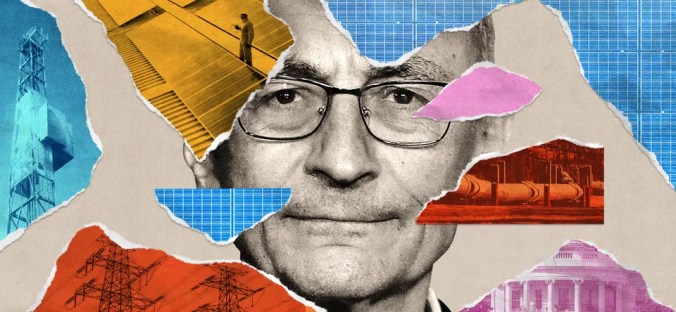
Illustration by Nicholas Konrad / The New Yorker; Source photographs from Getty.

We appreciate the author’s wide reach and tireless exploration for solutions to seemingly unsolvable puzzles:

A Case for Climate Optimism, and Pragmatism, from John Podesta

The veteran political operative now has one of the nation’s top climate jobs. He speaks about the Willow oil-drilling project, the Inflation Reduction Act, and the Biden White House.

“Humanity is on thin ice, and that ice is melting fast,” António Guterres, the Secretary-General of the United Nations, recently warned, in response to a newly alarming climate report. The ice is melting, in large part, because the world keeps burning fossil fuels. To change that, the U.S. will need to join other nations in replacing machines that burn them—cars, stoves, furnaces, and eventually things like planes and factories—with machines that run on electricity. Continue reading
Natural History Anew

An image from 1957, when the cross and square design was still legible. American Museum of Natural History

We have featured so many natural history museums in our pages over the years that one more might have been redundant; but no:

A new aerial photo shows the museum today, as a crazy quilt of buildings from many eras, with Gilder on the right. Iwan Baan

The article below, by Michael Kimmelman with photographs and video by Peter Fisher, allows us to imagine the experience of a new view on natural history in New York City.

The view at the entrance toward the monumental staircase with bleacher seats.

We are ready to be awed:

The stunning $465 million Richard Gilder Center for Science, designed like a canyon, is destined to become a colossal attraction.

When plans for it first surfaced, I wondered if the new Gilder Center at the Natural History museum might end up looking overcooked.

From the outside it’s a white-pink granite cliff with yawning windows shaped a little like the openings to caves, nestling the museum’s wonderful Romanesque Revival addition from the turn of the last century. Past the front doors, that cliff face morphs. It becomes an atrium in the guise of a towering canyon, a city block deep.

Skylights and balconies in the atrium of the new Richard Gilder Center for Science, Education and Innovation.

For its architects, Jeanne Gang and her team, Gilder was clearly a gamble and leap of faith, bucking today’s innocuous norms, almost begging for charges of starchitectural self-indulgence.

Now that it’s built, I love it.

I wouldn’t go so far as to equate it with the curvaceous genius of Gaudi or with Saarinen’s groovy TWA Terminal, but it’s in the family. Like them, Gilder is spectacular: a poetic, joyful, theatrical work of public architecture and a highly sophisticated flight of sculptural fantasy. New Yorkers live to grouse about new buildings. This one seems destined to be an instant heartthrob and colossal attraction. Continue reading
Lie-Liable Fossil Fuel Companies

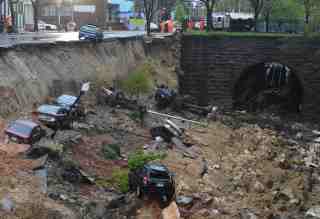
Following record rains in April of 2014, a section of Baltimore street simply collapsed. Now there’s some chance of holding the culprits accountable.

Thanks to Bill McKibben for this legal news following plenty of precursor stories on the same topic:

High court lets cities and states sue Exxon et al

…But something else happened yesterday too, with a price tag that may eventually dwarf that settlement, and with even larger potential implications for the future of the planet. The Supreme Court, also tersely, declined to grant cert in a case brought by oil companies desperately trying to hold off state court trials for their climate crimes. Continue reading

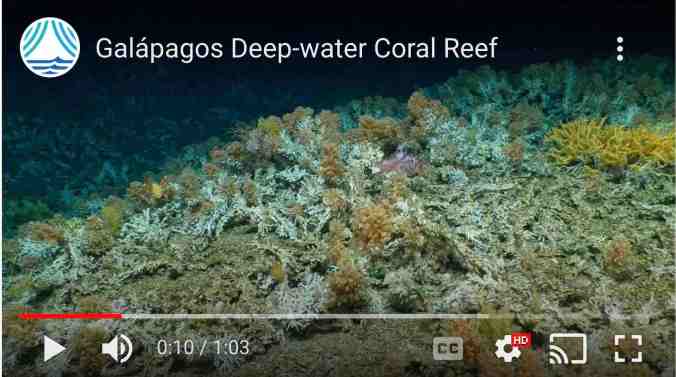
Galápagos Reef Discovery, Deep

The video is worth a minute of your time, and the short article that follows is as close as we get to nature-related good news these days. Our thanks, as always, to Yale e360:

Pristine Deep-Sea Reef Discovered in the Galápagos

The newly discovered deep-sea reef in the Galápagos Marine Reserve. WOODS HOLE OCEANOGRAPHIC INSTITUTION

In Ecuador’s Galápagos Islands, where ocean warming has decimated shallow-water reefs, scientists have discovered a healthy, sprawling coral reef hidden deep under the sea.


“This newly discovered reef is potentially an area of global significance,” Michelle Taylor of the University of Essex, co-lead of the expedition, said in a statement. It is “a site we can monitor over time to see how a pristine habitat evolves with our current climate crisis.” Continue reading