Lungs Of The Earth, The Amazon Calls Our Attention Again

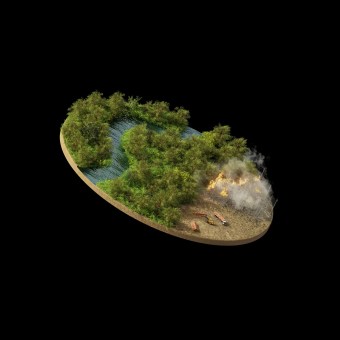
Illustration by Max Guther

The Amazon is one of those big topics that we come back to again and again for a reason.  We all depend on these lungs of the earth, so it would be strange to not be obsessed with the subject:

Some Brazilian scientists fear that the Amazon may become a grassy savanna — with profound effects on the climate worldwide.

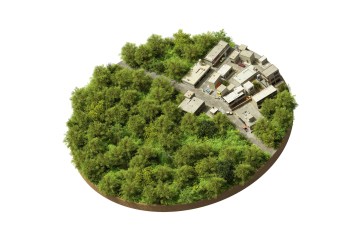
Illustration by Max Guther

One of the first times Luciana Vanni Gatti tried to collect Amazonian air she got so woozy that she couldn’t even operate the controls. An atmospheric chemist, she wanted to measure the concentration of carbon high above the rainforest. To obtain her samples she had to train bush pilots at obscure air-taxi businesses. The discomfort began as she waited on the tarmac, holding one door open against the wind to keep the tiny cockpit from turning into an oven in the equatorial sun. When at last they took off, they rose precipitously, and every time they plunged into a cloud, the plane seemed to be, in Gatti’s words, sambando — dancing the samba. Then the air temperature dipped below freezing, and her sweat turned cold. Continue reading
Time To Care About Climate Change

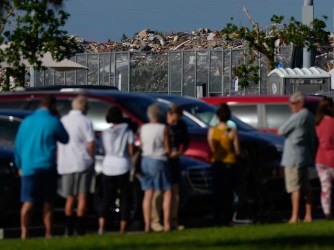
A pile of debris from Hurricane Ian rises behind a line of people waiting to vote in Fort Myers, Fla., in November 2022. Research suggests support for some climate policies increases immediately after climate-driven disasters such as Ian.
Rebecca Blackwell/AP

If you are not (yet) concerned about climate change there is no time like the present:

How our perception of time shapes our approach to climate change

Most people are focused on the present: today, tomorrow, maybe next year. Fixing your flat tire is more pressing than figuring out if you should use an electric car. Living by the beach is a lot more fun than figuring out when your house will be underwater because of sea level rise. Continue reading

Carbon Cowboys

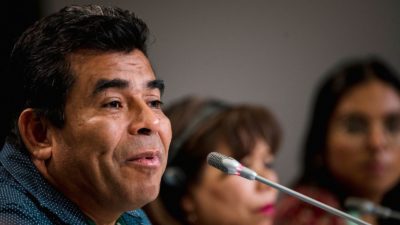
Levi Sucre Romero at the UN biodiversity conference in Montreal last week.

Levi Sucre Romero at the UN biodiversity conference in Montreal last week. ANDREJ IVANOV / AFP VIA GETTY IMAGES

Carbon credit brokers are busier than ever, and that is welcome news, but Levi Sucre Romero’s concerns give pause:

Forest Equity: What Indigenous People Want from Carbon Credits

To Indigenous leader Levi Sucre Romero, carbon credit markets have failed to respect Indigenous people and their key role in protecting their lands. In an e360 interview, he talks about how carbon brokers have taken advantage of local communities and why that must change.

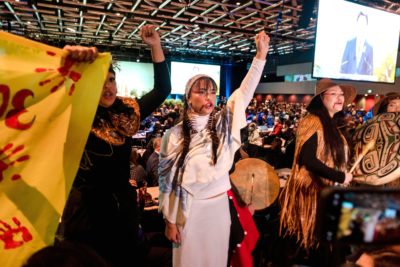
Indigenous protesters at the opening ceremony of the UN biodiversity conference in Montreal this month.

Indigenous protesters at the opening ceremony of the UN biodiversity conference in Montreal this month. ANDREJ IVANOV / AFP VIA GETTY IMAGES

In a world where carbon credit markets are taking advantage of Indigenous people and their forests, the United Nation is losing its leadership on combating climate change, says Indigenous leader Levi Sucre Romero.

In an interview with Yale Environment 360, Romero, who is from Costa Rica and is coordinator of the Mesoamerican Alliance of Peoples and Forests, calls out the “carbon cowboys” — the brokers who he says are wrecking efforts to allow Indigenous communities to have ownership of the carbon credits generated on their land, and who, by acting unscrupulously and secretively, are undermining global hopes of using nature to mitigate climate change. Continue reading

Why Waste Western Water?

A woman walks along a cliff top near Lake Powell, the second biggest reservoir in the U.S., where climate-change-driven drought continues to lower water levels. Photograph by David McNew / Getty

The management of water in the western USA has been an occasional topic in these pages and Rachel Monroe adds to our understanding:

The Water Wranglers of the West Are Struggling to Save the Colorado River

Farmers, bureaucrats, and water negotiators converged on Caesars Palace, in Las Vegas, to fight over the future of the drought-stricken Southwest.

In mid-December, I drove to Lake Mead, the nation’s largest reservoir, to see its infamous bathtub ring. The bathtub, in this metaphor, is Lake Mead, on the border between Nevada and Arizona; the ring is a chalk-white coating of minerals that its receding waters have left behind. The Southwest, which includes the Colorado River Basin, has been in a protracted drought since 2000; climate change has made it worse. Continue reading

What To Do With A Tenner

‘In the woods, there will be much more fungi and even more colour: scarlet elf cup (above), orange witches’ butter, yellow stagshorn, green elf cup, blue roundheads.’ Photograph: fotoco-istock/Getty Images/iStockphoto

This recommendation from Lucy Jones is as good as any we might otherwise recommend:

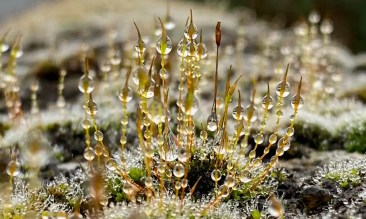
‘Wet weather makes for particularly juicy moss.’ Water droplets on moss on a wall. Photograph: Niall Carson/PA

The winter world may seem gloomy – but look closely, and you’ll see nature casting a spell

For less than a tenner, do as I do: buy a hand lens, head outside and discover fungi and moulds lighting up the darkness

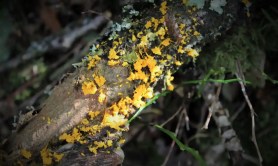
‘You won’t believe how exquisite slime moulds are.’ Photograph: Alastair Hotchkiss/Woodland Trust/PA

The profound therapeutic benefits of connecting with nature and spending time outside are well known. But in winter? When it’s cold, gloomy and everything looks dead? In fact, especially in the winter, when we are susceptible to fatigue, illness and seasonal low mood. And actually there is plenty of life, beauty and wonder right outside our doors, if we look closely.

Come and take a short walk with me in my nearest wild patch – an urban cemetery, a common environment across the British Isles. Continue reading

Glass Half Full, NOLA Community Recycling

This youthful organization, new to us but old enough to have proof of concept is, in their own words, crushing it:

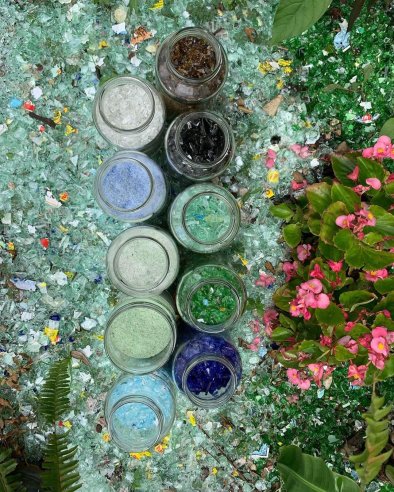
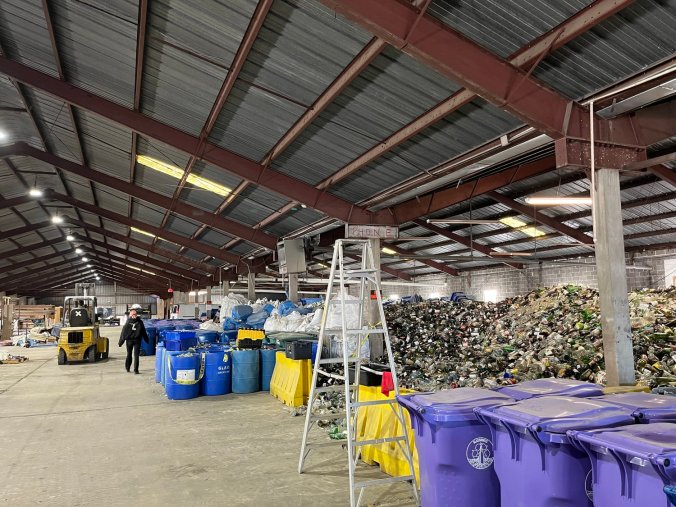
Turning glass waste into useable sand and cullet.

We collect and convert NOLA’s glass bottles — which have been crammed into our landfills for decades — into functional products: sand and glass cullet. These precious materials have an array of applications, from coastal restoration to flood prevention to eco-construction.

Converting glass into sand & glass cullet

Our recycling process involves diverting used glass products from landfills and sorting, sifting, and ultimately converting them into sand products ranging from super soft, beach-like sand to glass gravel. The final products are used for coastal restoration projects, disaster relief efforts, eco-construction, new glass products, and so much more. The applications for sand are truly endless.

Virtue Signaling Versus Virtue Versus Wrong

Laurence D. Fink, who runs BlackRock, has urged companies to adopt socially conscious practices. Winnie Au for The New York Times

We have no access to Mr. Fink’s motives or those of the firm he runs, or to how he and his colleagues make decisions–only to some of the actions they have taken. Our view on him and his firm may be simplistic, in that we respect their initial leadership on ESG but fault them now for not doing more. Even if they have only been virtue-signaling, and even if they fall short on true virtue, what they have done is obviously much better than those who are wrong on climate change:

BlackRock’s Pitch for Socially Conscious Investing Antagonizes All Sides

Right-wing officials are attacking BlackRock for overstepping. Those on the left say the world’s biggest asset manager is not doing enough.

Environmental, social and governance — or E.S.G. — investing, “to some degree, is a smoke screen,” said Tariq Fancy, a former BlackRock executive. Chloe Ellingson for The New York Times

It was a clarion call to chief executives everywhere.

In 2018, Laurence D. Fink, the longtime chief executive of BlackRock, the world’s largest asset manager, urged corporate leaders to assess the societal impact of their businesses, embrace diversity and consider how climate change could affect long-term growth.

“Companies,” Mr. Fink wrote in his annual letter to chief executives, “must ask themselves: What role do we play in the community? How are we managing our impact on the environment? Are we working to create a diverse work force? Are we adapting to technological change?” Continue reading

Fungi Lost & Found

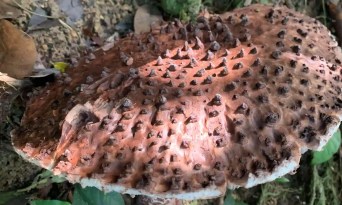
The sculptured toadstool (Amanita sculpta) had not been seen in Singapore for more than 80 years. Photograph: Adrian Loo/National Parks Board of Singapore

Over our nearly dozen years linking to stories we have shared plenty of what we have called lost and found stories (including this and this and this, and this), as well as fungi stories too numerous to link back to, this is the first lost and found fungi story:

Lost and found: how a Facebook post led to the ‘chocolate chip’ toadstool

The sighting of a ‘magnificent’ specimen of the Amanita sculpta, not seen in Singapore for 80 years, shows how the public can aid in conservation efforts

The cap is like a chocolate chip cookie,” says Serena Lee, senior manager at Singapore Botanic Gardens’ herbarium, describing the top of the sculptured toadstool (Amanita sculpta). Continue reading

Words, Terms & Exasperation

Words, and specifically how they are used, is a topic of amusement in our pages; and occasionally a topic of exasperation (thanks to Sarah M. Brownsberger and The Hedgehog Review):

Stop the Term-Creation Meaning-Kidnap!

When language became searchable.

On our recent return to the United States after a decade away in our other language, my family was struck by a change in American English. Continue reading

Land Use By Food Type, Data For Thought

The Conversation

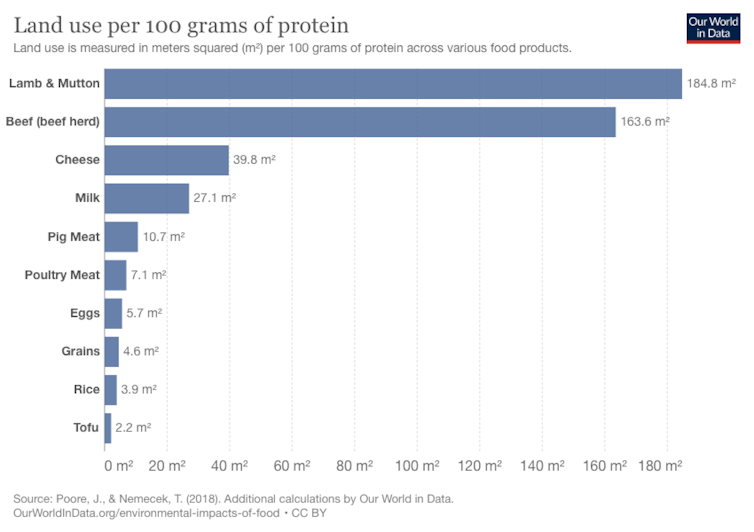
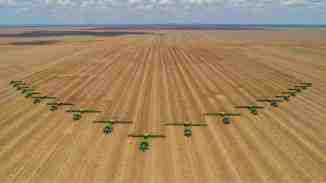
Chart of land use per 100g of protein for different foodsThe Conversation is “a news organization dedicated to facts and evidence” and with the tag line “Academic rigor, journalistic flair”. Our kind of reading. The graph to the left illustrates this article’s point; the photo below to the right is too composed for rigor:

Brazil’s enormous soy farms mostly produce food for animals, not humans. lourencolf / shutterstock

New food technologies could release 80% of the world’s farmland back to nature

Here’s the basic problem for conservation at a global level: food production, biodiversity and carbon storage in ecosystems are competing for the same land. Continue reading

Origami At The American Museum Of Natural History

D. Finnin/© AMNH

Folding paper was a frequent topic for us starting in 2011, but origami specifically has been featured only a few times. This holiday season at the American Museum of Natural History we add to the mentions:

The Making of the Origami Holiday Tree

One 13-Foot Tree, 1,000 Origami Models: A Spectacular Museum Tradition

M. Shanley/© AMNH

Early each year, as the days begin to get a bit longer and the first signs of spring crop up in Central Park, Ros Joyce and Talo Kawasaki, volunteers from OrigamiUSA and the designers of the Museum’s Origami Holiday Tree start planning for the year ahead.

M. Shanley/© AMNH

They begin combing the Museum’s halls in search of inspiration—going from floor to floor to decide on a perfect theme and to find just the right exhibits to re-create as origami models on the tree. Continue reading
Bronx River Alliance’s Foodway

Just after recently learning that this borough is the greenest, another story clues us in on this innovative program:

The Bronx River Foodway

Fresh Food from Our Land

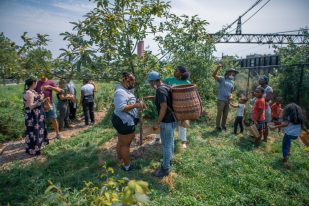
The Foodway connects the river area with people, growing food and medicinal plants. Come explore the food forest and relish (hah!) the delight of seeds becoming plants for life.

The Guardian’s Meka Boyle gives another reason why visiting this borough is a worthwhile extension to any visit to New York City:

‘It made my heart sing’: finding herbs and medicine in the Bronx food forest

The Bronx River Foodway, the only legal place to forage in New York, celebrates the end of a season

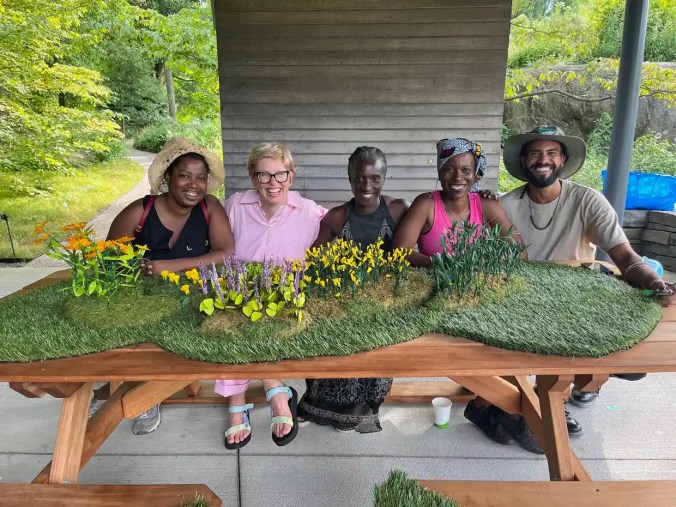
Foodway team members gathered around a picnic bench at the New York Botanical Garden created by the artist Elizebeth Hamby. Photograph: Courtesy Elizabeth Hamby

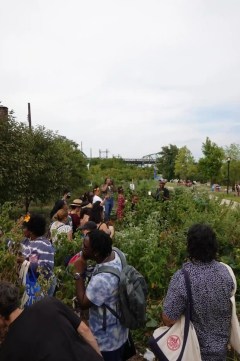
Bimwala’s tours are a mix of returning foragers eager to learn more and newcomers, many of whom have lived in the Bronx for decades. Photograph: Courtesy of Nathan Hunter

On a crisp November day in the South Bronx, more than 300 people made their way from Westchester Avenue below the clamor of the 6 train down a tree-lined path leading to Concrete Plant park. This is the home of the Bronx River Foodway, a quarter-acre food forest full of edible, mostly native plants. What looks like a stretch of land dotted with trees appears at first glance to be overrun by weeds, but the wild foliage has been intentionally planted by the Foodway. It is the only legal foraging site in New York City.

Neighbors young and old poured on to the grassy banks of the Bronx River to celebrate the end of the season and the foliage of the Bronx, including an array of snacks made from foraged ingredients: ginkgo cheese and acorn crackers, and pickled mushrooms and herbal ales made at recent four-part cooking series put on by the Foodway over the last two months. Continue reading
Icelandic Elf-Curious Attitudes

Toni Demuro

In a world that is full of climate denial nonsense, where responsibilities to nature are abandoned by many, what harm could possibly come from Icelanders believing their own peculiar sort of nonsense? We will take any help we can get if it helps us and helps our protection of nature:

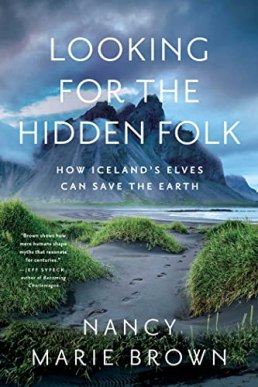
In “Looking for the Hidden Folk,” Nancy Marie Brown makes a strong case for everyday wonder.

For 70 summers, children have boated to an island in the Adirondack wilderness to seek out a cluster of tiny wooden houses and leave messages for the fairies who are said to live there. Sometimes the fairies write back — on slips of birch bark, tucked into the crevice of a log for children to find and exult over. The adult go-betweens behind the letters can’t resist feeding the children’s faith that the natural world reciprocates their interest.

Of course, they don’t believe in fairies themselves. In “Looking for the Hidden Folk,” the cultural historian Nancy Marie Brown asks: Why not? “Why should disbelief be our default? Why should we deride our sense of wonder? Why do we allow our world to be disenchanted?” Continue reading
Embracing Anthropocene

Image credits: Alamy; David Guttenfelder for The New York Times; Getty Images; Ashley Gilbertson for The New York Times; Michael Probst/Associated Press; Getty Images; NASA

We have been using this terminology already for more than a decade, thinking it was apt enough to be official:

For Planet Earth, This Might Be the Start of a New Age

A panel of experts has spent more than a decade deliberating on how, and whether, to mark a momentous new epoch in geologic time: our own.

The official timeline of Earth’s history — from the oldest rocks to the‌ dinosaurs to the rise of primates, from the Paleozoic to the Jurassic and all points before and since — could soon include the age of nuclear weapons, human-caused climate change and the proliferation of plastics, garbage and concrete across the planet. Continue reading

Tokyo’s Rooftop Solar

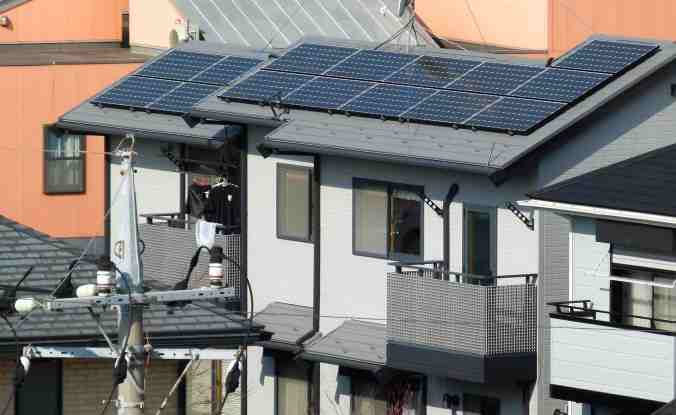
A rooftop solar installation in Yokohama, near Tokyo. COCREATR VIA FLICKR

Our hats off to Japan’s largest city for this requirement:

Tokyo to Mandate Rooftop Solar Panels on New Homes

Tokyo is mandating that all new homes in the city be built with rooftop solar panels starting in 2025. Continue reading
Fusion Hoopla

A reason that the breakthrough is causing such hoopla is that it implicitly promises that we could use fusion to run the world in almost its current form. Photograph courtesy Lawrence Livermore National Laboratory

Without the expertise to fully appreciate the science, the hoopla can be overlooked too easily. McKibben’s comment helps clarify:

The Fusion Breakthrough Suggests That Maybe Someday We’ll Have a Second Sun

In the meantime, we need to use the sun we’ve already got.

On Tuesday, the Department of Energy is expected to announce a breakthrough in fusion energy: according to early reports, scientists at the government’s Lawrence Livermore National Laboratory, in California, have succeeded for the first time in making their complex and expensive machinery produce more power than it uses, if only for an instant. Continue reading

Biodiversity, Montreal & Us

The opening plenary of the U.N. biodiversity conference in Montreal. Photograph by Andrej Ivanov / AFP / Getty

We continue, as a species, to document our impact on other species. The warning signs keep getting clearer. It is not pleasant reading, but it is documented for a reason; it is about us. It is about our responsibilities. Our thanks, as always, to Elizabeth Kolbert:

Can the U.N. Save the World from Ecological Collapse?

At this week’s summit, delegates will consider ambitious new conservation targets—even though the old ones have yet to be achieved.

The Red List of Threatened Species might best be described as a lack-of-progress report. Continue reading
Big Cats Need Space

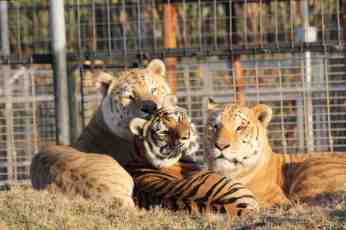
Big cats at the Greater Wynnewood Exotic Animal Park, a private sanctuary featured in the Netflix documentary series Tiger King. FIGHT4ANIMALRIGHTS VIA WIKIPEDIA

Big cats do not belong in cages, and certainly do not deserve to be treated as domestic pets. We assumed there were already clear and strict rules in place:

U.S. to Curb Private Ownership of Big Cats

The U.S. is set to enact a new law that prohibits private citizens from obtaining lions, tigers, jaguars, leopards, and other big cats as pets. Continue reading

Climate Science Is Getting Old

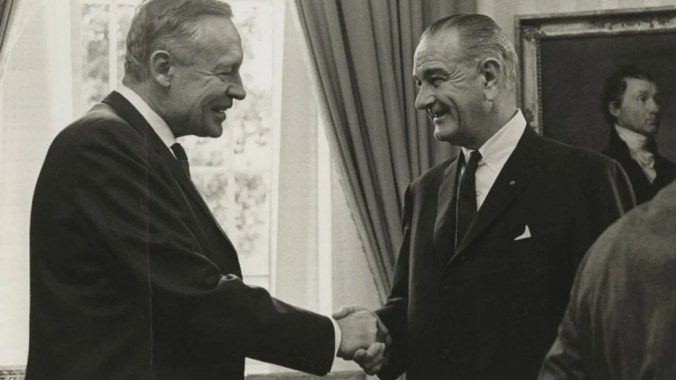
Scientist Roger Revelle, an adviser who warned Lyndon Johnson about climate change in 1965, greets the president in the Oval Office. Roger Revelle papers/Special Collections Archives/UC San Diego

In keeping with a theme–that the science of climate risk has been around for a couple generations now–we have linked to each time there are new revelations:

What Big Oil Knew About Its Products’ Climate Risks—and When

A long-forgotten report sheds light on a high-stakes liability question.

Carroll Muffett began wondering in 2008 when the world’s biggest oil companies had first understood the science of climate change and their product’s role in causing it. Continue reading
The Little Countries That Could

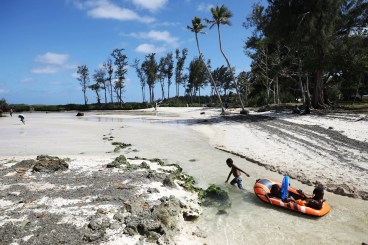
The atoll nation of Vanuatu is threatened by rising seas. “We had to learn how to manage our unimportance,” its president said. Mario Tama/Getty Images

This story has a familiar ring to it, if you are familiar with the history of Costa Rica going back to colonial times. Never a particularly “important” part of the empire, it thereby avoided many pitfalls typical of other countries in Latin America, and evolved into a stable democracy with progressive ideas and goals and achievements. We wish this little country in the Pacific comparable success by thinking outside the box, as its president says:

Emergency supplies being distributed after Cyclone Harold in 2020. International Federation of Red Cross, via Agence France-Presse — Getty Images

It wants a top international court to weigh in on whether nations are legally bound to protect against climate risks.

Nikenike Vurobaravu presides over a tiny country with a large hand in climate diplomacy.

Rising sea levels threaten the very existence of his Pacific Island nation of Vanuatu and its population of just over 300,000 people. Its best defense, he says, it to raise its voice creatively in international diplomatic talks. Continue reading