Nepal’s Community Forests

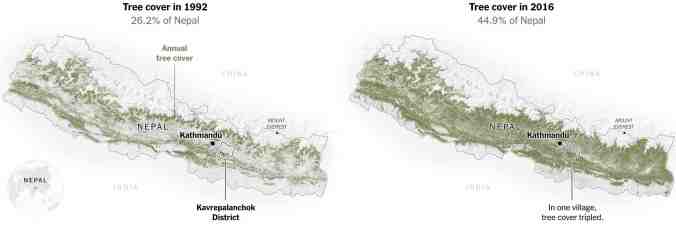
Note: Green areas show land that is mostly covered by trees, based on an analysis of satellite imagery. Source: Jefferson Fox, Jamon Van Den Hoek, Kaspar Hurni, Alexander Smith and Sumeet Saksena.By Pablo Robles

We have shared plenty of stories about Nepal, but until now no story about Nepal involving trees or forests. We welcome this one:

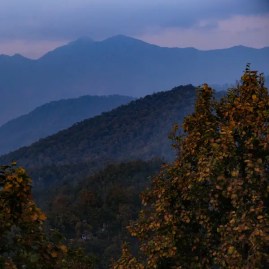
The community forests in Khairahani, Nepal, stretching over several tree-capped hills in March. Karan Deep Singh/The New York Times

An effort decades in the making is showing results in Nepal, a rare success story in a world of cascading climate disasters and despair

KANKALI COMMUNITY FOREST, Nepal — The old man moved gingerly, hill after hill, cutting dry shrubs until he was surrounded by trees that had grown from seedlings he had planted two decades ago. He pointed to a row of low peaks above the Kathmandu valley that were covered with dense foliage. Continue reading
Greenhouse By Joost

We have not heard news of Joost Bakker in over a decade, so Max Veenhuyzen’s profile and introduction to the documentary previewed above is most welcome:

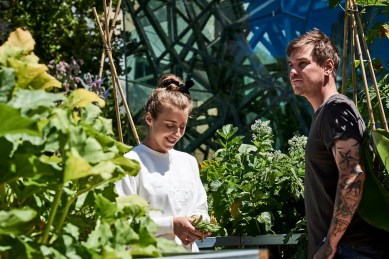
‘We can have houses covered with biology, plants, ecosystems and waterfalls’: Greenhouse by Joost documents the green-thinking initiatives of Future Food System. Photograph: Dean Bradley/Madman Entertainment

Mushroom walls and waste-fuelled stoves: inside the self-sufficient home of tomorrow

Joost Bakker believes a house can be more than a place to live: it can be a self-sustaining weapon against the climate crisis. A new Australian documentary explores his bold blueprint

Future Food System is anchored by self-watering garden beds filled with 35 tonnes of soil. Photograph: Earl Carter Images

“The most destructive things we humans do,” says Joost Bakker, “is eat.”

In terms of sentences that grab your attention, the introduction to new Australian documentary Greenhouse by Joost is right up there. Then again, Bakker – a multi-disciplinary designer, no-waste advocate and the film’s eponymous protagonist – has long been something of a provocateur. Continue reading

McKibben From COP 27 & A Rare Smile

You can read the daily news from COP27 on the official website, and it is useful information but not fully contextualized; for that we have our most reliable scribe who today is giving us one of his rare smiles:

Has the fever broken just a bit?

The view from Egypt: Trumpism, Putinism, Bolsonaroism finally on the defensive

Those of us who have been faithful in bringing the world bad news are perhaps excused if we seize occasionally on the the promising straws in the wind (though always aware that ill winds continue blowing, and not just in Florida where a rare November hurricane made landfall today). I’m thinking globally this afternoon, because I’m at the climate summit in Sharm al Sheikh in Egypt, where dozens of countries have pavilions (it’s the Epcot of carbon mitigation.) And the planet looks just a little better than it did a month ago. Continue reading

Blue Carbon Collaboration

Scientists fixed bio-logger tags equipped with cameras on tiger sharks in the Bahamas to map the ocean’s seagrass meadows. Photograph: Diego Camejo/Beneath the Waves

We thank Laura Paddison for this underwater news, published in the Guardian, that has implication for climate change mitigation:

Scientists discover ‘world’s largest’ seagrass forest – by strapping cameras to sharks

New study, carried out using tiger sharks in the Bahamas, extends total known global seagrass coverage by more than 40%

Tiger sharks are notoriously fierce. The huge animals, which can grow to more than 16ft, are ruthless predators and scared of absolutely nothing – recent research found that while other shark species fled coastal waters during strong storms, tiger sharks “didn’t even flinch”.

But recently they have a new role that could help burnish their reputations: marine scientists. Continue reading

Victors’ History Reconsidered

Yesterday, in a post about one type of spoils of victory, we shared some reading about responsibilities. Today, in a discussion of the book Indigenous Continent, we consider a different type of spoil of victory.

The accepted wisdom that history is written by the victors is contestable, and David Treuer seems the perfect person to walk us through this book’s attempt at doing so with regard to the indigenous peoples of what is now called North America:

Do We Have the History of Native Americans Backward?

They dominated far longer than they were dominated, and, a new book contends, shaped the United States in profound ways.

A portrait of Thayendanegea, painted in London, in 1785, by Gilbert Stuart. Art work by Gilbert Charles Stuart / British Museum

I remember when I first encountered what must be the best-selling book of Native American history ever published, “Bury My Heart at Wounded Knee,” by Dee Brown. I was twenty years old, and had made my way from the Leech Lake Reservation, in northern Minnesota, where I grew up, to Princeton, in a part of New Jersey that seemed to have no Indians at all. Since “Bury My Heart” appeared, in 1970, it has been translated into seventeen languages, and sold millions of copies. In the opening pages, Brown wrote, “The greatest concentration of recorded experience and observation came out of the thirty-year span between 1860 and 1890—the period covered by this book. It was an incredible era of violence, greed, audacity, sentimentality, undirected exuberance, and an almost reverential attitude toward the ideal of personal freedom for those who already had it. During that time the culture and civilization of the American Indian was destroyed.” Continue reading

What Billionaires Are Responsible For

Andrew Steer speaking at the World Economic Forum in Davos in May. Photograph: Ciaran McCrickard/World Economic Forum

At first, and even second glance, this argument is reasonable, so we share it in good faith:

Billionaires should not make up climate finance gaps, says Bezos Earth Fund head

Rich countries ‘not living up to obligations’, says Andrew Steer, in charge of $10bn environmental fund

Billionaires can not be expected to make up for climate finance gaps left by rich countries that fail to deliver on promises to the developing world, the head of the Bezos Earth Fund has said…

The article is worth reading at the source, in the Guardian, and our thanks as always to that newspaper and Patrick Greenfield.

But if you want a different take on what billionaires are responsible for, you might want to read what Anand Giridharadas has to say on the topic.

Or, at least read the review in the Guardian of his 2018 book.

Coffee, History & Literature

Adam Gopnik, one of our favorite essayists, wrote an excellent essay on this topic; and Michael Pollan, among others, wrote a book.

There is still plenty to say about the history of coffee, as far as we are concerned, and Ed Simon demonstrates it in this essay from The Millions, an online magazine:

Coffee, the Great Literary Stimulant

“I have measured out my life with coffee spoons.” –T.S Eliot, “The Love Song of J. Alfred Prufrock” (1915)

Maronite priest Antonio Fausto Naironi once claimed that the greatest of miracles happened in ninth-century Ethiopia. It was then and there, in the province of Oromia, that a young shepherd named Kaldi noticed that his goats were prone to running, leaping, and dancing after they had eaten blood-red berries from a mysterious bush. Continue reading

A Paradox Wrapped In A Conundrum

We almost always side with the animals. But sometimes there are no easy answers. Just puzzles.

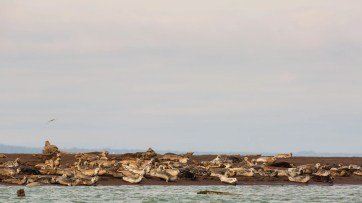
Parker Miles Blohm / KNKX. Harbor seals hauled out at low tide on the Nisqually River on October 10, 2022.

In this case, for what it is worth, our support is with the humans:

Seals and sea lions vex Washington tribes as Marine Mammal Protection Act turns 50

50 years ago, President Nixon signed the Marine Mammal Protection Act into law. The act has been hugely successful in restoring the abundance of the marine species it protects. But some say it’s too successful.

Tribes in particular say their treaty rights to fishing are under threat because now, too many seals and sea lions are feasting on endangered salmon. Continue reading

Berms & Dunes & Native Knowhow

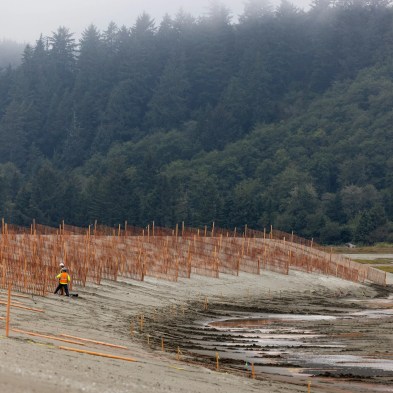
Old State Route 105 ends abruptly at the edge of the Pacific Ocean, after coastal erosion took out the road near the Shoalwater Bay Reservation in Tokeland, Wash.

We have often thought consulting those who have been on the land longest is a good idea, so this story is heartening:

Native American tribes are competing for the first federal grants designed to help move communities away from high water and other dangers posed by climate change.

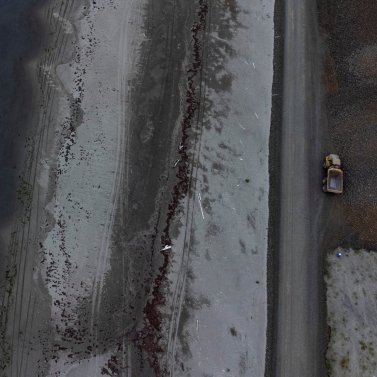
The U.S. Army Corps of Engineers is building a dune to protect the Shoalwater Bay Reservation.

SHOALWATER BAY INDIAN RESERVATION, Wash. — The van carrying tribal officials veered off the coastal highway, away from the Pacific and onto a dirt path hidden by cedar and spruce trees. After climbing an old logging road, it emerged into a clearing high above the Shoalwater Bay Indian Reservation, half a square mile of oceanfront that’s disappearing fast.

The tribal leaders want to relocate to the remote hilltop where they were standing, despite its uneven terrain. “If you can believe it, this is the most suitable land we have for building,” said Quintin Swanson, treasurer of the 471-member tribe. Moving up the mountain could cost half a billion dollars, he said.

As climate change gets worse, tribes like Shoalwater Bay are being squeezed between existential threats and brutal financial arithmetic. Consigned to marginal land more than a century ago by the United States government, some tribes are now trying to relocate to areas better protected from extreme weather yet lack the money to pay for that move. Continue reading
Choose Your Hope Vector Carefully

We all need an occasional dose of hope, especially when it comes to climate change. Choosing the right kind makes a huge difference, so give McKibben’s newsletter a thorough reading this week:

Magical Hope vs Actual Hope

Left or right, physics doesn’t much care about your wishful thinking

I spent the weekend in Reno, Nevada with, among other people, my old friend Rebecca Solnit. We were there to rally voters and knock on doors in one of the nastiest elections in the country—and at such times Solnit’s powerful reflections on hope are a balm and a spur. Continue reading
Tagging Technology Gives Godwit Game

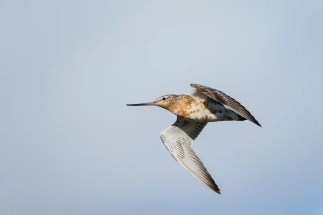
A juvenile bar-tailed godwit has flown from Alaska in the US to Tasmania in Australia, covering a record 13,560kms without stopping. Photograph: Johnny Madsen/Alamy

Who’s got game in the bird world is not, strictly speaking, a phrase associated with ornithologists or what they do for a living. But sometimes, their news features what looks like competitive sport to the lay public. We have shared news of long-journey bird species on several occasions, and one that has the right stuff now stands out from the rest by virtue of tagging technology:

Bar-tailed godwit sets world record with 13,560km continuous flight from Alaska to southern Australia

Satellite tag data suggests five-month-old migratory bird did not stop during voyage which took 11 days and one hour to reach Tasmania

A juvenile bar-tailed godwit – known only by its satellite tag number 234684 – has flown 13,560 kilometres from Alaska to the Australian state of Tasmania without stopping, appearing to set a new world record for marathon bird flights. Continue reading

Beware The Phantom

(Photo credit: Isaac Bowen / CC BY-NC 2.0)

Thanks to Yale Climate Connections:

‘’Phantom’ power is responsible for up to 10% of a home’s energy use

The electricity that your gadgets use during standby mode could be driving up your utility bill. 

‘Tis the season of ghosts, goblins … and phantom power? Continue reading

Community Challenges To Going Solar

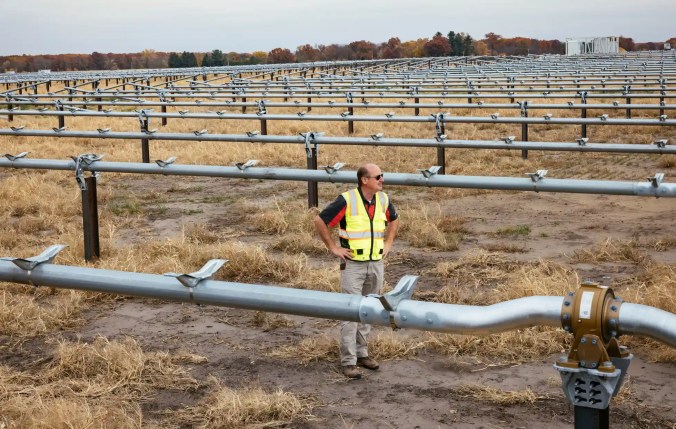
Farmer Norm Welker on his land in Starke county, Indiana, where a solar power field is being constructed. Photograph: Taylor Glascock/The Guardian

Our thanks to Oliver Milman, as ever, and the Guardian, as always, for this story from the front lines of getting it done in spite of opposition:

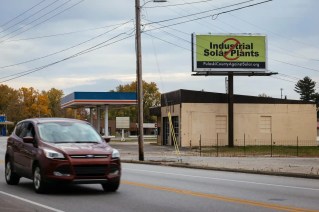
One of Connie Ehrlich’s anti-solar billboards in Winamac, Indiana. Photograph: Taylor Glascock/The Guardian

‘It’s got nasty’: the battle to build the US’s biggest solar power farm

A community turns on itself over the aptly named Mammoth solar project, a planned $1.5bn power field nearly the size of Manhattan

When proposals for the largest solar plant ever conceived for US soil started to gather pace – a plan that involves spearing several million solar panels into the flat farmland of northern Indiana – something in Connie Ehrlich seems to have snapped. Continue reading

David Wallace-Wells & Co With New Perspective

After providing some of the deepest gloom, one of the environmental journalists we respect for not flinching or sugar-coating is singing a new tune, at least on this day:

Beyond Catastrophe

A New Climate Reality Is Coming Into View

By David Wallace-Wells
Photographs by Devin Oktar Yalkin
Captions by Charley Locke

You can never really see the future, only imagine it, then try to make sense of the new world when it arrives Continue reading
About Patagonia’s Book Imprint

(Photo credit: Foreground book photos courtesy of Patagonia)

We already long-respected the company for plenty of good reasons; now one more:

Hope and action: The mission of Patagonia Books

Philanthropy has been a part of Patagonia Books’ mission and operations from the beginning, says Director Karla Olson.

When Yvon Chouinard, the founder of the outdoor wear and gear giant Patagonia, announced his decision to donate his $3-billion company to the newly established nonprofit Holdfast Collective for the purpose of combating climate change, Yale Climate Connections was both impressed and curious. Continue reading

Truffles From A Farm Near You

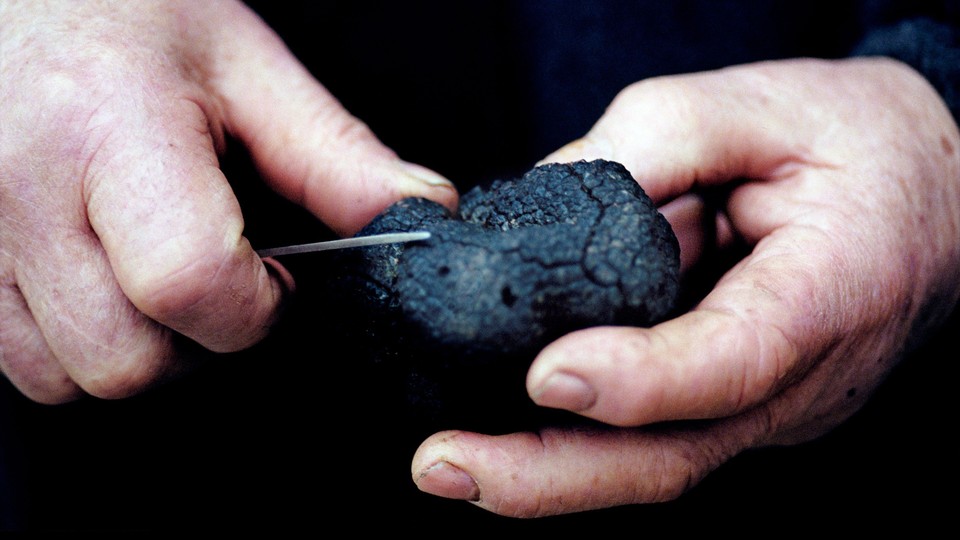
Someone saving a truffle

Berthold Steinhilber / Laif / Redux

We hope, from a culinary perspective, that truffle cultivation has advanced enough such that the statement in the title of Federico Kukso’s article below is correct. Thanks to the Atlantic, and to Knowable, for this:

Truffles Are Everywhere Now

Farmers around the world are trying to cash in on the prized black truffle.

Every morning, for three months of the year, Lola wakes up at 8 and goes hunting. Continue reading

Birds, Us, Past & Future

Our daily photo feature has been a long-running privilege for us to share from our various bird photographer friends who travel the world, and clearly a reason for some visitors to stay tuned here. We do what we can to ensure those birds are there for future generations to appreciate. The book featured above is likely to be of interest to many of those visitors. The author, seen only once before in our pages more than ten years ago, Tim Birkhead offers historical perspective that is well-reviewed and his publisher has this to say:

Since the dawn of human history, birds have stirred our imagination, inspiring and challenging our ideas about science, faith, art, and philosophy. Continue reading

Animal-Free Meat & Racing The Clock

BlueNalu’s fried cell-cultured yellowtail amberjack fish taco. Photograph: Courtesy of BlueNalu

Whether the meat you eat is from land animals or from the ocean, the chances are high that you will be eating man-made versions sooner rather than later:

‘Fishless fish’: the next big trend in the seafood industry

‘Alternative seafood’ is having a moment, with the rise of companies like BlueNalu and Wildtype, which has the backing of Leonardo DiCaprio

In the middle of San Francisco, there’s a pilot production plant for Wildtype, one of a handful of cell-cultivated seafood companies in the US. Inside, it’s growing sushi-grade coho salmon in tanks similar to those found in breweries – no fishing or farming required. Continue reading

British Rainforest Revival

Human activity has impacted the amount of temperate rainforest in the UK but it still exists in a few places, such as the Brecon Beacons in Wales. Photograph: Henk Meijer/Alamy

We already knew that rainforests are not only tropical ecosystems. But when you live in the tropics, you can forget. Our thanks as always to Patrick Greenfield, and to the Guardian, for this reminder:

Exclusive: campaigners call for protection and careful tree-planting to help restore the temperate rainforests that once covered swathes of the country

Rainforest, which has been decimated over thousands of years, has the potential to be restored across a fifth of Great Britain, a new map reveals. Continue reading

Memo From Mr. Gates

We have only rarely linked to stories featuring or mentioning Mr. Gates.

This is not because we do not value his opinions; we think he is the smart money on multiple fronts. Climate change is one of them.

Even if we consider McKibben the more reliable scribe, and even if we give Malmo his due, this is still smart money territory:

The state of the energy transition

My annual memo about the journey to zero emissions.

When I first started learning about climate change 15 years ago, I came to three conclusions. First, avoiding a climate disaster would be the hardest challenge people had ever faced. Second, the only way to do it was to invest aggressively in clean-energy innovation and deployment. And third, we needed to get going. Continue reading