Animal Prints & Entrepreneurial Conservation

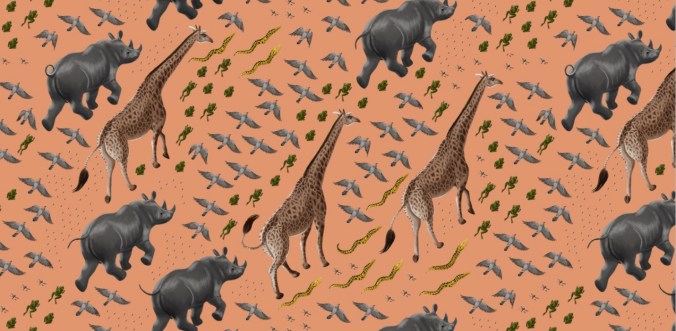
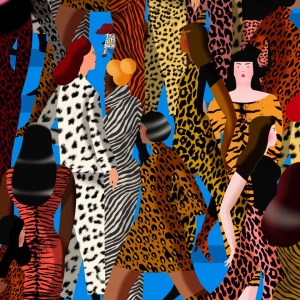
Conservation-minded scholars hope to harness the cultural power of animal prints. Illustration by Na Kim

It is difficult to judge from Rebecca Mead’s article Should Leopards Be Paid for Their Spots whether and how the idea has a practical future, although the exemplary collaboration between Panthera and Hermes has allure. The concept has plenty of merit, from my vantage point 26 years into an entrepreneurial career that shares some common ground.

If travelers are willing to pay a premium to support the conservation of a place; if they buy things to take home because those things support artisans and farmers; and continue to buy the coffee when back home because it funds bird habitat regeneration (customers tell me via email that in addition to the coffee being excellent, this is a motivator), then why not this too:

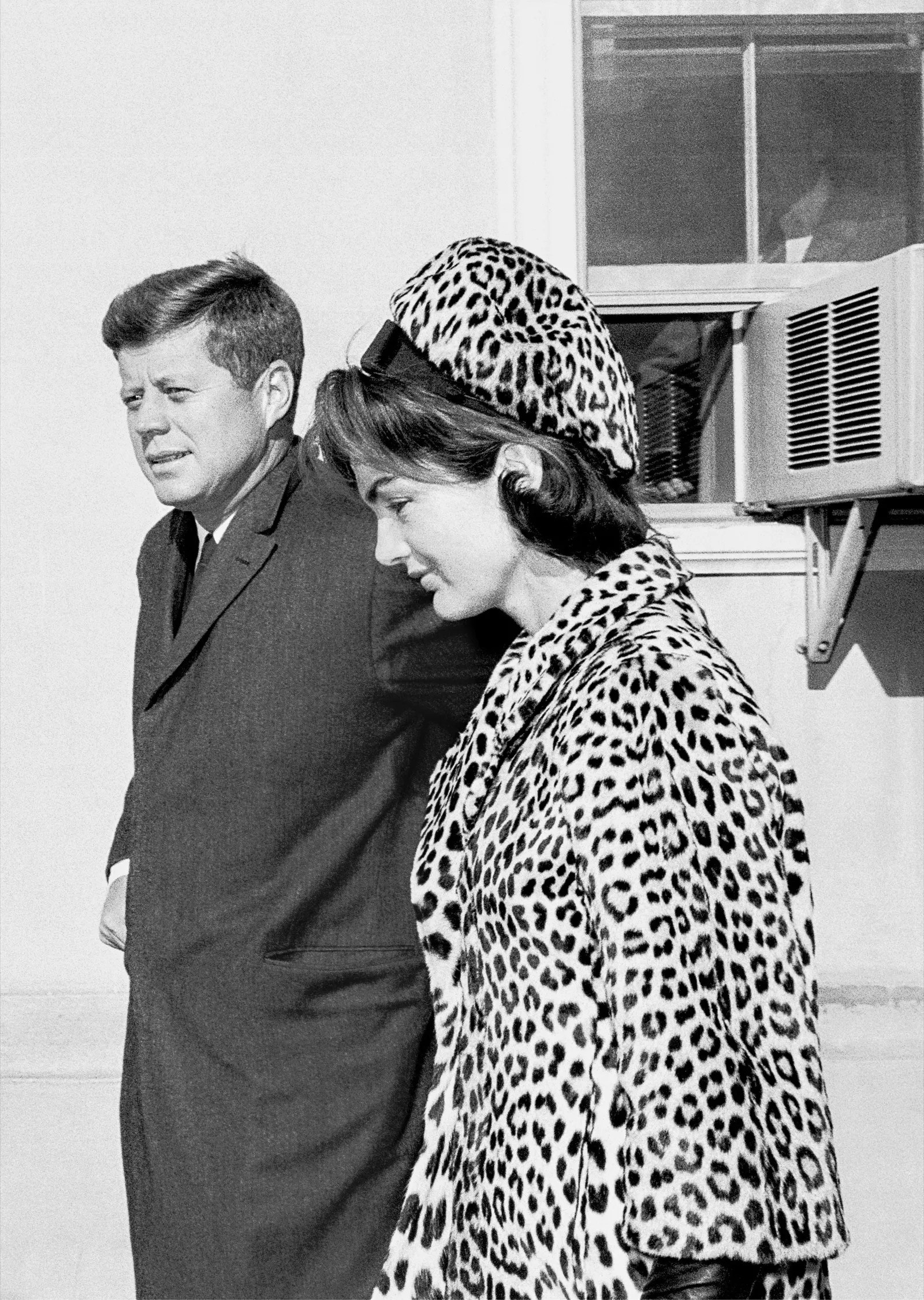
Style-setters from Egyptian princesses to Jackie Kennedy to Debbie Harry have embraced leopard prints. Proponents of a “species royalty” want designers to pay to help save endangered big cats.

Jacqueline Kennedy, in 1962. Photograph from Getty

When Jacqueline Kennedy was living in the White House, in the early sixties, she relied upon the taste of Oleg Cassini, the costume designer turned couturier, to supply her with a wardrobe that would befit her role as First Lady, one of the most photographed women in the world. In 1962, Cassini provided her with a striking leopard coat. Knee-length, with three-quarter sleeves and six buttons that fastened across the chest, the coat was not made from a synthetic leopard-patterned fabric. Continue reading
When Fences Are Un-Neighborly

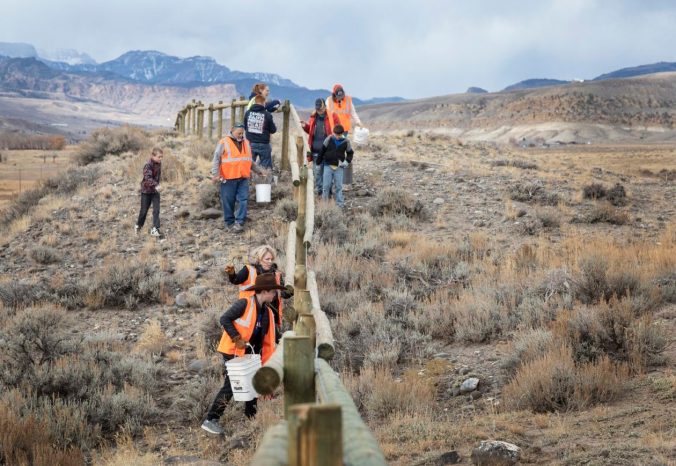
Volunteers modify a wire fence in Wyoming to allow wildlife to pass through. ABSAROKA FENCE INITIATIVE

If we take Robert Frost’s poetic license into the realm of how humans and wildlife might coexist more successfully, then the image above is powerful. Good fences might make good neighbors if they allow wildlife to migrate as needed.

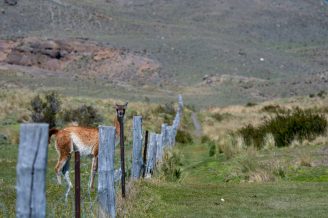
A guanaco at a fence in southern Chile. WOLFGANG KAEHLER / LIGHTROCKET VIA GETTY IMAGES

While working in the Patagonia region of Chile, 2008-2010, I saw images like this in the photo to the right regularly. On occasion the sight would be more gruesome. Ranchers had erected fences without regard for the need of guanacos to wander.

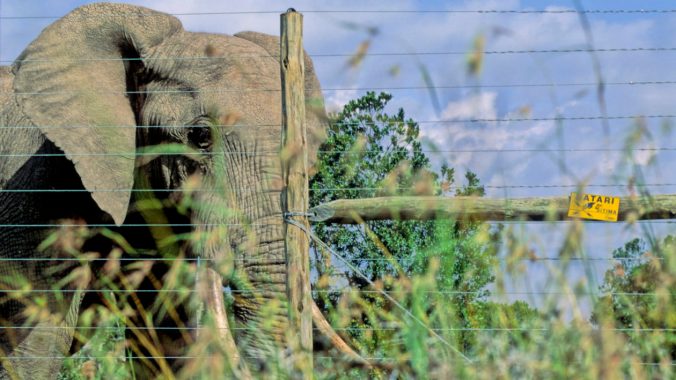
During our seven years living in India the human-elephant relationship was often one of worshipful respect, but included too many stories of fences, or worse, as methods farmers used to protect their properties from elephant intrusions. As is the case in Kenya (see the image below) fences are unneighborly. So, we were on the lookout for creative solutions. The following article by Jim Robbins, in Yale e360, is timely and welcome in this regard.

An African elephant alongside an electric fence in Laikipia, Kenya. AVALON / UNIVERSAL IMAGES GROUP VIA GETTY IMAGES

Unnatural Barriers: How the Boom in Fences Is Harming Wildlife

From the U.S. West to Mongolia, fences are going up rapidly as border barriers and livestock farming increase. Now, a growing number of studies are showing the impact of these fences, from impeding wildlife migrations to increasing the genetic isolation of threatened species.

The most famous fence in the United States is Continue reading

Octopus Intelligence Illustrated

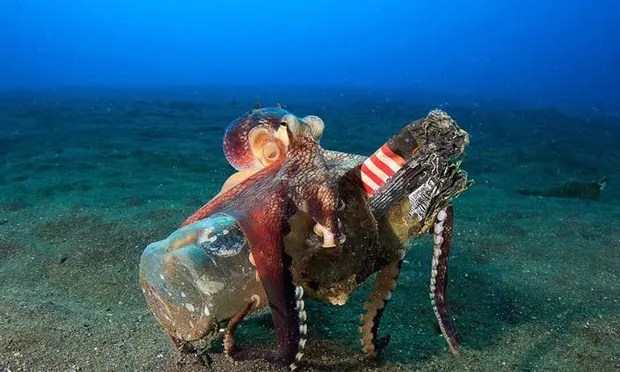
Octopuses were seen carrying plastic items around while ‘stilt-walking’. Photograph: Serge Abourjeily

It is not how we would prefer to understand them, or for these animals to demonstrate intelligence, but here are some examples of how they adapt to our discarded stuff:

Bottles, cans, batteries: octopuses found using litter on seabed

The most common interaction recorded was using rubbish as shelter. Photograph: Edmar Bastos

Creatures seen using discarded items for shelter or to lay eggs, highlighting ‘extreme ability to adapt’

Whether it’s mimicking venomous creatures, or shooting jets of water at aquarium light switches to turn them off, octopuses are nothing if not resourceful. Continue reading
Guardian’s Week In Wildlife

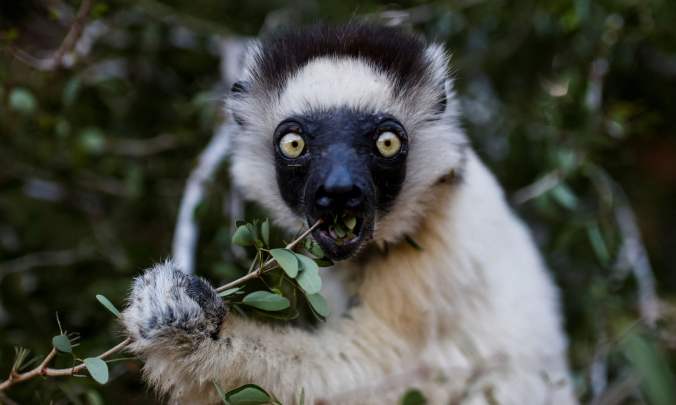
A sifaka lemur eats leaves at the Berenty Reserve in Toliara province, Madagascar. Photograph: Alkis Konstantinidis/Reuters

We source from the Guardian frequently for environmental stories, but sometimes just a few good photos from nature are a good way to end the traditional work week:

The week in wildlife – in pictures

The best of this week’s wildlife pictures, including a patient great tit, a hungry lemur, and a lucky escape for one humpback whale

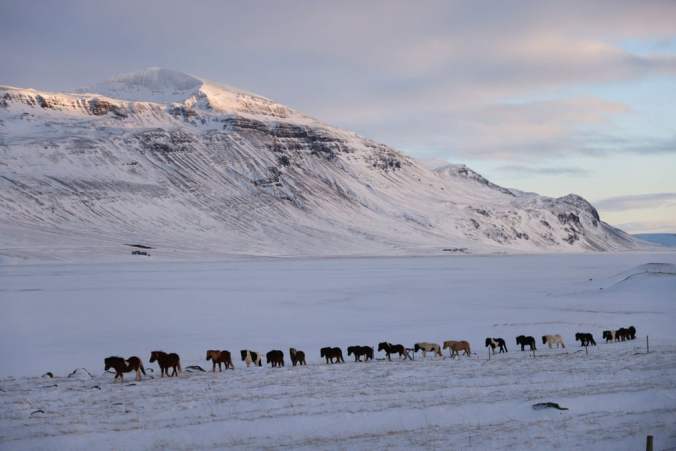
Icelandic horses walk on the snow in Hunavatnshreppur. The horses are unique in that they have five gaits, while other horses typically have three or four. Photograph: Nacho Doce/Reuters

Weekends are the busiest part of our work week; for us the photos are a motivator for that work; so thanks to Joanna Ruck for these. Click any image to go to the source.

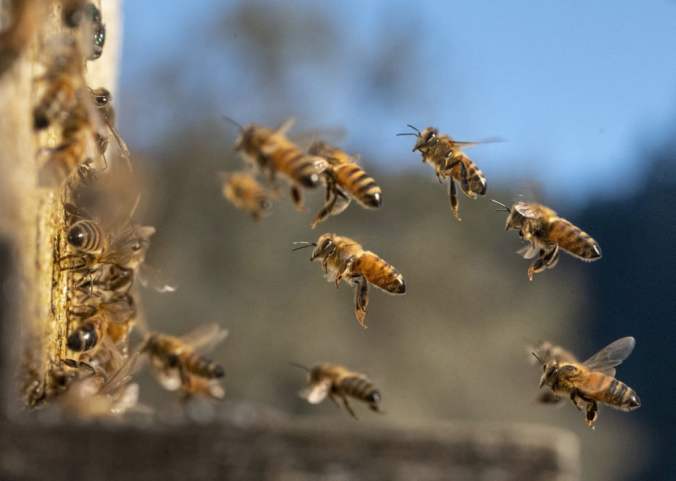
Honeybees venture out of their hive box on a warm afternoon on a farm near Elkton in western Oregon, US. Honeybees become active and start foraging at approximately 12.8C. Full foraging activity is not achieved until the temperature rises to 19C.  Photograph: Robin Loznak/Zuma Press Wire/Rex/Shutterstock

Dogs Doing Nature No Favors

Overfertilisation reduces biodiversity by allowing a few thriving plants to drive out others and the wildlife that depends on them. Photograph: John Walton/PA

Who knew? Now you do. Yes, one more thing to think about to take better care of your environment:

Deluge of dog pee and poo harming nature reserves, study suggests

Urine and faeces creating nitrogen and phosphorus levels that would be illegal on farms, scientists calculate

Dog faeces and urine are being deposited in nature reserves in such quantities that it is likely to be damaging wildlife, according to a new study. Continue reading
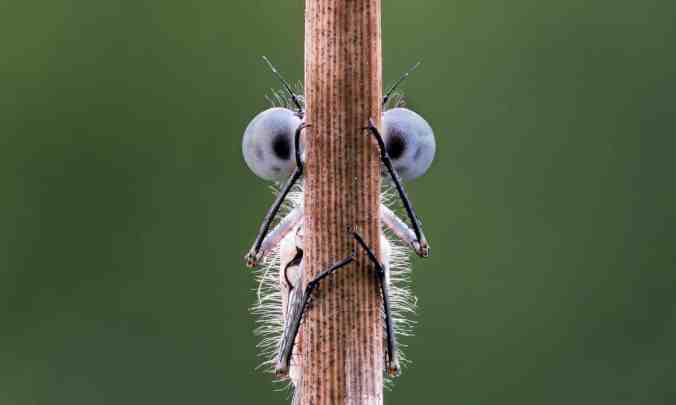
Aesop’s Animals Reviewed In Undark Magazine

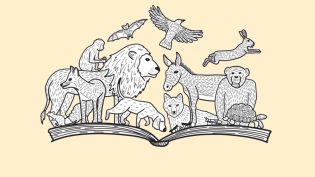
An illustration from “Aesop’s Animals” by Hana Ayoob.

The fables attributed to Aesop were mentioned twice in posts in our pages during our first year. Again the following year. And plenty of times since then. But there is plenty more to say about the menagerie, and a new book takes on that task. Dan Falk offers this Book Review: The Science Behind Aesop’s Menagerie in Undark Magazine (click the image above or the title below to read the entire review at the source):

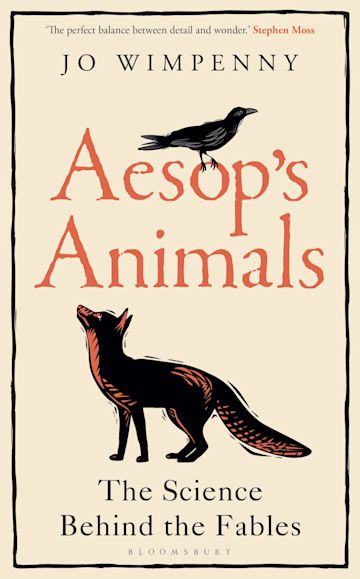
Aesop’s Animals coverIn “Aesop’s Animals,” zoologist Jo Wimpenny provides a guided tour of animal behavior drawn from the classic fables.

SEVERAL CHAPTERS into “Aesop’s Animals: The Science Behind the Fables,” zoologist and science writer Jo Wimpenny explains that, as a very young girl, she sometimes wanted to be a dog. (In a footnote she credits growing up in Wales for encouraging her “to think outside the box.”) This childhood fantasy, as the reader can readily imagine, involved crawling along the ground on all fours. But that only gets one part-way toward doghood, as the grown-up Wimpenny would come to realize. Continue reading

Fuzz, Author Interview

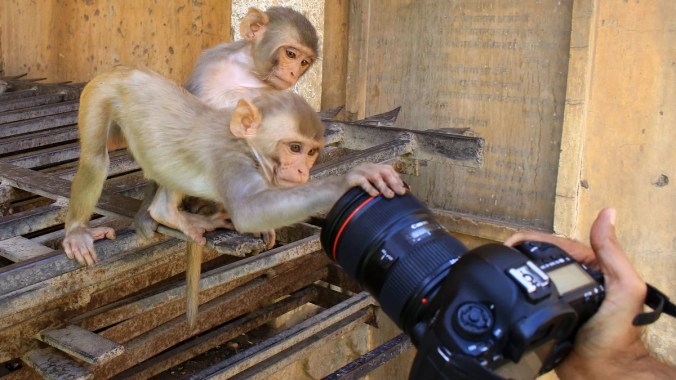
Macaques check out a camera in Galtaji Temple in Jaipur, India. Monkeys have been known to sneak into swimming pools, courts and even the halls of India’s Parliament. One attorney told author Mary Roach about a macaque that infiltrated a medical institute and began pulling out patient IVs. Vishal Bhatnagar/NurPhoto via Getty Images

This conversation with the author Mary Roach is plentiful with surprises about the human-animal interface, occasionally unfortunate and sometimes hilarious:

Fuzz: When Nature Breaks the Law by Mary Roach. Penguin Random House

Animals living among us often ignore the rules we try to impose on them. Science writer Mary Roach experienced this firsthand when a group of macaque monkeys accosted her in India.

“I was kind of asking for it,” Roach admits. “I walked up this trail where I knew there were a lot of macaques, and I walked up holding a bag of bananas.”

At first, nothing happened. Then Roach saw a monkey pop its head up from behind a boulder, “kind of like the bandits waiting for the stagecoach.” Continue reading
Goats’ Appetites Put To Work

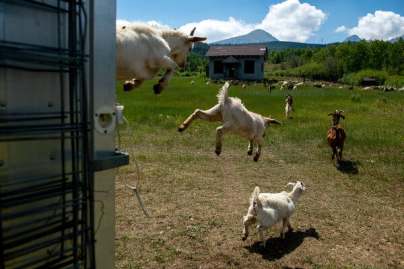
Goats made their first appearance in our pages as a matter of pure visual fun. Then there were several in a row that touched on companionship as well as culinary aspects. Finally one treated goats as workers.  That was five years ago. Today Coral Murphy Marcos tells the story, with photographs by Amanda Lucier, about a family, plus one intern, at the cutting edge of fighting fire with appetite:

The Unconventional Weapon Against Future Wildfires: Goats

When megafires burn in unison and harsh droughts parch the West, local governments, utilities and companies struggle with how to prevent outbreaks, especially as each year brings record destruction.

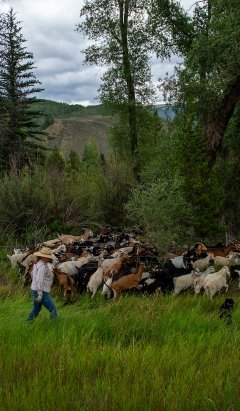
Carrying an unconventional weapon, Ms. Malmberg travels the American West in an Arctic Fox camper, occupying a small but vital entrepreneurial niche.

Ms. Malmberg, 64, is a goat herder and a pioneer in using the animals to restore fire-ravaged lands to greener pastures and make them less prone to the spread of blazes. Continue reading
To Build A Good Home, Sometimes You Need Pluck

We were aware that birds will build nests out of just about anything they can find, and sometimes in the strangest places. But how they get the material is less familiar, and in the article below is a video of a bird plucking fur from a fox, about as fun to watch as anything we have seen recently, so click through to the full story:

Sneaky Thieves Steal Hair From Foxes, Raccoons, Dogs, Even You

It’s simple: Mammals have hair or fur. Birds want it.

As anyone who has ever tried to eat french fries on a beach will attest, stealing is not an uncommon behavior among birds. In fact, many birds are quite skilled at bold and brazen theft. Continue reading
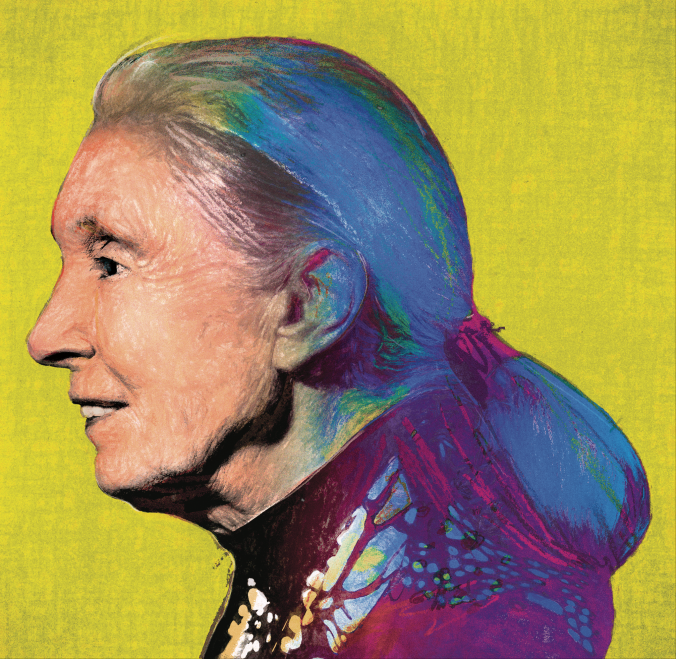
Jane Goodall In Living Color

Long-time fans, far from first-time posting:

Why Jane Goodall Still Has Hope for Us Humans

Wherever the story of our natural world ultimately lands, Jane Goodall will have earned a proud place in its telling. Goodall, 87, first found fame in the early 1960s for her paradigm-busting work as a primatologist. Continue reading
Human Intervention, Hold The Judgement

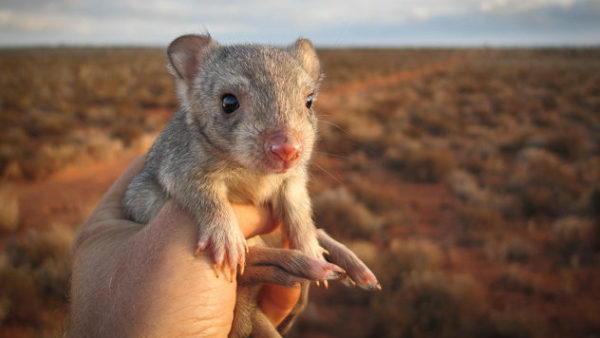
A burrowing bettong, also known as the boodie, in the Australian Outback. COURTESY OF AWC

I have not acquired the book yet, but I have heard her discuss it and read an interview with her about it; the author has moved from reporting on extinction and climate phenomena to reporting on human intervention schemes that respond to those phenomena. The stories as told in the article below adhere to a claim Kolbert makes in her discussion with Ezra Klein, that as a journalist she is not in the judgement business:

Assisting Evolution: How Far Should We Go to Help Species Adapt?

An Australian project to help threatened marsupial species adapt to avoid predatory cats is among a host of ‘assisted evolution’ efforts based on the premise that it is no longer enough to protect species from change: Humans are going to have intervene to help them change.

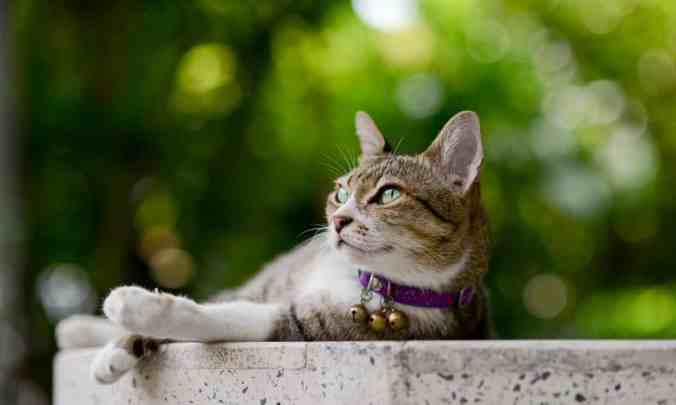
Reform School For Cats

The study also found that bells on collars made no difference to the number of animals killed by a cat. Photograph: GluePromsiri/Getty/iStockphoto

I am a cat person by nature. I have lost count of how many cats I had as pets since early childhood and well into adulthood, but I do remember our last two cats from three decades ago. Boris, a black cat with a tip of white on his tail, learned to jump up into my cradled arms if I stood in front of him and made a certain noise. His sister Mimi was named for the plaintive mi-mi cry she made when she climbed up onto the bathroom sink and rubbed her mouth against the faucet head, wanting us to turn the water on to drip out so she could drink. They lived long lives as indoor cats who did no harm to anyone or anything (that we knew of).  But when we learned how many birds, among other wildlife, that cats kill per year we decided not to adopt any more cats; we switched to dogs. Now, all these years later, I am happy to see there is hope for reformed cat behavior:

Meaty meals and play stop cats killing wildlife, study finds

Millions of pet cats are estimated to kill billions of animals a year but grain-free food can change cat behaviour

Feeding pet cats meaty food and playing with them to simulate hunting stops them killing wildlife, according to a study. Continue reading

Advances In Animal Migration Studies

Illustration by Shyama Golden

Sonia Shah, a science journalist and author of “The Next Great Migration: The Beauty and Terror of Life on the Move,” has provided a great summary of recent developments on the study of animal migration:

Animal Planet

An ambitious new system will track scores of species from space — shedding light, scientists hope, on the lingering mysteries of animal movement.

‘‘I’m going to do a set of coos,” Calandra Stanley whispered into the radio. The Georgetown ornithologist and her team had been hunting cuckoos, in an oak-and-hickory forest on the edge of a Southern Illinois cornfield, for weeks. Droplets of yesterday’s rain slid off the leaves above to those below in a steady drip. In the distance, bullfrogs croaked from a shallow lake, where locals go ice fishing in winter. Continue reading

Hidden Camera, Tiger Tree Hug, Award

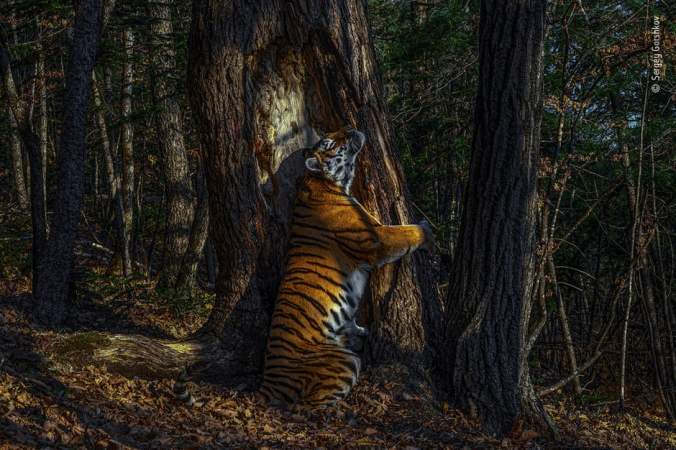
Sergey Gorshkov’s image of an Amur tiger, which won him the 2020 wildlife photographer of the year award.

Thanks to Mark Brown, Arts correspondent at the Guardian, for this:

Image of tiger hugging tree wins 2020 wildlife photographer award

Sergey Gorshkov left a hidden camera in a Russian forest for 11 months to capture the big cat

An image of a clearly ecstatic tigress hugging an ancient Manchurian fir tree in a remote Siberian forest has won one of the world’s most prestigious photography prizes.

It took Russian photographer Sergey Gorshkov 11 months to capture the moment using hidden cameras. His patience led to him being named 2020 wildlife photographer of the year by the Duchess of Cambridge at a ceremony at London’s Natural History Museum.

The image was selected from more than 49,000, with Roz Kidman Cox, the chair of the judging panel, calling the photograph “a unique glimpse of an intimate moment deep in a magical forest”. Continue reading

Smile-inducing Nature Photos

Hide and seek Photograph: Tim Hearn

Thanks to Matt Fidler’s display of the work by photographers in the right place at the right time to induce a needed smile in this contest’s audience.

Comedy Wildlife Photography awards 2020 finalists – in pictures

Continue reading

Lost & Found, Somali Sengi

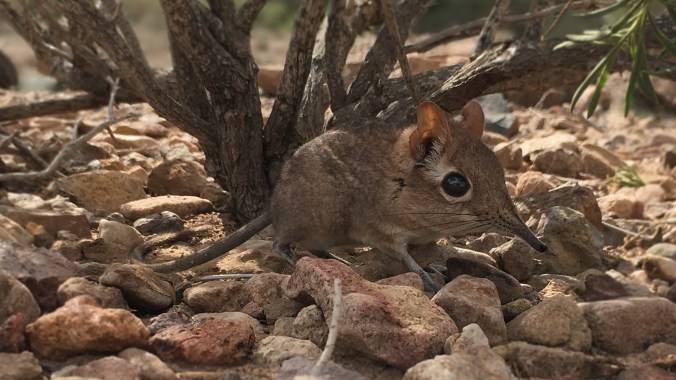
1_somali.sengi.at.assamo.djibouti_300dpi_wide-697a8ec352929562a9054b0f6945bce92e66bdbf-s1400-c85

Researchers have spotted the Somali sengi, a relative of aardvarks and elephants, in Djibouti.
Steven Heritage/Duke University Lemur Center

We have used lost & found within post titles enough times since we started that maybe it should be a category. They are mostly happy surprise stories. More complicated than cute kitten videos, but worth the read. For now, our congratulations to the scientists who made the discovery and our thanks to National Public Radio (USA) for reporting this:

Tiny Elephant Shrew Resurfaces After More Than 50 Years On Lost Species List

For more than 50 years, the mouse-size Somali sengi was thought to be a lost species.

Turns out, it wasn’t. Continue reading

Animals Having Fun

Thanks to Eric Vance for a fun and interesting read:

Where the Wild Things Play

The animal world is full of games. And tucked in among wrestling monkeys, belligerent birds and wily coyotes are lessons for us all.

As a sophomore in college I interned at a lab that studied dolphin behavior. The animals spent most of the year doing back flips and spraying water onto tourists at a theme park, then called Marine World Africa USA, just north of San Francisco. In their off months, they hung out with behavioral scientists who did experiments with them.

I quickly noticed a few things about dolphin research. One, it’s regularly interrupted by dolphin sex. Dolphins are dirty, dirty creatures. Two, despite this, it’s actually quite dull. Watching dolphins swim in circles eight hours a day gets old. And three, almost all dolphin experiments involve games and toys. Continue reading

Captivity, Creativity, Penguins & Art

I visited the Nelson-Atkins many times in recent decades when visiting family in Kansas City. I never visited the Kansas City Zoo because, while I am grateful for the essential services zoos can provide, animals in captivity generally depress me. Our son Milo and his 3-year old daughter were in Kansas City just after Amie and I visited in late February. With grand/great grand-parents they visited both the Nelson-Atkins and the Kansas City Zoo. The zoo was a huge hit with our grand-daughter, and I am grateful to that zoo for her exposure to live animals she might never otherwise get to see.

I did not know before just now what exceptions might exist to my general rule of avoiding even images of wild animals in captivity. I have discovered one. I suppose on reflection I will probably change my mind, but for now I stand by the idea that the directors of these two institutions are doing their best in tough times to find creative solutions for everyone:

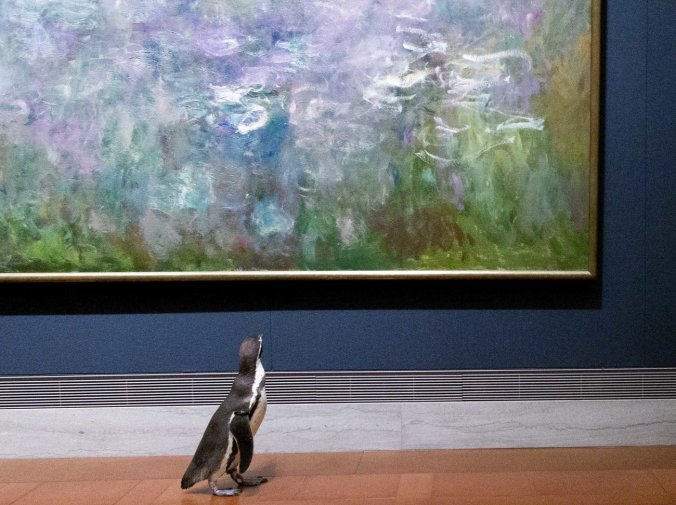
49895121561_cc28ef6c73_o-7b2482f9f0b178b3c48ac4384bb1a549e303e274-s1300-c85

Kansas City Zoo executive director Randy Wisthoff says their Humboldt penguins have missed their regular interactions with zoo visitors, so a field trip was in order.
Gabe Hopkins/The Nelson-Atkins Museum of Art.

WATCH: Missouri Penguins Enjoy ‘Morning Of Fine Art’ At Local Museum

49895121231_823f6b7fa0_c_sq-451cd0e2ce592d45a64580f911c58e6113df91cd-s500-c85

Penguins were allowed to waddle through the galleries of Kansas City’s Nelson-Atkins Museum of Art. Both the museum and the Kansas City Zoo — home to the penguins — have been closed because of the pandemic.
The Nelson-Atkins Museum of Art.

What a time to be a penguin.

First, a group of the flightless birds were recently allowed to roam the halls of Chicago’s Shedd Aquarium — a through-the-looking-glass moment if there ever was one.

Now, penguins visited a museum for a “morning of fine art and culture.”

The outing was arranged by The Nelson-Atkins Museum of Art in Kansas City, Mo., and the Kansas City Zoo. Both institutions are closed to the public because the pandemic.

“Quarantine has caused everyone to go a little stir-crazy, even the residents of the Kansas City Zoo. So several of the penguins decided to go on a field trip to the Nelson-Atkins, which is still closed, to get a little culture,” said a caption accompanying the video. Continue reading

Images From The Natural World

original (1)

Yi Liu / BigPicture Natural World Photography Competition

Thanks to The Atlantic for sharing these images from bioGraphic, the official media sponsor for the California Academy of Sciences’ BigPicture Natural World Photography Competition:

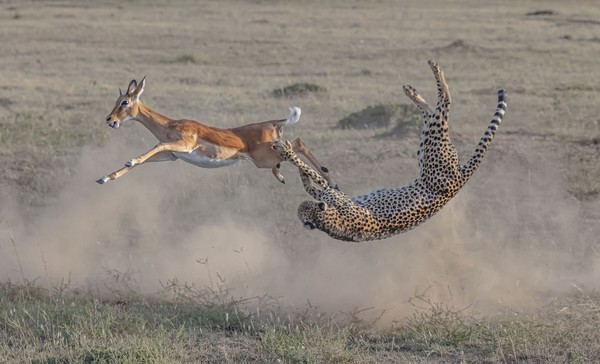
1.  Speed and strategy: Terrestrial Wildlife Winner. Catching prey is no easy feat for cheetahs (Acinonyx jubatus), although they’re the fastest land animals in the world. The mostly treeless terrain of the African savanna gives antelopes, impalas, and other ungulates ample time to spot approaching predators, and even a slight head start can be the difference between life and death. To avoid alerting their prey, cheetahs start out hunting low to the ground, where their spotted coat helps them blend into the terrain. When they get within 60 meters (200 feet) of their target, cheetahs accelerate at a blistering pace, reaching 95 kilometers (60 miles) per hour in a matter of seconds. But the feline predators still have to account for the speed of their prey—in this case an impala (Aepyceros melampus), which can zigzag at upwards of 80 kilometers (50 miles) per hour. To close the gap, this cheetah tripped its quarry as it attempted to escape, proving that sometimes, strategy is just as important as speed. 

original (2)

Andy Parkinson / BigPicture Natural World Photography Competition

2.  Shelter in place: Grand Prize Winner. To get this intimate shot of a mountain hare (Lepus timidus) curled up against a Scottish winter storm, Andy Parkinson endured weeks of ferocious cold and wind that drove shards of ice into his face. Continue reading