Manatees, To Brighten Your Horizon

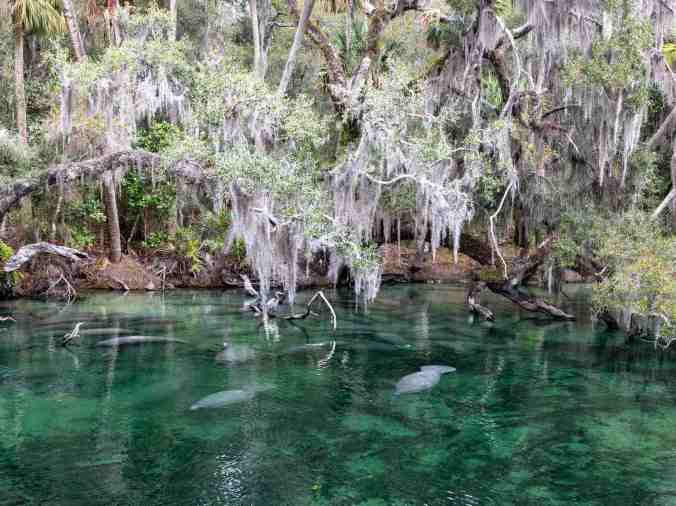
Manatees are generally solitary creatures, but tend to gather at warm water sites in the winter.
Florida State Parks

After a Kolbert doomcloud, a bit of sunshine is needed. Here it is in the form of creatures so charismatic they make you see something other than darkness. Thanks to National Public Radio (USA):

Legend has it that centuries ago, manatees used to be mistaken for mermaids, so a sight last week at one Florida state park would have put ancient sailors in shock.

Blue Spring State Park is home to one of the largest winter gathering sites for manatees in Florida, and recently, the park reached a new record when the number of manatees spotted in one group was nearly 1,000. Continue reading

How Birds See Color

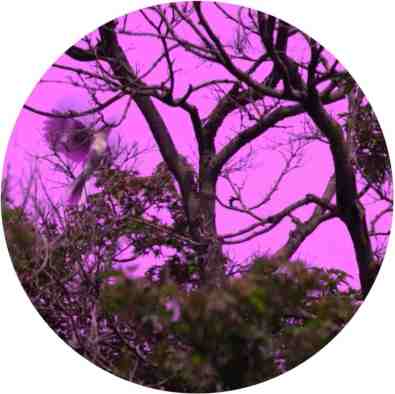
Forget cerulean — a bright, clear sky is actually dominated by ultraviolet light. Humans can’t see ultraviolet light, but many birds can. “Their sky will be essentially an ultraviolet sky,” said Daniel Hanley, a sensory ecologist at George Mason University.

Birds have gotten more attention in our pages than any other person, place or thing since we first started. Today that attention is focused on their sight:

A Bird’s-Eye View of a Technicolor World

Scientists have devised a new video system that reveals how animals see color, and us.

Is the sky truly blue?

Insects Love Solar Farms

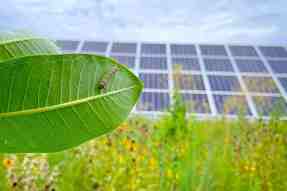
A monarch caterpillar on a common milkweed leaf at a solar farm in Minnesota. LEE WALSTON / ARGONNE NATIONAL LABORATORY

We have already linked a couple of times to the multidimensional benefits of solar, and here is another dimension:

At Solar Farms Planted with Native Vegetation, Insects Flourish

To reach its climate goals, the U.S. will need to build solar arrays on some 15,000 square miles of land, an area larger than Maryland. Continue reading

Dismantling Regulation

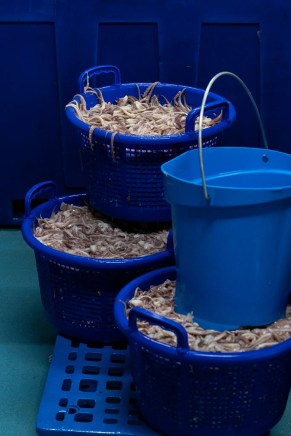
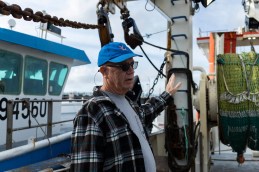
Bins of squid waiting to be packaged in Cape May. In a good week, Mr. Bright said his boats can bring in $100,000 worth of herring. Rachel Wisniewski for The New York Times

You can read the story or click the photo of William Bright below right to hear an explanation of how his case may be the end to regulation as we know it.

A Fight Over a Fishing Regulation Could Help Tear Down the Administrative State

The Supreme Court will hear arguments on Wednesday over whether to overturn a key precedent on the power of executive agencies.

On a blustery fall morning in southern New Jersey, the weather was too rough for the fishing boats at the center of a momentous Supreme Court case to set out to sea.

William Bright, a fisherman in New Jersey. He is the lead plaintiff in a case that could undermine the power of executive agencies, a long-sought goal of the conservative legal movement. William Bright, a fisherman in New Jersey. Photo: Rachel Wisniewski for The New York Times

A herring fisherman named Bill Bright talked about the case, which will be argued on Wednesday and could both lift what he said was an onerous fishing regulation and wipe out the most important precedent on the power of executive agencies, a long-sought goal of the conservative legal movement.

As workers cleaned squid and the salt air whipped over the docks, Mr. Bright, who has been fishing for 40 years and whose family-owned company is one of the plaintiffs, said he recognized the impact the case could have. Continue reading

Kew Gardens & New Species

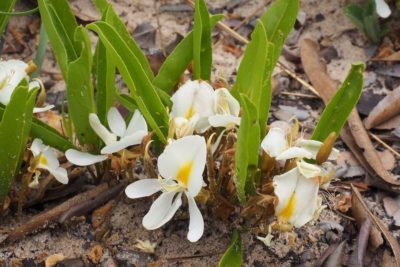
Cochlospermum adjanyae, a flowering plant that grows mostly underground and was first recorded by scientists in Angola in 2023. STEVE BOYES

Thanks to Yale e360:

Ten Curious New Plants and Fungi Recorded in 2023

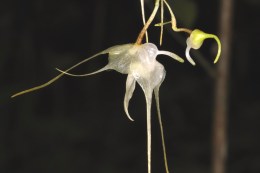
Aeranthes bigibbum. JOHAN HERMANS / RBG KEW

As the planet warms and extinctions mount, scientists are racing to catalog the vast array of life on Earth before species disappear. This year, researchers at the Royal Botanic Gardens, Kew, recorded 89 new species of plant and fungi across the globe, from the rocky edges of Antarctica to a dormant volcano in Indonesia.

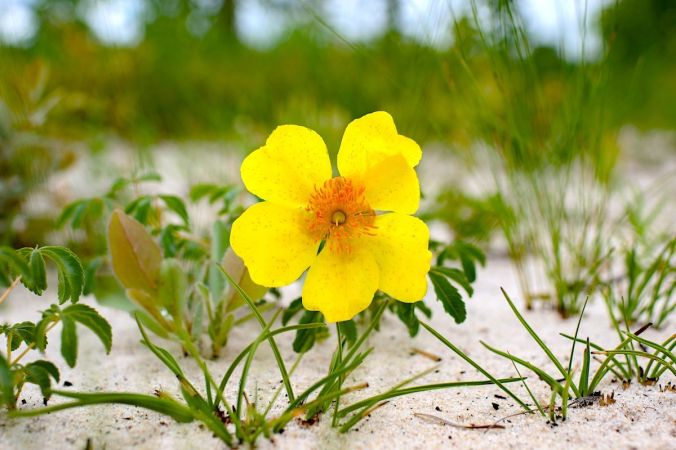
Baphia arenicola.

Baphia arenicola. DAVID GOYDER / RBG KEW

“It is an incredibly exciting time to be a scientist, but even as we make these wonderful new discoveries, we must remember that nature is under threat, and we have the power to do something about it,” Martin Cheek, a senior researcher with Kew, said in a statement. Continue reading

Channeling Water Nature’s Way

Just as much as we want packaging of our drinking water to be carefully thought out, we also want the channeling of water to make sense:

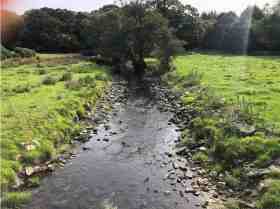
How the beck at James Robinson’s farm looked before the introduction of natural flood management techniques. Photograph: James Robinson

‘The wildlife that has come is phenomenal’: the UK farmers holding off floods the natural way

Planting trees, creating floodplains and rewilding rivers are among the new techniques being used to adapt to a heating climate

The streams, or becks, that run through James Robinson’s Lake District farm used to be cleaned out regularly – with vegetation yanked out and riverbeds dredged, or even completely filled in. Continue reading

Katherine J. Wu On Grizzlies

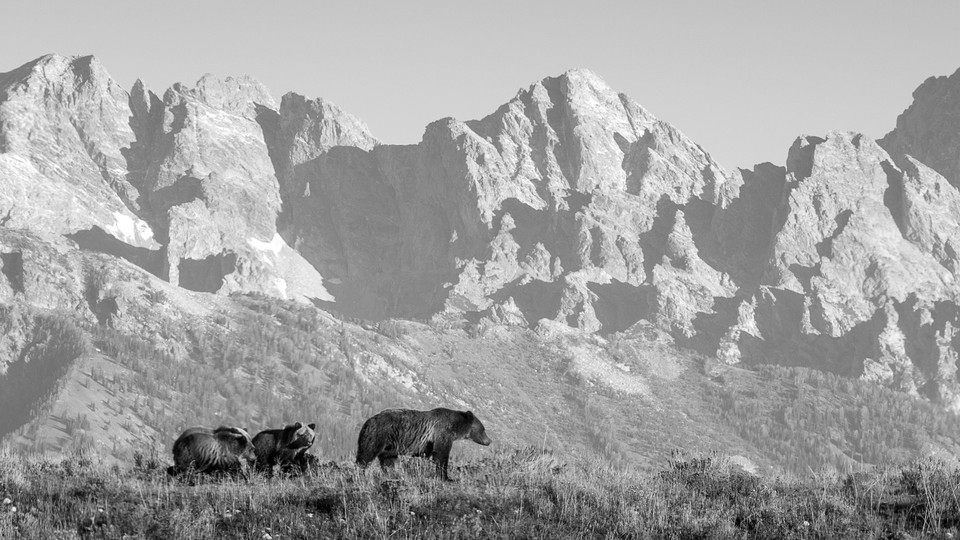
a black-and-white photo of several brown bears walking across a grassy plain, in front of mountains

Getty

We always appreciate Katherine J. Wu‘s writings on nature, especially her use of archival material to make a point:

Grizzly Bears Are Mostly Vegan

But humans made them more carnivorous.

On the subject of grizzly bears, the San Francisco Call—a short-lived newspaper that went out of print in 1913—wasn’t what you’d call kind. Continue reading

Ted Greene’s Treetime

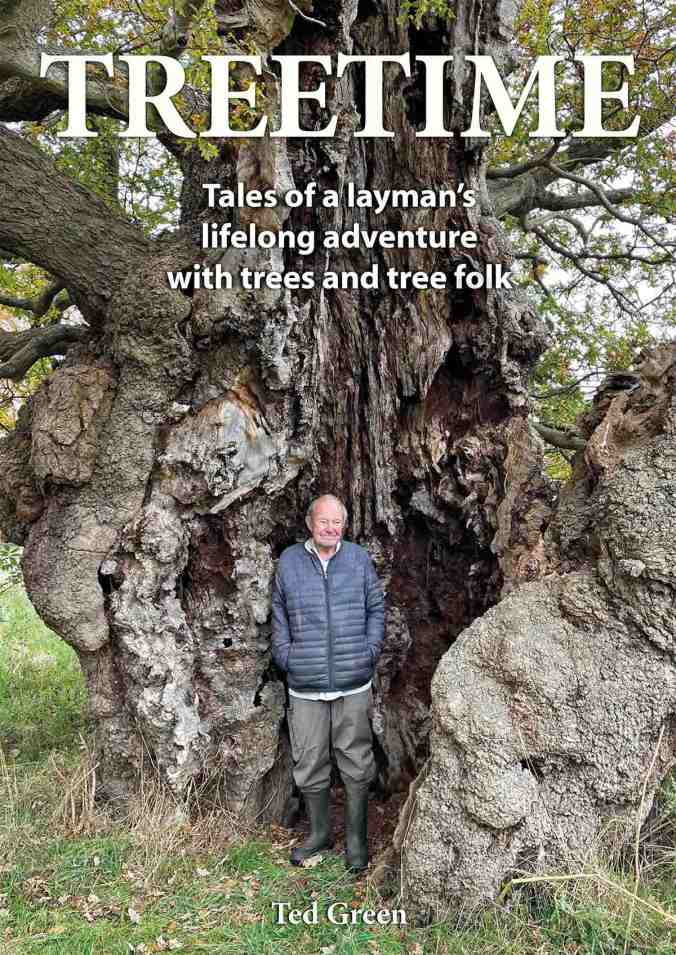
Thanks to the Guardian for bringing the above book to our attention:

Ted Green, a conservation adviser to the crown estate at Windsor, has a provocative take on our ‘living heritage’

Ted Green is a rebel. He calls sheep “land maggots”. A horse-riding centre is “a dog-food complex”. And the ancient tree expert’s new book includes a photo of him sticking up two fingers at a portrait of Margaret Thatcher. Continue reading

More Honey & Bees, Also

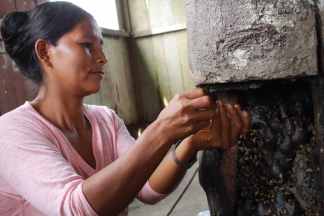
Tarkis Ríos Ushiñahua harvesting honey from stingless bees in a tree-trunk hive, at her home in Puerto Huamán in the Peruvian Amazon, 2019. [Hannah Hutchinson]

Along with anything else to get 2024 off to a good start, an article by Andrew Wingfield and Michael P. Gilmore that we missed from last year. The topic is one that we have only briefly touched on a couple times. The wider world of honey and the bees responsible for it are topics we hope to share more of this year.

To begin, let this bring some joy:

A Sweet and Potent Harvest

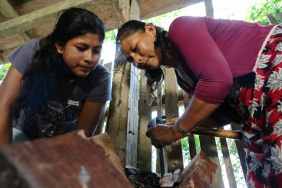
Tarkis Ríos Ushiñahua teaches her daughter to divide a hive, 2022. [Dylan Francis]

For the Maijuna of the Peruvian Amazon, harvesting honey from stingless bees is bringing prosperity and empowerment. Local beekeeping might also help preserve a vast ancestral forest.When Tarkis Ríos Ushiñahua collects honey from one of her beehives, she wears no protective clothing and uses just one tool, a large plastic syringe. 1 As she lifts the lid from the wooden box housing the hive, the bees swarm. They buzz around her face, land on her back, and settle in strands of her straight black hair, but they do no harm — these bees are stingless.

The bee yard of Loida Ríos Tamayo and Saúl Peterman Mosoline, 2021. [Enrique Redondo Navarro]

The slender tip of Ríos Ushiñahua’s syringe fits neatly inside the hive’s honeypots, brownish, papery-looking pouches that the bees have fashioned from wax and plant resins. Continue reading

Avocados & Michoacán

An avocado farm in Yoricostio, Michoacán. All photographs from Mexico, August 2023, by Balazs Gardi for Harper’s Magazine © The artist

A decade ago we thought we should source from Harper’s more, but its blog no longer exists to read the whole story that prompted that idea. Still going strong after 173 years of publication, this recent article in the magazine helps us understand what is wrong with one of our favorite farm products:

Forbidden Fruit
by Alexander Sammon

The anti-avocado militias of Michoacán

Phone service was down—a fuse had blown in the cell tower during a recent storm—and even though my arrival had been cleared with the government of Cherán in advance, the armed guard manning the highway checkpoint, decked out in full fatigues, the wrong shade to pass for Mexican military, refused to wave me through. My guide, Uli Escamilla, assured him that we had an appointment, and that we could prove it if only we could call or text our envoy. The officer gripped his rifle with both hands and peered into the windows of our rental car. We tried to explain ourselves: we were journalists writing about the town’s war with the avocado, and had plans to meet with the local council. We finally managed to recall the first name of our point person on the council—Marcos—and after repeating it a number of times, we were let through. Continue reading

Bird-Friendly Architecture

The New York Times building uses fritted glass clad with rods, which make its facade more visible to birds. Photograph: Daniel Slim/AFP/Getty Images

Birds fall victim to carelessly designed buildings. Bravo to the New York Times for building a bird-friendly HQ. Also to the Guardian for reporting on their competitor’s leadership, and on the architects leading the way with careful design:

Buildings kill a billion US birds a year. These architects want to save them

Highly transparent glass can lead to devastating collisions. But innovations in design are creating safer skylines – without sacrificing beauty
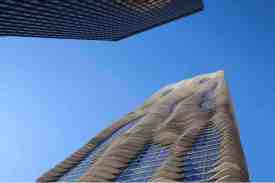
Chicago’s Aqua Tower was designed with birds in mind. Photograph: Radomir Rezny/Alamy

Chicago’s 82-story Aqua Tower appears to flutter with the wind. Its unusual, undulating facade has made it one of the most unique features of Chicago’s skyline, distinct from the many right-angled glass towers that surround it.

In designing it, the architect Jeanne Gang thought not only about how humans would see it, dancing against the sky, but also how it would look to the birds who fly past. The irregularity of the building’s face allows birds to see it more clearly and avoid fatal collisions. “It’s kind of designed to work for both humans and birds,” she said.
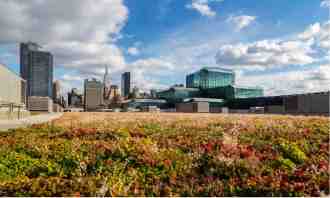
A green roof on the Javits Convention Center serves as a sanctuary for birds. Photograph: David Sundberg/Courtesy of Dan Piselli

As many as 1 billion birds in the US die in building collisions each year. And Chicago, which sits along the Mississippi Flyway, one of the four major north-south migration routes, is among the riskiest places for birds. This year, at least 1,000 birds died in one day from colliding with a single glass-covered building. Continue reading

Holiday Cheer From Mr. Grouse

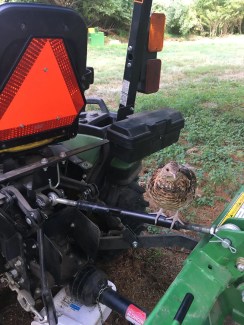
Bill Hartline and Mister Grouse. “He can be a pain, too,” Mr. Hartline said. Bill Hartline

Apart from bird-feeders, habituating wild animals among humans is troublesome. The Cornell Lab of Ornithology promotes birdfeeders so we trust that there is science supporting the practice. The science behind this grouse’s behavior represents another good exception:

Ruffed grouse are elusive and stealthy, but scientists are seeking a genetic explanation for why some of the birds become best buddies with people.

Mister Grouse helping with chores around the property. Bill Hartline

When Bill Hartline bought 50 acres of forested land outside Muncy, Pa., he was looking for a bit of solitude and a place to eventually build a new home in retirement. But during a camping trip there in early 2020, he discovered the wooded plot wasn’t as lonely as he thought. That evening, a ruffed grouse — a crow-size bird with a tiny mohawk and mottled feathers — appeared at his feet.

“I crouched down and said, ‘Hello.’ He cooed back and started following me around,” Mr. Hartline, 66, said. “Three years later, he’s still following me around.” Continue reading

The American Chestnut, Reconsidered

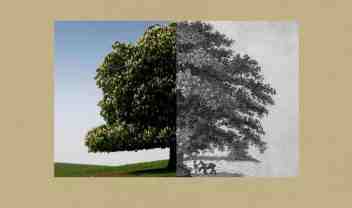
Illustration by The Atlantic. Source: Millennium Images / Gallery Stock; Bettmann/Getty

Katherine J. Wu reminds us of what it means to love something too much, and not enough:

America Lost Its One Perfect Tree

Lumber, shelter, delicious nuts—there was nothing the American chestnut couldn’t provide.

Across the Northeast, forests are haunted by the ghosts of American giants. A little more than a century ago, these woods brimmed with American chestnuts—stately Goliaths that could grow as high as 130 feet tall and more than 10 feet wide. Nicknamed “the redwoods of the East,” some 4 billion American chestnuts dotted the United States’ eastern flank, stretching from the misty coasts of Maine down into the thick humidity of Appalachia. Continue reading

Kelp & Life

Sugar kelp from Penobscot Bay, Maine. Photograph: Josie Iselin

We have featured the promise of various seaweed schemes many times, and we find it evergreen for further exploration:

Could I live and breathe seaweed – and reduce my use of plastics – for 24 hours?

Seaweed Day starts at 8am. Haunted by pervasive news that so many of our everyday habits harm our planet, I wonder how to minimize my personal use of plastics. I embark upon a day of replacing the microplastics that pollute our atmosphere, our water and even our bloodstreams.

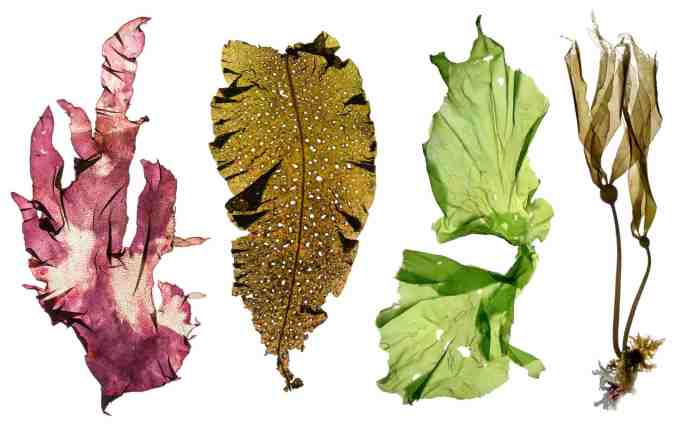
From left to right, Chondracanthus, Agarum, Ulva (sea lettuce), Nereocystis (juvenile bull kelp). Photograph: Josie Iselin

How much of my daily life can I accomplish with seaweed? Eating, washing, dressing? Armed with a budget of $500, I set out on a seaweed-based product shopping spree. Continue reading

Beavers’ Resilience On Display In Canada

Beavers are not always welcome, but where they belong, they are a wonder to behold. Ian Frazier offers this dispatch from the great North:

Deep in the Wilderness, the World’s Largest Beaver Dam Endures

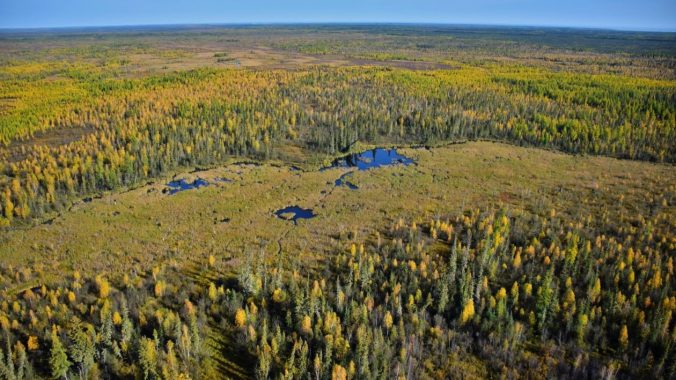
The largest beaver dam on Earth was discovered via satellite imagery in 2007, and since then only one person has trekked into the Canadian wild to see it. It’s a half-mile long and has created a 17-acre lake in the northern forest — a testament to the beaver’s resilience.

Wood Buffalo National Park, the largest national park in Canada, covers an area the size of Switzerland and stretches from Northern Alberta into the Northwest Territories. Continue reading

Rubber-Induced Destruction

Satellite images of Cambodian forest in 2000 (left) and, after being cleared, in 2015 (right). Forests were replaced by a grid of rubber plantations, as well as croplands. Source: NASA

If you have never seen ecosystem destruction firsthand, count yourself lucky. I witnessed, during visits over several years, as 1,000 acres of primary forest ecosystem was destroyed to make way for a rubber plantation. It was horrifying. And I am further horrified to read how what I witnessed was only a small part of a much bigger rubber-induced destruction (thanks as always to Fred Pearce):

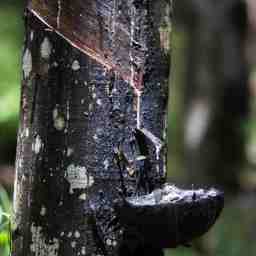
Rubber resin collected from a tree near Lubuk Beringin, Indonesia. TRI SAPUTRO / CIFOR

How Mounting Demand for Rubber Is Driving Tropical Forest Loss

The growing market for rubber is a major, but largely overlooked, cause of tropical deforestation, new analysis shows. Most of the rubber goes to produce tires, more than 2 billion a year, and experts warn the transition to electric vehicles could accelerate rubber use.

The elephants are gone. The trees are logged out. The Beng Per Wildlife Sanctuary in central Cambodia is largely destroyed, after being handed over by the government to a politically well-connected local plantation company to grow rubber. Continue reading

Power Rangers With A Different Approach

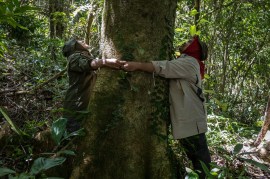
Women rangers hugged a tree while collecting data during a forest patrol near the village of Damaran Baru, in Aceh Province, Indonesia. Ulet Ifansasti for The New York Times

We thank Muktita Suhartono for the story and  Ulet Ifansasti for the photographs:

Female Rangers ‘Don’t Go All Alpha Like the Men’ to Protect a Forest

Rather than take a confrontational approach with trespassers looking to farm or log in a tropical rainforest in Indonesia, teams of women rangers try dialogue first.

Asmia, one of 15 rangers whose job is to protect nearby forests from squatters who want to clear trees for timber or to farm the fertile soil.

Riding her motorbike while balancing a backpack, a wok and a sharp cleaver, Asmia expertly maneuvered her way up a dangerous cliffside: a three-mile trip along a precipitous dirt path, barely 40 inches wide, to reach the mouth of the forest.

Asmia is one of the 15 members of a team of rangers — 10 of whom are women — whose job is to protect their village forest in Aceh Province in Indonesia from the squatters who want to clear the trees for timber or to farm the fertile soil.

Two teams of rangers, each consisting of five women and two men, take turns each month on five-day forest patrols.

“Here, we once fought with a squatter, asking him to stop the encroachment,” Asmia said, pointing as she walked beneath the thick canopy of trees that shadow her rounds. “He insisted on clearing the land, as he wanted to grow coffee. He was persistent. But we talked him out of it.” Continue reading

Carl Safina, Ecologist & Author, Interviewed

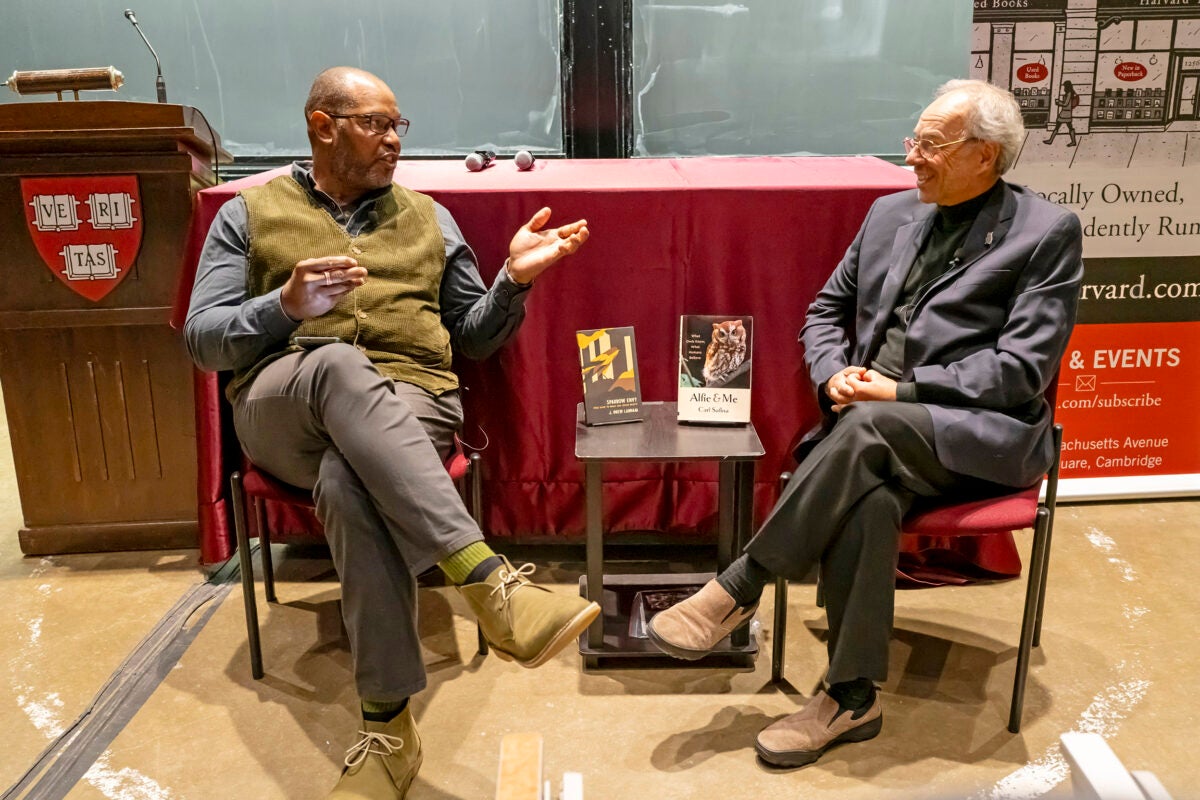
Joseph Drew Lanham and Carl Safina.

Joseph Drew Lanham (left) interviews fellow ecologist Carl Safina during a recent Harvard talk about Safina’s book “Alfie and Me: What Owls Know, What Humans Believe.” Jon Chase/Harvard Staff Photographer

We have linked to the work of Carl Safina only twice before (the second time just a photo credit) but now realize what we have been missing. Our thanks to Alvin Powell,
Harvard Gazette staff writer:

Screech owl wisdom

It took an ailing screech owl to teach a scientist the value of up-close-and-personal study.

Alfie and Me: What Owls Know, What Humans Believe by Carl Safina ...In a talk Monday at the Science Center, Carl Safina, an ecologist at Stony Brook University and author of several books about humanity’s relationship with nature, recalled that the chick was found on a friend’s lawn as the pandemic was tightening its grip on the world. In the picture Safina received, the bird looked beyond saving.“How did it die?” he asked.

“It was just a downy little, dying thing,” Safina, whose most recent book is “Alfie and Me: What Owls Know, What Humans Believe,” said in his Harvard talk, which was sponsored by the FAS Division of ScienceHarvard Library, and the Harvard Book Store and included questions from Clemson University ecologist Joseph Drew Lanham. Continue reading

Dominica’s Whale Sanctuary

Fewer than 500 sperm whales are estimated to live in the waters surrounding Dominica. Photograph: By Wildestanimal/Getty Images

This island is already known for sperm whales. Protecting their habitat strengthens Dominica’s reputation as the conservation leader in the region:

Dominica creates world’s first marine protected area for sperm whales

Nearly 300 sq miles of water on west of Caribbean island to be designated as a reserve for endangered animals

The tiny Caribbean island of Dominica is creating the world’s first marine protected area for one of Earth’s largest animals: the endangered sperm whale. Continue reading

Invasive Pythons Are Winning, Get Your Game On

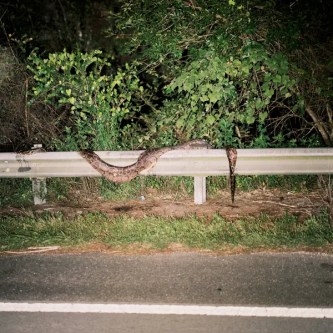
A Burmese python that was hit by a car. Zack Wittman for The New York Times

Nearly 12 years to the day since the first spectacular article we read on invasive species, we still watch for these stories. When it is invasive-hunting season, we take notice when new initiatives are announced:

Her Livelihood? Hunting Pythons in the Dead of Night.

Amy Siewe teaches people how to find and euthanize invasive Burmese pythons, which have been so successful at adapting to Florida that they appear here to stay.

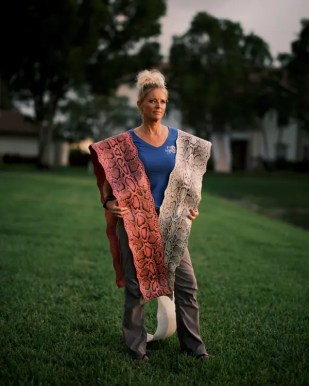
On a clothing rack in Ms. Siewe’s living room are a dozen of skins, dyed deep hues by a tannery that helps her make python-leather products, including Apple Watch bands. Zack Wittman for The New York Times

An unexpected chill can fall over the Florida Everglades late at night. Stars speckle the sky. Frogs croak and croak, their mating calls echoing in the air.

It is all peace and wonder until you remember why you are out at this hour, on the flatbed of a pickup truck outfitted with spotlights, trying to find invasive creatures lurking in the shadows.

A python hunt might evoke images of hunters trudging through swamps and wresting reptiles out of the mud. In reality, it involves cruising the lonely roads that traverse the Everglades in S.U.V.s, hoping for a glimpse of a giant snake. It is strange work, straining on the eyes, brutal on the sleep schedule. Continue reading