More On, And From, Kim Stanley Robinson

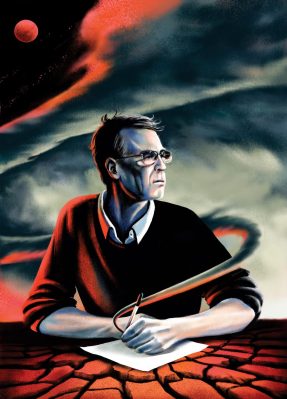
“The Ministry for the Future” displays Robinson’s anti-anti-utopianism: its prognosis is both heartening and harrowing. Illustration by Deena So’Oteh

Thirteen months ago I first became aware of this author and this book. Four months ago Robinson showed up on my radar again. I still had not made time for his book. And two weeks ago, another reminder of how my time has and has not been employed, this time posed as a question: Can Science Fiction Wake Us Up to Our Climate Reality? I already feel quite awake to that reality, but the question is still of considerable interest.

Kim Stanley Robinson’s novels envision the dire problems of the future—but also their solutions.

Robinson at home in Davis, California. Much of his sci-fi could seem like nature writing, with the Sierra Nevadas—his “heart’s home”—recast as Mercury or Mars. Photograph by Jim McAuley for The New Yorker

Last summer, the science-fiction writer Kim Stanley Robinson went on a backpacking trip with some friends. They headed into the High Sierra, hiking toward Deadman Canyon—a fifty-mile walk through challenging terrain. Now sixty-nine, Robinson has been hiking and camping in the Sierras for half a century. At home, in Davis, California, he tracks his explorations on a wall-mounted map, its topography thick with ink. He is a devotee of the “ultralight” approach to backpacking and prefers to travel without water, instead gathering it along the way, from lakes and streams. Arriving at the canyon, with its broad, verdant floor cradled in smooth slopes of granite, he planned to fill his bottles with meltwater from the seven glaciers buried in its headwall. Continue reading

Aesop’s Animals Reviewed In Undark Magazine

An illustration from “Aesop’s Animals” by Hana Ayoob.

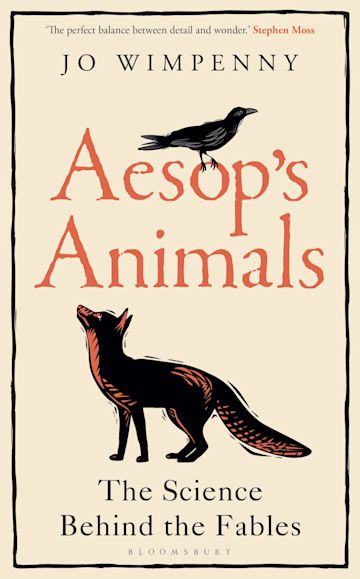
The fables attributed to Aesop were mentioned twice in posts in our pages during our first year. Again the following year. And plenty of times since then. But there is plenty more to say about the menagerie, and a new book takes on that task. Dan Falk offers this Book Review: The Science Behind Aesop’s Menagerie in Undark Magazine (click the image above or the title below to read the entire review at the source):

Aesop’s Animals coverIn “Aesop’s Animals,” zoologist Jo Wimpenny provides a guided tour of animal behavior drawn from the classic fables.

SEVERAL CHAPTERS into “Aesop’s Animals: The Science Behind the Fables,” zoologist and science writer Jo Wimpenny explains that, as a very young girl, she sometimes wanted to be a dog. (In a footnote she credits growing up in Wales for encouraging her “to think outside the box.”) This childhood fantasy, as the reader can readily imagine, involved crawling along the ground on all fours. But that only gets one part-way toward doghood, as the grown-up Wimpenny would come to realize. Continue reading

Good Fences Make Good Neighbors

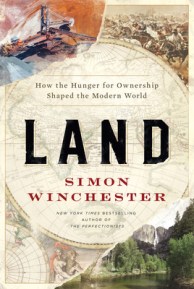
Land acquisition, for the purpose of conservation, is a subject that we touch upon from time to time. The bigger arc of land acquisition’s history, as well as its future, helps with perspective. The book to the right (linked to an independent bookseller’s website), potentially important for such perspective, is reviewed by Francisco Cantú in Human History and the Hunger for Land, as excerpted below (you can listen to the review by clicking the start button here):

From Bronze Age farmers to New World colonialists, the stories of struggle to claim more ground have shaped where and how we live.

Territorial expansion once meant conquest, but other modes are being explored. Illustration by Vincent Mahé

The final piece of terrain to be incorporated into the contiguous United States was an oddly shaped strip stretching from Las Cruces, New Mexico, to Yuma, Arizona. Known as the Gadsden Purchase, the area was obtained from Mexico in 1854 for ten million dollars, adding nearly thirty thousand square miles to a nation still drunk with Manifest Destiny expansionism. The motivations for acquiring the land were many—it contained huge deposits of ore and precious metals, held vast agricultural potential in the soils of its fertile river valleys, and, most important, had an arid climate that could allow a rail route to connect the coasts while remaining free from snowpack year-round. Continue reading

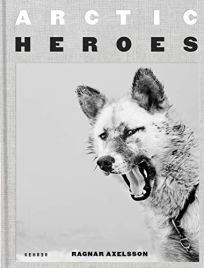
Arctic Heroes

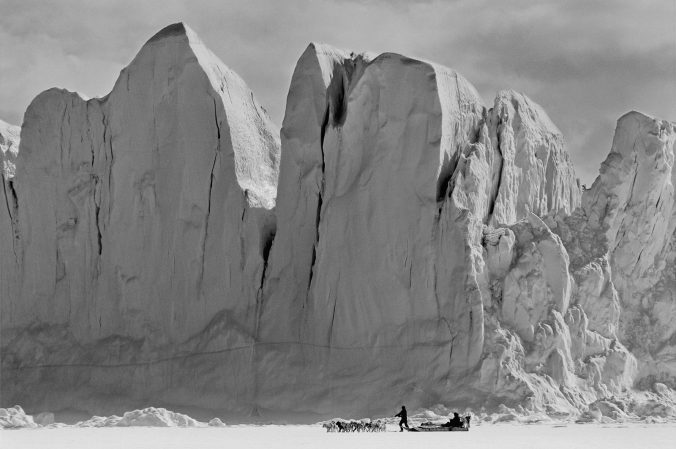
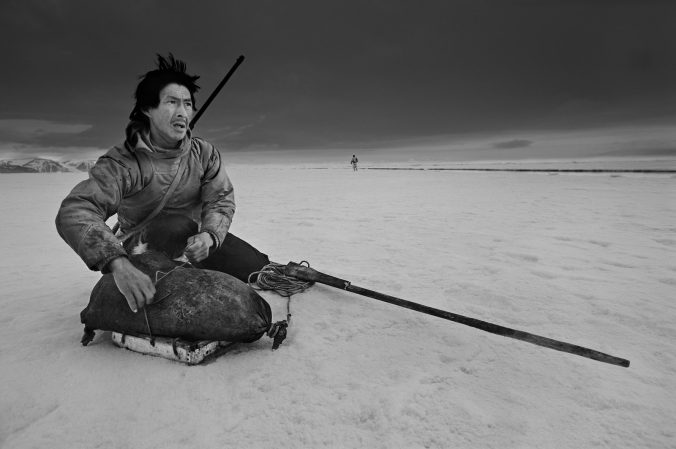
The book is not new, but it is new to us. Ben Taub has brought to our attention this stunning portraiture that, like most great photography, makes you wonder how the artist got the composition just so:

Ragnar Axelsson

The Fading Ways of Indigenous Arctic Hunters

Ragnar Axelsson

Ragnar Axelsson’s portraits from Greenland reveal the effects of climate change on ice floes, sled dogs, and a traditional culture.

During springtime in the far, far north—when the sun breaches the horizon, after months of total darkness—indigenous Greenlandic hunters head out to frozen inlets and get lost in ice and time. By day, the hunters might move miles in one direction, while the ice under their feet floats gently in another. Continue reading
The Nutmeg’s Curse, Reviewed

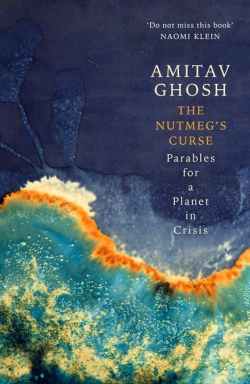
The Nutmeg’s Curse: Parables for a Planet in Crisis
by Amitav Ghosh
Hachette
352pp
Published October 2021
ISBN: 9781529369458

Amitav Ghosh, appearing in our pages only once before, has a new book. The title of this review of the book, A Dazzling Synthesis, says plenty, as does the endorsement from Naomi Klein:

We have been aware for centuries that we are responsible for the earth’s denudation: its ‘cold staring spaces’, as English writer John Evelyn called them in 1706, mourning the trees chopped down on his estate.  Around a hundred years later, the Prussian explorer Alexander Von Humboldt worried over ‘mankind’s mischief’, conjecturing that if humans ever ventured into outer space, they would carry with them a tendency to leave everything ravaged and barren.  (The closer they resembled man, he also observed, ‘the sadder monkeys look’).  ‘Are the green fields gone?’ asked the narrator of Herman Melville’s Moby Dick, published fifty years after Von Humboldt’s 1801 diary, as he watched his fellow Manhattanites staring dreamily out to sea.  Continue reading

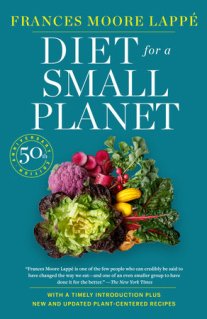
Diet For A Small Planet, Five Decades And Counting

Moosewood has been mentioned, along with its cookbooks, and we have featured plenty of other stories about veg-forward diets and related cookbooks; so it is odd that neither this book nor its author have featured in our pages before. Just in time to celebrate five decades, a fitting tribute to its author:

Frances Moore Lappé’s last hamburger was in 1971, the same year she published “Diet for a Small Planet,” her hugely influential book about food and sustainability, which virtually created the publishing category of food politics and turned Ms. Lappé into what she once self-deprecatingly called “the Julia Child of the soybean circuit.” Continue reading
Quirky, Old-School Enterprise Versus Doom

Powell’s anticipated that every part of its business would need to be closed, but then quickly realized that it could continue operating the warehouse. Amanda Lucier for The New York Times

We have used the word doom in a post title on four previous occasions, most recently this one. Doomsaying is not our goal here, but when it comes to the environment, particularly climate change, sometimes no other word will do.

A customer in Powell’s flagship store downtown. Amanda Lucier for The New York Times

On this fifth occasion I use the word just as seriously, but without reference to environmental challenges.  This book retailer has been on the front lines of one of the other big dangers I have had my eye on, and I am thankful to Peter S. Goodman for this account of their approach to survival:

Powell’s Books Survived Amazon. Can It Reinvent Itself After the Pandemic?

As much as any city, Portland, Ore., has been through hell. Its landmark store, Powell’s Books, must finally build a viable online business while recapturing its downtown success.

Powell’s anchors a once dicey neighborhood now dotted with glass-fronted condos and furniture boutiques. Amanda Lucier for The New York Times

PORTLAND, Ore. — Over its half-century in the heart of Portland, Powell’s Books has survived an unending array of foundational threats — the oft-anticipated death of reading, the rise of Amazon, the supposedly irretrievable abandonment of the American downtown.

None of that provided preparation for the tumult of the past two years. Continue reading
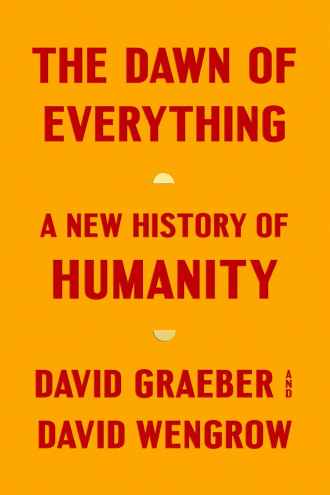
The Dawn Of Everything

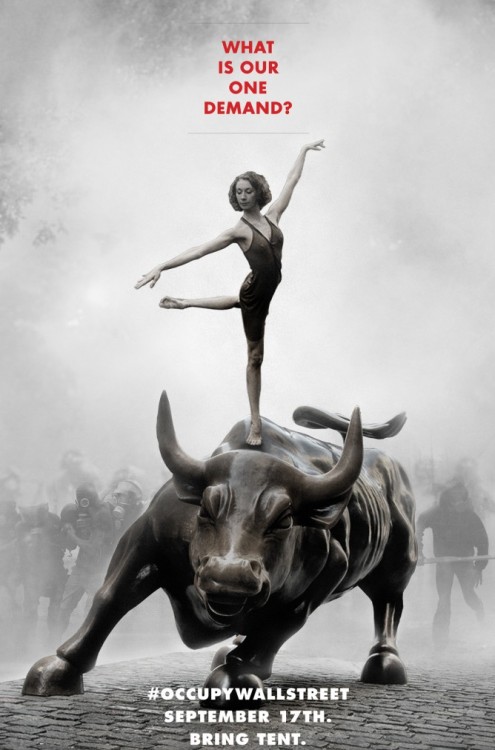
Occupy Wall Street never showed up in these pages until now, which is maybe too late. I recall visiting Zuccotti Park in late 2011, to observe more than to occupy. I remember a box of books, many young people and some my own age, and a palpable sense of purpose combined with a pretty straightforward logic. Also, tranquil. That ballerina meant something. But I could not stay. I was in New York on a very brief visit. I have the opposite of anarchist beliefs and my understanding at the time was that the animating philosophy had something to do with anarchy.

I shared views with Occupy Wall Street in opposition to historic inequalities that I could see as a ticking time bomb. But my time that day was limited. I had to leave. No regrets. Until now, perhaps. Maybe I should have stayed. This book, which I have now read several reviews of, gives me reason to wonder. That protest was the brainchild of someone who then spent a decade producing a book to offer a very different view of human history:

…The Big History best-sellers by Harari, Diamond and others have their differences. But they rest, Graeber and Wengrow argue, on a similar narrative of linear progress (or, depending on your point of view, decline). Continue reading
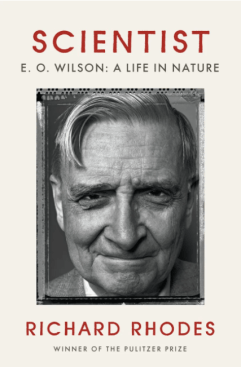
Scientists At Work

This book, about a scientist who has featured in plenty of posts on this platform, is introduced by one of our favorite writers with some juicy gossip from the halls of academia. I had no idea that the biology department at Harvard divided along the lines described here; the how is the juicy part and the why makes some sense–all for the best–knowing what we know now. As an aside, having taken my first calculus course as a doctoral student at age 30, with undergrads as classmates, I had a jolt of painful memory that made me even more respectful of this biologist’s determination.

Silent EarthThe second book reviewed in this essay is one we have pointed to previously, and the research that led to it was also featured much earlier. The backstory presented in this essay brings the science to life, so do read through to the end:

Where Have All the Insects Gone?

Scientists who once documented new species of insects are now charting their perilous decline—and warning about what it will mean for the rest of us.

In the summer of 1942, Ed Wilson, age thirteen, decided that it was time to get serious about research. He had already determined that he wanted to be an entomologist, a choice made partly out of interest and partly out of injury. As a child, he’d been fascinated with marine life. One day, he jerked too hard on a fish he caught, and one of its needlelike spines lodged in his right eye. The lens had to be removed, and, following the surgery, to see something clearly he needed to hold it up near his face. Insects were just about the only animals that submitted to this treatment. Continue reading

Nathan Myhrvold On The Splendid Table

When we posted on his book a few weeks ago the title of our post suggested that it was a frivolous offering. Not so. Surprisingly we have not posted about Nathan Myhrvold before, but the best profile on him was written before this platform launched. Then his dinosaur obsession and invention workshop were his primary talking points. In recent years those have made room for food.

And in case you do not have time for his book, you can get a sense of those talking points on this episode of The Splendid Table podcast:

Episode 741: Pizza: Origin, Culture and Making It with Nathan Myhrvold

This week, we take a deep dive into pizza with the co-author of the voluminous Modernist Pizza, Nathan Myhrvold. We get into the history, culture, and techniques behind great pizza. We hear stories from his worldwide travels and deep dives into pizza cultures and traditions. Plus, we hear about the culinary lab research devoted to making the best pizza ever, and he sticks around to answer your pizza-making questions. He is the founder of the Modernist Cuisine Lab…

Bewilderment & Richard Powers In Conversation

When I first linked to the work of Richard Powers it was when his previous book was being reviewed. Now he has a new book out, and from the conversation that follows it sounds like this one is a very good bookend to that one:

Richard Powers on What We Can Learn from Trees

The Pulitzer Prize-winning author asks whether we can reimagine our relationship with the natural world before it’s too late.

There are certain conversations I fear trying to fit into a description.

Continue reading
Richard Prum In Conversation With Tyler Cowen

We linked to one of Richard Prum’s books more than four years ago, then he was mentioned in a couple posts, each with small quotes based on his expertise. Here he is in conversation with someone who clearly appreciates his work and who knows how to ask good questions:

Richard Prum really cares about birds. Growing up in rural Vermont, he didn’t know anyone else interested in birding his own age. The experience taught him to rely on his own sense of curiosity and importance when deciding what questions and interests are worth studying. As a result, he has pursued many different paths of research in avian biology — such as behavioral evolution, where feathers come from, sexual selection and mate choice — many of which have led to deep implications in the field. In 2017, Tyler agreed with several prominent outlets that Prum’s book The Evolution of Beauty was one of the best books of the year, writing that it “offers an excellent and clearly written treatment of the particulars of avian evolution, signaling theory, and aesthetics, bringing together some disparate areas very effectively.” Continue reading
An Illustrated Catalog of American Fruits & Nuts


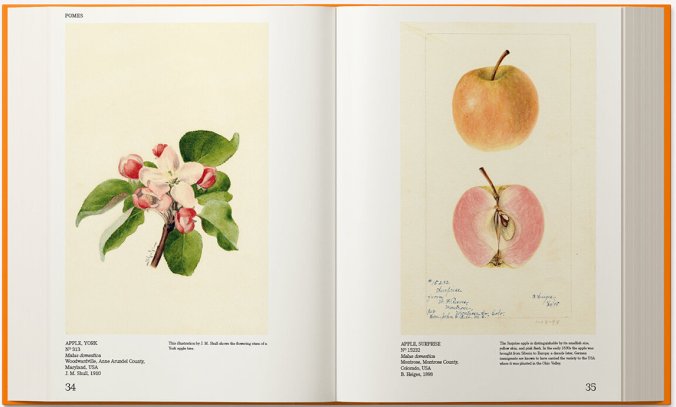
At 384 pages, with over 300 color illustrations, this illustrated catalog looks like the coffee table book of the year for any agriwonk, especially those who have been planting fruit and nut trees in the last year or so:

The United States Department of Agriculture Pomological Watercolor Collection encompasses over 7.500 botanical watercolor paintings of evolving fruit and nut varieties, alongside specimens introduced by USDA plant explorers from the late 19th and early 20th centuries. Assembled between 1886 and 1942, the collection’s remarkable, botanically accurate watercolors were executed by some 21 professional artists (including nine women). Authored largely before the widespread application of photography, the watercolors were intended to aid accurate identification and examination of fruit varietals, for the nation’s fruit growers. Continue reading

Jane Goodall & The Book Of Hope

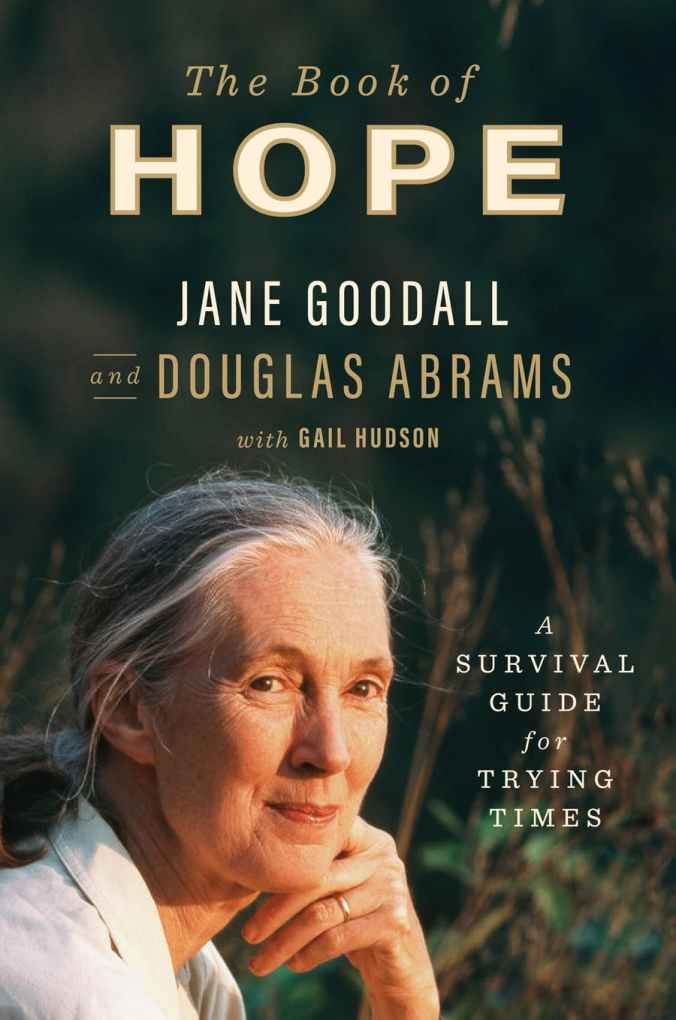
Click above to go to the publisher’s blurb about the book, and click below for the article Anna Russell, a wonderful writer in her own right, offers about the book and its subject:

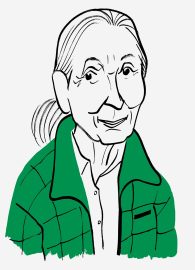
Jane Goodall’s Survival Guide

The eighty-seven-year-old naturalist knocks around her home on the south coast of England and explains why, despite the floods and fires and melting ice caps, she’s still optimistic about planet Earth.

Jane Goodall Illustration by João Fazenda

Before the pandemic, Jane Goodall travelled three hundred days a year to speak to audiences about the climate crisis. “I used to do, like, three days in the Netherlands, three days in Belgium, three days in France,” Goodall, who is eighty-seven, recalled recently. In China or Australia, “it would be, like, two weeks, where they’d spread me through their country.” Everywhere she went, she met young people who were “angry, depressed, or just apathetic, because, they’ve told me, we have compromised their future and they feel there is nothing they can do about it,” she writes in her twenty-first and most recent work, “The Book of Hope: A Survival Guide for Trying Times.” Amid flooding and wildfires, impassivity and eco-grief, the question she was asked most often was “Do you honestly believe there is hope for our world?” Continue reading
Fuzz, Author Interview

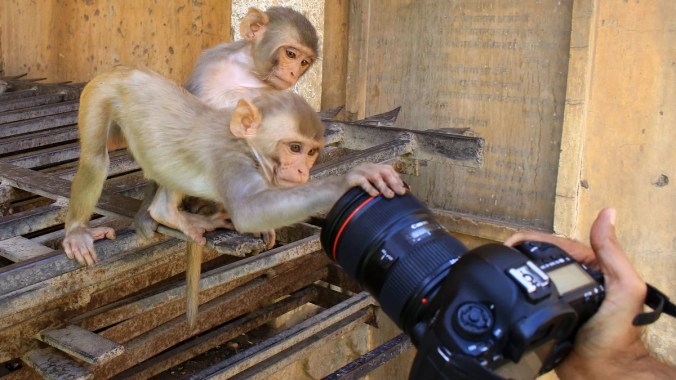
Macaques check out a camera in Galtaji Temple in Jaipur, India. Monkeys have been known to sneak into swimming pools, courts and even the halls of India’s Parliament. One attorney told author Mary Roach about a macaque that infiltrated a medical institute and began pulling out patient IVs. Vishal Bhatnagar/NurPhoto via Getty Images

This conversation with the author Mary Roach is plentiful with surprises about the human-animal interface, occasionally unfortunate and sometimes hilarious:

Fuzz: When Nature Breaks the Law by Mary Roach. Penguin Random House

Animals living among us often ignore the rules we try to impose on them. Science writer Mary Roach experienced this firsthand when a group of macaque monkeys accosted her in India.

“I was kind of asking for it,” Roach admits. “I walked up this trail where I knew there were a lot of macaques, and I walked up holding a bag of bananas.”

At first, nothing happened. Then Roach saw a monkey pop its head up from behind a boulder, “kind of like the bandits waiting for the stagecoach.” Continue reading
It’s Monday, So Pizza

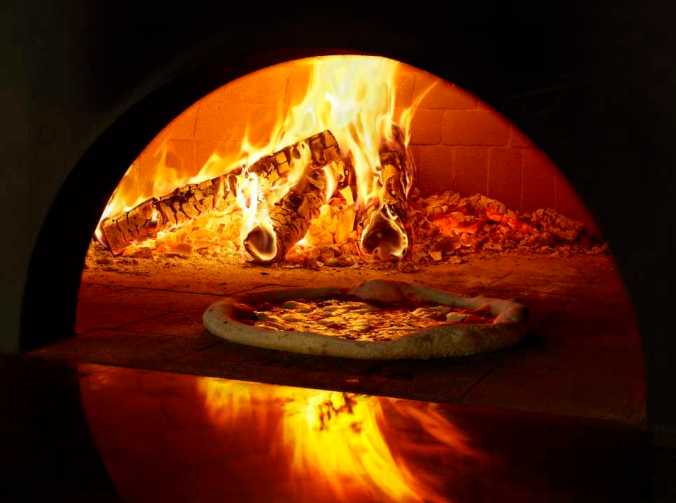
A pizza in a wood-fired oven. All photographs by Nathan Myhrvold / The Cooking Lab, LLC.

Phaidon‘s books frequently allow us to offer a fun alternative to our heavier fare. Today is one of those days to go for the fun:

The surprising history of pizza

Modernist Pizza might apply the latest science to the pizzaiolos’ role, but it also dishes up deep history too

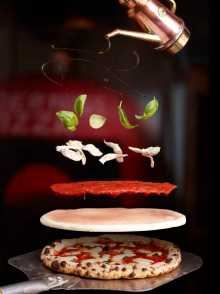
Pizza Margherita.

Modernist Pizza certainly applies a little science to the task of making a great slice. In this huge, comprehensive, three-volume publication, authors Nathan Myhrvold and Francisco Migoya share innumerable practical tips and innovative techniques to create great pizzas. Myhrvold is Microsoft’s former Chief Technology Officer and studied under Stephen Hawking at the University of Cambridge, and so almost all of those tips and techniques aren’t simple repetitions of old hunches and dogma, but the product of numerous test-kitchen experiments. Want to know the precise effects of ageing on mozzarella? Or which parts of your oven really cook your pie? Then get this set of books. Continue reading
Kim Stanley Robinson’s Message For All Of Us

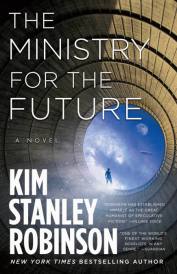
When The Ministry for the Future came to my attention late last year, it was the first I had heard of this author (I am buried deep under a big rock when it comes to science fiction). Now I wonder how I could have missed such an important thinker on the most important topics of our time (not science fiction):

Kim Stanley Robinson on “Utopian” Science Fiction

One of the premier writers of thinky sci-fi, Kim Stanley Robinson opened his book “The Ministry for the Future” with an all too plausible scenario: a lethal heat wave descends on India, with vast, horrifying consequences. It’s a sobering read, especially after July, 2021, was declared the hottest month on record. And yet Robinson tells Bill McKibben that his work is not dystopian; his central concern is how the globe could respond to such a disaster and begin to halt the momentum of global warming. Continue reading

A Taste Of Matthew Raiford’s Heritage

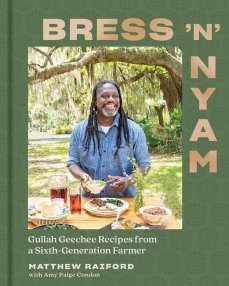
The last food book we featured was not a cookbook, but had plenty of food for thought. Thanks to the Kim Severson (again, after a couple years of our not seeing her work) for bringing Matthew Raiford, his family heritage, his farm and his cookbook to our attention in her article: A High-Summer Feast to Forge Connections in the Deep South. And if time is short, click through just for the exceptional photography:
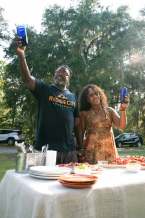
Rinne Allen for The New York Times

Matthew Raiford swore he’d never return to his family farm in coastal Georgia. But in breaking that vow, he found a sense of community worth celebrating with a lavish spread.

BRUNSWICK, Ga. — It’s not a stretch to say there may have never been a party for a cookbook like the one Matthew Raiford threw on his family farm a few weeks ago.

Rinne Allen for The New York Times

The book’s title is “Bress ‘n’ Nyam” — “bless and eat” in the English-based Creole spoken by the Gullah Geechee people who live along the coasts of the Carolinas, Georgia and northern Florida. Their ancestors were captured in West Africa and enslaved. Nowhere else in America has the cultural line from Africa been better preserved. (Mr. Raiford’s people call themselves freshwater Geechee, which means they are from the mainland of coastal Georgia. Saltwater Geechees are from the barrier islands.) Continue reading

Books About Below The Deepest Most Of Us Will Ever Go

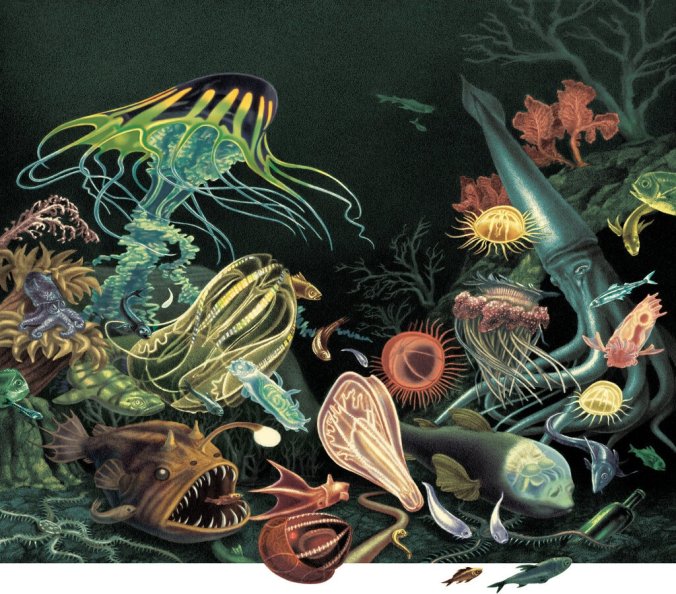
Chloe Niclas

Thanks to Robert Moor for these reviews:

The Wonders That Live at the Very Bottom of the Sea

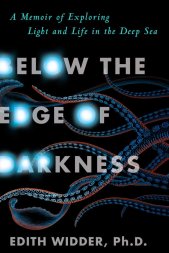
Two new books, Edith Widder’s “Below the Edge of Darkness” and Helen Scales’s “The Brilliant Abyss,” explore the darkest reaches and all that glows there.

In the deep sea, it is always night and it is always snowing. A shower of so-called marine snow — made up of pale flecks of dead flesh, plants, sand, soot, dust and excreta — sifts down from the world above. When it strikes the seafloor, or when it is disturbed, it will sometimes light up, a phenomenon known, wonderfully, as “snow shine.” Vampire squids, umbrella-shaped beings with skin the color of persimmons, float around collecting this luminous substance into tiny snowballs, which they calmly eat. They are not alone in this habit. Most deep-sea creatures eat snow, or they eat the snow eaters.

Until fairly recently, it was widely believed that the deep seas were mostly devoid of life. For centuries, fishermen hauled in deep-sea trawling nets filled with slime, not knowing that these were carcasses. Some animals, adapted to the pressure of the deep, are so delicate that in lighter waters a mere wave of your hand could reduce them to shreds. The myth of the dead deep sea, known as the Abyssus Theory, was disproved by a series of dredging and trawling expeditions in the 19th century, including a German scientific expedition in 1898 that pulled up the first known vampire squid. But the misconception nevertheless lingered. In 1977, a geologist piloting a submersible near the mouth of a hydrothermal vent, and finding it swarming with creatures, asked the research crew up above, “Isn’t the deep ocean supposed to be like a desert?” Continue reading

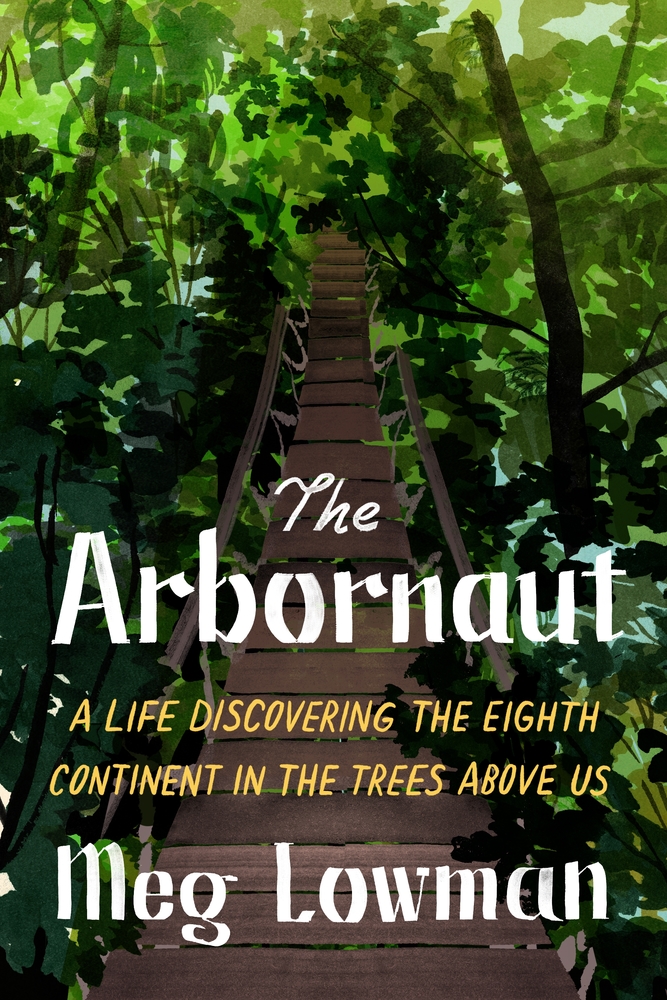
The Arbornaut

The author has been featured in these pages multiple times over the years. The publisher makes it easy to find an option that suits your shopping preferences (our preference is obvious). Her new book has received plenty of praise, according to an email she sent us:

Readers everywhere will be fascinated and inspired to learn more about nature, and especially about how we need to conserve the world’s forests.” ―Jane Goodall, PhD, DBE, founder of the Jane Goodall Institute, and United Nations Messenger of Peace Continue reading