Seeding Clouds To Relieve Megadrought

Cloud seeding equipment on the wing of plane flying over North Dakota. JIM BRANDENBURG VIA MINDEN PICTURES

Times are tough with regard to water, among other things. Tough times call for creative measures. Be creative, but also beware of unintended consequences:

Can Cloud Seeding Help Quench the Thirst of the U.S. West?

In the midst of an historic megadrought, states in the American West are embracing cloud seeding to increase snow and rainfall. Recent research suggests that the decades-old approach can be effective, though questions remain about how much water it can wring from the sky.

Not since Charlemagne was crowned Holy Roman Emperor in 800 A.D. has the American West been so dry. Continue reading

Circularity & The Future Of Recycling Plastic

Getty

Since our earliest days we have had team members searching for news on the subject of plastic, and what to do about it. The Atlantic, publishing an article by Ula Chrobak that was originally featured in Undark, points out The False Promise of Plastic Recycling:

A French company has a new solution to the plastic problem. Not everyone is buying it.

Since the first factories began manufacturing polyester from petroleum in the 1950s, humans have produced an estimated 9.1 billion tons of plastic. Of the waste generated from that plastic, less than a tenth of that has been recycled, researchers estimate. Continue reading

Less Beef Is Better, No Beef Is Best

A beef rib lifter stacked with strip steak and a sagebrush tree. Photograph by Kyoko Hamada. Styled by Martin Bourne

The photo to the left might have appealed to me last year or earlier. But having tried giving up beef for so long, and finally prevailing, now it has no appeal. It does not disgust me, but I expect to get there.

Ligaya Mishan’s article What Does the End of Beef Mean for Our Sense of Self? has excellent photography by Kyoko Hamada.

My highest compliment is reserved for the stylist Martin Bourne, for making the photos just slightly creepy, matching my current emotional response to looking at beef.
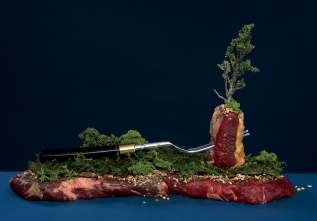
Strip steaks alongside a piece of sirloin tip. Photograph by Kyoko Hamada. Styled by Martin Bourne

When it comes to America’s legacy of Manifest Destiny, there’s perhaps no meal more symbolic than a bleeding steak. So who are we now that we’re consuming less red meat?

MEAT IS PRIMAL, or so some of us think: that humans have always eaten it; that it is the anchor of a meal, the central dish around which other foods revolve, like courtiers around a king; that only outliers have ever refused it. But today, those imagined outliers are multiplying. The United Nations Food and Agriculture Organization reports that the consumption of beef per capita worldwide has declined for 15 years. Nearly a fourth of Americans claimed to have eaten less meat in 2019, according to a Gallup poll. The recipe site Epicurious, which reaches an audience of 10 million, phased out beef as an ingredient in new recipes in 2020. Continue reading

Technically Food

We instinctively favor real food, but this author’s book has our attention:

The inside story of the paradigm shift transforming the food we eat, and the companies behind it.

Eating a veggie burger used to mean consuming a mushy, flavorless patty that you would never confuse with a beef burger. But now products from companies like Beyond Meat, Impossible Foods, and Eat Just that were once fringe players in the food space are dominating the media, the refrigerated sections of our grocery stores, and, increasingly, the world. With the help of scientists working in futuristic labs––making milk without cows, and eggs without chickens––startups are creating wholly new food categories. Real food is being replaced by high-tech. Continue reading

Stenophylla, A Coffee With Real Potential & Poster Child For Food Diversity

Our thanks to Dan Saladino, a food journalist and author of Eating to Extinction: The World’s Rarest Foods and Why We Need to Save Them as well as recipient of a James Beard Award for food journalism.

He offers an inside look at a relatively unknown coffee varietal with potential, and at the same time, an argument in favor of diversity, in his article Edible Extinction: Why We Need to Revive Global Food Diversity:

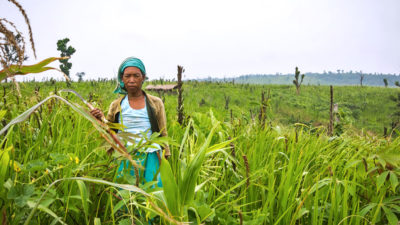
A Khasi farmer growing millet in Meghalaya, India.

A Khasi farmer growing millet in Meghalaya, India. NORTH EAST SLOW FOOD & AGROBIODIVERSITY SOCIETY

The Green Revolution helped feed a surging global population, but at the cost of impoverishing crop diversity. Now, with climate change increasingly threatening food supplies, the need for greater agricultural resilience means restoring endangered crop and food varieties.

Stenophylla beans up close. RBG KEW; KLAUS STEINKAMP / ALAMY

In August 2020, inside the cupping room of a London roastery, a team of botanists and baristas gathered to taste a coffee species that most believed had been lost forever. It was an important moment. Coffee experts had spent years searching in West Africa for the few remaining trees of this species, even issuing “wanted posters” to farmers asking if they had seen it. Continue reading

As The World Burns

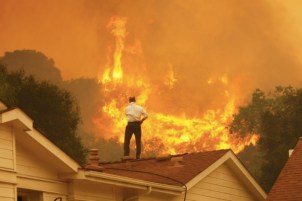
Heat waves have become hotter, droughts deeper, and wildfires more frequent, the I.P.C.C. report states, and the window of time for doing anything about it is fast closing. Photograph by David McNew / Getty

Even as a geopolitical crisis has our full attention, we cannot ignore other important information about our shared future. Click through to the magazine website where one of our favored interpreters of environmental news helps us understand how The Latest U.N. Climate Report Paints Another Grim Picture:

The Secretary-General cites a “criminal” abdication of leadership. Meanwhile, the U.S. Supreme Court is hearing a case that may hamper emissions regulations.

There were two front-page-worthy developments on Monday in the world of climate policy. Perhaps even more significant than either one was the fact that they were at cross-purposes. Continue reading

We Have Seen The Future, And It Is Youthful

Sunrise models itself on the civil-rights movement of the fifties and sixties. Photograph by Evan Jenkins for The New Yorker

In the current issue of the New Yorker, Andrew Marantz offers an inside view of The Youth Movement Trying to Revolutionize Climate Politics; we can only hope they succeed where previous generations have failed:

Sunrise has already shifted the conventional wisdom about climate change. Now it wants to create a mass movement, combining street protest with policy negotiation, while there’s still time.

On the evening of November 12, 2018, six days after being elected to Congress and six weeks before being sworn in, the socialist Democrats Rashida Tlaib and Alexandria Ocasio-Cortez walked into an Episcopal church in Washington, D.C. Inside, more than a hundred activists in their teens and twenties milled around a font of holy water, wearing nametags on their flannel and fleece, eating pizza from paper plates. Continue reading

Subsidizing Environmental Degradation Must End

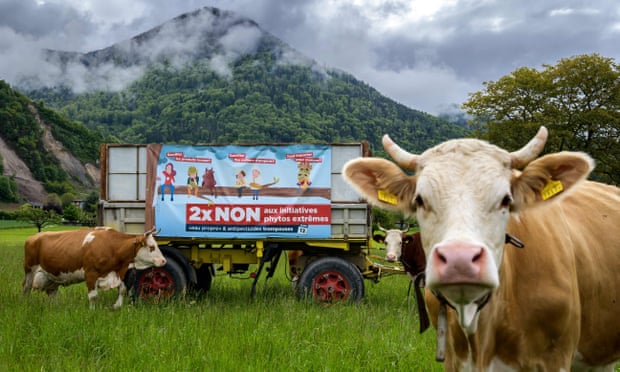
An electoral poster objecting to a proposed ban on subsidies for Swiss farms. A 2021 report found almost 90% of global farming subsidies are harmful. Photograph: Fabrice Coffrini/AFP/Getty

We missed this when it was first published a couple weeks ago, but it is still fresh and important:

World spends $1.8tn a year on subsidies that harm environment, study finds

Research prompts warnings humanity is ‘financing its own extinction’ through subsidies damaging to the climate and wildlife

The world is spending at least $1.8tn (£1.3tn) every year on subsidies driving the annihilation of wildlife and a rise in global heating, according to a new study, prompting warnings that humanity is financing its own extinction. Continue reading

What Remains, A Documentary

In this short documentary film by Paavo Hanninen, with text by David Kortava, the director says “It’s kind of a tragic story of the herculean effort that’s required just to build 1.3 miles of coastline”:

Protecting Louisiana’s Coastline with Oyster Shells in “What Remains”

Paavo Hanninen’s documentary looks at a surprisingly simple intervention with the potential to slow runaway land loss along the state’s fragile coast.

As early as the nineteen-thirties, oystermen in southern Louisiana began to notice the shoreline that they worked was creeping inland. Continue reading

Trees’ Wondrous Capabilities

Diana Beresford-Kroeger at her home in Ontario. “If you build back the forests, you oxygenate the atmosphere more, and it buys us time,” she said. Nasuna Stuart-Ulin for The New York Times

Another round of thanks to Cara Buckley for a vividly written snapshot. Using Science and Celtic Wisdom to Save Trees (and Souls) is about one person’s multi-talented capacity to inspire us in new ways related to trees, and the patience it has required:

Diana Beresford-Kroeger, a botanist and author, has created a forest with tree species handpicked for their ability to withstand a warming planet.

MERRICKVILLE, Ontario — There aren’t many scientists raised in the ways of druids by Celtic medicine women, but there is at least one. She lives in the woods of Canada, in a forest she helped grow. From there, wielding just a pencil, she has been working to save some of the oldest life-forms on Earth by bewitching its humans. Continue reading

Migration Motivated By Climate Change, Defined

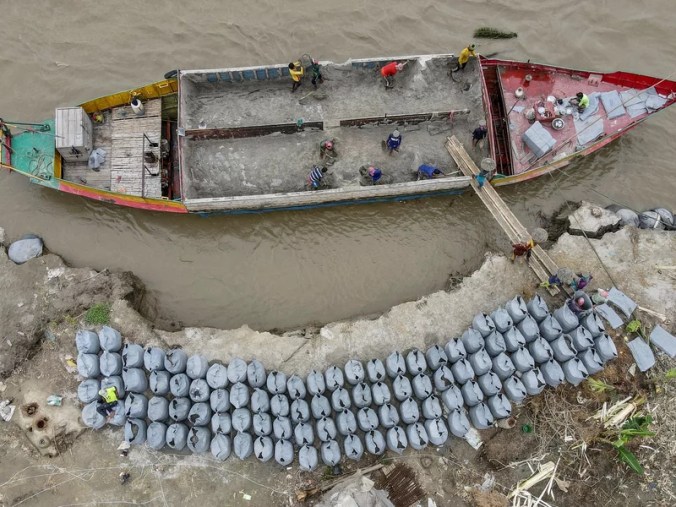
Workers place geo-textile bags to prevent river erosion on the banks of Padma River in Bangladesh last September. Munir Uz Zaman/AFP via Getty Images

Climate change has been a constant topic in our pages. Migration motivated by this crisis, not at all. Thanks to Ari Shapiro, at National Public Radio (USA) for this clarifying question and answer session:

The first step to preparing for surging climate migration? Defining it

There are calls to better define what constitutes “climate migration” amid concern that policies are not keeping up with the growing issue and countries are failing to properly help those fleeing disasters.

Anywhere from tens of millions to one billion people could become climate migrants by 2050, according to a recent report from the RAND Corporation. The number varies so widely depending on the definition used. Continue reading

Keep Peat In Place

Nanna Heitmann for The New York Times

Peat is back on our radar, with this excellent report by Matthew Thompson in the New York Times. It is part of a new series called Headway, an initiative “exploring the world’s challenges through the lens of progress,” which is exactly the founding sentiment of our platform here. So, read on:

Rural Congolese villagers are being asked to protect one of earth’s most precious ecosystems. What can other places contribute to our shared future?

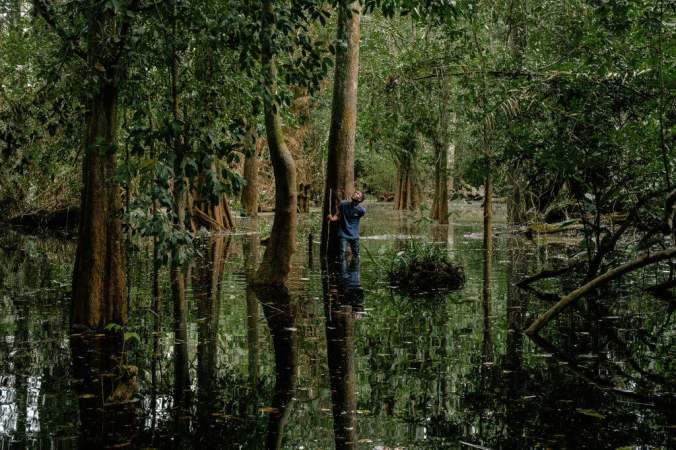
Imagine someone showed up on your doorstep one day and told you that the swampy forest not far from your home contained a rare and precious soil, so powerful that the planet’s future hinges on its preservation. The world is relying on you to keep the soil undisturbed, you’re told, or sinister forces will be unleashed, large enough to doom us all. Continue reading

Big Companies, Big Noise

(Original Caption) A man sitting atop a girder over the city is shown taking photos of the unfinished municipal building.

Bill Mckibben’s newsletter is one of the most efficient ways to stay informed on issues of interest to us in our daily posts on this platform. This week’s edition, titled Needs Improvement, is as good as any other recent edition. Consider subscription options that suit your budget by clicking the button, if you appreciate what you read below:

The Economic Giants Must Do Better than Meh

No one expects small businesses to be the leaders on climate change, though of course a noble handful are. It’s the giants—who have enormous brands to protect, and large margins to cover the cost of changing—that need to be out front. The ones with big ad campaigns with lots of windmills and penguins and cheerful shots of the smiling future. The ones who have made a lot of noise about ‘net zero.’ And how are they doing? Meh. Continue reading

More On, And From, Kim Stanley Robinson

“The Ministry for the Future” displays Robinson’s anti-anti-utopianism: its prognosis is both heartening and harrowing. Illustration by Deena So’Oteh

Thirteen months ago I first became aware of this author and this book. Four months ago Robinson showed up on my radar again. I still had not made time for his book. And two weeks ago, another reminder of how my time has and has not been employed, this time posed as a question: Can Science Fiction Wake Us Up to Our Climate Reality? I already feel quite awake to that reality, but the question is still of considerable interest.

Kim Stanley Robinson’s novels envision the dire problems of the future—but also their solutions.

Robinson at home in Davis, California. Much of his sci-fi could seem like nature writing, with the Sierra Nevadas—his “heart’s home”—recast as Mercury or Mars. Photograph by Jim McAuley for The New Yorker

Last summer, the science-fiction writer Kim Stanley Robinson went on a backpacking trip with some friends. They headed into the High Sierra, hiking toward Deadman Canyon—a fifty-mile walk through challenging terrain. Now sixty-nine, Robinson has been hiking and camping in the Sierras for half a century. At home, in Davis, California, he tracks his explorations on a wall-mounted map, its topography thick with ink. He is a devotee of the “ultralight” approach to backpacking and prefers to travel without water, instead gathering it along the way, from lakes and streams. Arriving at the canyon, with its broad, verdant floor cradled in smooth slopes of granite, he planned to fill his bottles with meltwater from the seven glaciers buried in its headwall. Continue reading

Nuclear Fusion’s Heat Feat

The interior of the JET, where an experiment generated 59 megajoules of heat, beating the 1997 record of 21.7 megajoules. Photograph: UKAEA

We have no expertise in this specific energy-related subject, but we know that new sources of energy are an important potential contributor to the reduction of global warming. So, we read this news about a new heat record from nuclear fusion as a qualified source of hope:

Nuclear fusion heat record a ‘huge step’ in quest for new energy source

Oxfordshire scientists’ feat raises hopes of using reactions that power sun for low-carbon energy

The prospect of harnessing the power of the stars has moved a step closer to reality after scientists set a new record for the amount of energy released in a sustained fusion reaction. Continue reading

Chile Has New Hands On Deck

The receding Santa Ines glacier in Seno Ballena fjord in Punta Arenas, southern Chile. Photograph: Martin Bernetti/AFP/Getty

Bringing experts into government does not sound like a news story, until you consider Chile. A country governed for decades by Chicago school economics–a strong invisible hand of market forces combined with a strong visible hand of military rule to keep leftists at bay–Chile’s most recent election led to some new hands in the governance picture.

With the climate crisis, Chile has an opportunity to set a new example for the world. The failure of markets until now to address a human-induced environmental catastrophe will be met with the combined force of expert scientific knowledge and public sector governance:

‘We need politicians and experts’: how Chile is putting the climate crisis first

President Gabriel Boric has brought renowned named climate scientist Maisa Rojas into government to help ensure a greener future

‘We need politicians and experts’: how Chile is putting the climate crisis first
President Gabriel Boric has brought renowned named climate scientist Maisa Rojas into government to help ensure a greener future

Hidden behind the Andes in a quiet corner of South America, a formidable generation of former student leaders are putting together one of the world’s most exciting progressive movements.

On 11 March, Gabriel Boric, 35, a tattooed leftist with a steely resolve to reform Chile from the bottom up, will become the country’s youngest ever president – and his green agenda is echoing across the world as time ticks away on an impending climate catastrophe.

“It is so exciting to see what these young people have done,” says Maisa Rojas, 49, a renowned Chilean climate scientist who has been named environment minister in a cabinet including several of Boric’s student protest generation. Continue reading

Agave, Night, Nectar

Video (click image above): Mexican long-nosed bats drinking nectar from agave flowers at night. Credit: Bat Conservation International

Bats, agave, and half a minute of night-time feeding are in the video above, which is also embedded in this article by Janet Marinelli, published in Yale e360:

How Preserving Agave Could Help Save an Endangered Bat

Drought linked to climate change, along with overgrazing, is destroying the agave plants on which the Mexican long-nosed bat depends. Now, an initiative is trying to restore the balance between the agaves, the bats that feed on them, and the people who live on these lands.

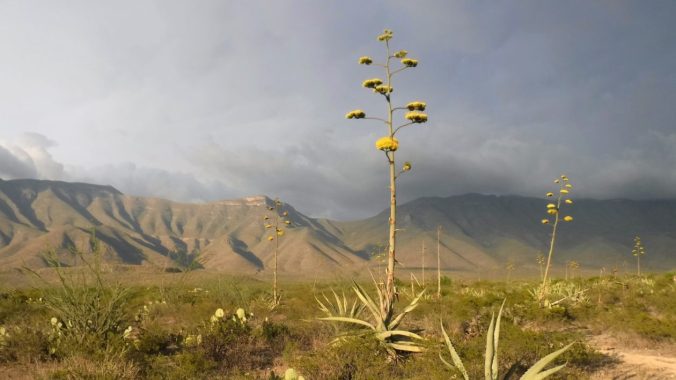
Agaves blooming in Estanque de Norias, Mexico. KRISTEN LEAR / BAT CONSERVATION INTERNATIONAL

At the southeast tip of a large valley in the northern Sierra Madre Oriental is the small Mexican town of Estanque de Norias, some 200 miles west of the Texas border at Laredo.

Continue reading

Volunteering For Town-Saving

The Ascutney ski resort once boasted 1,800 vertical feet of skiing on over 50 trails. When it closed for the last time in 2010, it was a crushing blow to the town of West Windsor. Caleb Kenna for The New York Times

Volunteers inspire more volunteerism, so here is another story about a community volunteering to save its own future, thanks to David Goodman and the New York Times for A Town That Saved a Mountain, and a Mountain That Saved a Town:

At the heart of the mountain’s revival is Ascutney Outdoors, a nonprofit with over 100 volunteers that now runs recreation on the mountain. Caleb Kenna for The New York Times

After the Ascutney ski resort in Vermont closed because of erratic snowfall and mismanagement, it threatened to take with it the nearby town of West Windsor. The community took the situation into its own hands.

Jim Lyall briskly skied up Mount Ascutney, eagerly pointing out the view. We were skinning up a ski area in southern Vermont, but the chairlifts are long gone. At the top of the mountain we arrived at an abandoned ski patrol cabin and lift station. A cold breeze whipped through the deserted structures. It had a ghostly, post-apocalyptic feel. Continue reading

Big Agriculture, Anti-Regulation & Antisocial Behavior

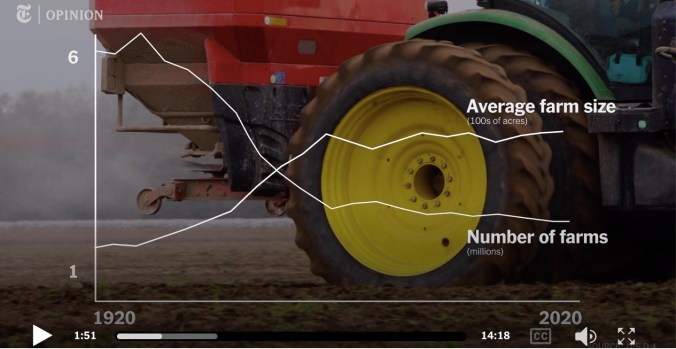
Click any image here to go to an op-ed video that takes just over 14 minutes to watch. You’ll get an inside look into what has happened to food production in the USA, and how, and why.

Summed up, it is all about the power of big-ag lobbying. They want no regulations. They want to decide on their own how to produce food. And it is making a big mess. This anti-regulatory ideology, which has the hallmark of antisocial behavior, is not unique to agricultural lobbyists, but is quite well illustrated by them.

Meet the People Getting Paid to Kill Our Planet

American agriculture is ravaging the air, soil and water. But a powerful lobby has cleverly concealed its damage.

“We’re Cooked” is an Opinion Video series about our broken food system and the three chances you get to help fix it — and save the planet — every day.


The global food system is a wonder of technological and logistical brilliance. It feeds more people than ever, supplying a greater variety of food more cheaply and faster than ever.

It is also causing irreparable harm to the planet. Continue reading

Palm Oil Potential

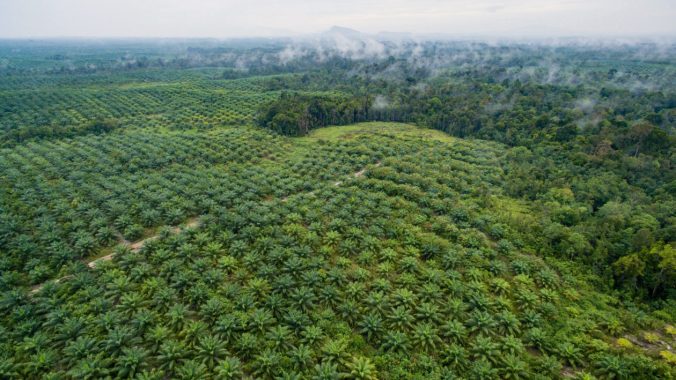
An oil palm plantation encroaches on a rainforest in West Kalimantan, Indonesia. NANANG SUJANA / CIFOR

Palm oil’s problems, and potential solutions have been catalogued in these pages many times. In this recent story by James Dinneen, writing again for Yale Environment 360, a new potential solution is explored:

Can Synthetic Palm Oil Help Save the World’s Tropical Forests?

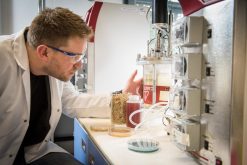
Christopher Chuck, a chemical engineer at the University of Bath, is working to produce yeast able to generate more oil from cheaper feedstocks. UNIVERSITY OF BATH

Numerous startups are creating synthetic palm oil in the lab, hoping to slow the loss of tropical forests to oil palm cultivation. But palm oil is the most widely used vegetable oil, and producing a synthetic version on a large scale remains a daunting challenge.

Tom Jeffries and Tom Kelleher met at Rutgers University in the 1970s while studying industrially useful microbes. Jeffries went on to run a yeast genomics program at the U.S. Department of Agriculture; Kelleher spent decades in the biomedical industry, working with biologics like insulin, which are produced by genetically modified microbes in giant, fermenting vats. Continue reading