Natural Corks Perform Ecosystem Services

Thanks to Sarah Kennedy and ChavoBart Digital Media for this story at Yale Climate Connections:

The surprising link between wine corks and climate change

Give a toast to cork forests, which store a great deal of carbon pollution.

If you open a bottle of champagne or wine this New Year’s Eve, take a look at the stopper.

In recent years, plastic stoppers and screw tops have come on the market as alternatives to natural cork, but cork can be better for the climate.

Cork is harvested in the Mediterranean from the bark of cork oak trees. The process does not harm the tree, and the bark regrows. But the first harvest cannot begin until the tree is about 25 years old. Continue reading

Baseball Analogizing Blackrock

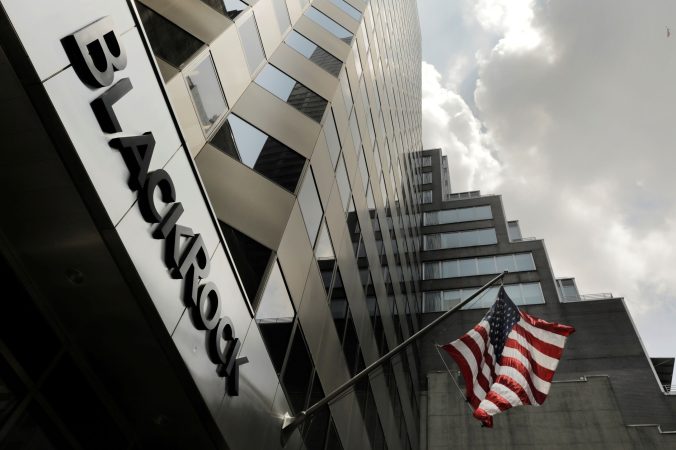
BlackRock, the world’s largest asset manager, continues to behave as if the corporations rapidly destroying the planet are normal players.Photograph by Lucas Jackson / Reuters

Bill McKibben’s weekly newsletter gives us reason to take a closer look beyond the hype about one of the most influential investment firms in the world. He uses baseball to raise concern in a way that is clear, if you know a little about the sport:

Can Wall Street’s Heaviest Hitter Step Up to the Plate on Climate Change?

The year is coming to an end, and all eyes are trained on D.C., as Joe Biden prepares to helm a venerable enterprise with a four-trillion-dollar budget. On the climate front, Biden’s team, which he announced last week, with Gina McCarthy, Deb Haaland, Jennifer Granholm, and John Kerry at the forefront, seems highly credible—a hundred-and-eighty-degree shift from the coterie of coal lobbyists and oil-industry operatives that have decorated the current Administration. Biden’s group has a real shot at getting Washington squarely in the global-warming fight. But, although that federal effort will doubtless occupy much of our attention in the year ahead, let’s close out 2020 by examining the de-facto government based on Wall Street. Its obvious head is BlackRock, the world’s largest asset manager, which is—just for purposes of scale—an eight-trillion-dollar enterprise, and the largest shareholder in almost every company that matters to the future of the Earth. BlackRock is a monetary heavy hitter.

To continue the baseball analogy, BlackRock finally stepped up to the climate plate this year. Larry Fink, the C.E.O., focussed his annual letter to investors on global warming, promising that henceforth sustainability would be at the heart of investment decisions. For that stand, Fink was recently named the first Institutional Investor of the Year—by Institutional Investor magazine. This encomium seems a little like awarding the season’s M.V.P. during spring training, simply because an intrepid player announces his plan to bat .400. In point of fact, BlackRock mostly whiffed on climate last year: the activist group Majority Action reports that, during proxy season, when BlackRock’s votes would have made a real difference, the firm voted to elect ninety-nine per cent of the directors proposed for boards at energy companies and utilities, even if the companies had made no serious climate commitments. The group also highlights that BlackRock supported just three of thirty-six “climate-critical resolutions” put to shareholders at S. & P. 500 companies—resolutions that might have curbed JPMorgan Chase’s lending to the fossil-fuel industry, or Duke Energy’s lobbying efforts. In half these cases, if BlackRock and its smaller competitor Vanguard had voted with the planet in mind, the resolutions would have passed. Fink didn’t bat .400, in other words—he batted below .100. Continue reading

Checking Your Decision-Making On Climate Criteria

Illustration by Ka Young Lee

We missed this useful brief exercise when it was first published a few months ago. Our thanks to Veronica Penney for the quiz and the scientific study it was based upon:

Think You’re Making Good Climate Choices? Take This Mini-Quiz

If you take an airplane trip, can you make up for the planet-warming emissions from that flight by doing things like driving less and turning off the lights in your house? Continue reading

The Weight Of Humanity

Bill McKibben‘s Climate Crisis newsletter this week has an interesting segment on the total weight of things humans have made, mentioning the book to the right for visual reference. Turns out our stuff now weighs more than all living things on the planet. That is impressive, but not necessarily in a good way:

We are necessarily occupied here each week with strategies for getting ourselves out of the climate crisis—it is the world’s true Klaxon-sounding emergency. But it is worth occasionally remembering that global warming is just one measure of the human domination of our planet. We got another reminder of that unwise hegemony this week, from a study so remarkable that we should just pause and absorb it. Continue reading

Ancestral Plants Worth Saving

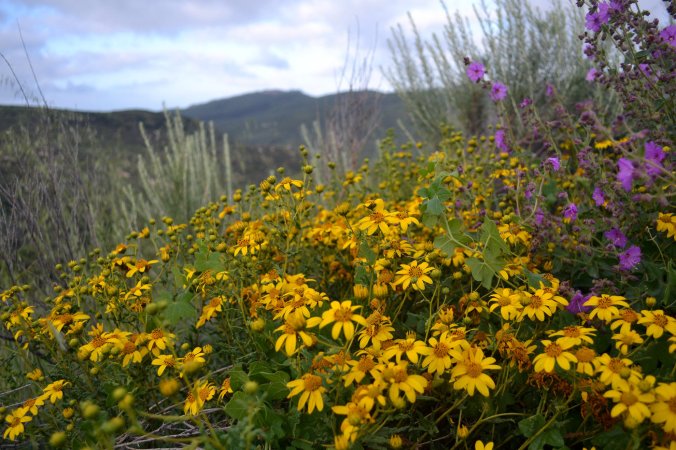
These sunflowers in San Diego National Wildlife Refuge are wild relatives of sunflowers that farmers around the world grow to produce oil. Lisa Cox/USFWS

Thanks to National Public Radio (USA) for this summary of a recent scientific study:

Distant Cousins Of Food Crops Deserve Respect And Protection

Hundreds of native North American plants, often dismissed as weeds, deserve a lot more respect, according to a new study. These plants, distant cousins of foods like cranberries and pumpkins, actually represent a botanical treasure now facing increased threat from climate change, habitat loss and invasive species.

The crops that the human race now depends on, including grains like wheat and tree fruit like peaches, originally were selected or bred from plants that grew wild hundreds or thousands of years ago. And those ancestral plants, like the small wild sunflowers that can be found across the United States, still exist. “If you see them growing along roadsides, those are the ancestors,” says Colin Khoury, a research scientist at the International Center for Tropical Agriculture. Continue reading

The Ministry For The Future, Reviewed In Yale Climate Connections

Yale Climate Connections is a nonpartisan, multimedia service providing daily broadcast radio programming and original web-based reporting, commentary, and analysis on the issue of climate change, one of the greatest challenges and stories confronting modern society.

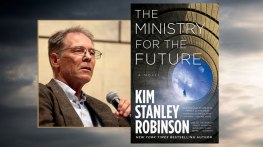
Today, within the time I have enjoyed my first cup of coffee, I have made two discoveries: a new (to me) source for stories to share here (click the banner above to go to Yale Climate Connections) and a book review that gets me wondering whether science fiction is a genre I have time for after all (I thought not, but click the image below to go to the review for yourself).

(Kim Stanley Robinson inset photo: Gage Skidmore)

In The Ministry for the Future, his twentieth novel, science fiction author Kim Stanley Robinson creates something truly remarkable: a credible, very-near future in which humans effectively solve the problem of climate change.

Climate lukewarmers may be tempted to interpret this upbeat summary as support for their technological optimism. That would be a mistake. Though it ends well, the story Robinson tells is harrowing.

I first heard about the book yesterday in a conversation with the author:

The most important book I’ve read this year

How climate change will force humanity to rethink capitalism, borders, terrorism, and currency.

That conversation was also a kind of review, but it was not until I looked for more information about the book this morning, and found that review by Michael Svoboda, that I got thinking about the genre of science fiction, and the sub-genre of climate fiction.

Reef Rescuers

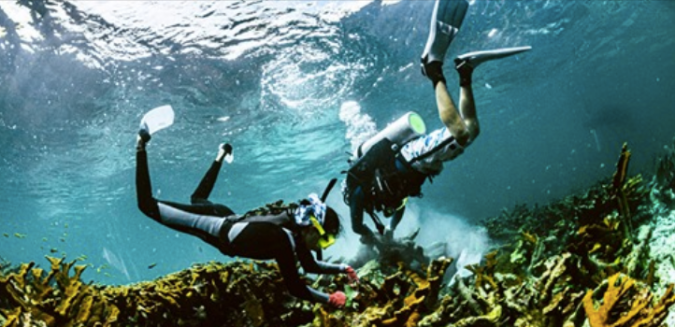
Members of a team calling itself “the Brigade” work to repair hurricane-damaged corals off the coast of Mexico.

An inspiring example of collaborative efforts that bring environmentalists and the insurance industry together to protect fragile marine ecosystems.

A Race Against Time to Rescue a Reef From Climate Change

In an unusual experiment, a coral reef in Mexico is now insured against hurricanes. A team of locals known as “the Brigade” rushed to repair the devastated corals, piece by piece.

When Hurricane Delta hit Puerto Morelos, Mexico, in October, a team known as the Brigade waited anxiously for the sea to quiet. The group, an assortment of tour guides, diving instructors, park rangers, fishermen and researchers, needed to get in the water as soon as possible. The coral reef that protects their town — an undersea forest of living limestone branches that blunted the storm’s destructive power — had taken a beating.

Now it was their turn to help the reef, and they didn’t have much time.

“We’re like paramedics,” said María del Carmen García Rivas, director of the national park that manages the reef and a leader of the Brigade. When broken corals roll around and get buried in the sand, they soon die. But pieces can be saved if they are fastened back onto the reef.

“The more days that pass, the less chance they have of survival,” she said.

The race to repair the reef is more than an ecological fight; it’s also a radical experiment in finance. The reef could be the first natural structure in the world with its own insurance policy, according to environmental groups and insurance companies. And Hurricane Delta’s force triggered the first payout — about $850,000 to be used for the reef’s repairs.

The success or failure of this experiment could determine whether communities around the world start using a new tool that marries nature and finance to protect against the effects of climate change. The response to Delta was a first test. Continue reading

Ending Perverse Subsidies

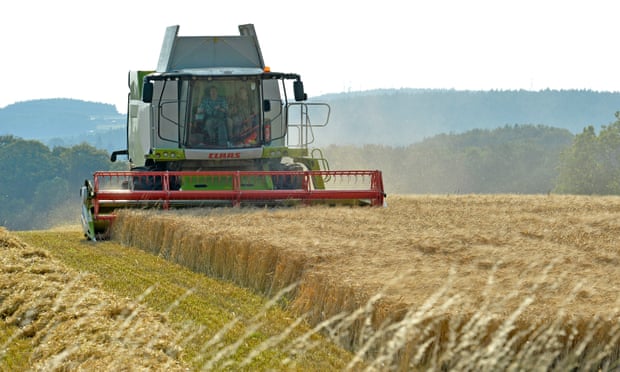
The wealthiest landowners – those receiving payments over £150,000 a year – will face the sharpest cuts. Photograph: Owen Humphreys/PA

We post so much about farming on this platform that it could be considered a major topic of interest. Subsidies, less so, but just as with farming there are both better and worse forms of subsidies. We favor reforming the perverse ones, and so cheer this news:

Environment to benefit from ‘biggest farming shake-up in 50 years’

£1.6bn subsidies for owning land in England to end, with funds going to improve nature

Wildlife, nature and the climate will benefit from the biggest shake-up in farming policy in England for 50 years, according to government plans.

The £1.6bn subsidy farmers receive every year for simply owning land will be phased out by 2028, with the funds used instead to pay them to restore wild habitats, create new woodlands, boost soils and cut pesticide use.

The wealthiest landowners – those receiving annual payments over £150,000 a year – will face the sharpest cuts, starting with 25% in 2021. Those receiving under £30,000 will see a 5% cut next year. Continue reading

Beware Of “This Is Big” & Other Snappy Catchphrases

The Miniature Science series of ads, created last year by the very talented folks at BBDO on behalf of their client ExxonMobil, are snappy.

By now most people who pay attention to climate science are aware of ExxonMobil’s active role in creating doubt about the emerging facts that their own scientists established about mankind’s impact on climate. In addition to actors like that giant petrochemical company, there are also behind-the-scenes, complicit creatives who have provided essential messaging to strengthen the deception. In a new essay, Bill McKibben turns his attention to those folks, and expects accountability:

If money is the oxygen on which the fire of global warming burns, then P.R. campaigns and snappy catchphrases are the kindling. Illustration by Lia Liao

When “Creatives” Turn Destructive: Image-Makers and the Climate Crisis

Past sins are past no more: an overdue historical recalibration is under way, with monuments being pulled down, dorms renamed, restitution offered. People did things, bad things; even across the span of centuries, they’re being held to account, and there’s something noble about that. The Reverend Robert W. Lee IV, for instance, recently backed the removal of his famous ancestor’s statue from Richmond, Virginia. The memorial, he wrote, “is a hollow reminder of a painful ideology and acts of oppression against black people. Taking it down will provide new opportunities for conversations, relationships and policy change.” Such a response raises an uncomfortable question: What are we doing now that our descendants will need to apologize for? Might we be able to get ahead of the sin this time? Continue reading

Does Planting A Trillion Trees Sound Implausible?

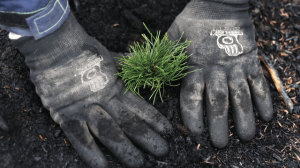
A nursery manager plants a whitebark pine at Glacier National Park in Montana in September 2019, part of an effort to restore vegetation following a wildfire. (Chip Somodevilla/Getty Images)

Here in Iota-drenched Costa Rica there is damage from this hurricane and from the one that just ended a week earlier, but it is minuscule compared to what Nicaragua and Honduras have sustained. If you are scientifically inclined, then two complementary ideas are easy to digest: 1) the people suffering most from the effects of climate change are among the least responsible for causing it; and 2) they live in places that may be best-suited for mitigating it.  For our part, planting trees when coffee is purchased is a drop in the ocean of need. A story we missed from a few months ago gives some hope that this particular idea has a future:

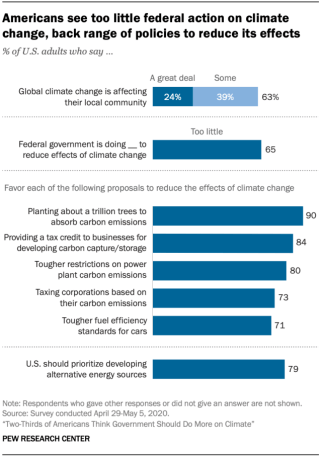
Two-Thirds of Americans Think Government Should Do More on Climate

Bipartisan backing for carbon capture tax credits, extensive tree-planting efforts

A majority of Americans continue to say they see the effects of climate change in their own communities and believe that the federal government falls short in its efforts to reduce the impacts of climate change.

At a time when partisanship colors most views of policy, broad majorities of the public – including more than half of Republicans and overwhelming shares of Democrats – say they would favor a range of initiatives to reduce the impacts of climate change, including large-scale tree planting efforts, tax credits for businesses that capture carbon emissions and tougher fuel efficiency standards for vehicles, according to a new Pew Research Center survey. Continue reading

Protecting Peat Bog Is Big

Andrew Coupar, a NatureScot peatlands expert, at the Forsinard visitor centre. Photograph: Murdo MacLeod/The Guardian

If you go to the home improvement center, or any gardening shop, you will see this stuff in plastic bags, ranging in size from small pillow to half-bale. If you purchase it you are buying into a destructive practice that goes beyond the destruction of amazingly beautiful landscape. If heritage status helps end that, we are all for it:

World heritage status for Scottish peat bogs could help UK hit net zero goals

Hopes rise that the Flow Country, the world’s largest carbon store, could become first peatland to win the status

Ecologists estimate that while peatlands cover only 3% of the Earth’s land surface, they hold 30% of the carbon stored on land. Photograph: Murdo MacLeod/The Guardian

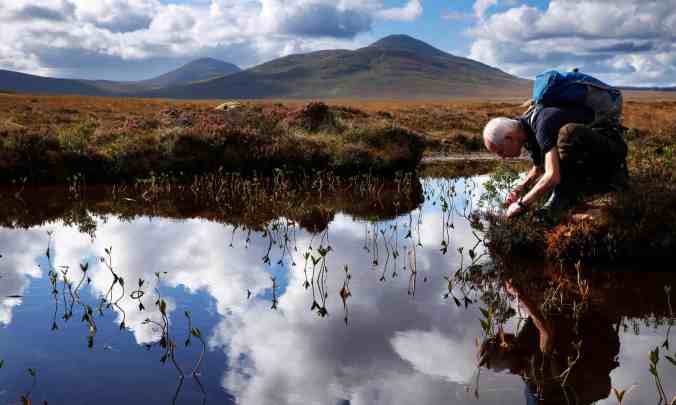
Andrew Coupar has crouched down by a small pool, its surface peppered with the small stalks of bogbean. In autumn its dark green oval leaves echo the muted browns, greens and ochres of the surrounding peatland.

In spring, however, the bogbean’s pink-fringed white flowers put on a remarkable display, carpeting the cluster of pools that mirror the blue skies and light clouds above and, along the horizon to west, the mountains of Sutherland. Continue reading

A 2020 Bright Spot

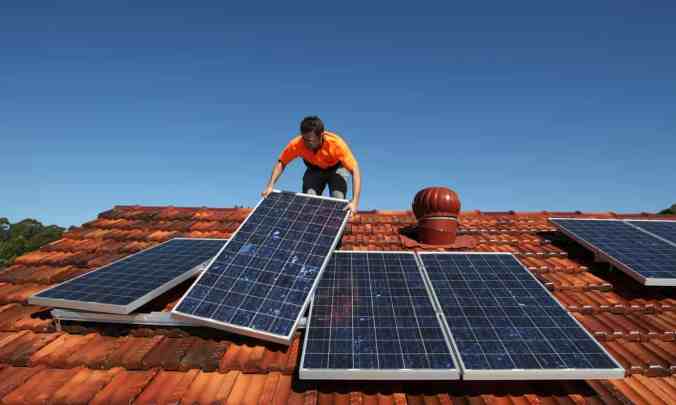
Solar panels are installed on to the roof of a house in Sydney, Australia. Almost 90% of new electricity generation in 2020 will be renewable, the IEA says. Photograph: Reuters

Thanks to the Guardian’s Environment editor Damian Carrington for this sunny news:

International Energy Agency expects green electricity to end coal’s 50-year reign by 2025

Global renewable electricity installation will hit a record level in 2020, according to the International Energy Agency, in sharp contrast with the declines caused by the coronavirus pandemic in the fossil fuel sectors. Continue reading

Character & Entrepreneurial Conservation

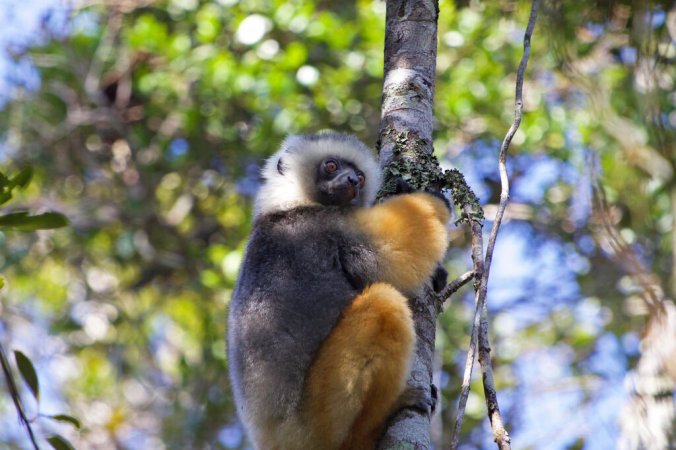
A diadem sifaka, a type of lemur, in northern Madagascar. Erik Vance/The New York Times

Erik Vance, whose work I have not seen in more than three years, caught my attention again this week. Then it was in National Geographic and from my perch in Belize his story had an obvious connection to my location. This story, in the New York Times, is read from a perch in Costa Rica. My perspective, as ever, is influenced by the search for examples of entrepreneurial conservation. I am happy to read about this one full of interesting characters, in a country I have yet to visit, where there is resonance with some of my experience in Costa Rica. Creative people, knowing that the country’s public conservation commitments have their limits, achieve remarkable conservation goals through private reserves that add to the public good. The section describing a small park with big potential could have also been written about Seth’s workplace last year:

In Madagascar, Endangered Lemurs Find a Private Refuge

Climate change is shifting the habitats of endangered species and requiring conservation scientists to think outside traditional park boundaries.

Sambava, Madagascar — Madagascar has always been one of the best places on Earth to study the natural world. Continue reading

Feedlot Paradigm Progress

A dust cloud over the Bovina Cattle Company’s feed yard near Bovina, Texas.

As we all hopefully make progress on our reduction of meat consumption, the science writer Henry Fountain and George Steinmetz (photographs and video) add to our understanding of how cattle are raised now, and what could change to reduce the carbon footprint:

Belching Cows and Endless Feedlots: Fixing Cattle’s Climate Issues

The United States is home to 95 million cattle, and changing what they eat could have a significant effect on emissions of greenhouse gases like methane that are warming the world.

HAPPY, Texas — Randy Shields looked out at a sea of cattle at the sprawling Wrangler Feedyard — 46,000 animals milling about in the dry Panhandle air as a feed truck swept by on its way to their pens. Continue reading

Marine Ecosystem Restoration Success Stories

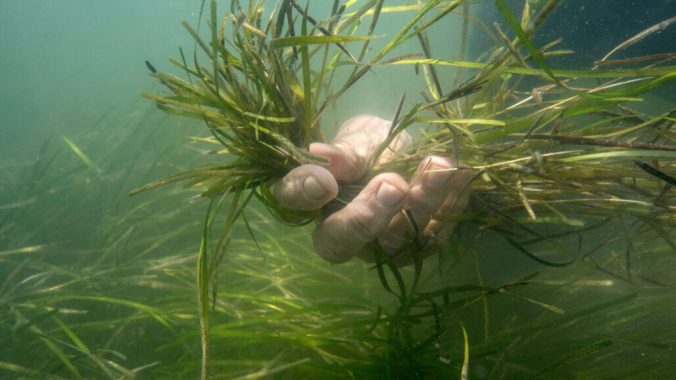
Seagrass beds off Virginia’s Eastern Shore went from barren sediment to abundant meadows in 20 years in the world’s largest restoration project. credit: JAY FLEMING

Thanks for Science News for this wonderful example of successful ecosystem restoration.

How planting 70 million eelgrass seeds led to an ecosystem’s rapid recovery

The study is a blueprint for capitalizing on this habitat’s capacity to store carbon

In the world’s largest seagrass restoration project, scientists have observed an ecosystem from birth to full flowering.

As part of a 20-plus-years project, researchers and volunteers spread more than 70 million eelgrass seeds over plots covering more than 200 hectares, just beyond the wide expanses of salt marsh off the southern end of Virginia’s Eastern Shore. Long-term monitoring of the restored seagrass beds reveals a remarkably hardy ecosystem that is trapping carbon and nitrogen that would otherwise contribute to global warming and pollution, the team reports October 7 in Science Advances. That success provides a glimmer of hope for the climate and for ecosystems, the researchers say.

The project, led by the Virginia Institute of Marine Science and The Nature Conservancy, has now grown to cover 3,612 hectares — and counting — in new seagrass beds. By comparison, the largest such project in Australia aims to restore 10 hectares of seagrass.

The results are “a game changer,” says Carlos Duarte. Continue reading

If You Have IKEA Stuff, Note This

I am not a fan of IKEA. That said, I shopped there once, as a younger parent. There seemed no other choice at the time, and I did not regret it until I became more acutely conscious of the perils posed by this business model. Thanks to Olivia Rosane at EcoWatch for sharing this story, which I missed in the Guardian because I scan the Environment section and usually skip the Business section (note to self):

IKEA to Buy Back Used Furniture This Black Friday in 27 Countries

IKEA created the world’s longest outdoor bookcase on Bondi Beach, Australia to celebrate its 30th birthday and promote literacy on Jan. 31, 2010. James D. Morgan / Contributor / Getty Images News

Swedish furniture giant IKEA has a plan to make this year’s Black Friday a little greener.

As part of its bid to become more sustainable, the store will allow customers to sell back their used furniture for up to half of its original price.

Sustainability is the defining issue of our time and IKEA is committed to being part of the solution to promote sustainable consumption and combat climate change,” UK and Ireland IKEA retail manager Peter Jelkeby told The Guardian. Continue reading

A Few Attenborough Minutes

When he first appeared in these pages, and each of the dozens of times since then that David Attenborough has returned, it is worth at least a few minutes of attention. Click above to go to the video or below to go to the transcript:

Amid planet’s crisis, filmmaker Sir David Attenborough’s ‘vision for the future’

Filmmaker Sir David Attenborough has been documenting the natural world since the 1950s. In his latest book and film, “A Life on Our Planet,” he offers a grave and alarming assessment about the climate crisis Earth is facing. The 94-year-old Attenborough spoke with William Brangham recently as part of our ongoing arts and culture series, Canvas. Continue reading

Arborists & Urban Futures

Xuebing Du

An article by Clive Thompson we linked to in 2016 makes me wonder why today is the first time we are sharing his work since then. I remember reading a review of his book last year but did not see a fit with the themes we tend to focus on here. Urban trees,  for one example, feature in our pages frequently. And trees more broadly speaking have probably been featured more than any other topic due to our mission. So our appreciation to the Atlantic for publishing this, and an added thanks for the excellent photographic accompaniments:

Trees Are Time Machines

Arborists are planting trees today that must survive decades of global warming. The health, comfort, and happiness of city dwellers hang in the balance.

City trees lead difficult lives. A lot of things are trying to kill them, particularly the trees planted on sidewalks: Tightly compacted soil with high alkaline content makes it harder for them to absorb nutrients. Tiny plots of land admit very little rainwater. They’ve got dogs peeing on them, people dropping cigarette butts nearby, and cars belching pollution.

Xuebing Du

“We’re talking about trees that are very vulnerable,” says Navé Strauss, the head of street-tree planting for New York City. His team manages the planting of new trees on streets and public rights of way; there are more than 666,000 street trees in the city, and the team plants about 16,000 new ones annually. For decades, New York arborists have tended to prefer “tough,” hardy species that thrive well against adversity—such as the London planetree, which sports grayish bark and big, maple-like leaves that offer sidewalks tons of shade.

But lately, Strauss has been looking for trees that can handle an even tougher challenge: climate change.

Xuebing Du

In the past century, the United States has heated up as much as 1.9 degrees Fahrenheit. Continue reading

A Sober Consideration Of Fire

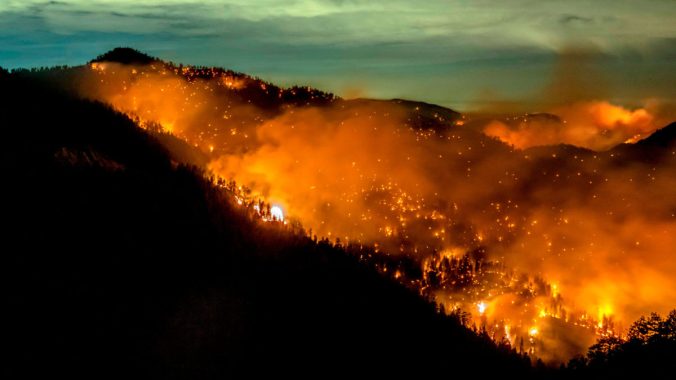
The Bobcat Fire burns through the Angeles National Forest in Southern California on September 17. KYLE GRILLOT/AFP VIA GETTY IMAGES

Stephen J. Pyne, more than an expert on fire–if you have heard the term Pyrocene, thank him–gives a primer here worth your time if you want the scary stuff in perspective. Wonky in a powerfully good way, still accessible and clear:

Our Burning Planet: Why We Must Learn to Live with Fire

By suppressing all wildfires and incessantly burning fossil fuels, humans have upset the role that fire has historically played in providing ecological balance. We need to rethink our view of fire and accept its presence by changing how we manage lands and plan our communities.

There is a paradox at the core of Earth’s unraveling firescapes.

The fires are seemingly everywhere, and everywhere more feral. They are burning from the Arctic to the Amazon, from New South Wales to the West Coast. They are visible, and their smoke projects their presence in the form of immense palls well removed from the flames. But equally significant are the fires that aren’t happening.

The Earth is a fire planet, the only one we know. It has held fires as long as plants have lived on land. Removing fire from landscapes that have co-evolved or co-existed with it can be as ruinous as putting fire into landscapes that have no history of it. The fires we don’t see — the fires that should be there and aren’t — are an index of ecological loss, like imposing a drought on a normally lush landscape.

We have too many bad fires — fires that kill people, burn towns, and trash valued landscapes. We have too few good ones — fires that enhance ecological integrity and hold fires within their historic ranges. At the same time, with the incessant burning of fossil fuels, we have too much combustion on the planet overall.

How did fire’s presence on Earth become so deranged? Continue reading

Cambium Carbon’s Reforestation Hubs

When we started this platform for sharing news and experiences related to innovative approaches to conservation, Seth was in Nicaragua and wrote multiple posts on Simplemente Madera  It is odd not to find a more recent post about their One Tree initiative because in early 2019 while sourcing for Authentica we sought out products that supported tree-planting. Today I am reminded of all that from a link I followed to Cambium Carbon in this story:

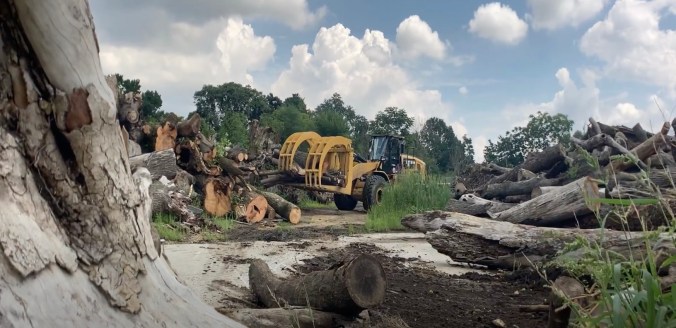
Courtesy of Cambium Carbon. Cambium Carbon aims to turn cut or fallen urban trees into wood products that can be sold to fund tree-planting efforts. Currently, most trees removed from cities are either chipped for low-grade application or hauled to a landfill at a significant cost.

Reforestation Hubs, ‘Coming Soon’ to a City Near You

Cambium Carbon, an initiative founded by YSE students to combat climate change and revitalize urban communities by reimagining the urban tree lifecycle, has earned a $200,000 Natural Climate Solution Accelerator Grant from The Nature Conservancy, in partnership with The Arbor Day Foundation. Continue reading