Fungi & Brownfield Remediation

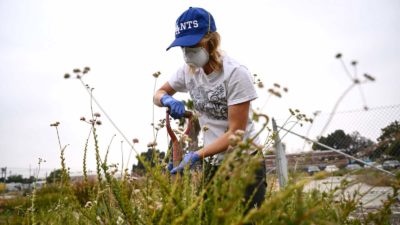
Researcher Danielle Stevenson digs up California buckwheat grown at a brownfield site in Los Angeles.

Researcher Danielle Stevenson digs up California buckwheat grown at a brownfield site in Los Angeles. PATRICK T. FALLON / AFP VIA GETTY IMAGES

Corporate irresponsibility abounds, so brownfield sites are abundant. And fungi sometimes offer relevant remediation options. Thanks to Richard Schiffman and Yale e360 for this interview on a topic we have cared about since launching this platform, and which we believe will be of increasing importance in our future:

Turning Brownfields to Blooming Meadows, With the Help of Fungi

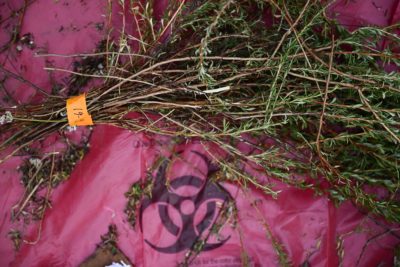
California buckwheat that has absorbed lead at a contaminated site in Los Angeles.

California buckwheat that has absorbed lead at a contaminated site in Los Angeles. PATRICK T. FALLON / AFP VIA GETTY IMAGES

Toxicologist Danielle Stevenson cleans up carbon-based pollutants and heavy metals from contaminated sites using fungi and plants. She’s also training environmental justice and tribal communities in using these methods so they can remediate toxic sites on their own.

The United States is dotted with up to a million brownfields — industrial and commercial properties polluted with hazardous substances. Continue reading
More Youth Demanding Liveable Futures

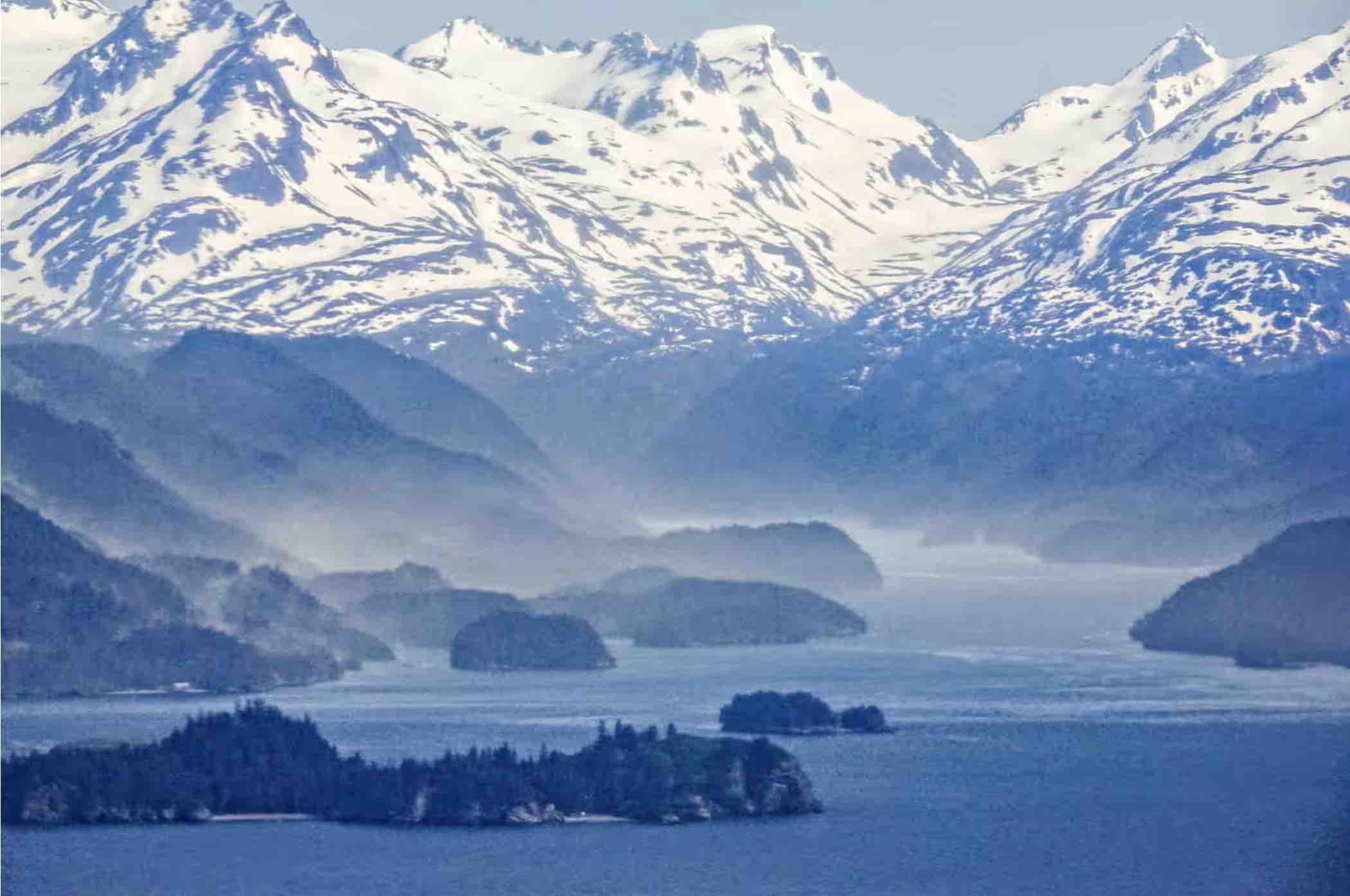
portion of the Kenai Peninsula in Alaska in 2023. The project would involve construction of a liquefaction plant to prepare the gas for export to Asia. Photograph: Richard Ellis/Alamy

Our appreciation to Dharna Noor for writing a clear story about this new legal initiative, and to the Guardian for publishing it. What started in Montana, a naturally well-endowed state with a mixed environmental record, now continues in Alaska, the biggest frontier of the American West. Our thanks to the younger generation for taking up the fight creatively:

Young Alaskans sue state over fossil fuel project they claim violates their rights

Plaintiffs claim $38.7bn gas export project, which would triple state’s greenhouse gas emissions, infringes constitutional rights

Eight young people are suing the government of Alaska – the nation’s fastest-warming state – claiming a major new fossil fuel project violates their state constitutional rights. Continue reading

Making Good Trouble In India

Another of this year’s trouble-making prize-winners:

Meet Alok Shukla

Alok Shukla led a successful community campaign that saved 445,000 acres of biodiversity-rich forests from 21 planned coal mines in the central Indian state of Chhattisgarh. In July 2022, the government canceled the 21 proposed coal mines in Hasdeo Aranya, whose pristine forests—popularly known as the lungs of Chhattisgarh—are one of the largest intact forest areas in India. Continue reading

First Nations’ Food Sovereignty

Delphine Lee

Thanks to Mother Jones for this:

Tribal Nations Are Taking Back Their Food Systems

A new farm bill program aims to undo centuries of federal mismanagement.

The farm bill is one of the most important but least understood pieces of US legislation, and it’s overdue for renewal. Continue reading

Investing Patagonia’s Proceeds In Conservation

Greg Curtis, the former deputy general counsel of Patagonia, is responsible for giving away huge sums of money to causes that are aligned with Patagonia’s history of environmental activism. Adam Amengual for The New York Times

When news broke about the company’s future, we were in awe; since then we heard little so this is a welcome update:

Patagonia’s Profits Are Funding Conservation — and Politics

$71 million of the clothing company’s earnings have been used since September 2022 to fund wildlife restoration, dam removal and Democratic groups.

A little more than $3 million to block a proposed mine in Alaska. Another $3 million to conserve land in Chile and Argentina. And $1 million to help elect Democrats around the country, including $200,000 to a super PAC this month.

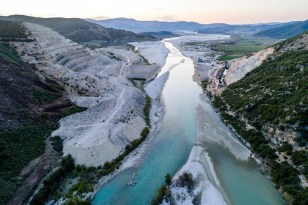
The site of the Kalivac Dam on the Vjosa River in Albania, where Holdfast has funded a major conservation project. Andrew Burr/Patagonia

Patagonia, the outdoor apparel brand, is funneling its profits to an array of groups working on everything from dam removal to voter registration.

In total, a network of nonprofit organizations linked to the company has distributed more than $71 million since September 2022, according to publicly available tax filings and internal documents reviewed by The Times. Continue reading
Rishi’s Wrong, Skidmore’s Right

Chris Skidmore said he could ‘no longer condone nor continue to support a government that is committed to a course of action that I know is wrong’. Photograph: Chris McAndrew/UK Parliament/PA

We rarely applaud those on the right side of the political spectrum when it comes to environmental issues. Most have been on the wrong side of history with regard to climate change. When one stands up and challenges the status quo, applause applause:

Chris Skidmore resigns Conservative whip over Sunak’s oil and gas licence plan

Former minister also resigns as an MP, which will trigger byelection in his Kingswood constituency

A former Conservative minister has announced he is resigning as an MP in protest at the party’s dash for oil and gas, setting up an awkward vote for the prime minister on the issue on Monday and an even more difficult byelection within weeks. Continue reading
Power Rangers With A Different Approach

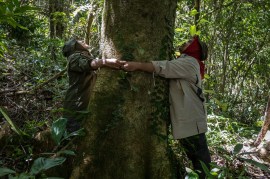
Women rangers hugged a tree while collecting data during a forest patrol near the village of Damaran Baru, in Aceh Province, Indonesia. Ulet Ifansasti for The New York Times

We thank Muktita Suhartono for the story and  Ulet Ifansasti for the photographs:

Female Rangers ‘Don’t Go All Alpha Like the Men’ to Protect a Forest

Rather than take a confrontational approach with trespassers looking to farm or log in a tropical rainforest in Indonesia, teams of women rangers try dialogue first.

Asmia, one of 15 rangers whose job is to protect nearby forests from squatters who want to clear trees for timber or to farm the fertile soil.

Riding her motorbike while balancing a backpack, a wok and a sharp cleaver, Asmia expertly maneuvered her way up a dangerous cliffside: a three-mile trip along a precipitous dirt path, barely 40 inches wide, to reach the mouth of the forest.

Asmia is one of the 15 members of a team of rangers — 10 of whom are women — whose job is to protect their village forest in Aceh Province in Indonesia from the squatters who want to clear the trees for timber or to farm the fertile soil.

Two teams of rangers, each consisting of five women and two men, take turns each month on five-day forest patrols.

“Here, we once fought with a squatter, asking him to stop the encroachment,” Asmia said, pointing as she walked beneath the thick canopy of trees that shadow her rounds. “He insisted on clearing the land, as he wanted to grow coffee. He was persistent. But we talked him out of it.” Continue reading

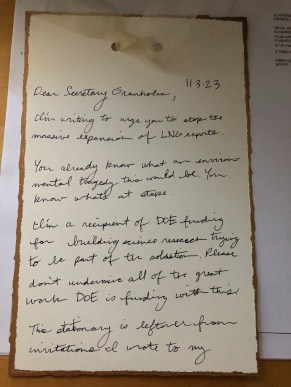
Letters To The Secretary

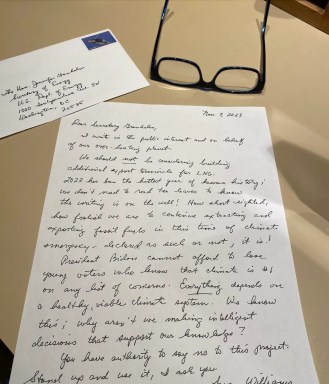
We have appreciated this newsletter since it started, and every issue since. This week it brings these handwritten letters to our attention:

…Oh, and who’s the other group of climate voters the president needs to worry about? That would be older people, like those of us at Third Act—we codgers have been organizing mass protests all year. And while we may not be TikTok savvy, we have another weapon: pen and stationery. In the last week Third Actors have unleashed thousands of letters on DOE headquarters—which may not sound quite as sexy as petitions from the Internet, but they have their own impact, since officials know that if you’re willing to do more than click you’re probably an effective and motivated adversary.

So consider [image above left]

Or [image to the right]

What I’m trying to say is, the Department of Energy has a real problem—an increasingly aware and activated posse of youngsters and oldsters. And a solution: announce CP2 is going nowhere, and that no other project will be approved, or even considered, until there’s been an exhaustive rewrite of the criteria taking into account the latest science and economics. It’s not hard. Continue reading

The Slow Ways App, For Right Of Way Walkers

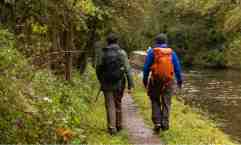
The Slow Ways founder, Daniel Raven-Ellison (right) walks with the Guardian’s Patrick Barkham as they verify a route between Congleton and Macclesfield. Photograph: Fabio De Paola/The Guardian

The right of way is a theme we love, and now there is a technology to assist our pursuit of those rights, at least in one country.

Our thanks to and the Guardian for their coverage of this development:

Walk the walk: the app mapping 140,000 miles of public right of way

Slow Ways was set up during the pandemic when frustrated locked-down walkers drew up more than 9,000 walking routes across Great Britain. Photograph: Fabio De Paola/The Guardian

Community-based, Slow Ways has verified 60% of a network of pedestrian-friendly routes across Great Britain

I meet up with Daniel Raven-Ellison, the brains behind the Slow Ways walking network, in the darkness of a drizzly dawn at Kidsgrove railway station in Staffordshire. Our mission? To walk and verify the final 17-mile (27km) link in the route between Birmingham and Manchester. Continue reading

Museum Loot Going Home

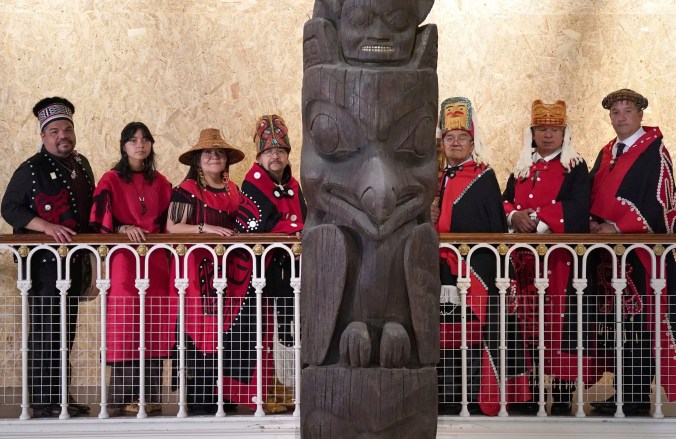
Earl Stephens, who goes by the Nisga’a cultural name Chief Ni’is Joohl, center left, and members of a delegation from the Nisga’a nation pose beside a 36-foot tall memorial pole during a visit to the National Museum of Scotland on Monday. Andrew Milligan/Press Association, via Associated Press

The legitimacy of museums possessing artifacts from other cultures is not inherently dubious, but as the Parthenon marbles example has demonstrated, there are plenty of reasonable questions. This story about a museum’s move to the better side of history is worth a read:

The pole is soon to be moved to British Columbia on the west coast of Canada. Jeff J Mitchell/Getty Images

Totem Pole Taken 94 Years Ago Begins 4,000-Mile Journey Home

The 36-foot tall memorial pole has spent almost a century in a Scottish museum. Now it will be returned to the Nisga’a Nation in Canada.

Almost 100 years ago, a hand-carved totem pole was cut down in the Nass Valley in the northwest of Canada’s British Columbia.

The 36-foot tall pole had been carved from red cedar in the 1860s to honor Ts’wawit, a warrior from the Indigenous Nisga’a Nation, who was next in line to become chief before he was killed in conflict. Continue reading
Planting Trees In New Haven

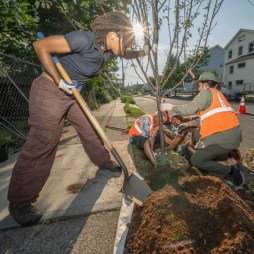
From left, Jess Jones, Ed Rodriguez, Zach Herring and Joshua De-Anda, planting a crab apple tree at 10 Wolcott Street in the Fair Haven neighborhood of New Haven, Conn. Tony Cenicola/The New York Times

Ed Rodriguez has a few years on me, but we have comparable tree counts. The caption of the second photo below captures my my own preference of activity on any given day. Having grown up in Connecticut and moved to Costa Rica decades ago, I note our reverse patterns of migration.

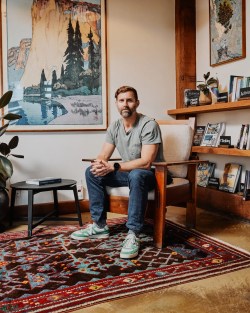
Colbi Edmonds, a member of the 2023-24 New York Times Fellowship class, reports from Seth’s previous hometown New Haven on an initiative I love reading about as much as I enjoy my own versions of the same kind of activity:

“I love to dig and mess around in the soil,” said Ed Rodriguez, who grew up in Puerto Rico but moved to Connecticut in the 1960s. Christopher Capozziello for The New York Times

One Neighborhood, 90 Trees and an 82-Year-Old Crusader

Ed Rodriguez is on a mission to convince his neighbors that they need trees to help combat summer heat — and to make the world a better place. It’s not always so easy.

Maria Gonzalez, who lives in New Haven, Conn., was envious of the other side of her street. It was lined with trees, offering some beauty as well as a shield from this summer’s unusual heat. But the sidewalk directly in front of her residence was bare, with trash littering patches of grass. Continue reading
Plastic Waste Losing Another Place To Land

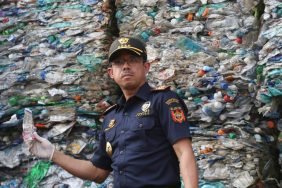
An Indonesian customs official intercepts a container full of illegally imported plastic waste in September 2019. ACHMAD IBRAHIM / AP PHOTO

When conscientious citizens learn more about where all the plastic goes when they do their part to recycle, it can be demoralizing. Recycling is important but the real solution is reducing the waste in the first place:

Indonesia Cracks Down on the Scourge of Imported Plastic Waste

Workers prepare to burn plastic waste at an import dump in Mojokerto, Indonesia. ULET IFANSASTI / GETTY IMAGES

When China banned plastic waste imports in 2018, exporters in wealthy countries targeted other developing nations. Faced with an unending stream of unrecyclable waste, Indonesia has tightened its regulations and has begun to make progress in stemming the plastics flow.

In 2019, at a meeting in Geneva, Switzerland, delegates from 187 countries approved the first-ever global rules on cross-border shipments of plastic waste. Continue reading

New Roots Garden, Urban Oasis

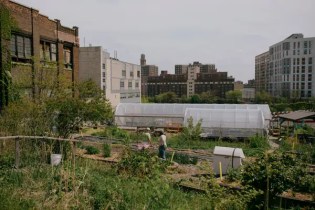
Sheryll Durrant has managed the New Roots Garden, which sits between the Grand Concourse and the Metro North railroad tracks in the Bronx, with volunteers for eight years.

We have linked out to stories about urban farming plenty of times; it never gets old:

Vital Places of Refuge in the Bronx, Community Gardens Gain Recognition

Lawmakers in Albany voted to designate community gardens statewide as crucial to the urban environment, especially in the fight against climate change. The bill awaits the governor’s signature but the role of these gardens stretches back decades.

The Morning Glory garden in the West Farms section of the Bronx is among more than 500 community gardens in New York City.

Sheryll Durrant left her family farm in Jamaica in 1989 and embarked on a career in corporate marketing. But after the 2008 financial meltdown, she reconsidered her life.

She returned to her roots.

Now she runs a thriving urban farm wedged into a triangular plot in the Bronx, between the Grand Concourse and the Metro North railroad tracks. At her farm, New Roots Garden, membership consists of refugees and migrants, resettled by the International Rescue Committee, whose herbs and vegetables sustain their memories of home.

“Just putting your hands in soil is a form of healing,” Ms. Durrant, 63, said. Continue reading
Thank You, Church Of England

‘The climate crisis threatens the planet we live on, and people around the world who Jesus Christ calls us to love as our neighbours,’ says Justin Welby, the archbishop of Canterbury. Photograph: Gareth Fuller/PA

This is likely the first, and maybe the only time we ever thank a church in our pages (religion has shown up only a few times, whereas divestment is quite common in our pages), but it is certainly warranted in this case:

C of E divests of fossil fuels as oil and gas firms ditch climate pledges

Church pension and endowment funds shed holdings after U-turns by BP and Shell

The Church of England is divesting from fossil fuels in its multibillion pound endowment and pension funds over climate concerns and what the church claims are recent U-turns by oil and gas companies. Continue reading
Taking Inspiration From Smallhold Farms In Africa

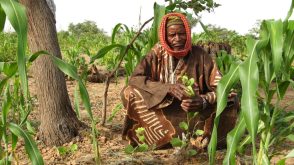
A farmer in Niger tends to a tree sprout growing among his millet crop. TONY RINAUDO / WORLD VISION AUSTRALIA

I am nearing the point where I can offer an update on the trees we have planted in advance of 1,000+ coffee plants going into the ground in their shade. Thanks to Fred Pearce, reporting in Yale E360, I have some inspiration coming from across the Atlantic on the broader value of those trees:

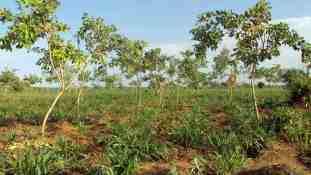
Dooki (Combretum glutinosum) trees grow on a millet field in Niger. P. SAVADOGO / ICRAF

As Africa Loses Forest, Its Small Farmers Are Bringing Back Trees

The loss of forests across Africa has long been documented. But recent studies show that small farmers from Senegal to Ethiopia to Malawi are allowing trees to regenerate on their lands, resulting in improved crop yields, productive fruit harvests, and a boost for carbon storage.

For decades, there have been reports of the deforestation of Africa. And they are true — the continent’s forests are disappearing, lost mainly to expanding agriculture, logging, and charcoal-making. But the trees? Continue reading
Crop Swap LA & Other Microfarm Advances

Illustration: Julia Louise Pereira/The Guardian

Our thanks to Victoria Namkung for this reporting in the Guardian, from Los Angeles:

‘Everything is natural and tastes so good’: microfarms push back against ‘food apartheid’

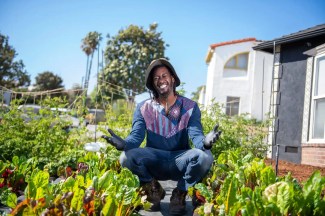
Crop Swap LA founder Jamiah Hargins in the Asante microfarm in Los Angeles, California. Photograph: Valérie Macon/AFP/Getty Images

Bipoc-led local farms in unconventional spaces decentralize systems that have produced food deserts and create food equity

On a recent Sunday morning in South Los Angeles, Crop Swap LA volunteers and staffers harvested bags of freshly picked produce from the front yard of a residence. Located just steps from Leimert Park Plaza, the Asante microfarm is the first of what will be numerous microfarms created by the organization, which is dedicated to growing hyperlocal food on unused spaces “in the neighborhood, exclusively for the neighborhood”. Continue reading
Ghana Says No Thank You To Europe’s Fast Fashion

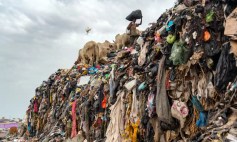
Some of the 6m items of clothing that arrive at Kantamanto Market each week. With the rise of fast fashion in the west, more is discarded as the quality drops. Photograph: Muntaka Chasant/Rex

When  the clothes cast off by the wealthy are cast on to those less wealthy, it should be done so according to the golden rule:

Stop dumping your cast-offs on us, Ghanaian clothes traders tell EU

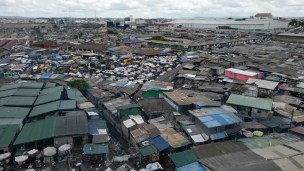
With 100 tonnes of clothing from the west discarded every day in Accra, ‘fast fashion’ brands must be forced to help pay for the choking textile waste they create, environmentalists say

An aerial view of Kantamanto market in Accra, where 100 tonnes of secondhand clothing a day are discarded. Photograph: Misper Apawu/The Guardian

A group of secondhand clothes dealers from Ghana have visited Brussels to lobby for Europe-wide legislation to compel the fashion industry to help address the “environmental catastrophe” of dumping vast amounts of textiles in the west African country. Continue reading
Indigenous Food Foraging

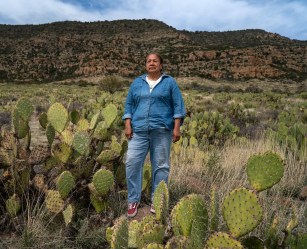
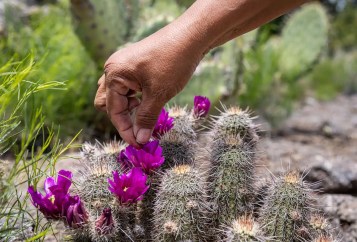
Prickly pear cacti, which produce Twila Cassadore’s favorite fruit. Photograph: Gabriela Campos/The Guardian

Samuel Gilbert was in Bylas, Arizona, on the San Carlos Apache Reservation to report this article, which contains excellent accompanying photographs by Gabriela Campos.

We thank the Guardian for this coverage of indigenous heritage:

‘It healed me’: the Indigenous forager reconnecting Native Americans with their roots

Twila Cassadore hopes teaching Western Apache traditional foodways can aid mental, emotional and spiritual health

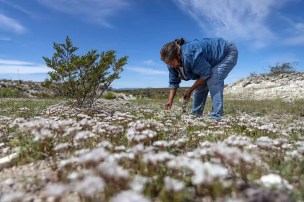
Twila Cassadore gathers wild pearl onions on a foraging trip in the San Carlos Apache Reservation in April. Photograph: Gabriela Campos/The Guardian

On a warm day in April, Twila Cassadore piloted her pickup truck toward the mountains on the San Carlos Apache Reservation in Arizona to scout for wild edible plants. A wet winter and spring rains had transformed the desert into a sea of color: green creosote bushes topped with small yellow flowers, white mariposa lilies, purple lupines and poppies in full bloom.

Cassadore picks the petals off a flowering cactus during a foraging trip. She uses the petals in salads. Photograph: Gabriela Campos/The Guardian

Cassadore and I drove up a rough dirt road that used to be an old cattle trail, passing through various ecosystems, moving from Sonoran desert to grasslands and piñon-juniper woodlands. In each area, Cassadore would stop to gather desert chia seeds, cacti flowers and thistles.

Cassadore stopped her truck beside a three-leafed sumac bush brimming with fruit. Continue reading
Lehua Kamalu Captains Hōkūleʻa,

This half hour podcast episode may be your best gateway to a weekend of healthy distraction:

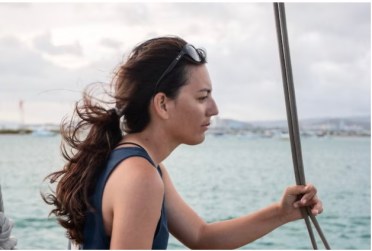
She Sails the Seas Without Maps or Compasses

For nearly 50 years, a group of Hawaiians have been sailing on traditional voyaging canoes using the methods that early Polynesian explorers relied on to navigate the Pacific Ocean—without maps and modern instruments, and relying on the stars, ocean waves, birds, and other natural elements to guide them. We meet National Geographic Explorer Lehua Kamalu, the first woman to captain a long-distance voyage on Hōkūleʻa, a double-hulled Polynesian canoe that was built in Hawaii in the 1970s. She describes what it’s like to navigate in incredibly rough waters, what it means to keep Polynesian navigation alive in the 21st century, and about her next big adventure: a four-year circumnavigation of the Pacific Ocean.

When Disney became the owner of Fox Entertainment’s assets, National Geographic Partners was part of the deal. We never appreciated National Geographic’s association with Fox Entertainment, nor do we think Disney is much better a fit, but we can still appreciate when they do something right.

Chilekwa Mumba, 2023 Goldman Environmental Prize Winner

https://youtu.be/8TG_1ILhxcU

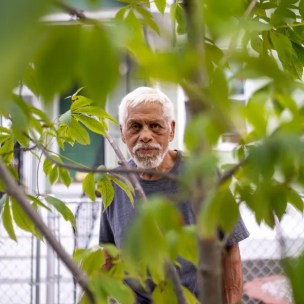
The 2023 Goldman Prize goes to this man:

Alarmed by the pollution produced by the Konkola Copper Mines operation in the Copperbelt Province of Zambia, Chilekwa Mumba organized a lawsuit to hold the mine’s parent company, Vedanta Resources, responsible. Chilekwa’s victory in the UK Supreme Court set a legal precedent—it was the first time an English court ruled that a British company could be held liable for the environmental damage caused by subsidiary-run operations in another country. This precedent has since been applied to hold Shell Global—one of the world’s 10 largest corporations by revenue—liable for its pollution in Nigeria.

Our thanks to Jocelyn C. Zuckerman for this conversation with him:

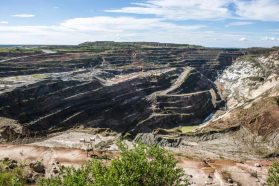
The Nchanga copper mine, operated by Konkola Copper Mines, in Chingola, Zambia. WALDO SWIEGERS / BLOOMBERG VIA GETTY IMAGES

This Zambian Took on a U.K. Mining Giant on Pollution and Won

Chilekwa Mumba led a court battle to hold a U.K.-based company responsible for the gross pollution from a copper mine it owns in Zambia. In an interview, he talks about how he and local villagers faced arrest to overcome long odds and finally win a landmark legal victory.

The southern African nation of Zambia is home to a wealth of minerals — in particular, lots of the copper and cobalt that the world will require to power a green economy. Continue reading