Sunflower Seastars & Ocean Futures

A sunflower sea star found in a kelp forest in waters off the Oregon coast before an invasion of sea urchins. Credit Scott Groth/Scott Groth, via Associated Press

Thanks to Nicholas Bakalar (last seen in these pages seven years ago, we welcome his science reporting work back after so long):

The Missing 24-Limbed Animals That Could Help Rescue the Ocean’s Forest

Scientists say that reintroducing the fast-moving predators to the West Coast could help control the spread of sea urchins that are devouring kelp.

The kelp forests off the West Coast are dying, and with their decline, an entire ecosystem of marine plants and animals is at risk. A large starfish with an appetite for sea urchins could come to the rescue. Continue reading

Protecting Insects Requires More Effort

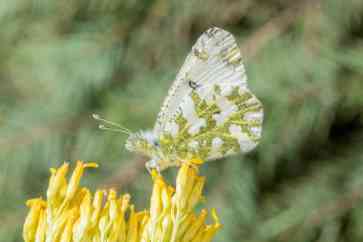
The large marble butterfly is now locally extinct in some places. Rick and Nora Bowers/Alamy

Insects matter, and our thanks to Catrin Einhorn for making it more clear why:

Are Butterflies Wildlife? Depends Where You Live.

A legal quirk leaves officials in at least a dozen states with little or no authority to protect insects. That’s a growing problem for humans.

It’s tough being an insect. They get swatted, stomped and sprayed without a thought. Their mere presence can provoke irrational panic. Even everyday language disparages them: “Stop bugging me,” we say. Continue reading

Keep The Night Sky Dark

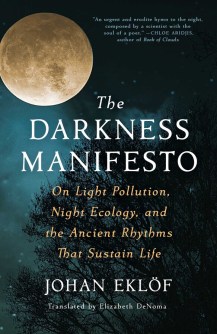
While sunlight gives electricity for the lights we need, there can be too much of a good thing. Thanks to Lisa Abend at the New York Times for this review:

A Manifesto for Loving the Darkness, and Not Metaphorically

Light pollution is disruptive to many species, from corals to bats to the humans who put up all those lights. “The Darkness Manifesto” urges us to reconsider our drive to dispel the dark.

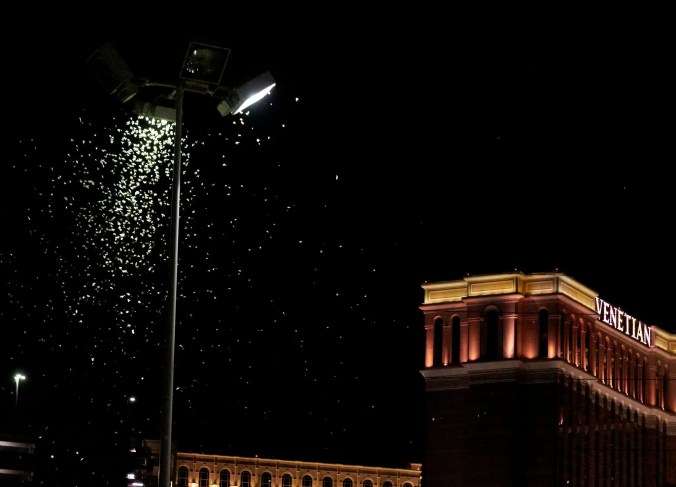
Artificial lights disorient many species, including the grasshoppers that swarmed the powerful lights over the Las Vegas strip in 2019. Bridget Bennett/Agence France-Presse — Getty Images

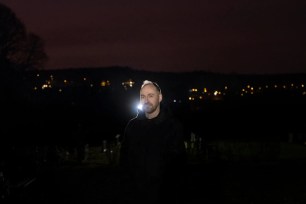
Losing a connection to the night sky is losing our connection to nature, said Johan Eklöf, but it is also losing some of our history. “What we see now is the same sky as our ancestors were looking at and making up stories about.” Nora Lorek for The New York Times

The zoologist Johan Eklöf began to consider the disappearance of darkness in our brightly lit world in 2015, when he was out counting bats in southern Sweden. The surrounding grounds were dark, as they had been decades earlier when his academic adviser had tallied the bat populations in the region’s churches. In the intervening years, however, those churches — whose belfries are famously appreciated by the winged mammals — had been illuminated with floodlights. “I started to think, how do the bats actually react to this?” Eklöf says. Continue reading

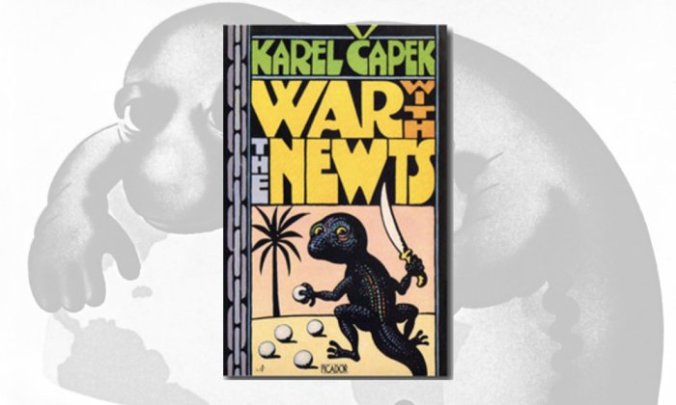
War With The Newts & Anticipation

The MIT Press ReaderJohn Rieder, an emeritus professor of English at the University of Hawai‘i at Mānoa, shares the following, excerpted from the book Uneven Futures: Strategies for Community Survival From Speculative Fiction:

On Karel Čapek’s Prophetic Science Fiction Novel ‘War With the Newts’

The Czech writer’s darkly humorous novel, published in 1936, anticipated our current reality with eerie accuracy.

Karel Čapek’s “War with the Newts,” published in 1936, one of the greatest pieces of science fiction of the 20th century, is a prophetic work. When I say prophetic, I mean it has the gift of seeing the present for what it is — and not only seeing it but also telling the rest of us what we have been looking at. Continue reading

Seed Bank Futures

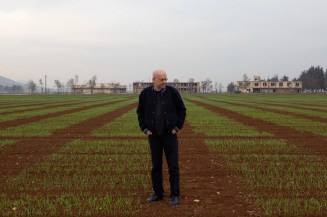
Hassan Machlab, a country manager with ICARDA in Lebanon, stands in the middle of a field with newly planted grains at the ICARDA research station, Dec. 21, 2022. Dalia Khamissy for NPR

Protecting plant species’ futures with seed banks grows greater in importance as time passes, because challenges to the planet multiply. We appreciate updates like this one by Ruth Sherlock and colleagues at National Public Radio (USA):

How ancient seeds from the Fertile Crescent could help save us from climate change

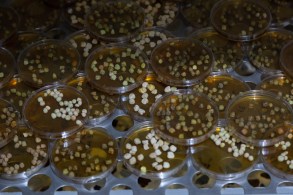
Chickpea grains are tested for various diseases at the ICARDA research station, Dec. 21, 2022. Dalia Khamissy for NPR

TERBOL, Lebanon — Inside a large freezer room at the International Center for Agricultural Research in the Dry Areas, tens of thousands of seeds are stored at a constant temperature of minus-4 degrees Fahrenheit. After being threshed and cleaned, the seeds are placed inside small, sealed foil packets and stored on rows of heavy, sliding metal shelves.

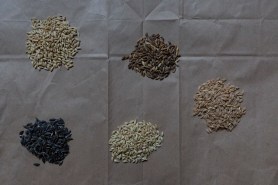
Barley grains stored at the ICARDA research station. Dalia Khamissy for NPR

Some of them may hold keys to helping the planet’s food supply adapt to climate change.

The gene bank can hold as many as 120,000 varieties of plants. Many of the seeds come from crops as old as agriculture itself. They’re sown by farmers in the Fertile Crescent region, where cultivation began some 11,000 years ago. Other seeds were deposited by researchers who’ve hiked in the past four decades through forests and mountains in the Middle East, Asia and North Africa, searching for wild relatives of wheat, legumes and other crops that are important to the human diet. Continue reading

Fungi Lost & Found

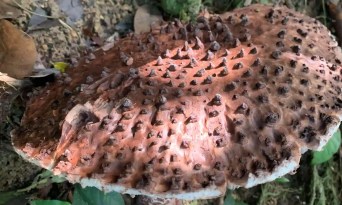
The sculptured toadstool (Amanita sculpta) had not been seen in Singapore for more than 80 years. Photograph: Adrian Loo/National Parks Board of Singapore

Over our nearly dozen years linking to stories we have shared plenty of what we have called lost and found stories (including this and this and this, and this), as well as fungi stories too numerous to link back to, this is the first lost and found fungi story:

Lost and found: how a Facebook post led to the ‘chocolate chip’ toadstool

The sighting of a ‘magnificent’ specimen of the Amanita sculpta, not seen in Singapore for 80 years, shows how the public can aid in conservation efforts

The cap is like a chocolate chip cookie,” says Serena Lee, senior manager at Singapore Botanic Gardens’ herbarium, describing the top of the sculptured toadstool (Amanita sculpta). Continue reading

Biodiversity, Montreal & Us

The opening plenary of the U.N. biodiversity conference in Montreal. Photograph by Andrej Ivanov / AFP / Getty

We continue, as a species, to document our impact on other species. The warning signs keep getting clearer. It is not pleasant reading, but it is documented for a reason; it is about us. It is about our responsibilities. Our thanks, as always, to Elizabeth Kolbert:

Can the U.N. Save the World from Ecological Collapse?

At this week’s summit, delegates will consider ambitious new conservation targets—even though the old ones have yet to be achieved.

The Red List of Threatened Species might best be described as a lack-of-progress report. Continue reading

Quiet Catches Criminals

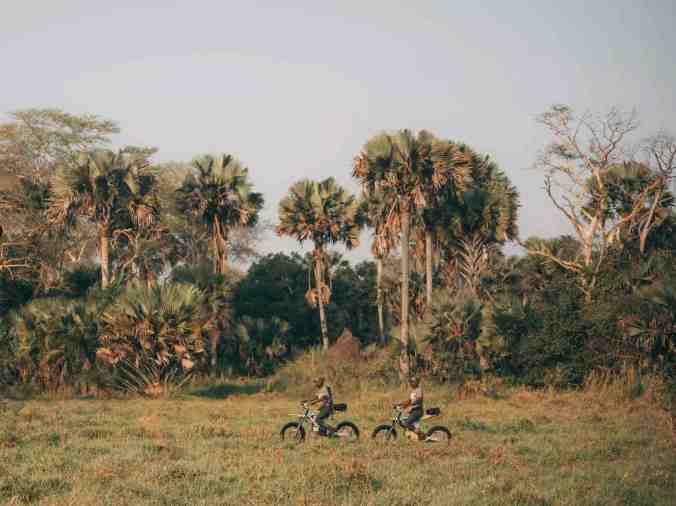
PHOTOGRAPH: JUSTIN SULLIVAN/CAKE

We have always had a soft spot for creative approaches to reducing, if not ending, poaching. And now this, thanks to Andy Jones at Wired:

Park Rangers Are Using Silent Ebikes to Catch Poachers

A Swedish electric bike is helping Mozambique’s park rangers protect game and reducing the need for fossil fuel infrastructure in Africa’s remotest areas.

AT THE END of 2021, a group of night poachers in a Mozambique national park—using torchlight to blind antelopes—were suddenly the ones left stunned in the dark. Continue reading

Wonders Of The Yucatán

In Calakmul and elsewhere, the fierce jaguar was worshiped as a deity. Ancient rulers and warriors adorned themselves with the animal’s skulls, skins, fangs and claws. Adrian Wilson for The New York Times

Several months ago when we confirmed our plans to attend a wedding in Merida, Mexico on November 5, Calakmul came to mind. We had already explored many famous Maya sites in Central America, most recently in Belize, not to mention Mexico, over the last three decades; and we have also been fortunate with big cat sightings.

We decided against extending our stay, choosing to spend a few days in Mexico City instead (I have been obsessed with Barragán in recent years, so seeing his former home and workshop there was a must). Charly Wilder‘s article in the New York Times, which I am only seeing now, makes me wonder when we will return to see what we neglected in the Yucatan:
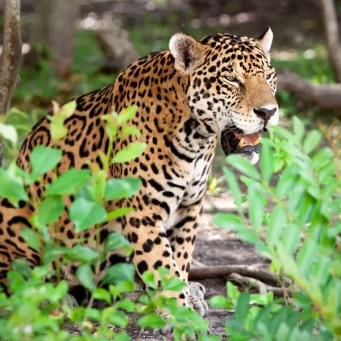
The number of jaguars is growing in Mexico, especially in areas of the Yucatán Peninsula. Patryk Kosmider/Getty Images

Thanks to Mexican conservation efforts, the jaguar is making a comeback in the Yucatán Peninsula. A traveler ventures into its habitat in the tropical jungles surrounding an ancient Maya city.

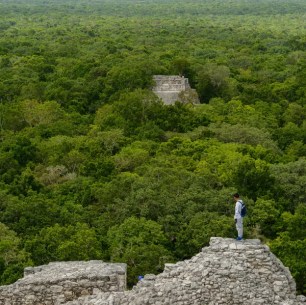
From the top of the great pyramid of the ancient Maya city of Calakmul in the southern Yucatán Peninsula in Mexico, you can see all the way to Guatemala. The jungle stretches out infinitely in every direction, an ocean of green punctuated only by the stepped pyramid peaks of two other Maya temples. Continue reading

If You Happen To Be In New York City

Installed in several locations on the Allen Street Malls between Broome and Hester Streets, this group exhibition features four artworks by five artists addressing themes of nature. Artists include Elizabeth Knowles and Eric David Laxman, Elaine Lorenz, Judith Peck, and Michael Wolf.

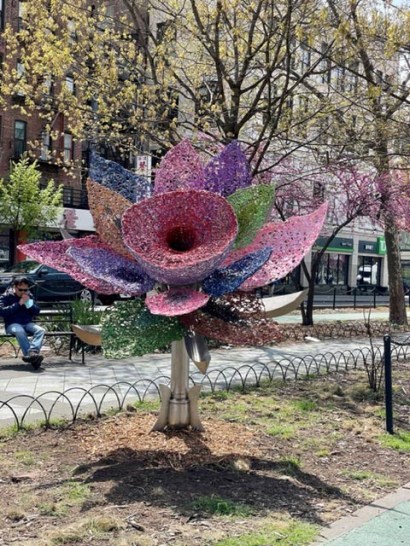
While at Cornell University last month I got my fill of early autumn florals and educational signage. While in the Botanic Gardens I was struck by a floral sculpture, a type of art I am not often moved by. But that one worked. And so, looking through the Art in the Parks section  of the New York City Department of Parks & Recreation  website,  the  image to the right caught my  attention.  And scrolling further through that collection I saw the image  below, which on a day after hurricane-driven rains  in  Costa  Rica,  with  the  morning sky clear of clouds,  hits the spot:

Naomi Lawrence, Tierra Fragil

September 25, 2022 to September 10, 2023
Morningside Park, Manhattan

Description:Tierra Fragil, depicts endangered insects and birds with the flowers and plants imperative to their survival. The mural informs and encourages the preservation of familiar species whose presence we may have taken for granted.

Tierra Fragil is made possible in part with public funds from Creative Engagement a regrant program supported by the New York City Department of Cultural Affairs in partnership with the City Council and the New York State Council on the Arts with support of the office of the Governor and the New York State Legislature, UMEZ Arts Engagement a regrant program supported by the Upper Manhattan Empowerment Zone Development Corporation and administered by LMCC. Additional funding was provided by the Friends of Morningside Park.

Infinity Trees

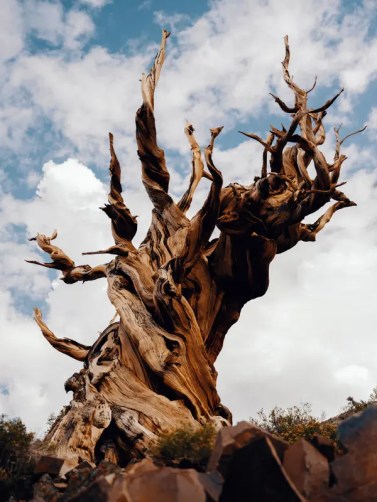
The trees, according to the ecologist Constance Millar, give you a “sense of infinity.” Photo by Adam Perez

We know that getting to a trillion trees is a stretch, but we might be able to sense infinity from a certain species of tree, according to Soumya Karlamangla in the New York Times article we link to here. Photos by Adam Perez help alot.

Bristlecone pines can live and reproduce even with only one branch of needles. Photo by Adam Perez

Historically I have worked to find my personal sense of infinity deep within tropical forests, but reading this and seeing the photos of these trees in a totally different type of ecysystem I can be convinced that it is elsewhere also:

In California, Where Trees Are King, One Hardy Pine Has Survived for 4,800 Years

In a harsh alpine desert, the Great Basin bristlecone pines abide amid climate change. Among them is the oldest tree on Earth (if you can find it).

Great Basin bristlecone pine trees endure in harsh conditions that other vegetation cannot withstand. Photo by Adam Perez

BISHOP, Calif. — Before the Egyptians built the Pyramids, before Jesus Christ was born, before the Roman Empire formed or collapsed, the trees were here.

Ten thousand feet up in the White Mountains of central California, in a harsh alpine desert where little else survives, groves of gnarled, majestic Great Basin bristlecone pines endure, some for nearly 5,000 years. Their multicolor trunks bend at gravity-defying angles, and their bare branches jut toward the sky, as if plucked from the imaginations of Tim Burton or J.K. Rowling.

These ancient organisms, generally considered the oldest trees on Earth, seem to have escaped the stringent laws of nature. Continue reading

Fishing Endgame

Note: Data for 2020 is from June 2020 through May 2021; for 2021, it is from June 2021 through May 2022.

Overfishing and potential solutions have received lots of attention in our pages over the years. It is not a new problem. And yet, we now have better metrics for how serious the problem is and who is responsible, currently, for making the problem worse. The screenshot to the left does not capture the full value of the dynamic illustration accompanying this article. Click the image to go to the source:

A Chinese ship fishing for squid off the west coast of South America in July 2021. Isaac Haslam/Sea Shepherd via Associated Press

How China Targets the Global Fish Supply

With its own coastal waters depleted, China has built a global fishing operation unmatched by any other country.

Rich and ecologically diverse, the waters around the Galápagos Islands have attracted local fishermen for centuries. Now, these waters face a much larger, more rapacious hunter: China. Continue reading

Tiger Conservation Progress

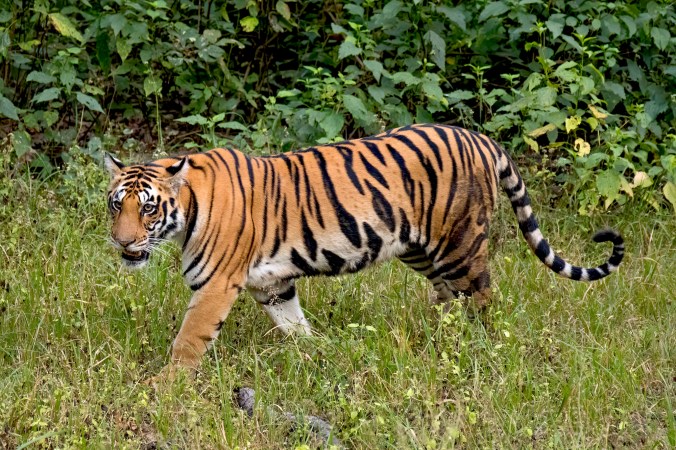
A Bengal tiger in India’s Kanha National Park. CHARLES JAMES SHARP VIA WIKIPEDIA

Tigers were an important part of our lives when this platform started, and for the following few years of our time in Kerala. We have retained an interest, so this news is welcome all these years later:

Wild Tiger Numbers 40 Percent Higher Than Previously Estimated

The number of endangered tigers around the world is 40 percent higher than previously thought, according to new data from the International Union for Conservation of Nature (IUCN). Continue reading

Monarch Butterflies’ Future

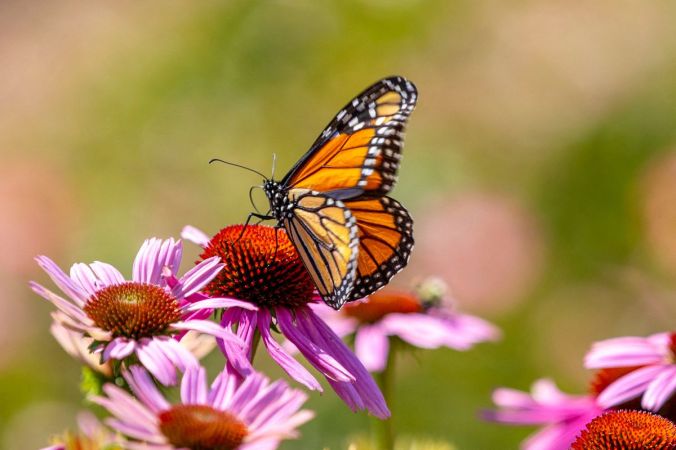
A Monarch butterfly, which is now placed in the endangered category of the International Union for the Conservation of Nature’s Red List of Threatened Species, perches at the Royal Botanical Gardens in Burlington, Ontario, Canada July 21, 2022. REUTERS/Carlos Osorio

Butterflies in general, and this species in particular, have graced our pages more than most other insects over the years. Thanks to Emma Farge and Gloria Dickie, from Reuters, for this:

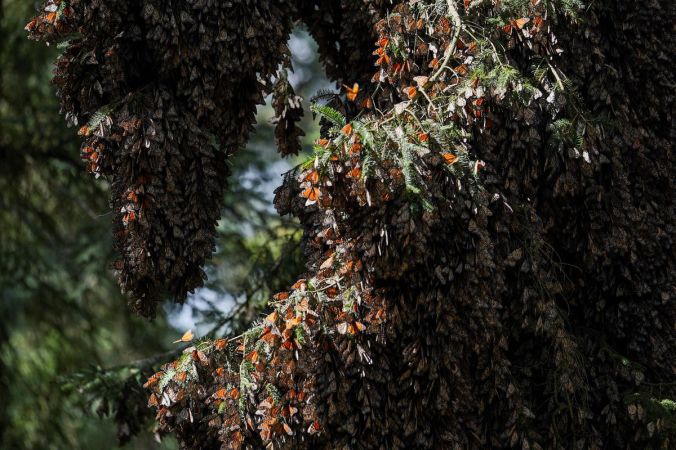
Monarch butterflies rest on a tree at El Rosario sanctuary, in El Rosario, in Michoacan state, Mexico February 11, 2021. Picture taken February 11, 2021. REUTERS/Toya Sarno Jordan/File Photo

Kaleidoscopic migratory monarch butterfly joins global endangered species list

GENEVA, July 21 (Reuters) – The migratory monarch butterfly, which has for millennia turned North American woodlands into kaleidoscopes of colour in one of nature’s most spectacular mass migrations, is threatened with extinction, international conservationists said on Wednesday. Continue reading

Fin Whales Doing Well Down South

Some gatherings were so large that spray from the whales’ blowholes resembled a fog on the ocean surface.

Some gatherings were so large that spray from the whales’ blowholes resembled a fog on the ocean surface. Dan Beecham

Happy whale news is not easy to come by. Winston Choi-Schagrin, a reporter covering climate and the environment for the New York Times, shares some:

A Whale Feeding Frenzy in Antarctica Signals a Conservation Success

Once hunted to the brink of extinction, fin whales in the Southern Ocean have rebounded and returned to their historic feeding grounds, according to a new survey.

From a distance, it looked like thick fog across the horizon. Continue reading

New World Rewilding

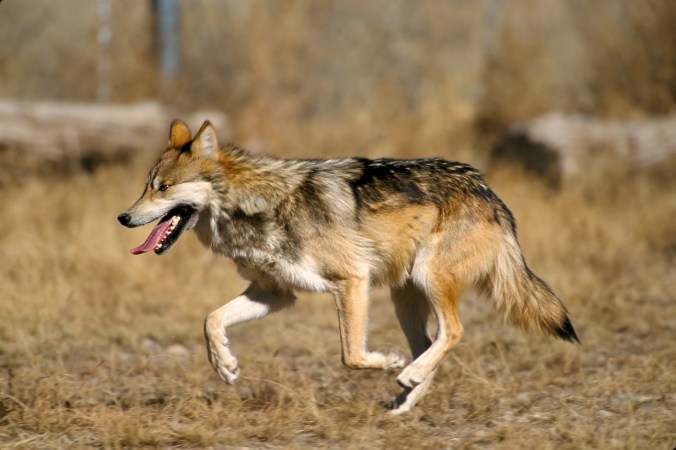
Mexican gray wolves have been reintroduced to Arizona and New Mexico over the last two decades. JIM CLARK / U.S. FISH AND WILDLIFE SERVICE

We have been posting about rewilding for nearly a decade, and it sees fair to say that the idea has developed traction worldwide:

T0GFFN Bison or Bufalo within prairie and pasture in protected natural area. Rancho el Uno, a space dedicated to the conservation of this species in Janos, Chihuahua. This fishery was reintroduced by the organization The Nature Conservancy, TNC. Janos Biosphere Reserve
  (© Photo: LuisGutierrez / NortePhoto.com

Bringing Back the Beasts: Global Rewilding Plans Take Shape

With a growing number of studies demonstrating the importance of large mammals to healthy ecosystems, scientists are proposing concrete plans to reintroduce these animals to the wild. The return of just 20 species to native habitats, they say, could be a boon to biodiversity.

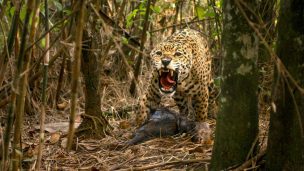
A jaguar guards its prey, a white-lipped peccary, in Goiás, Brazil. OCTAVIO CAMPOS SALLES / ALAMY STOCK PHOTO

For thousands of years, bison herds thundered freely throughout the Chihuahuan Desert on both sides of what is now the U.S.-Mexico border. In November 2009, after three frantic months of chasing down the required permits, Rurik List and Nélida Barajas watched as 23 bison from Wind Cave National Park in South Dakota arrived by tractor-trailer at the Santa Teresa international cattle crossing in southeastern New Mexico.

The animals, 20 females and three males, galloped through the dusty stockyards, across the border, and into the state of Chihuahua. Continue reading

Southern Cone Rewilding

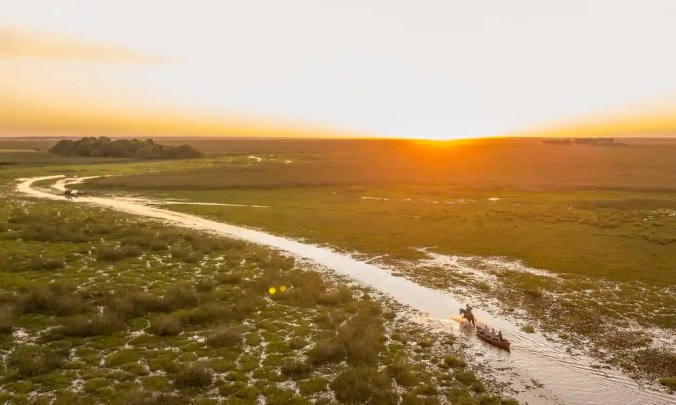
A horse and rider pull a tourist boat through the Iberá marshes

When we have linked to stories about conservation and efforts to rewild in the Southern Cone, it has been a mix of big cats and the efforts of Doug and Kris Tompkins. Our thanks to Patrick Greenfield and the Guardian for taking these themes long form:

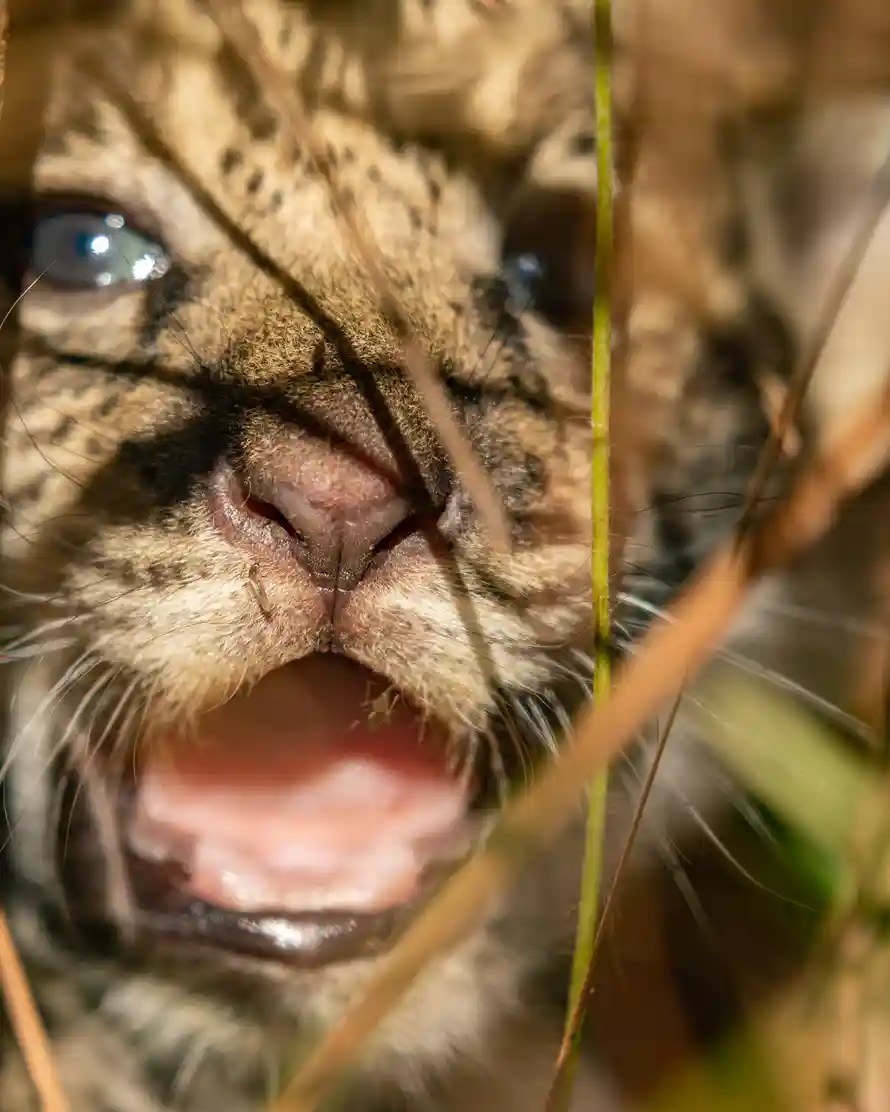
El Impenetrable national park, home to thousands of charismatic plants, flowers and animals, including jaguars.

How to rewild a country: the story of Argentina

It began with a philanthropic couple buying a swamp but has become one of the world’s boldest experiments in restoring degraded habitats, bringing wildlife and landscapes back from the brink

Chapter one

The return of the jaguar

It took about three seconds for piranhas to devour part of her left foot, biologist Deborah Abregü recalls, as we sit waiting for pizzas to cook on an open fire in Argentina’s El Impenetrable national park. Continue reading

Friday Feel-good Photos

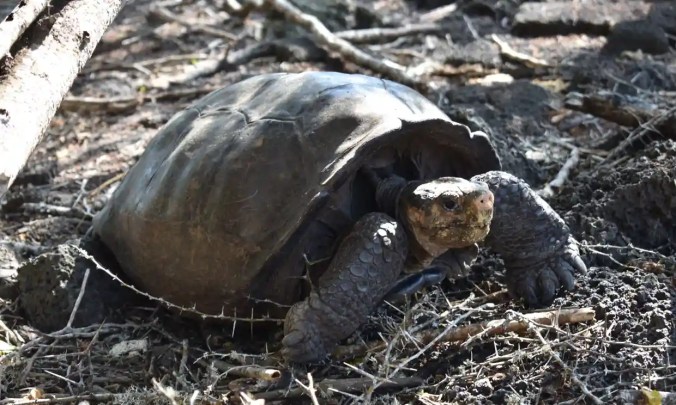
Scientists named the giant tortoise Fernanda, after the Fernandina Island, a largely unexplored active volcano in the western Galápagos archipelago that she calls home. Photograph: Lucas Bustamante/PA

Every now and then it is time for nature photos. First, above, is from a story that surprises, from a place we love:

‘Fantastic giant tortoise’ species thought extinct for 100 years found alive

Identification of Galápagos tortoise celebrated by scientists as a big deal for island’s biodiversity

And then there are photos unconnected to any news stories, scientific or otherwise, submitted for us to enjoy by people from around the world:

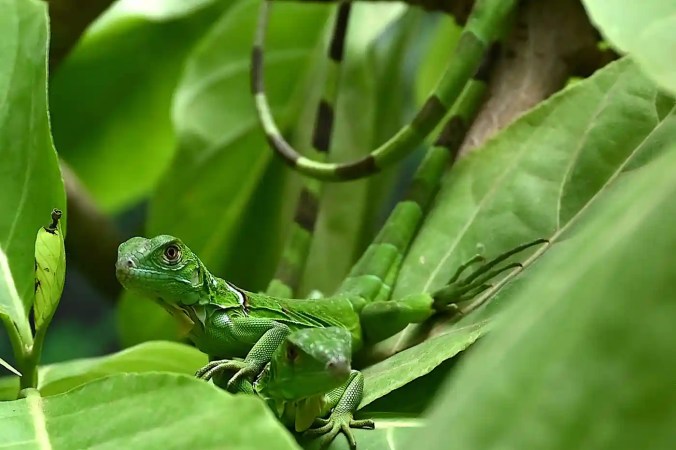
A newly hatched green iguana rests on foliage in a terrarium at the Chennai Snake Park in Chennai, India.  Photograph: Arun Sankar/AFP/Getty Images

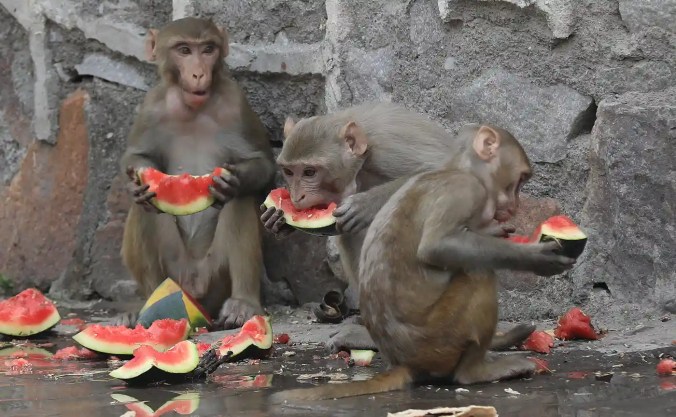
Two are from India, our home for seven years. Monkey business was a constant theme.

Monkeys eat watermelons during the heatwave in New Delhi, India. Photograph: Rajat Gupta/EPA

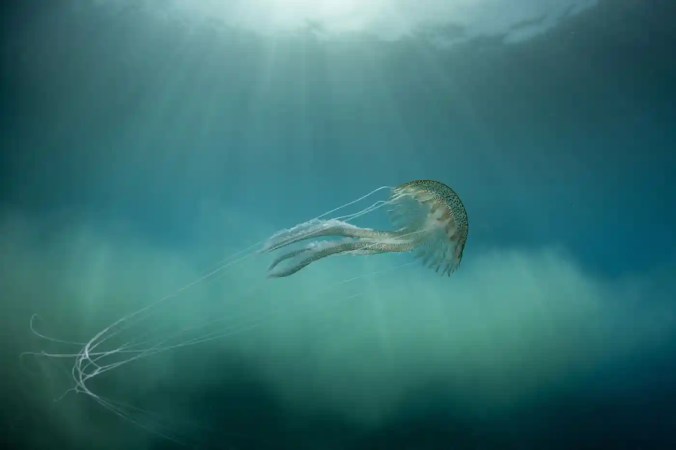
Another from a place whose name has lots of meaning for us:

A jellyfish swims off the island of Ithaca, Greece
Photograph: Cor Kuyvenhoven/Ghost Diving/Reuters

See all the other photos here.

Orchidelirium Anew

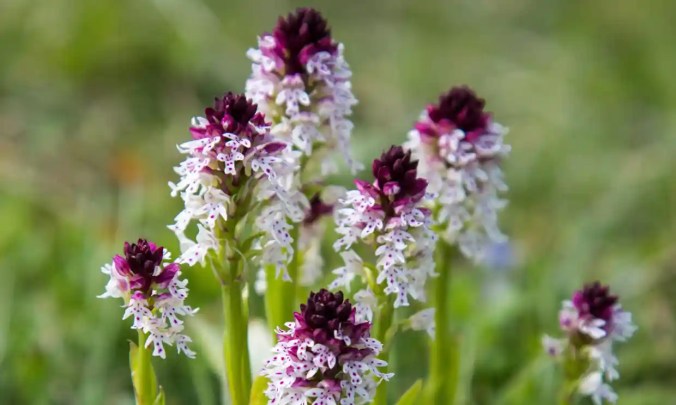
Burnt tip orchids. At least 10 vanished from a national nature reserve at Mount Caburn, East Sussex. Photograph: Katewarn Images/Alamy

Susan Orlean brought orchidelirium to our attention in 1999, shining a light on how and why these flowers inspire lots of good, and plenty of bad behavior. Orchids have been abundant in our pages over the years for various reasons, most recently due to a show; today due to criminal enterprise:

Spate of orchid thefts in England puts rare species at risk

Experts believe plants in Sussex and Kent were ‘stolen to order’

Hardy Orchid Society Replying to @HardyOrchidSoc This is what you should have seen. If you have any information that can help in the investigation please contact @kentpolice @BBCNews

A spate of thefts of rare orchids from sites in southern England has concerned scientists, who say endangered species may be at risk.

Orchid experts believe that the plants, from locations including in Sussex and Kent, may have been “stolen to order”.

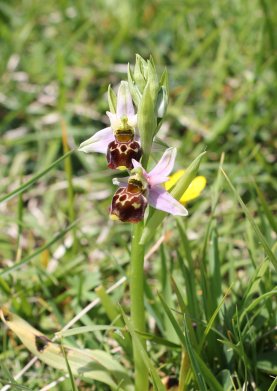
Conservationists at the Sussex Wildlife Trust were dismayed last week to hear of at least 10 burnt-tip orchids missing from a national nature reserve at Mount Caburn, while in Kent the Hardy Orchid Society reported that 30 late spider orchids had been taken from a site in Folkestone.

Neil Evans, of the Hardy Orchid Society, said: “The theft represents a major loss to the population. They are only found in this country in a few sites in Kent.” Continue reading

More On Seed Banks

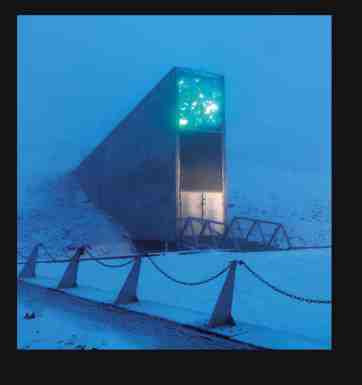
We have featured these banks before, but they are worthy of a more detailed inside look.

So, thanks to by Salomé Gómez-Upegui, Rita Liu and the Guardian. Their article, Seed banks: the last line of defense against a threatening global food crisis is full of images and written descriptions that put these banks in better perspective:

As climate breakdown and worldwide conflict continue to place the food system at risk, seed banks from the Arctic to Lebanon try to safeguard

As the risks from the climate crisis and global conflict increase, seed banks are increasingly considered a priceless resource that could one day prevent a worldwide food crisis. Continue reading