Petrostate Is A Choice

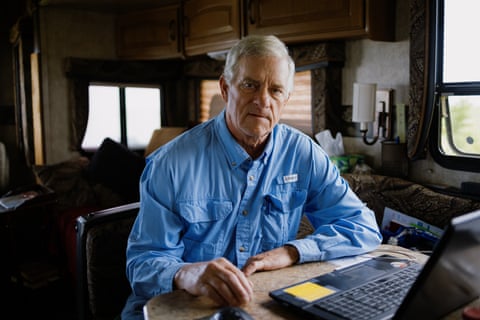
A middle-aged man in a blue button-up shirt sits in front of a laptop.

John Allaire, a former oil industry worker, has turned his efforts to blocking LNG plants from being built directly next to his camper home in Cameron parish.

Some states are moving forward with new technologies leading to a cleaner energy future. We respect John Allaire’s work to protect his state from leaning in to dirty energy, reminding us of the choice we all have to just watch others make decisions affecting where you live, or to do something:

‘This used to be a beautiful place’: how the US became the world’s biggest fossil fuel state

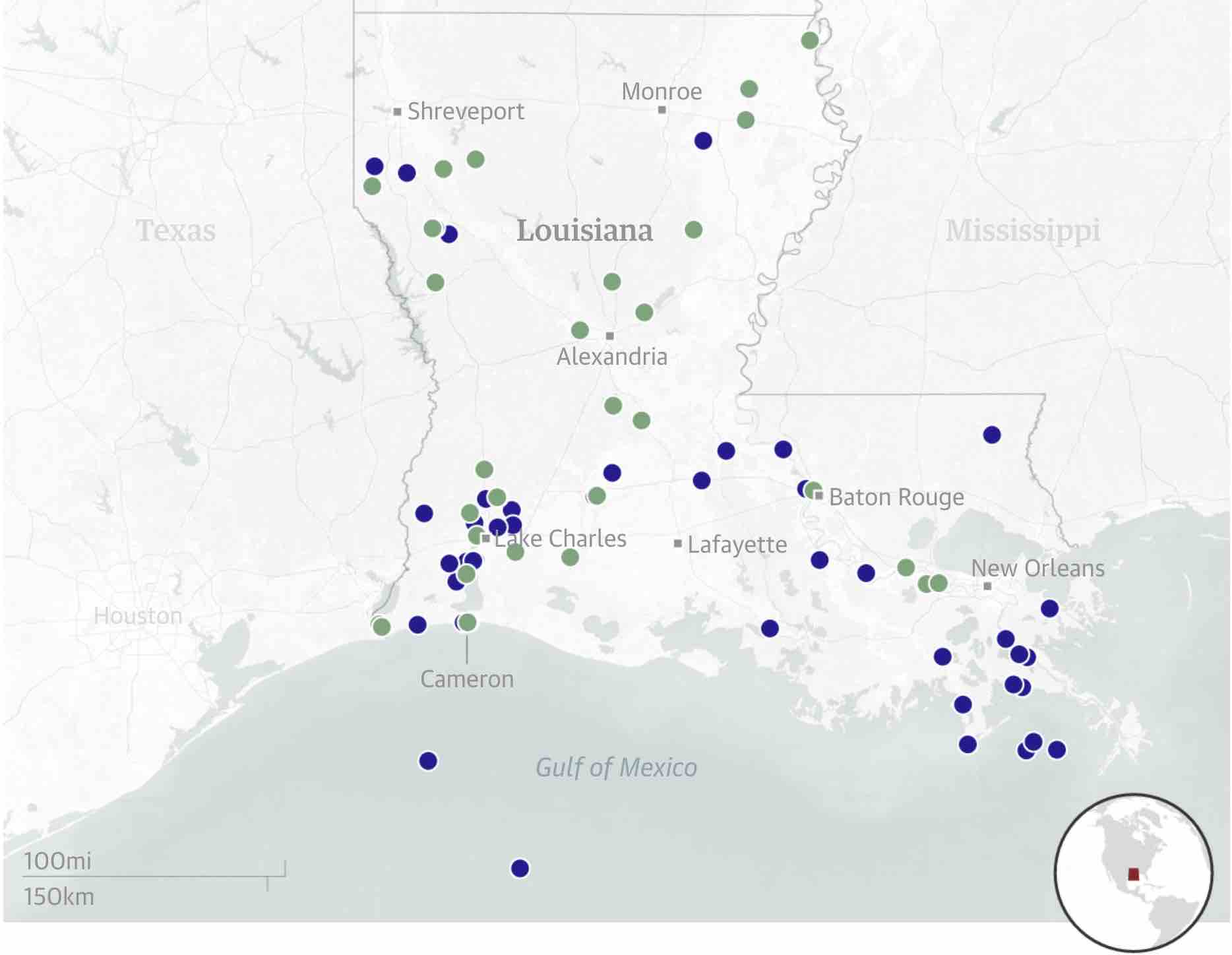
Guardian graphic. Sources: Oil & Gas Watch. Note: Map includes oil, gas and liquified natural gas projects. Those classified as ‘Announced / underway’ also include projects with statuses of ‘Under construction’, ‘Pre-construction’, ‘Commissioning’ and ‘On hold’.

No country has ever in history produced as much oil and gas as the US does now and Louisiana is ground zero

To witness how the United States has become the world’s unchallenged oil and gas behemoth is to contemplate the scene from John Allaire’s home, situated on a small spit of coastal land on the fraying, pancake-flat western flank of Louisiana.

Allaire’s looming neighbor, barely a mile east across a ship channel that has been pushed into the Gulf of Mexico, is a hulking liquified natural gas (or LNG) plant, served by leviathan ships shuttling its chilled cargo overseas. Continue reading
Big Buyer Power & Plastic Reduction Potential

Two stainless steel cylindrical containers hold a few dozen disposable forks, knives and drinking straws.

The goal of the administration’s plan is to reduce demand for plastics and encourage a market for reusable or compostable alternatives. Eric Baradat/Agence France-Presse — Getty Images

We celebrate when individuals, or groups, do things they were not required to do when those things are in the common interest. Some things require rules, and rules also require imagination and courage to be effective. This is welcome news at the intersection of entrepreneurial conservation and rules set by those in a position to make them work:

The White House Has a Plan to Slash Plastic Use in the U.S.

The government said it would phase out its purchases of single-use plastics, a significant step because it is the biggest buyer of consumer goods in the world.

Calling plastic pollution one of the world’s most pressing environmental problems, the Biden administration on Friday said that the federal government, the biggest buyer of consumer goods in the world, would phase out purchases of single-use plastics. Continue reading

USA Environmental Policy Opinion Landscape

An illustration showing a corn field, a wind turbine and an electric car on top of a solar farmIt is political season, which can be overwhelming. But it has moments of inspiration. Karin Kirk at Yale Climate Connections summarizes the landscape of opinion on key environmental issues:

Six incredibly popular climate policies

The majority of registered U.S. voters support electrification and renewable energy.

An infographic showing strong support for climate-pollution reducing policies

A strong majority of registered voters support certain policies aimed at tackling climate change, according to recent research by the Yale Program on Climate Change Communication (the publisher of this site) and the Center for Climate Change Communication at George Mason University.

Here’s a summary of these results. Continue reading

Fungi & Brownfield Remediation

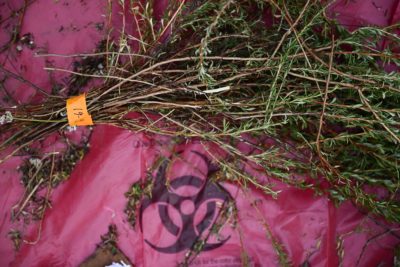
Researcher Danielle Stevenson digs up California buckwheat grown at a brownfield site in Los Angeles.

Researcher Danielle Stevenson digs up California buckwheat grown at a brownfield site in Los Angeles. PATRICK T. FALLON / AFP VIA GETTY IMAGES

Corporate irresponsibility abounds, so brownfield sites are abundant. And fungi sometimes offer relevant remediation options. Thanks to Richard Schiffman and Yale e360 for this interview on a topic we have cared about since launching this platform, and which we believe will be of increasing importance in our future:

Turning Brownfields to Blooming Meadows, With the Help of Fungi

California buckwheat that has absorbed lead at a contaminated site in Los Angeles.

California buckwheat that has absorbed lead at a contaminated site in Los Angeles. PATRICK T. FALLON / AFP VIA GETTY IMAGES

Toxicologist Danielle Stevenson cleans up carbon-based pollutants and heavy metals from contaminated sites using fungi and plants. She’s also training environmental justice and tribal communities in using these methods so they can remediate toxic sites on their own.

The United States is dotted with up to a million brownfields — industrial and commercial properties polluted with hazardous substances. Continue reading
Energy Observer In New York

Illustration by João Fazenda

Our thanks to Adam Iscoe, writing in the New Yorker, for this:

An Around-the-World Eco-Voyage Makes a Pit Stop Near Wall Street

Energy Observer, a ship equipped with solar panels and a hydrogen fuel cell, has spent the past seven years circumnavigating the globe, powered by sun, water, and salads.

One phrase that describes New York’s waterways is “diesel-powered”: supersized container ships, megayachts, oil tankers, garbage barges. But not every ship that comes to town is on a Greenpeace watch list; there are also schooners, plus the odd outrigger canoe. And recently a hundred-foot-long former racing catamaran from France, which had been retrofitted with solar panels and a hydrogen fuel cell, docked near Wall Street. Continue reading
Just Stop Oil & Alternative Approaches

A photo of two protesters sitting in front of Stonehenge, which has orange spray paint on it

Just Stop Oil via AP

On this platform dedicated to environmental and conservation topics, purposeful stone alteration has appeared in our pages exactly once before. Environmental vandalism, likewise. I appreciate this essay by Tyler Austin Harper, an assistant professor of environmental studies at Bates College and a contributing writer at The Atlantic, about a recent act of environmental vandalism:

Maybe Don’t Spray-Paint Stonehenge

Climate protests should be pro-humanity.

They run toward Stonehenge in white shirts. just stop oil is emblazoned on the front, marking them as emissaries of a British climate-activism group. The pair—one of them young, the other older—carry twin orange canisters that emit a cloud of what looks like colored smoke (we later learn it’s dyed corn flour). Continue reading
The Atlantic Editor’s Note, July/August 2024

Henry David Thoreau’s grave, Concord, Massachusetts (Jeffrey Goldberg)

Jeffrey Goldberg has not appeared in our pages directly before, but his work has had a profound impact on how we see the world. His editorship of The Atlantic, starting in 2016, overlaps with an increase in that magazine’s coverage of climate change in ways that we have found useful. His introduction to the summer issue of the magazine is a fitting example of his commitment to the topic:

In Wildness Is the Preservation of the World

Returning the planet to some sort of climate equilibrium is a universal interest.

Loyal readers of this magazine know that we are preoccupied with matters of climate change, and that we worry about the future of our home planet. I appreciate (I really do) Elon Musk’s notion that humans, as a species, ought to pursue an extraplanetary solution to our environmental crisis, but I believe in exploration for exploration’s sake, not as a pathway to a time share on Mars. Continue reading

Conversation With An Optimistic Scientist

the american atmospheric chemist professor susan solomon

Susan Solomon: ‘Frankly, I worry about climate scientists being encouraged to take a particular stance.’ Photograph: Justin Knight

Killian Fox (long time no see!) offers this wonderful conversation with an optimist who knows the science:

Climate scientist Susan Solomon: ‘Let’s not give up now – we’re right on the cusp of success’

The US atmospheric chemist on why she doesn’t share the pessimism of most climate scientists, fixing the ozone layer, and why Jacques Cousteau is her hero

Susan Solomon was born and raised in Chicago and got her PhD in atmospheric chemistry from the University of California, Berkeley. She is known for her work in the 1980s which established how the Earth’s protective ozone layer was being depleted by human-made chemicals. Continue reading
More Youth Demanding Liveable Futures

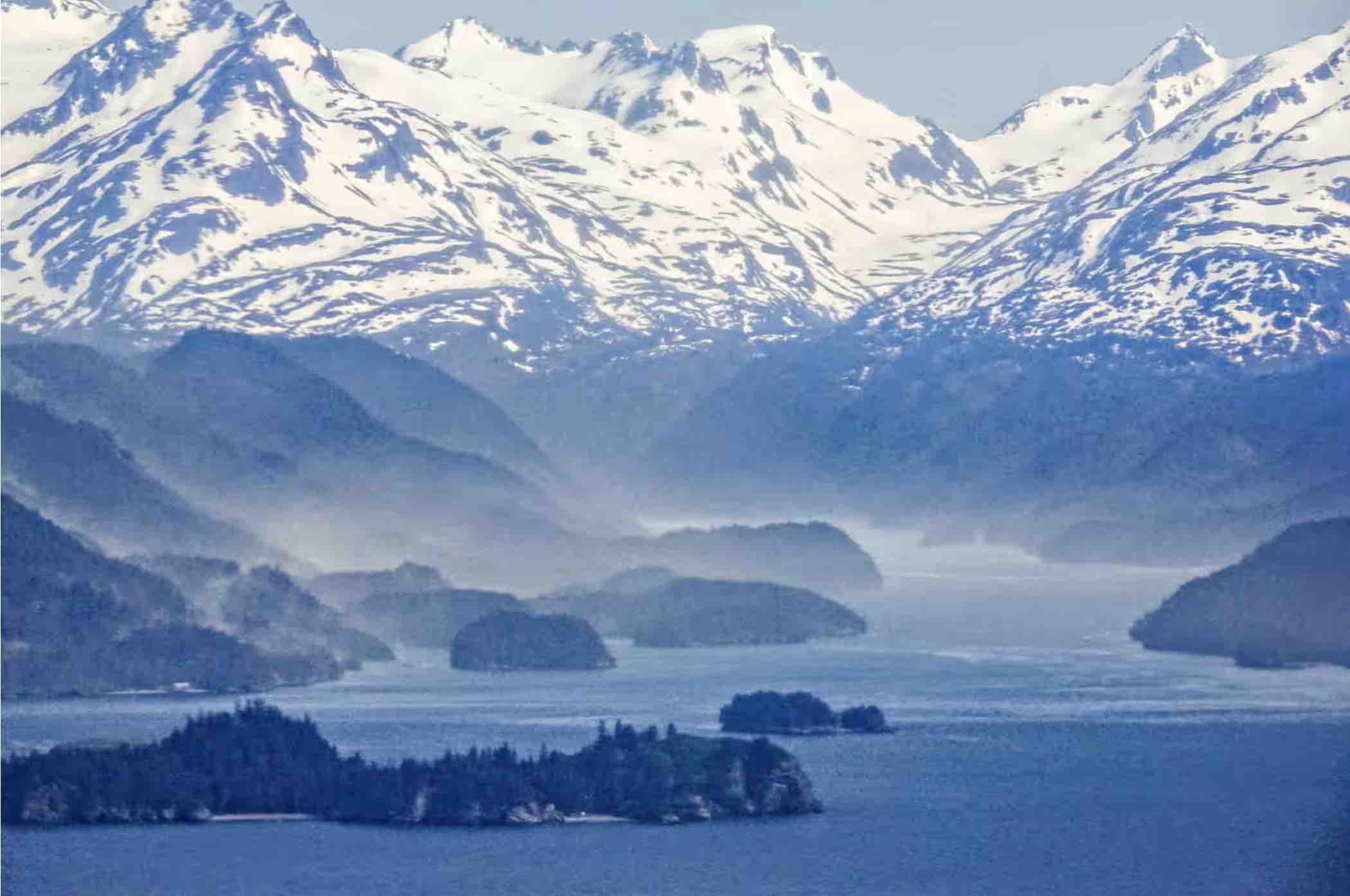
portion of the Kenai Peninsula in Alaska in 2023. The project would involve construction of a liquefaction plant to prepare the gas for export to Asia. Photograph: Richard Ellis/Alamy

Our appreciation to Dharna Noor for writing a clear story about this new legal initiative, and to the Guardian for publishing it. What started in Montana, a naturally well-endowed state with a mixed environmental record, now continues in Alaska, the biggest frontier of the American West. Our thanks to the younger generation for taking up the fight creatively:

Young Alaskans sue state over fossil fuel project they claim violates their rights

Plaintiffs claim $38.7bn gas export project, which would triple state’s greenhouse gas emissions, infringes constitutional rights

Eight young people are suing the government of Alaska – the nation’s fastest-warming state – claiming a major new fossil fuel project violates their state constitutional rights. Continue reading

Honeybee Facts & Figures

Illustration by Matteo Giuseppe Pani. Source: Getty.

We have done our part to share, perhaps erroneously, that honeybees are in trouble. We hope we have been wrong:

The Great Honeybee Fallacy

For years, people have understood them to be at imminent risk of extinction, despite evidence to the contrary. Why?

Everyone, for so long, has been worried about the honeybees. Continue reading

Not The End Of The World

This book came to my attention through an episode of Ezra Klein‘s podcast:

Cows Are Just an Environmental Disaster

The environmental data scientist Hannah Ritchie argues that climate technology is increasingly catching up to the world’s enormous need for clean energy and with a few changes, a more sustainable future is in sight.

How Much Communication Between Trees?

Baobab trees in Madagascar.
Photograph: Dave Carr/Getty Images

Ancient oak trees in Glastonbury, Somerset. Photograph: Eddie Linssen/Alamy

I acknowledge my enthusiasm for the idea that there is something going on between trees. I always want to hear more about it. Those who know me well joke that I am anti-woo-woo; but this one topic betrays a soft spot for the as-yet not fully explained. So I am thankful to Daniel Immerwahr for reminding me of the boundaries of what we know (so far):

A bristlecone pine tree, one of the oldest living organisms on Earth. Photograph: Piriya Photography/Getty Images

Mother trees and socialist forests: is the ‘wood-wide web’ a fantasy?

In the past 10 years the idea that trees communicate with and look after each other has gained widespread currency. But have these claims outstripped the evidence?

There are a lot of humans. Teeming is perhaps an unkind word, but when 8 billion people cram themselves on to a planet that, three centuries before, held less than a tenth of that number, it seems apt. Eight billion hot-breathed individuals, downloading apps and piling into buses and shoving their plasticky waste into bins – it is a stupefying and occasionally sickening thought. Continue reading

Illegal Miners Face The Fire

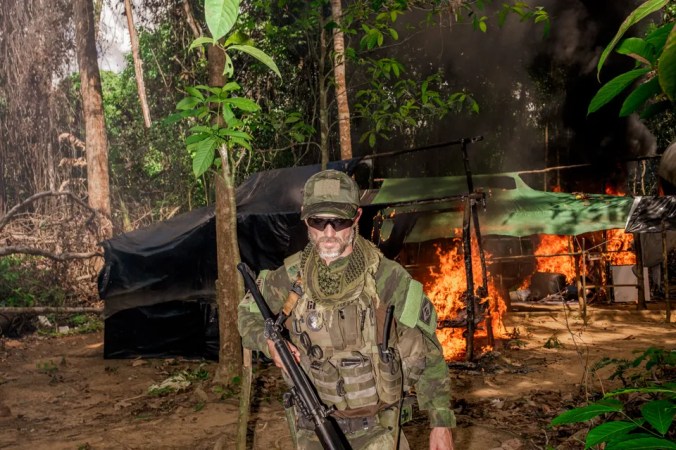
The G.E.F. burns mining camps as part of a long-running counteroffensive against environmental depredation. “Wherever they go, the miners destroy everything,” Felipe Finger, the unit’s leader, says. Photographs by Tommaso Protti for The New Yorker

Thanks to Jon Lee Anderson, as always, for his reporting from the danger zone that Brazil’s Amazon forest too often is:

The Brazilian Special-Forces Unit Fighting to Save the Amazon

As miners ravage Yanomami lands, combat-trained environmentalists work to root them out.

Roberto Cabral, a founder of the G.E.F., attends to a puppy discovered in a camp after miners fled.

In a clearing in the Brazilian Amazon, I stood with a group of armed men, discussing a viral TikTok video. The video, shot from a helicopter full of illegal miners, showed a vast stretch of rain forest, with dense foliage extending in all directions. The only sign of human habitation was below: a dirt circle surrounded by fanlike lean-tos made of wooden poles and palm fronds. It was a maloca, a traditional compound of the Yanomami, an Indigenous group that inhabits a remote territory in the rain forest of northern Brazil. Continue reading

Map For Planting & For Not Planting Trees

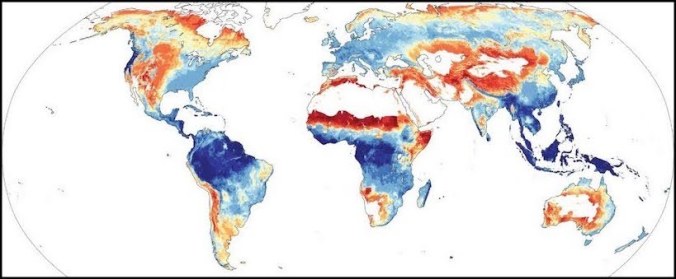
Regions where tree planting would curb warming on balance are shaded in blue, while regions where tree planting would intensify warming are shaded in red. HASLER, ET AL.

As we prepare to plant trees when the rainy season starts in a few weeks, a story like this one gives pause. If you are capable of reading and understanding the article summarized below, congratulations; meanwhile, thanks to Yale e360 for interpretation that allows the lay reader to follow along:

This Map Shows Where Planting Trees Would Make Climate Change Worse

Though oft touted as a fix for climate change, planting trees could, in some regions, make warming more severe, a new study finds. Continue reading

A Century’s Evidence On The Benefits Of Planting Trees

People work to reforest Allegheny National Forest in Pennsylvania circa 1934.
Photograph: Universal History Archive/Universal Images Group via Getty Images

Planting trees, we have noted, is smart policy.  Some campaigns may have stretched beyond scientific evidence, but science has given us plenty to go on:

Very cool: trees stalling effects of global heating in eastern US, study finds

Vast reforestation a major reason for ‘warming hole’ across parts of US where temperatures have flatlined or cooled

Civilian Conservation Corps workers plant 15,000,000 trees across the wastelands of southern Mississippi on 11 April 1940. They are part of the United Forest Service which will re-establish forests destroyed by logging and lumbering operations decades ago. Photograph: AP

Trees provide innumerable benefits to the world, from food to shelter to oxygen, but researchers have now found their dramatic rebound in the eastern US has delivered a further, stunning feat – the curtailing of the soaring temperatures caused by the climate crisis.

While the US, like the rest of the world, has heated up since industrial times due to the burning of fossil fuels, scientists have long been puzzled by a so-called “warming hole” over parts of the US south-east where temperatures have flatlined, or even cooled, despite the unmistakable broader warming trend. Continue reading

Investing Patagonia’s Proceeds In Conservation

Greg Curtis, the former deputy general counsel of Patagonia, is responsible for giving away huge sums of money to causes that are aligned with Patagonia’s history of environmental activism. Adam Amengual for The New York Times

When news broke about the company’s future, we were in awe; since then we heard little so this is a welcome update:

Patagonia’s Profits Are Funding Conservation — and Politics

$71 million of the clothing company’s earnings have been used since September 2022 to fund wildlife restoration, dam removal and Democratic groups.

A little more than $3 million to block a proposed mine in Alaska. Another $3 million to conserve land in Chile and Argentina. And $1 million to help elect Democrats around the country, including $200,000 to a super PAC this month.

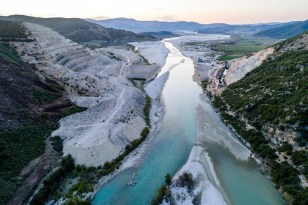
The site of the Kalivac Dam on the Vjosa River in Albania, where Holdfast has funded a major conservation project. Andrew Burr/Patagonia

Patagonia, the outdoor apparel brand, is funneling its profits to an array of groups working on everything from dam removal to voter registration.

In total, a network of nonprofit organizations linked to the company has distributed more than $71 million since September 2022, according to publicly available tax filings and internal documents reviewed by The Times. Continue reading

Dismantling Regulation

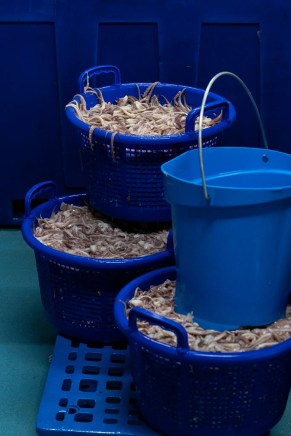
Bins of squid waiting to be packaged in Cape May. In a good week, Mr. Bright said his boats can bring in $100,000 worth of herring. Rachel Wisniewski for The New York Times

You can read the story or click the photo of William Bright below right to hear an explanation of how his case may be the end to regulation as we know it.

A Fight Over a Fishing Regulation Could Help Tear Down the Administrative State

The Supreme Court will hear arguments on Wednesday over whether to overturn a key precedent on the power of executive agencies.

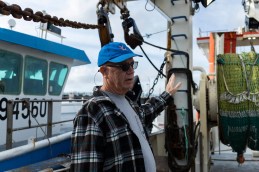
On a blustery fall morning in southern New Jersey, the weather was too rough for the fishing boats at the center of a momentous Supreme Court case to set out to sea.

William Bright, a fisherman in New Jersey. He is the lead plaintiff in a case that could undermine the power of executive agencies, a long-sought goal of the conservative legal movement. William Bright, a fisherman in New Jersey. Photo: Rachel Wisniewski for The New York Times

A herring fisherman named Bill Bright talked about the case, which will be argued on Wednesday and could both lift what he said was an onerous fishing regulation and wipe out the most important precedent on the power of executive agencies, a long-sought goal of the conservative legal movement.

As workers cleaned squid and the salt air whipped over the docks, Mr. Bright, who has been fishing for 40 years and whose family-owned company is one of the plaintiffs, said he recognized the impact the case could have. Continue reading

Rishi’s Wrong, Skidmore’s Right

Chris Skidmore said he could ‘no longer condone nor continue to support a government that is committed to a course of action that I know is wrong’. Photograph: Chris McAndrew/UK Parliament/PA

We rarely applaud those on the right side of the political spectrum when it comes to environmental issues. Most have been on the wrong side of history with regard to climate change. When one stands up and challenges the status quo, applause applause:

Chris Skidmore resigns Conservative whip over Sunak’s oil and gas licence plan

Former minister also resigns as an MP, which will trigger byelection in his Kingswood constituency

A former Conservative minister has announced he is resigning as an MP in protest at the party’s dash for oil and gas, setting up an awkward vote for the prime minister on the issue on Monday and an even more difficult byelection within weeks. Continue reading

Give Earth A Chance, & Other EcoPosters

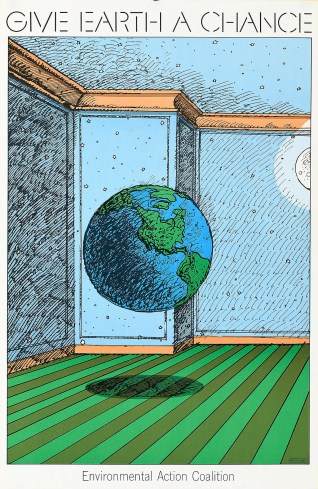
A poster from 1970 by Milton Glaser. via Poster House

If you happen to be in New York City and enjoy graphic design related to conservation you might enjoy this:

Told Ya So: The Prescient Posters of the Environmental Movement

Graphic artists have been helping call attention to climate change for decades, and a new exhibition charts the evolution of their pleas.

Last year was the warmest in recorded history. The graphic artists of the environmental movement tried to warn us. Their posters aimed to scare people straight with pictures of ecological ruin, or glorified nature, clean air and water, sunshine and verdure. Some offered earworm-y slogans and haunting visuals. Whatever their approach — bright, witty, somber, blunt, even sexy — they sought an image, a phrase, that could change enough minds to literally save the world. Continue reading

Ted Greene’s Treetime

Thanks to the Guardian for bringing the above book to our attention:

Ted Green, a conservation adviser to the crown estate at Windsor, has a provocative take on our ‘living heritage’

Ted Green is a rebel. He calls sheep “land maggots”. A horse-riding centre is “a dog-food complex”. And the ancient tree expert’s new book includes a photo of him sticking up two fingers at a portrait of Margaret Thatcher. Continue reading