Cabo Pulmo & Octavio Aburto’s Masterful Storytelling

David and Goliath

The more we look around, the more we find that Mr. Aburto is telling the Cabo Pulmo story as well as anyone:

The People (Past and Present)

What make Cabo Pulmo a success story is its people: when faced with the dilemma to either continue fishing or to turn towards conservative goals, the community decided they needed to change. Continue reading

Cabo Pulmo, Community & Conservation

Octavio Aburto keeps coming to our attention, as we read more about Cabo Pulmo, and today we discovered that he has provided several excellent short videos on Vimeo:

A thriving undersea wildlife park tucked away near the southern tip of Mexico’s Baja peninsula has proven to be the world’s most robust marine reserve in the world, according to a new study led by researchers at Scripps Institution of Oceanography at UC San Diego. Results of a 10-year analysis of Cabo Pulmo National Park (CPNP), published in the Public Library of Science (PLoS) ONE journal, revealed that the total amount of fish in the reserve ecosystem (the “biomass”) boomed more than 460 percent from 1999 to 2009. Citizens living around Cabo Pulmo, previously depleted by fishing, established the park in 1995 and have strictly enforced its “no take” restrictions.

Sardine Disco Balls, Or Cabo Pulmo

15tb-sardines-superjumbo

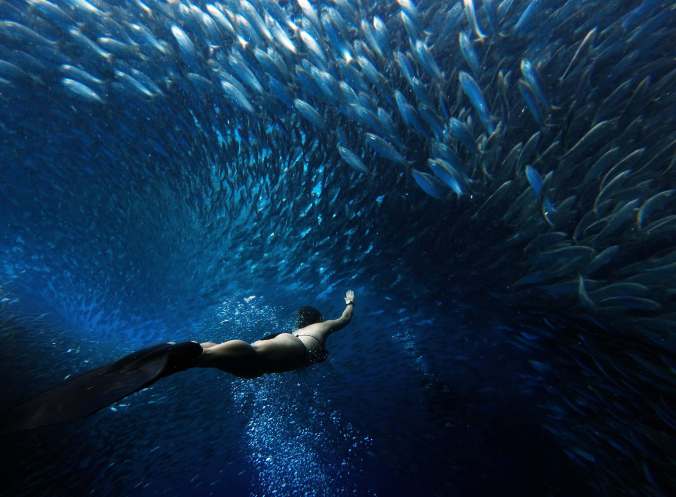
A free diver swooping into a sardine ball. Credit Keith Sepe

Joanna Klein’s story in the Science section of the New York Times this week, titled Swimming With the Mysterious Sardine Disco Balls of the Philippines, has had me thinking in recent days about the Gulf of California, and specifically about Villa del Faro. If you have reason to be in the Philippines, click the image above to get a quick view of what may be in store for a diver in certain waters.

But otherwise, I will riff off that photo in the direction of Baja California Sur. The intensity of those sardine schools are comparable to the biodiversity in the waters of Cabo Pulmo. Continue reading

Whale Songs

As whale season draws near in Baja California Sur, our ears become attuned to this type of singing.

Thanks to TED-Ed and Conservation Biologist Stephanie Sardelis and her talented team for so beautifully answering an age-old question.

Lessons From Ningaloo Reef

WOPA100627_D105

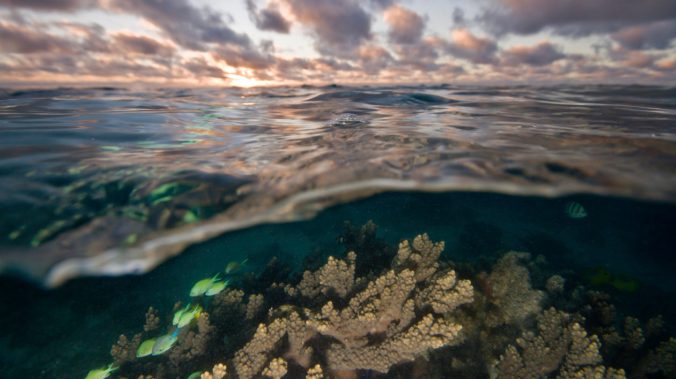
Acropora coral and blue green chomis on Ningaloo Reef in Western Australia. Photo © Steve Lindfield

Thanks to James Fitzsimons and The Nature Conservancy’s Australia program for this one:

Big, Bold & Blue: Lessons from Australia’s Marine Protected Areas

BY JUSTINE E. HAUSHEER

Australia has one the largest systems of marine protected areas in the world, from the coral-covered Great Barrier Reef to the sub-Antarctic Macquarie Island. Now, a new book details the lessons learned by Australian scientists, policymakers, and communities during more than 130 years of marine conservation.

The book — Big, Bold & Blue: Lessons from Australia’s Marine Protected Areas — gathers lessons learned from academia, government, NGOs, indigenous communities, and the fishing sector. Continue reading

The Science Of Marine Conservation

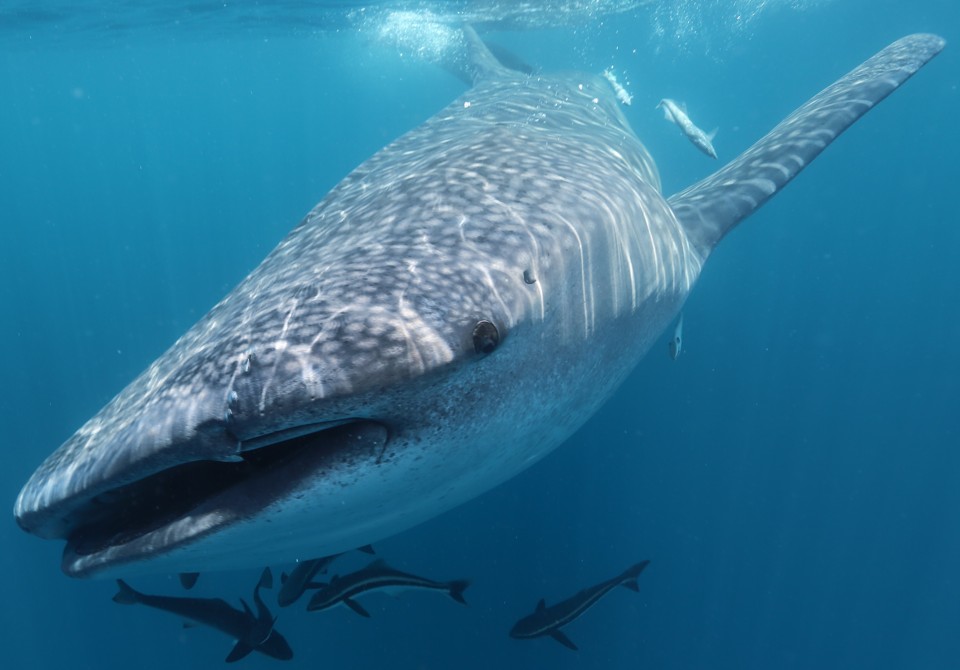
A whale shark in the Persian Gulf. Steffen Sanvig Bach

This is the future of marine ecosystem science (thanks as always to Ed Yong and the Atlantic’s ongoing  commitment to compelling coverage of environmental issues):

The World’s Biggest Fish in a Bucket of Water

Scientists used DNA floating in just 30 liters of seawater to count the endangered whale shark across two oceans.

ED YONG

If you lean over the side of a boat and scoop up some water with a jug, you have just taken a census of the ocean. That water contains traces of the animals that swim below your boat—flecks of skin and scales, fragments of mucus and waste, tiny cells released from their bodies. All of these specks contain DNA. And by sequencing that DNA gathered from the environment—which is known as environmental DNA, or eDNA—scientists can work out exactly what’s living in a patch of water, without ever having to find, spot, or identify a single creature.

And that helps, even when the creature in question is 18 meters long. Continue reading

Five Years Of Protection From Drilling

web_eho_6328-edit

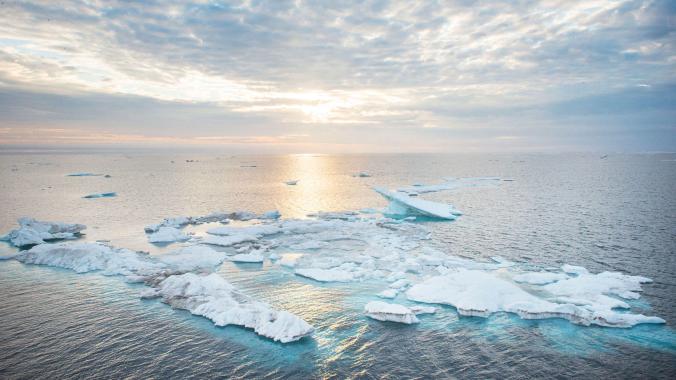
Melting sea ice in the Chukchi Sea, one of the areas included in the ban. Photo: Esther Horvath

Thanks to Audubon Magazine for their coverage of this news:

U.S. Offshore Drilling Banned Along Arctic and Atlantic Coasts for Next Five Years

A new federal leasing plan released today outlines where energy companies can look for oil while protecting vital bird habitat.

by Martha Harbison

After months of deliberations, the Bureau of Ocean Management announced its final five-year plan for offshore energy-exploration leases today. In that plan, no drilling leases would be available in U.S.-held Arctic and Atlantic waters from 2017 to 2022, meaning that no new drilling could happen in those areas until at least 2022.  Continue reading

World’s Largest Marine Reserve, Another Accomplishment Of 2016

ap_16302025591684_custom-392a50abd26d8fdc885b7c2a23b34b542c8d806c-s1100-c85

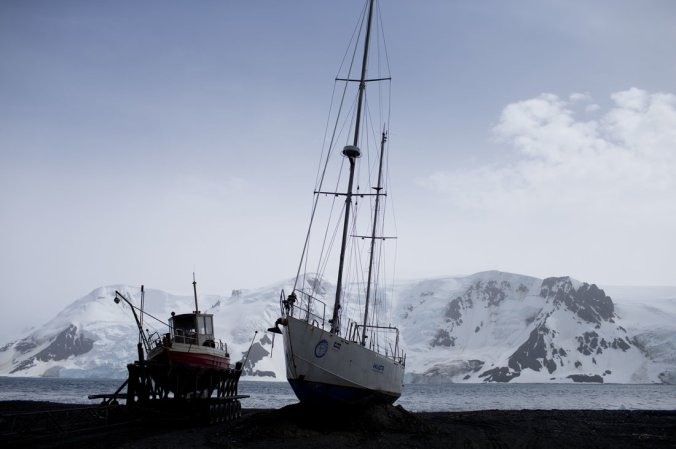
Boats sit on the beach at Bahia Almirantazgo in Antarctica. An agreement was reached on Friday to create the world’s largest marine protected area in the ocean next to the frozen continent. Natacha Pisarenko/AP

In an otherwise dismal year for the environment, we have tried to keep track of the few actions taken that are noteworthy for their scale and ambition. This week, and this month, are ending on a high note in that regard:

Nations Agree To Establish World’s Largest Marine Reserve In Antarctica

MERRIT KENNEDY

After years of negotiations, nations have reached an agreement to establish the world’s largest marine sanctuary in Antarctica’s Ross Sea.

Twenty-four countries and the European Union reached the unanimous deal at an international meeting of the Commission for the Conservation of Antarctic Marine Living Resources in Hobart, Australia on Friday. Continue reading

FishFace

tnc_17243496_preview_cropped-1260x708.jpg

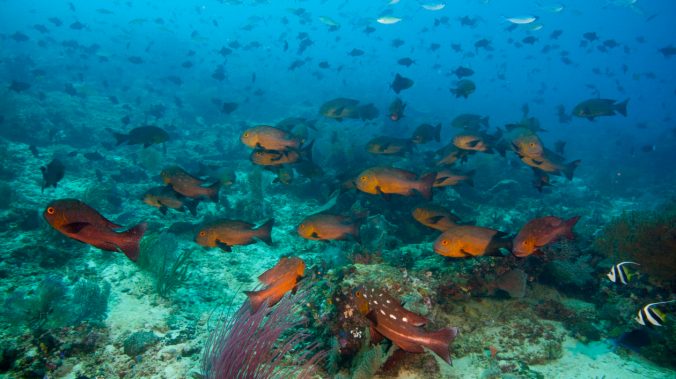
Midnight Snappers, Fusiliers, and Triggers school in deep water, photographed in the waters off Kofiau. Photo © Jeff Yonover

Nature Conservancy’s blog,

We Can Have Oceans Teeming with Fish with FishFace Technology

By Lisa Feldkamp

Traditional methods of gathering fisheries data can take as long as one or two years, costing time and money that many imperiled global fisheries don’t have.Enter FishFace, a new application under development by The Nature Conservancy in partnership with Refind Technologies. Similar to facial recognition software used to identify people, FishFace uses artificial intelligence to learn to recognize fish species in photographs. Continue reading

Conservation, Nature & Culture

09gero-master768

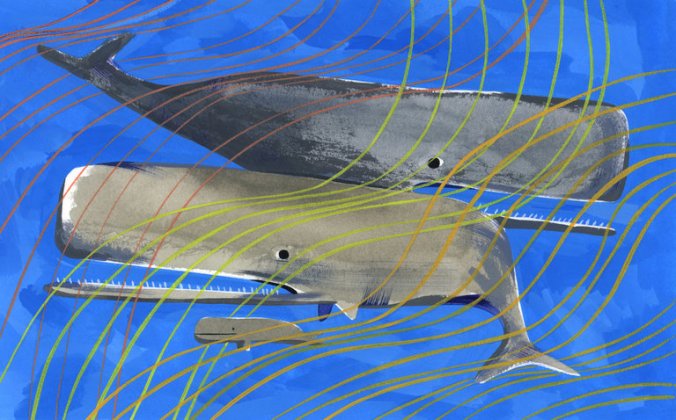
Credit Ping Zhu

A writer who captures the nuanced relationship between conservation of nature and culture has our attention:

The Lost Cultures of Whales

By

Aboard the Balaena, Caribbean — I am alone on deck, my headphones filled with the sounds of the deep ocean. I have been tracking the sperm whales since 4 a.m. Now the island of Dominica imposes its dark shape in front of the rising sun.

“We have whales!” I shout down to Hal Whitehead, who founded the Dominica Sperm Whale Project with me a decade ago. He puts the kettle on and asks who it is as he comes on deck. Continue reading

Underwater Pollination

seagrass_pollinator

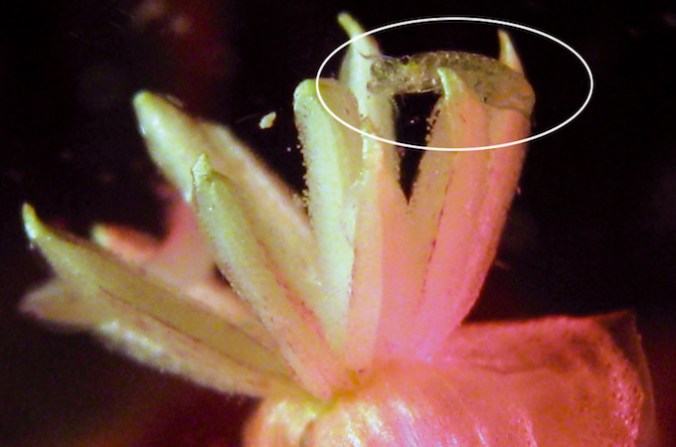
Image: Brigitta van Tussenbroek

We try to learn something new each day, and when we do, we pass it along here. Thanks to Conservation magazine for this one:

THE NEW UNDERWATER WORLD OF POLLINATION

Even at this relatively late stage in Earth’s exploration, it’s still possible to discover phenomena that are widespread, ecologically important, and—frankly—beautiful. Continue reading

If You Happen to Be In Gainsville

This slideshow requires JavaScript.

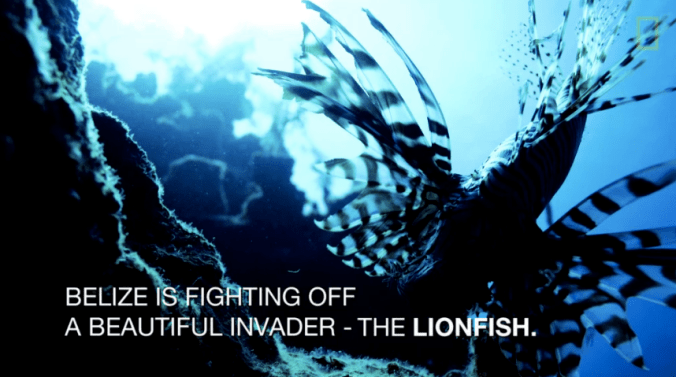
We’ve been posting on the environmental impact of the invasive lionfish ever since contributor Phil Karp took on the project of building a demand for the notoriously difficult to catch fish. Helping to build a market for the delicious meat and beautiful spines created income for local fishermen and their families in numerous areas of the Caribbean.

ReefSavers was created with all these goals in mind. Founded to gain control of the Lionfish population in the southeast US and Caribbean, they work toward both harvesting and developing a stable market in which supply can always meet the current demands. By unifying

the organizations working to control the Lionfish outbreak into a cohesive market place. Channeling all harvested Lionfish through a centralized market place will allow for a more stabilized fishery. With the creation of the Lionfish Market Place organizations will have a centralized place to sell their catch and buyers will not have to worry about limited supplies. By opening the Lionfish Market buyers for the whole state of Florida will be connected with a more constant supply, in turn this access will help to grow the industry and put revenue into the hands of the people trying to fight the outbreak.

The ReefSavers team came up with innovative strategies to help with supply and demand logistics, fanning the market for the fish for both chefs and more importantly, consumers. Welcome the Lionfish Invasion Tour in Gainsville, Florida! Continue reading

Lionfish Tales

This is issue has been on our radar for some time, in most part due to contributor Phil Karp‘s posts on his work with groups in Belize and other parts of the Caribbean focused on this goal. The concept of “If You Can’t Beat ’em, Wear ’em” carries a powerful message of innovative practices to manage the invasive species that’s causing havoc in the southern Atlantic and Caribbean waters. Continue reading

Seagrass In The Food Chain

090616_Daru_0005.jpg

Harvard University Post-Doctoral Fellow in Organismic and Evolutionary Biology, Barnabas Daru, researches seagrasses of the world. He is at Carson Beach in South Boston, where he found no seagrasses. Rose Lincoln/Harvard Staff Photographer

Postdoctoral researchers contribute to scientific knowledge akin, perhaps, to the way seagrass contributes to the robustness of a marine ecosystem’s biodiversity:

Strong case for seagrass

Researcher behind biodiversity analysis cites key role in food chain

By Alvin Powell, Harvard Staff Writer

new analysis of a key contributor to the marine food web has turned up a surprising twist: more unique species in cooler waters than in the tropics, a reversal of the situation on land.

The findings highlight the need to direct limited conservation dollars according to science, with a focus on places where biodiversity is most at risk, said Barnabas Daru, Harvard Herbaria Postdoctoral Fellow in Organismic and Evolutionary Biology, who performed the analysis on the world’s 70 species of seagrass.

Daru acknowledged that seagrass isn’t as exciting as sharks or tuna, or as marine mammals such as seals, dolphins, and manatees. But for anyone who cares about the health of marine animals, he said, the role of humble seagrass at the beginning of the marine food chain is key. Continue reading

Using Those Final Months Well

midwayatoll_wide-1f160673ec1ed0fd74e6f9d1873a19f4ecc530f8-s1100-c85

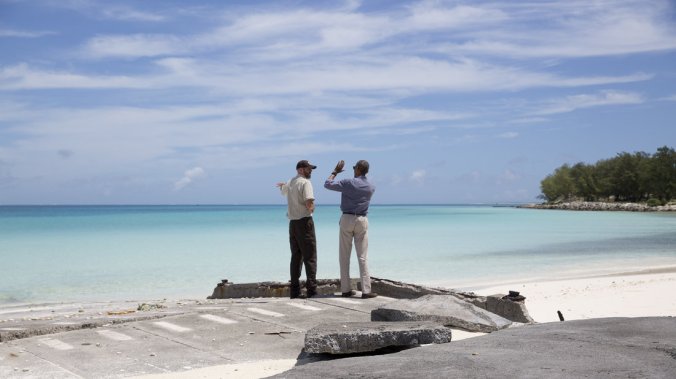
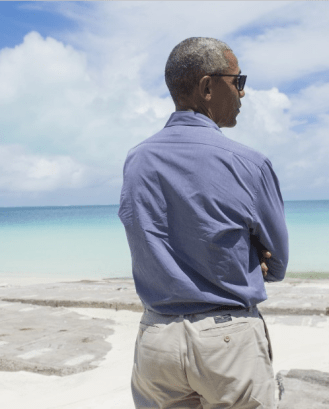
President Barack Obama on Midway Atoll in the Papahānaumokuākea Marine National Monument, Northwestern Hawaiian Islands, earlier this month with Marine National Monuments Superintendent Matt Brown. Obama expanded the monument using his authority under the 1906 Antiquities Act. Carolyn Kaster/AP

We are happy to see the Antiquities Act again proving so useful, so soon (the clock is ticking):

Obama To Designate First Marine National Monument In The Atlantic Ocean

During the Our Ocean conference later this morning in Washington, D.C., President Obama will establish the first national marine monument in the Atlantic Ocean.

The area of the Northeast Canyons and Seamounts Marine National Monument is the size of Connecticut and has been called an “underwater Yellowstone” and “a deep sea Serengeti.” Continue reading

From A Favorite Trouble-Maker

591.jpg

‘We see the effects of warming on land: the floods, the droughts, the refugees headed towards temporary safety.’ Photograph: Malcolm Francis/NIWA

Please click here so that credit goes to the source for this editorial by one of the thinkers we regularly turn to, one of our favorite sources of reminder to take action:

So, just as a refresher, it’s always good to remember that we live on an ocean planet. Most of the Earth’s surface is salt water, studded with the large islands we call continents.

It’s worth recalling this small fact – which can slip our minds, since we humans congregate on the patches of dry ground – because new data shows just how profoundly we’re messing with those seven seas. The International Union for the Conservation of Nature has published an extensive study concluding that the runaway heating of the oceans is “the greatest hidden challenge of our generation”. Continue reading

Lionfish Trap Tests in Pensacola Show Promise

Lionfish traps are currently being tested in the waters off of Pensacola.
Photo by Dr. Steve Gittings

There is no shortage of lionfish posts here, as a quick search of the site will show. Off the coast of Pensacola, Florida, we’re encouraged to hear that there is good news from the trapping scene – rather than speargun hunting, which has certain limits. Although we aren’t told how the tested traps avoid catching other fish than the target, it sounds like progress is being made. Jeremy Morrison reports:

Eighteen miles out into the Gulf of Mexico, lying in wait about a hundred feet deep, are a collection of contraptions that have Steve Gittings “pretty encouraged” and “really kinda jazzed.”

“I’m kinda pleasantly surprised about what we found in Pensacola,” said Gittings, science coordinator for the the National Oceanic and Atmospheric Administration National Marine Sanctuary.

Since July, Gittings and a his collaborators have been conducting tests on some prototypes of a lionfish trap he designed. In late August, the scientist wrote a report detailing what he considers to be the initial successes revealed during this summer’s testing.

Continue reading

VLMPAs Face Risks of Becoming Paper Parks

Image © CNN

President Obama at Midway Atoll. Image © CNN

Two definitions are needed here at the outset: VLMPAs are “very large marine protection areas” and “paper parks” is a phrase used by conservationists and researchers to convey the idea of parks designated by governments only on paper – that is, they don’t get appropriate funding or management to create actual conservation within park limits. Most paper parks are found in developing nations where politicians may have good intentions in setting aside land to protect, but then don’t have enough resources to enforce the rules adequately, or in worse-case scenarios turn a blind eye to extraction if it favors them. Last week I discussed a possible race for bigger parks, and both examples happened to be marine in nature. Two researchers have commented in the academic journal Marine Policy to warn against creating ever-larger marine parks in remote areas that might be hard to monitor, unless there’s commitment for real enforcement. John Vidal reports:

“It is not enough to simply cover the remotest parts of our oceans in notional ‘protection’ – we need to focus on seas closer to shore, where most of the fishing and drilling actually happens,” said Peter Jones, a marine researcher at University College London.

Co-author Elizabeth de Santo, an assistant professor at Franklin and Marshall College in Pennsylvania, added that the push for quantity over quality threatens to undermine sustainability.

Continue reading

Seaweed Farming to Start in Costa Rica

Red (despite the color) seaweed in spaghetti style. Photo © Ricardo Radulovich, UCR professor

A little less than a year ago, I read a very interesting article in The New Yorker about growing seaweed in Long Island Sound, off the shore of Connecticut, that held inspiring information on the environmental effects of farming the marine macroalgae: it absorbs excess nitrogen, phosphorus, and carbon dioxide from the ocean, all of which otherwise negatively affect the ecosystem’s health. Seaweed also can be a solid source of protein, vitamin B12, Omega 3 and 6 fatty acids, and fiber. So growing it is good for the oceans as well as our bodies.

Today, I was reminded about Dana Goodyear’s piece from last November as I read a headline on the University of Costa Rica’s webpage announcing that researchers from their School of Agricultural Engineering and Biosystems, after years of trial studies, will be promoting the growth of seaweed farming off of both coasts of Costa Rica, where they hope it will become a significant food source for the country. Continue reading

Russkaya Arktika National Park Expanded

Big sky can be seen above Tegetthoff Island.
Photograph by Cory Richards, National Geographic Creative

We have lots of land conservation news going on right now (just scroll down), which can only be a good thing, and is perfect timing given the US National Park Service centennial. Jocelyn will be posting a close-up feature of a park later today, but first I invite you to imagine a new arms race between Russia and the United States – not of weapons, but rather in the sphere of conservation through protected national park expansion. President Obama just quadrupled the area of marine national monument Papahānaumokuākea, and now Prime Minister Dmitry Medvedev of Russia expanded the island region of Russian Arctic National Park by over eighty percent. In this case, I say, the more friendly competition the better! Brian Howard reports on the Russian expansion:

Made up of more than 190 islands, Franz Josef Land is a mostly uninhabited area that is encased in sea ice for much of the year. Yet the rocky, glaciated islands are home to stunning biodiversity. The newly expanded park will protect habitat for such species as the Atlantic walrus, bowhead whale, polar bear, narwhal, and white gull.

Continue reading