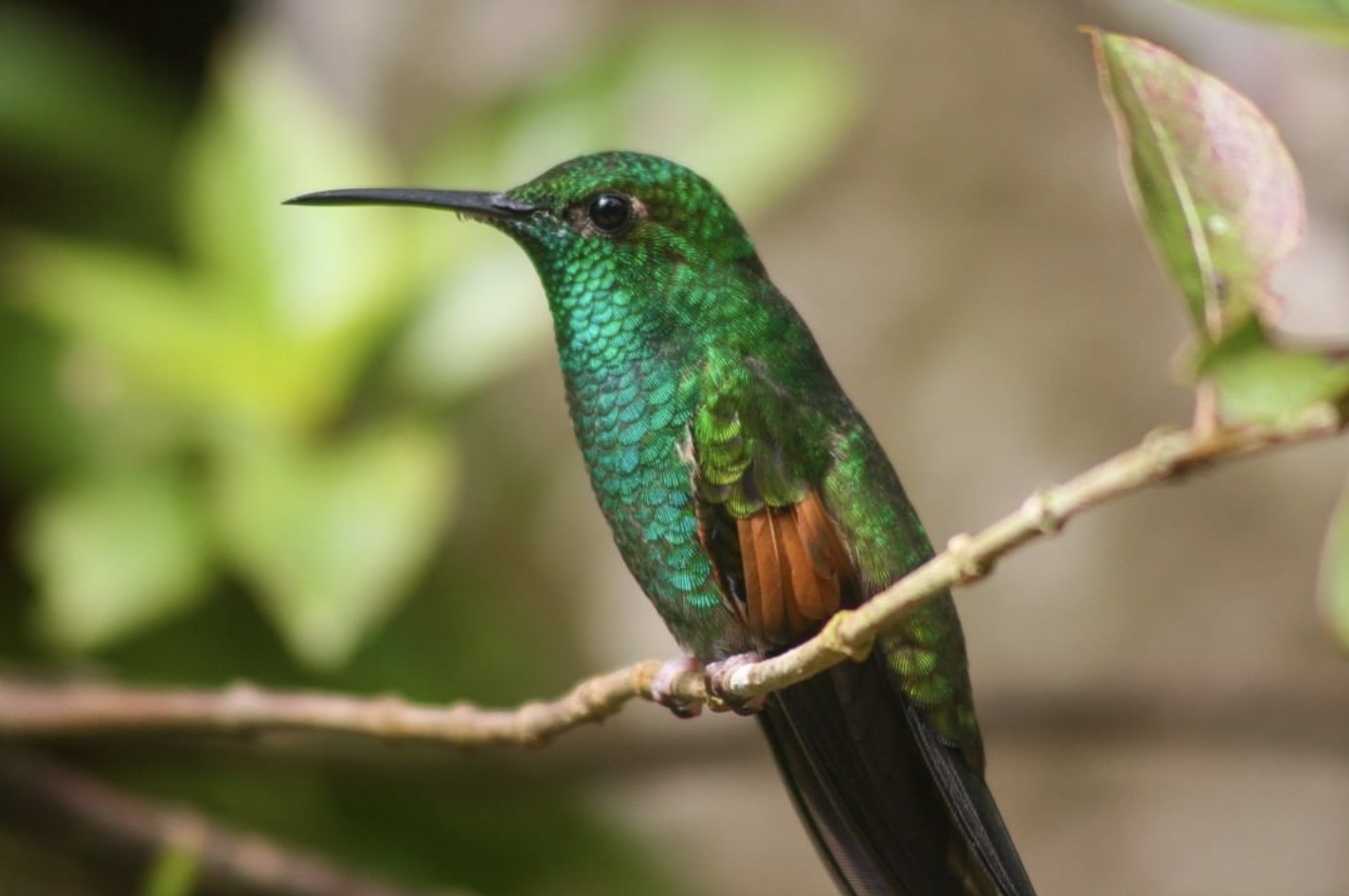
Monteverde Cloud Forest Reserve, Costa Rica
Monteverde Cloud Forest Reserve, Costa Rica
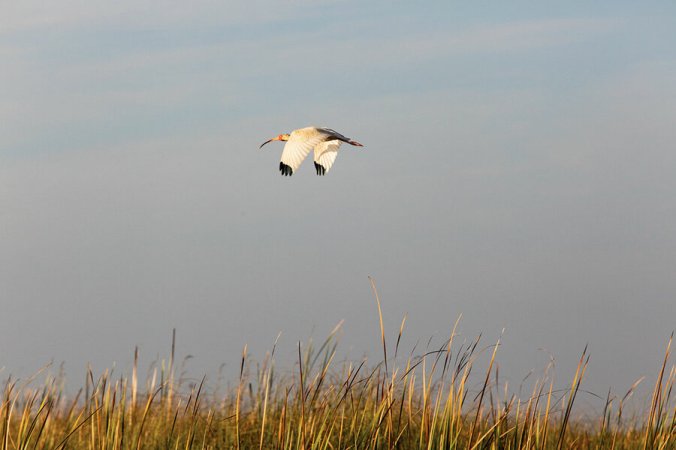
Melanie Stetson Freeman/Staff. A white ibis flies over the Everglades, where many bird species nest each year. Restoration efforts in Florida’s “river of grass” have begun to show signs of progress.
The CS Monitor was the newspaper delivered to our home when I was growing up. Lucky me. These days it still offers good journalism, but is no longer a paper. They made the switch to digital-only in 2008. In earlier years of my monitoring dozens of news sources for this platform it was the source of numerous stories of environmental interest in our pages. But in the last few years, for no particular reason, I failed to monitor their website for stories. And then today, this:
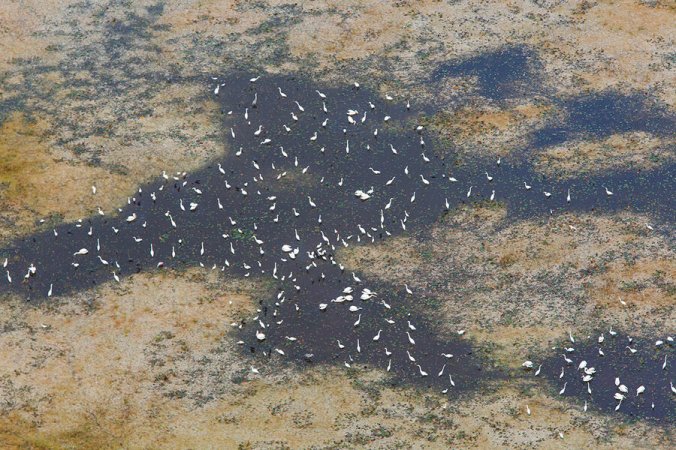
Melanie Stetson Freeman/Staff. Birds look like white flecks from the air.
‘River of Grass’: Inside the quest to restore the Everglades
Richard Mertens Special contributor
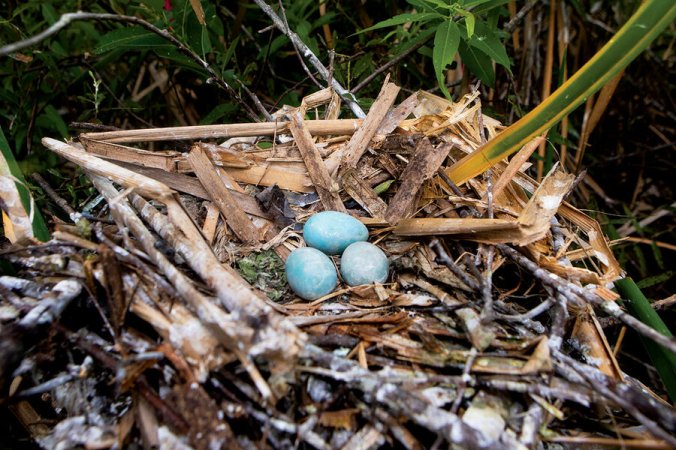
Melanie Stetson Freeman/Staff. Three eggs sit in a nest in the Everglades.
Eight hundred feet up, the helicopter banks hard to the left. The horizon disappears. Mark Cook, an avian biologist, peers out his side window at a small irregular patch of water below. It’s hardly distinguishable from innumerable other patches that lie in every direction, dark and shining amid a ragged expanse of brown marsh grass and green tree islands. Continue reading

Ciudad de Guatemala, Guatemala

ILLUSTRATION: WIRED; GETTY IMAGES
Climate inaction is a theme bookending the first decade of our chronicling news stories and analytical essays. Why, we have stopped bothering to wonder, is inaction so persistent? Whether activism or other forms of action, there is not enough of it relative to the scale of the crisis. We thank Eleanor Cummins, a freelance science journalist and adjunct professor at New York University’s Science, Health, and Environmental Reporting Program for these ideas as published in Wired:
‘Thinkwashing’ Keeps People From Taking Action in Times of Crisis
When it comes to issues like climate change, too many let the perfect become the enemy of the good, while the world burns.
LESS THAN A decade ago, “wait and see” arguments about climate change still circulated. “We often hear that there is a ‘scientific consensus’ about climate change,” physicist Steven E. Koonin wrote in The Wall Street Journal in 2014. “But as far as the computer models go, there isn’t a useful consensus at the level of detail relevant to assessing human influences.” The idea was that the world needed more data before it could respond to the threat posed by global warming—assuming such research indicated a response was even necessary. Continue reading

“Mating” – Leander Khil Photography
Seewinkel National Park, Austria
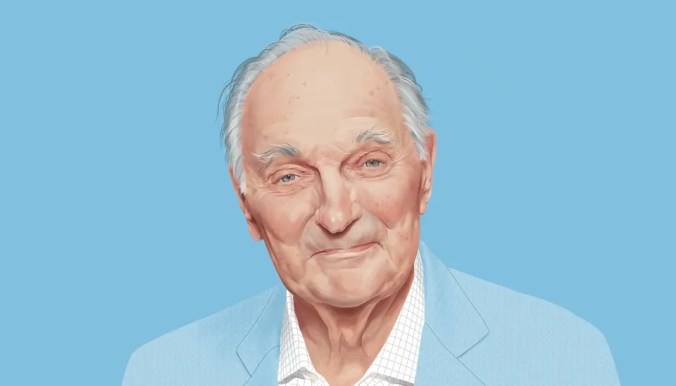
Illustration by Michael Dunbabin; Source photograph by Kevin Winter / Getty
Alan Alda was not likely to appear in our pages before, even though we knew about this work that he has been doing starting some years ago. Not likely because celebrity is more often than not a distraction. But this conversation is worth sharing, because we care about science, and effective communication about science:
Alan Alda Is Still Awesome
The actor and director talks about his podcast, the comedic chops of Volodymyr Zelensky, and being called an “honorary woman.”
Few actors inspire the warm fuzzies like Alan Alda. At eighty-six, he’s still the platonic ideal of “nice dad”: the type of guy you’d find in a cardigan, reading a copy of the Sunday Times in an armchair. But the popular image of Alda doesn’t cover the remarkable breadth of his career. Continue reading

Kalamassery, Kerala
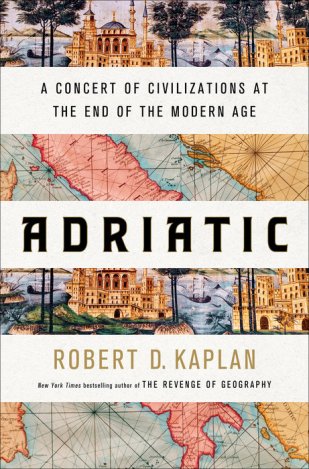 When I first set foot in Croatia more than two decades ago it was for a project to assist the country in defending the coastal areas from the pressures of mass tourism development. Within a couple of years I was doing similar work in Montenegro. Before too long we were enough in love with the region to make it our family’s home for a year.
So seeing this book about the future importance of the region, by an eminent scholar, is both heartwarming and concerning:
“[An] elegantly layered exploration of Europe’s past and future . . . a multifaceted masterpiece.”—The Wall Street Journal
“A lovely, personal journey around the Adriatic, in which Robert Kaplan revisits places and peoples he first encountered decades ago.”—Peter Frankopan, author of The Silk Roads
In this insightful travelogue, Robert D. Kaplan, geopolitical expert and bestselling author of Balkan Ghosts and The Revenge of Geography, turns his perceptive eye to a region that for centuries has been a meeting point of cultures, trade, and ideas. Continue reading
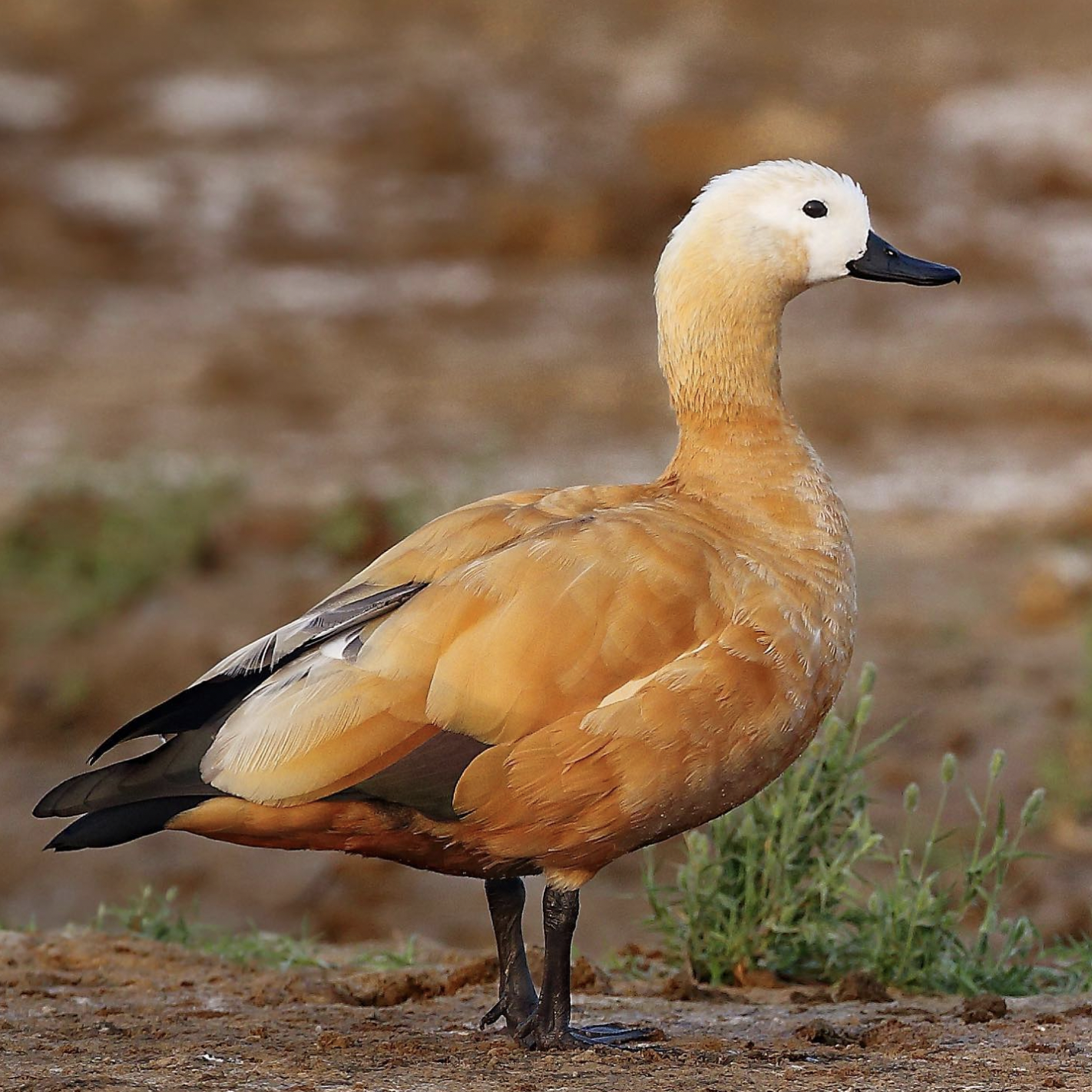
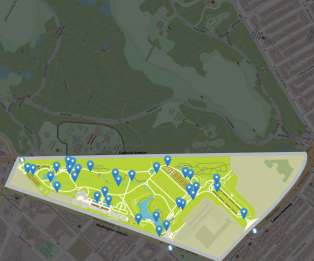
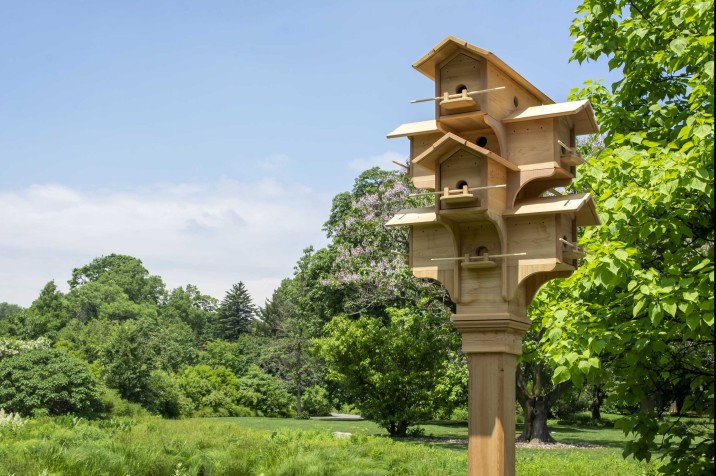
Artist-made birdhouses are installed throughout the Garden as part of For the Birds. Use the exhibition map or scan the list below to explore!
Zach Helfand gives us a quick sketch of what happens when celebrities, and celebrity architects, collaborate on behalf of birds. When you next have the opportunity to visit the Brooklyn Botanic Garden, keep this initiative in mind:
To benefit the Audubon Society, “For the Birds,” a COVID passion project, brings together ornithophiles and artist-designed birdhouses, including a 12BR Apt, A/C, No Elv, Vus.
100 Martin Inn birdhouse on location at Brooklyn Botanic Garden.
The recent housing market has brought about ruinous price increases, a bidding war over a fifth-floor walkup studio with no oven, and enough of a civic exodus for the Post to declaim, earlier this month, “listen up, new york—florida sucks, and you’ll all be back in five years.” But that doesn’t mean deals can’t be had. Take a unit that just went on the market. It’s a newly built architect-designed twelve-bedroom in shall we say Crown Heights, with finishes by a master carpenter and three-hundred-and-sixty-degree views of Prospect Park. Continue reading
Uttarakhand
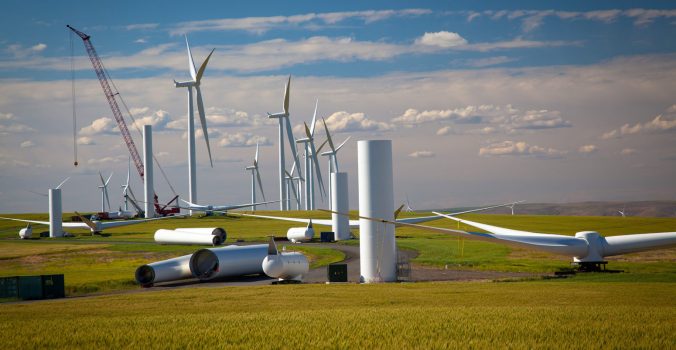
Thanks to Josh Gabbatis and the folks at CarbonBrief:
Windfarms raise incomes and house prices in rural US, study finds
Wind turbines have increased local incomes by around 5% and house values by 2.6% in parts of the US, according to a new study.
The research, published in the journal Energy Policy, found benefits in terms of jobs, taxes and land payments associated with renewable energy. Continue reading
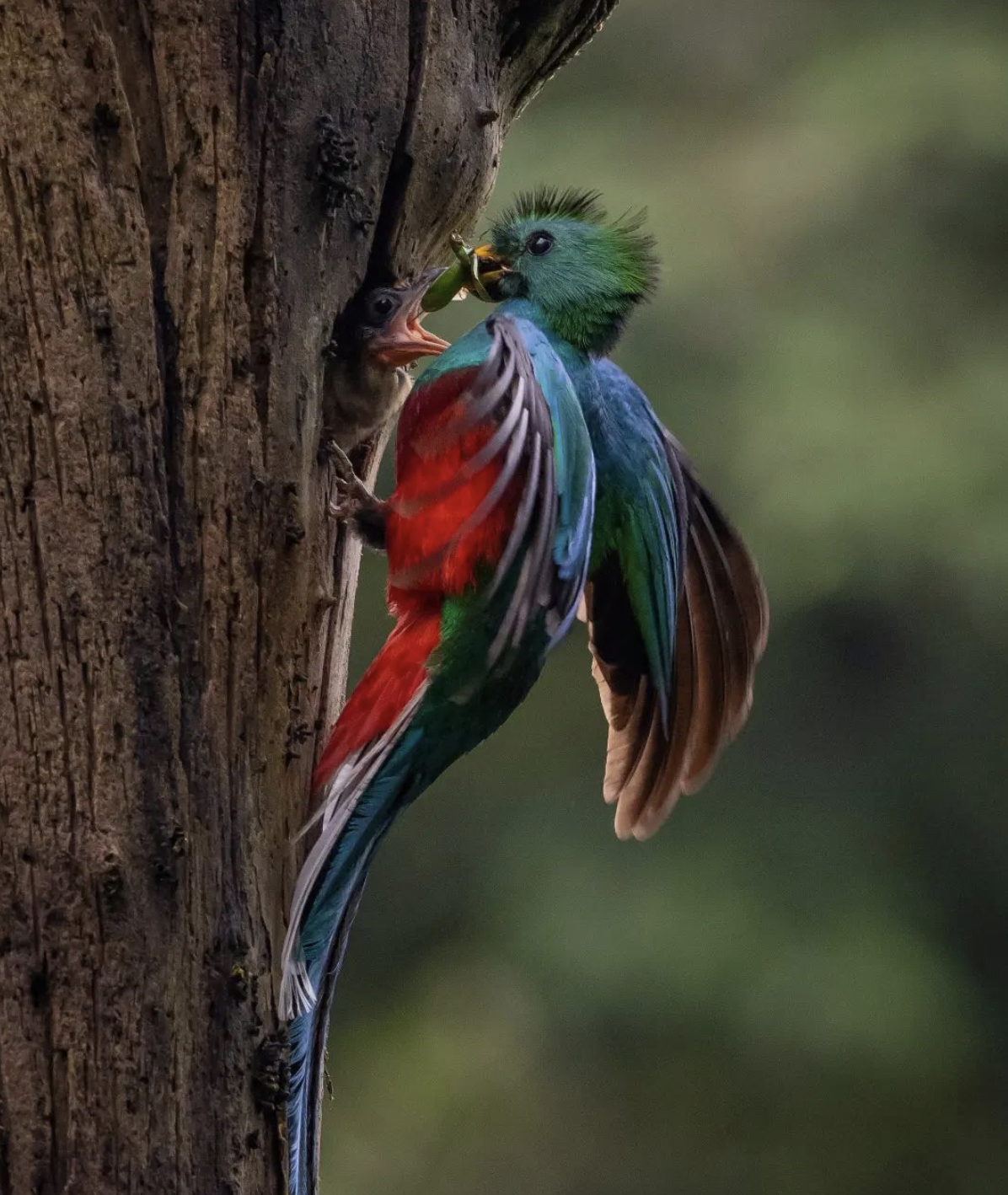
father feeding a green jade beetle to its young
Volcan Atitlán, Guatemala
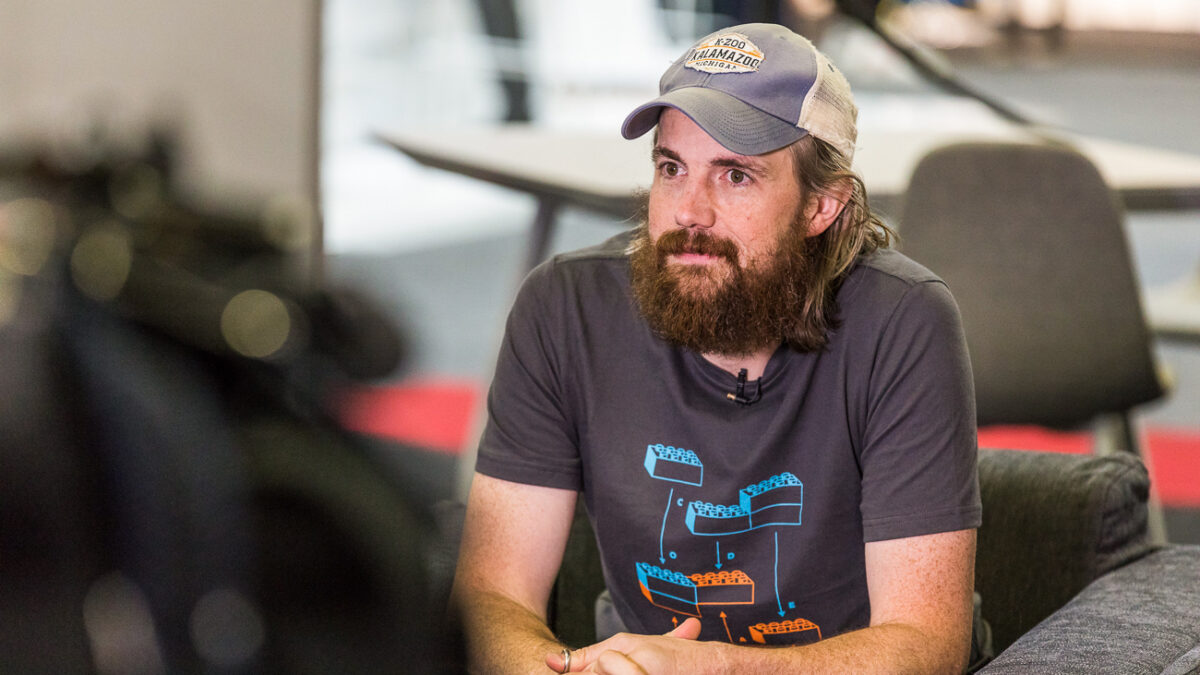
Until reading about them in this newsletter I read each week, Blair Palese, Peter McKillop and the Climate & Capital Media team were not on my radar. Now they are, and I enjoyed reading what they have written to Jeff Bezos about changing the game:
Capitalism in the right hands: How a tech bro just rewrote Australia’s climate future
- Following a stunning shareholder coup, Australian software billionaire Mike Cannon-Brookes becomes the world’s first corporate raider with a mission to radically reduce Australia’s carbon footprint.
- Cannon-Brookes made billions in software, but he is not retiring from the game in order to “give back” in the gentlemanly pursuit of charity.
- His victorious raid demonstrates that real climate action requires more than just writing checks.
- Instead Cannon-Brookes channeled corporate raider Carl Icahn, investor Henry Kravis, feminist organizer Gloria Steinem, Cajun political strategist James Carville and to do what no person has ever done: Merge political, financial, shareholder, and climate action into a single, ground-breaking capitalist moment to take on global warming.
- We thought Jeff Bezos should know Mike.
Dear Jeff Bezos,
Greetings from Climate & Capital Media. We tried to send you a message on LinkedIn, but there are like at least two dozen Jeff Bezoses and you are not one of them. We applaud your commitment to climate action and setting up the $10 Billion charitable Earth Fund.
But word in New York is you are a tad frustrated with the fund’s impact. Continue reading
Volcan Pacaya, Guatemala
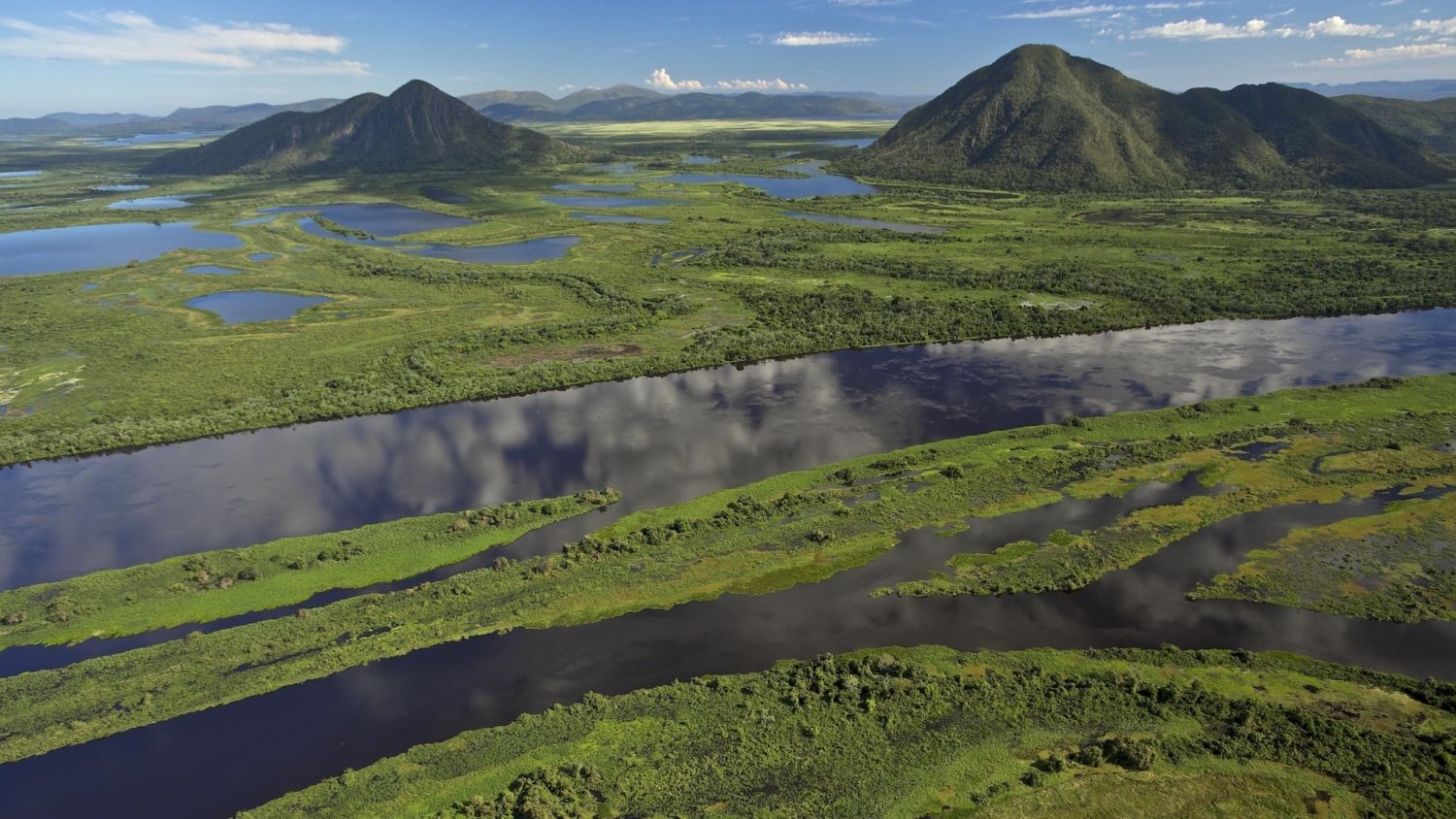
The Pantanal wetlands in Brazil. MARKUS MAUTHE / GREENPEACE
There is not much that has happened in Brazil in the last few years that I would consider good environmental news.
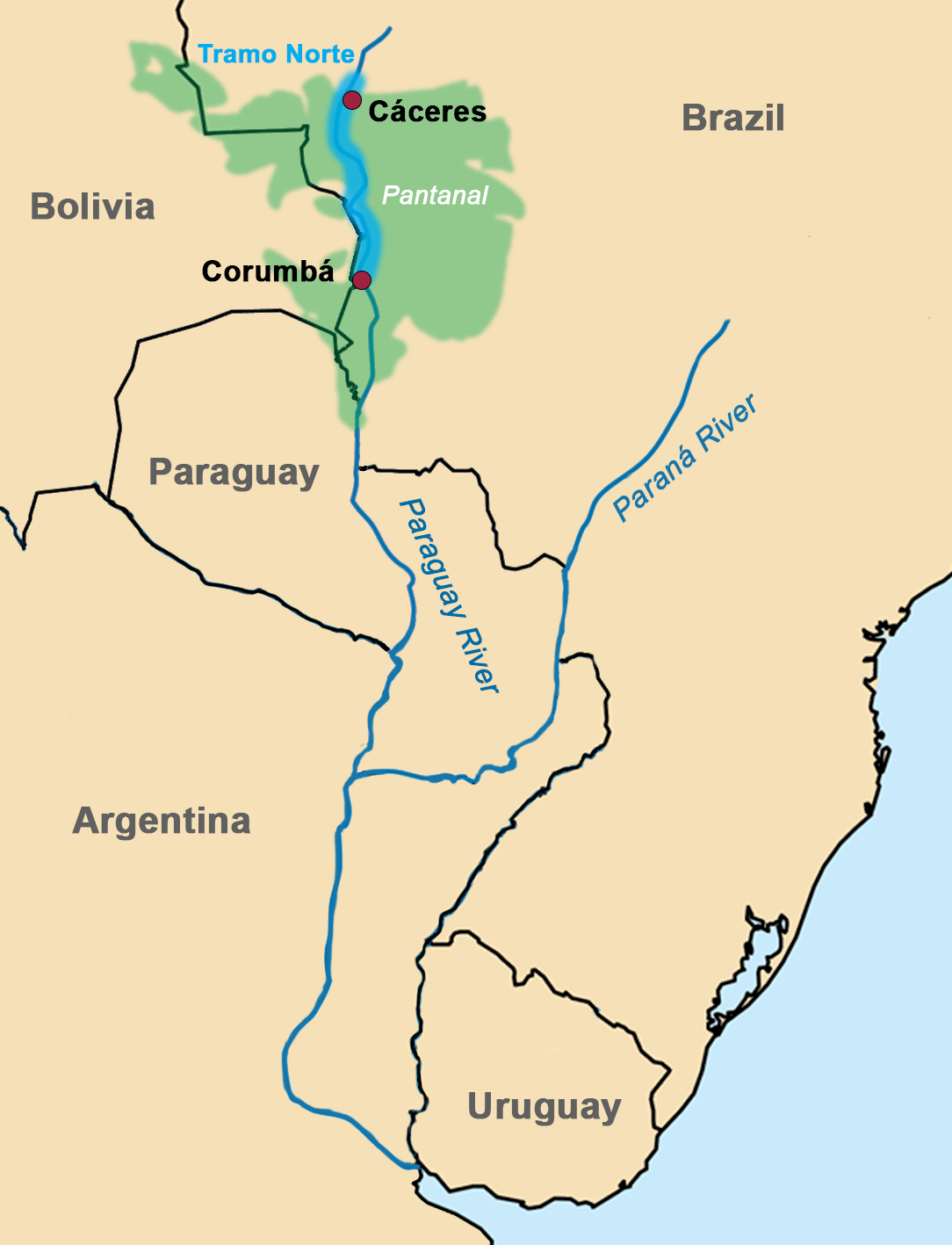
YALE ENVIRONMENT 360
So one more urgency is at risk of getting lost in all the rest (which may be part of a strategy). But making it easier to extract the extracted from the center of the continent is akin to adding fuel to a very big fire:
A Waterway Project in Brazil Imperils a Vast Tropical Wetland
The Pantanal, the world’s largest tropical wetland, has been battered in recent years by agricultural development, drought, and fire. Now, a push to turn the region’s key river into a waterway for soybean-laden barges threatens to alter the natural flows of this iconic ecosystem.
It takes 14 hours for Lourenço Pereira Leite to reach his fishing spot.
He and his brother-in-law chug along in a simple one-engine motorboat, towing their traditional fishing canoe behind them. Continue reading

San Isidro de el General, Costa Rica
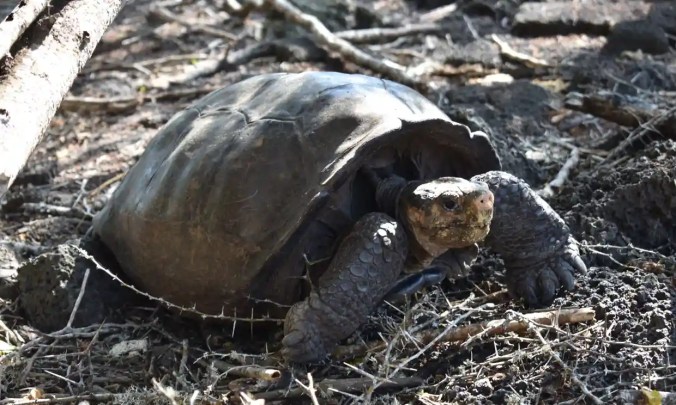
Scientists named the giant tortoise Fernanda, after the Fernandina Island, a largely unexplored active volcano in the western Galápagos archipelago that she calls home. Photograph: Lucas Bustamante/PA
Every now and then it is time for nature photos. First, above, is from a story that surprises, from a place we love:
‘Fantastic giant tortoise’ species thought extinct for 100 years found alive
Identification of Galápagos tortoise celebrated by scientists as a big deal for island’s biodiversity
And then there are photos unconnected to any news stories, scientific or otherwise, submitted for us to enjoy by people from around the world:
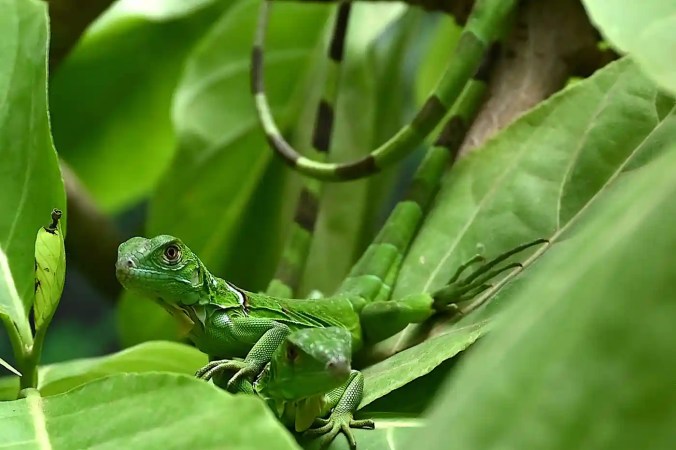
A newly hatched green iguana rests on foliage in a terrarium at the Chennai Snake Park in Chennai, India. Photograph: Arun Sankar/AFP/Getty Images
Two are from India, our home for seven years. Monkey business was a constant theme.
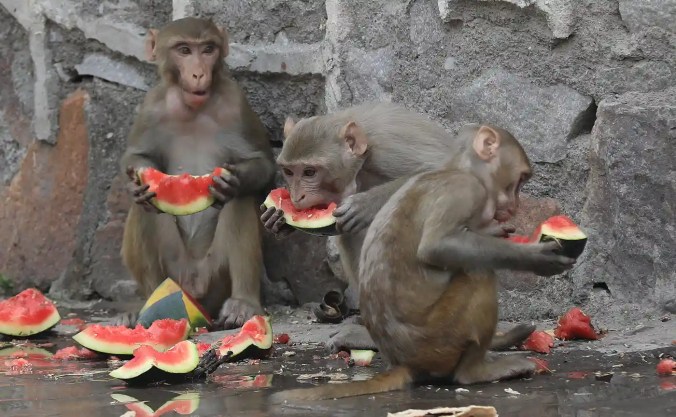
Monkeys eat watermelons during the heatwave in New Delhi, India. Photograph: Rajat Gupta/EPA
Another from a place whose name has lots of meaning for us:
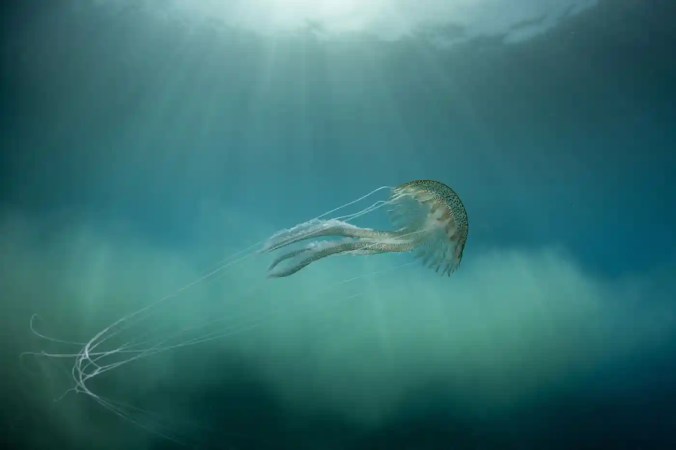
A jellyfish swims off the island of Ithaca, Greece
Photograph: Cor Kuyvenhoven/Ghost Diving/Reuters
See all the other photos here.

Costa Rica

Thanks to Stephanie Pain, Knowable Magazine and Smithsonian for this:
What Are Scientists Learning About the Deepest Diving Creatures in the Ocean?
Animals-turned-oceanographers are helping biologists find out what they do when they get to the cold, dark depths
Chilean devil rays swim in the Atlantic Ocean near the Azores. Reinhard Dirscherl / ullstein bild via Getty Images
There’s only one word for it: indescribable. “It’s one of those awesome experiences you can’t put into words,” says fish ecologist Simon Thorrold. Thorrold is trying to explain how it feels to dive into the ocean and attach a tag to a whale shark — the most stupendous fish in the sea. “Every single time I do it, I get this huge adrenaline rush,” he says. “That’s partly about the science and the mad race to get the tags fixed. But part of it is just being human and amazed by nature and huge animals.”
Whale sharks are one of a select group of large marine animals that scientists like Thorrold, of the Woods Hole Oceanographic Institution in Massachusetts, have signed up as ocean-going research assistants. Continue reading

 Organikos