Library!

The Long Room is at the heart of a $95 million conservation project at Trinity College Dublin’s Old Library. Paulo Nunes dos Santos for The New York Times

The exclamation point in this post’s title signifies enthusiastic appreciation for a pleasant surprise. A story about libraries to take the mind off all that other news, and point it to lasting treasures. Our thanks to Ed O’Loughlin for the story, Paulo Nunes dos Santos for the photos, and The New York Times for the publication:

An Irish National Treasure Gets Set for a Long-Needed Restoration

The majestic Old Library at Trinity College Dublin, where some of Ireland’s most ancient and valuable books are stored, is a popular tourist attraction.

A librarian walking along the corridors in the upper gallery. Paulo Nunes dos Santos for The New York Times

DUBLIN — The Long Room, with its imposing oak ceiling and two levels of bookshelves laden with some of Ireland’s most ancient and valuable volumes, is the oldest part of the library in Trinity College Dublin, in constant use since 1732.

But that remarkable record is about to be disrupted, as engineers, architects and conservation experts embark on a 90 million euro, or $95 million, program to restore and upgrade the college’s Old Library building, of which the Long Room is the main part. Continue reading

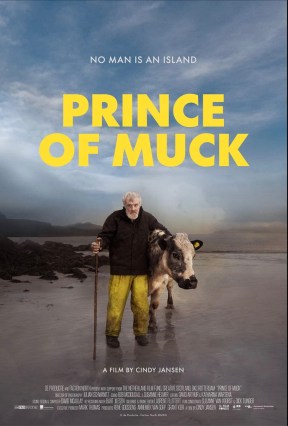
Three Cheers For Lawrence MacEwen

We missed this documentary film last year, perhaps because it was not reviewed in any of the news outlets we regularly monitor. But if you click the image to the right you can preview the film for a couple minutes. You will see it is about a man who spent his life protecting what he cared about. Since that is the underlying theme of the nearly 12,000 posts we have shared on this platform since 2011, it is cued up for viewing in our home this evening.  The film came to my attention in The Economist, and the accompanying photograph is unique in the history of obituaries in that publication or elsewhere:

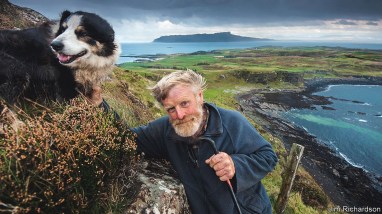
The barefoot laird.

Lawrence MacEwen made a tiny island prosper

As soon as spring arrived, the young Lawrence MacEwen shed his shoes. Barefoot, he ran to school down the only road on Muck, a mile and a half of gravel mixed with grass. Barefoot, he jumped among the fallen basalt stones of the dykes built long ago by kelpers, who had made a living gathering seaweed from the rocks. Barefoot he climbed the craggy western cliffs, hanging on to heather for dear life, and scampered to the top of Beinn Airein, the highest hill, to look out past Eigg and Rum to Knoydart and the Cuillin Hills. Barefoot he would stand for hours on the beach below his house, so mesmerised by the rolling tide that he could not stir until his mother called him in for tea. His feet would sink a little into the white sand, embedding him in the place. Continue reading

Will More Forests Cool The Planet Fast Enough?

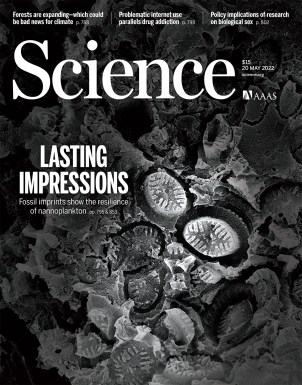
Thanks to Fred Pearce, who we normally link to at Yale e360, for The Forest Forecast, an article in the current issue of Science magazine:

Climate change could lead to a net expansion of global forests. But will a more forested world actually be cooler?

These are strange times for the Indigenous Nenets reindeer herders of northern Siberia. In their lands on the shores of the Arctic Ocean, bare tundra is thawing, bushes are sprouting, and willows that a generation ago struggled to reach knee height now grow 3 meters tall, hiding the reindeer. Surveys show the Nenets autonomous district, an area the size of Florida, now has four times as many trees as official inventories recorded in the 1980s. Continue reading

Running Tide’s Buoys


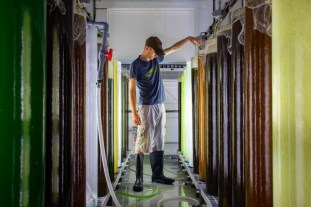
An image of a man in boots in a kelp hatchery
Since kelp grows as fast as two feet per day, it absorbs a huge amount of carbon through photosynthesis. (Jamie Walter / Running Tide)

Kelp  has featured in our pages frequently enough to be considered an important topic. It will be a partial solution to something big. Thanks, as always, to Robinson Meyer for the weekly newsletter that sometimes depresses the spirit but on other occasions, like this one, titled How to Fight Climate Change With Buoys That Look Like Ramen Noodles, points a small ray of hope in an unexpected direction:

Running Tide’s buoys are made of reclaimed waste wood, limestone, and kelp seedlings. (Jamie Walter / Running Tide)

Last month, somewhere off the coast of Maine, a small group of researchers and engineers released a series of tiny, floating objects into the water. The team called them “buoys,” but they looked more like a packet of uncooked ramen noodles glued to a green party streamer than anything of the navigational or weather-observing variety. These odd jellyfish had one role in life: to go away and never be seen again. With any luck, their successors would soon be released into the open ocean, where they would float away, absorb a small amount of carbon from the atmosphere, then sink to the bottom of the seafloor, where their residue would remain for thousands of years. Continue reading

Proto-Peat In The Arctic

PHOTOGRAPH: SANNA PIILO

We have posted enough times about the importance of protecting peat, but this is the first we hear the question Carbon-Rich Peat Is Disappearing. But Is It Also Growing? Our thanks to Matt Simon at Wired for this one:

PHOTOGRAPH: SANNA PIILO

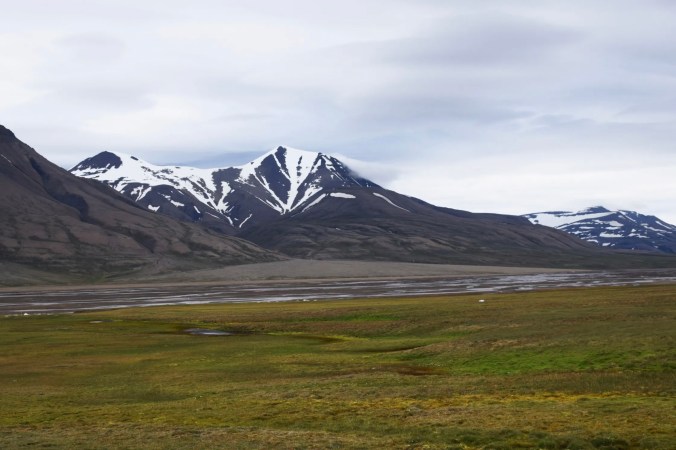
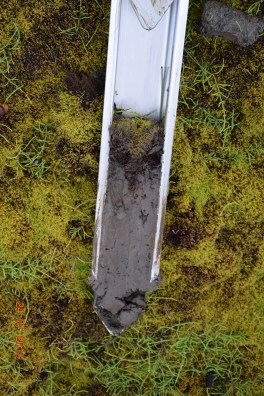
Scientists have discovered “proto-peat” forming in the Arctic as the Earth naturally sequesters carbon, but it could take centuries to mature.

THANK PEAT FOR that scotchy flavor of Scotch whisky: The muck forms in Scotland’s bogs, when layer after layer of dead vegetation resists decay and compresses into fuel, which is burned during scotch distillation. But you can also thank peat for helping keep our planet relatively cool, as all that muck—which is particularly common across the Arctic—traps a tremendous amount of carbon that would otherwise heat the atmosphere. Continue reading

The World’s Largest Living Thing

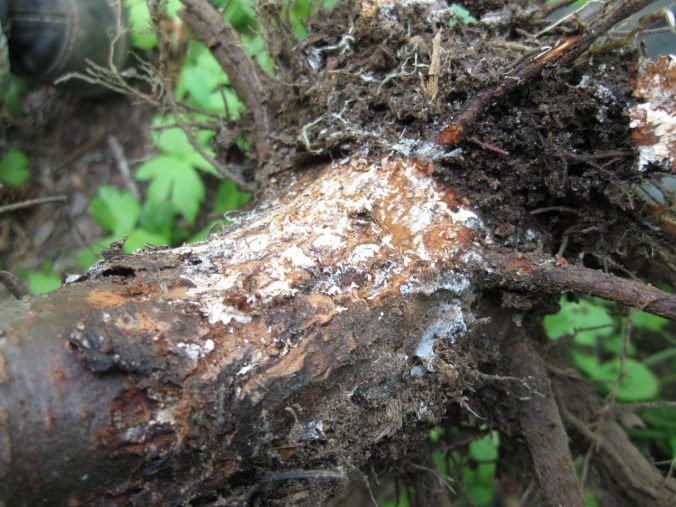
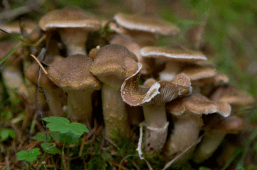
The world’s largest living thing is a stealthy parasite that lives mostly underground and beneath the bark of infected trees in a pale, stringy fungal network. COURTESY MIKE MCWILLIAMS

Thanks to Milo‘s interest in fungi, which we found infectious, we learned years ago what the world’s largest living thing is. We used to feature more stories from Atlas Obscura, but this is the first in a few years:

What the World’s Largest Organism Reveals About Fires and Forest Health

The Humongous Fungus is most visible when it produces the edible and tasty honey mushroom, but the season is brief and doesn’t happen every year. PETER PEARSALL, USFWS/PUBLIC DOMAIN

In Oregon, the Humongous Fungus plays a complex role in an ecosystem reshaped by humans.

UNDER THE BLUE MOUNTAINS OF Oregon lurks something massive and prehistoric. Yet the largest recorded organism on Earth, weighing more than 200 blue whales and dwarfing even Pando, Utah’s famous grove of quaking aspens, is nearly invisible to the untrained eye. It’s a single, genetically identifiable specimen of honey mushroom, or Armillaria ostoyae, that has been growing for thousands of years. Continue reading

Learning To Appreciate Wasps

Wasps are one of the least appreciated creatures on the planet, but we have always suspected they deserve some respect. We just never investigated why that might be the case. So, our thanks to the Guardian for bringing this book to our attention in an article titled Why we should all love wasps:

Wasps have always had a bad press. But Dr Seirian Sumner, who has spent her life studying them, argues they are sophisticated, socially complex and essential to the environment

In The Wasp Woman, a 1959 B-movie directed by Roger Corman, the owner of a failing cosmetics company becomes the test subject for a novel anti-ageing formula manufactured from the royal jelly of wasps. Continue reading

Technology Put To Good Use

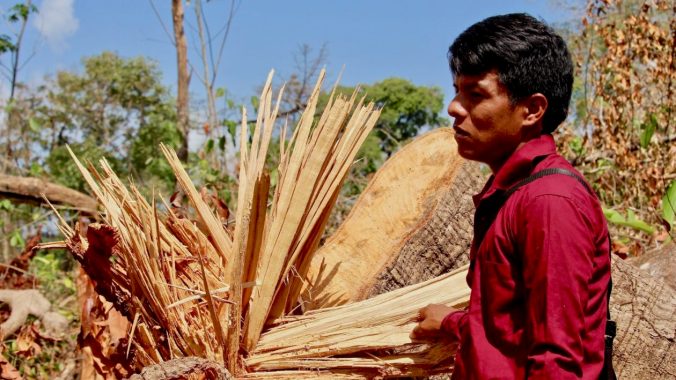
A Wounaan forest technician inspects an illegal clearcut in Indigenous territory. CULLEN HEATER

Jim O’Donnell and Cullen Heater tell an essentially hopeful story from our neighbor to the south:

Panama’s Indigenous Groups Wage High-Tech Fight for Their Lands

With help from U.S. organizations, Panama’s Indigenous people are using satellite images and other technologies to identify illegal logging and incursions by ranchers on their territory. But spotting the violations is the easy part — getting the government to act is far harder.

On a blazing February morning, the Indigenous Wounaan territorial monitoring coordinator, two forest technicians, and a local farmer climbed into the mountains outside the fishing and farming community of Majé, near Panama’s Pacific coast. Continue reading

The Dirty Banking & Fossil Fuel Relationship Seen From Another Angle

We know a bit about dirty banking. While we do not think money is a dirty word, we have seen how dirty it can get when mixed with fossil fuels. So thanks, as always, to Bill McKibben for this further illumination. We are sharing his newsletter, rather than the New Yorker story he references, because as you will see below he encourages sharing Your money is your carbon:

If you’ve got $125k in the financial system, it’s doing as much damage as your cooking and your heating and your flying. These are the most important new climate numbers for many years

Earlier today I published a big story in the New Yorker about how banks are driving the climate crisis. A report from a consortium of environmental groups made clear that for the biggest, richest companies on earth, the cash they keep in the banking system (which gets lent out for pipelines and the like) produces more carbon than their actual, you know, business. Google emits more carbon from its money than its phones, and Netflix from its streaming, and so on. Continue reading

Preservation & Protection Via Gamification

Incentives to behave differently in relation to the environment is a constant topic here, but we have not used the word gamification before. Today is finally the day. Thank you, Lindsey Galloway:

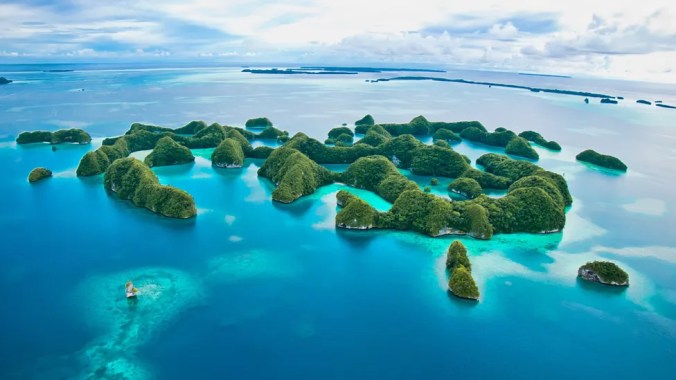
Palau’s world-first ‘good traveller’ incentive

Responsible travellers will be able to unlock exclusive cultural and nature-based experiences (Credit: Colors and shapes of underwater world/Getty Images)

In a world-first initiative, visitors to Palau will be offered exclusive experiences based on how they treat the environment and culture, not by how much they spend.

Despite being home to fewer than 20,000 residents, the Republic of Palau is making an outsized impact to preserve the planet. Not only did the country Continue reading