
Mattighatta Green Ravine, Karnataka
Mattighatta Green Ravine, Karnataka

Greenpeace ship MY Esperanza and activists try to hinder the shooting of a minke whale by the Yushin Maru No.2 catcher ship. Photograph: Kate Davison/Greenpeace
Paul Watson and Sea Shepherd were favorite post topics for a while, but long time no see. With a major anniversary for Greenpeace, a look at other important images from their history seems a fitting tribute:
Greenpeace: half a century on the frontline of environmental photo activism
On the organisation’s 50th anniversary, former head of photography at Greenpeace International talks about the motives behind the creation of its picture desk
Vega boarded by French commandos in Moruroa, 1973. Photograph: Ann-Marie Horne
Fifty years ago, on 15 September 1971, a ship named the Greenpeace set out to confront and stop US nuclear weapons testing at Amchitka, one of the Aleutian Islands in south-west Alaska.
Two years later a small boat called the Vega, crewed by David McTaggart, Ann-Marie Horne, Mary Horne and Nigel Ingram sailed into the French nuclear test site area at Moruroa, French Polynesia in the southern Pacific Ocean. Continue reading

Bandipur Tiger Reserve, Karnataka
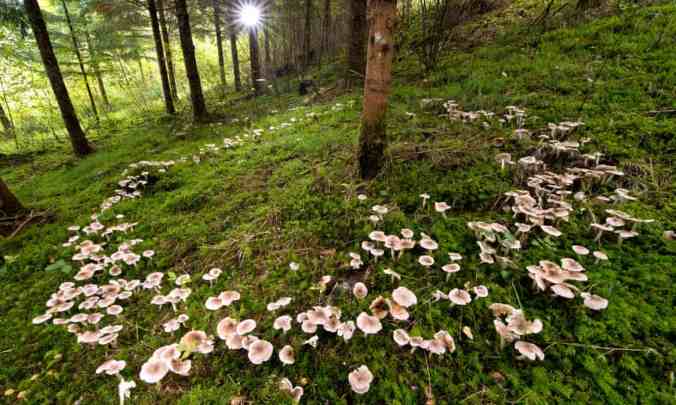
Hotspots of mycorrhizal fungi are thought to be under threat, from agriculture, urbanisation, pollution, water scarcity and changes to the climate. Photograph: Biosphoto/Alamy
We featured three articles by Fiona Harvey, Environment correspondent for the Guardian, each in 2016 on quite different topics, and then we did not see her again until today. Our attention to fungi has been constant since Milo got the topic started in 2011, and SPUN’s mapping project counts as good news:
World’s vast networks of underground fungi to be mapped for first time
Project aims to help protect some of trillions of miles of the ‘circulatory system of the planet’
Vast networks of underground fungi – the “circulatory system of the planet” – are to be mapped for the first time, in an attempt to protect them from damage and improve their ability to absorb and store carbon dioxide. Continue reading

Desert National Park, Rajasthan
 Starting seven years ago I have been paying attention to monopoly power mostly in the context of Amazon. One of the clearest articles on the topic focused on a young person’s breakthrough idea. So I was very happy to read about Lina Khan’s Battle to Rein in Big Tech by rehabilitating antitrust law:
As monopolies and other large companies gain increasing control of our daily lives, Khan is Joe Biden’s pick to do something about it.
In the spring of 2011, a recent Williams College graduate named Lina Khan interviewed for a job at the Open Markets Program, in Washington, D.C. Open Markets, which was part of the New America think tank, was dedicated to the study of monopolies and the ways in which concentration in the American economy was suppressing innovation, depressing wages, and fuelling inequality. Continue reading

male
Desert National Park, Rajasthan
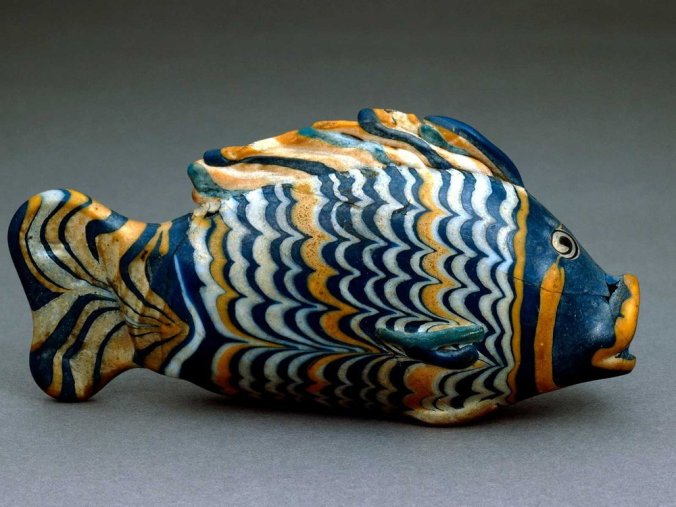
This glass fish was found in a fairly modest private house in Amarna, buried under a plaster floor along with a few other objects. It may once have contained ointment. The Trustees of the British Museum
We have featured stories about artisanal glass in the previous posts but this time the story is about the origins of the substance:
A Brief Scientific History of Glass
Featuring ingots, shipwrecks and an international trade in colors, the material’s rich past is being traced using modern archaeology and materials science
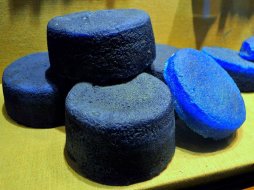
Blue glass ingots from the Uluburun shipwreck. Panegyrics of Granovetter / Flickr
Today, glass is ordinary, on-the-kitchen-shelf stuff. But early in its history, glass was bling for kings.
Thousands of years ago, the pharaohs of ancient Egypt surrounded themselves with the stuff, even in death, leaving stunning specimens for archaeologists to uncover. King Tutankhamen’s tomb housed a decorative writing palette and two blue-hued headrests made of solid glass that may once have supported the head of sleeping royals. His funerary mask sports blue glass inlays that alternate with gold to frame the king’s face. Continue reading
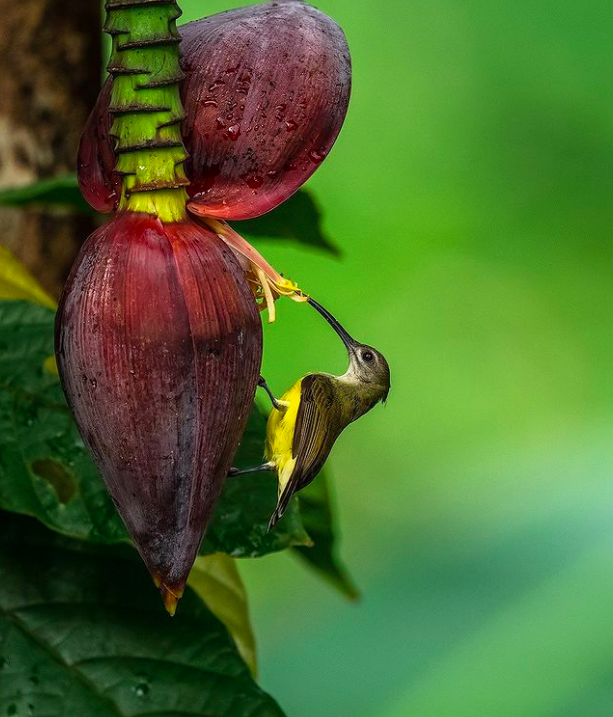
Western Ghats
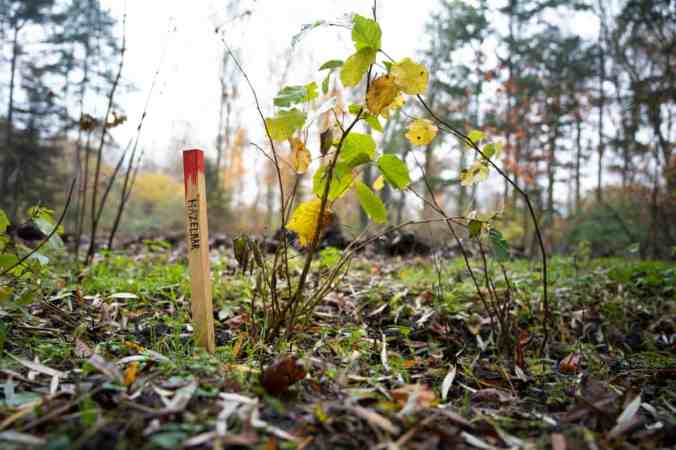
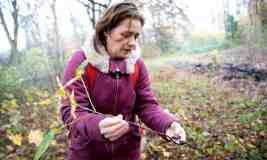
A hazel sapling (Corylus avellana) in the ditches of the tree hub at Amsterdamse Bos. Photograph: Judith Jockel/The Guardian
The trillion trees concept, which inspires but has had its share of legitimate questions, has a scrappy cousin with a novel approach:
‘Every tree counts’: Dutch come up with cunning way to create forests for free
More Trees Now aims to give away 1m unwanted saplings to farmers and councils with hope idea will spread across Europ
Hanneke van Ormondt saves a sapling at the tree hub in Amsterdamse Bos, Amsterdam, the Netherlands. Photograph: Judith Jockel/The Guardian
In a clearing in the Amsterdamse Bos, a forest on the outskirts of the Dutch capital, is a “tree hub” where hundreds of saplings, among them hazelnut, sweet cherry, field maple, beech, chestnut and ash, are organised by type.
The idea behind it is simple: every day unwanted tree saplings were being cleared and thrown away when those young trees could be carefully collected and transplanted to where they are wanted. Continue reading

Guajira, Colombia
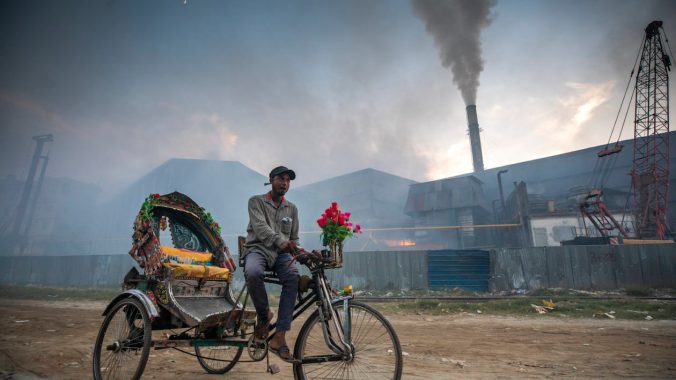
A steel re-rolling mill in Narayanganj, Bangladesh. Well-designed carbon markets could spur companies in developing countries to reduce emissions. AHMED SALAHUDDIN / NURPHOTO VIA AP
Thanks to Yale e360 for this opinion on a hot topic that we have sometimes mused less seriously about:
How to Repair the World’s Broken Carbon Offset Markets
Markets that connect businesses hoping to offset their carbon emissions with climate change mitigation projects have been plagued by problems. But an economist and his co-authors argue that carbon markets can be reformed and play a significant role in slowing global warming
In the wake of the Glasgow climate summit, governments must now return to the daunting challenge of making good on their emissions-reductions pledges, which at this point remain insufficient to hold warming below 2 or even 1.5 degrees C above pre-industrial levels. Continue reading
 Rishikesh, Uttarakhand
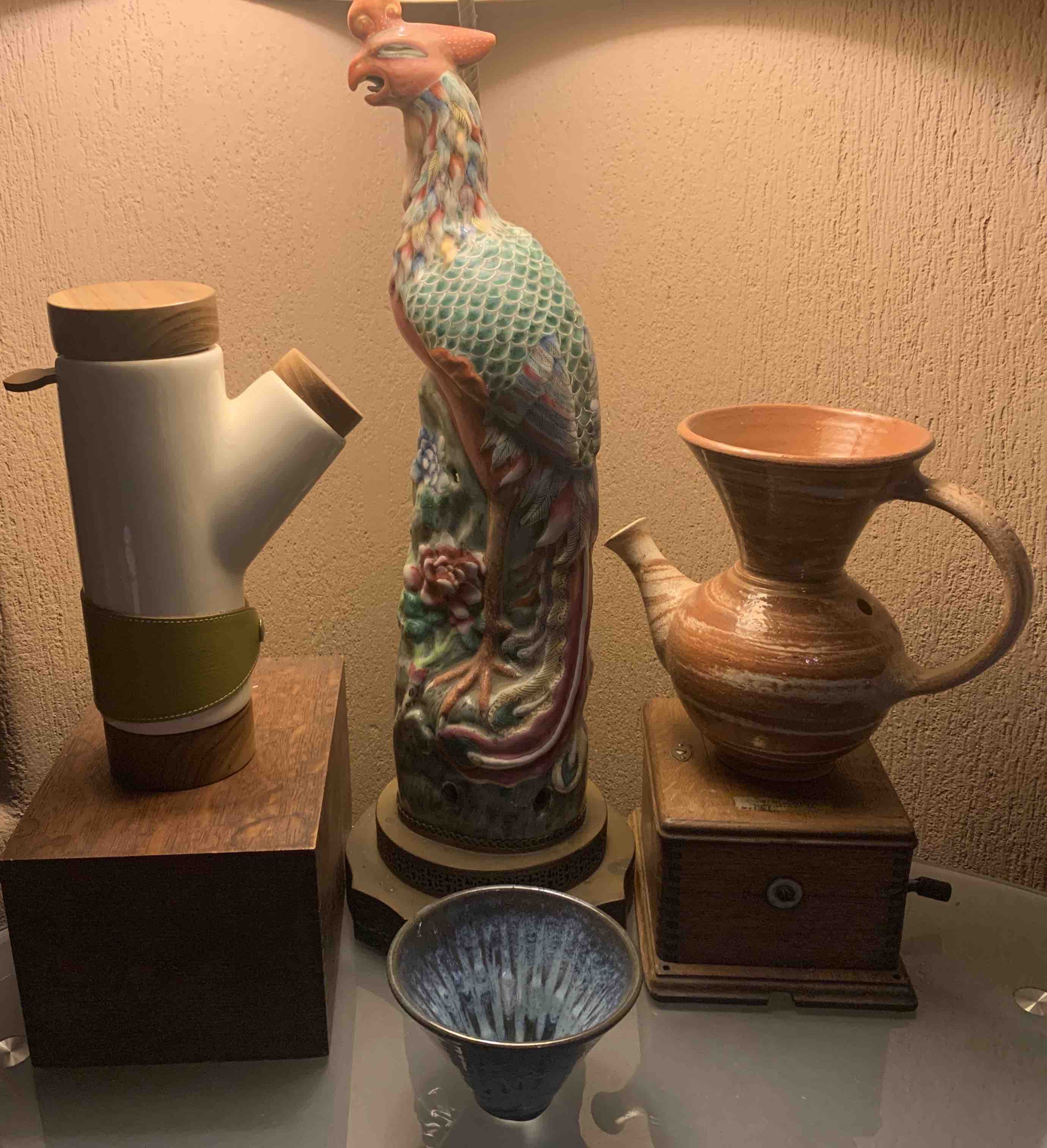
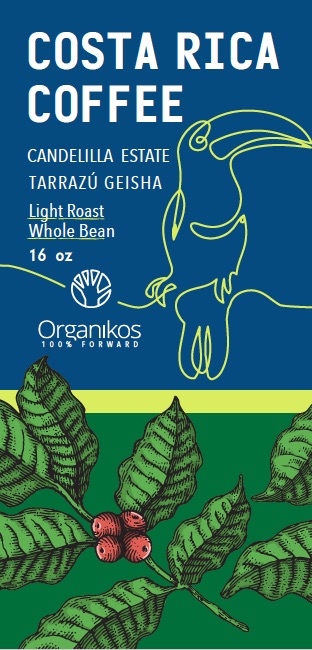
Introduced at the Authentica shops in Costa Rica on Thanksgiving Day, 2021
The base of the lamp at my desk is a ceramic bird that serves as a year-round reminder of Thanksgiving. And the ceramic coffee artifacts on my desk serve the same purpose, reminding me each time I sit to work that there are constantly plenty of reasons to give thanks.
We opened two Authentica shops in Costa Rica on Thanksgiving weekend 2019. Sophomore year for both Organikos and Authentica was mettle-testing. We passed. If flying colors were not evident enough in how we passed, here they are in the label for our newest coffee. First introduced last month to a group of students at Cornell University, whose tasting notes we have appreciated receiving, as of today it is available in our shops in Costa Rica.
So, thanks for all that.

Lower Dibang Valley, Arunachal Pradesh
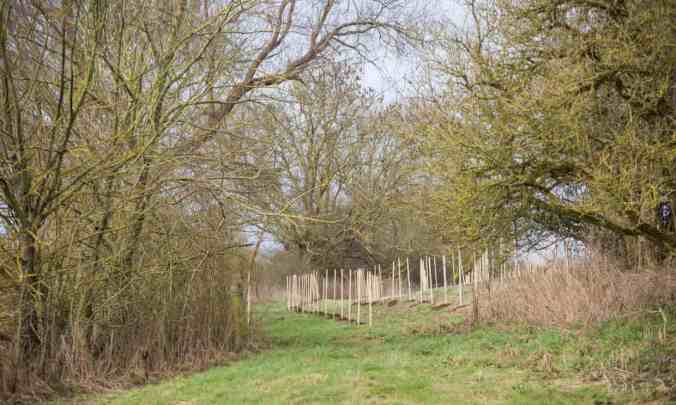
One of the National Trust’s tree-planting projects, at Kingston Lacy in Dorset. Its Plant a Tree appeal has topped £1m. Photograph: James Dobson/National Trust/PA
Planting trees is part of our business model. So, we love this news:
Forget flowers – poll shows third of people prefer to say I love you with a tree
National Trust says tree giving growing in popularity but only 7% know best season to plant
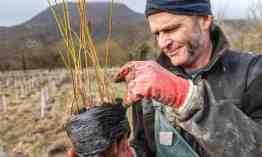
A National Trust ranger, David Smith, preparing saplings for planting at Hafod Garegog in north Wales. Photograph: Paul Harris/National Trust/PA
For centuries people have said it with flowers but research suggests a new tradition is gaining popularity in the UK – expressing love, thanks, perhaps even regret with the gift of a tree.
A third of people said they would consider saying it with a tree rather than a bouquet and more than one in 10 had already done so, according to the research commissioned by the National Trust.
However, the conservation charity also said only 7% of people in the UK knew the best time of year to plant, and it was launching a drive to improve “tree literacy”. Continue reading
Etosha National Park, Namibia

A solar-covered parking lot at the plant of Anhui Quanchai Engine Co., Ltd. in Chuzhou, China. IMAGINECHINA VIA AP IMAGES
Using solar panels to create shade for coffee trees requires thought about the tradeoffs between the non-shade benefits trees otherwise provide: (nitrogen-fixing in the case of poro trees, plus bird habitat and other biodiversity benefits) and the non-shade benefits that solar panels provide (renewable energy). Solar panels on parking lots and other roofs, on the other hand, seems the definition of a no-brainer. Our thanks to Richard Conniff and Yale e360, as always:
Why Putting Solar Canopies on Parking Lots Is a Smart Green Move
Solar farms are proliferating on undeveloped land, often harming ecosystems. But placing solar canopies on large parking lots offers a host of advantages — making use of land that is already cleared, producing electricity close to those who need it, and even shading cars.
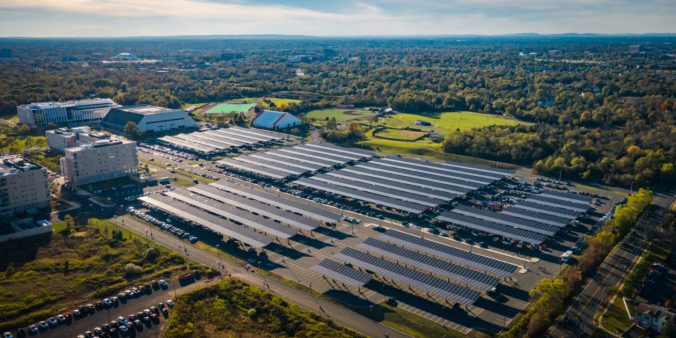
A solar parking facility at Rutgers University in Piscataway, New Jersey, with an output of 8 megawatts of electricity.
Fly into Orlando, Florida, and you may notice a 22-acre solar power array in the shape of Mickey Mouse’s head in a field just west of Disney World. Nearby, Disney also has a 270-acre solar farm of conventional design on former orchard and forest land. Park your car in any of Disney’s 32,000 parking spaces, on the other hand, and you won’t see a canopy overhead generating solar power (or providing shade) — not even if you snag one of the preferred spaces for which visitors pay up to $50 a day. Continue reading

Yaxha National Park, Petén, Guatemala
As we consider new canopy options, a switch to electric roasting of Organikos coffee also seems clearly worthy of consideration. I just found out about this company, and its sustainability report from last year puts it high on my list of roasters to consider:



 Organikos