Authenticity & Culinary Adaptation

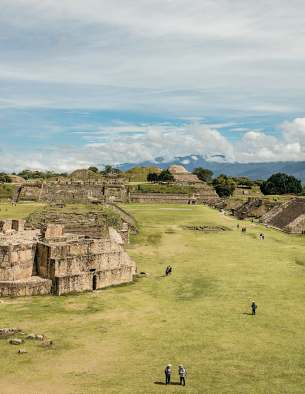
The pre-Columbian ruins of Monte Albán, which overlooks the city of Oaxaca, Mexico. Once an ancient Zapotec capital, it was later occupied by the Indigenous Mixtec peoples. Stefan Ruiz

Authenticity, especially culinary, is a tricky topic. But it is one we choose to wrestle with for commercial purposes as well as for more personal reasons. Especially during our seven years in India, developing menus for visitors, we had to adapt local spice levels (leaning heavy on the Scoville scale) to a broader palette while maintaining tradition. The specific question in the article below is about an introduced ingredient into one of the world’s richest culinary traditions. I want to know the history, I respect authenticity, but I also prize adaptation. So, thank you to Aatish Taseer for the excellent details and to Stefan Ruiz for the stunning photographs in this story:

Tracing Mexico’s Complicated Relationship With Rice

Having arrived in the country via the Spanish Conquest, the grain’s presence poses the question: What’s native, and what isn’t, when it comes to a nation’s culinary history?

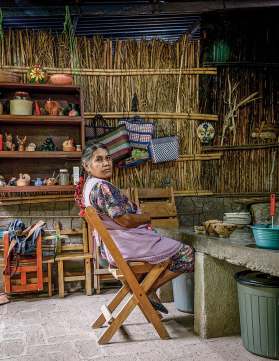
Margarita Navarro Gómez sits in one of her three kitchens at home in the village of Santo Tomás Jalieza, just outside of Oaxaca, where she lives with her two sisters, Crispina and Inés. The three siblings are known for their hand-woven textiles and for their homemade version of the rice-based beverage horchata. Stefan Ruiz

I ARRIVED IN Oaxaca on a rainy afternoon in May. We flew over pleated hills that formed a girdle around the Oaxaca valley, one of the most fertile variegated soils in the world. The earth was stamped with cloud shadows that gave an impression both of movement and fixity — a rich, dark earth with an inner seam that showed red and metallic in places. The shadow of the plane, like a fighter escort, followed us as we descended, then was subsumed by the rain-drenched tarmac. The sky was full of light. Leaving the small white airport, we passed a palisade of organ pipe cactuses. There was blue-leaved agave in the traffic islands and, lining the streets, the trees of my childhood in Delhi — flamboyant, laburnum, jacaranda — were in flower. A nondescript modern town of brightly shuttered shops, auto repair and signs that read “aluminio y vidrio” gave way to a fully intact Spanish colonial town from the 16th century. “Downtown: local people,” my driver said, observing the change, “centro histórico for foreign people.”

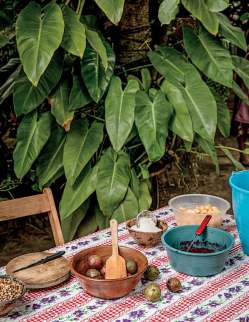
Some of the raw ingredients for horchata, including (from left) walnuts, prickly pear, prickly pear pulp, sugar and melon, which are later added to a mixture of ground rice and cinnamon. Stefan Ruiz

We came along large-stoned cobbled streets and single-story buildings painted in warm shades of ocher and that famous Oaxacan color — a carmine, drawn from the cochineal, a cactus-dwelling insect, which, with the addition of a single drop of lemon juice, turns into one of the most seductive reds known to man. There is no place, not even India, where the use of color produces as beguiling a mixture of gaiety and melancholy as Mexico. The British writer Rebecca West, who was here in the 1960s, has a description in “Survivors in Mexico” (2003) that cannot be bettered: “Here these walls are painted colors that are special to Mexico, touching variants of periwinkle blue, a faded acid pink, the terra-cotta one has seen on Greek vases, a tear-stained elegiac green.” Continue reading
What Are You Willing To Do To Protect The Environment?

ILLUSTRATION: PABLO HURTADO DE MENDOZA

Elizabeth Flock has written the most unusual article I have ever read published by The Economist (in this case its 1843 magazine, which offers longform stories). The question in the title of her article below gives the reader permission to draw their own conclusion on the ethics of destruction of private property in the interest of environmental justice. It is the second time I have been surprised in such a way (this conversation was even more surprising since it was the first time a mainstream publication raised such a question). This article poses the question in the context of a very human story, well-told:

Two environmentalists sabotaged an oil pipeline in America. Are they terrorists or heroes?

As the devastating effects of climate change became impossible to ignore, Jessica Reznicek and Ruby Montoya took matters into their own hands

ILLUSTRATION: PABLO HURTADO DE MENDOZA

When Jessica Reznicek walked into a courtroom in Des Moines, Iowa, last June, her sun-weathered face was the only clue that she’d lived rough: that she’d camped at the edge of an oil-pipeline construction site for months; that she’d camped night after night all over the country when she and Ruby Montoya, her co-defendant, were on the run; that she’d camped simply because, as far back as she could remember, she loved being in nature.

Reznicek, dressed in a black trouser suit and white blouse with her blonde hair hanging neatly, hoped that the federal judge deciding her sentence might show her some sympathy (Montoya was due to be sentenced later in the summer). Continue reading
Quirky, Old-School Enterprise Versus Doom

Powell’s anticipated that every part of its business would need to be closed, but then quickly realized that it could continue operating the warehouse. Amanda Lucier for The New York Times

We have used the word doom in a post title on four previous occasions, most recently this one. Doomsaying is not our goal here, but when it comes to the environment, particularly climate change, sometimes no other word will do.

A customer in Powell’s flagship store downtown. Amanda Lucier for The New York Times

On this fifth occasion I use the word just as seriously, but without reference to environmental challenges.  This book retailer has been on the front lines of one of the other big dangers I have had my eye on, and I am thankful to Peter S. Goodman for this account of their approach to survival:

Powell’s Books Survived Amazon. Can It Reinvent Itself After the Pandemic?

As much as any city, Portland, Ore., has been through hell. Its landmark store, Powell’s Books, must finally build a viable online business while recapturing its downtown success.

Powell’s anchors a once dicey neighborhood now dotted with glass-fronted condos and furniture boutiques. Amanda Lucier for The New York Times

PORTLAND, Ore. — Over its half-century in the heart of Portland, Powell’s Books has survived an unending array of foundational threats — the oft-anticipated death of reading, the rise of Amazon, the supposedly irretrievable abandonment of the American downtown.

None of that provided preparation for the tumult of the past two years. Continue reading
Global North, Global South & Responsibilities

Photo: Hannah Whitaker; Prop Styling: Marina Bevilacqua.

David Wallace-Wells has done it again. Devastated me with considerations I should have had on my own, but had not. And he makes it so vivid that once you see his point you cannot stop seeing it. Having lived in the Global South for a majority of my adult years, but having been born into and lived in the Global North for the first half of my life, this story resonates with me in ways I cannot quite describe. But the quote from Proverbs in yesterday’s post seems even more intensely relevant:

Climate Reparations

A trillion tons of carbon hangs in the air, put there by the world’s rich, an existential threat to its poor. Can we remove it?

I. What Is Owed

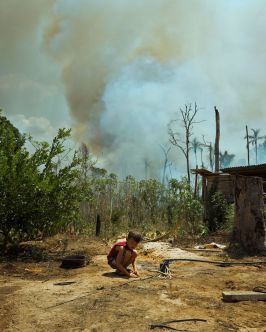
Brazil, 2019. Photo: Cristina de Middel/Magnum Photos

The math is as simple as the moral claim. We know how much carbon has been emitted and by which countries, which means we know who is most responsible and who will suffer most and that they are not the same. We know that the burden imposed on the world’s poorest by its richest is gruesome, that it is growing, and that it represents a climate apartheid demanding reparation — or should know it. We know we can remove some of that carbon from the atmosphere and undo at least some of the damage. We know the cost of doing so using tools we have today. And we know that unless we use them, the problem will never go away. Continue reading
Anglophiles, We, This Observation Is Useful

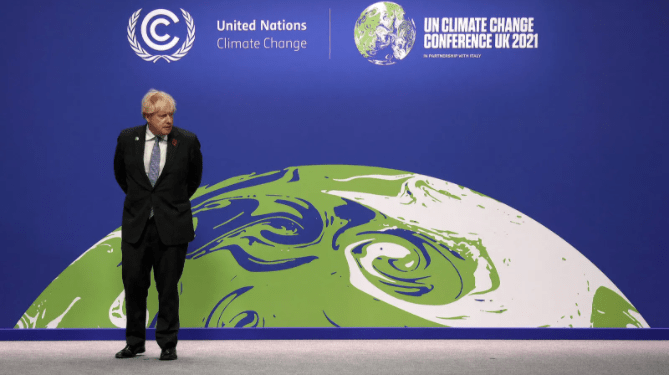
On a good day, Prime Minister Boris Johnson’s energy can change the political weather. But he will say, and forget, anything to get where he wants to be. Photography by Christopher Furlong / Getty

The last line of this article quotes the book of Proverbs, and it stings: ‘Where there is no vision, the people perish.’ We have a  borrowed phrase–not my circus, not my monkeys–for situations that are frustrating but technically none of our business. I did not like any element of the Brexit campaign, and I especially did not like Boris Johnson’s “solutions” to its challenges. None of my business, in a sense, because I am not a citizen of that country. But I care about the UK, so I care about Brexit. I care about the UK so I care about its leadership (or lack thereof). For that reason, I share this:

Boris Johnson’s Fickle Climate Leadership

In the face of scientific reality, the host of the U.N. climate-change talks comes up short.

For more than an hour on Monday morning, Boris Johnson, the British Prime Minister, stood on a gray carpet in front of a bright-blue-and-green backdrop—a swirling, hopeful suggestion of the Earth—at the Scottish Event Campus, in Glasgow, welcoming international leaders to cop26, the climate-change talks. A few feet away, António Guterres, the U.N. Secretary-General, a more placid presence, occupied his own stretch of carpet. Continue reading

Greek Islands & Cleaner Energy

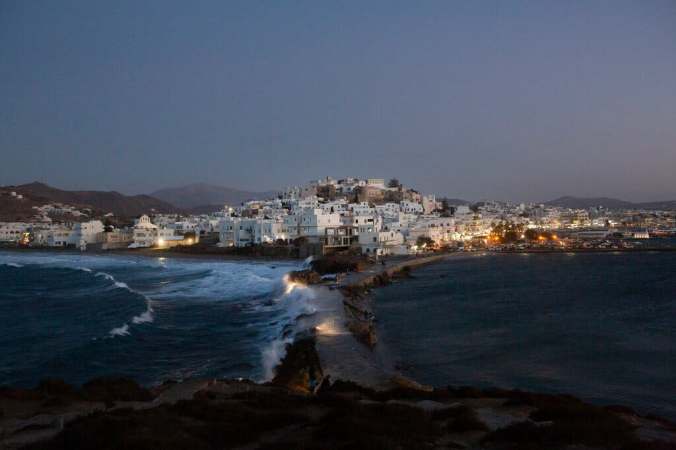
The island of Naxos is now linked to the Greek mainland via an underwater electrical cable. Eirini Vourloumis

Writing from Costa Rica, which currently generates nearly all of its electricity from renewable sources, but thinking of Greece, which is moving in that direction, my thanks to Liz Alderman and Eirini Vourloumis for the excellent reporting and photography about that journey:

Greece Is Getting Rewired for the Future

As climate change bears down, Greece is upending its sources of energy and trying to reshape its economic destiny.

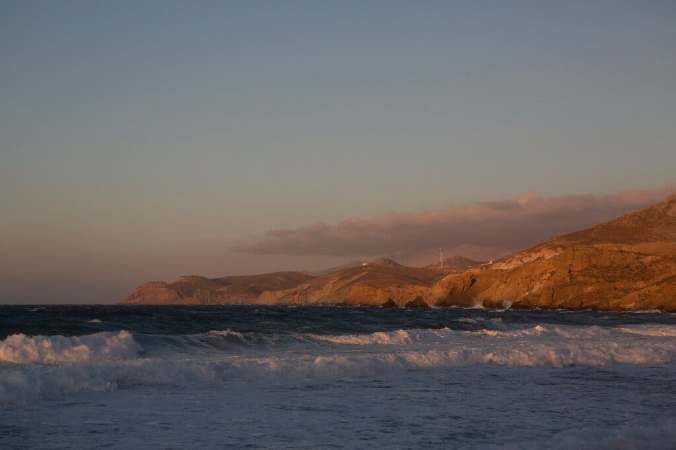
Two wind turbines on a hill outside the main town of Naxos. Eirini Vourloumis

NAXOS, Greece — On the windswept western tip of one of Greece’s largest islands, an unassuming stone building above the Aegean Sea has become an unlikely outpost in this country’s fight against climate change. Continue reading

Sign Up For McKibben

James Watt, at work in the small University of Glasgow workshop where he basically invented the fossil fuel era

I am trying to imagine getting tired of reading Bill McKibben’s constant flow of commentary and news, even though most of it is dismal. It would be like getting tired of paying attention to the environment, especially climate issues. Yesterday’s observations from Glasgow are particularly rewarding, and I hope you will consider subscribing to his newsletter:

Glasgow: where climate wreckage began

And where it’s definitely not going to end

I spent part of the morning wandering the gorgeous Victorian courtyards of the University of Glasgow (they would seem familiar to you—it’s where they shot the exteriors for the Harry Potter films), trying to find the university chapel where I was supposed to give a lecture. Instead of that august sanctuary, I stumbled across the James Watt building—and with it a poignant set of reminders about just how quickly we’ve managed to bring the world to the edge of ruin. Continue reading

Humanity & Melting History

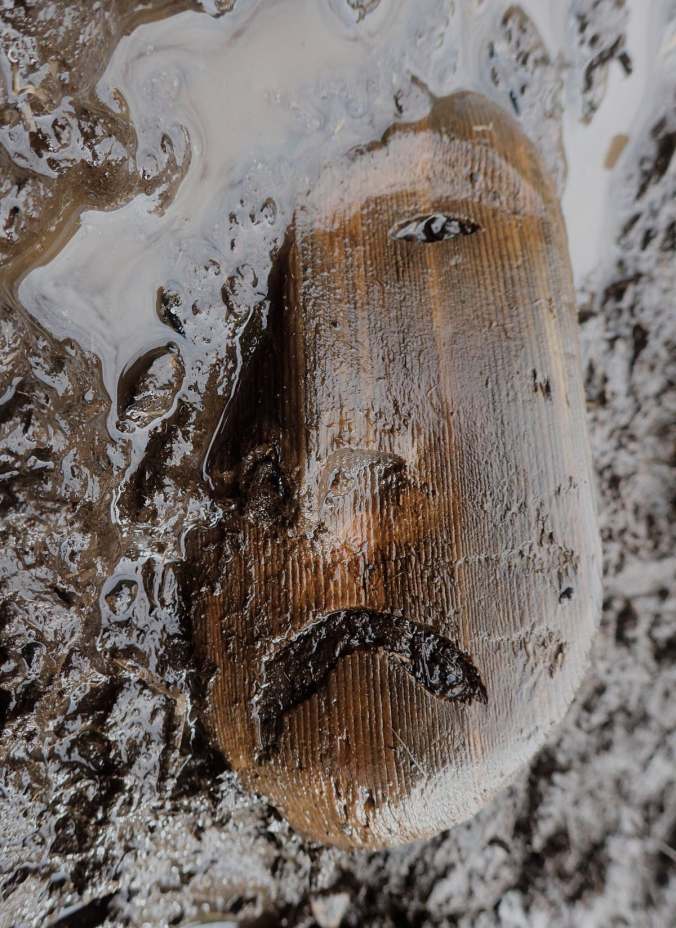
A mask belonging to the Yup’ik people of Alaska emerging from the permafrost. It is one of more than 100,000 artifacts retrieved from Nunalleq, the site of a village that was attacked by rivals 350 years ago. University of Aberdeen

When I posted about this book yesterday I had the long arc of history on my mind all day, and now this:

As Earth Warms, Human History Is Melting Away

Climate change is revealing long-frozen artifacts and animals to archaeologists. But the window for study is slender and shrinking.

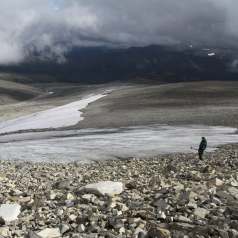
The Langfonne ice patch in Norway. Glacier Archaeology Program, Innlandet County Council

For the past few centuries, the Yup’ik peoples of Alaska have told gruesome tales of a massacre that occurred during the Bow and Arrow War Days, a series of long and often brutal battles across the Bering Sea coast and the Yukon. According to one account, the carnage started when one village sent a war party to raid another. But the residents had been tipped off and set an ambush, wiping out the marauders. The victors then attacked the undefended town, torching it and slaughtering its inhabitants. No one was spared. Continue reading

The Dawn Of Everything

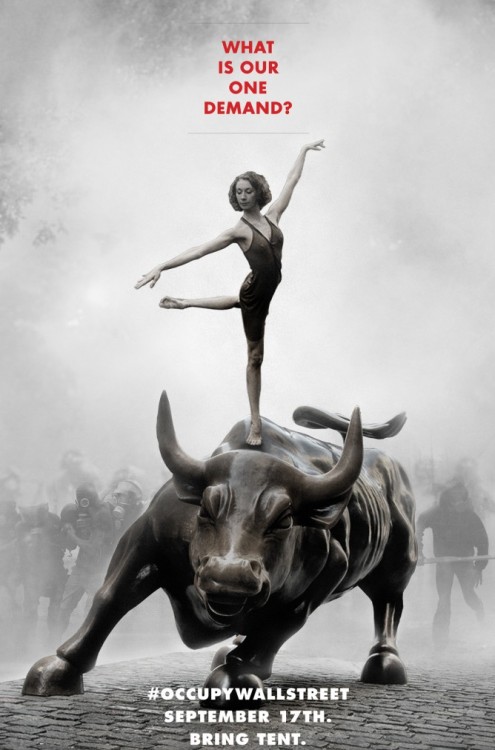
Occupy Wall Street never showed up in these pages until now, which is maybe too late. I recall visiting Zuccotti Park in late 2011, to observe more than to occupy. I remember a box of books, many young people and some my own age, and a palpable sense of purpose combined with a pretty straightforward logic. Also, tranquil. That ballerina meant something. But I could not stay. I was in New York on a very brief visit. I have the opposite of anarchist beliefs and my understanding at the time was that the animating philosophy had something to do with anarchy.

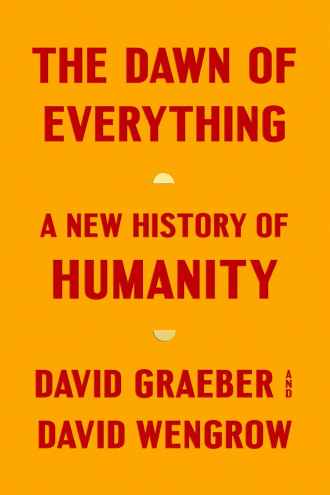
I shared views with Occupy Wall Street in opposition to historic inequalities that I could see as a ticking time bomb. But my time that day was limited. I had to leave. No regrets. Until now, perhaps. Maybe I should have stayed. This book, which I have now read several reviews of, gives me reason to wonder. That protest was the brainchild of someone who then spent a decade producing a book to offer a very different view of human history:

…The Big History best-sellers by Harari, Diamond and others have their differences. But they rest, Graeber and Wengrow argue, on a similar narrative of linear progress (or, depending on your point of view, decline). Continue reading

Blue-Legged Shiny Penny Tarantula

I have been working on expanding our banana and plantain micro-plantation, which has grown by at least three dozen newly planted in the last year. The largest of all herbaceous flowering plants, as they get to their “tree” stage they will serve as shade for the coffee we are prepping for planting this year. In the area where that planting is happening, as I move earth with my shovel I frequently encounter insects that are unlike any I have seen before. This recent encounter impressed me. Blue legs. Body armor like a shiny new penny. It got me humming a tune (if you are a fan of Harry Belafonte, you will know this lyric that goes with the tune):

A beautiful bunch o’ ripe banana
Daylight come and me wan’ go home
Hide the deadly black tarantula
Daylight come and me wan’ go home

If you are not yet a fan, what are you waiting for?

Geisha’s Got Game

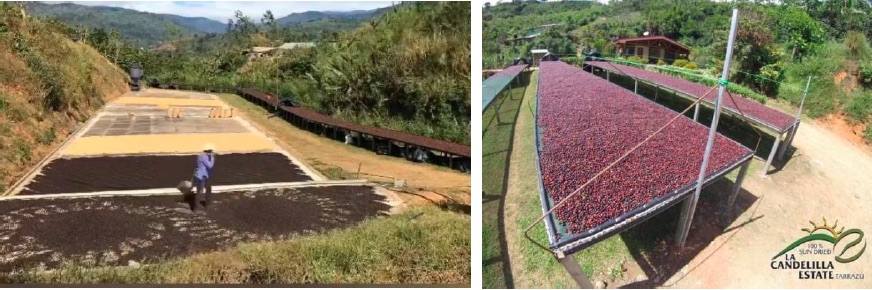
Today we are introducing a Geisha varietal produced by the Candelilla estate, a family farm in Costa Rica’s Tarrazu region, into the Organikos lineup of specialty coffees. Just in time, a friend from Panama who gifted us a bag of Hacienda la Esmeralda beans in late 2019, sent me a link yesterday to this film:

What goes into your daily cup of coffee? And what is that worth? The Republic of Panama, one of the tiniest countries and coffee exporters in the world, now produces the most sought-after beans on earth. They can sell for over $1,000 a pound, while commodity coffee prices hover around $1. HIGHER GROUNDS tells the story of how Panama is reimagining coffee…and of the inspiring passion and collaborative spirit behind it all.


Scientists At Work

This book, about a scientist who has featured in plenty of posts on this platform, is introduced by one of our favorite writers with some juicy gossip from the halls of academia. I had no idea that the biology department at Harvard divided along the lines described here; the how is the juicy part and the why makes some sense–all for the best–knowing what we know now. As an aside, having taken my first calculus course as a doctoral student at age 30, with undergrads as classmates, I had a jolt of painful memory that made me even more respectful of this biologist’s determination.

Silent EarthThe second book reviewed in this essay is one we have pointed to previously, and the research that led to it was also featured much earlier. The backstory presented in this essay brings the science to life, so do read through to the end:

Where Have All the Insects Gone?

Scientists who once documented new species of insects are now charting their perilous decline—and warning about what it will mean for the rest of us.

In the summer of 1942, Ed Wilson, age thirteen, decided that it was time to get serious about research. He had already determined that he wanted to be an entomologist, a choice made partly out of interest and partly out of injury. As a child, he’d been fascinated with marine life. One day, he jerked too hard on a fish he caught, and one of its needlelike spines lodged in his right eye. The lens had to be removed, and, following the surgery, to see something clearly he needed to hold it up near his face. Insects were just about the only animals that submitted to this treatment. Continue reading
Pruning & Planting Season

All in a day’s work

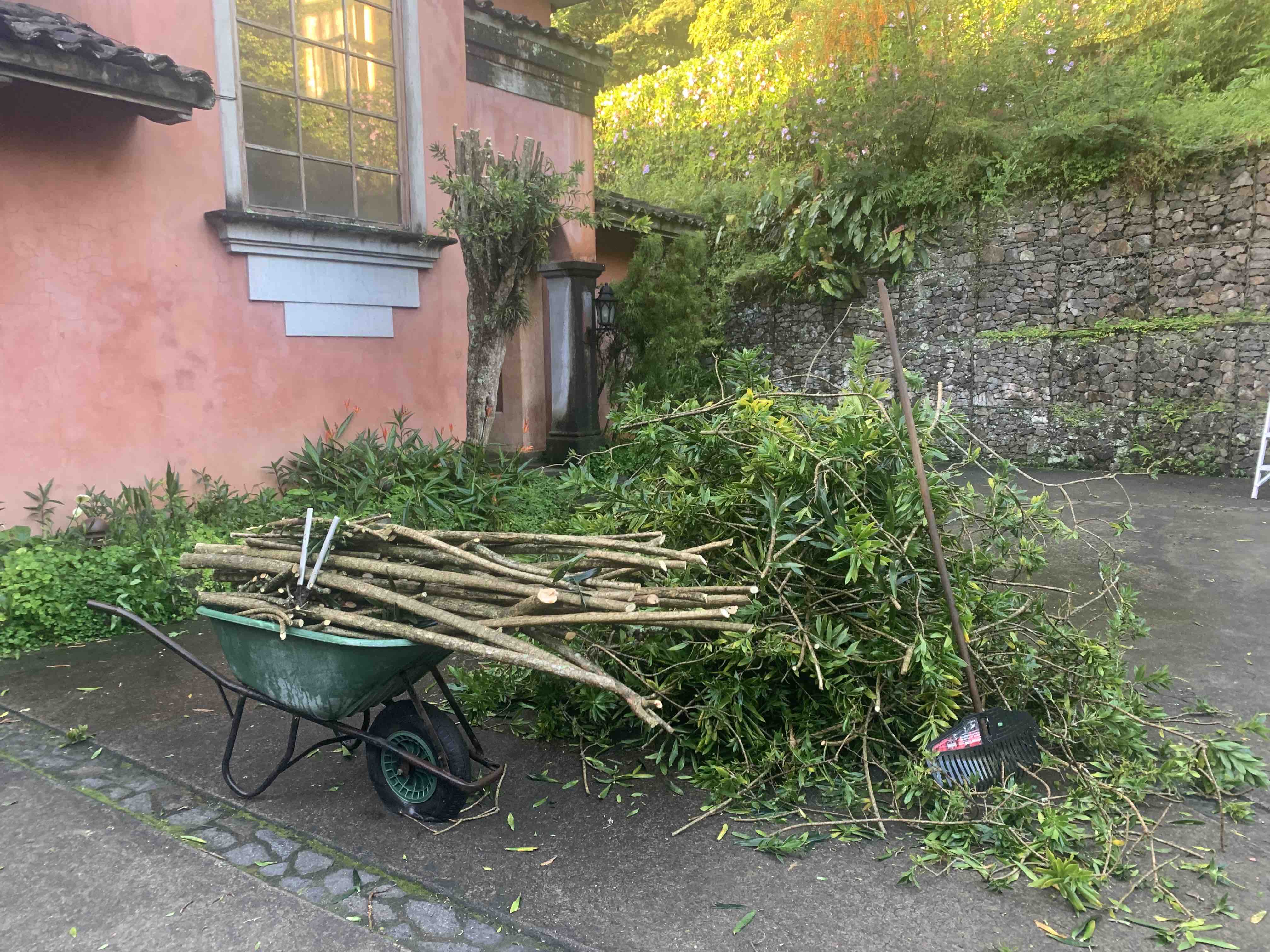
After 21 years since planting the sapling, this tree grew to be nearly two stories tall. Instead of one tall trunk with branches going horizontally and diagonally, there is one trunk that rises two meters from the ground up, and from there a dozen or so mini-trunks continue up vertically–those you can see in the foreground that are longer. I will now replant those tall stakes, plus another 100 or so smaller stakes cut from the top thinner sections of those branches. This is an unusual species of tree (more on that another time) so my hope is that planting all these cuttings will fortify the species. Birds love this tree, even though I have never seen fruit or any other edible that might attract them.

Roses In The Cloister

Roses in the cloister.   SIMON WATSON

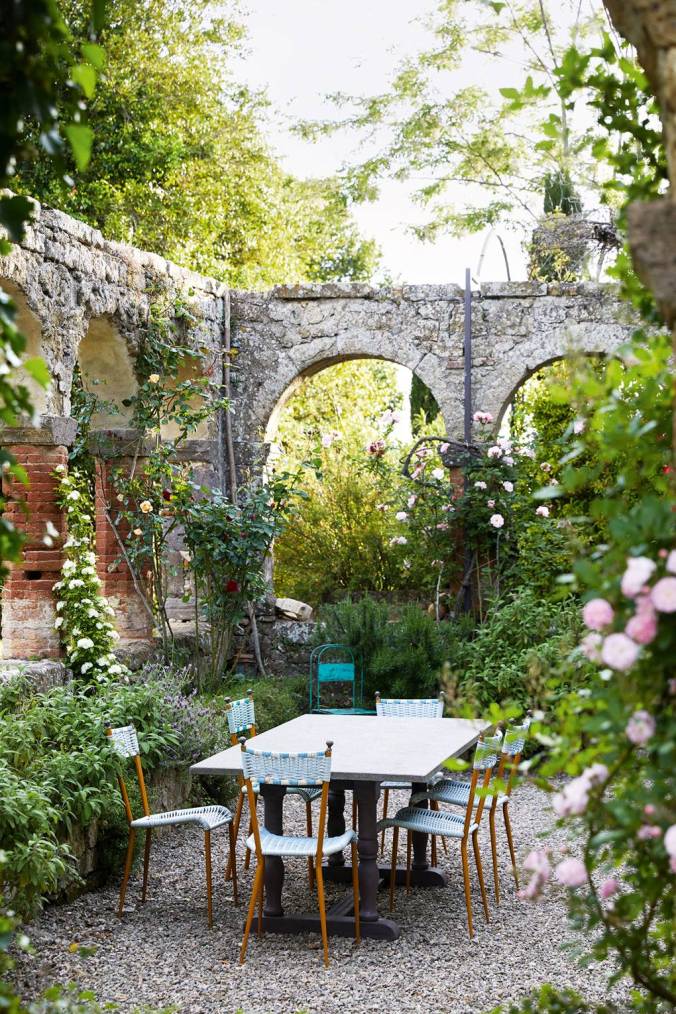
Yesterday’s post linked to earlier ones with rose references, and one of those led me to a small correction. The photo above shows a slightly different angle on the roses in the garden of the restored convent. I had assumed those roses were very old. A bit of sleuthing led me to the fact that they were planted during the restoration, and they are “indeed quite perfumed.” For that and other reasons it is worth taking another look at that project, this time told by Olinda Adeane and with excellent photos by Simon Watson:

A mother & daughter’s restoration of a 16th-century Tuscan convent

A mother-and-daughter design duo has taken an unconventional approach to the conversion of a sixteenth-century convent in Tuscany, filling the rooms with objects and artworks of their own making.

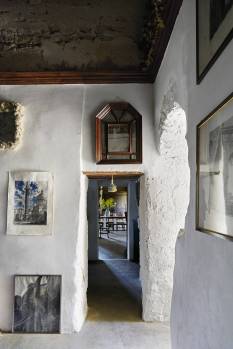
In the library, hand-coloured prints stand out against the white walls. SIMON WATSON

Henry James once described his friend Edith Wharton as a ‘great and glorious pendulum’ swinging back and forth across the Atlantic. In a similar fashion, Holly Lueders, a designer from New York, has returned to Greece every year since she first visited the country as an 18-year-old student. Holly grew up in a sleepy town in Missouri with little in the way of culture or local craft, but her family was artistic and good with their hands. ‘Anything we wanted, we made for ourselves,’ remembers Holly. She studied art history and archaeology at Columbia University and completed her studies in Athens. Continue reading
Admiring A Horticultural Refuge

Stella Kalinina

Community gardens have been a regular topic in our pages over the last decade. We never tire of the subject. I personally have a soft spot for roses, especially those found in unexpected places. So, Raúl Laly Fernández, you are my hero. I hope that the next time I am in Los Angeles I will find you in this garden and bear witness to the rose wonders I see in these photographs. Kudos to the writer/photographer Stella Kalinina for capturing this intersection between immigrant culture, working class refuge, and horticultural knowhow:

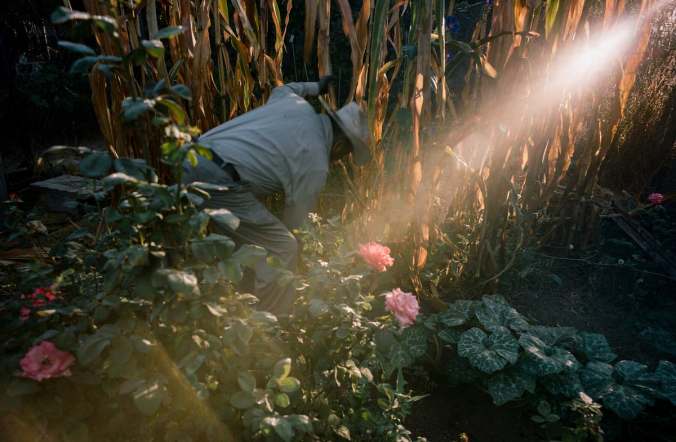
Mr. Fernández decorates a sitting area in his plot with roses that he grows.

In Los Angeles, Glimpses of an Oasis With Deep Immigrant Roots

The San Pedro Community Gardens have provided physical and spiritual nourishment for the past half a century to multiple generations of immigrant Angelenos.

Kimberly Mentlow received a plot in San Pedro after three years on a waiting list. “Being able to plant something or see something grow — it’s extremely therapeutic,” she said.

Ten minutes from my home, next to a decommissioned landfill, a freeway and the largest port in the country, sits an unlikely hillside oasis of vegetables and fruit trees.

Emerging like a mirage from its surroundings, the San Pedro Community Gardens occupy a six-acre parcel of city-owned land in the otherwise highly industrialized area of the blue-collar harbor community of San Pedro, in Los Angeles. Continue reading
Monbiot’s Scrutiny In Perspective

Illustration by Eva Bee

The first I heard of him, nearly a decade ago, I was immediately hooked on his writing, and the ideas he was offering were surprising to read in a mainstream, if progressive, publication. He introduced me to rewilding. If you have not been reading or perhaps listening to George Monbiot during this decade you may not have noticed how his radicalism has evolved. In this editorial ostensibly about the Pandora Papers I learned something about Madeira that I want to read more about:
…A few decades after the Portuguese colonised Madeira in 1420, they developed a system that differed in some respects from anything that had gone before. By felling the forests after which they named the island (madeira is Portuguese for wood), they created, in this uninhabited sphere, a blank slate – a terra nullius – in which a new economy could be built. Continue reading

Haruki Murakami Reflects On A Category Of Memento

This is from the British magazine The Economist. The message is very stylish, but it’s still a T‑shirt, and it makes me wonder about how to react to such a sudden, challenging dictum.

Photographs courtesy Ebisu Yasutomo

I would wear the shirt above. No surprise given how often I link to that publication. At our Authentica shops we sell items that serve as reminders. T-shirts are among those items.

We do not sell it, but I can relate to the kind of person who would wear the one in the photo to the right. Like the one above it illustrates a very short and delightful photo essay:

An Accidental Collection

How I amassed more T-shirts than I can store

by Haruki Murakami.

I’m not particularly interested in collecting things, but there is a kind of running motif in my life: despite my basic indifference, objects seem to collect around me. Continue reading
Verdant, Drenched & Down At Ground Level

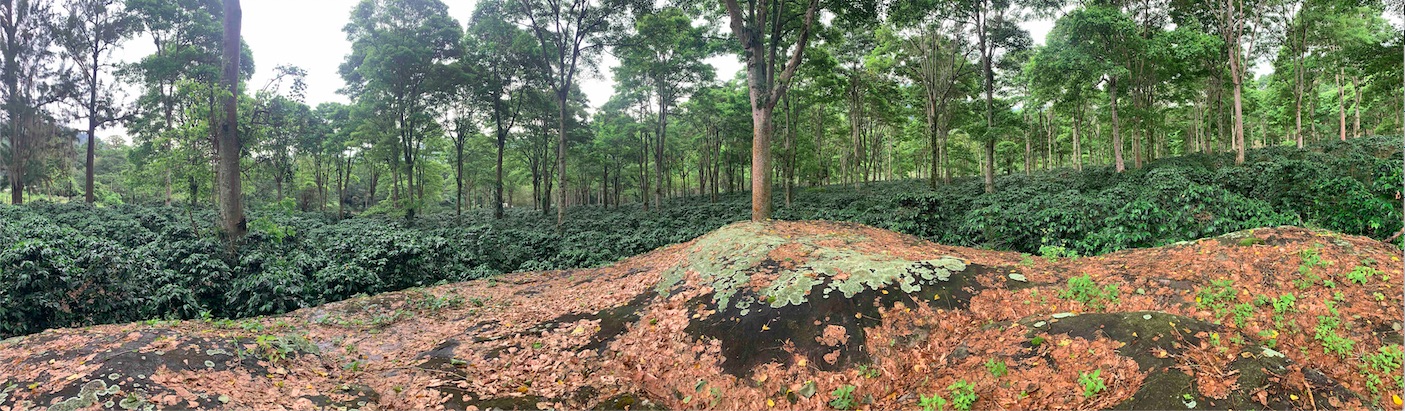
During the last six weeks or so of rainy season in Costa Rica, the word verdant is the perfect word for describing coffee plantations, especially those with long-lived canopies. The photo above, which I took while visiting a coffee farm in the Turrialba region, shows a mature canopy and coffee that is thriving under it, as are the lichens and moss on the gigantic rock in the foreground. Greenest this time of year, the coffee will have red cherries ready for picking within the next two months as the rains subside.
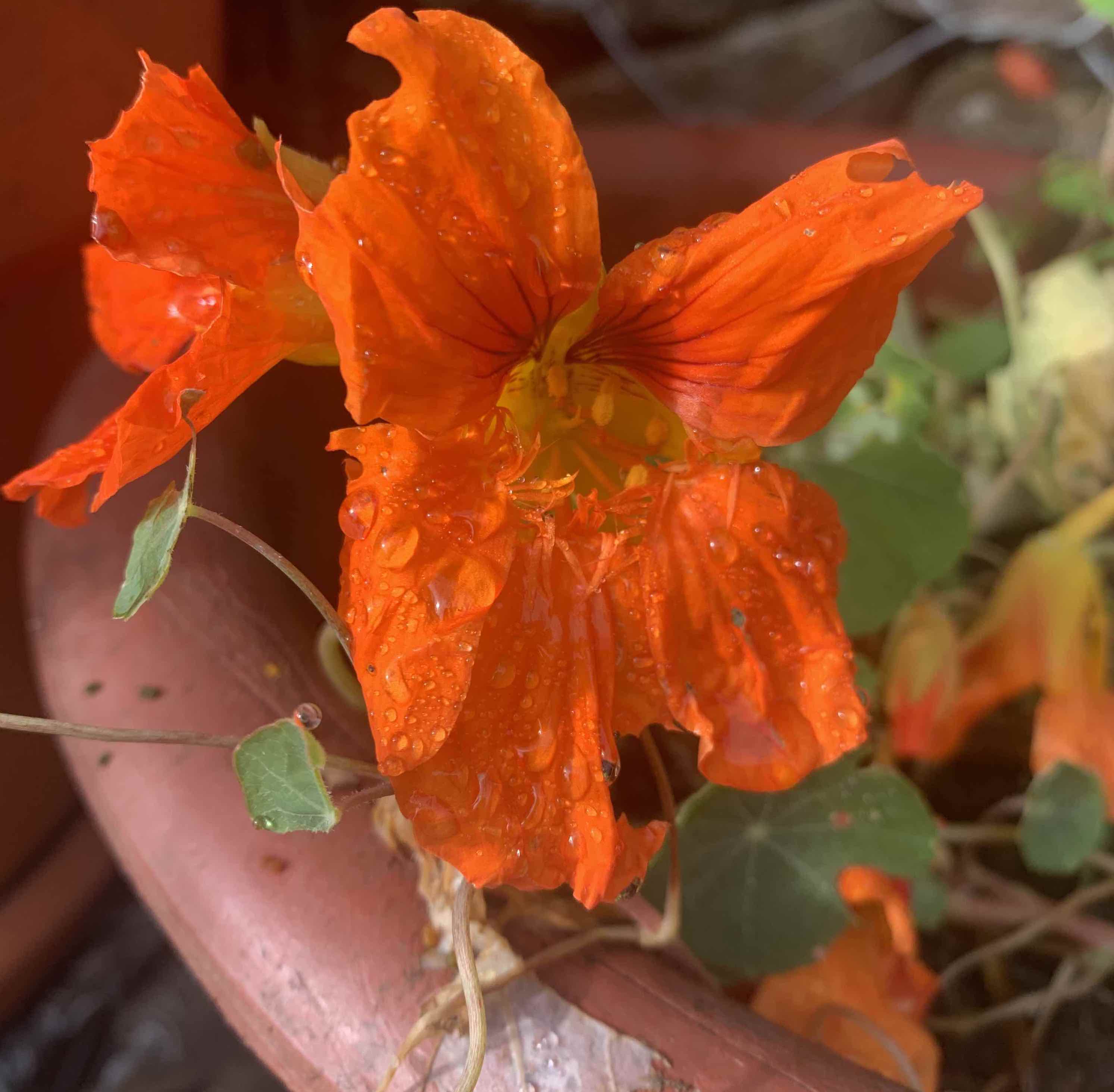
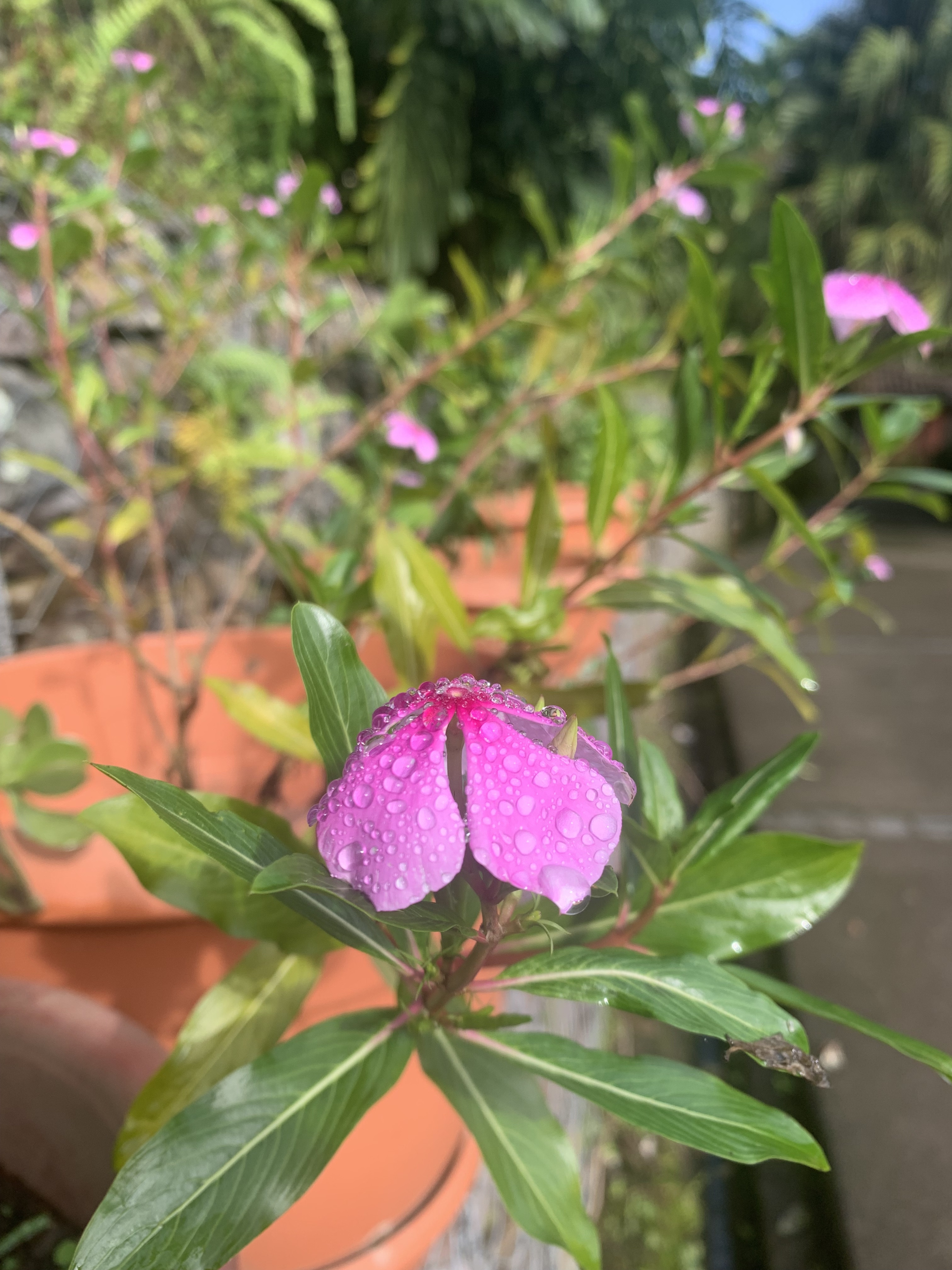
At home, potted flowers that have been providing color on a rock wall near our terrace are getting that drenched look.

Drenched does not have the same beautiful implication of verdant, but it will have to do. I cannot find a prettier alternative to describe the look of flowers that have absorbed as much water as possible and now just let the morning mist roll off.

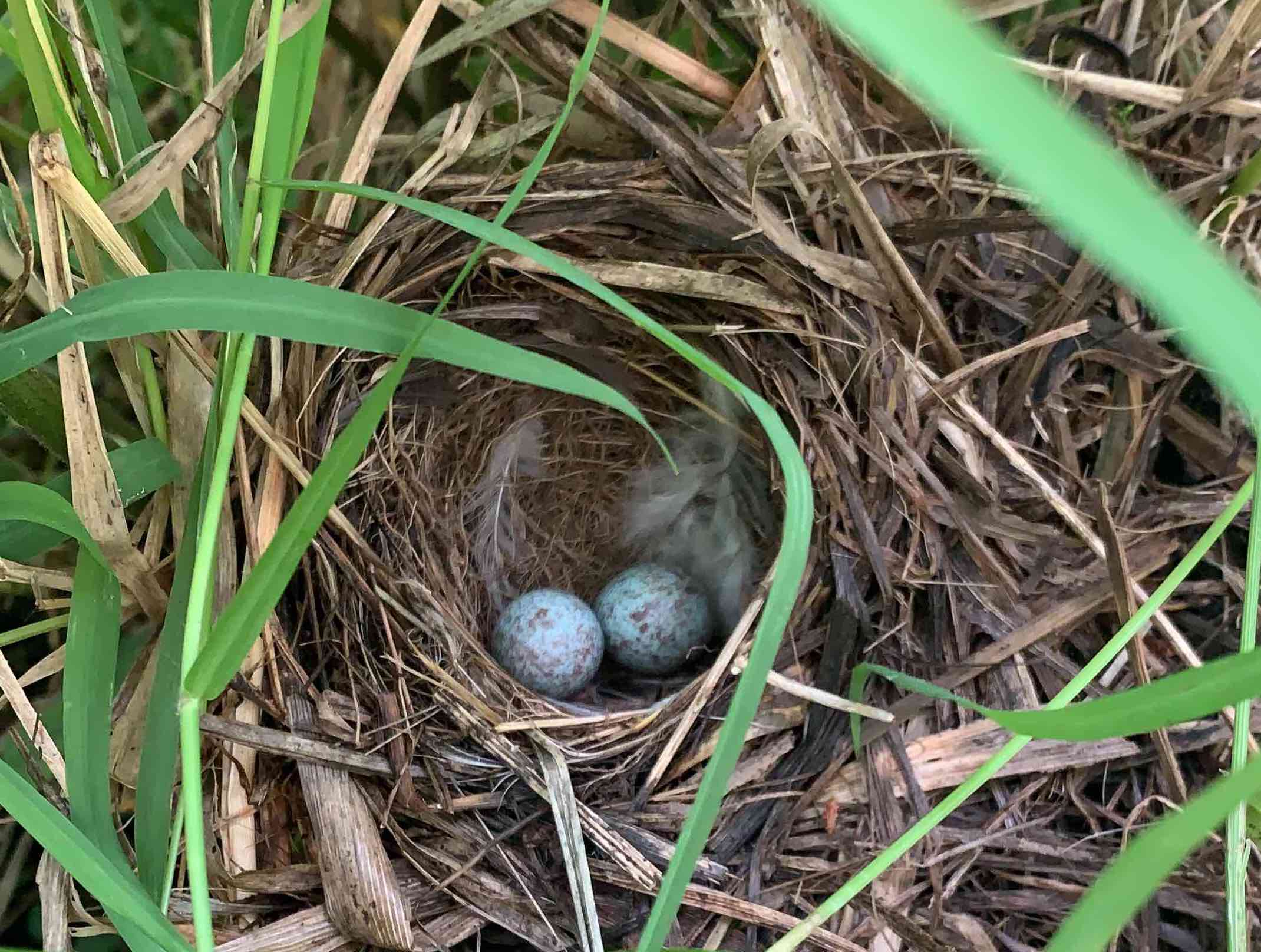
I was surprised to find this nest while tending to some overgrown grass yesterday. It was right by a post of the fence that protects the land we are replanting. The surprise was a nest at ground level. According to Seth these are most likely eggs from this bird. Good luck, eggs. Good luck, birds.

A Bit Of Merlin’s Backstory

Heather Wolf. Illustration by João Fazenda

Five years ago David Owen wrote a short article that fit well with the recycling and upcycling themes we frequently cover so we linked to it. Since then his writing caught my eye again on a related theme, and then earlier this year wrote one of my favorite profiles of recent years. This week I am drawn to his work again. Seth first introduced us to Merlin, after his three years working at the Lab of Ornithology. Merlin has been improving, and we have given it a few more looks since then. But today I am happy to learn more about the app’s backstory:

Meet Merlin, the Bird-Identifying App

How Heather Wolf, a part-time juggling impresario, turned her birding habit into an app that pegs species—even on the Brooklyn Bridge—using both images and birdsong.

Heather Wolf earned a degree in sociology at U.C.L.A., then spent six years playing electric bass in a travelling band. She earned a master’s degree in information science, moved to Brooklyn, and worked as a software developer for a company based in Manhattan. Continue reading

Restor & Correcting The Trillion Tree Mess

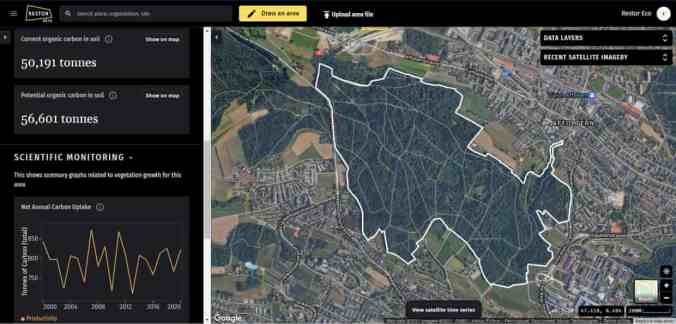
Crowther says Restor is his ‘life’s vision’, mapping the latest data and thousands of conservation projects. Photograph: Courtesy of Restor

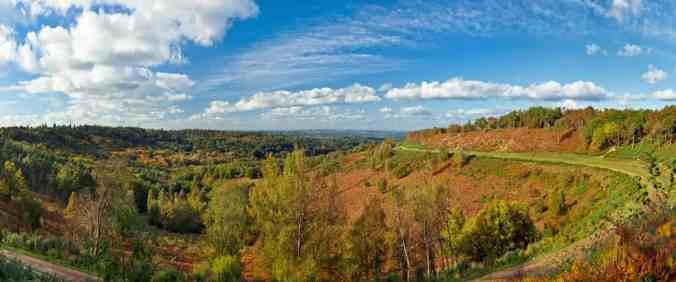
I have been on a tree-planting spree in the last couple years. So I am constantly on the lookout for resources that help me see this work in a larger context. Here is a great one I have just learned about. Restor’s macro-level organizing of conservation through geographic information systems requires skills and ambitions that few have in such capacity as the scientist featured in the following story. Maps like the one shown above are less inspirational, but more powerful in other ways, than scenes of effective restoration like the one below.

The former A3 London to Portsmouth road at Hindhead, after being restored back to heathland. Photograph: Tony Watson/Alamy

T. W. Crowther has featured in our pages for years, starting with our link to his work on how many trees are on our planet and what this implies with regard to climate. We lunged forward to share the idea that planting a trillion trees was the key implication, and also lurched back a bit when it seemed worthy of more consideration. This article does much to clear up “the mess” that Mr. Crowther acknowledges resulted from the trillion tree findings, and which I was captivated by:

‘I’ve never said we should plant a trillion trees’: what ecopreneur Thomas Crowther did next

Thomas Crowther understands more than most the danger of simple, optimistic messages about combating the climate crisis. Continue reading