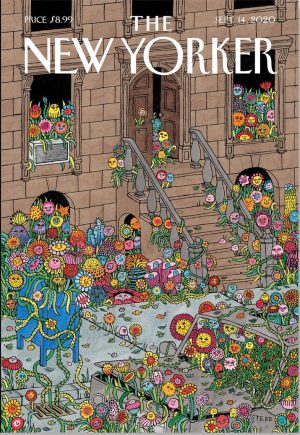
September Gardens

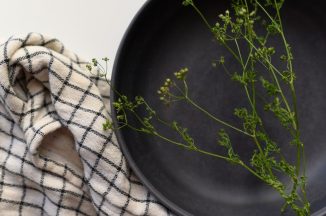
My media diet for posting on this platform is made up of 134 websites and counting, including half a dozen that I visit daily. This magazine cover, which was powerfully relevant to one of our longstanding themes, is from one of those half dozen, and the image to the right is from another. When Milo started a culinary fungi farm for us in India, small scale agriculture became a regular theme. So the growth in the cityscape combined with this story, The Culinary Potential of Bolting Vegetables, feels right at home with our garden theme:

The flavor of green coriander is a perfect complement to all the vegetables in season when it starts to bolt, even if the bolting happens earlier than expected.Photograph from Cavan / Getty

Did your garden bolt early this year? Maybe you didn’t even notice, because of how jagged and asymmetrical the passage of time has been since spring. Maybe you even spent a period in denial, thinking, This must just be what my cilantro, and lettuce, and parsley did last summer: briefly leaf in a friendly vegetative way, then sprint in suicidal mania toward a flowering death. That’s what happened to me, anyway. Continue reading

Sociology As A Moderator Of Economics

Zeynep Tufekci speaking at a conference in Munich. “I’ve just been struck by how right she has been,” said a Harvard epidemiologist. Credit: Felix Hörhager/Picture Alliance

By the time Zeynep Tufekci appeared in our pages last year I had been reading her analytical essays and op-eds for a while, and found her perspective on technology consistently clarifying. My instinctive apprehension about social media, which I could not explain, combined with my vague optimism about technology more broadly, which I also could not explain–found something to orient with in her writings. Now she makes an appearance through the lens of a keen observer of our media. What is keen about the observation is the attention to the sociological foundations of her perspective. With all that economics has done, for better and for worse, the influence of that dismal science has been ascendent for much of the modern era. Sociology has never had the prestige or influence in the USA that the field of economics has, and this profile hints at what this may have cost us:

How Zeynep Tufekci Keeps Getting the Big Things Right

Dr. Tufekci, a computer programmer who became a sociologist, sounded an early alarm on the need for protective masks. It wasn’t the first time she was right about something big.

Dr. Tufekci at a 2017 conference in Gothenburg, Sweden. Credit:Julia Reinhart/ Getty Images

When the Centers for Disease Control and Prevention told Americans in January that they didn’t need to wear masks, Dr. S. Vincent Rajkumar, a professor at the Mayo Clinic and the editor of the Blood Cancer Journal, couldn’t believe his ears.

But he kept silent until Zeynep Tufekci (pronounced ZAY-nep too-FEK-chee), a sociologist he had met on Twitter, wrote that the C.D.C. had blundered by saying protective face coverings should be worn by health workers but not ordinary people. Continue reading

The Garden, As Illuminated By Jamaica Kincaid

200907_r36965

The word garden currently catches my eye more effectively than any other word. Jamaica Kincaid gives good reason for it:

The Disturbances of the Garden

In the garden, one performs the act of possessing.

By Jamaica Kincaid

Consider Switching Your Search Engine

_114139145_christiankroll_ceo2

Christian Kroll was inspired to change the direction of his life after travelling through India

I remember testing Ecosia in 2013, when we were based in India. For some reason I no longer recall it did not remain my default search engine then. But after reading again about it now–and more about its founder’s ideas and expectations, and most importantly his actions–I was intrigued enough to do another test. Not exhaustive, but I compared the search results on Ecosia versus Google for a bunch of words and phrases that are of interest to me. Since Ecosia is connected to Bing I did not need to compare those results. Result? I have just made Ecosia my default search engine, for the reasons Mr. Kroll expected I would. And if for any reason I decide to switch back, this time I will report why here. But I do not expect to. This is an attempt to be consistent with my own expectations. Thanks to Suzanne Bearne for bringing this/him back to my attention:

The search engine boss who wants to help us all plant trees

_114131867_kenya2019_naliakainthetreenursery_copyrightjoshigottlieb

It supports 20 tree-planting projects in 15 different countries. Photo: JOSHI GOTTLIEN.

The BBC’s weekly The Boss series profiles different business leaders from around the world. This week we speak to Christian Kroll, the founder and chief executive of internet search engine Ecosia.

Christian Kroll wants nothing less than to change the world.

“I want to make the world a greener, better place,” he says.

“I also want to prove that there is a more ethical alternative to the kind of greedy capitalism that is coming close to destroying the planet.” Continue reading

A New Word, A New Way

merlin_172447659_8bf4071f-e0af-4399-bde4-1f973331804f-jumbo

Kai Schwoerer/Getty Images

Words matter. And from the outset of this platform we have let sustainable reign when talking travel, or tourism, or hospitality.  I am happy to have Elaine Glusac’s primer on new vocabulary to consider when discussing all our favorite, familiar topics. After 25 years with a word, a concept, that has worked wonders, this new message sounds about right to me. Regenerative, the word, the concept, does not make me think any less of the arc of sustainability’s useful life, which I think has a long stretch to go. But regenerative has a spring in its step:

Move Over, Sustainable Travel. Regenerative Travel Has Arrived.

Can a post-vaccine return to travel be smarter and greener than it was before March 2020? Some in the tourism industry are betting on it.

oakImage-1598454446779-jumbo

Kevin Steele/Playa Viva

Tourism, which grew faster than the global gross domestic product for the past nine years, has been decimated by the pandemic. Once accounting for 10 percent of employment worldwide, the sector is poised to shed 121 million jobs, with losses projected at a minimum of $3.4 trillion, according to the World Travel & Tourism Council.

But in the lull, some in the tourism industry are planning for a post-vaccine return to travel that’s better than it was before March 2020 — greener, smarter and less crowded. If sustainable tourism, which aims to counterbalance the social and environmental impacts associated with travel, was the aspirational outer limit of ecotourism before the pandemic, the new frontier is “regenerative travel,” or leaving a place better than you found it. Continue reading

Puzzling Palm Positivity

Palm-Full-Width-3

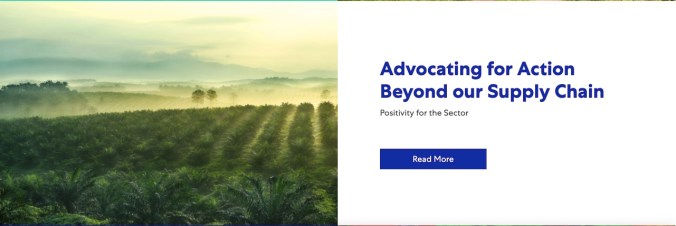
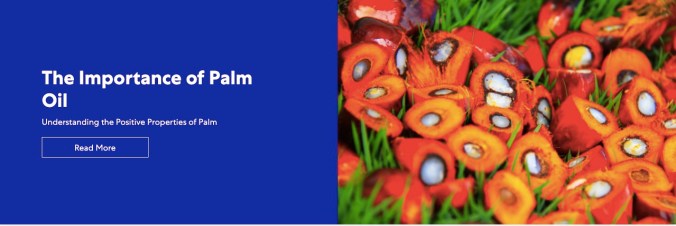
I saw this photo while skimming the headlines in the Environmental News section of the Guardian’s website. I have been skimming that section most mornings since July, 2011. Out of 3,000+ times skimming and always finding at least one news story to click through to read, today was the first time I ever clicked on an image that I could see was part of a paid advertisement. I landed on a screen filled with this:

Mars1

I have replicated as best I can what I saw, including the links to the messages embedded behind each of the images. The images of palm plantations are so pretty. The messages are so positive.

I am puzzled.

Palm?

Positive?

Michael Pollan With More On Coffee

When it comes to updating my knowledge about coffee I am omnivorous, and so Michael Pollan’s work is always welcome. He recently shared more about this work, and thankfully the Radcliffe Institute shared the zoom talk. If you are inclined to geek out on coffee, take an hour for that; or at least it is worthy of a few minutes if you only have time to read the summary:

How caffeine changed the world

Author Michael Pollan discusses his latest work on the world’s most-used psychoactive substance

Regenerating, Banana & Plantain

Banana1

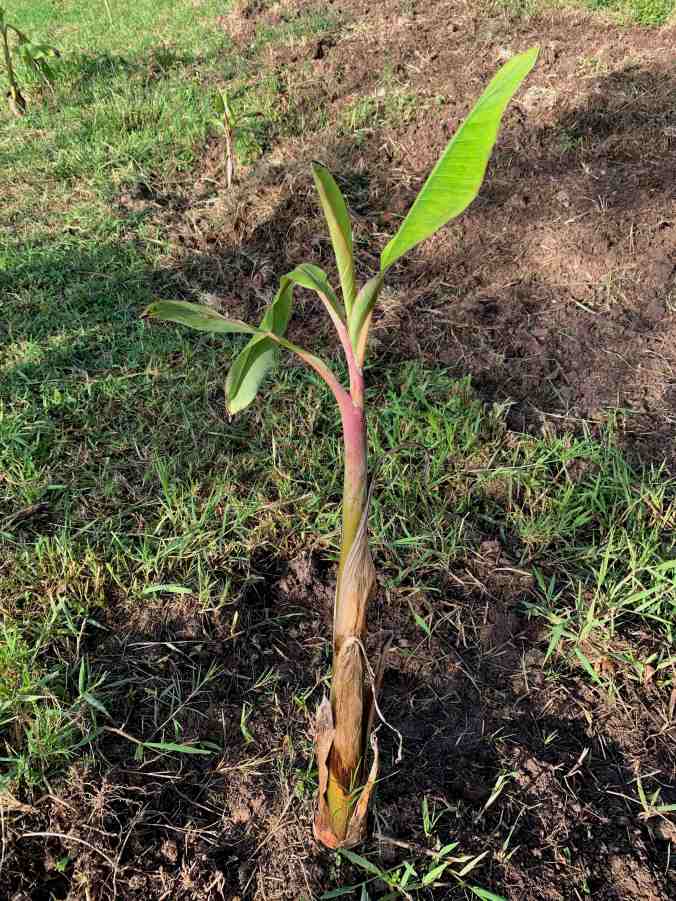
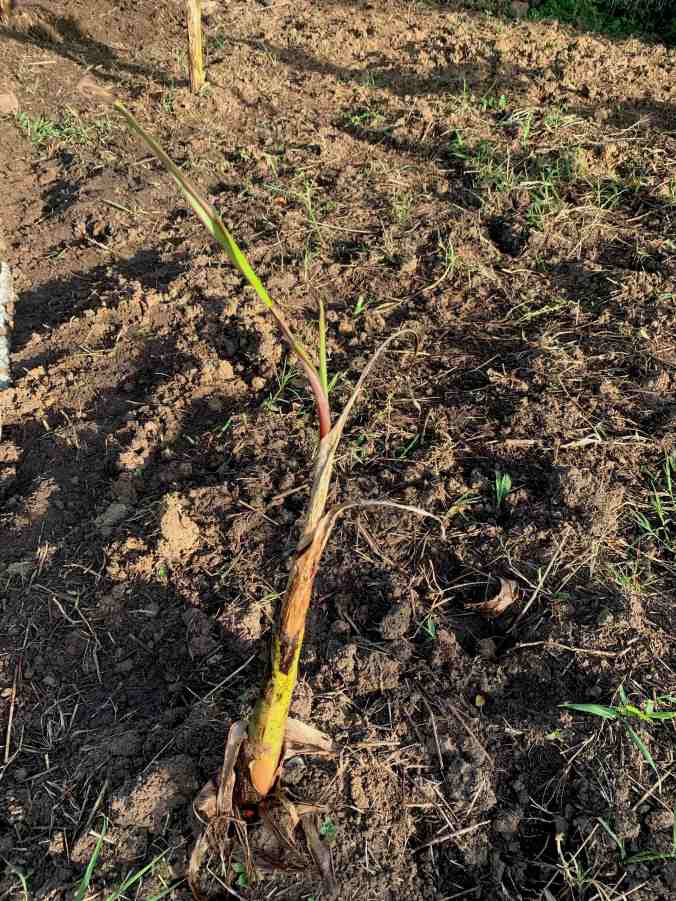
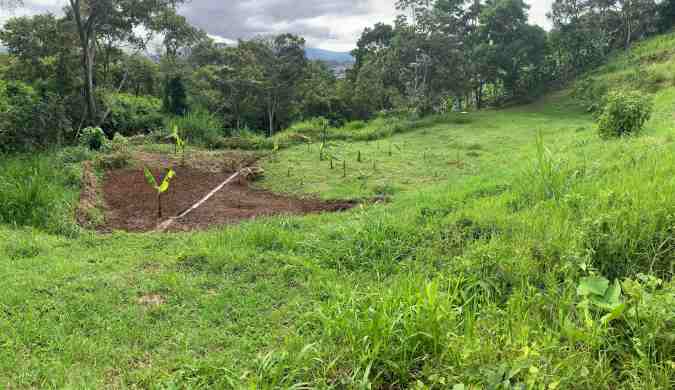
Following yesterday’s theme, but switching to another example, today I will say a few words more about the pitch. The last time I spent time thinking about bananas as much as I am now, it was in the context of creating an edible landscape. Amie and other team members wrote plenty on this topic when we were based in Kerala.

Banana2

Now that I am prepping for regeneration I am watching these banana and plantain plantings grow day to day, week to week as I remove the grasses surrounding them. Continue reading

Regenerating, Early Steps

Ornamentals

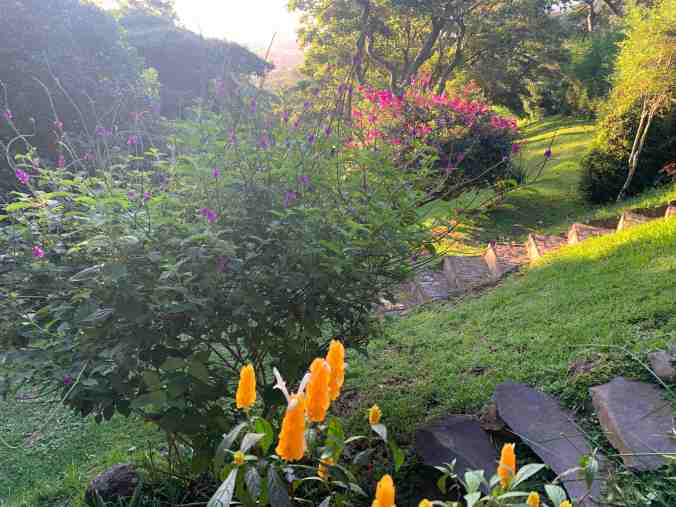
In the early stages of regenerating this erstwhile coffee farm, moving decades-old ornamentals to the periphery has been an important activity. But some ornamentals stay put. The purple flowers center-left in the image above are a favorite of both hummingbirds and butterflies, so that bush, planted only one year ago, was a no-go. And behind it, a bougainvillea that was planted in 2001 remains because it has become a favorite place for hens to bring their chicks to hide under the foliage from a grey hawk that has taken up residence above in the poro trees.

Ornamentals1

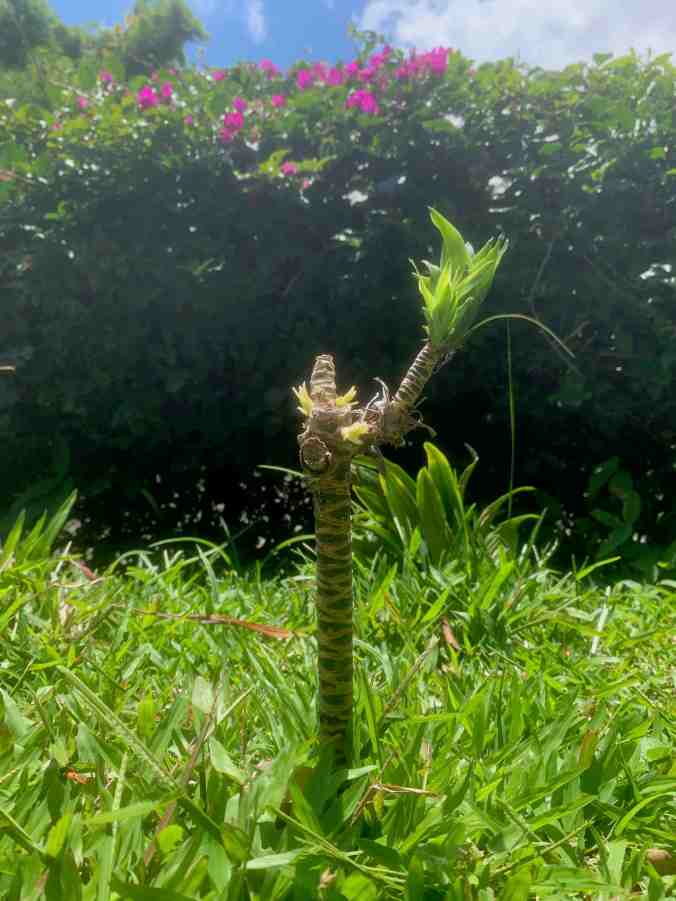
In this image above, in the background is a sibling of the bougainvillea planted in 2001, and this one was already closer to the periphery so did not need moving. But in the foreground is an example of another ornamental that has a completely different purpose. It is, frankly, an ugly ornamental as these things go. It does not produce flowers, instead putting its energy and other resources underground to create a strong, deep root system. It is planted for soil retention. And this stalk was cut from a mature version of the same, as seen below. Continue reading

Nature Nurtures

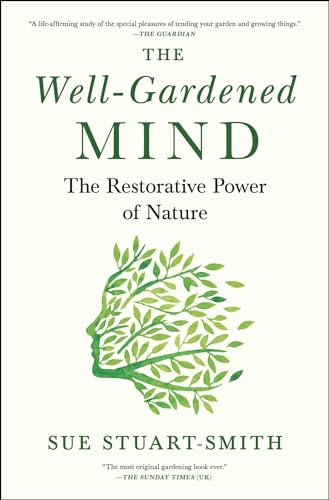
First, a recommendation of AbeBooks, one of the many alternatives you might consider for buying this or other books. Second, I recommend Rebecca Mead‘s riff on the book, The Therapeutic Power of Gardening in the current issue of the New Yorker.  When I last read her work there it was a stretch of the culinary imagination. This time, the opposite, with the subtitle of the essay asking “Can anxious minds find solace working with plants? A therapist and her husband, a garden designer, say yes.” We are in the middle of a perfect case study for the core thesis of the book and of Mead’s essay.

In the last six days we planted nearly 100 trees, like those pictured here, which will fix nitrogen in the soil, provide shade for the coffee, and beckon birds for both food–parrots in particular mob these trees when the flowers are in bloom–and nesting. There is an obvious connection between the concept of biophilia and what is discussed in this book and essay, but this quote captures a nuanced point differentiating cultivated versus wild nature:

“When we sow a seed, we plant a narrative of future possibility,” Sue Stuart-Smith, a British psychiatrist and psychotherapist, writes in her new book, Continue reading

Samfundssind, A Word For These Times

p08mjtp0

The JunkFood project is to continue, even though Alchemist has now reopened its doors (Credit: Soren Gammelmark)

How words matter is a longstanding theme here, and I have occasionally let a Danish word capture my attention. I am susceptible to stories about modern Danish norms, much as I was by Norse mythology as a kid. So, thanks to Mark Johanson and the BBC for bringing this to our attention:

How a long-forgotten word rallied a nation

A word buried in the history books helped Danes mobilise during the pandemic, flattening the curve and lifting community spirit.

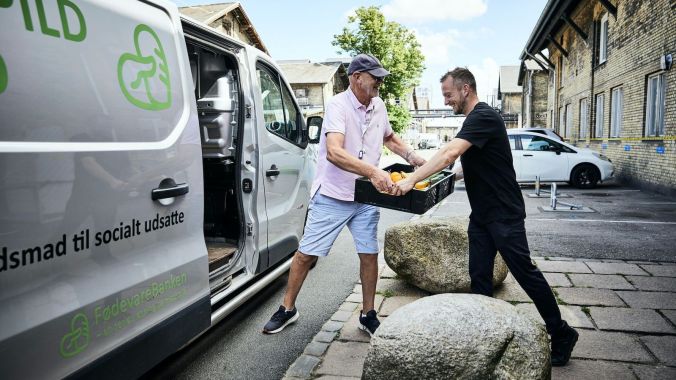
Danish chef Rasmus Munk shocked the culinary world last year with the opening of his audacious Copenhagen restaurant Alchemist, which offers a multisensory food and entertainment experience across 50 courses and five acts. More surprising, still, was what the Michelin-starred chef did next when the pandemic brought his marathon meals to an abrupt halt on 15 March.

p08mjt8h

By 19 March, Munk had pivoted from serving 2,900kr ($450) worth of molecular gastronomy (think wood ants preserved in candy ‘amber’ and cherry-infused lamb brains) for 48 nightly guests to whipping up 600 daily portions of down-to-earth staples (such as pasta carbonara and chicken puff pie) for Copenhagen’s homeless and socially vulnerable residents.

“I put out a call for help on Instagram, and the next day I had nearly 1,000 emails from fellow chefs and everyday people who offered to drive the food out to the 14 shelters we now work with,” he explains. Hotels and restaurants also got in touch to donate food that would have otherwise gone to waste. Soon, Alchemist’s four kitchens were buzzing with masked volunteers, and the nascent social responsibility project JunkFood, which Munk had started as an experiment before the pandemic, took root. Continue reading

Tending The Pitch

Quad

In previous posts I have pointed my lens to this area, but from another angle and with limited scope. In the photo above, in the distant upper right you san see a small light object which is the top of the bee colony. With this view you can make out where the curvy berms lead and if you squint you can see the long quadrangle. A few months prior to our departure to live in Croatia in August, 2006 I decided that this stretch of relatively flat land would make a good football pitch for our boys and their friends. It was a mess of bramble and brush at the time so I cleared it and removed the big rocks and let it be. We would be gone for one year, and when we came back I would finish the pitch.

Plans change. We did not return to live in Costa Rica for another dozen years. This week, as we move to Plan B I took a snapshot of how that pitch looks right now. I am one quarter of the way through removing all the grasses that invaded the land while we were away. Under their blanket is all the rich soil that earthworms produce when left alone for awhile. That pitch, which now has 30 banana and plantain trees, and hundreds of bean plants as well as beets, will next get watermelon where the land is already cleared. These all will help the soil, and prepare the shade needed, in advance of coffee planting next year.

Planting Coffee, Plan B

TriunfoSeedlings

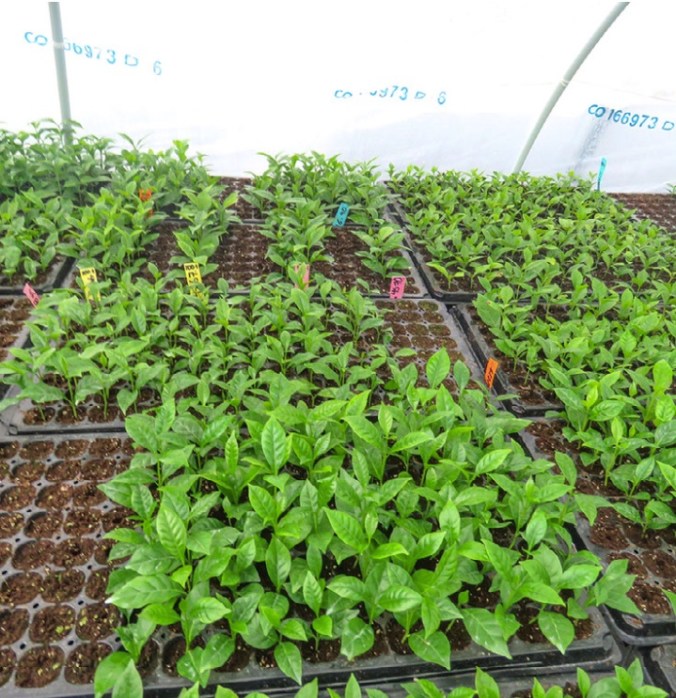
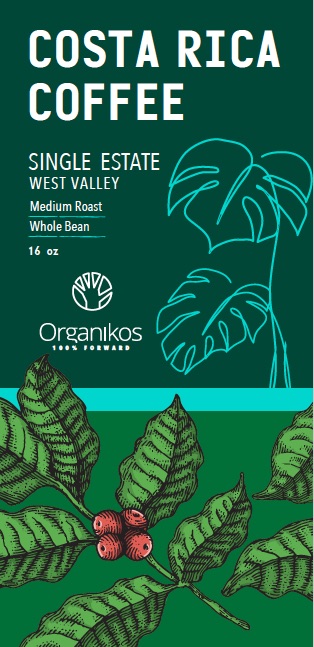
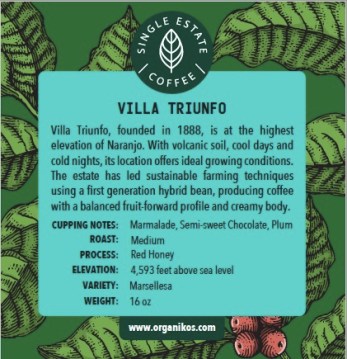
VTriunfoFIf you have been following these pages for at least a few months, you know that we kept the coffee beans from our last harvest to use as seeds for replanting land that was coffee farm for most of the last century. For better or worse, the photo above is not the result of those coffee beans. It is normal for seeds like ours to germinate in 6-8 weeks. As of today we have precisely zero germination. Plan A, complete. Not a failure, just a lesson in the vagaries of agriculture. Plan B has been growing on me since creating the new labels for our coffee. Specifically one of the single estates that we offer, which is produced at Villa Triunfo in the Western Valley of Costa Rica. These specifications, which I received last year during our cupping sessions, were my guide to rewriting the text for the label on the back of the bag:

VTBackThis farm is unique in that it has Starmaya and Marsellesa cultivars which were both developed as a joint venture between ECOM and CIRAD (agricultural development in France). This lot of coffee displays how when Marsellesa, a Sarchimor type varietal is properly cared for, harvested and processed it can rival some of the most desirable varietals in the region. This coffee was produced in the Red Honey method which leaves some residual mucilage on the seed prior to drying. After drying, the parchment coffee appears red in color resulting in the “Red Honey” distinction. With this process, a bit of the coffee fruit flavors make their way into the cup as well.

Today, I will put in motion Plan B, one part of which is the acquisition and planting of seedlings from these hybrid beans (those in the photo at the top) that our friends at Villa Triunfo have been having great success with.

Organikos, Coffee & Community

Walking yesterday’s theme further down a country road: since late March Community Supported Agriculture (CSA) has been a constant topic of interest. Initially my thoughts were with the family farms supplying our fruits and vegetables. We spent the month of April and much of May looking closely at how we might support them. Concerned that the social distancing and lockdown measures that were sure to come would close the farmers’ markets, putting unbearable pressure on those families and their farms we thought a limited time, limited purpose CSA would help these farmers. It was a good idea, but it was not for us to do. The municipalities, farmer cooperatives and other organizers of the farmers’ markets in Costa Rica proved creative and resilient. So far, so good.

Now, as we prepare to launch our coffee roasting and delivery service in the USA, I see Organikos offering a community the opportunity to support coffee farmers in Costa Rica. Last year, prior to opening, we had projected that in 2020 Organikos would sell 7,000 pounds of coffee in the two Authentica shops. Those two shops were designed to serve the travelers who have been arriving and departing by the millions for the last two decades. We entered into supply contracts based on those projections, and invested in the infrastructure to make it happen. We were on track, through mid-March, to meet the projections. Needless to say, now that will not happen as planned.

We may yet get to 7,000 pounds of coffee sold in 2020. With 4+ months to go, with the website ready to go live and the roaster fired up we will see how quickly we can build a community to support this particular form of agriculture.

Farming & Influence

merlin_175042608_2a4dde30-9e9a-43b9-a4ad-6577fd58351c-superJumbo

Hilary Swift for The New York Times

Ellen Barry, somehow, has not shown up in our pages before today. Strange, because she was based in India during our years there. Her audio adaptation of a dream-like experience, The Jungle Prince of Delhi, ranks with the best serialized podcasts out there. After her time in India she became New England Bureau Chief of the New York Times, a transition I will presume to understand: India can be so transformative and so profound an experience that landing back in familiar territory is a great next step. And today she shows up on my screen with a topic so different from that, and so related to my recent interests and activities that I finally must add her work to our recommendations:

In a Wistful Age, Farmers Find a New Angle: Chore TV

It’s hard for small farmers to earn a living selling their products. Enter the “farmer-influencer,” who can earn more by streaming farm life, in all its comforting monotony, to a growing online audience.

merlin_175042704_e4edf125-1362-4ae9-a81d-1f4da04cacba-superJumbo

Hilary Swift for The New York Times

PEACHAM, Vt. — The sweet smell of hay rose off the earth on a recent evening, as Morgan Gold strode across his farmyard in heavy boots. He crossed the paddock, scanning for new eggs, water levels, infected peck wounds, rips in the fence line.

But mainly — let’s be honest — he was looking for content.

Though Mr. Gold sells poultry and eggs from his duck farm in Vermont’s northeast corner, most of what he produces as a farmer is, well, entertainment.

Mr. Gold, who is short and stocky, with the good-natured ease of a standup comedian, does his chores while carrying a digital camera in one hand and murmuring into a microphone.

Then, twice a week, like clockwork, he posts a short video on YouTube about his exploits as a neophyte farmer, often highlighting failures or pratfalls. Keeping a close eye on analytics, he has boosted his YouTube audiences high enough to provide a steady advertising revenue of around $2,500 to $4,000 a month, about eight times what he earns from selling farm products. Continue reading

Mysterious Eels

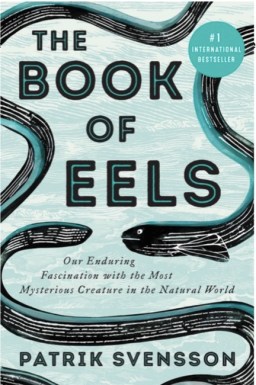
BookOfEelsThis book (click the image to the left to go to the publisher) has become an unexpected bestseller. The other times we have posted on the topic of eels, a couple of them were artistic in nature and the other were scientific in nature. I would not have predicted that a whole book on the topic was something I would want to read, let alone that a very sizable audience would develop. I would expect that if there were to be more than four posts mentioning eels in the nine years we have been posting, we might have covered the topic of aquatic agriculture. But, no.

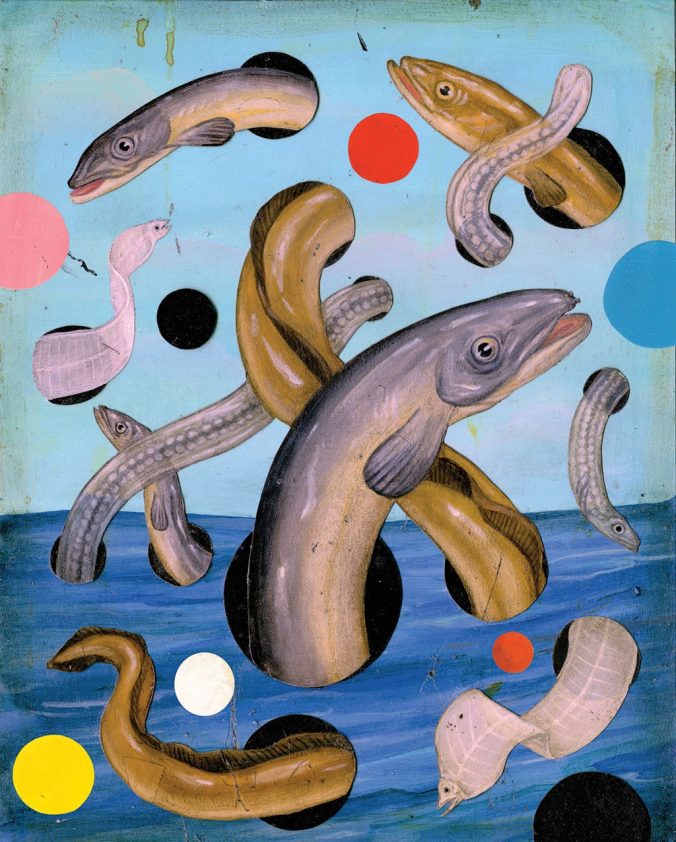
BookOfEelsNPRWhen I listened to a conversation (click the image to the right to go to the podcast) with the author of The Book of Eels it reminded me that I had already read a review of the book by Brooke Jarvis a few months earlier. And that we should post more on eels The illustration adorning the review was fun. The opening paragraphs were compelling:

200525_r36517

The mysterious creature has attracted avid detectives since ancient times. Illustration by Jason Holley

In the spring of 1876, a young man of nineteen arrived in the seaside city of Trieste and set about a curious task. Every morning, as the fishermen brought in their catch, he went to meet them at the port, where he bought eels by the dozens and then the hundreds. He carried them home, to a dissection table in a corner of his room, and—from eight until noon, when he broke for lunch, and then again from one until six, when he quit for the day and went to ogle the women of Trieste on the street—he diligently slashed away, in search of gonads. Continue reading

Aficionados-R-Us

Tandoh-cheese

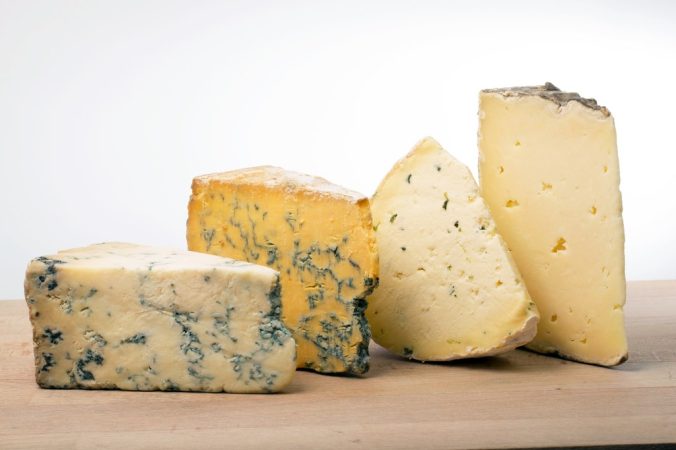
When you talk with aficionados, it usually doesn’t take long for the conversation to veer away from curds, whey, and mold, and toward matters of life and death. Photograph from Alamy

Ruby Tandoh, a food writer and the author of “Eat Up!,” has written an essay that fits perfectly on our platform. It happens to focus on the culture of cheese, which has not featured much here because for the first six years we were in India and since then we have been back in Costa Rica, and there is not much of a culture of cheese in either of those locations. But aficionado should be a category with which to tag most of our posts, whether the topic is coffee, authentic artisan handicrafts, sustainable travel, etc. So thanks to Ruby for emphasizing the aficionados in her essay (I will save for another day the surprise of feta cheese, which a farmer in Costa Rica is now making at Greek quality level):

How a Cheese Goes Extinct

The late Mary Holbrook, a white-haired maestro in the British cheesemaking world, was known for her soft cheeses and her sharp temper. Once a week, she made the trip from Sleight Farm, her home in the southwest of England, to London to check on her wares as they ripened in the maturation rooms of an upscale cheese shop. Holbrook’s apprentices, hardened to her singular style of mentorship, knew to brace themselves for reprimands when she returned. Occasionally, though, Holbrook would come back with bags of treats—yogurt, mangoes, sweets—which she spilled across the kitchen table of her cold mid-nineteenth-century farmhouse on the crest of a hill, and they knew that the cheese must be tasting good, and that Mary’s little world was in order. Continue reading

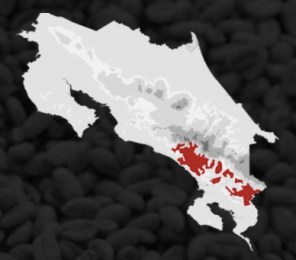
Costa Rica Coffee Terrain: Brunca

We have mentioned this region previously, showing where our organic coffee comes from. Brunca is, from my experience, the region most people would neglect to name if quizzed on listing all of Costa Rica’s coffee-growing zones. And while no one would claim it is racing to lead the pack in awareness, it is the region with the oldest certified organic coffee estate in the hemisphere, and if only for that reason, I think its future is bright:

BruncaCoffeeThe beverage’s taste ranges from the very soft, coming from the low and middle areas, to the sweet and complex citrus flavor of the higher areas of Pérez Zeledón and Coto Brus. Light aromas stand out, with fragrances similar to orange flowers and coffee jasmine.

Brunca is a region located in the south of Costa Rica and comprises the Coto Brus, Buenos Aires and Pérez Zeledón cantons. Continue reading

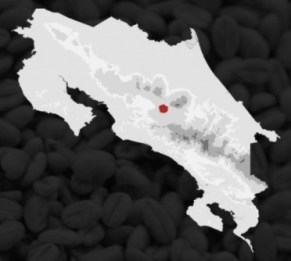
Costa Rica Coffee Terrain: Tres Rios

Tomorrow I will highlight a video showing one final region classified by the Costa Rica Coffee Institute. Yesterday I linked to a video of one of the lesser known regions; today, the smallest but historically most prestigious region:

TresRiosCoffeeIts green color has characteristic blue shades. A full-bodied beverage which guarantees, among other features, a pleasant long-lasting aftertaste. A fine and balanced acidity mixed with sweet notes.

Tres Ríos is located a few kilometers east of the capital of Costa Rica, San José.  Its origin dates back to 1820, with the expansion of the coffee area from the Central Valley to other provinces, which grew strongly during the 1840s and until the middle of the century. Continue reading

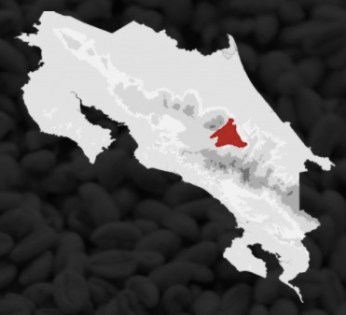
Costa Rica Coffee Terrain: Turrialba

From the Central Valley, go due east. You will cross into Cartago province and go through one of the most verdant agricultural zones in the country. If you are lucky to have a sunny day, the variations on green will dazzle you. Irazu volcano will be on your left, due north. When you have driven for about two hours you will arrive in Turrialba:

TurrialbaCoffeeIn this beautiful valley, the early ripening of coffee, extended by multiple flowerings resulting from constant rains, provides special conditions for the bean, which is characterized by its large size. Turrialba coffee is cherished because it supplies both the national and international markets early. The cup is characterized by a mild acidity, light body, and a delicate and soft aroma. Continue reading