Water Hogs & Fire

A huge field of pineapples in Maui, Hawaii. The extensive use of pesticides on Maui’s pineapple fields poisoned nearby water wells. Photograph: David Olsen/Alamy

In addition to helping understand how fire came to ravage a Hawaiian island, this article’s highlighting of water hogs makes the case obvious that water is an underpriced, therefore undervalued natural resource, so it gets wasted:

A sugar mill in Hawaii. Photograph: University of Southern California and California Historical Society

Land privatization and water depletion set the stage for the Lahaina fire 150 years ago. Now, land companies may benefit even more

In the late 18th century, when the Hawaiian Kingdom became a sovereign state, Lahaina carried such an abundance of water that early explorers reportedly anointed it “Venice of the Pacific”. A glut of natural wetlands nourished breadfruit trees, extensive taro terraces and fishponds that sustained wildlife and generations of Native Hawaiian families. Continue reading

UK Regenerative Agriculture Festival, Groundswell 2023

Last year’s highlights in the video above, and a review of this year’s festival in the link below to an online magazine:

Lannock Manor Farm, Hertfordshire, SG4 7EE, UK

The Groundswell Festival provides a forum for farmers, growers, or anyone interested in food production and the environment to learn about the theory and practical applications of regenerative farming systems.

The next Groundswell Festival takes place on the 26th & 27th of June 2024. View the Event Guide from 2023 here.

Among The Reasons To Regenerate Soil

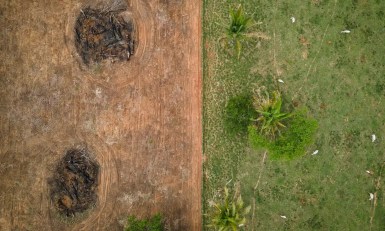
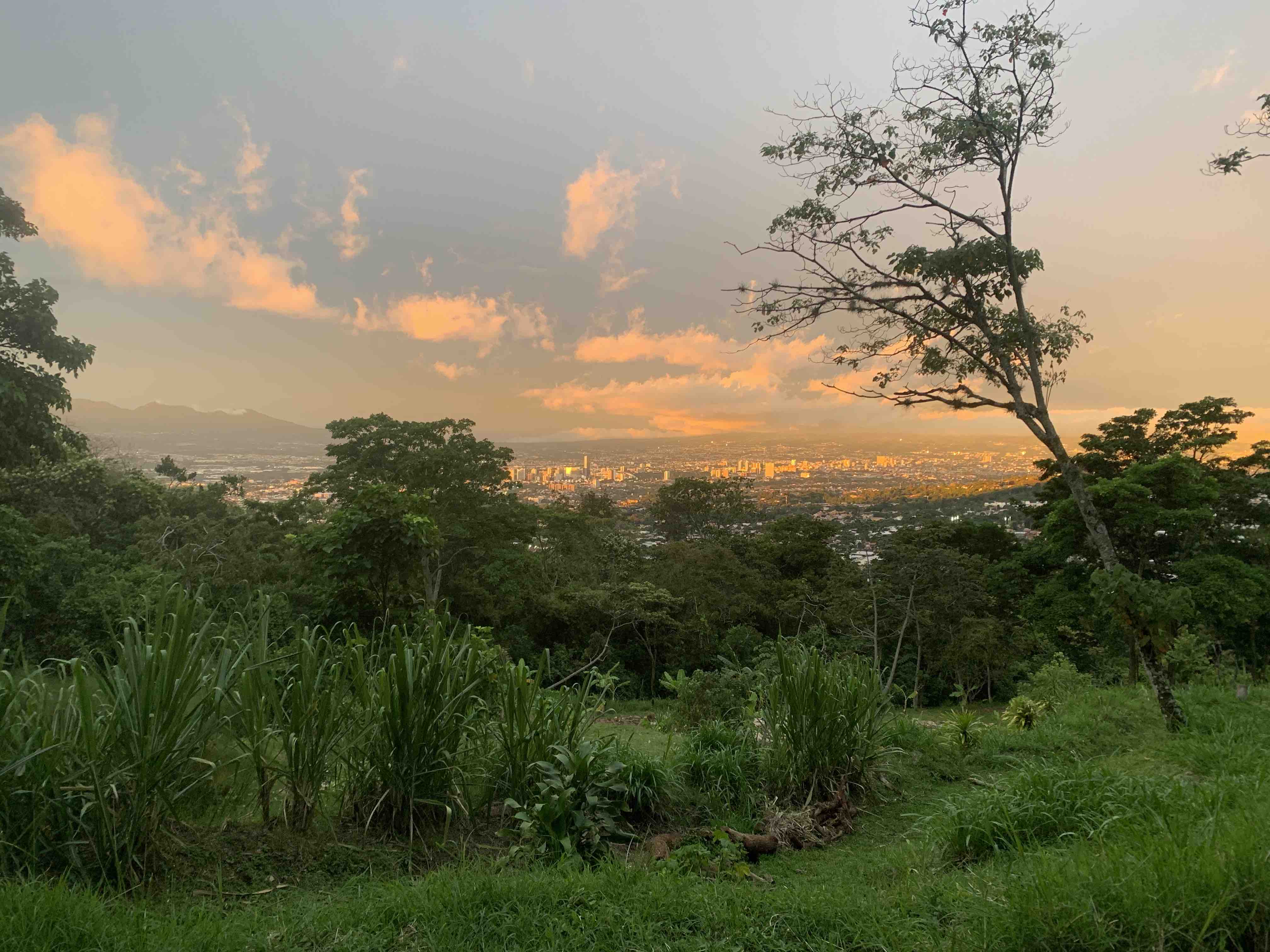
Organikos soil regeneration view from above, early Tuesday morning

When we started the berm where the sugarcane grows now, we knew we had a multi-year project ahead of us. This morning, before the sun had risen enough to shine on the land, I snapped the photo above, looking down on the acreage where we have planted more than 100 trees to provide shade for coffee we will plant in the near future. Besides all that, plenty of good ideas for how and why to regenerate the quality of the soil on that land; here’s some more:

A springtail crawls over snail eggs. ANDY MURRAY

Nearly Two-Thirds of All Species Live in the Ground, Scientists Estimate

Soils are more rich in life than coral reefs or rainforest canopies, providing a home to nearly two-thirds of all species, according to a sprawling new analysis. Continue reading
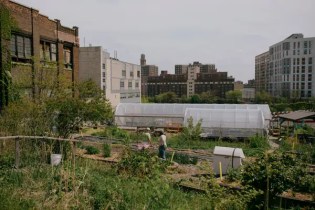
New Roots Garden, Urban Oasis

Sheryll Durrant has managed the New Roots Garden, which sits between the Grand Concourse and the Metro North railroad tracks in the Bronx, with volunteers for eight years.

We have linked out to stories about urban farming plenty of times; it never gets old:

Vital Places of Refuge in the Bronx, Community Gardens Gain Recognition

Lawmakers in Albany voted to designate community gardens statewide as crucial to the urban environment, especially in the fight against climate change. The bill awaits the governor’s signature but the role of these gardens stretches back decades.

The Morning Glory garden in the West Farms section of the Bronx is among more than 500 community gardens in New York City.

Sheryll Durrant left her family farm in Jamaica in 1989 and embarked on a career in corporate marketing. But after the 2008 financial meltdown, she reconsidered her life.

She returned to her roots.

Now she runs a thriving urban farm wedged into a triangular plot in the Bronx, between the Grand Concourse and the Metro North railroad tracks. At her farm, New Roots Garden, membership consists of refugees and migrants, resettled by the International Rescue Committee, whose herbs and vegetables sustain their memories of home.

“Just putting your hands in soil is a form of healing,” Ms. Durrant, 63, said. Continue reading
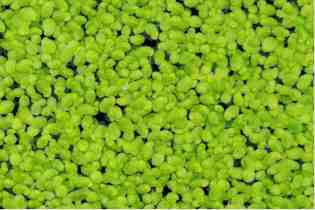
Duckweed, By Plantible Foods

Duckweed at the Plantible Foods aqua farm in San Marcos, Calif. (Eric Thayer/for The Washington Post)

We link frequently to articles about meat replacement options, and this appears to be the first time that duckweed is the plant protein being featured. So, thanks to Michael J. Coren, a climate advice columnist at the Washington Post, for this:

The plant protein that could push meat off your plate

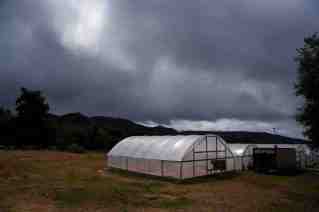
Plantible grows duckweed in ponds housed in greenhouses. (Eric Thayer/for The Washington Post)

SAN MARCOS, Calif. — I came to this aquatic farm an hour outside of San Diego because I wanted to see what could be the future of humanity’s protein supply.

At the moment, it looks more like a meth lab out of the drama “Breaking Bad,” jokes Tony Martens Fekini, the chief executive of Plantible Foods.

Debris from a machine that grinds duckweed. (Eric Thayer/for The Washington Post)

Decrepit recreational vehicles squat on the property. In one corner, people tend to vials, grow lights and centrifuges in a trailer lab. More than a dozen big ponds filled with duckweed, a tiny green plant, bask in the Southern California sunshine.

But the only thing cooking here is protein.

Continue reading
Taking Inspiration From Smallhold Farms In Africa

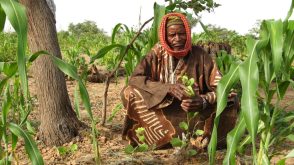
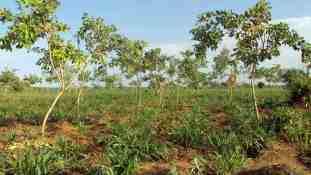
A farmer in Niger tends to a tree sprout growing among his millet crop. TONY RINAUDO / WORLD VISION AUSTRALIA

I am nearing the point where I can offer an update on the trees we have planted in advance of 1,000+ coffee plants going into the ground in their shade. Thanks to Fred Pearce, reporting in Yale E360, I have some inspiration coming from across the Atlantic on the broader value of those trees:

Dooki (Combretum glutinosum) trees grow on a millet field in Niger. P. SAVADOGO / ICRAF

As Africa Loses Forest, Its Small Farmers Are Bringing Back Trees

The loss of forests across Africa has long been documented. But recent studies show that small farmers from Senegal to Ethiopia to Malawi are allowing trees to regenerate on their lands, resulting in improved crop yields, productive fruit harvests, and a boost for carbon storage.

For decades, there have been reports of the deforestation of Africa. And they are true — the continent’s forests are disappearing, lost mainly to expanding agriculture, logging, and charcoal-making. But the trees? Continue reading
Sea Cucumbers Working Overtime

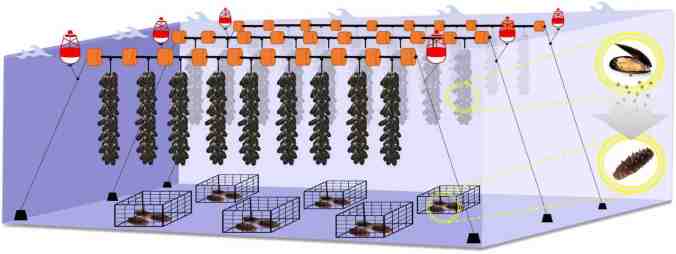
Diagram of a test project in Italy in which sea cucumbers cleaned up excrement from farmed mussels. GROSSO ET AL.

A topic that rarely, if ever, has made our pages, the sea cucumber’s moment in the spotlight has arrived:

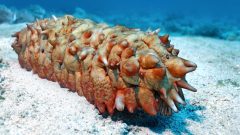
A sea cucumber near Mindoro Island in the Philippines. IMAGEBROKER / ALAMY STOCK PHOTO

Are Sea Cucumbers a Cleanup Solution to Fish Farm Pollution?

Seafood farm operators are breeding and deploying sea cucumbers to vacuum up the massive amounts of fish waste that pose a major problem for their industry. It is part of an effort to redesign fish farms with multiple species so that they work more like natural ecosystems.

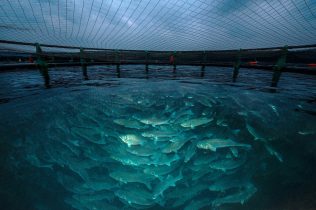
Sea bass at a fish farm in the Adriatic Sea off the coast of Slovenia. WATERFRAME / ALAMY STOCK PHOTO

Off the coast of the Hawaiian Island of Kauai, an underwater metropolis bustles. Sea turtles glide lazily through the surf while schools of fluorescent yellow butterflyfish weave between basketball-size sea urchins and sharp corals.

But Dave Anderson isn’t distracted by the otherworldly charm of the coral reef — he’s here on a mission. Around 70 feet below the surface, he finds his prize: a red sea cucumber. Continue reading

The World Of Sugar, Reviewed

Our thanks to the LA Review of Books for this review by Dinyar Patel:

Sugar, Slavery, and Capitalism: On Ulbe Bosma’s “The World of Sugar”

WHAT MIGHT DONALD RUMSFELD have in common with Frederick Barbarossa, Mormons, and Queen Elizabeth I’s rotting teeth? The answer is simpler than you might expect: the power and influence of sugar, a crystalline specimen of world-historical significance dissolved in your morning coffee or tea. A warmongering neocon, a Holy Roman emperor, pious Utahns, and a heavily cavitied pair of Tudor gnashers are part of an expansive cast of characters in Ulbe Bosma’s new work on the sweet stuff, The World of Sugar: How the Sweet Stuff Transformed Our Politics, Health, and Environment over 2,000 Years. This book is a tour de force of global history, one that helps us better understand the genesis of both modern capitalism and globalization. Continue reading

Collagen & Its Discontents

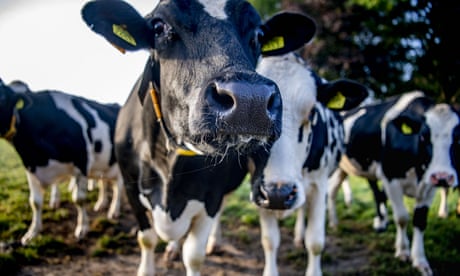
Collagen is derived from cattle, but unlike beef, there is currently no obligation to track the product’s environmental impacts. Photograph: Cícero Pedrosa Neto

Know your beauty products:

Global craze for collagen linked to Brazilian deforestation

Investigation finds cases of the wellness product, hailed for its anti-ageing benefits, being derived from cattle raised on farms damaging tropical forest

Tens of thousands of cattle raised on farms that are damaging tropical forests in Brazil are being used to produce collagen – the active ingredient in health supplements at the centre of a global wellness craze. Continue reading
Phosphogeddon, Peecycling & Other Modern Portmanteaus

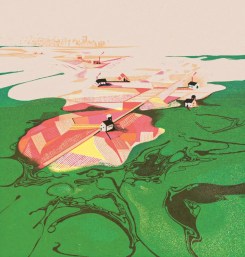
Addressing the problem, some scientists believe, may require reimagining agriculture from the ground up. Illustration by Juan Bernabeu

Stephen Porder is Professor of Ecology and Evolutionary Biology, a Fellow in the Institute at Brown for Environment and Society, and the Assistant Provost for Sustainability at Brown. Elemental is his new book looking at how life shapes Earth using basic elements we may take for granted. Read on to learn more about the book, and its wider relevance to other books now being published that discuss phosphorous.

Thanks, as always, to Elizabeth Kolbert for her book reviews, and in this case a nod to the Rich Earth Institute:

Phosphorus Saved Our Way of Life—and Now Threatens to End It

Fertilizers filled with the nutrient boosted our ability to feed the planet. Today, they’re creating vast and growing dead zones in our lakes and seas.

In the fall of 1802, the German naturalist Alexander von Humboldt arrived in Callao, Peru’s major port, just west of Lima. Humboldt had timed his visit to coincide with a transit of Mercury, which he planned to observe through a three-foot telescope, in order to determine Lima’s longitude. He set up his instruments atop a fort on the waterfront, and then, with a few days to kill before the event, wandered the docks. A powerful stench emanating from boats loaded with what looked like yellowish clay piqued his curiosity. From the locals, Humboldt learned that the material was bird shit from the nearby Chincha Islands, and that it was highly prized by farmers in the area. He decided to take some home with him. Continue reading
Coffee Capsules Reconsidered

‘It hurts to know that we create so much waste.’ Composite: The Guardian/Getty Images/NASA

We have been clearly on one side of this, but now thanks to Cecilia Nowell and the Guardian we acknowledge a possible reason to reconsider:

Are coffee pods really eco-friendly? The truth behind the surprising findings

Coffee capsules notoriously produce waste – but some experts maintain that reducing how much coffee you use, even with a pod, can decrease emissions

If you drink one of the 2bn cups of coffee consumed each day worldwide, you may have seen headlines last month celebrating the coffee pod, a single-serving container – typically made of plastic or aluminum – that can be inserted into a machine to brew a cup of coffee. Continue reading
Post-Peak Meat

Hundreds of dairy farms across California have sold the rights to their manure to energy producers. Illustration: Ricardo Cavolo/The Guardian

We are always on the lookout for more reasons why reducing beef and dairy consumption makes sense:

Brown gold: the great American manure rush begins

The energy industry is turning waste from dairy farms into renewable natural gas – but will it actually reduce emissions?

Cows in a meadow at a dairy farm in Zundert, the Netherlands.

Have we reached ‘peak meat’? Why one country is trying to limit its number of livestock

On an early August afternoon at Pinnacle Dairy, a farm located near the middle of California’s long Central Valley, 1,300 Jersey cows idle in the shade of open-air barns. Above them whir fans the size of satellites, circulating a breeze as the temperature pushes 100F (38C). Underfoot, a wet layer of feces emits a thick stench that hangs in the air. Just a tad unpleasant, the smell represents a potential goldmine. Continue reading

Seed Bank Futures

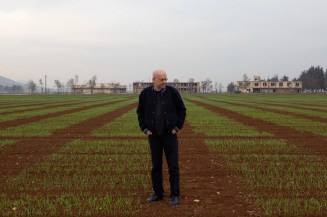
Hassan Machlab, a country manager with ICARDA in Lebanon, stands in the middle of a field with newly planted grains at the ICARDA research station, Dec. 21, 2022. Dalia Khamissy for NPR

Protecting plant species’ futures with seed banks grows greater in importance as time passes, because challenges to the planet multiply. We appreciate updates like this one by Ruth Sherlock and colleagues at National Public Radio (USA):

How ancient seeds from the Fertile Crescent could help save us from climate change

Chickpea grains are tested for various diseases at the ICARDA research station, Dec. 21, 2022. Dalia Khamissy for NPR

TERBOL, Lebanon — Inside a large freezer room at the International Center for Agricultural Research in the Dry Areas, tens of thousands of seeds are stored at a constant temperature of minus-4 degrees Fahrenheit. After being threshed and cleaned, the seeds are placed inside small, sealed foil packets and stored on rows of heavy, sliding metal shelves.

Barley grains stored at the ICARDA research station. Dalia Khamissy for NPR

Some of them may hold keys to helping the planet’s food supply adapt to climate change.

The gene bank can hold as many as 120,000 varieties of plants. Many of the seeds come from crops as old as agriculture itself. They’re sown by farmers in the Fertile Crescent region, where cultivation began some 11,000 years ago. Other seeds were deposited by researchers who’ve hiked in the past four decades through forests and mountains in the Middle East, Asia and North Africa, searching for wild relatives of wheat, legumes and other crops that are important to the human diet. Continue reading
Aeon & The Rise Of Maize In Asia

On the outskirts of Kunming, the capital of Yunnan province in southwestern China, 6 November 2006. Photo by stringer/Reuters

Aeon was a regular source of excellent ideas and information during our first few years, and we are happy to see it again:

Maize is arguably the single most important crop in the world and is rivalled only by soybeans in terms of versatility. That said, it is, along with sugar cane and palm oil, among the most controversial crops, proving particularly so to critics of industrial agriculture. Although maize is usually associated with the Western world, it has played a prominent role in Asia for a long time, and, in recent decades, its importance in Asia has soared. For better or worse, or more likely for better and worse, its role in Asia seems to be following the Western script. Continue reading
Land Use By Food Type, Data For Thought

The Conversation

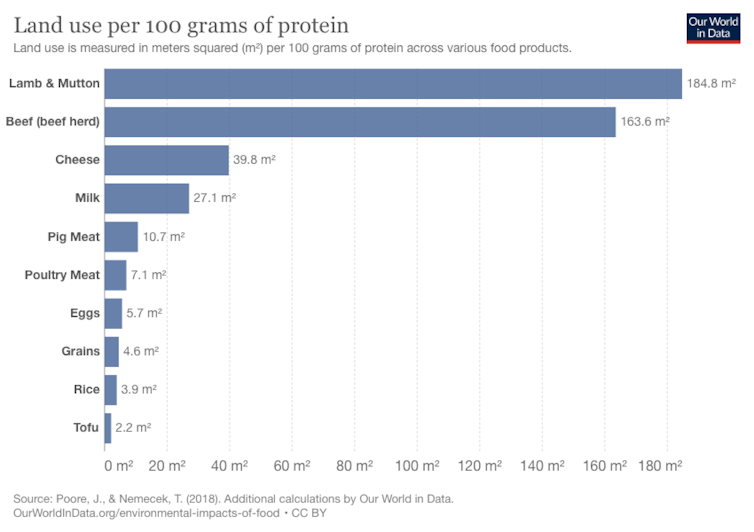
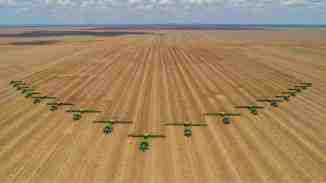
Chart of land use per 100g of protein for different foodsThe Conversation is “a news organization dedicated to facts and evidence” and with the tag line “Academic rigor, journalistic flair”. Our kind of reading. The graph to the left illustrates this article’s point; the photo below to the right is too composed for rigor:

Brazil’s enormous soy farms mostly produce food for animals, not humans. lourencolf / shutterstock

New food technologies could release 80% of the world’s farmland back to nature

Here’s the basic problem for conservation at a global level: food production, biodiversity and carbon storage in ecosystems are competing for the same land. Continue reading
Precision Fermentation’s Implied Potential

Illustration: Eleanor Shakespeare/The Guardian

It is the first time we are seeing these two words together, and George Monbiot has this to say about the potential implied:

Embrace what may be the most important green technology ever. It could save us all

Never mind the yuck factor: precision fermentation could produce new staple foods, and end our reliance on farming

So what do we do now? After 27 summits and no effective action, it seems that the real purpose was to keep us talking. If governments were serious about preventing climate breakdown, there would have been no Cops 2-27. The major issues would have been resolved at Cop1, as the ozone depletion crisis was at a single summit in Montreal. Continue reading
Peanuts, Soil Regeneration & Coffee

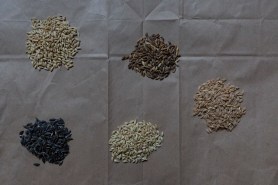
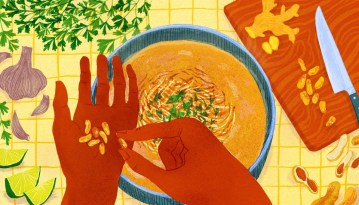
I will not blame Ruby Tandoh for the link to the predatory bookseller in her essay; the magazine she writes for is responsible. Instead, I will just put a better link from the book image on the left to where you might purchase it. Bringing our attention to the book is enough of a good deed to overlook that link. Especially as I work on finding new ways to fix nitrogen in the soil we are prepping for coffee planting:

The Possibilities of the Peanut

I’ve made salads of peanut with watermelon and sumac, fries dunked in garlic-scented satay sauce, and more variations on my aunt’s Ghanaian groundnut stew than I can remember.

Illustration by Sophia Pappas

It would be hard to find a more devoted champion of the peanut than the agricultural scientist George Washington Carver. Born into slavery in Missouri around 1864, Carver studied at Iowa State University and then taught at the Tuskegee Institute, where he would spend much of the rest of his life learning to repair the environmental damage wrought by intensive cotton farming. Continue reading
Banana Genome Science

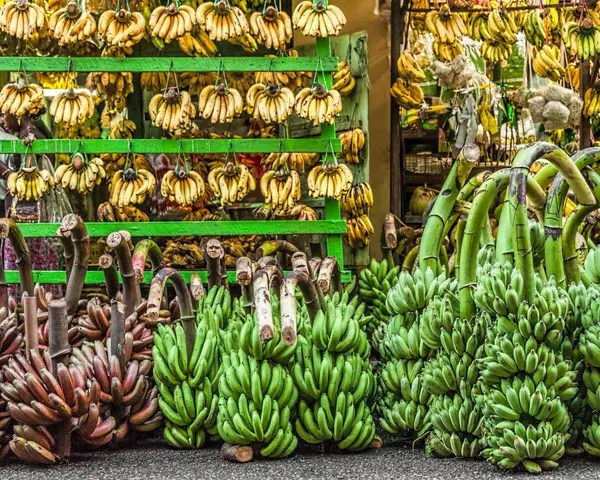
Imagine if you had all of these bananas to pick from every day. Beatrice Sirinuntananon/Shutterstock

We did not search for banana ancestors while living in India. We just found as many varietals as we could to support the genetic stock. I have remained interested in doing the same ever since. They are more versatile than most people are aware, so the outcome of this scientific search matters:

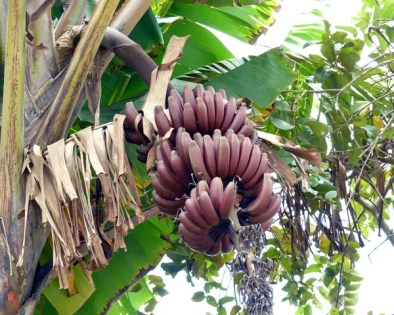
Red or blue, squat or bulbous, seeded or seedless: Bananas have a lot of diversity and scientists have identified genetic signals of varieties that have not yet been found in the wild. guentermanaus/Shutterstock

The Search Is on for Mysterious Banana Ancestors

A new study shows that domesticated bananas have genetic markers tying them to three types of wild bananas that have not yet been found.

Bananas, it turns out, are not what we thought they were.

Sure, most, when ripe, are yellow and sweet and delicious slathered in peanut butter. Continue reading
Olives, Farmers, Beauty & Beastly Heat

Emilio Parra Doiztua for The New York Times

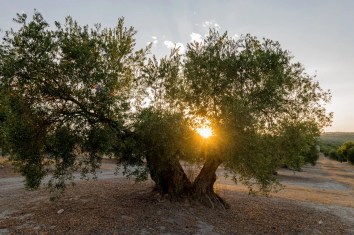
My thoughts today start with the people who farm olives in this location deprived of the water needed to sustain their livelihoods. Because my mother was born on an olive-producing farm in an olive-privileged region of Greece, my eye is always drawn to stories about olive farmers.
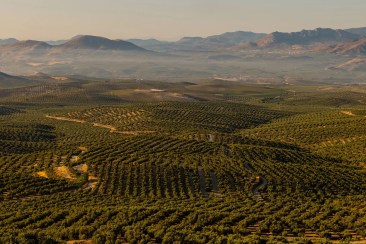
Jaén, a province of Andalusia, has over 67 million olive trees. Emilio Parra Doiztua for The New York Times

When there are photos of olive trees, I am in for the whole story. My strongest, earliest memories are of the olive trees surrounding the terrace of the farmhouse my mother grew up in. Stories about olive farmers challenged by climate change are more difficult to read without sympathy pain, but I do so knowing that olive trees are survivors.
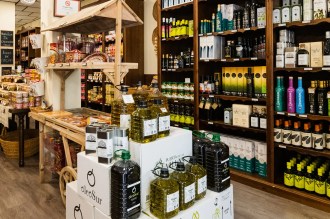
Panacite, a store in Ubeda, sells a range of variants of oil production from the region. Emilio Parra Doiztua for The New York Times

David Segal and José Bautista have reported this story with compassion and clarity:

Spain’s Jaén Province, home to one fifth of the world’s supply of “green gold,” copes with climate change and threats to its way of life.

The branch, plucked from one of thousands of trees in this densely packed olive grove, has browning leaves and a few tiny, desiccated buds that are bunched near the end. To Agustín Bautista, the branch tells a story and the story is about a harvest that is doomed. Continue reading

Alaska, Goosefoot Farm & The New Frontier

Either before or after reading the article below, please click on the image to the right. If it is early morning where you are, it will get you started on the right foot. If it is the middle of the day, the website will refresh you. And if it is night time, sweet dreams will almost certainly follow.

Our coffee CSA, combined with our regenerative activities, are only a  couple of reasons why this article is of personal interest to me. Work in Yakutia increased my wanting to visit Alaska, which started with the fact that my wife Amie was born there. Most of all, it is Alaska! The reasons are compounding, but time is not. Many thanks to Yasmin Tayag for this article in the New Yorker:

The Surreal Abundance of Alaska’s Permafrost Farms

Illustration by Nicholas Konrad / The New Yorker

In a place where the summer sun shines for twenty-one hours a day, climate change is helping to turn frozen ground into farmland.

In 2010, Brad St. Pierre and his wife, Christine, moved from California to Fairbanks, Alaska, to work as farmers. “People thought we were crazy,” Brad said. “They were, like, ‘You can grow things in Alaska?’ ” Their new home, not far from where Christine grew up, was as far north as Reykjavík, Iceland, and receives about sixty inches of snow each year. Continue reading