Dream Of The Octopus

The topic of octopus spiked last year for various reasons, but we have been interested in these creatures for much longer. Thanks to Benjamin Thompson and Shamini Bundell for this podcast on Nature’s website:

Do octopuses dream? Neural activity resembles human sleep stages

Brain probes reveal complexities of octopus sleep, and a hormone that could help make calorie-restricted diets more effective.

00:46 Inside the brains of sleeping octopuses

Researchers have probed the brains of octopuses and confirmed previous reports suggesting that these invertebrates have a two-stage sleep cycle similar to that seen in many vertebrates. The team suggests this system may have evolved independently in the two groups, as there are millions of years of evolutionary history between them. However, despite its presumed importance, it is a mystery why this system exists at all.

Research article: Pophale et al.

Nature Video: Do octopuses dream? Brain recordings provide the first clues

Reviving Plants Lost To Time

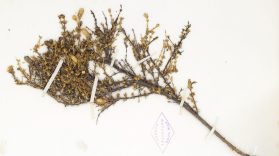
A branch of Blutaparon rigidum, collected on a 1905-1906 expedition to the Galapagos Islands, contains hundreds of potentially viable seeds. NEW YORK BOTANICAL GARDEN

We have touched on the topic of reviving extinct species only a few times previously, and as obvious as it seems we must mention that reviving plant species sounds like a more sound ambition. So, thanks to Janet Marinelli and Yale e360 for this story:

Back from the Dead: New Hope for Resurrecting Extinct Plants

Armed with new technology, botanists are proposing what was once thought impractical: reviving long-lost plant species by using seeds from dried specimens in collections. The challenges remain daunting, but researchers are now searching for the best de-extinction candidates.

In January 1769, botanists Joseph Banks and Daniel Solander found a daisy in Tierra del Fuego, at the southern tip of South America. Continue reading

George Musser Talks With Michael Levin For Nautilus

Nautilus is not one of our go-to sources for inspiration, but with conversations like this it is obvious we should be paying more attention to their work. Thanks to George Musser for this article:

The Biologist Blowing Our Minds

Michael Levin is uncovering the incredible, latent abilities of living things.

Michael Levin, a developmental biologist at Tufts University, has a knack for taking an unassuming organism and showing it’s capable of the darnedest things. He and his team once extracted skin cells from a frog embryo and cultivated them on their own. With no other cell types around, they were not “bullied,” as he put it, into forming skin tissue. Instead, they reassembled into a new organism of sorts, a “xenobot,” a coinage based on the Latin name of the frog species, Xenopus laevis. It zipped around like a paramecium in pond water. Continue reading

The Diligence Of Local Bees

Native Bees Yield Hardier Flowers Than Honey Bees, Research Finds

Bees getting the scientific attention they deserve, our thanks to Yale e360 for summarizing and sharing these findings:

Native Bees Yield Hardier Flowers Than Honey Bees, Research Finds

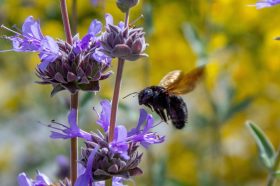
Flowers pollinated by native bees produce fitter offspring than flowers pollinated by honey bees, according to a new study carried out in San Diego, California. Continue reading

California Bumble Bee Atlas

Leif Richardson examines a queen bee. Grace Widyatmajda/NPR

Bumble bees need help and the California Bumble Bee Atlas Project is on it. Thanks to National Public Radio (USA) for bringing it to our attention:

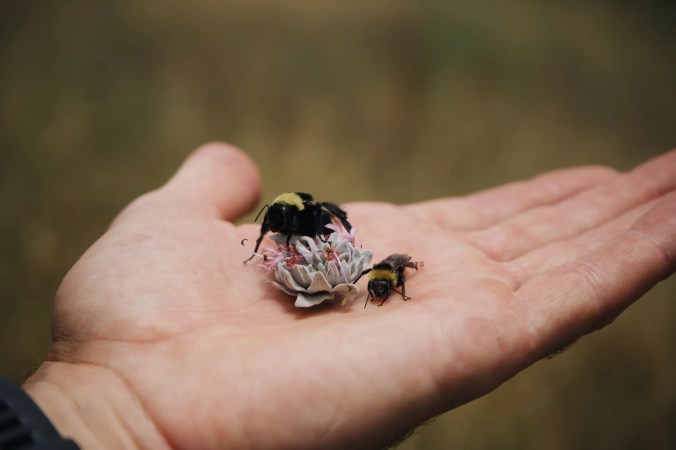
Krystle Hickman, a bee photographer and volunteer for the Bumble Bee Atlas Project, carefully places a bee onto a flower.
Grace Widyatmadja/NPR

Nets, coolers and courage: A day in the life of a volunteer bee conservationist

I never realized how fuzzy a bumble bee is until I got to hold one between my fingertips. It feels like a furry black and yellow bear, buzzing with its tiny body, wriggling with its legs.

The conservation biologist Leif Richardson, who handed me this bee a moment ago, has some advice for holding it. “You’re going to squeeze harder than you think you need to, but not so hard that you hurt him.” Continue reading

Duckweed, By Plantible Foods

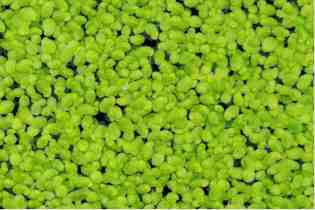
Duckweed at the Plantible Foods aqua farm in San Marcos, Calif. (Eric Thayer/for The Washington Post)

We link frequently to articles about meat replacement options, and this appears to be the first time that duckweed is the plant protein being featured. So, thanks to Michael J. Coren, a climate advice columnist at the Washington Post, for this:

The plant protein that could push meat off your plate

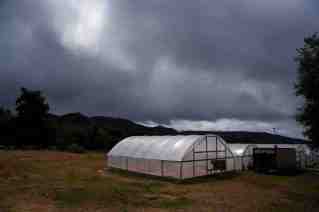
Plantible grows duckweed in ponds housed in greenhouses. (Eric Thayer/for The Washington Post)

SAN MARCOS, Calif. — I came to this aquatic farm an hour outside of San Diego because I wanted to see what could be the future of humanity’s protein supply.

At the moment, it looks more like a meth lab out of the drama “Breaking Bad,” jokes Tony Martens Fekini, the chief executive of Plantible Foods.

Debris from a machine that grinds duckweed. (Eric Thayer/for The Washington Post)

Decrepit recreational vehicles squat on the property. In one corner, people tend to vials, grow lights and centrifuges in a trailer lab. More than a dozen big ponds filled with duckweed, a tiny green plant, bask in the Southern California sunshine.

But the only thing cooking here is protein.

Continue reading

More On Merlin Sheldrake, Fungi & Related Matters

Merlin Sheldrake, author of the best-selling book “Entangled Life.” Alexander Coggin for The New York Times

We are grateful to any publication that gives this topic its due attention, in this case the New York Times and a particular thanks to Jennifer Kahn for such a thoughtfully written profile:

A vast fungal web braids together life on Earth. Merlin Sheldrake wants to help us see it.

One evening last winter, Merlin Sheldrake, the mycologist and author of the best-selling book “Entangled Life,” was headlining an event in London’s Soho. The night was billed as a “salon,” and the crowd, which included the novelist Edward St. Aubyn, was elegant and arty, with lots of leggy women in black tights and men in perfectly draped camel’s-hair coats. “Entangled Life” is a scientific study of all things fungal that reads like a fairy tale, and since the book’s publication in 2020, Sheldrake has become a coveted speaker.

A pied bleu (Lepista personata), also known as the field blewit. Alexander Coggin for The New York Times

At talks like these, Sheldrake is sometimes asked to answer a question he poses in the first chapter of his book: What is it like to be a fungus? The answer, at least according to Sheldrake, is at once alien and wondrous. “If you had no head, no heart, no center of operations,” he began. “If you could taste with your whole body. If you could take a fragment of your toe or your hair and it would grow into a new you — and hundreds of these new yous could fuse together into some impossibly large togetherness. And when you wanted to get around, you would produce spores, this little condensed part of you that could travel in the air.” There were nods. In the audience, the woman next to me gave a long, affirming hum. Continue reading

Sea Cucumbers Working Overtime

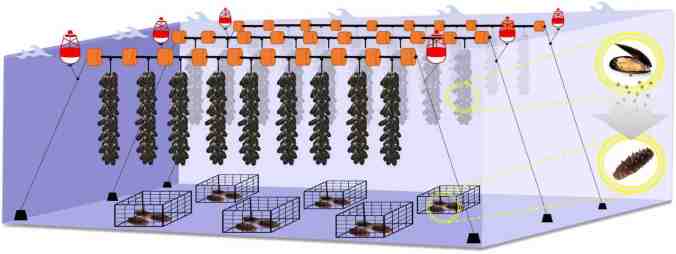
Diagram of a test project in Italy in which sea cucumbers cleaned up excrement from farmed mussels. GROSSO ET AL.

A topic that rarely, if ever, has made our pages, the sea cucumber’s moment in the spotlight has arrived:

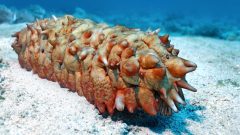
A sea cucumber near Mindoro Island in the Philippines. IMAGEBROKER / ALAMY STOCK PHOTO

Are Sea Cucumbers a Cleanup Solution to Fish Farm Pollution?

Seafood farm operators are breeding and deploying sea cucumbers to vacuum up the massive amounts of fish waste that pose a major problem for their industry. It is part of an effort to redesign fish farms with multiple species so that they work more like natural ecosystems.

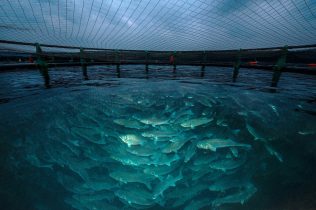
Sea bass at a fish farm in the Adriatic Sea off the coast of Slovenia. WATERFRAME / ALAMY STOCK PHOTO

Off the coast of the Hawaiian Island of Kauai, an underwater metropolis bustles. Sea turtles glide lazily through the surf while schools of fluorescent yellow butterflyfish weave between basketball-size sea urchins and sharp corals.

But Dave Anderson isn’t distracted by the otherworldly charm of the coral reef — he’s here on a mission. Around 70 feet below the surface, he finds his prize: a red sea cucumber. Continue reading

The Bathysphere Book, Reviewed

When a book like this comes along, take in what the review has to say, maybe read a second opinion, then go find a copy from any of the several independent booksellers offering it:

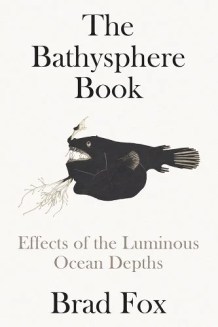
In “The Bathysphere Book,” Brad Fox chronicles the fascinating Depression-era ocean explorations of William Beebe.

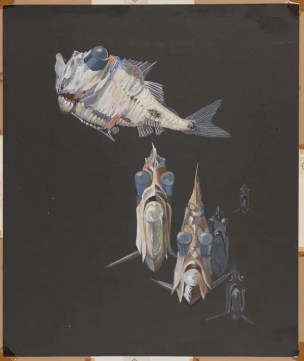
Wildlife Conservation Society Archives

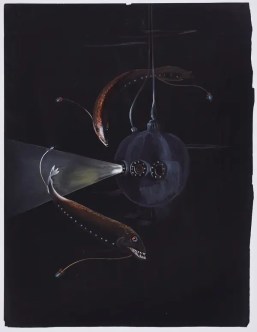
Consider the siphonophore. An inhabitant of the lightless ocean, it looks like a single organism, but is actually a collection of minute creatures, each with its own purpose, working in harmony to move, to eat, to stay alive. They seem impossible but they are real. In 1930 William Beebe was 3,000 feet underwater in a bathysphere, an early deep-sea submersible, when he spotted a huge one: a writhing 20-yard mass whose pale magenta shone impossibly against the absolute blackness of the water. As you can imagine, it made an impression.

Wildlife Conservation Society Archives

“The siphonophore mind, Beebe thought, asks us to rethink our individuality, to consider our epidermis as only one way to measure the extent of our bodies,” writes Brad Fox in “The Bathysphere Book,” a hypnotic new account of Beebe’s Depression-era underwater exploration. “In that light, our furious competition, our back-stabbing and fights over resources, is nonsense. Better we work together, getting closer and closer, more finely attuned to each other’s needs until we are indistinguishable.” Continue reading

Butterfly Origin Story

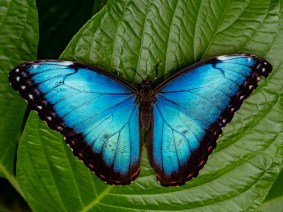
A blue morpho butterfly sits on a leaf. A new study finds that butterflies likely originated somewhere in western North America or Central America around 100 million years ago. Kristen Grace/Florida Museum

It is almost a certainty that if you visit Costa Rica you will see the blue morpho fluttering by somewhere. And you may be in the location of its origin story:

Butterflies originated in North America after splitting from moths, new study suggests

Akito Kawahara remembers being eight years old when he went on a special tour of the insect collection at the American Museum of Natural History in New York City. He marveled at the vast array of pinned bugs before stopping in front of a large picture of the butterfly family tree.

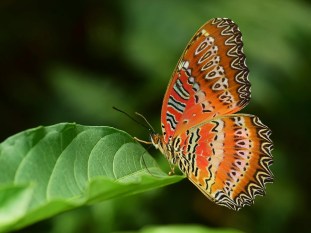
A red lacewing butterfly perches on a plant. Rachit Pratap Singh

A number of spots on that tree, he saw, were curiously blank.

“Just looking at it, realizing that scientists at these museums still don’t know these basic things — I’ll never forget that day,” Kawahara says.

That moment sparked a lifelong passion in Kawahara to fill in those blanks and determine where these charismatic insects originated. Now, he’s gotten a little closer to an answer. His latest research shows that butterflies probably first flapped their wings in present-day western North America or Central America. Continue reading

The Lab Of Peter Girguis

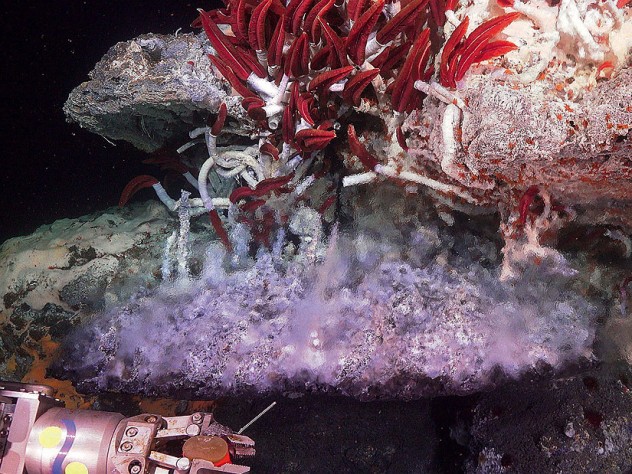
Giant tubeworms take up chemicals from a hydrothermal vent 6,200 feet deep in the Gulf of California (the Girguis lab is world-renowned for research on these worms). Photograph courtesy of the Schmidt Ocean Institute

Our thanks to Veronique Greenwood (after a few years’ absence from our notice) for her most recent article in Harvard Magazine:

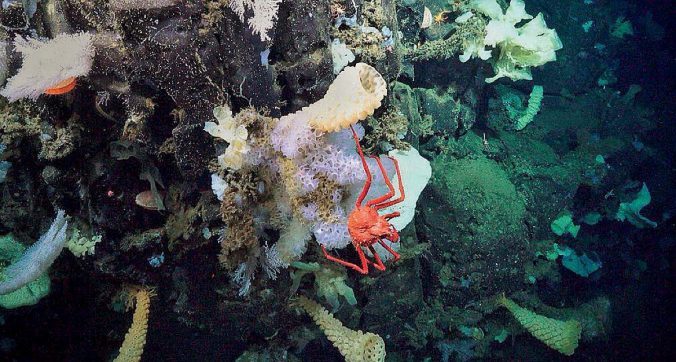
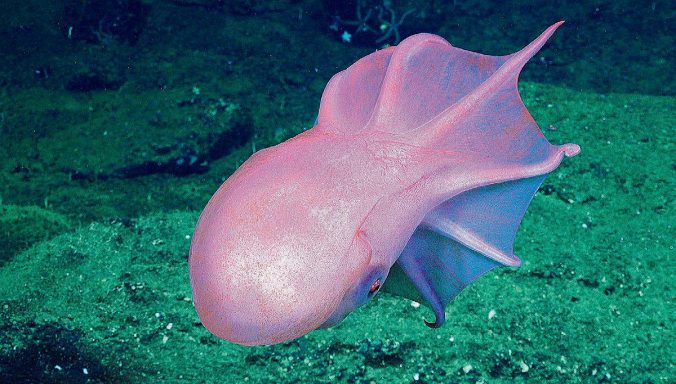
Top: a remote dive at Emery Knoll, a deepwater reef off Southern California, reveals crabs, sponges, and corals. Bottom: a rare sighting of the massive seven-arm octopus, Haliphron atlanticus. Photographs courtesy of the Schmidt Ocean Institute

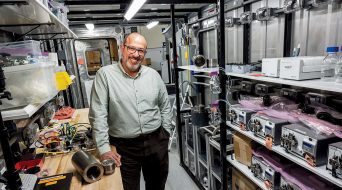
Peter Girguis on terra firma in the lab. Photograph by Jim Harrison

Plumbing the Deep Sea

Peter Girguis probes life on the ocean floor

In a cavernous underground space behind Harvard’s Biological Laboratories, biochemist Peter Girguis frowns at the pressure vessel in his hand. The machined titanium cylinder, about the size of a French press, gleams as he works to release the cap, and he chuckles at his own stubbornness. He could probably find a tool to loosen it, he remarks. Continue reading

Bees’ Brains

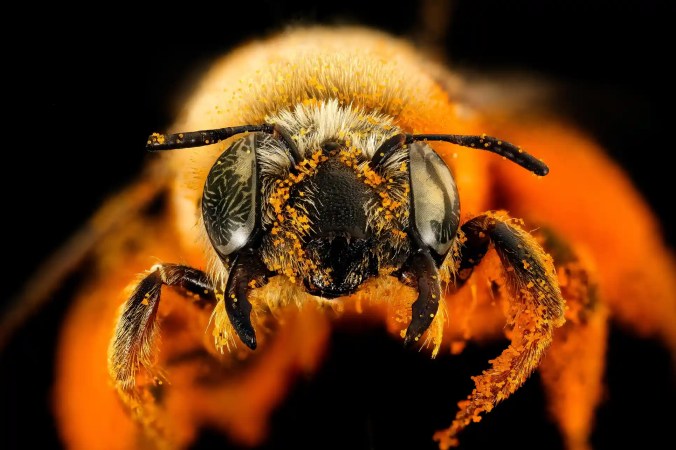
Bees are in a class by themselves as pollinators, a role that requires a sophisticated mind, says one expert. Photograph: Alamy

Stories about bees in our pages are the proverbial bees knees, again, this time with some information on their sense of the world:

‘Bees are sentient’: inside the stunning brains of nature’s hardest workers

‘Fringe’ research suggests the insects that are essential to agriculture have emotions, dreams and even PTSD, raising complex ethical questions

When Stephen Buchmann finds a wayward bee on a window inside his Tucson, Arizona, home, he goes to great lengths to capture and release it unharmed. Continue reading

Beasts That Bluff

Whether to ward off predators or to exploit their victims, creatures can gain advantage by posing as different creatures. Illustration by Lou Benesch

When Elizabeth Kolbert reviews a book we know that at least the review is a must-read:

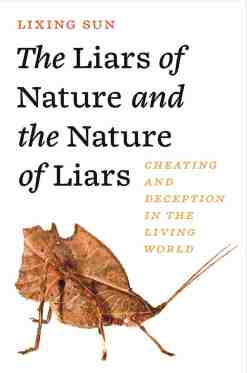
Why the Animal Kingdom Is Full of Con Artists

Some crows “cry wolf” to snatch food from their neighbors; some caterpillars trick ants into treating them like queens. What can we learn from beasts that bluff?

On April 20, 1848, Alfred Russel Wallace and Henry Walter Bates set off for the Amazon on a boat named Mischief. The two young men—Bates was twenty-three, Wallace twenty-five—had met a few years earlier, probably at a library in Leicester, in England’s East Midlands. Both were passionate naturalists, and both were strapped for cash. (Neither had been able to afford university.) To finance their adventures, they planned to ship specimens back to London, where they could be sold to wealthy collectors.

For reasons that no one has ever been able to explain—but that many have speculated about—Wallace and Bates separated soon after they reached Brazil. In the decade that followed, Wallace amassed an immense trove of new species; lost most of them in a ship fire; set off again, for Southeast Asia; and, with Charles Darwin, discovered natural selection.

Bates, meanwhile, remained in Brazil. He sailed up the Tapajós, an Amazon tributary, and then up the Cupari, a tributary of the Tapajós. Travel in the region was often agonizingly slow; to get from the town of Óbidos to Manaus, a journey of less than four hundred miles, took him nine weeks. (At some point during the trip, he was robbed of most of the money he was carrying.) Bates would find a congenial town and spend months, even years, there, making daily forays into the surrounding rain forest. He tromped around in a checked shirt and denim pants, an outfit considered outré by the British merchants he encountered in Brazil, who wore their top hats rain or shine. Continue reading

Caterpillars, Among Other Insects, More Appreciated

Some scientists warn of an insect apocalypse. The flying-insect community has been “decimated,” a research paper said. Illustration by Jochen Gerner

Insects were among the first regular features in these pages, thanks to Milo’s camera and personal interest. There were more when Seth worked in Costa Rica, followed by plenty of articles and editorials of various types, as well as my own discoveries while working outside. Looking back over those, I notice that caterpillars were featured only once, in a post on integrated pest management. So the following is a welcome addition to the mix:

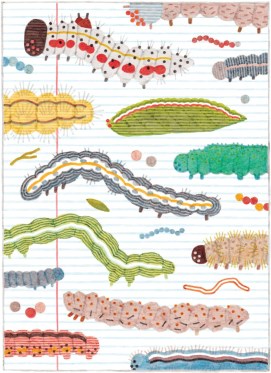
The Little-Known World of Caterpillars

An entomologist races to find them before they disappear.

The Devils River, in southwestern Texas, runs, mirage-like, along the edge of the Chihuahuan Desert, through some of the most barren countryside in the United States. Access to the river is limited; unless you’re in a kayak, the only way to travel upstream is along a skein of rutted dirt roads. It was on one of these roads that, a few years ago, David Wagner noticed a shrub that seemed to him peculiarly filled with promise. Continue reading

Protecting Insects Requires More Effort

The large marble butterfly is now locally extinct in some places. Rick and Nora Bowers/Alamy

Insects matter, and our thanks to Catrin Einhorn for making it more clear why:

Are Butterflies Wildlife? Depends Where You Live.

A legal quirk leaves officials in at least a dozen states with little or no authority to protect insects. That’s a growing problem for humans.

It’s tough being an insect. They get swatted, stomped and sprayed without a thought. Their mere presence can provoke irrational panic. Even everyday language disparages them: “Stop bugging me,” we say. Continue reading

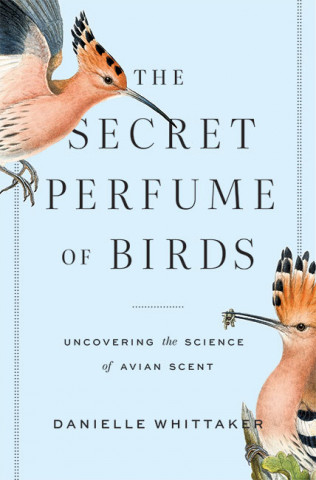
The Secret Perfume Of Birds, Reviewed By The Inquisitive Biologist

The Inquisitive Biologist recently came to our attention with a book review, and now another review of a book on a topic that is new (to us):

To successfully navigate their world, organisms rely on numerous senses. Birds are no exception to this; and yet, for a long time, people have been convinced that birds cannot smell. This came as a surprise to evolutionary biologist Danielle J. Whittaker. Given that smell is effectively chemoreception (the sensing of chemical gradients in your environment) and was one of the first senses to evolve, why would birds have no use for it? The Secret Perfume of Birds tells the story of 15 years spent investigating the olfactory capabilities of birds and provides an insider’s account of scientific research. Continue reading

Phosphogeddon, Peecycling & Other Modern Portmanteaus

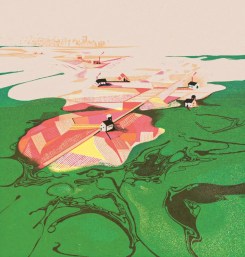
Addressing the problem, some scientists believe, may require reimagining agriculture from the ground up. Illustration by Juan Bernabeu

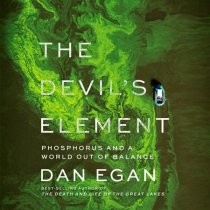
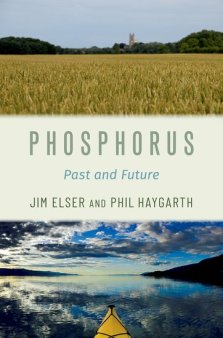
Stephen Porder is Professor of Ecology and Evolutionary Biology, a Fellow in the Institute at Brown for Environment and Society, and the Assistant Provost for Sustainability at Brown. Elemental is his new book looking at how life shapes Earth using basic elements we may take for granted. Read on to learn more about the book, and its wider relevance to other books now being published that discuss phosphorous.

Thanks, as always, to Elizabeth Kolbert for her book reviews, and in this case a nod to the Rich Earth Institute:

Phosphorus Saved Our Way of Life—and Now Threatens to End It

Fertilizers filled with the nutrient boosted our ability to feed the planet. Today, they’re creating vast and growing dead zones in our lakes and seas.

In the fall of 1802, the German naturalist Alexander von Humboldt arrived in Callao, Peru’s major port, just west of Lima. Humboldt had timed his visit to coincide with a transit of Mercury, which he planned to observe through a three-foot telescope, in order to determine Lima’s longitude. He set up his instruments atop a fort on the waterfront, and then, with a few days to kill before the event, wandered the docks. A powerful stench emanating from boats loaded with what looked like yellowish clay piqued his curiosity. From the locals, Humboldt learned that the material was bird shit from the nearby Chincha Islands, and that it was highly prized by farmers in the area. He decided to take some home with him. Continue reading

Darkness Reconsidered

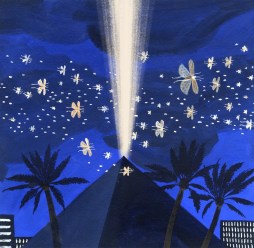
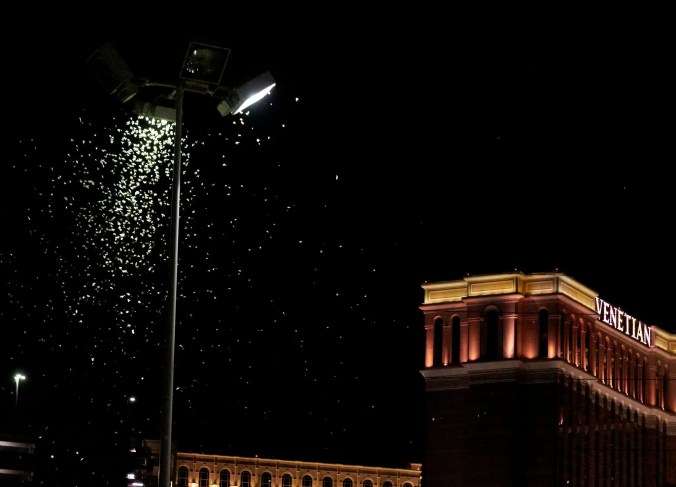
The Luxor Hotel’s “sky beam,” in Las Vegas, generates forty-two billion candlepower of light each night, confusing flying creatures that are drawn to its radiance. Illustration by Carson Ellis

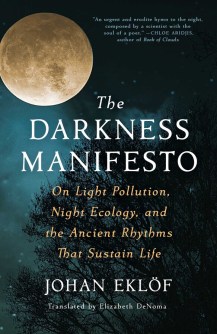
We already linked to one review of it but this book seems worthy of at least two, and if at least one of them is by this essayist then probably two will be enough:

Is Artificial Light Poisoning the Planet?

A Swedish ecologist argues that its ubiquity is wrecking our habitats—and our health.
Among the many looming ecological disasters that terrify us today, one that only a handful of people have contemplated as sufficiently looming and terrifying is the loss of the bats in our belfry. Continue reading

Keep The Night Sky Dark

While sunlight gives electricity for the lights we need, there can be too much of a good thing. Thanks to Lisa Abend at the New York Times for this review:

A Manifesto for Loving the Darkness, and Not Metaphorically

Light pollution is disruptive to many species, from corals to bats to the humans who put up all those lights. “The Darkness Manifesto” urges us to reconsider our drive to dispel the dark.

Artificial lights disorient many species, including the grasshoppers that swarmed the powerful lights over the Las Vegas strip in 2019. Bridget Bennett/Agence France-Presse — Getty Images

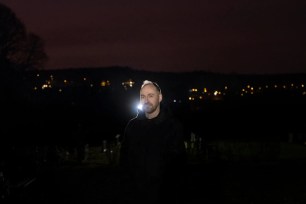
Losing a connection to the night sky is losing our connection to nature, said Johan Eklöf, but it is also losing some of our history. “What we see now is the same sky as our ancestors were looking at and making up stories about.” Nora Lorek for The New York Times

The zoologist Johan Eklöf began to consider the disappearance of darkness in our brightly lit world in 2015, when he was out counting bats in southern Sweden. The surrounding grounds were dark, as they had been decades earlier when his academic adviser had tallied the bat populations in the region’s churches. In the intervening years, however, those churches — whose belfries are famously appreciated by the winged mammals — had been illuminated with floodlights. “I started to think, how do the bats actually react to this?” Eklöf says. Continue reading

Bio-Based Gains

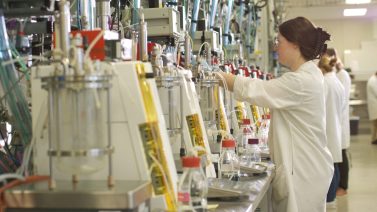
Scientists at San Diego-based Genomatica, which is developing a plant-based nylon. GENOMATICA

We have been watching and waiting for this range of products to have their day, and Jim Robbins delivers an up to date account that gives hope:

From Lab to Market: Bio-Based Products Are Gaining Momentum

A 3D-printed house made from sawdust and other timber industry waste by the University of Maine’s Advanced Structures and Composites Center. UNIVERSITY OF MAINE

Propelled by government investment and shareholder demand, manufacturers are pushing to get bio-based products into the marketplace. These new materials — made from plants, fungi, and microbes — aim to replace those that contain toxins and are difficult to recycle or reuse.

In the 1930s, the DuPont company created the world’s first nylon, a synthetic polymer made from petroleum. The product first appeared in bristles for toothbrushes, but eventually it would be used for a broad range of products, from stockings to blouses, carpets, food packaging, and even dental floss.

Nylon is still widely used, but, like other plastics, it has environmental downsides: it is made from a nonrenewable resource; its production generates nitrous oxide, a potent greenhouse gas; it doesn’t biodegrade; and it sheds microfibers that end up in food, water, plants, animals, and even the clouds.

Laminated timber beams and floors used in the construction of Ascent, a 25-story apartment building in Milwaukee. THORNTON TOMASETTI

Now, however, a San Diego-based company called Genomatica is offering an alternative: a so-called plant-based nylon made through biosynthesis, in which a genetically engineered microorganism ferments plant sugars to create a chemical intermediate that can be turned into nylon-6 polymer chips, and then textiles. The company has partnered with Lululemon, Unilever, and others to manufacture this and other bio-based products that safely decompose. Continue reading