Kaboom! The First Successful Climate Raid Ever

Capitalism in the right hands: How a tech bro just rewrote Australia’s climate future

Until reading about them in this newsletter I read each week, Blair Palese, Peter McKillop and the Climate & Capital Media team were not on my radar. Now they are, and I enjoyed reading what they have written to Jeff Bezos about changing the game:

Capitalism in the right hands: How a tech bro just rewrote Australia’s climate future

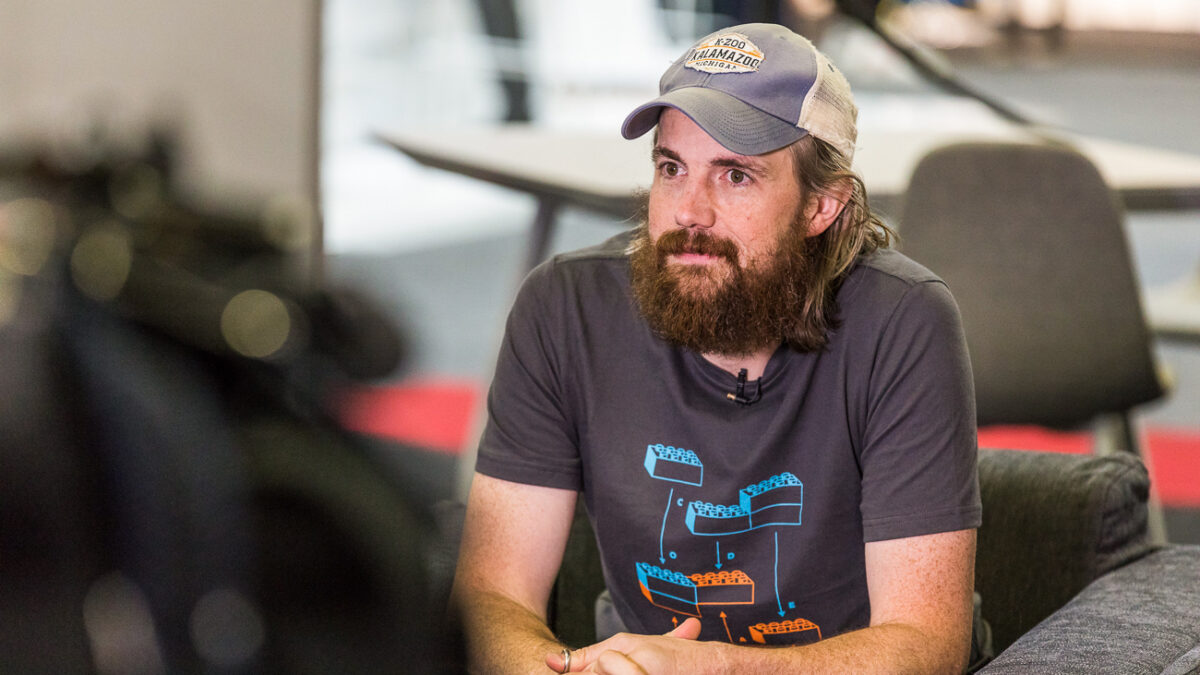
  • Following a stunning shareholder coup, Australian software billionaire Mike Cannon-Brookes becomes the world’s first corporate raider with a mission to radically reduce Australia’s carbon footprint.
  • Cannon-Brookes made billions in software, but he is not retiring from the game in order to “give back” in the gentlemanly pursuit of charity.
  • His victorious raid demonstrates that real climate action requires more than just writing checks.
  • Instead Cannon-Brookes channeled corporate raider Carl Icahn, investor Henry Kravis, feminist organizer Gloria Steinem, Cajun political strategist James Carville and to do what no person has ever done: Merge political, financial, shareholder, and climate action into a single, ground-breaking capitalist moment to take on global warming.
  • We thought Jeff Bezos should know Mike.

Dear Jeff Bezos,

Greetings from Climate & Capital Media. We tried to send you a message on LinkedIn, but there are like at least two dozen Jeff Bezoses and you are not one of them. We applaud your commitment to climate action and setting up the $10 Billion charitable Earth Fund.

But word in New York is you are a tad frustrated with the fund’s impact. Continue reading

Will More Forests Cool The Planet Fast Enough?

Thanks to Fred Pearce, who we normally link to at Yale e360, for The Forest Forecast, an article in the current issue of Science magazine:

Climate change could lead to a net expansion of global forests. But will a more forested world actually be cooler?

These are strange times for the Indigenous Nenets reindeer herders of northern Siberia. In their lands on the shores of the Arctic Ocean, bare tundra is thawing, bushes are sprouting, and willows that a generation ago struggled to reach knee height now grow 3 meters tall, hiding the reindeer. Surveys show the Nenets autonomous district, an area the size of Florida, now has four times as many trees as official inventories recorded in the 1980s. Continue reading
Running Tide’s Buoys


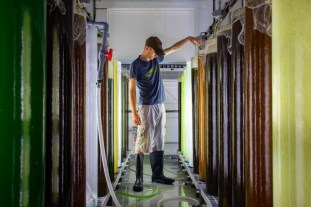
An image of a man in boots in a kelp hatchery
Since kelp grows as fast as two feet per day, it absorbs a huge amount of carbon through photosynthesis. (Jamie Walter / Running Tide)

Kelp  has featured in our pages frequently enough to be considered an important topic. It will be a partial solution to something big. Thanks, as always, to Robinson Meyer for the weekly newsletter that sometimes depresses the spirit but on other occasions, like this one, titled How to Fight Climate Change With Buoys That Look Like Ramen Noodles, points a small ray of hope in an unexpected direction:

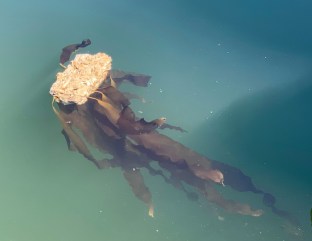
Running Tide’s buoys are made of reclaimed waste wood, limestone, and kelp seedlings. (Jamie Walter / Running Tide)

Last month, somewhere off the coast of Maine, a small group of researchers and engineers released a series of tiny, floating objects into the water. The team called them “buoys,” but they looked more like a packet of uncooked ramen noodles glued to a green party streamer than anything of the navigational or weather-observing variety. These odd jellyfish had one role in life: to go away and never be seen again. With any luck, their successors would soon be released into the open ocean, where they would float away, absorb a small amount of carbon from the atmosphere, then sink to the bottom of the seafloor, where their residue would remain for thousands of years. Continue reading

Proto-Peat In The Arctic

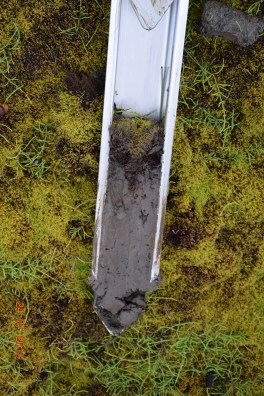
PHOTOGRAPH: SANNA PIILO

We have posted enough times about the importance of protecting peat, but this is the first we hear the question Carbon-Rich Peat Is Disappearing. But Is It Also Growing? Our thanks to Matt Simon at Wired for this one:

PHOTOGRAPH: SANNA PIILO

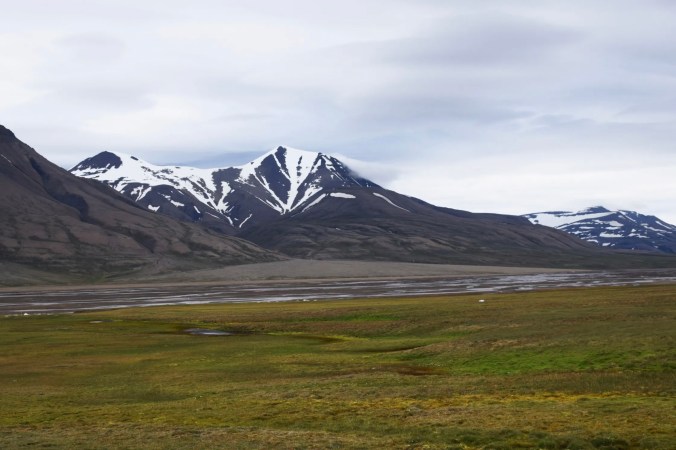
Scientists have discovered “proto-peat” forming in the Arctic as the Earth naturally sequesters carbon, but it could take centuries to mature.

THANK PEAT FOR that scotchy flavor of Scotch whisky: The muck forms in Scotland’s bogs, when layer after layer of dead vegetation resists decay and compresses into fuel, which is burned during scotch distillation. But you can also thank peat for helping keep our planet relatively cool, as all that muck—which is particularly common across the Arctic—traps a tremendous amount of carbon that would otherwise heat the atmosphere. Continue reading
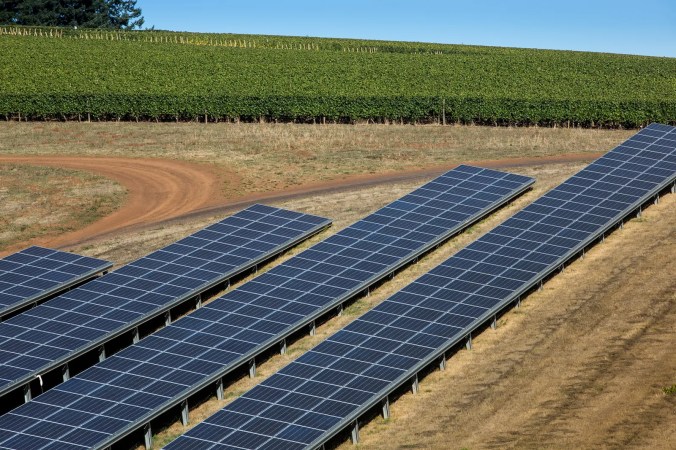
The Dirty Banking & Fossil Fuel Relationship Seen From Another Angle

We know a bit about dirty banking. While we do not think money is a dirty word, we have seen how dirty it can get when mixed with fossil fuels. So thanks, as always, to Bill McKibben for this further illumination. We are sharing his newsletter, rather than the New Yorker story he references, because as you will see below he encourages sharing Your money is your carbon:

If you’ve got $125k in the financial system, it’s doing as much damage as your cooking and your heating and your flying. These are the most important new climate numbers for many years

Earlier today I published a big story in the New Yorker about how banks are driving the climate crisis. A report from a consortium of environmental groups made clear that for the biggest, richest companies on earth, the cash they keep in the banking system (which gets lent out for pipelines and the like) produces more carbon than their actual, you know, business. Google emits more carbon from its money than its phones, and Netflix from its streaming, and so on. Continue reading

Questions About Forests As Carbon Sinks

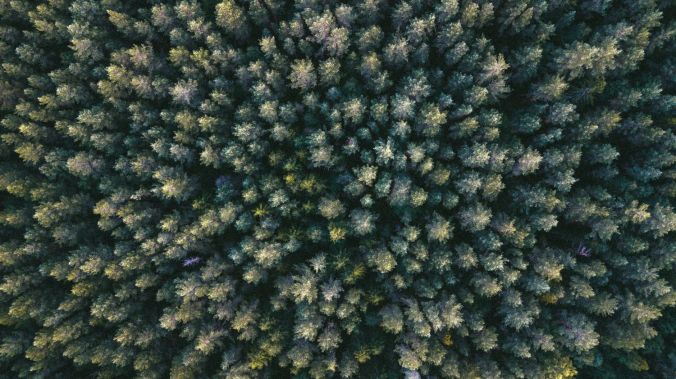
PEXELS

We have featured articles about forests so many times for multiple reasons. Even when we hint that we do so just out of pure love, it is almost always about the value of forests to our future on the planet. As always, when a Yale e360 article can help illuminate further on a topic, here goes:

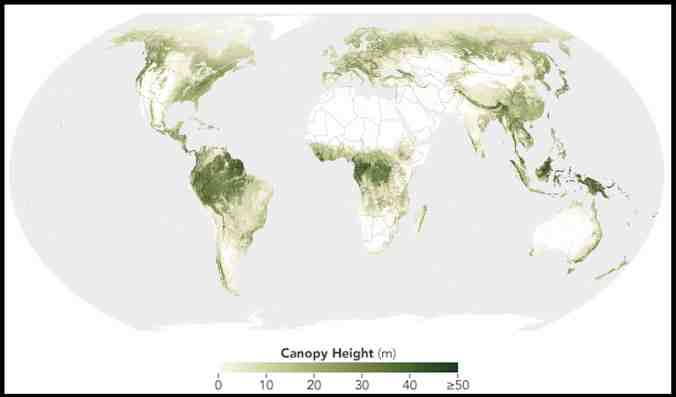
This map shows the height of forests worldwide. Taller forests typically store more carbon. NASA

Climate Change Will Limit How Much Carbon Forests Take Up, New Research Shows

Governments are increasingly looking to forests to draw down carbon pollution, but worsening droughts threaten to stunt tree growth, while larger wildfires and insect infestations risk decimating woodlands, two new studies show. Continue reading
Critical Mass On Greener Steel

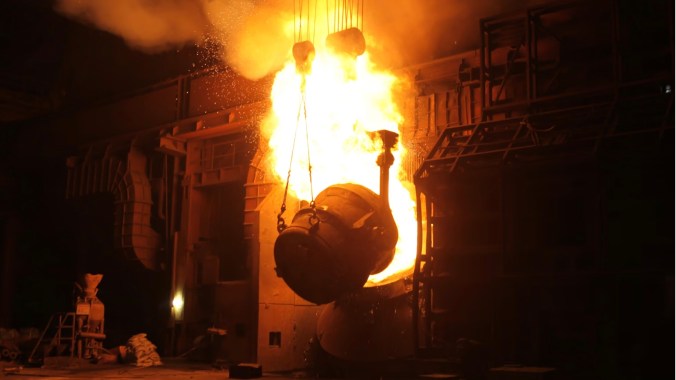
Getty

Greening the production of steel has been the topic of exactly one previous post, which linked to an article by Matthew Hutson from last September that made passing reference to the company featured in the article below. Maybe we are getting closer to critical mass:

Roughly a tenth of global carbon emissions comes from the steel industry. Doing something about that is easier said than done.

In the city of Woburn, Massachusetts, a suburb just north of Boston, a cadre of engineers and scientists in white coats inspected an orderly stack of brick-size, gunmetal-gray steel ingots on a desk inside a neon-illuminated lab space.

What they were looking at was a batch of steel created using an innovative manufacturing method, one that Boston Metal, a company that spun out a decade ago from MIT, hopes will dramatically reshape the way the alloy has been made for centuries. Continue reading

Microfauna, Microbiota & Other Wonders Of Soil

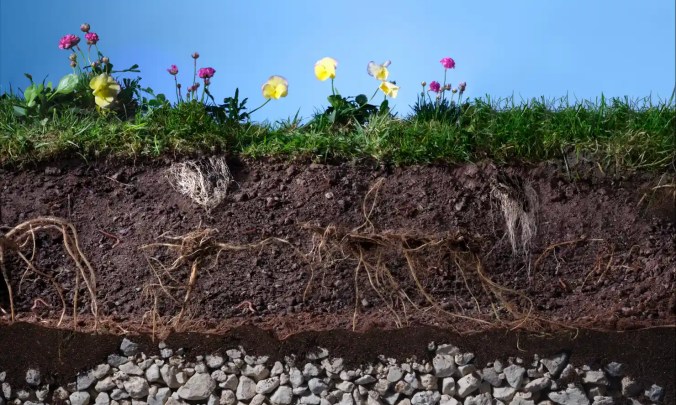
When a plant root pushes into soil, it triggers an explosion of activity in billions of bacteria. Photograph: Liz McBurney/The Guardian

I used the word microflora in the title of a post I wrote 3+ years ago, and today I learned something that serves as a correction. I used that word to distinguish from the better known charisma of megafauna. But there is a better word I should have used in that title, so I am using it in the title of today’s post. The word microbiota has made a few fleeting appearances in our pages, buried in the text of scientific explanations. This editorial by George Monbiot got me to look up the word microflora and from now on I will avoid the misnomer:

The secret world beneath our feet is mind-blowing – and the key to our planet’s future

Don’t dismiss soil: its unknowable wonders could ensure the survival of our species

Beneath our feet is an ecosystem so astonishing that it tests the limits of our imagination. It’s as diverse as a rainforest or a coral reef. We depend on it for 99% of our food, yet we scarcely know it. Soil. Continue reading

The Effects Of Fire Suppression

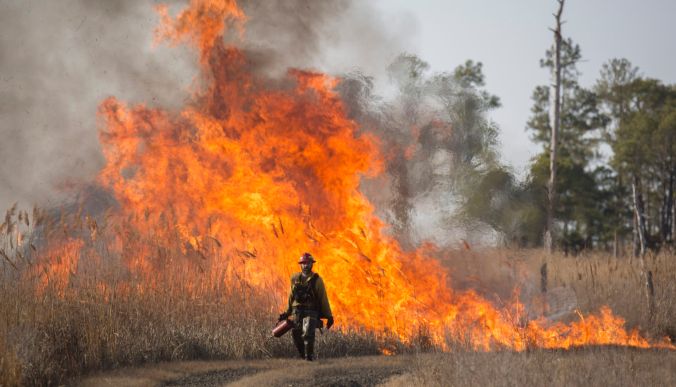
A controlled burn near the Blackwater National Wildlife Refuge in Maryland. SARAH BAKER

We have linked to many stories about wildfires over the years, noting their relationship to climate change. Our working assumption seems to have been that fire is always problematic, but here is reason to reconsider that, thanks to Gabriel Popkin and Yale e360:

Bringing Back Fire: How Burning Can Help Restore Eastern Lands

For millennia, North American ecosystems benefited from fire, mostly set by Indigenous people. Now, a movement is growing, particularly in the eastern U.S., to reintroduce controlled burns to forests and grasslands and restore the role of fire in creating biodiverse landscapes.

It’s an apocalyptic scene that has become all too familiar in recent years. Continue reading

Personal Approaches To Carbon Footprint Reduction

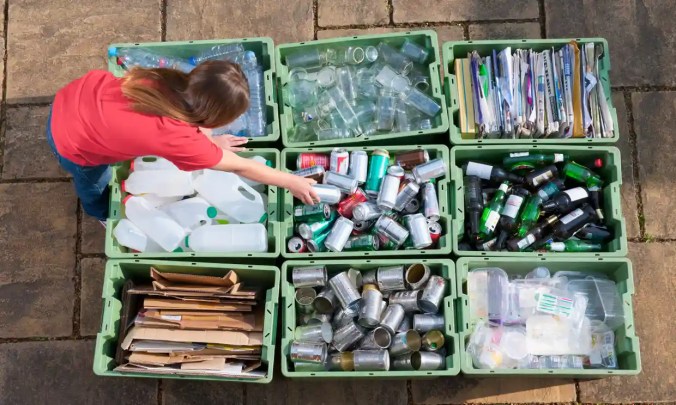
Recycle to save the planet? Photograph: Jacobs Stock Photography Ltd/Getty Images

A public service request for your input, from the Guardian:

What is the single most effective thing I could do to reduce my carbon footprint?

The long-running series in which readers answer other readers’ questions on subjects ranging from trivial flights of fancy to profound scientific and philosophical concepts

What is the single most effective thing I could do to reduce my carbon footprint? Without dying, preferably. Andrew Hufnagel, Caithness

Post your answers (and new questions) below or send them to nq@theguardian.com. A selection will be published on Sunday.

Nature’s Energy Storage Potential

Decarbonization would be easier if we could bank clean energy for later. Illustrations by Hudson Christie

Thanks to Matthew Hutson for the article in the current edition of the New Yorker titled The Renewable-Energy Revolution Will Need Renewable Storage:

Can gravity, pressure, and other elemental forces save us from becoming a battery-powered civilization?

We need to vastly expand our energy-storage capacity if we’re to avoid climate catastrophe.

The German word Dunkelflaute means “dark doldrums.” It chills the hearts of renewable-energy engineers, who use it to refer to the lulls when solar panels and wind turbines are thwarted by clouds, night, or still air. On a bright, cloudless day, a solar farm can generate prodigious amounts of electricity; when it’s gusty, wind turbines whoosh neighborhoods to life. But at night solar cells do little, and in calm air turbines sit useless. These renewable energy sources stop renewing until the weather, or the planet, turns. Continue reading

Climate Policies To Cheer On

(Washington Post illustration; Demetrius Freeman/The Washington Post; iStock)

I am heading to Ithaca tomorrow for family reasons, so the third item described in the story that follows is of particular interest. But every one of the items is worth reflecting on, in a news world without enough such stories. Our thanks to the Washington Post Staff who put this list together:

10 recent climate policies that could make a difference

Stories from the past six months that show what local and national policy change can look like

The most recent IPCC report makes it clear: There is no one silver bullet that can address global warming. Instead, nations, businesses, communities and individuals all have a role to play in helping to create a safer and more sustainable future. But without action from the world’s wealthiest countries, the nations and people who are least at fault for fueling climate change will be the ones who suffer the most, the scientists behind the report warn. Continue reading

Old Growth Forest Protection Schemes

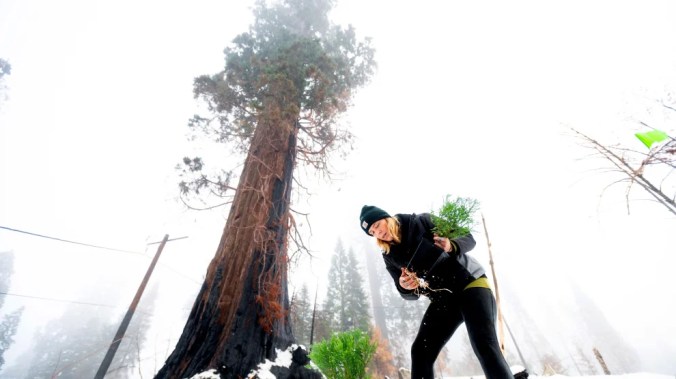
Caryssa Rouser, a propagation specialist with Archangel Ancient Tree Archive, plants a sequoia tree in October, 2021, in Sequoia Crest, California. Noah Berger/AP

Old growth forests matter for so many reasons. Not least, biophilic reasons. But at this moment, we rightly pay more attention to their value with regard to urgent climate issues. Maddie Oatman makes a good case in this Mother Jones essay:

Why Old-Growth Forests Matter So Much in the Fight Against Climate Change

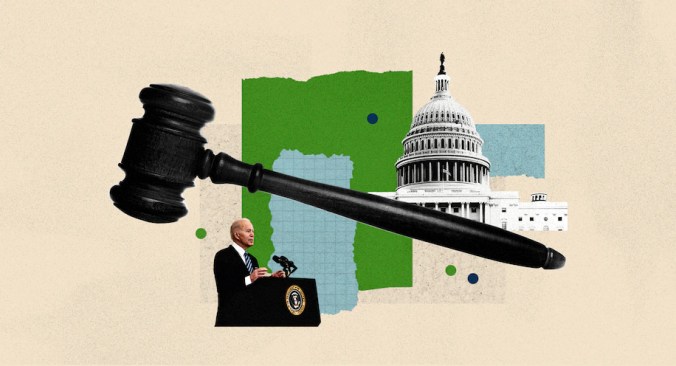
Biden’s executive order to preserve ancient trees is a big deal—but it could have gone further.

Few experiences have rendered me as awestruck as the winter morning I spent wandering through a grove of ancient sequoias, their sienna bark glowing against the snowy ground. Continue reading

Carbon, Sequestration & Hope

(Brandon Thibodeaux / The New York Times / Redux)

When I read about a promising new technology related to carbon sequestration, I am ambivalent based on the experience of many past false hopes. Carbon is a very large problem. Finding new methods of sequestration is a very challenging puzzle.

I track such developments every week by reading the newsletter that Bill McKibben posts on Substack. Most weeks I post something here from that, and do my best to balance the terrifying and enraging with the more hopeful news he occasionally shares there.

The only other newsletter I read regularly is Robinson Meyer’s newsletter for the Atlantic, called The Weekly Planet. Here is one of his worth reading for a bit of encouragement (when you click the hyperlink it will go to the current newsletter, which until April 20 is this one; after April 20 scroll to find this edition):

The Biggest Investment Ever in Sucking Carbon Out of the Sky

The world’s biggest tech companies are getting serious about carbon removal, the still-nascent technology wherein humanity can pull heat-trapping carbon dioxide out of the atmosphere. Yesterday, an alliance of prominent Silicon Valley companies—including Google, Meta, Shopify, and the payment company Stripe—announced that it is purchasing $925 million in carbon removal over the next eight years. In a world awash in overhyped corporate climate commitments, this is actually a big deal. Continue reading

When Diplomats Must Be Undiplomatic

Yesterday I posted about one of the easier topics among the many options I have to post about every day. Today, a topic increasingly frequent in my posts, but definitely not an easy one. So I look to one person to summarize our week-to-week progress or lack of it. As always, I recommend signing up for his newsletter:

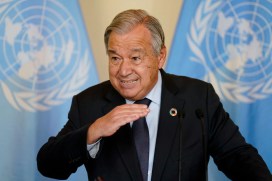
The World’s Top Diplomat Has Had It Up to Here

The Secretary General of the UN models how to think about climate change

I can remember when some of us organized what may have been the planet’s first truly huge climate march, with 400,000 people descending on New York in 2014. Then UN Secretary General Ban Ki-moon came to walk with us for a few blocks, and it was considered remarkable: the world’s top diplomat had previously been too diplomatic to join in protests challenging the policies of his member nations. Continue reading

If SUVs Were An Individual Country

The Biden Administration is set to unveil a new set of fuel-efficiency standards on Friday. Photograph by David Paul Morris / Bloomberg / Getty

Elizabeth Kolbert’s essay offers perspective on how the SUV category has grown as a percentage of the global fleet, and what that has meant for fuel consumption. The point of the essay seems not to demonize owners of SUVs, but to suggest a mechanism to put the category on a level playing field with more fuel efficient vehicles. The humanist in me imagines that most SUV owners would own up, given the chance, and take responsibility for their footprint and pay their fair share:

A Better Idea Than Releasing Oil from the Strategic Reserve

It’s time to do away with the S.U.V. loophole.

On Thursday afternoon, President Joe Biden announced that the federal government would release up to a hundred and eighty million barrels of oil from the Strategic Petroleum Reserve over six months. The move, aimed at bringing down gas prices—“Americans are feeling Putin’s gas price hike at the pump,” Biden tweeted—is obviously politically motivated. Continue reading

How Do We Love Thee, Forests, Let Us Count The Ways

Forests, such as this one in Indonesia, do lmore than just store carbon. Photograph: Xinhua/Rex/Shutterstock

It may sound obvious, but until now it was not quantified: The world’s forests do more than just store carbon, new research finds

New data suggests forests help keep the Earth at least half of a degree cooler, protecting us from the effects of climate crisis

The world’s forests play a far greater and more complex role in tackling climate crisis than previously thought, due to their physical effects on global and local temperatures, according to new research. Continue reading

Crypto, Pigs & Possibilities

Wind turbines next to Argo Blockchain’s new facility in Dickens County, Texas. The site would be fueled mostly by wind and solar energy. Carter Johnston for The New York Times

First thought upon seeing the headline of the story below: when pigs fly. There is plenty of evidence to the contrary. If you read to the end of the story, published in the New York Times (click through to read it in full there), you will understand that some at the cutting edge of crypto want to change the name of what they do to “validators” from the less environmentally-friendly sounding “miners.” So, second thought: lipstick on pigs. But, at least they are acknowledging the complaint. Plus, the author of this story has a remarkable track record of reporting on issues we care about. So let’s read their latest claims with an open mind:

Bitcoin Miners Want to Recast Themselves as Eco-Friendly

Facing intense criticism, the crypto mining industry is trying to change the view that its energy-guzzling computers are harmful to the climate.

Texas has become a hot spot for crypto mining, attracting more than two dozen companies, partly because of an unusual incentive structure with its power grid. Carter Johnston for The New York Times

Along a dirt-covered road deep in Texas farm country, the cryptocurrency company Argo Blockchain is building a power plant for the internet age: a crypto “mining” site stocked with computers that generate new Bitcoins. Continue reading

Close The Hose Of Fossil Fuel Cash

Michael Mann, director of the Earth System Science Center at Pennsylvania State University, said fossil-fuel funding ‘has been used to compromise leading academic institutions’. Photograph: James Ross/AAP

Hats off to Michael Mann and colleagues for this determination:

Universities must reject fossil fuel cash for climate research, say academics

Open letter from 500 academics likens fossil-energy funding of climate solutions to tobacco industry disinformation

Universities must stop accepting funding from fossil fuel companies to conduct climate research, even if the research is aimed at developing green and low-carbon technology, an influential group of distinguished academics has said. Continue reading

McKibben’s Longform Power Pitch

The market for electrons is predictable, meaning that solar panels installed on farmland can provide a fairly stable income for farmers. Photograph by George Rose / Getty

Illustration by Álvaro Bernis

If you have not been reading Bill McKibben regularly, or at all, here is as good a place to start as you will find. It is a long, powerful pitch:

In a World on Fire, Stop Burning Things

The truth is new and counterintuitive: we have the technology necessary to rapidly ditch fossil fuels.

In 2020, fossil-fuel pollution killed three times as many people as COVID-19 did. Photograph by Artur Widak / NurPhoto / Getty

On the last day of February, the Intergovernmental Panel on Climate Change issued its most dire report yet. The Secretary-General of the United Nations, António Guterres, had, he said, “seen many scientific reports in my time, but nothing like this.” Setting aside diplomatic language, he described the document as “an atlas of human suffering and a damning indictment of failed climate leadership,” and added that “the world’s biggest polluters are guilty of arson of our only home.” Continue reading