The Great Atlantic Sargassum Belt

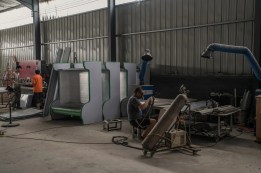
A worker removing sargassum with machinery at a resort in Cancun, Mexico, last year. Alonso Cupul/EPA, via Shutterstock

We have seen its beauty and otherwise tended to feature its positive uses, but not all seaweed is created equal; so, our thanks to Livia Albeck-Ripka and Emily Schmall for this news and analysis:

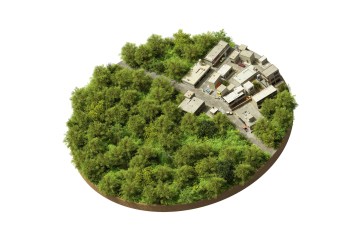
A Giant Blob of Seaweed is Heading to Florida

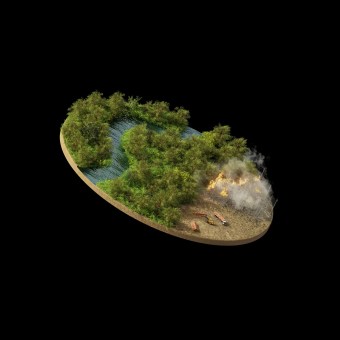
The mass, known as the great Atlantic Sargassum belt, is drifting toward the Gulf of Mexico. Scientists say seaweed is likely to come ashore by summer to create a rotting, stinking, scourge.

For much of the year, an enormous brown blob floats, relatively harmlessly, across the Atlantic Ocean. Its tendrils provide shelter and breeding grounds for fish, crabs and sea turtles. Spanning thousands of miles, it is so large that it can be seen from outer space. Continue reading


SUV Realities, Fictions, Dangers

Carmakers have long profited from what’s known as the S.U.V. loophole, which allows auto manufacturers to get around fuel-efficiency regulations by selling trucks. Photograph from Alamy

SUV is a three-letter word, popular to the point of problematic. Thanks again to Elizabeth Kolbert for the most recent thinking on the topic:

Why S.U.V.s Are Still a Huge Environmental Problem

The world is moving toward heavier cars at a time when it should be doing precisely the reverse.

Last year, the world’s S.U.V.s collectively released almost a billion metric tons of carbon dioxide. If all the vehicles got together and formed their own country, it would be the world’s sixth-largest emitter, just after Japan. This is a disturbing figure, but, according to a new report from the International Energy Agency, it gets worse. Globally, S.U.V. sales continue to grow, even though, last year, total passenger-vehicle sales fell. And the trend has now spread to electric vehicles: in 2022, for the first time, the sale of electric S.U.V.s edged out the sale of other electric cars. Continue reading

Phosphogeddon, Peecycling & Other Modern Portmanteaus

Addressing the problem, some scientists believe, may require reimagining agriculture from the ground up. Illustration by Juan Bernabeu

Stephen Porder is Professor of Ecology and Evolutionary Biology, a Fellow in the Institute at Brown for Environment and Society, and the Assistant Provost for Sustainability at Brown. Elemental is his new book looking at how life shapes Earth using basic elements we may take for granted. Read on to learn more about the book, and its wider relevance to other books now being published that discuss phosphorous.

Thanks, as always, to Elizabeth Kolbert for her book reviews, and in this case a nod to the Rich Earth Institute:

Phosphorus Saved Our Way of Life—and Now Threatens to End It

Fertilizers filled with the nutrient boosted our ability to feed the planet. Today, they’re creating vast and growing dead zones in our lakes and seas.

In the fall of 1802, the German naturalist Alexander von Humboldt arrived in Callao, Peru’s major port, just west of Lima. Humboldt had timed his visit to coincide with a transit of Mercury, which he planned to observe through a three-foot telescope, in order to determine Lima’s longitude. He set up his instruments atop a fort on the waterfront, and then, with a few days to kill before the event, wandered the docks. A powerful stench emanating from boats loaded with what looked like yellowish clay piqued his curiosity. From the locals, Humboldt learned that the material was bird shit from the nearby Chincha Islands, and that it was highly prized by farmers in the area. He decided to take some home with him. Continue reading

Living Carbon

OUR MISSION

We believe the challenge of climate instability is the biggest opportunity for global mobilization we have ever seen. It is an opportunity to learn how to use technology to rebalance our ecosystems rather than further alienate us from them. We work with the inherent power of plants, informed by generations of scientific research, to restore ecosystems, improve biodiversity, and enhance the ability of photosynthetic organisms to draw down and store carbon from the atmosphere.

A mission we are curious about, click the image above to learn more.

Africa’s Sunlight & Europe’s Electricity

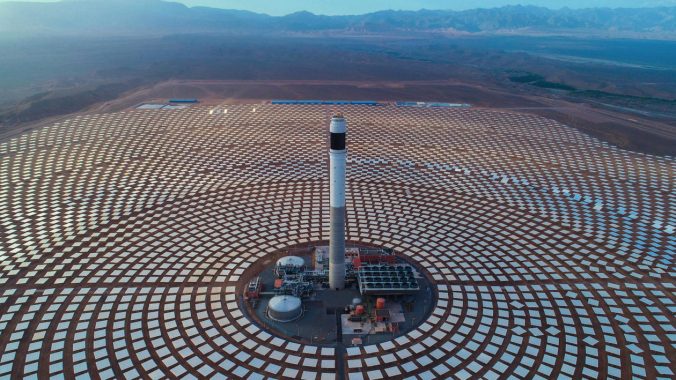
The Noor solar power station near Ouarzazate, Morocco. SEPCO III / XINHUA / ALAMY STOCK PHOTO

Fred Pearce brings us news from the European-African axis of renewable energy:

In Scramble for Clean Energy, Europe Is Turning to North Africa

In its quest for green energy, Europe is looking to North Africa, where vast solar and wind farms are proliferating and plans call for submarine cables that will carry electricity as far as Britain. But this rush for clean power is raising serious environmental concerns.

Solar panels in sun-rich North Africa generate up to three times more energy than in Europe. And North Africa has a lot more room for them than densely populated Europe. Continue reading

Coffee Capsules Reconsidered

‘It hurts to know that we create so much waste.’ Composite: The Guardian/Getty Images/NASA

We have been clearly on one side of this, but now thanks to Cecilia Nowell and the Guardian we acknowledge a possible reason to reconsider:

Are coffee pods really eco-friendly? The truth behind the surprising findings

Coffee capsules notoriously produce waste – but some experts maintain that reducing how much coffee you use, even with a pod, can decrease emissions

If you drink one of the 2bn cups of coffee consumed each day worldwide, you may have seen headlines last month celebrating the coffee pod, a single-serving container – typically made of plastic or aluminum – that can be inserted into a machine to brew a cup of coffee. Continue reading
Greta Thundberg Talking To David Wallace-Wells

David Wallace-Wells has published a conversation, Greta Thunberg: ‘The World Is Getting More Grim by the Day’, in advance of the publication of the book to the right:

There is genuinely no precedent in the modern history of geopolitics for the climate activist Greta Thunberg.

Four and a half years ago, she began “striking” outside of Swedish parliament — a single teenager with a single sign. She was 15. In just a few months, she had made her mark at the United Nations climate conference in Poland: “You are not mature enough to tell it like it is,” she told the assembled diplomats and negotiators, “even that burden you leave to us children.” Continue reading

When Diplomatic Language Is Counter-Productive

Climate-change straight talk is crucially important as the occurrence of enormous, unnatural disasters coincides with a man-made flood of obfuscation. Photograph from Getty

We look for positive news on the environment without hiding the perils. Bill McKibben, as always, prefers straight talk in all such matters:

The U.N. Secretary-General’s Searing Message for the Fossil-Fuel Industry

Forget diplomatic language—it’s a moment for some home truths.

On Monday morning, at the United Nations, the Secretary-General delivered his annual report on priorities—a kind of State of the Planet address. If you’re struggling to remember the name of the current Secretary-General, it’s António Guterres, who came to the job after, among other things, serving as the Prime Minister of Portugal. We’re used to the idea that “diplomatic language” is filled with euphemisms—“a full and frank exchange of views,” and so on. Continue reading
Post-Peak Meat

Hundreds of dairy farms across California have sold the rights to their manure to energy producers. Illustration: Ricardo Cavolo/The Guardian

We are always on the lookout for more reasons why reducing beef and dairy consumption makes sense:

Brown gold: the great American manure rush begins

The energy industry is turning waste from dairy farms into renewable natural gas – but will it actually reduce emissions?

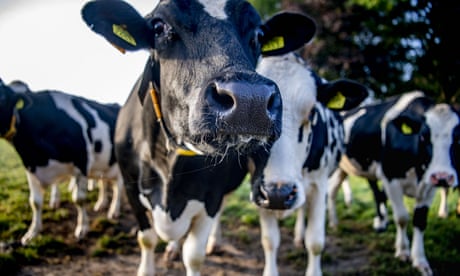
Cows in a meadow at a dairy farm in Zundert, the Netherlands.

Have we reached ‘peak meat’? Why one country is trying to limit its number of livestock

On an early August afternoon at Pinnacle Dairy, a farm located near the middle of California’s long Central Valley, 1,300 Jersey cows idle in the shade of open-air barns. Above them whir fans the size of satellites, circulating a breeze as the temperature pushes 100F (38C). Underfoot, a wet layer of feces emits a thick stench that hangs in the air. Just a tad unpleasant, the smell represents a potential goldmine. Continue reading

Reducing Cement’s Carbon Footprint, Improving Its Longevity

PHOTOGRAPH: GETTY IMAGES

Whether we want buildings to last longer or not, we now know that reducing the carbon footprint of the materials used is a consideration is important:

The Secret to Making Concrete That Lasts 1,000 Years

Scientists have uncovered the Roman recipe for self-repairing cement—which could massively reduce the carbon footprint of the material today.

ROME’S PANTHEON STANDS defiant 2,000 years after it was built, its marble floors sheltered under the world’s largest unreinforced concrete dome. For decades, researchers have probed samples from Roman concrete structures—tombs, breakwaters, aqueducts, and wharves—to find out why these ancient buildings endure when modern concrete may crumble after only a few decades. Continue reading
The Remarkable Efficiency Of Heat Pumps, Explained

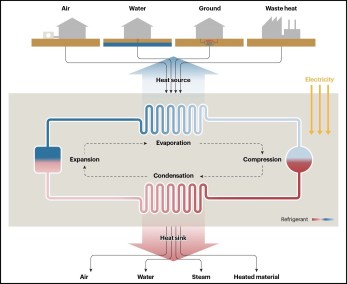
Heat pumps use electricity to compress a refrigerant, raising its temperature. IEA

Heat pumps have only been a passing reference occasionally in these pages, but today they are the focus, thanks to Paul Hockenos in Yale e360:

In Europe’s Clean Energy Transition, Industry Turns to Heat Pumps

With soaring gas prices due to the Ukraine war and the EU’s push to cut emissions, European industries are increasingly switching to high-temperature, high-efficiency heat pumps. Combined with the boom in residential use, the EU is now hoping for a heat pump revolution.

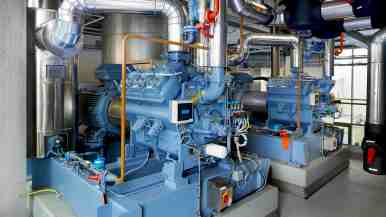
An industrial heat pump at the Mars Confectionery in Veghel, the Netherlands. GEA

The Wienerberger brickworks in Uttendorf, Austria, in the Tyrolean Alps, has always required a steady stream of 90 degree C (194 degree F) heat to dry its construction blocks. This process would have been an expensive proposition for the company after Russia cut gas exports to Europe, as it was for most of Europe’s energy-intensive construction industry. But four years ago, Wienerberger — the largest brick producer in the world — made an investment in the future that is now paying off: it replaced Uttendorf’s gas-fired boiler with an industrial-scale heat pump, which whittles the factory’s energy bill by around 425,00 euros a year. Continue reading
EV Boom

Ibrahim Rayintakath

At this point we should not be surprised but the momentum is still stunning:

Electric Vehicles Keep Defying Almost Everyone’s Predictions

It is striking that in the same year that Tesla’s stock price dropped by about two-thirds, destroying more than $700 billion in market value, the global market for electric vehicles — which for so long the company seemed almost to embody — actually boomed. Continue reading

Ozone Progress

A refrigerator factory in 2018 in Xingfu, China, an area that defied restrictions on ozone-depleting CFC-11 until a government crackdown. Gilles Sabrié for The New York Times

Any time we see even the slightest sign of meaningful change, it is worth pausing, noting it, and getting back to work:

Rogue emissions from China of ozone-depleting chemicals had threatened to delay recovery by a decade. But the emissions were stopped, according to a U.N.-backed report.

The protective ozone layer in the upper atmosphere could be restored within several decades, scientists said Monday, as recent rogue emissions of ozone-depleting chemicals from China have been largely eliminated. Continue reading

Lungs Of The Earth, The Amazon Calls Our Attention Again

Illustration by Max Guther

The Amazon is one of those big topics that we come back to again and again for a reason.  We all depend on these lungs of the earth, so it would be strange to not be obsessed with the subject:

Some Brazilian scientists fear that the Amazon may become a grassy savanna — with profound effects on the climate worldwide.

Illustration by Max Guther

One of the first times Luciana Vanni Gatti tried to collect Amazonian air she got so woozy that she couldn’t even operate the controls. An atmospheric chemist, she wanted to measure the concentration of carbon high above the rainforest. To obtain her samples she had to train bush pilots at obscure air-taxi businesses. The discomfort began as she waited on the tarmac, holding one door open against the wind to keep the tiny cockpit from turning into an oven in the equatorial sun. When at last they took off, they rose precipitously, and every time they plunged into a cloud, the plane seemed to be, in Gatti’s words, sambando — dancing the samba. Then the air temperature dipped below freezing, and her sweat turned cold. Continue reading

Time To Care About Climate Change

A pile of debris from Hurricane Ian rises behind a line of people waiting to vote in Fort Myers, Fla., in November 2022. Research suggests support for some climate policies increases immediately after climate-driven disasters such as Ian.
Rebecca Blackwell/AP

If you are not (yet) concerned about climate change there is no time like the present:

How our perception of time shapes our approach to climate change

Most people are focused on the present: today, tomorrow, maybe next year. Fixing your flat tire is more pressing than figuring out if you should use an electric car. Living by the beach is a lot more fun than figuring out when your house will be underwater because of sea level rise. Continue reading

Carbon Cowboys

Levi Sucre Romero at the UN biodiversity conference in Montreal last week.

Levi Sucre Romero at the UN biodiversity conference in Montreal last week. ANDREJ IVANOV / AFP VIA GETTY IMAGES

Carbon credit brokers are busier than ever, and that is welcome news, but Levi Sucre Romero’s concerns give pause:

Forest Equity: What Indigenous People Want from Carbon Credits

To Indigenous leader Levi Sucre Romero, carbon credit markets have failed to respect Indigenous people and their key role in protecting their lands. In an e360 interview, he talks about how carbon brokers have taken advantage of local communities and why that must change.

Indigenous protesters at the opening ceremony of the UN biodiversity conference in Montreal this month.

Indigenous protesters at the opening ceremony of the UN biodiversity conference in Montreal this month. ANDREJ IVANOV / AFP VIA GETTY IMAGES

In a world where carbon credit markets are taking advantage of Indigenous people and their forests, the United Nation is losing its leadership on combating climate change, says Indigenous leader Levi Sucre Romero.

In an interview with Yale Environment 360, Romero, who is from Costa Rica and is coordinator of the Mesoamerican Alliance of Peoples and Forests, calls out the “carbon cowboys” — the brokers who he says are wrecking efforts to allow Indigenous communities to have ownership of the carbon credits generated on their land, and who, by acting unscrupulously and secretively, are undermining global hopes of using nature to mitigate climate change. Continue reading

Great EV Expectations

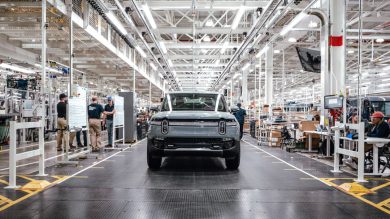
A Rivian R1T electric pickup truck at the company’s factory in Normal, Illinois. JAMIE KELTER DAVIS / BLOOMBERG VIA GETTY IMAGES

I had no reason to bet against Tesla until now, but I did wonder whether it was good for anyone (other than its shareholders) for that one company to dominate its market over the longer term. Now, happily, it looks like the market will do what we need it to do, which is get robust:

For U.S. Companies, the Race for the New EV Battery Is On

Spurred by federal mandates and incentives, U.S. manufacturers are pushing forward with developing new battery technologies for electric vehicles. The holy grail is a battery that is safer, costs less, provides longer driving range, and doesn’t use imported “conflict” minerals.

Sixteen years have passed since engineer Martin Eberhard unveiled his futuristic custom-designed sports car before a crowd of investors, journalists, and potential buyers in a Santa Monica Airport hangar. Continue reading

Virtue Signaling Versus Virtue Versus Wrong

Laurence D. Fink, who runs BlackRock, has urged companies to adopt socially conscious practices. Winnie Au for The New York Times

We have no access to Mr. Fink’s motives or those of the firm he runs, or to how he and his colleagues make decisions–only to some of the actions they have taken. Our view on him and his firm may be simplistic, in that we respect their initial leadership on ESG but fault them now for not doing more. Even if they have only been virtue-signaling, and even if they fall short on true virtue, what they have done is obviously much better than those who are wrong on climate change:

BlackRock’s Pitch for Socially Conscious Investing Antagonizes All Sides

Right-wing officials are attacking BlackRock for overstepping. Those on the left say the world’s biggest asset manager is not doing enough.

Environmental, social and governance — or E.S.G. — investing, “to some degree, is a smoke screen,” said Tariq Fancy, a former BlackRock executive. Chloe Ellingson for The New York Times

It was a clarion call to chief executives everywhere.

In 2018, Laurence D. Fink, the longtime chief executive of BlackRock, the world’s largest asset manager, urged corporate leaders to assess the societal impact of their businesses, embrace diversity and consider how climate change could affect long-term growth.

“Companies,” Mr. Fink wrote in his annual letter to chief executives, “must ask themselves: What role do we play in the community? How are we managing our impact on the environment? Are we working to create a diverse work force? Are we adapting to technological change?” Continue reading

Land Use By Food Type, Data For Thought

The Conversation

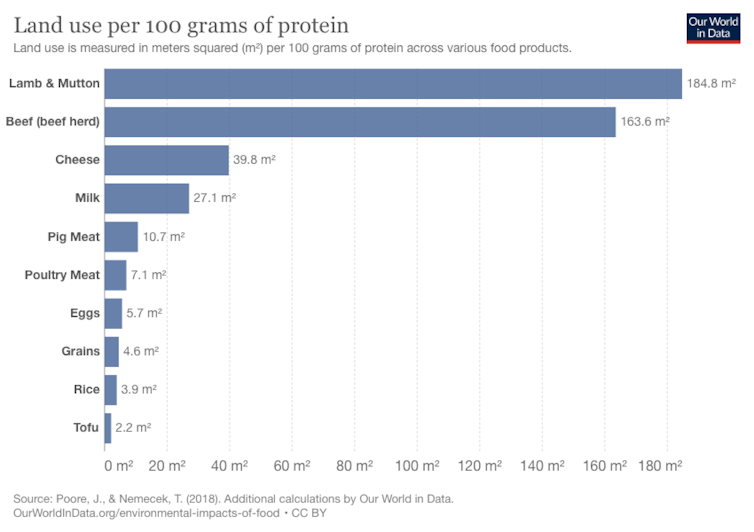
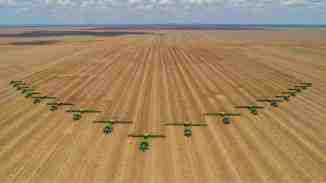
Chart of land use per 100g of protein for different foodsThe Conversation is “a news organization dedicated to facts and evidence” and with the tag line “Academic rigor, journalistic flair”. Our kind of reading. The graph to the left illustrates this article’s point; the photo below to the right is too composed for rigor:

Brazil’s enormous soy farms mostly produce food for animals, not humans. lourencolf / shutterstock

New food technologies could release 80% of the world’s farmland back to nature

Here’s the basic problem for conservation at a global level: food production, biodiversity and carbon storage in ecosystems are competing for the same land. Continue reading

Embracing Anthropocene

Image credits: Alamy; David Guttenfelder for The New York Times; Getty Images; Ashley Gilbertson for The New York Times; Michael Probst/Associated Press; Getty Images; NASA

We have been using this terminology already for more than a decade, thinking it was apt enough to be official:

For Planet Earth, This Might Be the Start of a New Age

A panel of experts has spent more than a decade deliberating on how, and whether, to mark a momentous new epoch in geologic time: our own.

The official timeline of Earth’s history — from the oldest rocks to the‌ dinosaurs to the rise of primates, from the Paleozoic to the Jurassic and all points before and since — could soon include the age of nuclear weapons, human-caused climate change and the proliferation of plastics, garbage and concrete across the planet. Continue reading