Nature’s Energy Storage Potential

Decarbonization would be easier if we could bank clean energy for later. Illustrations by Hudson Christie

Thanks to Matthew Hutson for the article in the current edition of the New Yorker titled The Renewable-Energy Revolution Will Need Renewable Storage:

Can gravity, pressure, and other elemental forces save us from becoming a battery-powered civilization?

We need to vastly expand our energy-storage capacity if we’re to avoid climate catastrophe.

The German word Dunkelflaute means “dark doldrums.” It chills the hearts of renewable-energy engineers, who use it to refer to the lulls when solar panels and wind turbines are thwarted by clouds, night, or still air. On a bright, cloudless day, a solar farm can generate prodigious amounts of electricity; when it’s gusty, wind turbines whoosh neighborhoods to life. But at night solar cells do little, and in calm air turbines sit useless. These renewable energy sources stop renewing until the weather, or the planet, turns. Continue reading

Climate Policies To Cheer On

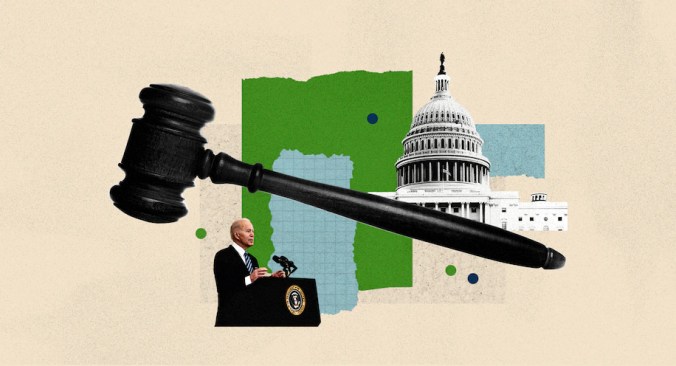
(Washington Post illustration; Demetrius Freeman/The Washington Post; iStock)

I am heading to Ithaca tomorrow for family reasons, so the third item described in the story that follows is of particular interest. But every one of the items is worth reflecting on, in a news world without enough such stories. Our thanks to the Washington Post Staff who put this list together:

10 recent climate policies that could make a difference

Stories from the past six months that show what local and national policy change can look like

The most recent IPCC report makes it clear: There is no one silver bullet that can address global warming. Instead, nations, businesses, communities and individuals all have a role to play in helping to create a safer and more sustainable future. But without action from the world’s wealthiest countries, the nations and people who are least at fault for fueling climate change will be the ones who suffer the most, the scientists behind the report warn. Continue reading

Tidal Power

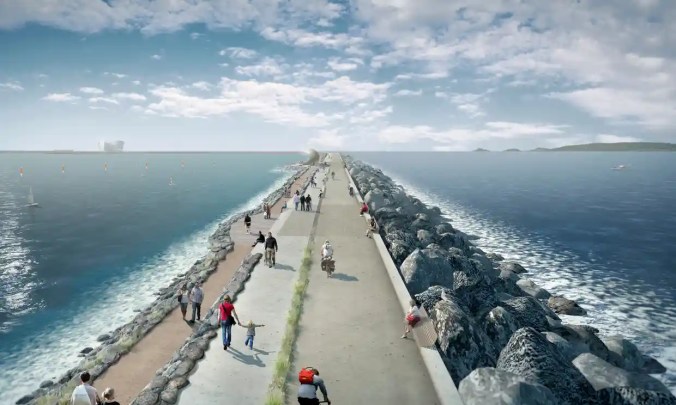
An impression of a £1.3bn tidal lagoon project, which the government refused to back in 2018. Photograph: Tidal Lagoon Power/PA

Most of our attention to ocean water is focused on the climate,  and the few renewable energy stories with oceans featured have been about offshore wind projects. Today’s news corrects the deficit of attention to the power of tidal waves:

Could Anglesey’s tidal energy project drive a new energy revolution?

Experts say Wales has huge potential for generating renewable marine power, yet, so far, ambitious schemes have been ignored

South Stack lighthouse on Holy Island, north Wales: construction on the island’s tidal stream project has just begun. Photograph: Getty Images

On the stunning and craggy coastline of Holy Island in north Wales, work has started on a construction project to generate energy from one of the world’s greatest untapped energy resources: tidal power.

The Morlais project, on the small island off the west of Anglesey has benefited from £31m in what is likely to be the last large grant for Wales from the European Union’s regional funding programme. It will install turbines at what will be one of the largest tidal stream energy sites in the world, covering 13 square miles of the seabed. Continue reading

Old Growth Forest Protection Schemes

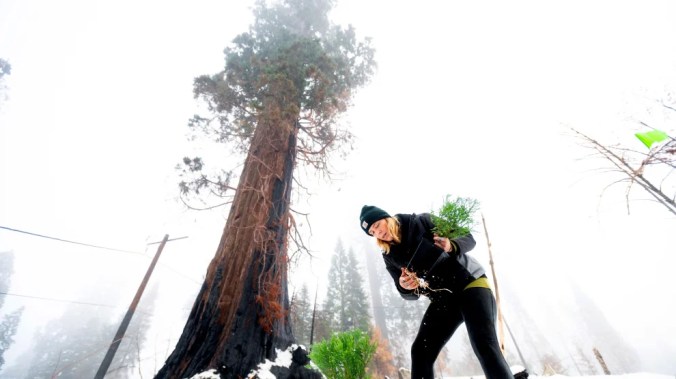
Caryssa Rouser, a propagation specialist with Archangel Ancient Tree Archive, plants a sequoia tree in October, 2021, in Sequoia Crest, California. Noah Berger/AP

Old growth forests matter for so many reasons. Not least, biophilic reasons. But at this moment, we rightly pay more attention to their value with regard to urgent climate issues. Maddie Oatman makes a good case in this Mother Jones essay:

Why Old-Growth Forests Matter So Much in the Fight Against Climate Change

Biden’s executive order to preserve ancient trees is a big deal—but it could have gone further.

Few experiences have rendered me as awestruck as the winter morning I spent wandering through a grove of ancient sequoias, their sienna bark glowing against the snowy ground. Continue reading

More On Seed Banks

We have featured these banks before, but they are worthy of a more detailed inside look.

So, thanks to by Salomé Gómez-Upegui, Rita Liu and the Guardian. Their article, Seed banks: the last line of defense against a threatening global food crisis is full of images and written descriptions that put these banks in better perspective:

As climate breakdown and worldwide conflict continue to place the food system at risk, seed banks from the Arctic to Lebanon try to safeguard

As the risks from the climate crisis and global conflict increase, seed banks are increasingly considered a priceless resource that could one day prevent a worldwide food crisis. Continue reading

Convivial Conservation

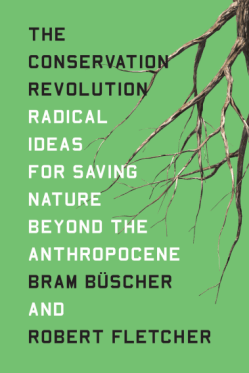
Click on this image to go to the page where the illustrative video about convivial conservation is embedded

New to me, but not new, is this pairing of words that have a magical ring to them when said together:

Convivial Conservation

Convivial (literally: ‘living with’) conservation offers a new and integrated approach to understanding and practicing environmental conservation. It is a Whole Earth vision that responds to the major ecological, social and political-economic challenges facing people and biodiversity in the 21st century

Click on the image above to watch a short video introducing the concept, and click to the right to read more about the book. Click here to read more about ongoing research on this topic. Anyone following our posts on this platform for the last decade+ will have seen a different pair of words frequently used–sometimes related to biodiversity and other times related to culture. Now that I have let this other word pairing have some space in my day, I expect to see the words more frequently in these pages.

Carbon, Sequestration & Hope

(Brandon Thibodeaux / The New York Times / Redux)

When I read about a promising new technology related to carbon sequestration, I am ambivalent based on the experience of many past false hopes. Carbon is a very large problem. Finding new methods of sequestration is a very challenging puzzle.

I track such developments every week by reading the newsletter that Bill McKibben posts on Substack. Most weeks I post something here from that, and do my best to balance the terrifying and enraging with the more hopeful news he occasionally shares there.

The only other newsletter I read regularly is Robinson Meyer’s newsletter for the Atlantic, called The Weekly Planet. Here is one of his worth reading for a bit of encouragement (when you click the hyperlink it will go to the current newsletter, which until April 20 is this one; after April 20 scroll to find this edition):

The Biggest Investment Ever in Sucking Carbon Out of the Sky

The world’s biggest tech companies are getting serious about carbon removal, the still-nascent technology wherein humanity can pull heat-trapping carbon dioxide out of the atmosphere. Yesterday, an alliance of prominent Silicon Valley companies—including Google, Meta, Shopify, and the payment company Stripe—announced that it is purchasing $925 million in carbon removal over the next eight years. In a world awash in overhyped corporate climate commitments, this is actually a big deal. Continue reading

Meat Me Half Way

Changing the way we eat to improve our lives and save our planet has been a common theme over the years on this platform. In case you missed yesterday’s post, this new book by Brian Kateman was mentioned in the newsletter:

We know that eating animals is bad for the planet and bad for our health, and yet we do it anyway. Ask anyone in the plant-based movement and the solution seems obvious: Stop eating meat.

But, for many people, that stark solution is neither appealing nor practical. Continue reading

When Diplomats Must Be Undiplomatic

Yesterday I posted about one of the easier topics among the many options I have to post about every day. Today, a topic increasingly frequent in my posts, but definitely not an easy one. So I look to one person to summarize our week-to-week progress or lack of it. As always, I recommend signing up for his newsletter:

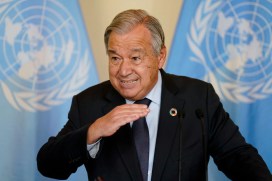
The World’s Top Diplomat Has Had It Up to Here

The Secretary General of the UN models how to think about climate change

I can remember when some of us organized what may have been the planet’s first truly huge climate march, with 400,000 people descending on New York in 2014. Then UN Secretary General Ban Ki-moon came to walk with us for a few blocks, and it was considered remarkable: the world’s top diplomat had previously been too diplomatic to join in protests challenging the policies of his member nations. Continue reading
Vagrancies Better Appreciated

A Stellar’s sea eagle, native to East Asia. Design Pics Inc./Alamy

These two themes, birds and their various forms of adaptation, make Marion Renault’s article These Birds Aren’t Lost. They’re Adapting a perfect fit for sharing here as an excerpt, and recommending that you read the story where it was published:

Bird-watchers love to see vagrants, or birds that have traveled far outside their range. But scientists say they have a lot to teach us in a world facing ecological change.

From what we can tell, the Steller’s sea eagle trekking across North America does not appear homesick.

The bird has strayed thousands of miles from its native range in East Asia over the last two years, roving from the Denali Highway in Alaska down to a potential sighting South Texas before moving eastward and back north to Canada and New England. Its cartoonish yellow beak and distinctive wing coloration recently attracted crowds of rapt birders to Maine before turning up on April Fools’ Day in Nova Scotia. Continue reading

If SUVs Were An Individual Country

The Biden Administration is set to unveil a new set of fuel-efficiency standards on Friday. Photograph by David Paul Morris / Bloomberg / Getty

Elizabeth Kolbert’s essay offers perspective on how the SUV category has grown as a percentage of the global fleet, and what that has meant for fuel consumption. The point of the essay seems not to demonize owners of SUVs, but to suggest a mechanism to put the category on a level playing field with more fuel efficient vehicles. The humanist in me imagines that most SUV owners would own up, given the chance, and take responsibility for their footprint and pay their fair share:

A Better Idea Than Releasing Oil from the Strategic Reserve

It’s time to do away with the S.U.V. loophole.

On Thursday afternoon, President Joe Biden announced that the federal government would release up to a hundred and eighty million barrels of oil from the Strategic Petroleum Reserve over six months. The move, aimed at bringing down gas prices—“Americans are feeling Putin’s gas price hike at the pump,” Biden tweeted—is obviously politically motivated. Continue reading

Youth & Perspective

It should not be this difficult to change viewpoints on an existential topic. But apparently it is. If it requires a new social media platform, and watching a few short, catchy videos, so be it:

A growing chorus of young people is focusing on climate solutions. “‘It’s too late’ means ‘I don’t have to do anything, and the responsibility is off me.’”

Alaina Wood is well aware that, planetarily speaking, things aren’t looking so great. She’s read the dire climate reports, tracked cataclysmic weather events and gone through more than a few dark nights of the soul. Continue reading

Writing About The Banda Islands & Nutmeg & Us

Around the time we shared a book review of Amitav Ghosh’s most recent work he gave a lecture about the Banda Islands, explaining the relationship between nutmeg and our current challenges related to climate change. It includes conversation with his host, a professor of creative writing, who draws out of Ghosh on his writing process.

The best part of the lecture is about half way through, when Ghosh talks about the agency of botanicals, a topic that many of us first encountered in the writings of Michael Pollan. Thanks to Rhoda Feng for giving Ghosh’s book another review, which led me to find the video above:

A SMALL BUT INCREDIBLY VALUABLE NUT

At the end of Amitav Ghosh’s SEA OF POPPIES (2008), a character reflects on how her life has been governed not by the sign of Saturn but by the poppy seed. Offering a seed to her lover, she says: ‘Here, taste it. It is the star that took us from our homes and put us on this ship. It is the planet that rules our destiny.’ SEA OF POPPIES is part of the Ibis trilogy by Ghosh – followed by RIVER OF SMOKE (2011) and FLOOD OF FIRE (2015) – about the nineteenth-century Anglo-Chinese Opium Wars. Continue reading
How Do We Love Thee, Forests, Let Us Count The Ways

Forests, such as this one in Indonesia, do lmore than just store carbon. Photograph: Xinhua/Rex/Shutterstock

It may sound obvious, but until now it was not quantified: The world’s forests do more than just store carbon, new research finds

New data suggests forests help keep the Earth at least half of a degree cooler, protecting us from the effects of climate crisis

The world’s forests play a far greater and more complex role in tackling climate crisis than previously thought, due to their physical effects on global and local temperatures, according to new research. Continue reading
Close The Hose Of Fossil Fuel Cash

Michael Mann, director of the Earth System Science Center at Pennsylvania State University, said fossil-fuel funding ‘has been used to compromise leading academic institutions’. Photograph: James Ross/AAP

Hats off to Michael Mann and colleagues for this determination:

Universities must reject fossil fuel cash for climate research, say academics

Open letter from 500 academics likens fossil-energy funding of climate solutions to tobacco industry disinformation

Universities must stop accepting funding from fossil fuel companies to conduct climate research, even if the research is aimed at developing green and low-carbon technology, an influential group of distinguished academics has said. Continue reading

Climate Forests

LET TREES
GROW
PROTECT THE CLIMATE

Last week’s epic essay by Bill McKibben in the New Yorker was followed up by his weekly newsletter, in which he mentions the organization above. Visit and see what they are doing. And the newsletter is a useful footnote to the essay:

…It argues that the time has come for us to end—after 200,000 years—the central place of combustion in human affairs, and rely instead on the fact there’s a flaming ball of gas hanging 93 million miles away in the sky. I won’t repeat the argument here, but I do want to extend it a little. Continue reading
Kenya’s Coffee Climbs

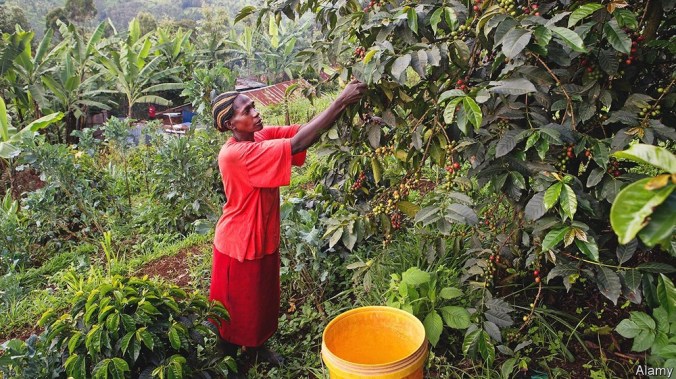
Coffee is climbing uphill in Kenya because the climate up there is more suitable. But there are no easy fixes to the climbing temperatures, for coffee or other crops. Hybrids and wild heirloom varietals had our attention already, and are mentioned in this article from the Middle East & Africa section of the Economist’s print edition under the headline “Hot coffee:”

Why global warming threatens east African coffee

Other cash crops including tea will also be affected

Jeremiah Letting learned about coffee from his father. As a child in the late 1980s, he worked on his family’s one-acre (0.4 hectare) coffee farm in the hills of Nandi county, western Kenya. The cycle ran like clockwork: cultivate, plant, ripen, harvest and sell. “Every year was the same,” he says. “It was timely.” Continue reading
McKibben’s Longform Power Pitch

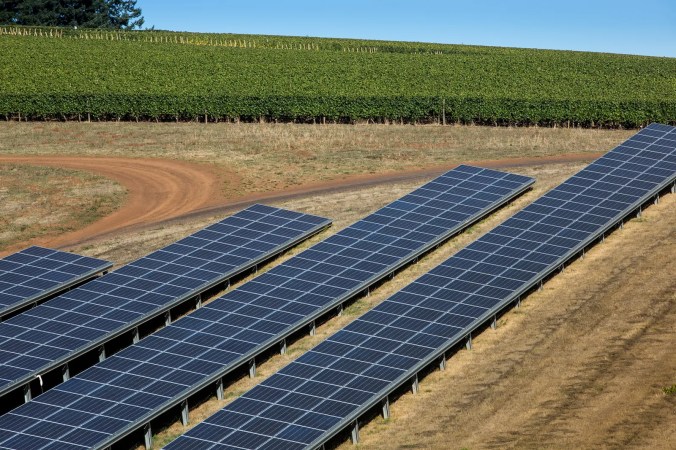
The market for electrons is predictable, meaning that solar panels installed on farmland can provide a fairly stable income for farmers. Photograph by George Rose / Getty

Illustration by Álvaro Bernis

If you have not been reading Bill McKibben regularly, or at all, here is as good a place to start as you will find. It is a long, powerful pitch:

In a World on Fire, Stop Burning Things

The truth is new and counterintuitive: we have the technology necessary to rapidly ditch fossil fuels.

In 2020, fossil-fuel pollution killed three times as many people as COVID-19 did. Photograph by Artur Widak / NurPhoto / Getty

On the last day of February, the Intergovernmental Panel on Climate Change issued its most dire report yet. The Secretary-General of the United Nations, António Guterres, had, he said, “seen many scientific reports in my time, but nothing like this.” Setting aside diplomatic language, he described the document as “an atlas of human suffering and a damning indictment of failed climate leadership,” and added that “the world’s biggest polluters are guilty of arson of our only home.” Continue reading

The Force Of Law, On Top Of Information & Protest

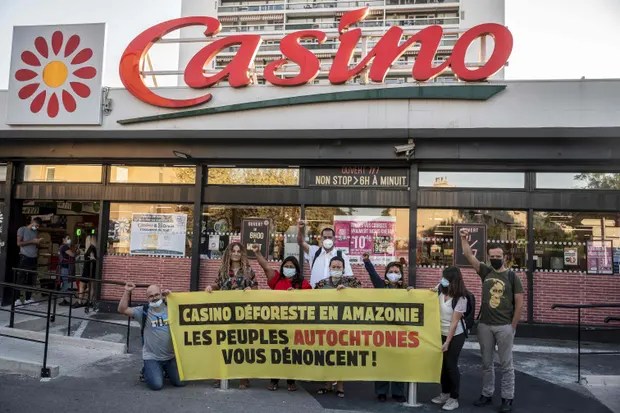
A protest in Marseille against the French supermarket chain Groupe Casino for allegedly selling meat products linked to deforestation. Photograph: Christophe Simon/AFP/Getty

What can we do when commercial interests damage our collective future? The identification of and protest against companies doing business in ways that cause environmental destruction are two important forces, but the force of law is another. Thanks to the Guardian for its ongoing coverage of these:

Legal eagles: how climate litigation is shaping ambitious cases for nature

Plans for an airport in the Tagus estuary have failed to take into account its impact on the wetlands, lawyers argue. Photograph: Handout

Environmental lawsuits are nothing new but now lawyers are turning their attention to cases that address the loss of biodiversity

The Tagus estuary near Lisbon is Portugal’s largest wetland, a vital habitat and stopover for tens of thousands of migratory birds, including flamingos, black-tailed godwits and glossy ibis. Continue reading
Jumpstarting System Change

So many things to change, so little time. If you are looking for a way to jumpstart a change to the system, consider these six lifestyle adjustments (thanks to the Guardian for the feature story on Jump):

From using smartphones for longer to ending car ownership, research shows ‘less stuff and more joy’ is the way forward

Founder of the Jump campaign Tom Bailey. Photograph: Andy Hall/The Observer

Research shows that people in wealthier, high-consuming countries can help avert climate breakdown by making six relatively straightforward lifestyle changes, creating a society of “less stuff and more joy”.

Experts say if enacted these “shifts” would account for a quarter of the required emissions reductions needed to keep the global heating down to 1.5C and increase pressure on government and the private sector to make the necessary far-reaching systemic change. Continue reading